
If you're after a privacy screen or a garden border and you need it yesterday, picking the right fast growing hedge nz is everything. The best contenders, like the ever-popular Griselinia littoralis or some of the speedier Pittosporum varieties, can put on up to a metre of growth a year. That means you can go from exposed to enclosed in just a couple of seasons.
Choosing the Right Fast Growing Hedge for Your Garden
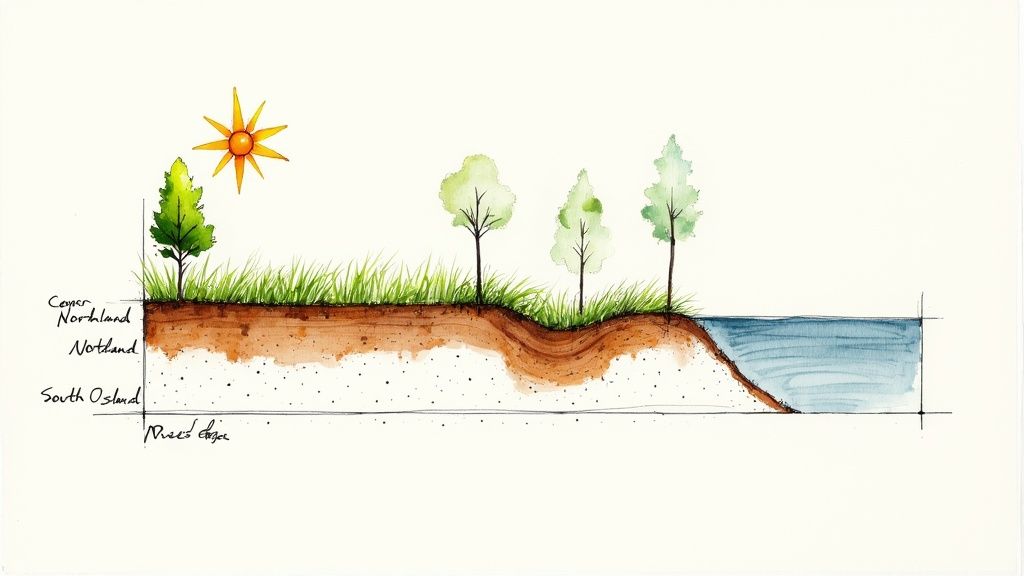
Kicking off a hedge project can feel like a massive undertaking, but nailing the plant selection is the first, and most important, step. Think of it like laying the foundations for a house—get it right from the get-go, and you're set up for a strong, beautiful result that will last for years. This isn't just about grabbing the fastest-growing thing you can find; it's about playing matchmaker between a plant and the unique conditions of your Kiwi backyard.
Matching Plants to Your Place
New Zealand's climate is a real mixed bag, and that has a huge say in which plants will actually take off. A hedge that loves the subtropical warmth of Northland might completely give up the ghost during a frosty Southland winter. Getting to know your local environment is the only way to guarantee that rapid growth you're looking for.
Here's what you need to suss out:
- Climate Zone: Are you on the coast copping salt spray? In a windy spot that needs a tough windbreak? Or inland where you get sharp frosts?
- Sunlight Exposure: Does your spot get blasted with full sun all day, enjoy a bit of partial shade, or is it mostly shady? Most fast-growers need at least half a day of sun to really get going.
- Soil Type: What are you working with underfoot? Heavy clay, dreamy free-draining loam, or something sandy? A simple soil test can tell you a lot, helping you pick plants that will feel right at home.
To make things a bit easier, here’s a quick rundown of some top performers.
Quick Comparison of NZ's Top Fast Growing Hedges
This table summarises some of the best choices for Kiwi gardens, highlighting their key features to help you narrow down the options based on what you need.
| Plant Name | Annual Growth | Best For | Sunlight Needs | Maintenance |
|---|---|---|---|---|
| Griselinia littoralis | Up to 1m | Coastal sites, privacy | Full Sun to Part Shade | Regular clipping |
| Pittosporum tenuifolium | 50-70cm | Quick screens, native gardens | Full Sun to Part Shade | Moderate |
| Photinia 'Red Robin' | 30-60cm | Colourful foliage, screening | Full Sun | Regular pruning for colour |
| Bambusa 'Gracilis' | Up to 2m+ | Very fast vertical screens | Full Sun to Part Shade | Clumping, minimal spread |
| Corokia 'Geenty's Green' | 30-50cm | Tough conditions, formal look | Full Sun | Tolerates heavy pruning |
Choosing the perfect hedge is a personal decision, but hopefully, this gives you a great starting point for what might work in your space.
Defining Your Hedge's Purpose
Beyond the weather and soil, you need a clear idea of what you want your hedge to do. Your end goal will seriously narrow down the options. Are you after a dense privacy screen to block out the neighbours, a hardy windbreak to shelter the rest of your garden, or just a neat decorative border to frame a pathway?
The function of your hedge dictates its form. A tall, impenetrable security screen requires a completely different plant and trimming routine than a low, ornamental border planted for a splash of colour.
Take one of New Zealand’s favourite native hedging plants, Griselinia littoralis (Kapuka). It's loved for its speedy growth and its ability to handle tough, windy coastal spots. While it can get huge if you let it, most people keep it trimmed to a tidy hedge somewhere between 2 and 8 metres, which makes it incredibly versatile.
Ultimately, taking the time to think through these points will help you create a shortlist of plants that won’t just grow fast—they'll thrive. This thoughtful approach to your garden and landscape design is the real secret to getting that healthy, lush, and fast growing hedge you're dreaming of.
Meet NZ's Top Performing Fast Growing Hedges
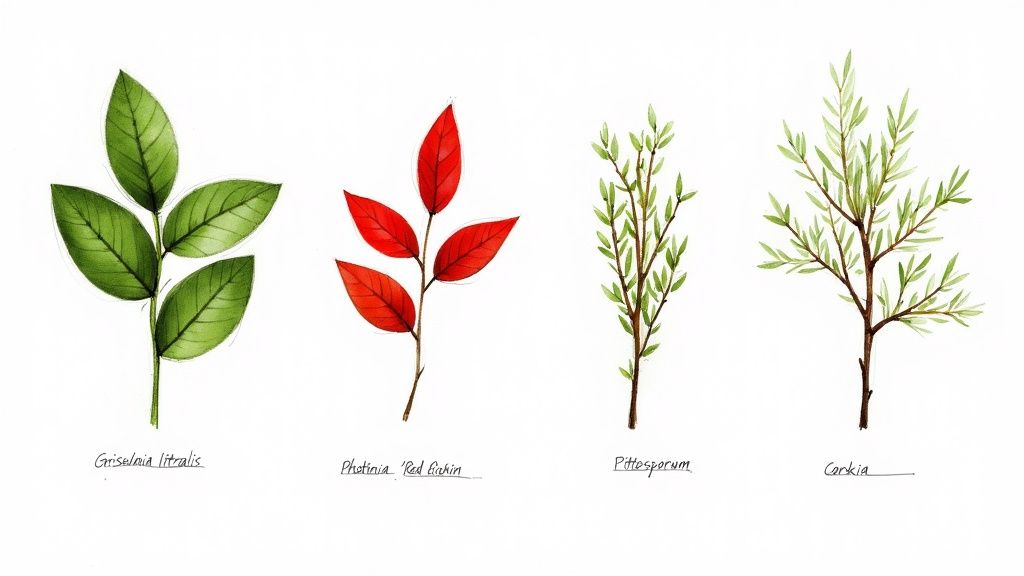
Alright, now that you’ve got a handle on what your garden really needs, it’s time to meet some of the star players. These are the go-to choices for Kiwi gardeners looking to create a fast, effective, and beautiful living screen. We'll dig a bit deeper than a simple list and get to know the unique character each one brings to the garden.
From vibrant colour to rugged resilience, there's a perfect match for every backyard. Getting to know their individual traits is the key to picturing how they’ll perform and transform your space.
Griselinia Littoralis (Kapuka or NZ Broadleaf)
Griselinia is a true New Zealand icon, and for very good reason. This native evergreen is famous for its lush, apple-green, glossy leaves and its seriously fast growth rate. In the right conditions, it can put on up to 1 metre a year.
It creates a dense, attractive screen that looks fantastic all year round. Its real trump card, though, is its incredible tolerance for coastal conditions. If your garden gets battered by salt-laden winds, Griselinia is your best mate, forming a tough yet beautiful windbreak where other plants would give up.
Griselinia is the quintessential Kiwi hedge—tough, good-looking, and grows like the clappers. Its resilience in coastal areas makes it a reliable favourite for creating privacy screens that can handle everything the New Zealand coastline throws at them.
Photinia 'Red Robin'
If you're after a hedge with a bit of drama and colour, Photinia 'Red Robin' is an absolute showstopper. While its mature leaves settle into a deep, glossy green, the new growth bursts out in a brilliant, fiery red. This creates a stunning two-toned effect, especially in spring right after a trim.
'Red Robin' is a vigorous grower, typically adding 30-60cm to its height each year. To get the most out of that spectacular red foliage, you'll want to prune it regularly through spring and summer. This encourages fresh flushes of colourful new shoots, keeping the display looking its best.
Pittosporum Tenuifolium (Kōhūhū)
Another fantastic native option, Pittosporum comes in a huge range of varieties. This gives you a wonderful choice of foliage colours, textures, and sizes to play with. From the silvery-green leaves of 'Stephens Island' to the dark, almost black foliage of 'Tom Thumb' (a dwarf variety), there's a Pittosporum for every garden style.
Most of the hedging varieties are fast growers, easily achieving 50-70cm of growth per year. They form a dense, fine-textured hedge that’s both elegant and effective for screening. Better yet, Pittosporums are generally hardy and tolerate a range of conditions right across New Zealand.
Other Reliable Contenders
While those top three are deservedly popular, they aren't your only options. A few other plants also offer fantastic, fast-growing solutions for Kiwi gardens.
- Corokia: A tough native with fine, wiry branches and tiny leaves. It’s perfect for creating a dense, twiggy hedge that is incredibly hardy in windy and dry spots.
- Lilly Pilly (Syzygium varieties): Many Australian natives in the Lilly Pilly family thrive here. They offer lush foliage, attractive new growth in shades of bronze or red, fluffy flowers, and even edible berries, making them a superb all-rounder.
How to Plant Your Hedge for Rapid Establishment
Even the toughest, fastest-growing plant needs a good start to really take off. How you plant your hedge is probably the single most important part of the whole process. Getting these first steps right is your ticket to the dense, living screen you're after and will pay you back with years of healthy, vibrant growth.
When it comes to gardening, timing is everything. For a fast-growing hedge in NZ, your best windows are autumn and spring. An autumn planting lets the roots settle in over the cooler, wetter winter, getting them ready for a massive growth spurt when the soil warms up. Spring is also a great option, just know you’ll need to be a bit more on the ball with watering as things heat up.
Prepare the Ground for Success
Think of this step as making a comfy bed for your new plants. They won’t stand a chance in hard, nutrient-starved ground. Before a single spade hits the dirt, you need to improve the soil along your planned hedge line.
First up, clear away all weeds and grass from a strip at least a metre wide. Then, it's time to dig over the soil and really load it up with some good organic matter.
- Compost and Sheep Pellets: Digging in plenty of well-rotted compost and sheep pellets adds vital nutrients and dramatically improves the soil structure.
- Drainage: If you're dealing with heavy clay, adding gypsum will work wonders to break it up and stop the roots from getting waterlogged.
This groundwork gives your hedge a well-stocked pantry to draw from while it gets established.
Trench or Individual Holes?
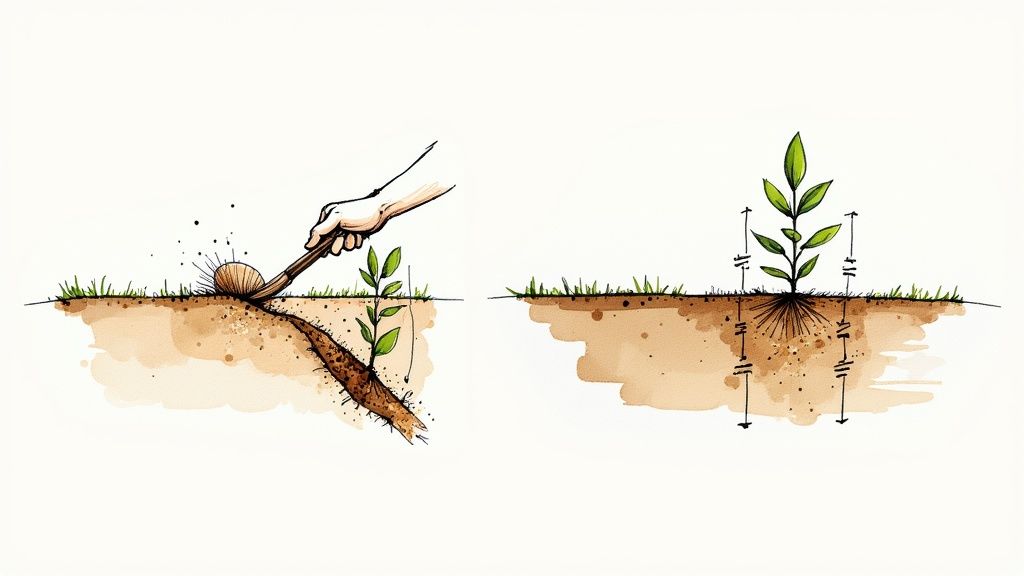
For a really uniform, gap-free hedge, digging a continuous trench is hands-down the best method. A trench about 50cm wide and 40cm deep breaks up all the soil evenly, which means the roots can spread out easily without having to fight through compacted ground.
Digging a trench creates a shared root zone for the entire hedge. It encourages all the plants to grow together as one interconnected unit, which will give you a much faster and denser screen than planting in separate holes.
Of course, digging a long trench can feel like a huge job. If that's the case, a tool like a hole digger auger drill bit can make quick work of individual holes. Just be sure to dig them nice and wide so the roots have room to expand.
The final, crucial step is getting the depth right. You want the top of the plant's soil from the pot to be perfectly level with the surrounding ground. Planting too deep is a classic mistake that can suffocate the roots and cause the plant to fail.
Once they're in place, backfill the trench, gently firm the soil around each plant, and give your new hedge a really good, deep watering to settle everything in.
Using Native Hedges for Privacy and Security
Choosing a native hedge is about so much more than just finding something that grows fast. It’s about bringing a little piece of Aotearoa right into your backyard. These plants are already perfectly in tune with our local conditions, and they create incredible habitats that bring in native birds and helpful insects.
When you go for natives, you're not just planting a screen. You're building a tiny ecosystem that makes your garden a more vibrant, resilient, and authentically Kiwi space.
Totara for Natural Defence
If your goal is more than just privacy—if you want a bit of security too—then some natives are head and shoulders above the rest. Totara is a fantastic choice, especially if you've got a larger or rural property and want a serious natural barrier.
A native conifer, Totara is a brilliant fast growing hedge nz for both its screening and security perks. You can expect it to put on about 50 to 80 centimetres of growth in two years, which is impressively quick for a native hedging tree. The real kicker is its dense, prickly foliage, which naturally discourages unwanted animals or intruders from pushing through.
That inherent toughness turns a simple hedge into a living fence that really earns its keep.
Maintaining Your Living Barrier
One of the best things about a tough native like Totara is that it’s pretty straightforward to look after. It’s not a fussy exotic that needs constant pampering to do its job and look good.
To keep a Totara hedge in a tidy, formal shape, a good trim twice a year is usually all it takes. This is generally enough to promote that thick, dense growth you want for a screen and stop it from getting wild and leggy. If you're inspired to go all-in, you can learn more about creating a complete thriving NZ native garden to go with your new hedge.
Of course, while a native hedge provides amazing natural security, it's worth knowing your other options. For those thinking about other physical barriers, it can be helpful to understand what goes into high-quality security fencing.
At the end of the day, though, choosing a native hedge is a fantastic way to blend practicality with a real connection to New Zealand's natural heritage.
Keeping Your Fast-Growing Hedge Healthy and Tidy
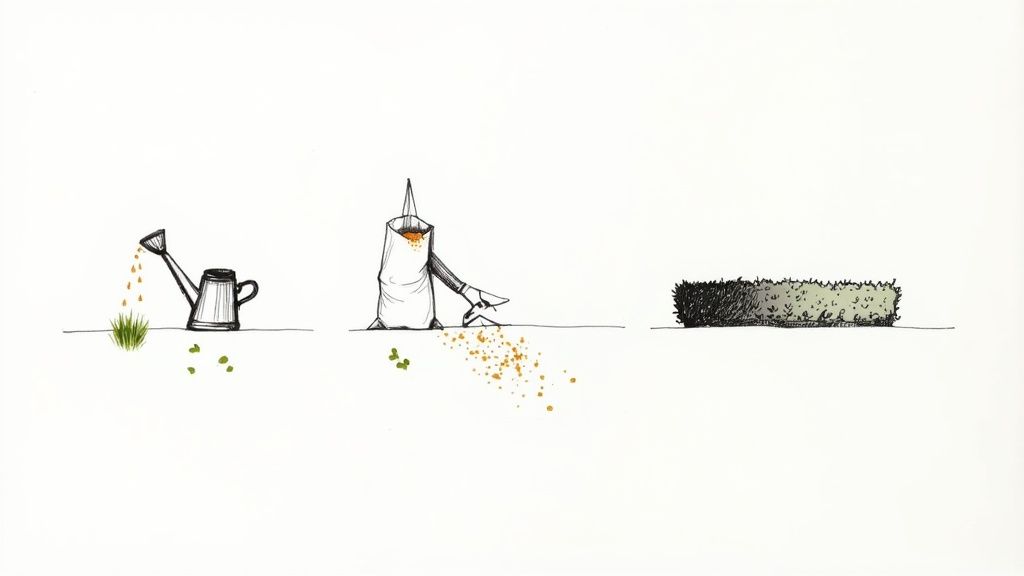
A vibrant, fast-growing hedge doesn’t just happen by magic; it’s the result of some good old-fashioned, consistent care. Once your plants are in the ground, a simple maintenance plan is all you need to keep them looking healthy, dense, and tidy for years to come.
Think of it as a small investment of time that pays huge dividends in privacy and beauty. These vigorous plants are thirsty and hungry, especially as they get established, and getting the fundamentals right gives them the fuel they need for that rapid growth you're after.
Smart Watering Strategies
Water is the lifeblood of a new hedge, particularly during its first summer. We all know how unpredictable New Zealand's weather can be, so you can't always rely on rainfall alone. The goal here is to encourage deep, strong roots that will make the hedge far more resilient in the long run.
- For New Hedges: Water them deeply once or twice a week during any dry spells. A long, slow soak is much better than a quick daily sprinkle, as it encourages roots to grow downwards in search of moisture.
- For Established Hedges: Once your hedge has been in the ground for a year or two, it'll be much more self-sufficient. You’ll only need to give it a deep watering during those long, dry summer periods.
A simple check is to stick your finger a few centimetres into the soil. If it’s dry, it’s time to get the hose out.
Feeding for Fuelled Growth
To sustain that impressive growth rate, your hedge needs plenty of nutrients. A well-timed feed gives your plants the energy to produce that lush, dense foliage that makes for a great screen.
Applying a balanced, slow-release fertiliser in early spring is ideal. This is just as the main growing season kicks off, giving your hedge a steady supply of food to draw on over the coming months. Spreading a layer of quality compost around the base of the hedge each spring also works wonders, improving soil structure and providing essential organic matter.
The Art of Pruning and Trimming
Pruning is where you truly get to shape the character of your hedge. Far from being a chore, it’s your chance to guide the plant’s growth, whether you want a razor-sharp formal screen or a softer, more natural look.
There are two main types of pruning to get your head around.
Formative Pruning: This is what you do with young plants to establish a strong, dense framework right from the ground up. By trimming the sides and top early on, you encourage bushy growth and stop the hedge from becoming sparse and leggy at the base.
Once the hedge is established, regular trimming takes over. For most fast-growing hedges here in NZ, this means a trim two or three times a year during the growing season (spring to mid-autumn). This keeps the shape neat and promotes that dense, interlocking growth that creates a solid screen.
For a deeper dive into getting your timing right, understanding optimal pruning times for different plant types is a massive help. This knowledge will help you make the most effective cuts for your hedge's long-term health and appearance.
Common Questions About Fast Growing NZ Hedges
Even the best-laid plans can hit a snag, and when it comes to establishing a living screen, a few questions always seem to pop up. Getting good, practical answers can be the difference between a lush, dense hedge and a patchy, struggling one. Let's tackle some of the most common queries we hear from Kiwi gardeners.
A little bit of know-how goes a long way. Getting your head around these common hurdles—from plant spacing to timing your trims—will give you the confidence to grow that perfect, fast growing hedge nz gardeners dream of.
How Far Apart Should I Plant My Hedge?
This one’s a classic balancing act between your budget, your patience, and what the plant itself needs to thrive.
As a solid rule of thumb for vigorous, popular varieties like Griselinia or Pittosporum, aim to plant them 75cm to 1 metre apart. This gives each plant enough room to develop a healthy root system while ensuring the gaps close over in good time.
If you’re after a more instant screen or you're starting with smaller plants, you can definitely tighten this up to between 50-60cm. Just be sure to check the specific recommendation for whatever you're planting. Jamming them in too close can cause them to compete for light and nutrients, but spacing them too far apart will leave you staring at gaps for years to come.
What Is the Absolute Fastest Growing Hedge in NZ?
When pure, unadulterated speed is the goal, a couple of clear contenders emerge.
For most gardens, it’s hard to go past the native Griselinia littoralis (Kapuka). In the right conditions, it can put on a stunning metre of growth per year. It's just a fantastic all-rounder, known for its lush, vibrant green look and hardy nature.
Another absolute powerhouse is the conifer 'Leighton Green' (Cupressocyparis leylandii). It's incredibly fast and the go-to choice for creating very tall, formal privacy screens. But remember, the "fastest" isn't always the "best" for your situation. It all comes down to the look you want, your local climate, and how much trimming you're prepared to do—because extreme speed almost always means more maintenance.
While it's tempting to chase maximum speed, the best hedge is one that strikes a balance between rapid growth and being genuinely happy in your garden's climate and soil. A slightly slower plant that thrives is always a better bet than a speedster that struggles.
When Is the Best Time to Prune My Hedge in NZ?
Getting your pruning times right is absolutely crucial for keeping your hedge healthy, dense, and tidy.
Your main structural prune—where you might be cutting back thicker, woodier branches—is best done in late winter or early spring. This timing is perfect, as it’s just before the big spring growth spurt kicks off, allowing the plant to heal quickly and respond with a burst of vigorous new shoots.
For the regular trims that keep a formal hedge looking sharp, you’ll likely be doing this two or three times over the main growing season from spring through to mid-autumn. Try to avoid any major haircuts in late autumn; any tender new growth that follows can be easily damaged by the first winter frosts. And for flowering hedges, the rule is simple: prune them right after they’ve finished flowering. That way, you won't accidentally snip off next season's buds.
Ready to create your perfect living fence? At Jungle Story, we connect you with trusted local sellers offering a huge range of hedging plants perfect for any Kiwi garden. Explore our collection and find the ideal fast-growing hedge for your space today at https://junglestory.co.nz.