
For many Kiwi gardeners, picking out hedge plants can feel like a huge decision, and rightly so! The best options always come down to two things: what you need it to do, and where you're putting it.
Think about the classics. Hardy native Griselinia littoralis and the ever-popular exotic Buxus (Boxwood) are worlds apart. One creates lush, dense privacy screens, while the other is perfect for those sharp, elegant borders. A great hedge always starts with figuring out its job in your garden.
Choosing the Right Hedge for Your NZ Garden
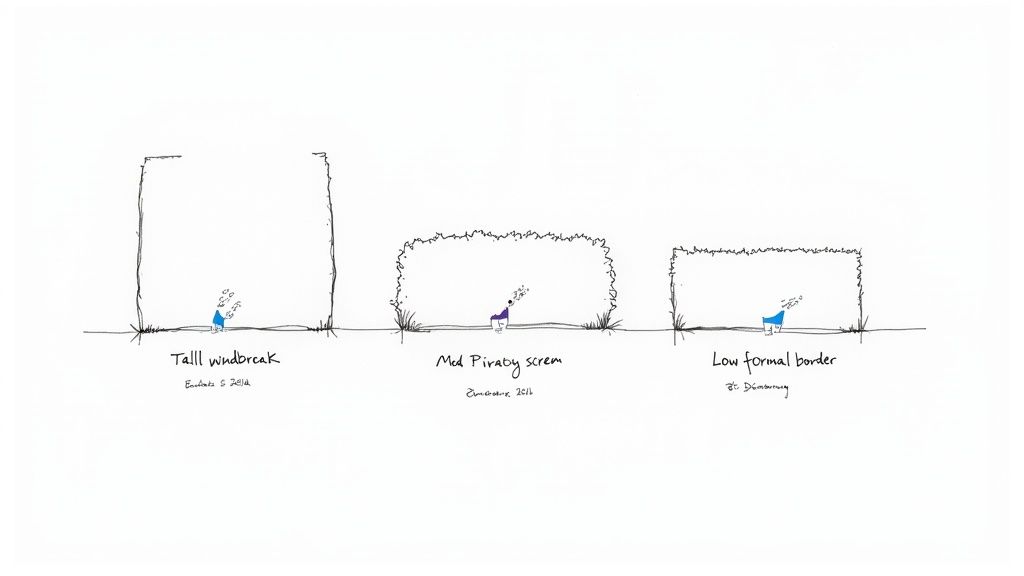
A hedge is so much more than a line of shrubs; it’s a living wall that gives your outdoor space structure and personality. It’s the very framework of your garden's design. Before you even think about looking at plant labels, it pays to ask yourself a few simple questions to whittle down the options.
This bit of planning up front is what makes the difference. It ensures you end up with a hedge that not only looks fantastic but will actually thrive where you plant it and suit your lifestyle. Sure, a fast-growing hedge gives you quick privacy, but are you really up for trimming it all the time?
Defining Your Hedge's Purpose
First things first, what's this hedge actually for? Different plants are good at different things, so getting clear on your goal is the most important step you'll take.
- Privacy Screening: Need to block out the neighbours or hide a less-than-lovely view? You’ll want a dense, evergreen plant that can get up to at least 1.8 metres.
- Windbreak: If your spot is a bit exposed, especially in windy places like Wellington, a tough, resilient hedge can be a real lifesaver for the rest of your garden.
- Formal Border: Going for that classic, manicured look for your Christchurch villa? You'll need a slow-growing plant with small leaves that doesn't mind a precise clip.
- Noise Reduction: A thick, dense hedge can do a surprisingly good job of muffling traffic noise, making your garden a much more peaceful spot to be.
Assessing Your Local Conditions
New Zealand’s climate is famously varied. A plant that loves the subtropical north might really struggle down south. Take a good look at your own backyard – your specific microclimate, your soil type, and how much sun the area gets.
A hedge is a long-term investment in your property's structure and beauty. Choosing a plant that is well-suited to your specific climate and soil conditions from the outset will save you countless hours of maintenance and potential disappointment down the line.
Finally, you’ll have to decide between Kiwi natives and well-behaved exotics. Natives are born and bred for our conditions and are great for supporting local wildlife. On the other hand, exotics can offer unique colours, flowers, and the kind of formal structure you can't get anywhere else.
Understanding how all these pieces fit together is a massive part of good garden landscape design. By figuring out your needs first, you're creating a clear blueprint for finding the perfect hedge plants NZ has to offer.
Discovering Top Native Hedge Plants
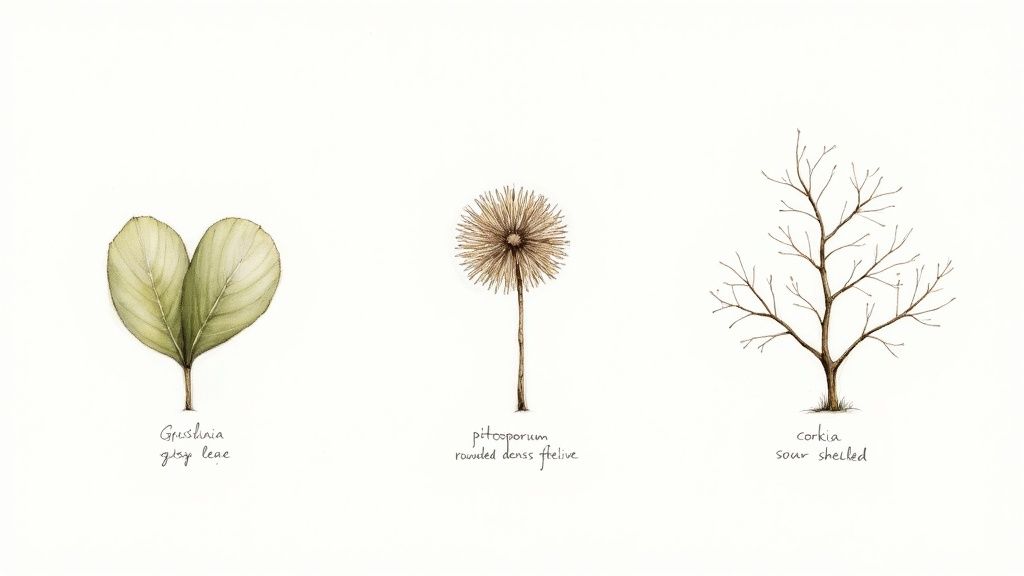
Choosing native plants for your hedge is a brilliant way to create a garden that’s truly at home here in New Zealand. These are the plants that have evolved to thrive in our local climates and soils, which means less fuss for you once they’re settled in. But a native hedge is much more than just a green barrier; it quickly becomes a living ecosystem, offering food and shelter to our local birds and insects.
When you embrace our unique flora, you’re connecting your garden to the wider Kiwi landscape. From the glossy, generous leaves of Kapuka to the delicate foliage of Kōhūhū, native hedges have a character you just won’t find anywhere else. They bring a piece of wild, beautiful Aotearoa right to your back door.
It's no surprise that this focus on local species is getting more popular. As we all become more interested in sustainability, the benefits of using plants that belong here are obvious. In fact, a staggering 80% of New Zealand’s trees, ferns, and flowering plants are endemic—found nowhere else on Earth. You'll often see hardy favourites like Pittosporum, Corokia, Coprosma, and Muehlenbeckia, all perfectly suited to our conditions. If you want to dive deeper, there's a comprehensive IPPS report about NZ native plant production that's full of great info.
Griselinia Littoralis (Kapuka or NZ Broadleaf)
Griselinia littoralis, which most of us know as Kapuka, is an absolute superstar among Kiwi hedge plants. Its lush, apple-green leaves form a dense and vibrant screen that looks incredible all year round. It’s a pretty quick grower too, so you won’t be waiting long for that solid wall of green.
What makes this native so reliable is its tolerance for a whole range of conditions, including salty coastal winds. For a nice, thick hedge, pop them in the ground about 75cm to 1 metre apart. A light trim once or twice a year is all it needs to stay looking sharp and full.
Pittosporum Species (Kōhūhū)
The Pittosporum family is wonderfully versatile, offering a massive range of colours, textures, and sizes. Whether you need a tall privacy screen or a neat little formal border, there’s almost certainly a Pittosporum that’s perfect for the job. Varieties like 'Stephens Island' are incredibly tough and wind-hardy, while something like 'Silver Sheen' gives you a more delicate, shimmering look.
Most Pittosporums are fast-growing and love a spot in full sun with soil that drains well. Their small leaves and dense growth make them a dream to clip into tidy, formal shapes.
By selecting native species for hedging, gardeners are not just planting a boundary; they are actively restoring a small piece of New Zealand's natural heritage, supporting biodiversity one garden at a time.
Corokia Species (Wire-Netting Bush)
If you're after a hedge with a unique, architectural vibe, you can’t go past Corokia. Its wiry, interlocking branches and tiny leaves create a distinctive, almost sculptural look, especially in winter when the structure really stands out. This toughness also makes it a brilliant choice for exposed or windy sites where other plants might struggle.
Corokia is fantastically low-maintenance. You can either clip it into a sharp, formal hedge or just let it grow into its more natural, artistic form. It’s a great way to add some interesting texture to your garden design. For more ideas on using incredible natives, have a look at our guide to creating a beautiful NZ native garden.
A World of Choice: Popular Exotic Hedge Plants
While our native plants connect us beautifully to the Aotearoa landscape, sometimes a garden calls for a different flavour. It's no surprise that many introduced species have become staples in Kiwi gardens – they bring something unique to the party. Exotic hedges can offer colours, textures, and crisp formal lines that are hard to find elsewhere.
Choosing an exotic hedge opens up a much broader design palette. Maybe you’re dreaming of a classic, tightly-clipped European-style garden, or perhaps you want a splash of fiery red to brighten up the winter months. Many of these plants have been bred for centuries specifically for hedging, so they take beautifully to a good trim.
Timeless Classics for Structure and Colour
Some plants have truly earned their spot as Kiwi garden favourites. They're reliable, look fantastic, and fit into almost any garden style you can think of.
-
Buxus (Boxwood): This is the undisputed champion for creating low, formal borders. Buxus has small, dense evergreen leaves and grows slowly, making it perfect for detailed shaping without needing a trim every five minutes. It's the go-to for defining garden beds or creating those intricate, classic knot gardens.
-
Photinia 'Red Robin': Famous for its brilliant crimson new growth, Photinia puts on a stunning seasonal show. It's a fast grower, so it makes a great privacy screen in a hurry. Give it a good prune in spring, and you'll be rewarded with another flush of its signature red leaves, keeping your garden looking fresh and vibrant.
-
Camellias (Sasanqua and Japonica): Want a hedge that does more than just be green? Camellias are an amazing choice. They produce gorgeous flowers from autumn into winter (usually from May through to August here in NZ), bringing a pop of colour when almost everything else is dormant. Their glossy, dark green foliage also creates a lush, elegant screen all year round.
A Glimpse into Our Hedging History
Some of our introduced plants have a long, and frankly complicated, history in New Zealand. They're a living reminder of our horticultural past. Take Gorse (Ulex europaeus), for instance. It was brought over by early English settlers back in the 1800s and, for a time, was one of the country's most important hedge plants.
Despite its invasive reputation now, it actually played a key role in those early days, fixing nitrogen in poor soils and providing dense, spiky shelter for stock. It’s a fascinating story, and you can read more about gorse's surprising role in NZ's history on hedgecutter.co.nz.
By carefully picking well-behaved exotics, you can create specific looks that might be tricky to achieve with natives alone. The trick is to choose responsibly, making sure your chosen plant enhances your garden without becoming a headache for the local environment.
A Side-by-Side Look at NZ's Best Hedging Plants
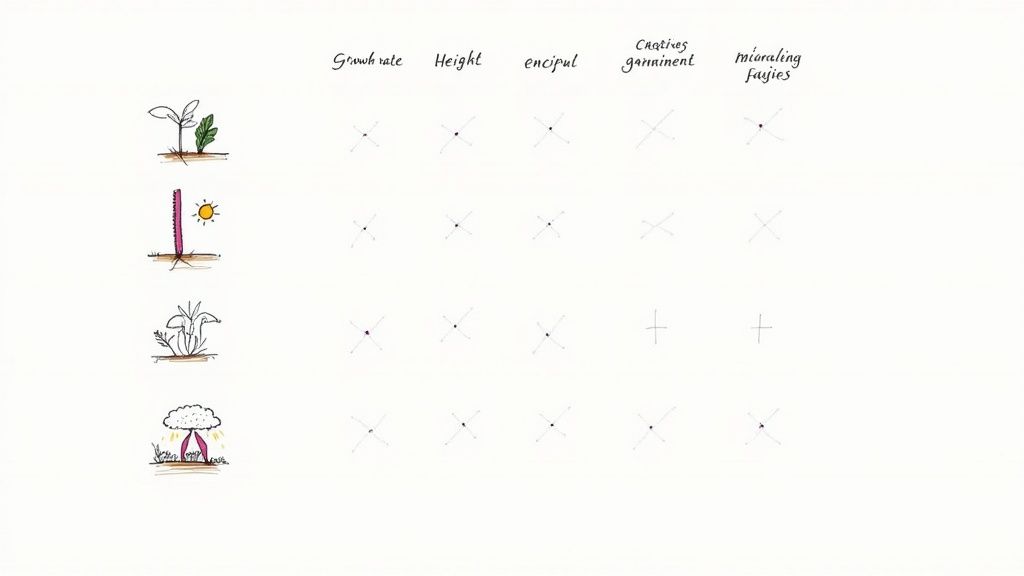
With so many fantastic native and exotic options out there, picking the right one for your garden can feel a bit overwhelming. To cut through the noise, we've laid out a simple comparison of the most popular and reliable hedging plants you'll find across New Zealand.
Think of this as a cheat sheet to help you shortlist the perfect contenders for your spot. By seeing key details like growth rate, ideal height, and sun needs at a glance, you can quickly get a feel for what will work with your property and how much effort you'll need to put in.
NZ Hedge Plant Comparison Guide
This table breaks down the essentials for some of the best good hedge plants NZ gardeners swear by. Whether you need a lightning-fast privacy screen or a slow-growing, formal border, this will point you in the right direction.
| Plant Name | Growth Rate (per year) | Ideal Height | Sunlight Needs | Key Feature |
|---|---|---|---|---|
| Griselinia littoralis | Fast (50cm+) | 2-4m | Full Sun / Part Shade | Lush, apple-green leaves and excellent coastal tolerance. |
| Buxus (Boxwood) | Slow (10-15cm) | 0.5-1.5m | Full Sun / Part Shade | The classic choice for crisp, formal low borders. |
| Pittosporum Tenuifolium | Fast (30-50cm) | 2-5m | Full Sun | Extremely versatile with many varieties for screening. |
| Corokia 'Frosted Chocolate' | Medium (20-30cm) | 1.5-2m | Full Sun | Unique wiry texture and tough, wind-resistant nature. |
| Photinia 'Red Robin' | Fast (30-60cm) | 2-4m | Full Sun | Stunning crimson new growth provides vibrant colour. |
| Camellia sasanqua | Medium (20-30cm) | 2-3m | Part Shade | Beautiful flowers in autumn and winter for seasonal interest. |
| Teucrium fruticans | Medium (30-40cm) | 1-1.5m | Full Sun | Silver-grey foliage is perfect for dry, sunny spots. |
With this table, you can start to imagine which plant best fits into your garden's story. If privacy is a top priority and you want it yesterday, a fast-growing Griselinia or Photinia is a brilliant choice. On the other hand, if you have the patience for precision, the slow, steady growth of Buxus is simply unmatched for creating those elegant, formal lines.
Choosing a hedge plant is like casting a character for a long-running play in your garden. The right choice will perform beautifully for years with just a little direction, while the wrong one might constantly demand attention or never quite fit the role.
Ultimately, the best hedge plant is one that ticks the boxes for your style, your environment, and your lifestyle. This comparison makes that first big decision a whole lot easier, so you can move forward with confidence.
How to Plant and Establish Your New Hedge
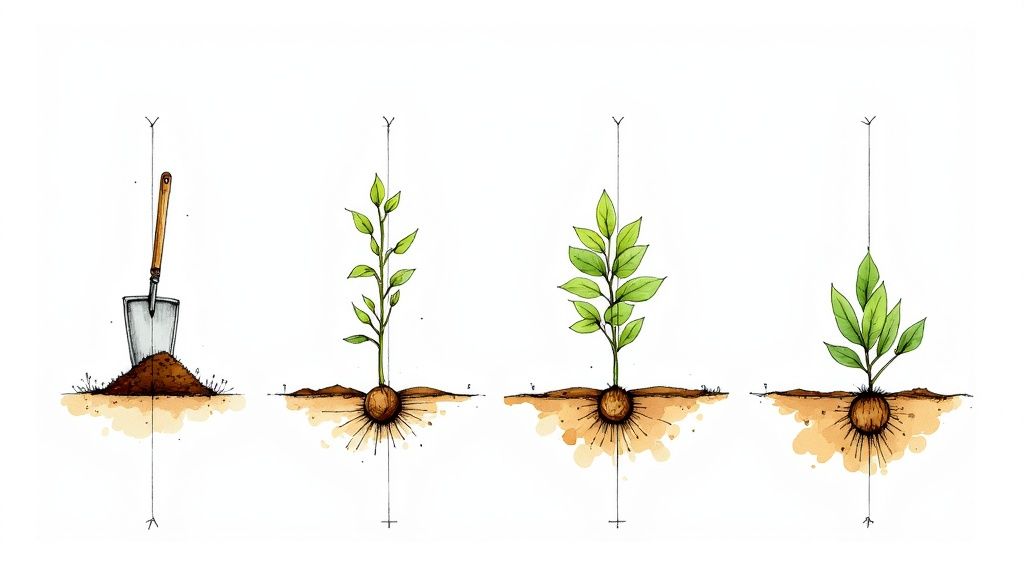
A stunning, healthy hedge doesn’t just pop up out of nowhere. It's the direct result of giving your plants the absolute best start in life. That initial care is what sets the stage for vigorous growth, ensuring you end up with a dense, living wall rather than a sad, patchy fenceline.
Think of it like building a house. You wouldn’t dream of starting without a solid foundation, right? The same principle applies here. A little extra effort right at the beginning will pay you back with years of lush, beautiful growth.
Preparing the Ground for Success
Great soil is the cornerstone of a thriving hedge. Before you even touch a spade, it's vital to get the entire planting area ready, creating a welcoming home for your new plants’ roots to spread out and get comfortable.
Start by clearing a strip at least 60cm wide of all weeds and grass. This gets rid of any competition for precious water and nutrients. Next, give the soil a good dig-over to loosen it up, breaking apart any compacted clumps which will massively improve the drainage.
Now is the perfect time to enrich the soil. Dig in generous amounts of compost or well-rotted manure to boost fertility and give the soil a better structure. This is like packing a lunchbox for your young plants, giving them all the food they need to establish themselves quickly.
Spacing and Planting Your Hedge
Getting the spacing right is the secret to achieving that seamless, dense look we're all after. Plant them too far apart and you'll be left with permanent gaps. Plant them too close, and you risk overcrowding and poor air circulation as the hedge matures, which can lead to problems down the line.
As a general rule of thumb, aim for this:
- For smaller hedges (under 1.5m): Plant about 3 plants per metre.
- For larger screening hedges (over 1.5m): Plant about 2 plants per metre.
When you're ready to plant, dig a hole that is twice as wide and just as deep as the plant’s root ball. Gently tease out any circling roots before placing the plant in the hole, making sure it sits at the same depth it was in its pot. Backfill with your lovely prepared soil, firming it down gently to get rid of any sneaky air pockets.
Take Griselinia littoralis, for instance. It's one of the most popular good hedge plants NZ gardeners choose for its dense foliage. To get a really solid screen with it, you'd space the individual plants about 75cm to 1 metre apart. For more local insights, check out this guide on planting the best NZ hedge plants on archipro.co.nz.
The best time to plant a new hedge in most of New Zealand is autumn. The soil is still warm from summer, but the cooler, wetter weather gives the roots a whole season to get established before the stress of next summer's heat kicks in.
Early Care for a Strong Start
Once your hedge is in the ground, that first bit of care is critical. Give each plant a really thorough watering right after planting to settle the soil and close up any remaining air gaps around the roots.
For the first year, consistent watering is your main job. A deep soaking once or twice a week is far better than a light daily sprinkle. Finally, apply a thick layer of mulch, like bark chip or pea straw, around the base of the plants. This simple step helps keep moisture in the soil, suppresses weeds, and regulates the soil temperature—giving your new hedge everything it needs to flourish.
Mastering Hedge Maintenance and Pruning
A hedge is a living, breathing part of your garden. Just like anything else you grow, it needs a bit of regular attention to stay healthy, dense, and looking sharp. Think of it as an ongoing conversation with your plants – a little care now and then goes a long way in keeping it looking its best and preventing bigger headaches down the track.
This isn't just about giving it a quick trim every now and then. True hedge care is a cycle: pruning to create the shape you want, feeding to fuel that lush, green growth, and keeping a watchful eye out for any pests or diseases trying to move in.
Young vs Mature Hedges: A Different Approach to Pruning
Pruning isn’t a one-size-fits-all job. How you trim your hedge depends entirely on its age, as a young, developing plant has very different needs to a fully established one.
- Formative Pruning: This is what you do for young hedges in their first couple of years. The goal here isn’t about gaining height, it’s all about creating density. By regularly tipping the side shoots, you encourage the plant to branch out and become bushy right from the base. This is the secret to avoiding that gappy, leggy look later on.
- Maintenance Trimming: Once your hedge is established, it's all about maintaining its size and shape. For most hedges, this means a trim once or twice a year, depending on how vigorously it grows. A pro tip is to always keep your hedge slightly wider at the bottom than the top, which allows sunlight to reach the lower branches and keeps it full all the way down.
Your Seasonal Hedge Care Calendar
Knowing when to prune is just as critical as knowing how. Get the timing wrong, and you could stress the plant or accidentally snip off all the buds that would have become flowers.
Here’s a general guide for keeping your hedge happy throughout the New Zealand seasons:
Late Winter to Early Spring: This is the perfect window for a good, solid trim on most evergreen hedges. You get it done just before the big spring growth spurt kicks in. It’s also a great time to give your hedge a feed with a balanced fertiliser to give it the energy it needs for all that new foliage.
Late Summer: Got a fast-grower like a Pittosporum or Griselinia? You’ll likely need to give it a second, lighter trim in late summer. This just keeps it looking tidy and sharp through autumn and into winter.
Pest control is the other piece of the puzzle. Nasty little critters like aphids and scale insects can sometimes be a problem. A great natural way to deal with them is with neem oil. You can learn more about how to use neem oil for plants in your garden to keep those unwanted guests at bay without resorting to harsh chemicals.
A little bit of consistent care is all it takes to ensure your hedge remains a beautiful, thriving feature of your garden for years to come.
Your Top Hedging Questions Answered
Even with the best plan in hand, questions always crop up once you start digging. Let's tackle some of the most common queries we hear from Kiwi gardeners about getting their hedges just right.
What Is the Fastest Growing Hedge in NZ?
If you're after a privacy screen in a hurry, you've got some great options. Griselinia littoralis and some of the faster Pittosporum varieties are real contenders, often shooting up by 50cm a year when they're happy. In just a couple of seasons, you can have a pretty solid green wall. Photinia 'Red Robin' is another speedy favourite, famous for its brilliant red new growth.
How Far Apart Should I Plant My Hedge?
Getting the spacing right from day one is the secret to a thick, uniform hedge. It all comes down to the plant's final size and the look you're going for.
- For smaller, formal hedges (under 1.5m): A good rule of thumb is 3 plants per metre.
- For taller screening hedges (over 1.5m): Give them more room to breathe, planting about 2 plants per metre.
Always double-check the label for your specific plant, though, as every variety is a little different.
I can't stress this enough: correct spacing is the single most important step for creating a solid, gap-free hedge. Planting too close can choke the plants and cause disease, while planting too far apart will leave you with gaps you'll be looking at for years.
Can I Grow a Hedge in a Shady Spot?
You absolutely can, but your choices are a bit more selective. Most of the popular sun-lovers won't perform well, but there are some fantastic shade-tolerant plants. Camellia sasanqua is a brilliant pick for partly shaded spots, and it rewards you with stunning autumn and winter flowers. Some Coprosma species and the classic English Box (Buxus) can also do surprisingly well without a full day of direct sun.
At Jungle Story, we have a huge selection of the best hedge plants NZ gardeners know and love, from hardy natives to beautiful exotics. You can find the perfect match for your garden and get it delivered right to your door by exploring our collection at https://junglestory.co.nz.