
So you’re thinking about bringing some green into your home? Great choice. Finding the right indoor plant often starts with a few tried-and-true favourites, like the bulletproof Snake Plant, the easy-going Pothos, or the classic Peace Lily. These guys are popular for a reason—they tend to do well in all sorts of Kiwi homes, which makes them a fantastic place to start.
What Makes an Indoor Plant Good for Your Home
Picking a houseplant is a bit like choosing a new flatmate. You want one that fits your lifestyle, doesn't need constant babysitting, and brings a bit of personality and colour to the space. A truly 'good' indoor plant isn't just about pretty leaves; it's about finding a green companion that actually suits your home and how you live in it.
The best indoor plants are, above all, adaptable. They can roll with the punches of a typical Kiwi home—from a sunny spot by the window in summer to the dry air blasted out by a heat pump between June and August. This resilience is really the key to a happy plant-parent relationship.
Core Traits of a Great Houseplant
What separates a plant that just hangs on for dear life from one that’s truly thriving? It all boils down to a few key things that make them a natural fit for life indoors. A plant that’s right for your place will usually have these traits:
- Adaptable to Light: It can happily soak up whatever light you’ve got, whether that's a bright, indirect spot in a north-facing room or the dimmer corners of a hallway.
- Tolerant of Household Conditions: It’s not a drama queen about humidity and can handle the temperature swings that happen in our homes.
- Low Maintenance Needs: It’s forgiving if you forget to water it now and then and doesn’t need a complicated care routine to look its best.
Getting this right is a game-changer, especially for new plant owners. Instead of just grabbing a plant and hoping for the best, the real secret is to figure out your home’s environment first. With so many of us living in apartments and townhouses, we're getting creative with our indoor green spaces. It's not just about looks anymore; it's about choosing plants that genuinely improve our homes.
Here's a simple way to think about it: a good indoor houseplant is one whose natural habitat is pretty similar to the conditions inside your home. When you match the plant to your environment, you're setting it up for success right from the get-go.
When you choose wisely, you spend less time stressing and more time just enjoying the calm, green vibes. If you’re looking for a few ideas to get started, we've put together a list of some of the greatest indoor houseplants you can find.
Matching a Plant to Your Home Environment
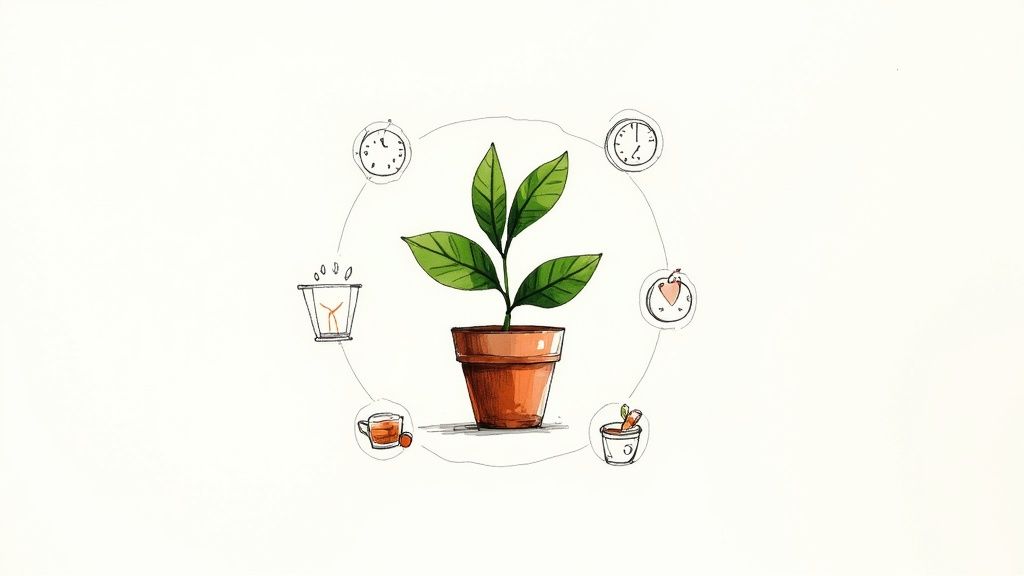
The secret to a thriving jungle of indoor plants isn't some mythical ‘green thumb’—it's actually about playing detective in your own home. The best good indoor house plants are simply the ones that are already a great fit for the environment you have. Instead of forcing a plant to adapt, you get to choose one that will love your space from day one.
Becoming a 'home environment detective' just means learning to see your rooms from a plant's perspective. It’s all about observing the light, temperature, and humidity. Once you get a feel for these things, you can pick plants that are destined to flourish, not just survive.
Reading Your Home's Light
Light is everything to a plant; it's their main food source. But not all light is created equal, and figuring out the difference is the first major step.
-
Direct Sunlight: This is the intense, unfiltered stuff. Think of the sun's rays hitting a plant without anything in the way. It’s like a full-on summer barbeque—perfect for some sun-loving succulents, but it will quickly scorch the leaves of most indoor plants.
-
Bright, Indirect Light: This is the sweet spot for a huge number of popular houseplants. Imagine a room that’s bright enough to read in all day, but where the sun itself isn't directly touching the leaves. It's gentle, consistent, and provides plenty of energy without the burn.
-
Low Light: This is what you find in spots far from a window, in hallways, or rooms with small, south-facing windows. It’s not ‘no light’—every plant needs some—but it’s more of a soft, ambient glow.
To get a handle on your light, just spend a day watching how the sun moves through your rooms. Take note of which spots get hit with direct rays and for how long. The bright areas just out of the sun's reach are your prime real estate for a massive variety of good indoor house plants.
Understanding Your Home's Microclimates
Every Kiwi home is full of microclimates—little pockets with their own distinct conditions. That draughty old villa window creates a cooler, breezier spot than the rest of the room. The corner with the heat pump can become a desert of dry air, especially during our winter months from June to August.
A steamy bathroom after a hot shower creates a temporary tropical paradise, which is absolutely perfect for humidity-loving ferns. On the other hand, a spot near a door that’s always opening and closing can cause stressful temperature swings that more delicate plants just can't stand.
Once you start noticing these unique zones, you can place your plants with total precision. That beautiful Calathea that needs high humidity? It’ll think it's on a tropical holiday in the bathroom. The tough, drought-tolerant Snake Plant? It won’t even flinch at the drier air near the living room heater. Mapping these spots transforms plant care from a game of chance into a successful strategy.
The Most Forgiving Plants for Beginners
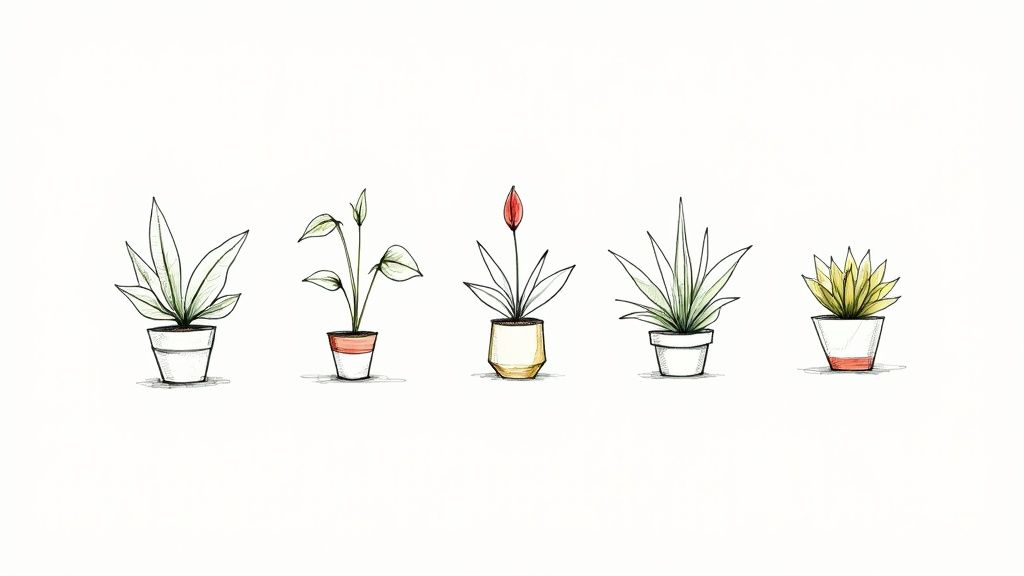
Starting your journey into indoor gardening is incredibly exciting, but let’s be honest—the fear of accidentally killing your first green friend can be a bit daunting. Forget the myth of the 'green thumb'; the real secret is simply choosing a plant that's tough enough to handle a few learning mistakes along the way. These are the champions of resilience, the kinds of good indoor house plants that almost seem to thrive on a little bit of neglect.
This interest in houseplants has truly blossomed across the country. A 2022 survey of over 860 Kiwi plant enthusiasts revealed that more than 70% had expanded their plant collections in the previous six months. And with 76% of people still buying their plants from physical stores, it’s clear that bringing home a new green companion is an experience we still love.
The Near-Invincible Snake Plant (Dracaena trifasciata)
The Snake Plant, also known as Mother-in-Law's Tongue, is the undisputed king of easy-care plants. Its striking, architectural leaves aren’t just for looks—they’ve evolved to store water efficiently, which is why it can easily handle infrequent watering. In fact, it actually prefers its soil to dry out completely between drinks.
It’s also incredibly versatile when it comes to light. While it appreciates bright, indirect sun, it will happily tolerate the lower light of a hallway or a bedroom corner without a single complaint. This amazing adaptability makes it one of the most forgiving plants you can possibly find.
The Drought-Tolerant ZZ Plant (Zamioculcas zamiifolia)
Think of the ZZ Plant as the camel of the plant world. It has large, water-storing rhizomes (they look a bit like little potatoes underground) that allow it to survive long periods of drought. This makes it the perfect match for busy people or anyone who travels often.
Its built-in survival mechanism means the biggest mistake you can make is overwatering. During New Zealand's cooler, damper winter months from June to August, you might only need to water it once a month as its growth slows right down.
The ZZ Plant’s glossy, dark green leaves bring a touch of style to any setting, and it asks for very little in return. It’s also not fussy about its spot, thriving in anything from low light to bright, indirect sunlight.
The Fast-Growing Pothos (Epipremnum aureum)
If you're after a plant that gives you rewarding visual feedback, Pothos is your go-to. Its beautiful, heart-shaped leaves grow on trailing vines that can quickly create that lush, jungle vibe you're dreaming of. It's also a fantastic communicator; its leaves will visibly droop when it's thirsty and perk right back up almost immediately after a good drink.
Pothos is another star performer in various light conditions, and its tolerance for both forgetful watering and less-than-ideal light makes it one of the very best starter plants out there. For anyone keen to explore more options, our guide to low-maintenance indoor plants in NZ has plenty more great suggestions.
Thriving Plants for Low-Light Spaces
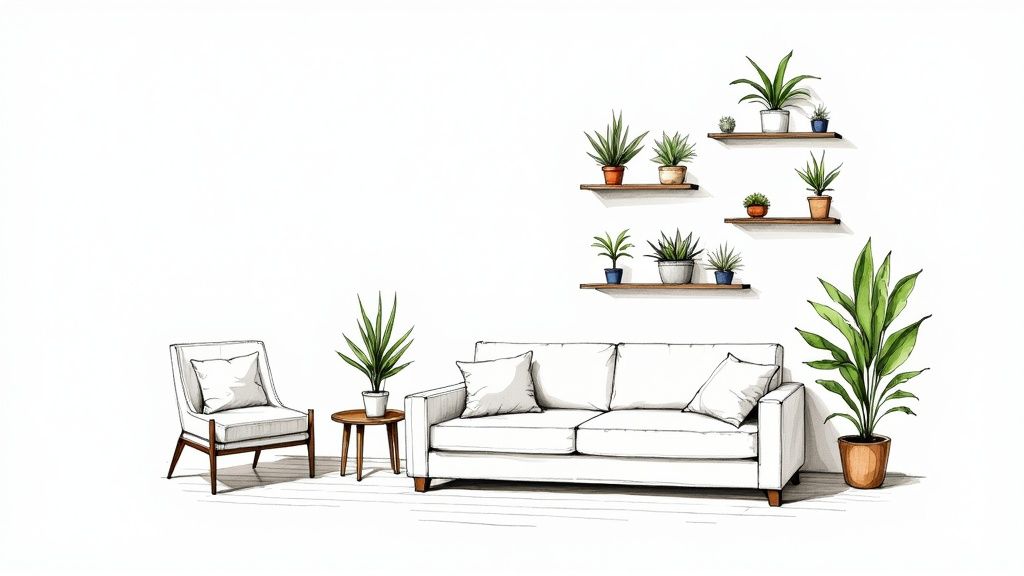
Not every room in a New Zealand home is swimming in sunshine, and that’s perfectly okay. In fact, some of the most beautiful and good indoor house plants actually do better away from the harsh glare, preferring a gentler, more filtered light. This opens up a whole world of green possibilities for those often-forgotten corners of your home.
It’s a common myth that ‘low-light’ means ‘no-light’, but let’s get that straight: no plant can survive in a pitch-black cupboard. What these plants are masters at is thriving on minimal, indirect light. Think of a room with a south-facing window, a dim hallway that catches ambient light, or a bathroom with a small, frosted window.
These plants have simply adapted to life on the forest floor, under the canopy of much larger trees, so direct sun is often far too intense for their delicate leaves.
Top Choices for Dimmer Corners
When you’re looking to bring some life to a shady spot, a few tried-and-true heroes always come to mind. They’re famous for their ability to keep their rich colour and stay healthy without needing a front-row seat at the window.
-
Peace Lily (Spathiphyllum): With its elegant, deep green leaves and iconic white flowers (which are actually a spathe!), the Peace Lily is a classic for a reason. It’s not just stunning; it also gives you a clear signal when it’s thirsty by dramatically drooping its leaves, making it wonderfully easy to look after.
-
Cast Iron Plant (Aspidistra elatior): This one really does live up to its name. It’s almost indestructible and can tolerate low light, forgetting to water it now and then, and even fluctuating temperatures. It’s the ultimate set-and-forget green companion.
These two are perfect for finally adding that touch of nature to spaces you might have thought were off-limits for plants.
Think of low-light plants as the introverts of the plant world. They don't need to be the centre of attention in a bright, sunny spot. Instead, they thrive quietly in the calm, ambient light of a cosy corner, adding depth and life without any fuss.
Perfect Placements for Low-Light Plants
So, where exactly are the best spots for these shade-lovers? The trick is to find areas that get consistent ambient light but are protected from any direct sunbeams. A hallway that borrows light from other rooms is an ideal spot, as is a home office tucked away from a window.
Even a bedroom on the south side of your house can be the perfect home for a Cast Iron Plant or a Peace Lily. By matching the right plant to the right spot, you can make sure every part of your home feels green and full of life, proving you don’t need a sun-drenched conservatory to grow a beautiful indoor garden.
Plants That Boost Wellbeing and Purify Air
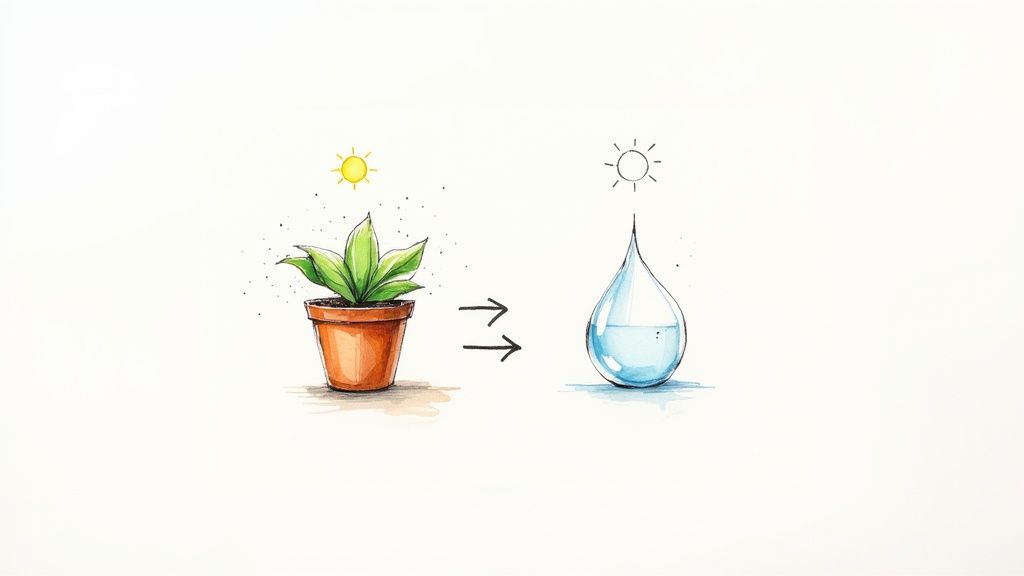
Choosing a good indoor house plant is about so much more than just decorating a room; it’s about bringing a little piece of nature inside to genuinely improve your home and your health. Indoor plants are like quiet companions, working alongside you to create a more peaceful, healthy sanctuary.
There's something incredibly calming about the simple ritual of checking the soil, giving a plant a drink, or gently wiping dust from a leaf. It’s a small, mindful practice that can really ground you and reconnect you with the natural world.
This connection isn't just a feeling—it’s something many Kiwis have embraced. Interest in houseplants absolutely boomed in New Zealand during and after the pandemic, with people falling in love with their good looks and calming presence. As you can read over on The Spinoff, these Kiwi plant communities have really grown, with many owners saying their plants help them build positive habits and create lovely sensory experiences.
Natural Air Filters for Your Home
One of the biggest perks of having houseplants is their incredible ability to act as natural air purifiers. You can think of them as living, breathing filters that work around the clock, quietly scrubbing the air you breathe every single day.
A surprising number of everyday household items—from our furniture and cleaning sprays to paints and carpets—can release tiny airborne nasties called Volatile Organic Compounds (VOCs). The good news is that certain plants have been shown to absorb these compounds through their leaves and root systems, effectively pulling them out of your indoor environment.
It's a bit like having a silent, green-powered air purifier in every room. While you enjoy their beauty, these plants are diligently working to make your home's atmosphere cleaner and healthier for you and your family.
Top Air-Purifying Plant Choices
While almost any plant will improve your air quality to some degree, a few are real superstars in this department. These are fantastic choices if you want to get the most bang for your buck, combining stunning looks with powerful, natural filtering.
-
Spider Plant (Chlorophytum comosum): This one is a true champion of air purification. It's famous for its knack for removing common household toxins like formaldehyde and xylene. Its graceful, arching leaves and ability to produce little baby "spiderettes" also make it a fun, engaging plant that’s super easy to propagate.
-
English Ivy (Hedera helix): A timeless trailing plant, English Ivy is especially good at filtering airborne faecal particles. This makes it a brilliant choice for improving the air in or near bathrooms. It’s also known to help reduce mould levels in the home.
-
Peace Lily (Spathiphyllum): Not only does the elegant Peace Lily handle lower light levels like a champ, but it's also a powerhouse at removing ammonia, benzene, formaldehyde, and trichloroethylene. Its beautiful white spathes, which look like flowers and appear in spring and summer, are a lovely bonus.
By bringing these kinds of plants into your home, you’re doing far more than just styling your space—you’re actively creating a healthier environment. It's a holistic approach that connects the simple joy of caring for something green with the real-world benefits of cleaner air and a calmer mind, turning your home into a true retreat for your wellbeing.
Your Essential Indoor Plant Care Guide
Bringing a plant home is just the beginning. To keep your new green mate happy, you need to get the basics right. Think of it less like a list of chores and more like a simple, satisfying routine that helps your plant settle in and look its best.
The good news? Most indoor plants are pretty straightforward once you understand three key things: watering, feeding, and dealing with pests. Get these down, and you’ll have the confidence to create the lush indoor jungle you've always wanted.
The Art of Watering Correctly
The most common mistake we see is overwatering. It comes from a good place, but it can literally drown a plant's roots. The best way to avoid this is to ditch the strict schedule and start checking the soil first.
It's a bit like testing a cake. Just poke your finger about 5 cm deep into the potting mix. If it comes out dry with no soil sticking to it, it's time for a drink. If your finger comes out with moist soil attached, your plant is all good for now—check it again in a few days.
Feeding Your Plants Through the Kiwi Seasons
Like us, plants get hungry, especially when they're busy growing. For most houseplants here in New Zealand, that active growth spurt lines up with our spring and summer, roughly from September through to February.
During these warmer, brighter months, a regular feed gives them the fuel they need to push out new leaves. As we head into the cooler, darker days of autumn and winter, their growth naturally slows down. This is their rest period, so you can ease off the feeding, or stop completely, until spring kicks things off again.
Think of it like a seasonal vitamin boost. You’re giving your plant extra energy when it’s working hard in the sun, and letting it conserve that energy when the days are short and cool.
For a deeper dive, learning about the right indoor plant fertilizer can make a huge difference in keeping your plants nourished all year round.
Managing Common Houseplant Pests
Even the cleanest homes can sometimes get tiny, unwanted visitors. Spotting pests early is the secret to managing them before they become a real headache. Two of the most common culprits you might come across are mealybugs and fungus gnats.
- Mealybugs: These look like little bits of white fluff, often tucked away where the leaves join the stem. The easiest fix is to dip a cotton bud in rubbing alcohol and dab them directly. Simple and effective.
- Fungus Gnats: These are those annoying little black flies that buzz around the top of the soil. They love damp conditions, so your first line of defence is to let the top layer of soil dry out properly between waterings.
Keeping a close eye on your plants and acting fast at the first sign of trouble will keep these small issues from turning into big problems. It’s the final piece of the puzzle for maintaining a thriving indoor garden.
Common Questions About Indoor Plants
Even the greenest thumbs have questions, especially when getting to know a new plant. Think of this as your go-to guide for those little puzzles that often crop up for plant parents in New Zealand. Getting these details right from the start can make a world of difference to your plant's health.
Answering these common queries is a great way to build your confidence. Before you know it, you'll be reading your plant's signals and troubleshooting like a pro.
What Does Overwatering Really Mean?
Overwatering is probably the number one reason houseplants don't make it, but it's a bit of a misunderstood term. It's not about giving the plant too much water at once; it's about watering too frequently and never letting the soil have a chance to dry out.
When the soil stays waterlogged, it suffocates the roots by cutting off their oxygen supply. Without oxygen, roots can't do their job and they start to rot—and unfortunately, there's often no coming back from that. The golden rule is to always check the soil moisture before reaching for the watering can.
How Do I Know When to Repot My Plant?
Most good indoor house plants are quite content being a little snug in their pots. That said, they'll give you a few clear signs when it’s time to upgrade to a roomier home:
- You can see roots poking out of the drainage holes at the bottom.
- Water seems to run straight through the pot without soaking in, a sign there’s more root than soil left.
- The plant's growth has completely stopped during the growing season (spring and summer).
- It's becoming top-heavy and tends to tip over easily.
In New Zealand, the best time to repot is during spring (September to November). This is when your plant is kicking into its active growth phase, giving it plenty of energy to recover and settle into its new home with minimal stress.
Do I Need a Pot with a Drainage Hole?
Yes, absolutely. For nearly every indoor plant, this is a non-negotiable. A pot without drainage is a one-way ticket to root rot because any excess water gets trapped at the bottom, creating a swampy environment that will drown the roots.
If you’ve found a beautiful decorative pot that doesn't have a hole, don't despair! You can use it as a 'cachepot'. Just keep your plant in its plastic nursery pot and pop that inside the decorative one. When it's time to water, lift the inner pot out, give it a good soak, let it drain completely, and then place it back inside.
Ready to start your own indoor jungle? At Jungle Story, we connect you with New Zealand's best growers, offering everything from forgiving beginner plants to rare collector's items. Find your perfect green companion today at https://junglestory.co.nz.