
For Kiwis looking to really lift the atmosphere at home, the best hanging plants are the ones that are as practical as they are stylish. We’re talking about troopers like the resilient Pothos or the absolutely stunning String of Pearls. These guys thrive in New Zealand's temperate climate, giving you a perfect splash of green without eating up precious floor space.
Bringing Greenery Upwards in Kiwi Homes
In homes all across New Zealand, from tiny Auckland apartments to those classic Wellington townhouses, something green is happening. People are catching on to the magic of vertical gardening, lifting their plants off the floor and creating living, breathing displays that naturally draw your eyes up. This isn't just a flash-in-the-pan trend; it's a clever, beautiful response to the way we live now.
Think of this guide as your complete roadmap to mastering the art of the hanging plant, Kiwi-style. We'll get into everything you need to know to create your own thriving aerial garden, whether you're a total beginner or a seasoned green thumb.
Why Hanging Plants Are Perfect for New Zealand Homes
The love for hanging plants is about much more than just good looks. They’re a seriously practical solution for modern living, especially in our cities where every square metre counts. You can see this shift happening in the numbers, too.
The Garden Supplies Retailing industry here in New Zealand, which covers plant sales, has seen a steady growth rate of 4.5% a year between 2020 and 2025. It’s clear that as our homes get a bit smaller, Kiwis are still hungry for nature. Hanging plants have become a go-to because they deliver all the leafy goodness without taking up any floor real estate.
By deciding to go vertical, you can:
- Maximise Your Space: Instantly free up floors, shelves, and benchtops. It’s amazing how much bigger and less cluttered a small room can feel.
- Create Visual Interest: Add layers and depth to your decor. That empty corner or blank wall suddenly becomes a captivating feature.
- Improve Well-being: There's no denying it—being surrounded by nature is good for the soul. It’s known to reduce stress and lift your mood, making your home feel calmer and more restorative.
A Journey into Vertical Gardening
Consider this guide your personal coach for creating a knockout hanging garden. We'll walk through all the essentials, tailored specifically for our unique New Zealand conditions. You’ll learn how to pick the right plants for our climate, get the hang of seasonal care that works with our Southern Hemisphere seasons, and find creative ways to show off your plants.
To carry that calming, natural vibe through your whole home, have a look at these nature-themed bedroom ideas, where hanging plants often play a starring role.
Whether you’re a complete novice excited to hang your very first plant or a long-time enthusiast ready to grow your collection, our goal is to give you the confidence and know-how to make it happen. Let’s get started.
Choosing the Right Hanging Plants for Your Home
Picking the perfect plant is a lot like matchmaking. It’s all about understanding your home's unique personality—its sunny spots and shady corners—and finding a plant that will love living there as much as you do. This section is your guide to the best hanging plants for Kiwi homes, so you can choose a leafy companion that doesn’t just hang on, but truly comes alive.
We’ll dive into the best options for those sun-drenched windowsills and the resilient troopers that thrive in lower-light areas. We've also got hardy trailers for blustery balconies and some gorgeous native NZ plants that look stunning in a hanging basket. Each recommendation comes with a quick profile, giving you the confidence to pick a winner.
To make things even easier, here's a quick-reference table to help you compare some of our top picks at a glance.
Top Hanging Plants for New Zealand Homes
| Plant Name | Ideal Light | Watering Needs | Best Location (Indoor/Outdoor) |
|---|---|---|---|
| String of Pearls | Bright, direct sun | Infrequent; allow soil to dry out completely | Indoor |
| Pothos (Devil's Ivy) | Low to bright, indirect light | Moderate; allow top soil to dry | Indoor |
| Heartleaf Philodendron | Low to bright, indirect light | Moderate; keep soil consistently moist | Indoor |
| Spider Plant | Bright, indirect light | Moderate; allow top soil to dry | Indoor |
| Muehlenbeckia | Full sun to partial shade | Regular, keep soil moist but not soggy | Outdoor / Indoor |
| Trailing Geranium | Full sun | Regular; allow soil to dry between waterings | Outdoor |
This table is just a starting point, of course. Let's get into the details of what makes each of these plants special.
For Sun-Drenched Spots
Got a window that gets blasted with sun? Perfect. That’s prime real estate for some spectacular sun-worshippers who will reward you with explosive growth when given the light they crave.
- String of Pearls (Curio rowleyanus): An absolute icon. Its cascading strands of perfect, pea-like leaves are a real showstopper in a sunny spot. Just be careful not to overwater it, especially during our cooler, damp Kiwi winters (June - August) when it needs to dry out.
- Hoya (Wax Plant): Hoyas are brilliant trailers with thick, waxy leaves and incredible clusters of star-shaped, fragrant flowers. They thrive in bright, indirect light and don't mind a bit of direct morning sun.
- Rhipsalis (Mistletoe Cactus): Think of this as a jungle cactus. It loves bright light, but not the harsh, scorching afternoon sun. Its fascinating, spindly stems create a really unique, modern silhouette.
For Those Lower-Light Corners
Not every room is a sun trap, and that’s totally fine. It doesn't mean you have to give up on your plant dreams. Many hanging plants have evolved to thrive in the dappled light of a forest floor, making them perfect for those spots a bit further from the window.
The secret to success in dimmer spaces is to work with the light, not against it. Instead of trying to force a sun-lover to adapt, just pick a plant that naturally prefers the shade. This one shift in thinking makes plant care so much easier and more rewarding.
These hardy plants are famous for their resilience and their ability to bring a splash of green to even the gloomiest corners of your home.
- Pothos (Epipremnum aureum): Often called Devil's Ivy, this is probably the most forgiving hanging plant on the planet. Its heart-shaped leaves, often splashed with yellow or white, will happily trail down in almost any light you give them.
- Heartleaf Philodendron (Philodendron hederaceum): Very similar to Pothos in looks and easy-going nature, this is another foolproof choice for beginners. Its lush, deep green leaves create that classic, deep-jungle vibe.
- Spider Plant (Chlorophytum comosum): Famous for its arching leaves and the little baby "spiderettes" that dangle down, the Spider Plant is incredibly simple to care for. It's also a fantastic air purifier.
Embracing Native New Zealand Flora
While it's easy to fall for tropical beauties from overseas, there's something special about bringing our own unique flora indoors. New Zealand's isolation means around 85% of our seed plants are found nowhere else on Earth. Using natives in your hanging baskets not only looks incredible but also helps support local ecosystems. If you're keen to learn more, the New Zealand Plant Conservation Network has some fantastic resources.
- Muehlenbeckia axillaris (Pōhuehue): Also known as Creeping Wire Vine, this tough-as-nails native forms a dense, tangled mat of fine, wiry stems and tiny round leaves. It's incredibly resilient and looks amazing spilling over the sides of a basket.
- Renga Renga Lily (Arthropodium cirratum): While you often see it as a ground cover, its broad, lush leaves create a gorgeous cascading effect in a large, sheltered outdoor hanging basket.
Hardy Choices for Outdoor Balconies
Kiwi weather can throw a bit of everything at us, so outdoor hanging plants need to be pretty tough. These options can handle a bit of wind and changing temperatures, making them perfect for your balcony, deck, or patio.
- Trailing Geraniums (Pelargonium peltatum): A classic for good reason. They provide a non-stop explosion of colour from spring right through to autumn. They love the sun and are fairly drought-tolerant once they get settled in.
- Lysimachia (Creeping Jenny): With its almost electric chartreuse leaves, Lysimachia creates a stunning waterfall of colour that will brighten any space. It’s a vigorous grower that’s happy in both sun and partial shade.
Mastering Seasonal Plant Care in New Zealand
Looking after hanging plants in New Zealand is more than just a splash of water here and a bit of sun there; it’s about getting in sync with our unique Southern Hemisphere seasons. A plant’s needs can change dramatically, from the long, sun-drenched days of a Hawke's Bay summer to the crisp, frosty mornings of a Southland winter. Nailing this seasonal rhythm is the secret to a thriving hanging garden, all year round.
Think of the year as a cycle of growth, rest, and getting ready for what's next. When you align your care routine with what’s happening outside your window, you’re giving your plants exactly what they need, right when they need it. This NZ-specific advice will keep your hanging beauties happy and healthy through every season.
Spring Revival (September to November)
As the days get longer and a bit of warmth returns to the soil, your plants are stirring from their winter slumber. Spring in New Zealand is all about explosive new growth, making it the perfect time to give your hanging plants a fresh start and the energy they need to really take off.
This is the best time for repotting. If you're seeing roots sneaking out of the drainage holes or the soil is drying out in a flash, that’s your plant telling you it needs a bigger home. Just be sure to choose a pot only 2-3 cm wider than the old one – too much space can lead to soggy soil and unhappy roots.
Spring is also feeding time. After a slow winter, your plants are hungry.
- Fertilising: Start them on a balanced liquid fertiliser every two to four weeks. It’s like a power-up, giving them all the nutrients needed for strong new leaves and stems.
- Pruning: Get in there and snip off any yellow or dead leaves left over from winter. A good trim encourages the plant to grow bushier and fuller, focusing its energy on healthy new growth.
- Watering: You’ll notice you need to water more often as the temperature climbs and growth speeds up. Just poke a finger into the soil every few days to check it's not getting completely parched.
Summer Care (December to February)
A proper Kiwi summer means long days, intense sun, and sometimes scorching heat. For your hanging plants, this can be a pretty stressful time if you're not on top of your game. The main goals are simple: keep them hydrated and protect them from getting frazzled.
Water is everything during these hot months. Plants in hanging baskets dry out way faster than those in regular pots because the air hits them from all sides. You might find yourself watering every other day, or even daily during a real heatwave. Always check the top few centimetres of soil first; if it’s dry, it’s time for a good drink.
Heat stress is a real danger, especially for plants hanging near a north-facing window. Keep an eye out for tell-tale signs like wilting, drooping leaves, or crispy brown edges. If you see this, shift the plant to a cooler spot with less direct sun until it bounces back.
For more tips on keeping your indoor plants happy year-round, our comprehensive indoor plant care guide has you covered with detailed advice on light, water, and humidity.
Autumn Preparation (March to May)
As the air gets a bit cooler and the light softens, your plants naturally start to slow down, getting ready for the colder months. Your care routine needs to follow suit, shifting from encouraging growth to helping them wind down for their rest period.
Now's the time to slowly ease up on watering and feeding. With shorter, cooler days, your plants just don’t use as much water or need as many nutrients. A common mistake is overwatering in autumn, which can quickly lead to root rot. Let the soil dry out a bit more between waterings and cut back fertilising to once a month, stopping altogether by the end of May.
Winter Maintenance (June to August)
Winter is downtime for most hanging plants in NZ. Growth will slow to a crawl, and your job is mainly to protect them from the cold and help them make the most of the low light. Move any delicate plants away from draughty windows or doors, as those sudden cold snaps can do real damage.
You’ll want to cut back on watering significantly. The soil stays damp for much longer in winter, so you might only need to water every few weeks. The golden rule is to always check the soil moisture before you even think about grabbing the watering can. One last tip: give the leaves a gentle wipe with a damp cloth every now and then. It removes dust and helps them soak up every last ray of that precious winter light.
Hanging and Styling Your Plants with Confidence
A gorgeous hanging plant is one thing, but how you display it is what really turns it from a simple pot plant into a piece of living art. When you move beyond the basic hook-in-the-ceiling, you start to showcase your greenery like a pro. This is all about choosing the right hardware, installing it safely, and styling your plants to really sing with your home’s unique character.
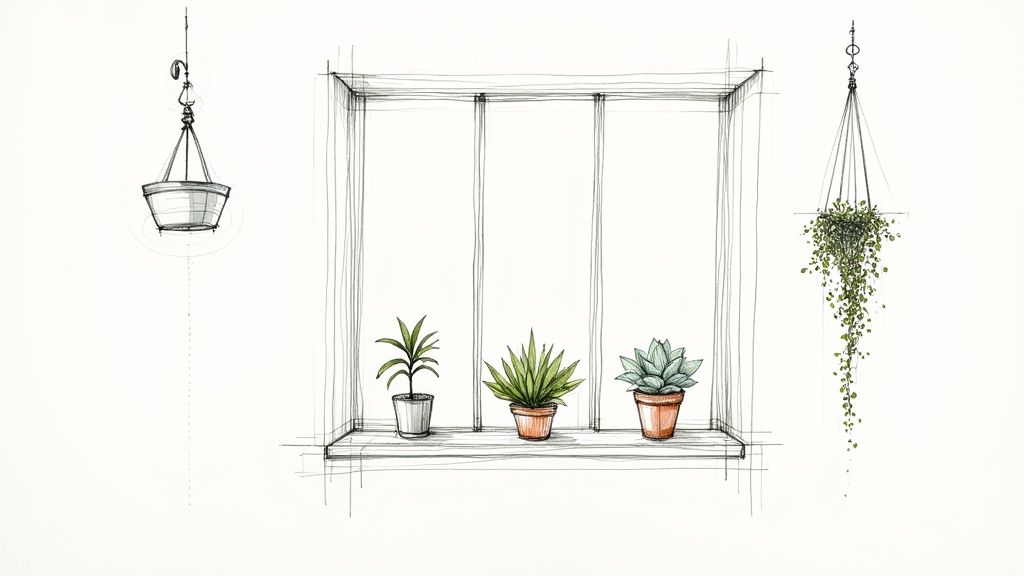
From classic ceramic pots to bohemian macrame hangers, the possibilities are pretty much endless. Let's get into how to hang and style your plants with confidence, turning any corner of your Kiwi home into a stunning green feature.
Choosing the Right Hardware and Ensuring Safety
Before you can get to the fun part of styling, you need to hang your plants securely. The hardware you pick is the foundation of your display, so it’s something you absolutely have to get right. What you’ll need really comes down to the weight of your plant and the surface you’re hanging it from.
Drilling into a plasterboard ceiling or wall? A standard screw just won’t cut it. You'll need a specialised fitting like a toggle bolt or a plasterboard anchor. These are designed to spread the weight and stop the hook from ripping a hole in your GIB. For solid wood beams or studs, a sturdy screw-in hook will usually do the trick just fine.
A critical safety check: always know the weight of your fully watered plant. Soil gets surprisingly heavy when it's wet, and this is the maximum load your hardware will ever have to support. It’s always better to go for hardware rated for a slightly heavier weight than you think you need—better safe than sorry!
A few reliable options that work well in most NZ homes include:
- Ceiling Hooks: These are brilliant for creating a central feature or hanging plants in a window. Just make sure you screw them directly into a ceiling joist for maximum support. A stud finder will be your best friend here!
- Wall Brackets: Perfect for framing doorways, windows, or a piece of art. They add a classic, elegant touch and can usually support heavier pots without any trouble.
- Tension Rods: A fantastic, damage-free option, especially if you’re renting. You can wedge a tension rod inside a window frame or an alcove and hang lightweight plants from it using simple S-hooks.
Creating Stunning Visual Arrangements
Okay, once your hardware is safely installed, the real fun begins. Styling is all about creating a sense of balance, texture, and visual interest. Instead of just hanging one lonely plant, start thinking like a designer and create dynamic arrangements that really draw the eye.
A simple but incredibly effective technique is to play with height. Grouping three plants together at varying levels creates an instant focal point. You can easily do this by using hangers of different lengths or just by adjusting the chains on your pots. This method works beautifully in an empty corner, transforming it into a lush, multi-layered green space.
Another powerful approach is to use your plants to frame a view. Placing hanging plants on either side of a window draws attention to the natural light and the garden outside, beautifully connecting your indoor space with the outdoors.
Matching Pots and Hangers to Your Decor
The pot and hanger you choose are just as important as the plant itself. Think of them as the outfit. They should complement your home’s aesthetic, tying your greenery into your overall decor.
- For a Modern Look: Go for sleek, minimalist ceramic or metal pots in neutral colours like white, black, or grey. Simple leather or unadorned metal hangers really enhance this clean aesthetic.
- For a Bohemian Vibe: This is where you can embrace natural textures. Think macrame hangers, woven baskets, and terracotta pots—they’re perfect for creating a relaxed, earthy feel.
- For a Classic Style: You really can't go wrong with elegant ceramic pots that have subtle patterns or glazes, paired with simple chain or rope hangers.
By thoughtfully picking your plants, hardware, and styling arrangements, you can create a display that’s both beautiful and completely secure. For a bit more inspiration, explore our guide to the best hanging baskets NZ has on offer, where we cover a whole range of materials and styles to suit any home.
Solving Common Hanging Plant Problems
Even the most dedicated plant parent runs into a hiccup now and then. A yellowing leaf here, a weird spot there—it’s all part of the journey. The good news is your hanging plants are fantastic communicators; you just have to learn their language. Think of this section as your troubleshooting guide to help you figure out what they’re saying and get them thriving again.
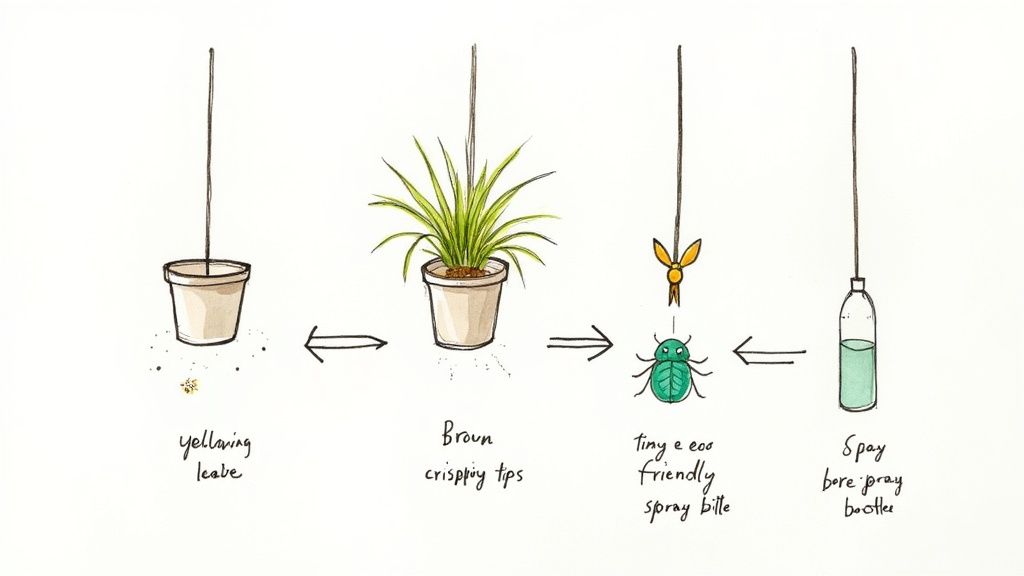
We'll work through this by looking at the symptoms first. By spotting what’s wrong, you can quickly get to the root of the problem and apply the right fix, bringing your leafy mates back to their vibrant best.
Decoding Yellow Leaves
Yellow leaves are probably the most common S.O.S. signal from a plant, but they can mean a few different things. The trick is to look at how they’re yellowing and think back on your recent care routine.
Overwatering is the number one culprit. If the soil feels constantly damp and the lower leaves are turning yellow and soft before dropping off, you’re probably being a bit too generous with the watering can. The roots simply can't breathe in waterlogged soil, which leads to rot.
On the flip side, underwatering can also cause yellowing. When this is the problem, the leaves will often feel dry and crispy, and the whole plant might look a bit sad and wilted. The soil itself will be bone-dry, sometimes even pulling away from the edges of the pot.
The Watering Rule of Thumb: Before you even think about watering, check the soil. Push your finger about 2-3 cm deep. If it feels damp, hold off for another day or two. If it’s dry, it’s time for a good drink.
Dealing with Pests in NZ
Finding tiny webs, sticky spots, or unwelcome critters on your plants can feel a bit gut-wrenching, but most common pests are totally manageable with eco-friendly solutions readily available here in New Zealand. The key is to catch them early.
- Spider Mites: These tiny arachnids create fine, delicate webbing, usually tucked away on the undersides of leaves. They absolutely love dry conditions, so simply upping the humidity can help keep them away.
- Mealybugs: These pests look like little bits of white, cottony fluff, often hiding where the leaf meets the stem. They suck the sap from your plant, which can stunt its growth.
- Aphids: Small, pear-shaped insects that tend to cluster on fresh, new growth. Like mealybugs, they feed on sap and can make leaves curl or turn yellow.
For most of these unwanted guests, a simple homemade spray of neem oil with a drop of dish soap in water is a lifesaver. Give the affected plant a thorough spray, making sure you get the undersides of the leaves. Repeat this every 5-7 days until you can’t see any more pests.
Correcting Leggy and Sparse Growth
Is your trailing plant looking a bit stretched out, with long, bare bits of stem between the leaves? We call this leggy growth, and it's a dead giveaway that your plant is desperate for more light. It’s literally stretching itself out trying to find the sun.
The fix is easy: move it to a brighter spot. Once it’s getting the light it needs, you can prune those long, bare stems back. This encourages the plant to branch out from the base, creating a much fuller, bushier look. Don’t just bin the cuttings, either—many can be propagated to make brand new plants!
For a secure and stylish way to get your plants into that perfect sunny spot, try using some discreet hanging plant pot clips. They’re great for guiding vines or supporting stems along a wall or ceiling, helping you maximise light while creating a beautiful, living feature.
Fixing Brown and Crispy Leaf Tips
If you're noticing the very tips or edges of your leaves turning brown, dry, and crispy, the issue is almost always a lack of humidity. It's a really common problem in Kiwi homes, especially in winter when we've got heaters blasting away and drying out the air.
While some plants are more sensitive to this than others, boosting the humidity is pretty straightforward. Grouping your plants together is a great start, as they create their own little humid microclimate. You can also give the leaves a regular misting with a spray bottle or pop a small humidifier nearby. This simple change can make a world of difference, keeping those leaves looking lush and green right to the very end.
Finding Healthy Hanging Plants in New Zealand
Alright, you’ve got the vision, you know the spot – now for the fun part: choosing a happy, healthy plant to bring home. Getting this right from the start is the key to success, especially when you’re buying online. You want a plant that’s ready to thrive, not just survive.
Let's walk through how to find the best hanging plants in New Zealand, what to look for when you're clicking 'add to cart', and why a specialist nursery really does make all the difference.
How to Spot a Reputable Online Plant Nursery
Shopping for plants online is a game-changer for convenience, but you need to know what a good seller looks like. A great online nursery isn't just a shop; they’re plant people who want you and your new green friend to succeed.
Here’s what sets the best online plant stores apart:
- Clear, Honest Photos: The pictures should show you what the plants actually look like, not just a perfect stock photo. Look for multiple angles that give you a real sense of the plant's size, health, and current condition.
- Detailed Plant Info: A good seller gives you the full rundown. They’ll have proper care guides telling you exactly what a plant needs for our Kiwi conditions – light, water, humidity, the lot. It shows they know their stuff and care about the plant's life after it leaves their greenhouse.
- Secure Nationwide Shipping: This one’s a deal-breaker. Reputable nurseries have figured out their packaging. They know how to tuck a plant in so it arrives safely, whether you're in Auckland or Invercargill, protecting delicate leaves and keeping the soil where it belongs.
The Value of Buying from Specialists
When you buy from a specialist nursery like Jungle Story, you’re not just getting a plant in a box. You’re tapping into a wealth of knowledge and a serious commitment to quality. These people live and breathe plants.
They can give you solid advice on everything from which great indoor houseplants will actually work in your space to how to deal with a sudden pest problem. This expertise means the plants themselves have been properly cared for from day one, so you’re getting a robust, healthy specimen that's ready to settle into its new home. Think of it as an investment in a plant that’s had the best possible start in life.
Buying from a specialist is like getting a plant with its own support team. You’ve got a reliable source for advice, making your whole journey into vertical gardening that much more rewarding.
More Than Just a Plant
Bringing a hanging plant into your space is more than just a style choice; it’s a brilliant little investment in your own well-being. The positive buzz around indoor plants is growing all over New Zealand as more of us focus on creating homes that feel calm and restorative.
It’s been shown that having greenery indoors can genuinely lower stress, lift your mood, and even help you focus. In our often-compact urban homes, hanging plants are a clever way to bring in these benefits without taking up precious floor space. This connection to nature really resonates in Aotearoa. In 2019, our horticultural sector produced an impressive $9.5 billion worth of products. You can dive into the details in the full 2019 freshfacts report from Plant and Food. By choosing a plant, you're not just greening up your home; you're supporting a fantastic local industry and doing something positive for yourself.
Got a Few Questions?
Even the most seasoned plant enthusiast has questions now and then. It's all part of the journey! We get asked a lot about the finer points of caring for hanging plants, so we’ve put together some quick answers to the most common queries.
Think of this as a final once-over to make sure you're set up for success. A little bit of knowledge now can help you sidestep common issues later and keep that vertical garden of yours looking lush.
How Often Should I Repot My Hanging Plants?
Most hanging plants are happy to be repotted every one to two years. The best time for this little refresh is during spring, between September and November, when they're bursting with new energy and will bounce back quickly.
Your plant will give you some pretty clear hints when it's feeling cramped. You might spot roots peeking out of the drainage holes, or notice that water zips straight through the pot without seeming to soak in. When you do move it to a new home, choose a pot that’s only 2-3 cm wider. This stops the roots from getting lost in too much soggy soil.
What’s the Best Soil for Hanging Plants?
For the most part, a good quality, free-draining indoor potting mix is your best bet. You’ll find great options at any Kiwi garden centre, and this kind of mix gives most trailing plants that perfect balance of moisture and air around their roots.
Some plants, however, are a bit more particular. If you've got a succulent like a String of Pearls, you’ll want a special cactus and succulent mix that drains even more quickly. For tropical beauties like Pothos or Philodendrons, you can give a standard mix a boost by chucking in a handful of perlite or pumice. It's a simple trick that makes a world of difference for drainage and encourages strong, healthy roots.
Are Hanging Plants Safe for My Pets?
This is a big one for all of us with furry family members. The honest answer is that many popular hanging plants, including Pothos, Philodendrons, and the String of Pearls, are toxic to cats and dogs if they have a nibble.
The safest approach is always to check if a plant is toxic before you bring it home. SPCA New Zealand has helpful resources listing plants that can be dangerous for our animal companions.
But don't worry, there are plenty of stunning, pet-safe options out there! Spider Plants, many types of ferns (like the Boston Fern), and some Calatheas are non-toxic and look fantastic hanging up. While placing plants high up helps, choosing something non-toxic from the get-go means total peace of mind for you and your curious pets.
Ready to grow your own vertical jungle? Jungle Story has a gorgeous collection of healthy, happy hanging plants perfect for any Kiwi home, delivered safely to your doorstep. Come have a look and find your new leafy mate at https://junglestory.co.nz.