
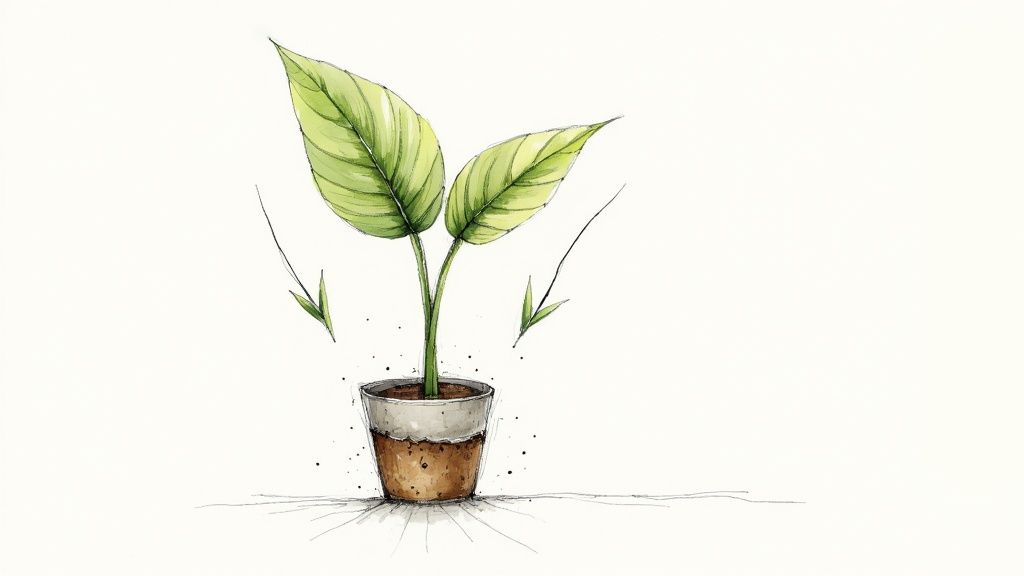
Ever looked at a houseplant that was once full of life and wondered where its sparkle went? It’s a classic story for many of us plant lovers here in NZ. The reason is usually pretty simple: your plant is hungry, and its home—the pot—has run out of food.
A plant in your garden has access to a whole ecosystem. Think decomposing leaves, worms, and a constant supply of nutrients. Your indoor plant, on the other hand, lives in a closed-off world. That initial potting mix is great, but every time you water, your plant drinks up the good stuff, and some of it washes right out the bottom. Sooner or later, the pantry is bare.
The Limited Pantry Analogy
It helps to think of your plant's pot as a pantry, stocked with a few months' worth of groceries. When you first bring it home, it has everything it needs. But as it grows, it eats through those supplies. If you don't do a grocery run, it's going to go hungry. That's exactly what a good quality indoor plant fertiliser is—it's the trip to the supermarket to restock the pantry and give your plant the fuel it needs to thrive.
Without that top-up, you’ll start to see the signs. Growth slows right down, the leaves might look a bit pale and washed out, or the whole plant just seems to lack its usual oomph. It's not sick; it's just missing its meals. This is especially noticeable during our Kiwi spring and summer when plants are in overdrive and using up energy fast.
Introducing the Big Three Nutrients
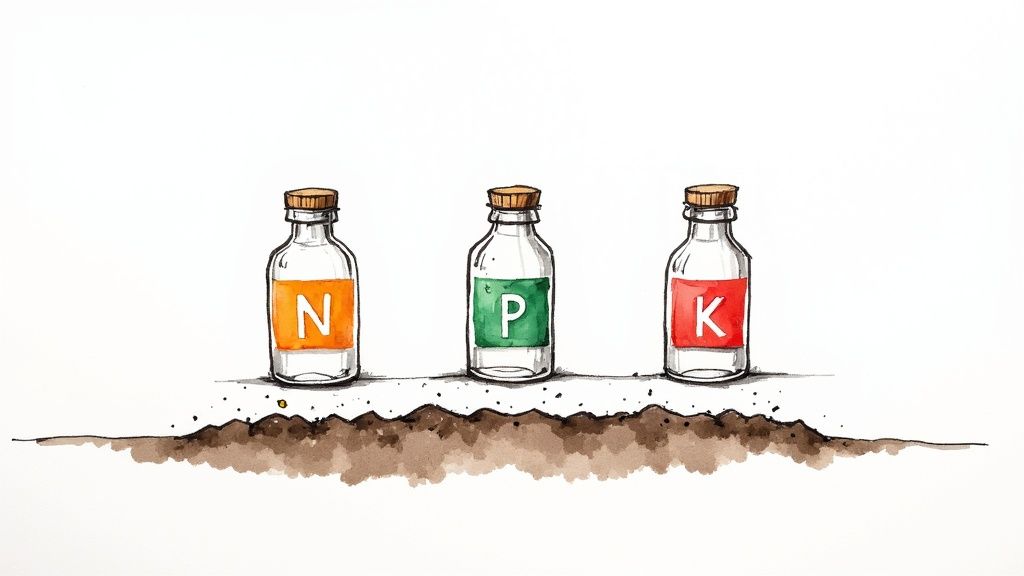
To figure out what your plant is craving, you just need to get to know the 'big three' macronutrients. You'll see them on every fertiliser label, usually as a set of three numbers.
- Nitrogen (N) for Leaves: This one is all about lush, green foliage. Nitrogen is a key ingredient in chlorophyll, the stuff that makes leaves green and powers photosynthesis. If you want your Monstera to push out huge, vibrant leaves, nitrogen is what it's after.
- Phosphorus (P) for Roots and Flowers: Think of phosphorus as the foundation guy. It’s what encourages a strong, healthy root system, which is the anchor for the whole plant. It’s also the magic ingredient that helps plants produce flowers and fruit.
- Potassium (K) for Overall Health: Potassium is like a plant's personal trainer and immune booster all in one. It helps the plant manage its water intake, strengthens its cells, and makes it tougher against pests and diseases. It basically keeps everything running smoothly.
Once you get your head around this basic idea—that your potted plants have a limited food supply—you're well on your way. Understanding these three core nutrients is the first step to picking the right food and getting your feeding schedule sorted for your green flatmates.
Choosing the Right Fertiliser for Your Plants
Walking into a garden centre to pick out an indoor plant fertiliser can feel a lot like standing in the cereal aisle—the number of options is just plain overwhelming. You’ve got colourful bottles of liquid feed, neat little sticks to push into the soil, and bags of pellets. How do you even begin to know which one is right for your green friends?
The good news is, it's simpler than it looks. The key is to match the product to your routine and your plants' needs. Are you a hands-on plant parent who enjoys a weekly watering ritual? Or are you a busy bee looking for a "set and forget" solution? Answering that one question will point you straight in the right direction.
A Quick Comparison of Fertiliser Types
To help you find the best indoor plant fertiliser for your lifestyle and plant collection, here’s a quick rundown of the most common formats.
| Fertiliser Type | Best For | Application Frequency | Pros | Cons |
|---|---|---|---|---|
| Liquid Concentrate | Hands-on plant parents who enjoy a regular care routine. | Every 2-4 weeks during growing season. | Fast-acting, easy to control dosage, great for quick results. | Requires regular, consistent application; easy to overfeed. |
| Slow-Release Granules | Busy individuals or those with large plant collections. | Every 3-9 months, depending on the product. | Low-maintenance, provides a steady feed, hard to mess up. | Less control over nutrient release, can't be "turned off" in winter. |
| Fertiliser Spikes | A simple, mess-free alternative to granules. | Every 1-3 months. | Easy to use, pre-measured dosage. | Nutrients can be concentrated in one spot, leading to uneven feeding. |
| Organic Options (e.g., worm castings, seaweed) | Those seeking a natural, gentle approach. | Varies; often used as a soil amendment or supplement. | Improves soil health, very low risk of burning roots. | Often lower in NPK; may need to be paired with a balanced fertiliser. |
Ultimately, the right choice depends on how involved you want to be in the feeding process.
Liquid Concentrates: The Fast-Food Option
Liquid fertilisers are probably the most common choice you'll see for indoor plants here in New Zealand. They come as a concentrate that you simply dilute with water and apply when you do your regular watering. Think of it as an instant energy drink for your plant—a quick, easily absorbed nutrient boost.
This format gives you fantastic control over how much and how often you feed. You can easily tweak the strength, using a weaker mix for sensitive plants or dialling it back during the cooler, slower months. Because the nutrients are ready to go, you often see positive results pretty quickly, which is always satisfying.
Slow-Release Granules: The Set-and-Forget Solution
For anyone with a packed schedule or a jungle's worth of plants, slow-release fertilisers are an absolute game-changer. These are tiny pellets or granules that you mix into the top layer of potting mix. Every time you water, a small amount of nutrients is released into the soil.
This method provides a gentle, steady feed over a long time, often lasting anywhere from three to nine months. It's the ultimate low-maintenance option, making sure your plants are consistently fed without you having to remember a weekly schedule. The only potential downside is the lack of control; once the granules are in, you can't really stop the feeding process, which is something to keep in mind as growth slows in winter.
Your choice of indoor plant fertiliser often comes down to your personality. Do you prefer the immediate feedback and control of a liquid feed, or the long-term, hands-off convenience of slow-release granules? There's no single 'best' option—only what's best for you and your plants.
Speciality and Organic Options
Beyond the two main types, you’ll find some other brilliant options designed for specific needs, including a growing number of natural and organic choices.
- Fertiliser Spikes: These are solid, compressed sticks of fertiliser you push directly into the soil. Like granules, they release nutrients slowly, but their distribution can be a bit uneven, sometimes creating "hot spots" of food.
- Seaweed Tonics: A Kiwi favourite! Seaweed-based products are fantastic soil conditioners. While they’re lower in the main NPK nutrients, they're packed with trace elements and growth hormones that encourage strong roots and overall plant health. They work best as a supplement alongside a balanced fertiliser.
- Worm Castings: This is a wonderfully natural and gentle option. Worm castings (or vermicast) can be mixed into your potting soil or scattered on top. They improve the soil's structure and provide a slow, steady release of nutrients, making it almost impossible to over-fertilise your plants.
The boom in indoor gardening across New Zealand, especially in cities where garden space is a luxury, has led to a great range of these specialised products. Even as the wider garden supply industry has seen some ups and downs, the demand for things made just for houseplants remains strong. It’s clear Kiwis love bringing the outdoors in.
Feeling a bit more confident? Choosing the right format is the first step. Our complete guide to indoor plant fertiliser can help simplify the decision even further. The goal is to find a product that fits into your life while giving your plants exactly what they need to thrive.
How to Read a Fertiliser Label
Picking up a bottle of plant food can feel like you’re trying to decode a secret message. All those numbers and chemical names look a bit intimidating at first, but figuring them out is the key to becoming a truly confident plant parent. The most important thing to look for is a set of three numbers, known as the NPK ratio.
Think of the NPK ratio as a nutritional breakdown, just like the one on the back of your cereal box. It tells you the percentage of the three key macronutrients your plant needs to thrive. The numbers are always listed in the same order, so once you know the code, you’re set.
Decoding the NPK Ratio
Those three numbers on the front of the bottle represent the percentage, by weight, of Nitrogen (N), Phosphorus (P), and Potassium (K). So, a fertiliser labelled 10-5-5 contains 10% nitrogen, 5% phosphorus, and 5% potassium.
Let's break down what each of these powerhouse nutrients actually does for your plants.
-
N is for Nitrogen (Leaves): The first number is all about lush, green growth. Nitrogen is a core part of chlorophyll, the pigment that lets plants turn sunlight into energy. A higher nitrogen number means the formula is designed to boost vibrant foliage, making it a feast for leafy beauties like your Fiddle Leaf Fig or Philodendron.
-
P is for Phosphorus (Roots and Flowers): The middle number focuses on building a strong foundation. Phosphorus is vital for healthy root development, helping your plant establish a solid system to absorb water and nutrients. It also plays a crucial role in encouraging flowers and fruit, acting as a bloom booster for flowering varieties like Orchids and Peace Lilies.
-
K is for Potassium (Overall Resilience): The final number is the all-rounder, responsible for a plant’s general wellbeing. Potassium helps regulate a plant’s internal processes, like water movement, and strengthens its cell walls. This makes the plant much more resilient against pests, diseases, and environmental stress.
Understanding this simple code transforms you from a confused shopper into a savvy plant expert. You can walk into any garden centre in New Zealand, look at the numbers, and know exactly what that fertiliser is designed to do.
Looking Beyond the Big Three
While NPK gets most of the attention, a truly great indoor plant fertiliser will also list essential micronutrients. These are minerals that plants need in much smaller amounts, but they’re still absolutely critical for their health. Think of them as the vitamins that support the main meal.
Key micronutrients you might see listed include:
- Magnesium (Mg): The central atom in the chlorophyll molecule. A deficiency often shows up as yellowing leaves between the veins.
- Iron (Fe): Essential for photosynthesis. A lack of iron can cause new leaves to come out pale or yellow.
- Calcium (Ca): Helps build strong cell walls and supports root development.
- Sulphur (S): Important for forming proteins and chlorophyll.
A formula that includes these trace elements provides a more complete nutritional profile, preventing common deficiencies that can leave your plants looking tired and unhealthy. Choosing a balanced fertiliser that covers both macro and micronutrients is a brilliant way to ensure your entire plant collection is getting everything it needs. You can explore some of the great indoor houseplants for Kiwis that will benefit most from a well-rounded diet.
A fertiliser label is a powerful tool. By learning to read the NPK ratio and look for essential micronutrients, you gain the ability to precisely match the formula to your plant’s specific needs—whether you want to encourage bushy leaves, brilliant flowers, or robust health.
Your Fertilising Schedule for NZ Seasons
Even though they're tucked up safely inside, our houseplants are still tuned in to the rhythm of the seasons. Just like a mighty kauri in the forest, they notice the days getting longer and the sunlight streaming through the windows becoming more intense. For us Kiwi plant parents, that means our feeding schedule needs to match our Southern Hemisphere seasons, not the advice you might find on an American or European blog.
The main idea is simple: feed your plants when they're actively growing, and let them rest when they're not. It's a bit like a training athlete—you give them extra fuel during their peak season but let them take it easy in the off-season to recover. Trying to force-feed a dormant plant is like trying to get a pōhutukawa to bloom in July; you're just working against nature.
Spring and Summer: The Growing Season
Here in New Zealand, the growing season really kicks into gear in spring (September to November) and hits its peak during summer (December to February). As the days lengthen and warm up, your plants wake from their winter snooze and start pushing out new leaves, stems, and flowers. All that energetic growth requires a lot of fuel.
This is the time to give them a consistent supply of nutrients with a good quality indoor plant fertiliser. Your plants can make the most of the food you offer, turning it into that beautiful, lush foliage we all love.
- How often? For most houseplants, feeding every 2 to 4 weeks with a diluted liquid fertiliser is a great routine right through spring and summer.
- A gentle start: As spring rolls in, ease your plants back into it. Start with a half-strength mix for the first couple of feeds in September to avoid giving their system a shock.
- Peak summer: By the time the full summer sun is here, your plants will be at their hungriest. You can switch to the full-strength dose recommended on the bottle to support their vigorous growth.
The real secret for Kiwi plant owners is to simply listen to your plants. If you're seeing lots of new, healthy growth, that's a clear sign it's hungry and ready for its next meal.
Autumn and Winter: The Resting Period
As we head into autumn (March to May), you'll notice things naturally start to slow down. The days get shorter, the light is less intense, and your plant's growth will begin to taper off. This is its cue to wind down for a rest. If you keep feeding at a summer pace, you can do more harm than good—unused fertiliser salts can build up in the soil and burn the roots.
Winter in New Zealand, from June to August, is the quietest time for most of our indoor plants. They don't go fully dormant like a deciduous tree outside, but their metabolism slows right down. They just don't need the extra kai.
- Tapering off: In autumn, start reducing how often you fertilise. You could stretch it out to every 6 to 8 weeks, or just stop completely by the time May comes around.
- Winter rest: During the winter months, it’s best to stop fertilising completely for the majority of your houseplants. This gives them a chance to rest and conserve energy, getting them ready for the big growth spurt that will come with spring.
- The exceptions: Some tropical plants or any you have under grow lights might keep showing signs of growth all year round. For these guys, a very diluted feed once every couple of months through winter might be a good idea. Just watch the plant—it will tell you what it needs.
This seasonal approach isn't about sticking to a rigid calendar. It's more about getting to know your plant's natural life cycle. By watching for its cues—new growth in spring, a slowdown in autumn—you can give it the right support at the right time, making sure it stays healthy and vibrant all year round.
How to Apply Fertiliser Without Harming Your Plants
Feeding your indoor plants can feel a bit nerve-wracking at first, but it's a simple process once you get the hang of it. The goal is to make sure every feeding session gives your plant a healthy boost, not a shock. With a couple of key rules under your belt, you’ll be delivering nutrients like a pro.
The most important thing to remember is to never fertilise a thirsty plant. Adding fertiliser to dry soil is like throwing spice on an open wound—it’s a recipe for disaster. The plant’s delicate feeder roots will absorb the concentrated nutrients too quickly, leading to chemical burns, sad brown leaf tips, and a stressed-out plant.
Always give your plant a good drink of plain water first. Let it soak through and the excess drain away, then wait about 30 minutes before coming back with your diluted fertiliser. This little buffer protects the roots, allowing them to take up the nutrients gently.
Following the Instructions With Care
While fertiliser labels are a great starting point, it pays to approach them with a "less is more" mindset. Manufacturers want you to see amazing results, but your home isn't a laboratory. A plant tucked away in a lower-light corner simply won’t need as much food as one soaking up the sun all day.
The single biggest mistake we see is over-fertilising. If you're ever in doubt, just dilute your fertiliser to half the strength recommended on the bottle. It's always, always safer to underfeed than to risk burning your plant's precious roots.
This cautious approach is non-negotiable for sensitive plants. Delicate ferns or notoriously fussy varieties do much better with a weaker, more frequent dose of food. Tailoring your approach to the specific plant, as we cover in our guide for Fiddle Leaf Fig care, can make a world of difference.
Step-by-Step Application for Different Types
The method you’ll use really just depends on the type of fertiliser you’ve chosen. Here’s a quick rundown of the most common ways to apply it.
For Liquid Concentrates:
- Water First: Give your plant a normal watering and let the excess drain completely.
- Measure and Mix: Carefully measure your liquid feed (full or half-strength) and mix it into your watering can.
- Apply Evenly: Pour the diluted solution over the soil, trying to avoid splashing the leaves. Make sure you moisten the entire root zone.
For Slow-Release Granules:
- Measure the Dose: Check the packaging to figure out the right amount for your pot size.
- Sprinkle and Mix: Lightly scatter the granules over the top of the soil.
- Incorporate Gently: Use your fingers or a small fork to gently work the granules into the top centimetre or two of potting mix.
- Water In: Water your plant as you normally would. This activates the coating on the granules and starts the slow, steady release of nutrients.
Troubleshooting Common Fertilising Problems

Even with the best intentions, it’s easy to get things a little wrong with your indoor plant fertiliser. The good news is that our plants are great communicators; you just need to know what signs to look for. Spotting the early warnings of a feeding issue means you can get things back on track before any real harm is done.
Think of it like being a plant detective. Are the leaf tips turning a bit crispy and brown? Is your plant suddenly dropping perfectly healthy-looking leaves? These are classic clues that something’s up in the nutrient department. Let’s break down what to look for and how to fix it.
Spotting the Signs of Over-Fertilising
Giving your plant a bit too much love is probably the most common fertilising mistake out there. It’s an easy trap to fall into, especially when you’re eager to see new growth, but the symptoms are pretty clear once you know them.
- White, crusty stuff on the soil? That’s a tell-tale sign of excess fertiliser salts building up.
- Brown, crispy leaf tips? This is what we call "fertiliser burn." The extra salts are literally pulling moisture out of the leaves, causing the edges to look burnt.
- Sudden leaf drop? If your plant is dropping leaves (even green ones) or the lower leaves are yellowing and falling off, it could be a cry for help from stressed-out roots.
The Solution: Flush the Soil To fix over-fertilising, you need to give the soil a good wash. Take your plant to the sink or shower and let lukewarm water run through the potting mix for a few minutes. Let it drain completely, and then hold off on feeding for at least a month. This gives the roots a chance to recover from the shock.
Recognising an Underfed Plant
While it’s not as immediately damaging as overfeeding, a hungry plant will definitely let you know it needs a meal. The signs tend to appear more slowly over time.
- Slow or stunted growth? If your plant isn’t putting on any new growth, especially during spring and summer in New Zealand, it’s likely hungry.
- Pale, yellowing leaves? When the older, lower leaves turn a pale, washed-out green or a uniform yellow, it’s often a classic sign of nitrogen deficiency.
- Just looking a bit… sad? A plant that seems generally lacklustre and isn’t producing new flowers or vibrant foliage is probably in need of a feed.
The Solution: Start a Gentle Feeding Routine The fix here is nice and simple: start feeding your plant! Grab a balanced indoor plant fertiliser and dilute it to half the recommended strength to start with. Apply it to damp soil every few weeks through the growing season and keep an eye out for happy, healthy new growth.
Getting fertiliser right is vital for all kinds of growing, from our indoor jungles to large-scale horticulture across New Zealand. In fact, the country's fertiliser imports reached nearly NZ$1.5 billion in 2022, a figure that shows just how essential these nutrients are. Even as costs change, the demand for nitrogen, phosphate, and potash products remains strong for everyone from farmers to urban gardeners. For a deeper dive into these market trends, you can explore the full report on New Zealand’s fertiliser landscape.
Plant Fertiliser FAQs
Diving into the world of indoor plant fertiliser can feel a bit overwhelming, and it's natural for questions to pop up. To help you out, we've gathered some of the most common queries we hear from Kiwi plant parents, with straightforward answers for your plant care journey.
Can I Use the Same Fertiliser on All My Plants?
For the most part, yes you can. A quality, balanced, all-purpose indoor plant food (something with a 10-10-10 ratio is a great start) will do the trick for the majority of your leafy green friends. It provides a solid, even spread of the essential nutrients they need to stay healthy and keep growing.
That said, some plants are a bit more particular. Flowering varieties like orchids and African violets, for example, really appreciate a formula with a bit more phosphorus (the 'P' in NPK) to help them produce those beautiful blooms. Cacti and succulents are another exception; they prefer a specialised, low-nitrogen feed because they’re naturally adapted to soils that aren't very rich.
Can I Make My Own Fertiliser at Home?
Absolutely! It’s something a lot of Kiwi gardeners love to do. You can get pretty creative with simple, natural options. The cooled, unsweetened water left over from boiling your veggies is a great one. You can also use diluted coffee grounds for acid-loving plants, or even make a nutrient "tea" by soaking banana peels in water.
These homemade solutions are gentle and add some great micronutrients to the soil. Just remember that they aren't as scientifically precise as a commercial formula. Think of them as a fantastic supplement, but it’s often best to use them alongside a complete indoor plant fertiliser to make sure your plants are getting the full, balanced diet they need to truly thrive.
It's a common myth that fertiliser is 'plant food'. Plants actually make their own food through photosynthesis, using light, water, and air. A better way to think of fertiliser is like a multivitamin – it provides the essential minerals they need to support that process and stay healthy and strong.
What Happens if I Never Fertilise My Indoor Plants?
Don't worry, your plant won't give up on you overnight. But, over time, it will slowly use up all the nutrients available in its potting mix and will start to struggle. You’ll eventually notice its growth slows right down, new leaves might come through looking small and pale, and the whole plant will just look a bit sad and tired.
Without those key minerals, your plant also becomes an easier target for pests and diseases. Giving your green mates a regular feed with a good indoor plant fertiliser is one of the simplest things you can do to give them the strength they need to live a long, vibrant life.
Ready to give your plants the nourishment they've been missing? Explore the fantastic range of plant care products from trusted sellers at Jungle Story and find the perfect fertiliser to help your indoor garden flourish. Check out our collection at https://junglestory.co.nz.