
Picture this: a backyard that’s not just a patch of lawn, but a living, breathing slice of Aotearoa. Imagine stepping outside to the sound of tūī singing and watching pīwakawaka (fantails) flit between the branches. That’s the reality of an NZ native garden – a space that’s not only stunningly beautiful and wonderfully low-maintenance, but also deeply connected to our country’s unique natural heritage.
Why Go Native in Your Garden?
Planting a garden with New Zealand natives is about so much more than just what looks good. It’s a chance to cultivate a little piece of wild Aotearoa right at your back door. For me, it’s one of the most rewarding ways to feel connected to our landscapes and to support the delicate web of life that relies on our indigenous plants.
A Tough, Resilient Sanctuary
One of the best things about choosing natives is just how tough they are. These are plants that have spent thousands of years adapting to our specific climates, whether that’s a windswept coastline, a frosty inland basin, or a damp, shady gully. They’re built for our conditions.
What does this mean for you, the gardener?
- Less time with the hose: Once they’re settled in, a lot of natives are surprisingly drought-tolerant. They can handle our increasingly dry summers without needing constant watering.
- Forget the fertiliser: Native plants are perfectly adapted to New Zealand's unique, often low-nutrient soils. They generally do best without any extra feeding.
- Nature’s pest control: By attracting native birds and helpful insects, your garden quickly establishes its own balanced ecosystem, keeping pests in check naturally.
A Garden with Deep Cultural Roots
The practice of gardening in Aotearoa is an ancient and significant one. Long before Europeans arrived, Māori cultivated māra (gardens) centred on vital food crops like kūmara. As new plants were introduced, these gardening traditions evolved, blending the old with the new.
Today, we’re seeing a real resurgence in the love for native plants in our backyards, and it reflects a growing appreciation for both their ecological and cultural importance. If you're interested, you can find out more about the history of gardens in New Zealand.
An NZ native garden becomes a living story. It’s a space that supports local wildlife, revives the cultural significance of our flora, and provides a tranquil retreat that truly feels like home.
Ultimately, choosing natives is an invitation to work with nature, not against it. The end result is a garden that’s not only easier to look after but is also humming with life and character – a true reflection of Aotearoa.
Designing Your Native Garden with Purpose

A stunning NZ native garden doesn't just happen by accident. The secret to a thriving, beautiful space is a bit of old-fashioned planning that works with your little patch of Aotearoa, not against it. Before you even think about visiting a nursery, taking the time to really get to know your garden and sketch out a few ideas is the best investment you can make.
Become a Garden Detective
First things first, you need to play detective. Grab a notepad, pull up a chair, and spend a day just watching how the sun tracks across your property. Make a note of the spots that get blasted by the midday sun and which corners are left in cool shade for most of the day. This simple "sun map" is gold; it’s the single most important piece of information for putting the right plant in the right place.
Next up, get your hands dirty. Dig into your soil a bit. Is it heavy clay that feels claggy and holds onto water? Or is it sandy and loose, draining in an instant? While most natives are pretty tough, knowing your soil type means you can pick plants that will settle in and feel right at home from day one.
Wind is another big one for any Kiwi gardener. Figure out which way the prevailing wind whips through and identify your most exposed areas. A smartly placed cluster of tough shrubs like kōhūhū (Pittosporum tenuifolium) or tarata (lemonwood) can act as a natural windbreak, creating a peaceful, sheltered microclimate for more delicate species to flourish behind them.
Think in Layers, Like the Bush
With your observations in hand, you can start sketching a rough layout. The key here is to think in layers. This creates that wonderful depth and natural, forest-like feeling we all love.
- Groundcovers: Low-growers like Muehlenbeckia axillaris or native violets are fantastic for suppressing weeds and carpeting the ground.
- The Middle-Storey: This is where shrubs like hebes and smaller coprosmas come in. They add structure and are absolute magnets for birds and insects.
- The Canopy: Even a single feature tree, like a magnificent kōwhai or a striking tī kōuka (cabbage tree), can provide height and become a real focal point.
You’re not trying to perfectly replicate a slice of native bush, but to borrow its best ideas. Layering your plants creates a resilient, interconnected little ecosystem that pretty much looks after itself.
Give Your Garden a Job
Finally, have a good think about what you actually want from your garden. Is its main purpose to be a private, leafy retreat for you to unwind in? A hardy coastal garden that can shrug off salt spray? Or maybe a buzzing, vibrant sanctuary to attract tūī and kererū?
Defining your garden's "job" makes choosing plants so much easier. If a bird-friendly paradise is the goal, you’ll want to pack it with plants that offer food and shelter all year round—think harakeke (flax) for its rich nectar and dense shrubs for safe nesting spots.
We can take a leaf out of our own history books here. When botanic gardens were first established in New Zealand’s cities back in the 19th century, it was a celebration of our unique flora. Early gardeners quickly learned that many fussy European plants simply couldn't cope with our climate. So, they turned to hardy native trees that were perfectly adapted to local conditions. You can see how these historic gardens influence modern planting even today. This timeless approach—right plant, right place—is the ultimate recipe for a resilient and effortlessly beautiful garden.
Choosing The Right Native Plants For Your Region
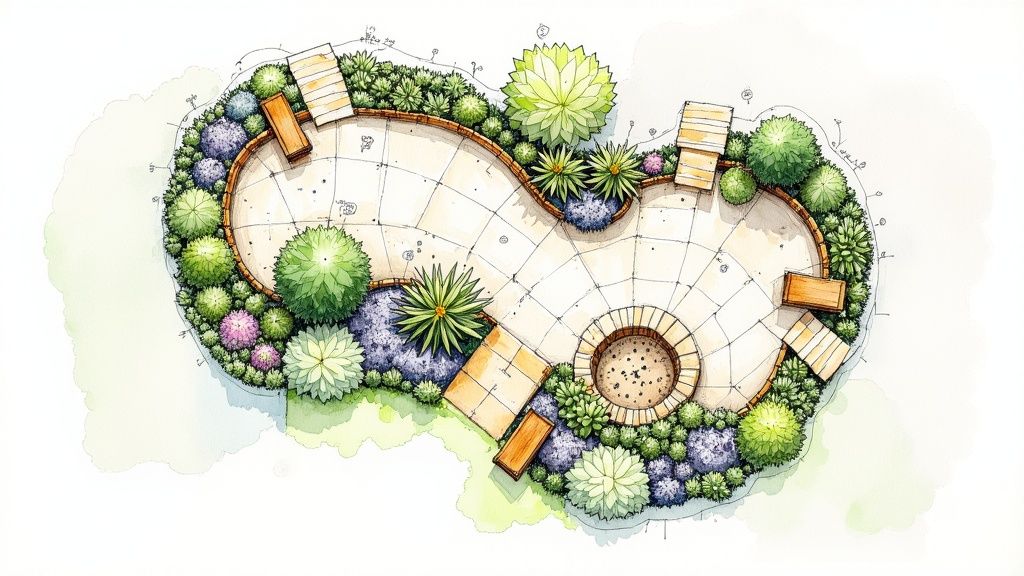
Here’s where your garden vision really begins to come alive. If there’s one secret to a thriving, low-fuss NZ native garden, it’s a concept we call ‘eco-sourcing’. Put simply, it’s all about picking plants that already grow naturally in your local area.
Think of it like this: a plant from the balmy, salt-sprayed coast of the Far North just isn’t built for a frosty Southland winter. By choosing plants that are already genetically wired for your region’s unique soil, rainfall, and temperatures, you’re giving them a massive head start. They’ll establish quicker, fight off pests more effectively, and demand far less work from you.
Matching Plants To Your Garden's Microclimates
Now, let's zoom in from your wider region to the specific microclimates in your own backyard—those very spots you mapped out earlier. Every garden has its quirks, but there’s a native plant perfectly suited for almost any challenge you can throw at it.
Got a damp, shady corner where nothing seems to grow? Don't fight it, work with it. That’s the dream home for many of our beautiful native ferns. An Asplenium or blechnum will absolutely love the cool, moist earth under a tree fern or on the south side of the house, adding that lush, deep green texture.
At the other end of the scale, you might have a sun-baked bank that gets absolutely scorched all summer. This is where the tough, sun-loving natives come into their own. A hardy little hebe will provide gorgeous flowers for the bees, while the silvery-blue tussock of Poa cita brings movement and beauty that won't flinch at a drought.
The most successful native gardens I’ve ever seen are where the gardener works with the land, not against it. Take the time to observe your site’s challenges and opportunities, and you’ll find plants that don’t just survive, but truly flourish.
This way of thinking also applies to what you want from your garden. If you’re keen to mix in some edible plants, you don't have to stick to the usual veggie patch. While many of us choose natives for their stunning foliage, exploring our fruit-bearing species is incredibly rewarding. For a few ideas on how to get productive plants into your garden, our guide to growing fruit trees in NZ has some great tips you can adapt.
A Simple Plant Selector For Your Goals
To help you get started, we've put together this quick-reference table. Think of it as a cheat sheet to help you build a plant palette that works for your specific garden goals, whether that’s attracting birds, creating a bit of privacy, or just adding some year-round colour.
NZ Native Plant Selector for Common Garden Goals
| Garden Goal | Recommended Native Plant | Key Features & Conditions |
|---|---|---|
| Attract Native Birds | Harakeke (Phormium tenax) | Produces abundant nectar-rich flowers in summer that tūī and bellbirds love. Extremely hardy and thrives in a wide range of conditions, from damp soils to exposed sites. |
| Create a Privacy Screen | Kōhūhū (Pittosporum tenuifolium) | A fast-growing shrub with dense, dark foliage that makes an excellent hedge or screen. Tolerant of a wide range of conditions and responds well to trimming. |
| Plant for a Damp Area | Pūrei (Carex secta) | A beautiful tussock-forming sedge that is perfect for wet soils, pond edges, or damp gullies. Provides habitat for insects and lizards. |
| Add Year-Round Colour | Coprosma (e.g., 'Pacific Sunrise') | Many modern coprosma cultivars offer vibrant foliage in shades of red, orange, and pink that intensify in the cooler months, especially after a frost. Hardy and low-maintenance. |
| Fill a Hot, Dry Spot | Tī kōuka (Cordyline australis) | The iconic cabbage tree is incredibly drought-tolerant once established and provides strong architectural form. Its scented flowers are a bonus for insects. |
Use this table as a jumping-off point for your own research. Once you have a few names, you can dig deeper to find the specific varieties that are best suited to your little patch of Aotearoa.
Soil Prep and Planting for Long-Term Success
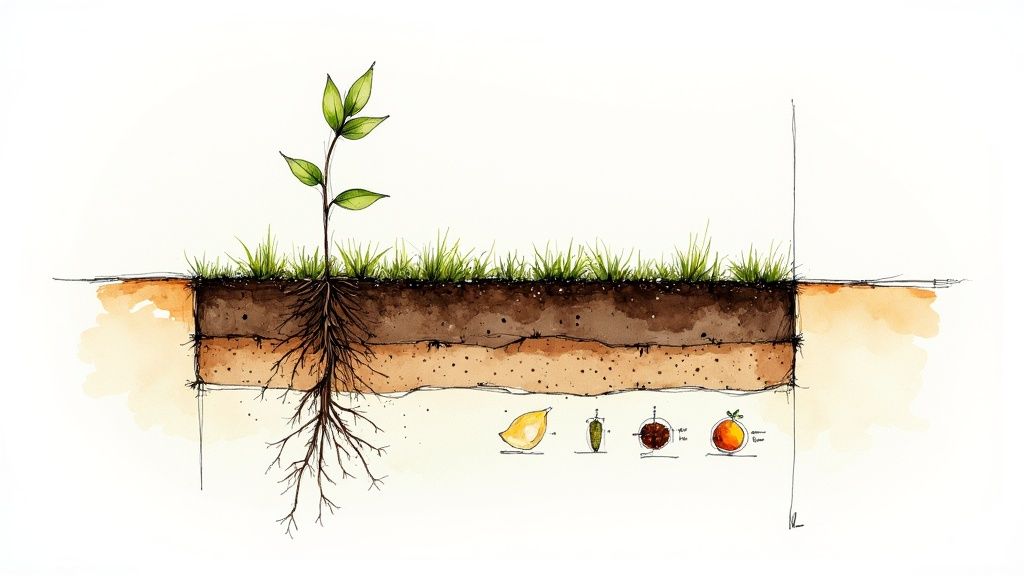
Healthy, resilient plants start with the ground they live in. Honestly, getting your soil right and planting correctly is the single most important thing you can do to guarantee your NZ native garden flourishes for years to come. This groundwork sets the stage for everything that follows.
The first job is to clear the area. If you’re dealing with stubborn patches of lawn or persistent weeds, laying down thick cardboard or a few layers of newspaper works wonders. Just cover it with a layer of mulch or compost and leave it for a few months. This no-dig, "lasagne" method smothers the weeds without chemicals and starts enriching the soil as everything breaks down.
Preparing the Perfect Foundation
Once your site is clear, it’s time to think about the soil itself. A common mistake I see Kiwi gardeners make is adding far too much rich compost. It seems helpful, but most of our native plants are beautifully adapted to thrive in our unique, less fertile soils. Too much goodness can actually make them grow soft, leggy, and weak.
A lighter touch is always best. If you have heavy clay, digging in some organic matter like compost or fine bark will do wonders for drainage and aeration. For sandy soils, the same additions help hold onto precious moisture. The goal isn't to create a rich vegetable patch, but simply to improve the soil's structure so the roots can breathe and grow.
Today, as we create urban gardens, we’re doing more than just planting; we're helping to restore a small piece of our natural heritage. The rapid transformation of New Zealand’s landscape between 1860 and 1910 saw vast areas of indigenous forest cleared. Planting natives in our backyards is a powerful way to enhance biodiversity and mend some of this historical ecological damage. You can read more about how urban planting is restoring ecological balance on journals.uclpress.co.uk.
Getting Your Plants in the Ground
Now for the exciting part—planting. This moment is critical for preventing transplant shock and ensuring your new plants establish strong, healthy roots.
Here’s what I’ve learned works best:
- Dig the right hole. Aim for about twice as wide as the plant's root ball, but no deeper. Planting too deep is a classic error that can cause the stem to rot right at the base.
- Handle with care. Gently squeeze the pot to loosen the plant, then carefully slide it out. Take a moment to tease out any tightly circled roots at the bottom. This small step is vital—it encourages them to grow outwards into the new soil, not just keep spiralling in on themselves.
- Position and backfill. Place your plant in the hole, making sure the top of its soil is perfectly level with the surrounding ground. Backfill with the original soil you dug out, firming it gently with your hands to remove any large air pockets.
Once your plant is in, give it a long, deep drink of water. This initial watering is absolutely crucial; it settles the soil snugly around the roots and gets rid of any sneaky air gaps. If you're putting in a privacy screen or a windbreak, you can get some great ideas in our guide to fast-growing trees in NZ.
Finally, spread a generous layer of mulch—like bark chip or pea straw—around the base of the plant. Just be sure to keep it from touching the stem itself. This locks in that precious moisture, suppresses competing weeds, and protects the soil. You've now given your native plant the best possible start in its new home.
Caring for Your Thriving Native Ecosystem
One of the best things about having an NZ native garden is just how self-sufficient it becomes over time. Once your plants are established, you'll find it evolves into a resilient little ecosystem that pretty much takes care of itself. Your job shifts from hard labour to gentle guidance—mostly just observing and doing the odd simple task to help your garden along.
The most hands-on you'll need to be is in the first one to two years. Getting the watering right during this establishment phase is crucial. A good, deep soak once or twice a week, especially through the drier months from spring to autumn, is what you're aiming for. This encourages the roots to travel deep down into the soil, building up the plant's resilience to drought for the future. After that initial period, you can really step back. Most established natives will only need a top-up drink during a seriously prolonged summer dry spell.
Pruning with a Light Touch
When it comes to pruning native plants, less is almost always more. The goal here is gentle shaping and maintenance, not hacking things back aggressively. Of course, different plants have different needs, so it pays to know what you’re trimming.
- Hebes: A light trim just after they’ve finished flowering is perfect. It encourages them to grow bushy and dense, which means a much more spectacular flower show next season.
- Harakeke (Flax): To keep flax looking tidy, just remove the oldest, outer leaves and any dead flower stalks. Make sure to cut them right down at the base. A word of warning: never trim the central new shoots—that’s the very heart of the plant.
- Grasses and Sedges: So many of our native grasses simply need a periodic ‘comb through’. Pop on some gloves and gently pull out any dead blades to keep them looking fresh.
This gentle approach means you’re working with the plant's natural shape and form, boosting its health rather than putting it under stress. For more inspiration on shaping your green spaces, check out our other garden ideas for NZ backyards.
Letting Nature Do the Work
A truly healthy native garden quickly becomes its own pest control system. By planting a diverse range of species—especially flowering and nectar-rich plants like kōwhai, hebes, and harakeke—you're essentially rolling out the welcome mat for native birds and beneficial insects. Tūī and bellbirds won't just delight you with their song; they're also fantastic pollinators. Meanwhile, you'll see pīwakawaka (fantails) and grey warblers darting about, snapping up pests like aphids and caterpillars.
It's fascinating to watch your garden find its own balance. Instead of reaching for a chemical spray, you’ll see ladybirds turn up to feast on aphids, and other predatory insects arrive to keep pests in check.
By fostering this biodiversity, you're not just creating a garden; you're cultivating a living ecosystem. The focus shifts from fighting problems to providing the right conditions for nature’s own solutions to flourish. This is the real magic of a well-planned NZ native garden.
Ultimately, caring for your native garden is all about observation. Pay attention to how your plants are responding to the changing seasons. A fallen leaf isn't a problem that needs fixing; it's future mulch, returning vital nutrients to the soil. Your job is simply to provide a little support here and there, then stand back and let your garden's incredible natural resilience shine.
Your Questions on NZ Native Gardens Answered
Starting any new garden project is exciting, but it almost always comes with a few questions. To help you get going with confidence, we've put together answers to the queries we hear most often from fellow Kiwi gardeners.
Let's dive into some of the practical stuff so you can get on with creating the beautiful native garden you've been dreaming of.
How Much Maintenance Does an NZ Native Garden Really Need?
Honestly, once it’s established, a NZ native garden is wonderfully low-maintenance. The real work is all upfront during the planning and planting stages. For the first year or two, you’ll need to be on top of watering to help the plants settle in and get their roots down.
After that initial period, you'll find most natives are brilliantly self-sufficient and drought-tolerant. They'll only really need a deep watering during those long, dry summer spells. Your ongoing to-do list will be refreshingly short.
You're mostly looking at:
- An annual top-up of mulch to keep the weeds at bay and lock in moisture.
- A light prune here and there to tidy up shapes or snip off any dead branches.
Because these plants have evolved right here in our conditions, they rarely need fertiliser. They're also naturally tough against many local pests and diseases, which saves you a lot of time, money, and hassle in the long run.
Can I Have Flowers and Colour in a Native Garden?
Absolutely! This is one of the biggest myths out there. While we all love the lush green textures and unique foliage, a native garden can be an absolute riot of colour all year round.
If you’re after fiery reds, you can't go past pōhutukawa or rātā if you're in a milder or coastal spot. Hebes are another must-have; they come in an incredible range of purples, pinks, and whites and are total magnets for bees.
The iconic kōwhai tree bursts into brilliant yellow flowers in late winter and spring, a true beacon for tūī and bellbirds. By carefully selecting a mix of flowering species, you can enjoy a lively display of colour that changes with the seasons.
And for a real showstopper, the kakabeak (Clianthus) produces stunning red flowers that look incredible cascading down a bank or over a wall.
How Long Will It Take for My Native Garden to Look Established?
This all comes down to your plant choices. With the right strategy, you can get that lush, 'filled-in' look much quicker than you might think. The secret is to use fast-growing 'pioneer' species.
Plants like certain coprosmas, pittosporums (especially kōhūhū), and hebes are perfect for this. They grow quickly and can make a garden feel established in as little as two to three years.
But they're more than just a quick fix. These fast growers create a protective microclimate, acting as a living nursery for slower-growing, long-lived trees like tōtara or rimu to get their start. It’s a clever, layered approach that mimics how our native bush regenerates naturally, giving you both quick results and the enduring beauty of a mature garden.
Ready to bring your NZ native garden to life? At Jungle Story, we connect you with trusted local growers offering a huge range of beautiful native plants, from fast-growing shrubs to magnificent feature trees. Start building your slice of Aotearoa today by exploring our marketplace at https://junglestory.co.nz.