
So, what are the best indoor plants for home? While it really comes down to your space and lifestyle, the top contenders for most Kiwi homes are usually the classics: the tough-as-nails Snake Plant, the elegant, air-purifying Peace Lily, and the ever-popular, fast-growing Spider Plant. These guys are resilient, give you a gorgeous touch of green without a lot of fuss, and are perfect whether you're just starting out or have been collecting plants for years.
Find Your Perfect Plant: A Guide for Kiwi Homes
Ready to get into the incredibly rewarding world of indoor gardening? This guide is here to help you bring the life-giving power of plants into your New Zealand home, boosting your air quality and your wellbeing at the same time.
Across the country, houseplants have well and truly become a beloved part of Kiwi life. They’re turning city apartments in Auckland and classic villas down in Christchurch into lush, green sanctuaries. Let's cut through the confusion and get straight to what you need to know.
Your Roadmap to a Thriving Indoor Jungle
Think of this as your personal roadmap to growing an indoor jungle. We'll walk through everything you need to build your confidence and pick the perfect green companion for your home—one that suits your light, your lifestyle, and your environment, no matter how much experience you have (or don't have!).
We're going to cover how to:
- Read your home’s environment: Get a feel for the unique light, humidity, and temperature conditions in your space.
- Pick the right plant category: Find out if you need something low-maintenance, pet-safe, or a dramatic statement piece.
- Nail the essential care: Master the basics of watering, feeding, and troubleshooting to keep your plants happy and healthy.
Bringing plants indoors is so much more than just decorating; it’s about creating a living, breathing space that connects you with a bit of nature. Studies have even shown that indoor plants can seriously reduce stress and lift your mood—a pretty wonderful addition to any home.
This guide goes beyond just giving you a list of plants. The goal is to give you real, practical knowledge you can actually use. If you're keen to dive right in, our overview of great indoor houseplants is a fantastic place to start. Let’s get this adventure started and find the perfect plant to enrich your living space.
Matching Plants to Your Home Environment

Before you even think about stepping into a garden centre, the real first step to plant success happens right where you are. It’s about becoming a bit of a detective in your own home. A thriving plant is really just a plant that’s found its perfect spot, so getting to know your home's unique conditions is the most important part of the journey.
A quick assessment is all it takes to make sure you choose the best indoor plants for your home—the ones that will truly flourish, not just hang on for dear life. Let's break down what to look for, starting with the absolute number one thing every plant needs.
Demystifying Your Home's Light
Think of light as a plant's food. You wouldn't give a cat dog food, and in the same way, you can't stick a sun-worshipping cactus in a dark corner and expect it to be happy. Getting a handle on your home’s natural light is fundamental. If you're hoping to grow your collection or bring in some sun-lovers, figuring out how to increase natural light in your home can be a game-changer.
So, how do you actually work out what kind of light you have? There's a simple little trick for that—the shadow test.
-
Direct Light: Around midday, hold your hand about 30 cm above the spot you’re thinking of for a plant. See a crisp, sharply defined shadow? That's direct sunlight. This is pretty intense light, common in north-facing windows here in New Zealand, and it can easily scorch the leaves of many tropical plants.
-
Bright, Indirect Light: Now, if that shadow is softer but still easy to see, you've got bright, indirect light. This is the gold standard for a massive range of houseplants, as it mimics the lovely dappled light they'd get on a forest floor.
-
Low Light: Is the shadow really faint and blurry? That's a low-light area. While no plant can live in a pitch-black room, some seriously tough characters can handle these shadier corners.
A quick tip: check the light at different times of the day, and even different times of the year. A spot that gets lovely, gentle morning sun in winter (June - August) could get absolutely blasted by the harsh afternoon sun in a Kiwi summer (December - February).
Understanding Humidity and Temperature
Lots of our favourite indoor plants, like lush ferns and colourful Calatheas, come from humid, tropical jungles. New Zealand homes, particularly older ones or those with powerful heat pumps, can have pretty dry air. This is what leads to those frustrating crispy, brown leaf tips.
But you don't need a fancy machine to create a happy microclimate for your plants. A few simple tricks work wonders:
- Group plants together: As plants release moisture from their leaves (it’s a process called transpiration!), grouping them creates a natural little pocket of higher humidity.
- Use a pebble tray: Just pop your pot on a tray filled with pebbles and a bit of water. As the water evaporates, it’ll boost the humidity right around your plant.
- Misting: A light spritz with a mister a few times a week gives tropicals that little moisture hit they crave.
Temperature is also part of the puzzle. Most houseplants are happy in the same temperature range we are, somewhere between 18°C to 24°C. The main thing is to avoid sudden changes. Keep them away from draughty doors, open windows, and direct blasts from heaters or fireplaces, which can cause stress.
Considering Space and Safety
Finally, have a realistic think about your space and who you share it with. That magnificent Fiddle Leaf Fig might look incredible in the shop, but it'll quickly take over a small apartment. Always check the plant's potential mature size before you commit.
And most importantly, if you have curious pets or little kids, safety has to be number one. Many common houseplants, like Peace Lilies and Snake Plants, are toxic if chewed on or eaten. Always double-check if a plant is toxic before you bring it home—there are plenty of stunning, non-toxic options out there that will give you total peace of mind.
The Best Low-Maintenance Plants for Beginners
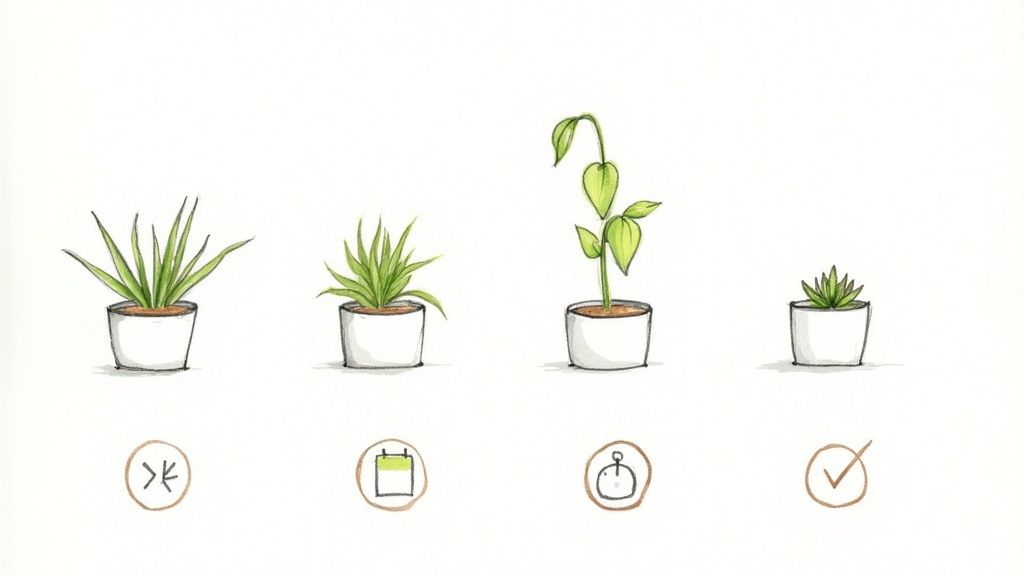
Feeling a bit nervous about keeping a plant alive? You're definitely not alone. The good news is, you don’t need some kind of magical green thumb to fill your home with lush greenery. The real secret is just choosing the right plants—the ones that are naturally tough, forgiving, and almost seem to thrive on a bit of healthy neglect.
Think of this section as your official confidence-booster. We're about to explore the world of 'bulletproof' houseplants, the undisputed champions of easy-care living that are perfect for anyone just starting their plant journey. They're ideal for busy professionals, students, or anyone who’s ever accidentally loved a plant to death with too much water.
We’ve handpicked a few varieties that are exceptionally well-suited to the typical conditions inside New Zealand homes. Let's prove, once and for all, that anyone can grow a thriving indoor garden.
The Unkillables: Your Starting Line-up
So, what actually makes a plant "low-maintenance"? It usually comes down to where it originally grew. Plants that evolved in tough environments—think dry deserts or the dim floor of a dense forest—are already wired to handle less-than-perfect care. They've developed clever tricks to store water or make the most of minimal light.
Here are three of the most forgiving and best indoor plants you can start with.
1. Snake Plant (Dracaena trifasciata) The Snake Plant, also known as Mother-in-Law's Tongue, is the undisputed king of easy care. Its stiff, upright leaves have a modern, architectural vibe that fits into any decor. Best of all, it's famous for tolerating low light and very infrequent watering, making it a true set-and-forget favourite.
- Light: Prefers bright, indirect light but will happily put up with low-light corners.
- Water: Let the soil dry out completely between waterings. Every 3-4 weeks is often plenty, especially during the cooler months from June to August. Overwatering is its only real kryptonite.
- Difficulty: Extremely Low
2. Zanzibar Gem or ZZ Plant (Zamioculcas zamiifolia) With its glossy, dark green leaves, the ZZ Plant looks incredibly chic, yet it’s one of the toughest characters you can find. It stores water in its underground rhizomes, which means it can go for absolute ages without a drink. If you forget about it for a while, it won't hold a grudge.
- Light: Thrives in anything from low to bright indirect light. Just keep it out of direct sun, which can scorch its leaves.
- Water: Give it a good soak only when the soil is bone dry, roughly once a month or even less in winter.
- Difficulty: Extremely Low
3. Pothos or Devil's Ivy (Epipremnum aureum) Pothos is a gorgeous trailing plant that’s incredibly rewarding for beginners. It grows fast and will even give you a heads-up when it’s thirsty—its leaves will start to look a little soft and droopy. It's super versatile, looking amazing in a hanging basket or trailing down from a high shelf.
If you're keen to master this beginner-friendly vine, our detailed guide on looking after your Pothos plant in NZ has you covered.
- Light: Does best in medium to bright indirect light but adapts well to lower light situations.
- Water: Water when the top few centimetres of soil feel dry. It’s far more tolerant of being too dry than too wet.
- Difficulty: Very Low
Top Low-Maintenance Plants at a Glance
To help you decide, here’s a quick comparison of our top "unkillable" picks. This table breaks down their basic needs, making it easy to see which one might be the perfect match for your space and schedule.
| Plant Name | Light Needs | Watering Frequency | Key Feature |
|---|---|---|---|
| Snake Plant | Low to Bright Indirect | Every 3-4 Weeks | Extremely drought-tolerant and handles low light well. |
| ZZ Plant | Low to Bright Indirect | Every 4-6 Weeks | Stores water in rhizomes; almost thrives on neglect. |
| Pothos (Devil's Ivy) | Medium to Bright Indirect | Every 1-2 Weeks | Fast-growing and visually "tells" you when it's thirsty. |
These three are a fantastic starting point. You really can't go wrong with any of them, as they all forgive the common mistakes new plant parents make.
Simple Care for Simple Plants
Even the toughest plants appreciate a little bit of care to look their best. The key to low-maintenance gardening isn’t no care; it's just simple care.
- Less is More with Water: The number one rookie error is overwatering. Always, always check the soil first. If you feel any moisture, put the watering can down and walk away.
- Dust the Leaves: Every month or so, give the leaves a gentle wipe with a damp cloth. This helps the plant breathe and soak up more light.
- Don't Fuss: These plants don't need constant attention. Just let them be, and they'll reward you with steady, reliable growth.
By starting with one of these hardy varieties, you build your confidence and learn the basic rhythms of plant care in a low-stakes, enjoyable way. They are the perfect first step on your journey to creating a beautiful indoor sanctuary.
Stunning Statement Plants to Transform Any Room
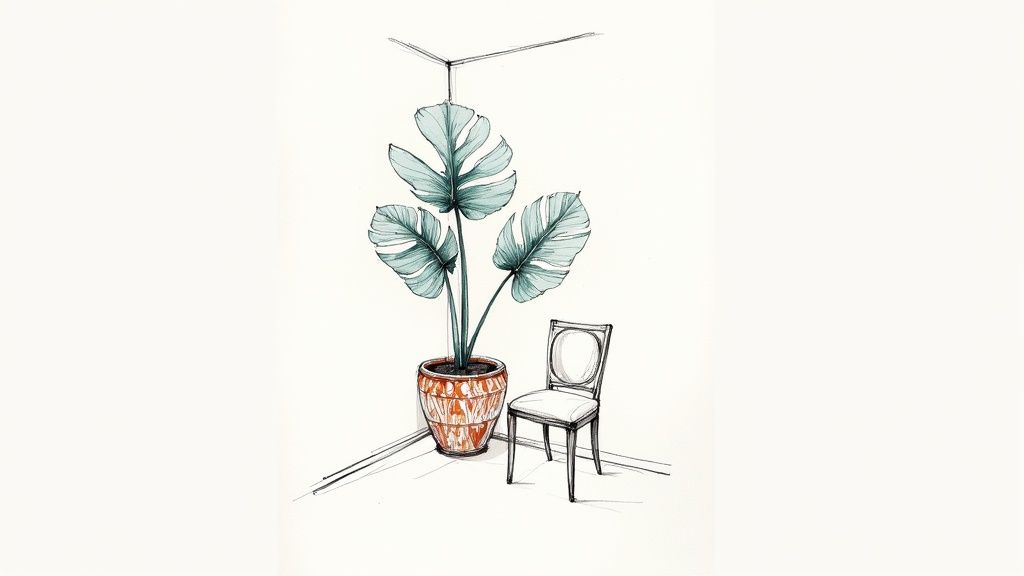
Sometimes, a little pot on the windowsill just won't cut it. You're after a masterpiece, a living sculpture that can turn an ordinary room into something extraordinary. This is where statement plants come in—the large, dramatic, and architecturally interesting plants that have become absolute staples in New Zealand interior design.
More than just a splash of green, these plants act as a focal point, drawing the eye and anchoring your entire decor. They bring a sense of scale, life, and drama that smaller plants simply can't match. If you’re ready to make a bold move and give your home a 'wow' factor that’s both beautiful and alive, this is your starting point.
What Makes a Plant a Statement Piece
A plant earns its "statement" title through a few key qualities. It’s not just about getting the biggest one you can find, although size is often a huge part of it. It’s about presence.
- Impressive Scale: Think of a towering Fiddle Leaf Fig or a broad Kentia Palm. Their size physically commands attention and can even make a ceiling feel higher.
- Unique Shape or Form: Plants with unusual leaf shapes create fascinating silhouettes. Nothing does this better than the iconic split leaves of a Monstera.
- Striking Foliage: Bold colours or dramatic variegation can turn a plant into a piece of living art, captivating anyone who walks into the room.
Choosing one of these botanical icons is an investment in your home’s look and feel. Knowing how to care for them is the key to protecting that investment so they can remain a stunning centrepiece for years to come.
Iconic Statement Plants for Kiwi Homes
Some plants have rightfully earned their spot as the go-to statement pieces in Aotearoa. They blend breathtaking looks with care routines that are actually manageable, making them some of the best indoor plants for home decorators wanting to make an impact.
1. Monstera Deliciosa (Swiss Cheese Plant) No plant defines modern indoor style quite like the Monstera. Its iconic, split (or fenestrated) leaves are instantly recognisable and bring a lush, tropical vibe to any space. It’s a true phenomenon in New Zealand, going from an outdoor garden staple of decades past to the absolute star of indoor living. This "Monstera madness" saw sales on Trade Me surge by an incredible 111% after December 2017, a trend driven by urbanisation and our desire for green companions in apartments. You can dive deeper into this Kiwi plant frenzy in this great analysis from The Spinoff.
- Light: Bright, indirect light is what encourages those famous splits in the leaves.
- Water: Give it a good soak when the top few centimetres of soil feel dry.
- Difficulty: Moderate
2. Fiddle Leaf Fig (Ficus lyrata) The Fiddle Leaf Fig is the darling of interior design magazines for a reason. Its huge, violin-shaped leaves and distinct, tree-like form bring a sophisticated, natural elegance to living rooms and bright corners.
- Light: It’s a light-lover and needs lots of it—bright and indirect. A spot near a north-facing window is often perfect in a NZ home.
- Water: Water when the top inch of soil is dry, but be very careful not to let it sit in a soggy pot. They hate wet feet.
- Difficulty: High – can be notoriously fussy about its conditions.
3. Bird of Paradise (Strelitzia nicolai) For a truly grand and tropical statement, you can't go past the Bird of Paradise. Its enormous, banana-like leaves create an instant jungle vibe. This plant grows tall and upright, making it absolutely ideal for filling empty vertical space with a splash of the exotic.
- Light: Loves bright light, and will even appreciate a few hours of direct morning sun.
- Water: Keep the soil consistently moist (but not waterlogged) during its growing season in spring and summer.
- Difficulty: Moderate
Placement and Potting for Maximum Impact
Where you put your statement plant is just as important as which one you choose. Give it a spot where it has room to grow and can be admired from multiple angles—think corners of living rooms, next to a feature chair, or in a bright entryway.
Remember, a statement plant needs a statement pot. Choose a decorative pot that complements both the plant and your room’s decor. It must have good drainage and be large enough to give the roots space, which is crucial for the long-term health of a big specimen.
Trending Plants for the Modern Enthusiast
Once you've got the hang of the basics, a whole new world of incredible, sought-after plants starts to open up. This is where we get into the fun stuff: the trendy varieties that are all over the Kiwi plant scene. These are the social media darlings, celebrated for their jaw-dropping variegated leaves, unique textures, and elegant, trailing shapes.
For many Kiwis, especially those in urban centres, these are more than just plants—they've become cherished 'plant pets'. This is particularly true for renters in city apartments where having a furry friend often isn't an option. Let's explore what makes these plants so special and the slightly more involved care they need to really shine.
The Magic of Variegation and Texture
So, what makes a plant an 'It' plant? More often than not, it's all about the leaves. Plants with wild patterns and interesting textures bring a kind of visual drama that a simple splash of green just can't match. They're like living, breathing art, constantly unfurling new, one-of-a-kind leaves.
-
Variegated Plants: These are the plants with multi-coloured leaves, showing off splashes, stripes, or speckles of white, cream, pink, or yellow. This is caused by a lack of chlorophyll in parts of the leaf, which makes them stunning but also a bit trickier. Since the non-green bits can't photosynthesise, these plants usually need brighter, indirect light than their all-green relatives.
-
Textured Wonders: Picture the velvety leaves of a Philodendron Micans or the deep, ribbed foliage of an Anthurium. These plants are incredibly tactile and add a sensory depth to your indoor jungle, making for a much richer, more engaging space.
Jumping on these trends is a blast, but it's always best to pick a plant you know you'll love long after the hype has settled.
Top Trending Plants in New Zealand Homes
While trends can be fleeting, a few plants have truly captured the hearts of New Zealanders with their unique beauty and fascinating growth. They ask for a bit more from you than the beginner-friendly options, but the payoff is a plant that's nothing short of spectacular.
1. Hoya Varieties (Wax Plant) Hoyas have absolutely exploded in popularity, and it's easy to see why. People adore their waxy leaves and incredible, fragrant clusters of star-shaped flowers. As trailing plants, they're perfect for hanging baskets or for training up a small trellis. The Hoya Obovata, with its big, round, splashy leaves, is a firm favourite right now.
The rise of the Hoya is a great window into how our lifestyles shape our plant choices. Their low-fuss care and gorgeous trailing habit are a perfect match for modern Kiwi homes. This reflects a broader shift where young renters in pet-free city flats are turning to plants for company, a trend covered in reports on New Zealand's evolving indoor plant market.
- Light: Bright, indirect light is a must. A little soft morning sun can even encourage them to flower during the growing season.
- Water: Let the soil dry out almost completely between waterings. Their semi-succulent leaves store water, making them pretty drought-tolerant.
- Difficulty: Moderate
2. Philodendron 'Pink Princess' This is, without a doubt, the reigning queen of social media. The 'Pink Princess' features dark green, heart-shaped leaves with amazing splashes of vibrant, hot pink. Every new leaf is a complete surprise, which makes it a ridiculously exciting plant to grow.
The key to variegated plants like the 'Pink Princess' is finding that sweet spot. Too little light, and you'll lose the pink. Too much direct sun, and those delicate pink and green patches will scorch in a heartbeat.
- Light: Bright, indirect light is non-negotiable if you want to keep that stunning pink colouration.
- Water: Water when the top few centimetres of soil feel dry. Give it a moss pole to climb, and you'll be rewarded with bigger, healthier leaves.
- Difficulty: Moderate to High
3. Calathea 'White Fusion' Calatheas, or Prayer Plants, are famous for their mesmerising leaves, and the 'White Fusion' is a true work of art. Its leaves look like they've been painted with delicate brushstrokes of green and white, with a beautiful lilac-purple on the underside.
- Light: Medium to bright indirect light is best. Keep it out of direct sun, which will fade its colours and burn the fragile leaves.
- Water: Likes its soil to stay consistently moist, but never soggy. It absolutely needs high humidity, so a pebble tray or a humidifier is essential.
- Difficulty: High – notoriously fussy about its water and humidity levels.
Essential Care for Thriving Indoor Plants
Alright, let's get our hands dirty. Knowing the basics of ongoing care is what turns a home with a few plants into a thriving indoor jungle. Think of this as your toolkit for keeping your green friends happy, moving beyond just surviving to actually flourishing.
Nailing these fundamentals is the real secret. And we'll start with the biggest one for new plant parents: watering.
Mastering the Art of Watering
If there’s one mistake we all make, it’s loving our plants a little too much with the watering can. Overwatering is the number one killer of houseplants, leading to root rot before you even realise there’s a problem.
The golden rule is beautifully simple: always check the soil before you water.
Just poke your finger about 2-3 cm deep into the potting mix. If it feels damp, step away. Wait another day or two. If it’s dry to the touch, it's time for a good drink. Water generously until you see it running out of the drainage holes at the bottom, then make sure the pot isn't left sitting in a puddle.
Feeding Your Plants Through the Kiwi Seasons
Think of fertiliser as a power-up for your plants. It’s the extra boost of nutrients they need to push out new leaves and stay vibrant, but only when they're actually using that energy.
Here in the Southern Hemisphere, the main growing season is spring through summer, which is roughly September to February. During these months, feeding your plants every 2-4 weeks with a good quality liquid fertiliser is perfect. Once growth slows down in the cooler, darker months from March to August, you can cut back completely.
A healthy root system is the foundation of a happy plant. The right potting mix provides aeration, drainage, and support. To give your plants the best start, learn more about choosing a quality indoor potting mix for your houseplants.
Simple Pest Management
Every now and then, you might spot some tiny, unwelcome guests like spider mites or mealybugs. Don’t panic! Catching them early is the key.
For a few stray pests, just wiping the leaves down with a damp cloth can be enough to get rid of them. If you've got a more stubborn problem, a simple spray made from neem oil, a drop of dish soap, and water is a fantastic, eco-friendly solution. A quick check of your plants every week or so will help you keep them healthy and pest-free.
Your Houseplant Questions, Answered
Even with the best guide in hand, there are always a few lingering questions that pop up as you get to know your plants. This is where we tackle some of the most common queries we hear from our fellow Kiwi plant parents, giving you clear, simple answers to build your confidence.
Think of this as your go-to cheat sheet for those "what if" moments. From finding the perfect pet-safe greenery to knowing exactly when it's time for a bigger pot, we’ve got you covered.
What Are the Best Air-Purifying Plants for NZ Homes?
If you're looking to bring a bit of freshness indoors, some of the most effective and forgiving plants for Kiwi homes are the Snake Plant (Dracaena trifasciata), Spider Plant (Chlorophytum comosum), and the elegant Peace Lily (Spathiphyllum). They're all well-known for their knack for filtering out common household toxins.
Many people wonder how much plants really help. For a bigger picture on improving your home's atmosphere, this guide on indoor air quality solutions is a great read. And don't forget the Zanzibar Gem (ZZ Plant) – it's another brilliant air purifier that asks for almost nothing in return.
Which Popular Houseplants Are Safe for Pets?
When you’ve got furry family members, plant safety is a top priority. Thankfully, you don’t have to sacrifice style for safety! There are plenty of gorgeous, non-toxic plants that will give you complete peace of mind.
Here are a few popular and safe choices you’ll find in homes across New Zealand:
- Spider Plants (Chlorophytum comosum)
- Calathea varieties (like the beautiful Prayer Plant)
- Hoya species (often called the Wax Plant)
- Parlour Palms (Chamaedorea elegans)
It’s always a good habit to double-check a specific plant’s toxicity before you bring it home, but this list is a fantastic, worry-free starting point.
How Do I Know When to Repot My Plant?
Giving your plant a new home is a skill every plant parent needs. A good rule of thumb is to repot your houseplants every 1-2 years, ideally during their main growing season. For us here in New Zealand, that’s spring (starting around September).
So, how can you tell it's time? Watch for roots peeking out of the drainage holes, water that rushes straight through the pot without soaking in, or if the plant just looks comically oversized for its container.
When you do repot, choose a new pot that’s only about 2-5 cm wider in diameter. This gives the roots room to grow without overwhelming them with too much soil, which can lead to soggy roots.
Ready to find the perfect green friend for your space? Explore the incredible selection from trusted sellers across New Zealand at Jungle Story. Find your next botanical treasure and have it delivered right to your door. Visit us at https://junglestory.co.nz to start your adventure.