
First things first, let's clear up a common mix-up. The stunning 'Bird of Paradise' we all love to grow in New Zealand is the Strelitzia plant, not the exotic, feathered birds from Papua New Guinea. This guide is your complete roadmap to growing these incredible architectural plants in your Kiwi home or garden.
Your Guide to Strelitzia in New Zealand
The name 'Bird of Paradise' conjures up images of colourful, dancing birds in faraway rainforests. And while New Zealand has its own amazing birdlife, the one you’ll find in our gardens and living rooms is a plant. It gets the name from its flower, which looks uncannily like a tropical bird in mid-flight. This guide is all about the Strelitzia genus—the plant behind the famous name.
We'll introduce you to the two main stars you'll find across Aotearoa: the towering Strelitzia nicolai (Giant White Bird of Paradise) and the classic Strelitzia reginae (Orange Bird of Paradise). Both have found a happy second home here in our temperate climate, growing well from the subtropical warmth of Northland right down to sheltered spots in the South Island.
Plant vs Bird: A Quick Clarification
It’s an easy mistake to make, but the plant and the bird are worlds apart. New Zealand is home to 363 unique bird species, but the actual birds-of-paradise aren't among them. That very distinct family of birds lives mainly in New Guinea and parts of Australia.
The Strelitzia plant, originally from Southern Africa, earned its nickname because its striking orange and blue flower bracts look just like the head and beak of a crested bird. It's this dramatic appearance that makes it such a knockout feature plant.
Creating Your Own Tropical Oasis
Whether you're dreaming of a massive indoor statement piece with those iconic paddle-like leaves, or you want to build a dense, tropical vibe in the garden, the Bird of Paradise is a fantastic choice. Its bold structure and vibrant flowers add an instant touch of the exotic.
These plants are more than just greenery; they're living sculptures that can totally define a space. As a standout tropical plant, your Strelitzia can become the focal point of a room's design. For instance, you could explore different tropical ideas for bedrooms to weave your plant into a cohesive, resort-like feel.
Right, let's get into it. This guide will walk you through everything you need to know for success.
Choosing the Right Strelitzia for Your Space
Picking the right Bird of Paradise is a lot like choosing a feature piece of art for your home. It has to fit the space, suit your style, and ultimately, bring you joy. Here in New Zealand, the choice usually comes down to two incredible but very different siblings: the grand Strelitzia nicolai and the classic Strelitzia reginae. One is a giant that reaches for the ceiling, while the other is famous for putting on a world-class floral show.
Getting this choice right from the get-go is the key to a plant that doesn’t just survive but thrives, becoming a real centrepiece in your home or garden. So, let’s break them down to help you decide which of these botanical superstars is the one for you.
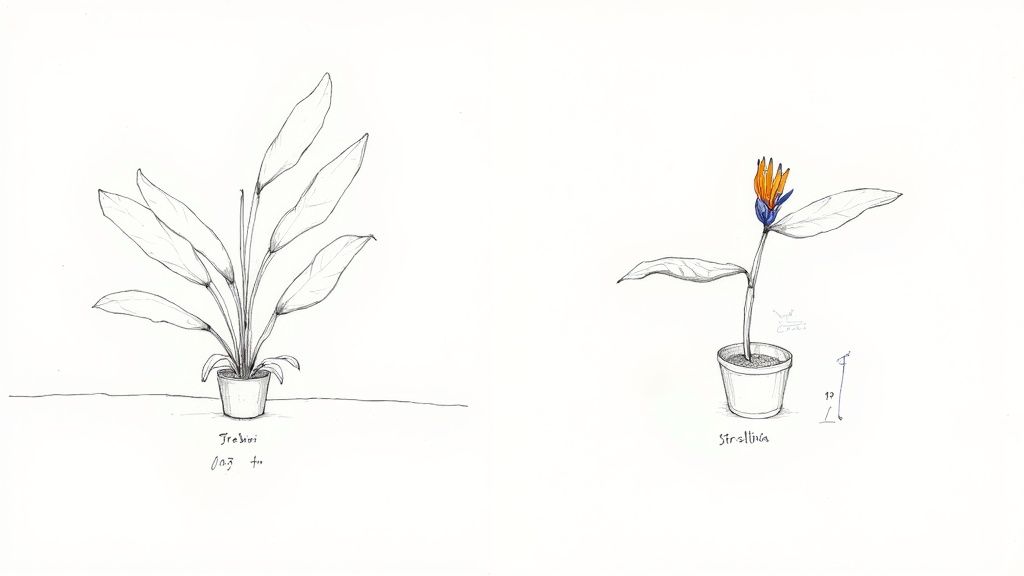
The Dramatic Statement Maker: Strelitzia nicolai
Often called the Giant White Bird of Paradise, Strelitzia nicolai is all about lush, oversized foliage. Think of it as the ultimate living sculpture. Its enormous, banana-like leaves can stretch up to 2 metres long, creating an instant jungle vibe that demands attention.
This is the plant you go for when you have some serious space to fill and want that bold, architectural look. It’s perfect for:
- Homes with high ceilings: Its impressive vertical growth is a natural fit for airy, open-plan living spaces, atriums, or any room with a soaring ceiling.
- Sheltered outdoor spots: In the warmer parts of New Zealand, it makes a stunning tropical screen in a courtyard. Just be sure to protect it from harsh frosts and strong winds.
While its white and deep blue flowers are beautiful, they’re a rare sight indoors. With S. nicolai, the magnificent foliage is the real star of the show.
The Iconic Flower Power: Strelitzia reginae
When most of us picture a ‘Bird of Paradise’, it’s the Strelitzia reginae we’re thinking of. This is the classic orange variety, beloved for its vibrant, unmistakable flowers that look like exotic birds mid-flight. It’s a much more compact, clumping plant than its giant cousin.
If the nicolai is a feature wall, the reginae is the perfect armchair companion—stylish, manageable, and delivering an incredible pop of colour. Its paddle-shaped leaves are more leathery and grow on elegant, individual stems, giving it a much tidier look.
While its leaves are beautiful in their own right, the main reason people choose Strelitzia reginae is for those incredible flowers. Give it enough light and the right care, and a mature plant will reward you with its signature orange and blue blooms all through the warmer months.
This makes it the go-to for anyone who wants that iconic tropical flower. It’s also slightly more cold-tolerant than S. nicolai, meaning it does well both indoors in a bright spot and outdoors in garden beds across many parts of the country.
Strelitzia Nicolai vs Strelitzia Reginae: A Quick Comparison
To make the choice even clearer, here’s a simple side-by-side look at what sets these two apart. This should help you figure out whether you need the towering drama of nicolai or the colourful flair of reginae.
| Feature | Strelitzia nicolai (Giant White) | Strelitzia reginae (Orange) |
|---|---|---|
| Maximum Height | Can reach 6-10 metres outdoors; often ceiling-height indoors. | Typically grows to 1.5-2 metres tall. |
| Primary Appeal | Huge, lush, banana-like leaves create a jungle canopy. | Iconic orange and blue flowers that bloom reliably. |
| Growth Habit | Tree-like, with a central trunk that forms over time. | Clumping, sending up multiple leafy stems from the base. |
| Best For | Large indoor spaces with high ceilings; creating a dramatic screen outdoors. | Medium-sized indoor pots; garden beds where flowers are a feature. |
| Light Needs | Prefers bright, indirect light; can handle some direct sun. | Needs several hours of direct sun to encourage flowering. |
Ultimately, both are stunning plants, but they play very different roles. One brings the jungle indoors with its scale, while the other delivers that classic, colourful tropical punch.
How to Plant Your Bird of Paradise for Success
Getting your Strelitzia set up for a long and happy life starts the moment you bring it home. A strong start is everything, and that means giving it the perfect foundation, whether you’re planting it in a garden bed or an indoor pot. This guide is tailored specifically for New Zealand conditions, ensuring your new plant feels right at home from day one.
Think of it like laying the groundwork for a house; if the foundation is solid, the structure will stand strong for years. We’ll walk through finding the perfect spot, mixing the ideal soil, and giving your Bird of Paradise the best possible chance to truly flourish.
Finding the Perfect Spot Outdoors
For those planting a Bird of Paradise outside, your first decision is the most important: location. These plants are after a ‘Goldilocks’ spot—not too harsh, not too shady, but just right. As subtropical natives, the goal is to replicate that environment as best you can in your Kiwi garden.
Look for a position that gets at least six hours of bright, direct sun each day. This is the secret to encouraging those iconic flowers on S. reginae. Morning sun is perfect, as the intense afternoon sun during a New Zealand summer can sometimes be a bit much and scorch the leaves.
Shelter is just as important. Those large, paddle-like leaves can get shredded by strong winds, so a spot protected by a fence, wall, or other established plants is ideal. If you’re in a cooler region, protection from heavy frosts is essential for survival, especially those carried on chilly southerly winds.
Preparing the Garden Soil
Strelitzia are hungry plants, but they absolutely despise "wet feet," meaning their roots can't stand sitting in soggy soil. The key to a happy outdoor plant is creating a rich, well-draining environment that mimics the fertile ground of their native habitat.
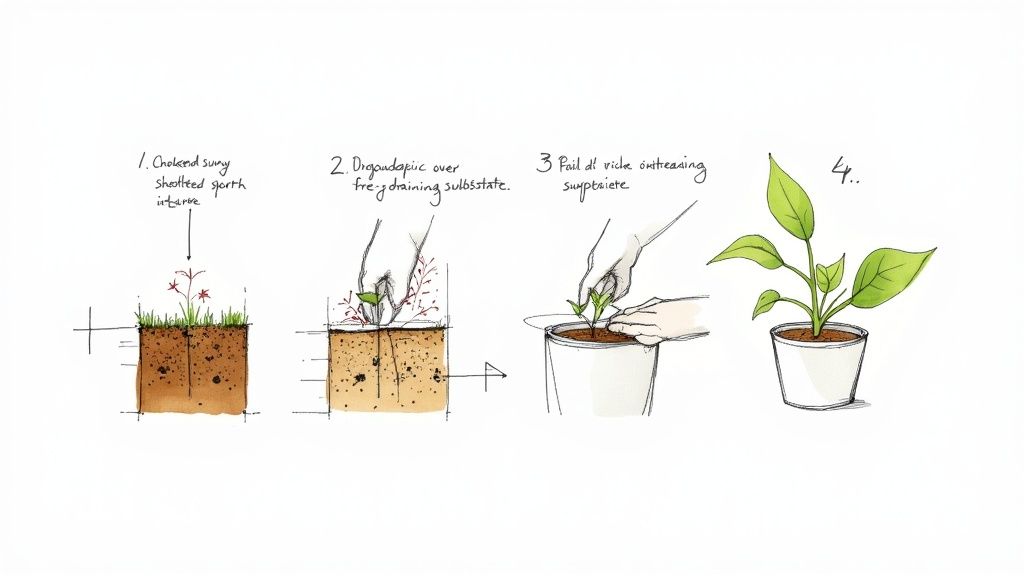
Follow these steps to get your garden bed ready:
- Dig a Generous Hole: Aim for a hole that’s twice as wide and just as deep as the plant's root ball. This gives the roots plenty of loosened soil to stretch out into.
- Amend the Soil: Mix the soil you dug out with a good amount of organic matter. Compost, well-rotted manure, or sheep pellets are all fantastic choices.
- Ensure Good Drainage: If you're dealing with heavy clay soil, common in many parts of New Zealand, mix in some pumice or sand. This works wonders for aeration and stops the soil from becoming waterlogged.
The ideal soil texture is crumbly and loose. If you squeeze a handful, it should hold its shape for a moment before falling apart easily. That’s the sign of a perfect balance between moisture retention and drainage.
The best time to get your Bird of Paradise in the ground in New Zealand is during spring (September-November) or early autumn (March-April). This gives the plant a chance to establish its root system in milder weather, before the stress of summer heat or winter cold kicks in.
Potting Your Indoor Bird of Paradise
If you're growing your Strelitzia indoors, your focus shifts from the garden plot to the pot. Nailing the right container and potting medium is the blueprint for a thriving indoor specimen.
First, choose a pot that’s only slightly larger than the current root ball—about 5-10 cm wider in diameter is plenty. A pot that’s too big will hold onto excess moisture, which can lead to the dreaded root rot. And of course, make sure it has plenty of drainage holes.
Next up is the soil blend. A standard potting mix is a good starting point, but you’ll want to give it an upgrade. For the best results, mix:
- Two parts premium potting mix
- One part perlite or pumice for aeration
- One part orchid bark to create air pockets
This recipe provides the structure, nutrients, and fantastic drainage that Strelitzia roots love. For a deeper dive into creating the perfect blend, check out our guide to potting mix and soil components that work wonders for tropicals. With the right foundation set, your plant is ready for a lifetime of growth.
A New Zealand Seasonal Care Routine
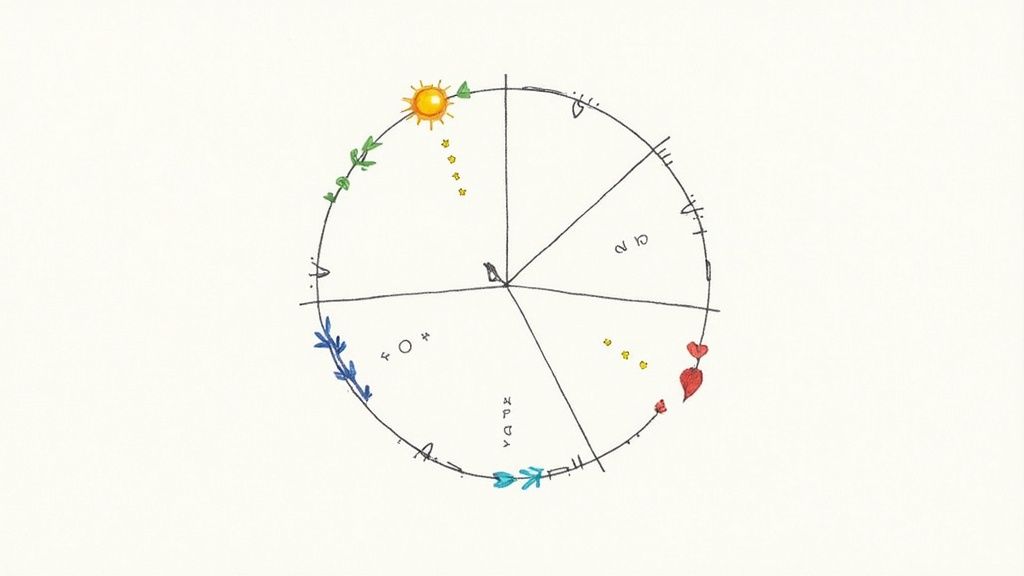
Caring for your Bird of Paradise isn't about a single set of rules; it's a living rhythm that flows with the Kiwi seasons. Just like our gardens wake up in spring and slow down in winter, your Strelitzia has its own annual cycle. Tapping into this calendar is the secret to not just keeping your plant alive, but helping it truly flourish.
Mapping out your care routine by season ensures your plant gets exactly what it needs, right when it needs it. From the vigorous growth of spring to the quiet dormancy of winter, each period has its own focus. This approach heads off common problems like overwatering in winter and ensures you're providing the right fuel for growth and flowering in the warmer months.
Spring Wake Up Call (September – November)
As the days get longer and warmer, your Bird of Paradise begins to stir from its winter rest. This is the main growing season, a time for the energetic unfurling of new leaves and, for mature plants, the exciting potential for flower development. Your job now is to provide the fuel for this impressive growth spurt.
Start by increasing how often you water. You'll want to let the soil dry out slightly between drinks, but you'll quickly notice the plant is much thirstier than it was during winter. Now is also the crucial time to start feeding. A balanced liquid fertiliser applied every two to four weeks will give it the nutrients it needs to produce those big, beautiful leaves.
For an in-depth look at choosing the right food, our guide on indoor plant fertilizer offers fantastic, tailored advice. This is the most important feeding period of the year, setting the stage for a healthy summer.
Summer Maintenance Mode (December – February)
New Zealand summers can bring intense heat and light, shifting your focus from encouraging growth to simply maintaining hydration and health. During the peak of summer, your bird of paradise nz will be at its most active, transpiring more water through its large leaves just to stay cool.
Watering becomes your main task. Check the soil every few days, especially during hot, dry spells. Indoor plants might need watering more than once a week, while outdoor plants will appreciate a deep soak to keep their root systems happy. Just be careful not to let the pot sit in a saucer of water, as this can still lead to root issues, even in warm weather.
A good rule of thumb is to check the top 5-7 cm of soil. If it feels dry to the touch, it’s time to water thoroughly until you see it run out of the drainage holes. This ensures the entire root ball gets a drink.
Autumn Wind Down (March – May)
As the days shorten and the temperatures begin to cool, your Strelitzia will naturally start to slow its growth. This is the transition period where you help the plant prepare for its winter dormancy. It's a gradual process of easing off the intense care of summer.
You can begin to reduce the frequency of both watering and feeding. Your plant won't be using as many resources, so you can stretch out the time between waterings and cut back on fertiliser. By the end of autumn, you might only be feeding it once a month, if at all, and watering less often as the soil takes longer to dry. This all signals to the plant that it's time to rest.
Understanding the unique hydration needs of your Strelitzia is vital. For broader insights into optimal watering techniques for flowering plants, you might find this guide helpful as it explores the core principles of seasonal watering.
Winter Rest Period (June – August)
Winter is the dormant season for your Bird of Paradise. Growth will slow to a near standstill, and the plant's needs change dramatically. The biggest danger during a New Zealand winter, especially for indoor plants, is overwatering. With lower light levels and cooler temperatures, the soil stays damp for much longer, creating the perfect conditions for root rot.
For indoor plants, drastically reduce your watering. You might find you only need to water once every three to four weeks, or even less. Always, always check the soil moisture levels before adding any more water. For outdoor plants, the main concern is frost. In most of the North Island, they’ll be fine in a sheltered spot, but in colder regions, providing frost cloth protection on cold, clear nights is essential to prevent leaf damage.
Stop feeding completely during these months. The plant is resting and simply doesn't need the extra nutrients. Your seasonal care routine comes full circle as you protect your plant through the cold, getting it ready for the burst of new life that will arrive again with spring.
Solving Common Pest and Health Issues
Even the toughest plants have an off day, and your Bird of Paradise is no different. Think of this as your plant's first-aid kit – a quick field guide to spotting and solving the common problems Strelitzia can face here in New Zealand, from tiny indoor critters to their single biggest health threat.
A little know-how is all you need to tackle these issues gently and effectively, keeping your plant healthy and looking its structural best for years. Most problems, you'll find, are surprisingly easy to fix once you know what you’re looking for.
Identifying and Treating Common Pests
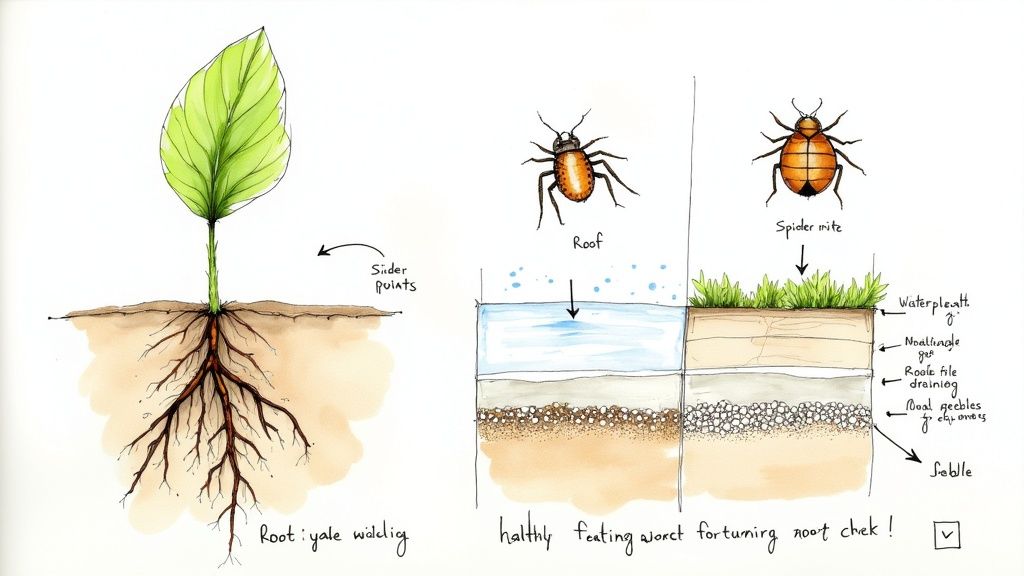
While they’re generally robust, indoor Strelitzia can sometimes attract a few unwelcome guests. The dry air inside our homes, especially with the heater blasting in winter, creates the perfect environment for sap-sucking pests. The two you're most likely to encounter on a bird of paradise nz are mealybugs and spider mites.
- Mealybugs: These fluffy, white, cotton-like insects love to tuck themselves into the tight spots where leaves join the stem. They feed on sap, and a big infestation can lead to yellowing leaves and stunted growth.
- Spider Mites: These guys are tiny arachnids, almost impossible to spot with the naked eye. Your first clue is usually the fine, silky webbing on the undersides of leaves or a delicate, speckled pattern on the leaf surface.
Luckily, you don't need harsh chemicals to show them the door. For a small-scale invasion, a cotton bud dipped in rubbing alcohol will deal with mealybugs on contact. If the problem is more widespread, a natural horticultural oil is your best bet.
The most effective and gentle solution for both mealybugs and spider mites is neem oil. It’s a natural, plant-based insecticide and fungicide that disrupts the pests' life cycle without harming your plant or the environment.
Simply wiping the leaves down with a damp cloth every so often is also a fantastic preventative measure. It physically removes pests and dust, which helps the plant photosynthesise better. For a full rundown on how to use it safely, check out our helpful guide on applying neem oil for plants.
Preventing the Number One Enemy: Root Rot
Pests can be annoying, but the undisputed number one killer of Bird of Paradise plants is root rot. This problem comes from a soil-borne fungus that absolutely thrives in soggy, poorly aerated conditions – a real risk in New Zealand's damper climate, especially for potted plants in winter.
The first signs of trouble often show up in the leaves. They might start to yellow, droop, or get brown, mushy spots right at the base. If you suspect root rot, you might also notice a musty smell coming from the soil.
Prevention is absolutely the best cure here. It all comes down to getting the watering and soil mix right from day one. Always use a well-draining potting mix with plenty of pumice or bark, and make sure your pot has good drainage holes. Most importantly, let the top 5-7 cm of the soil dry out completely before you even think about watering again. This simple habit is the single most important thing you can do to keep your plant’s roots healthy and strong.
Propagating Your Plant to Share or Expand
One of the best parts of being a plant parent is sharing your success. If your Bird of Paradise is happy and thriving, you can easily create more to expand your own indoor jungle or give a truly personal gift to a friend. While you can grow them from seed, it’s a marathon of patience best left to the truly dedicated.
The quickest and most reliable method by far is division. This just means separating a mature, healthy plant into a few smaller, independent ones. It might sound a bit full-on, but it's a natural process that actually reinvigorates the parent plant and gives you brand-new, ready-to-go plants almost instantly.
When and How to Divide Your Strelitzia
Timing is everything if you want your new divisions to take off. The sweet spot for doing this in New Zealand is during early spring (September to October). The plant is just waking up from its winter slowdown and kicking into its active growth phase, which gives the new divisions a full season to get their roots established before the next cool spell.
Ready to give it a go? Here’s a simple, step-by-step guide:
-
Prep the Plant: Give your plant a good, deep watering the day before you plan to divide it. This makes the soil much easier to work with and ensures the roots are hydrated, which helps reduce the shock of being separated.
-
Ease it Out: Carefully slide the whole plant out of its pot. If it’s a big specimen in the garden, you’ll need to dig around the clump with a spade to gently lift it from the ground.
-
Clean the Roots: Gently shake and brush off the excess soil. You want to get a clear look at the root system and see where the different "fans" of leaves connect. The structure is made up of thick, fleshy roots called rhizomes.
-
Find the Divisions: Look for the natural separation points in the clump. A good, viable division will have a fan of leaves with its own decent-sized root system already attached. Aim for sections that have at least 3-4 leaves each, as this gives them enough energy to survive on their own.
-
Make the Cut: Using a clean, sharp knife or spade, carefully slice through the rhizomes to separate the sections you’ve picked out. Be firm but gentle to avoid unnecessarily damaging the roots you want to keep.
Aftercare for New Divisions
What you do next is crucial for helping the new plants settle in. Pot each new division into a container that's just a little bit bigger than its root ball, using a fresh, high-quality, well-draining potting mix.
Think of your new divisions as being in recovery. Pop them in a warm spot with plenty of bright, indirect light—keep them out of harsh, direct sun, which can scorch the already-stressed leaves. Keep the soil lightly moist but never soggy.
Hold off on the fertiliser. It can be tempting to give them a boost, but wait at least a month or two, until you see definite signs of new growth. That's the signal that the roots have established and the plant is ready for a feed. With a bit of care, your new Bird of Paradise babies will be flourishing in no time.
Your Bird of Paradise Questions Answered
Even the greenest thumbs have questions when getting to know a new plant. To help you get your Strelitzia settled in and thriving, we’ve put together some quick answers to the most common queries we hear from Kiwi gardeners.
Why Are the Leaves on My Bird of Paradise Splitting?
It’s easy to think you’ve done something wrong when you see a perfect leaf start to split, but don’t worry – it's completely normal. This is actually a clever trick the plant learned in its windy native habitat. The leaves are designed to tear neatly along their veins, which lets strong winds pass through without snapping the whole leaf off. Genius, right?
While you can’t stop it entirely, you can minimise it. If your plant is outdoors, try to find a spot sheltered from the worst of the wind. Indoors, just keep it out of high-traffic hallways where people might brush past, and a bit of extra humidity will help keep the leaves flexible.
How Long Until My Bird of Paradise Flowers in NZ?
This is where the virtue of patience really comes in. Waiting for that first iconic, bird-like flower is a big moment, but the timing all comes down to the plant's age and how it was started.
- A plant grown from a division of a mature plant will be the quickest, usually taking 2-3 years to flower.
- If you’re growing from seed, you’re in it for the long haul. It can often take 4-7 years, sometimes even longer.
To give it a nudge, make sure it's getting at least six hours of bright, beautiful sun every day. In spring and summer, a good feed with a fertiliser high in potassium and phosphorus can also encourage blooming. Interestingly, letting the plant get a little bit root-bound in its pot can also be the trigger it needs to start producing flowers.
Can I Grow a Giant Bird of Paradise Indoors?
You absolutely can, and a young Strelitzia nicolai makes for a jaw-dropping houseplant. Just be prepared for it to live up to its 'giant' name. This plant has serious ambition and can hit the ceiling in just a few years, so it’s best for homes with high ceilings, airy open-plan living areas, or lofty atriums.
You'll need to keep its size in check by pruning off the oldest, outermost leaves now and then. Eventually, it will need a very large, heavy-duty pot to support its weight and stop it from toppling over.
Is the Bird of Paradise Plant Toxic to Pets?
Yes, unfortunately, the Bird of Paradise is considered mildly toxic to cats and dogs if chewed on or eaten. The leaves, flowers, and stems contain compounds that can upset their stomachs, leading to things like drooling, vomiting, or diarrhoea.
It's very rarely serious, but it's definitely best avoided. We recommend placing your Strelitzia where curious pets can't get to it, or maybe choosing a different pet-friendly plant if you have a known chewer in the house.
Ready to bring one of these architectural beauties into your home or garden? At Jungle Story, we source a stunning range of Strelitzia and other tropical treasures from New Zealand's top growers, and we deliver them straight to your door.
Explore our collection and start your own jungle story today at https://junglestory.co.nz.