
The Pothos plant, often called Devil's Ivy, might just be the most popular houseplant in New Zealand, and for good reason. It's incredibly resilient, looks fantastic, and feels right at home in a huge range of Kiwi living spaces, from a sun-drenched Auckland apartment to a cosy villa down in Dunedin.
Why Pothos Is NZ’s Favourite Houseplant
Walk into almost any home, cafe, or office across New Zealand, and chances are you'll spot the lush, trailing vines of a Pothos. But what is it about this humble plant, also known as Devil's Ivy, that has made it such a beloved feature in our homes? It really comes down to a perfect mix of good looks and a tough-as-nails attitude.
You can think of the Pothos as the ultimate green flatmate—it’s gorgeous to look at but asks for very little in return. It's famously low-maintenance, which means you definitely don't need a green thumb to keep it happy. This easy-going nature makes it the perfect plant for our busy lifestyles and the varied indoor environments up and down the country.
The Ultimate Low-Maintenance Companion
The biggest reason for its popularity is that it’s so forgiving. Pothos are exceptionally tough and can bounce back even if you're a bit forgetful. Forgotten to water it for a week? It’ll probably forgive you. Is your flat a bit on the darker side through winter? Your Pothos will likely be just fine.
This resilience takes away the intimidation factor that can come with houseplants, making it a great starting point for new plant parents. At the same time, seasoned collectors love its reliability and the sheer variety of stunning leaves it offers.
For a lot of Kiwis, the Pothos is more than just a plant; it's a confidence booster. Because it thrives with minimal fuss, it encourages people to keep going on their indoor gardening journey, adding more and more green to their homes.
Here in New Zealand, the Pothos has adapted perfectly to our indoor climates. While it’s not a native species, it flourishes inside and handles the artificial lighting common in our homes and offices. With a bit of care, its trailing stems can grow to an impressive 2.4 metres long, creating a beautiful cascading effect from a high shelf or hanging basket. You can get more insights on its growth habits from the Kings Plant Barn's growing guides.
Key Benefits for Kiwi Homes
Beyond its easy-care reputation, the Pothos brings a few other benefits that make it an ideal choice for New Zealand households:
- Air Purifying: Pothos is well-known for helping filter common indoor air pollutants, which contributes to a healthier living space.
- Looks Good Anywhere: With its heart-shaped leaves and trailing vines, you can style it in so many ways—let it climb a moss pole, hang it in a basket, or let it drape elegantly over furniture.
- Year-Round Greenery: It provides a constant splash of green, bringing life indoors even on the greyest winter days.
At the end of the day, the Pothos has earned its top spot in NZ homes by being incredibly rewarding. It gives you maximum visual impact for minimal effort, making it the go-to choice for anyone wanting to enjoy the beauty of indoor plants without the stress.
Exploring Popular Pothos Varieties in New Zealand
One of the best things about bringing a Pothos home is the sheer variety on offer. They all share that famously easy-going nature, but each type has its own personality, bringing a completely different look to your space. When you start looking for a pothos plant nz, you’ll discover an amazing range of colours and patterns, from sunny yellows to deep, dramatic greens.

Choosing a variety is a bit like picking art for your walls; it’s all about finding the one that matches your style. Some are subtle and classic, while others are loud and proud, demanding to be the centre of attention. Let’s dive into some of the most popular Pothos varieties you're likely to come across here in New Zealand.
The Classics Everyone Loves
These are the tried-and-true Pothos that have well and truly earned their place in Kiwi homes. You’ll find them pretty easily, they grow like weeds (in a good way!), and they're incredibly forgiving, which makes them a fantastic starting point for any new plant parent.
- Golden Pothos (Epipremnum aureum): This is the quintessential Pothos. Its bright green, heart-shaped leaves are generously splashed with golden-yellow variegation. It's the sunny, cheerful friend that instantly brightens up any corner.
- Marble Queen Pothos: For a more elegant, painterly vibe, the Marble Queen is an absolute stunner. Its leaves are heavily streaked and speckled with creamy white, creating a gorgeous marbled effect. No two leaves are ever the same.
- Neon Pothos: If you’re after a real statement piece, the Neon Pothos is your guy. The leaves are a shocking, vibrant lime green with no patterns at all. That pop of electric colour looks incredible against a dark wall and adds a really modern, energetic feel.
These three really are the backbone of many indoor plant collections. You just can't go wrong.
The Sought-After Beauties
Once you've got the bug, you might want to hunt for something a little different. There are some truly beautiful Pothos out there with unique textures and patterns. They can sometimes be harder to find, but they are absolutely worth the search.
The main difference comes down to variegation—those beautiful patterns of different colours on the leaves. Variegation happens when parts of the leaf don't have chlorophyll, which is the pigment that makes plants green. This is also why a highly variegated plant, like a Snow Queen, needs a bit more light than its solid green cousins.
A plant’s variegation is its signature. A Golden Pothos might have bold, confident splashes of yellow, while a Manjula Pothos has soft, watercolour-like strokes of cream and green, showcasing just how diverse a single species can be.
A Quick Guide to Pothos Varieties in NZ
To help you choose, here’s a quick-reference table comparing some popular varieties. It’s a handy way to match a plant to your home’s look and the amount of light you have available.
| Variety Name | Key Visual Feature | Light Tolerance | NZ Availability |
|---|---|---|---|
| Golden Pothos | Green leaves with splashes of golden yellow. | Very High (Low to Bright) | Common |
| Marble Queen | Heavily speckled with creamy white variegation. | Medium (Needs Bright Light) | Common |
| Neon Pothos | Solid, vibrant lime-green leaves. | High (Low to Bright) | Common |
| Jade Pothos | Solid, deep dark green leaves. | Very High (Tolerates Low Light) | Fairly Common |
| Snow Queen | Almost pure white leaves with green flecks. | Low (Needs Bright, Indirect Light) | Less Common |
| Manjula Pothos | Wavy-edged leaves with creamy, white, and green patterns. | Medium (Needs Bright Light) | Rare / Collector |
At the end of the day, the best pothos plant nz for you is the one you fall in love with. Whether it's the classic charm of a Golden Pothos or the rare beauty of a Manjula, there’s a perfect variety out there waiting for you.
Mastering Pothos Care in the NZ Climate
Pothos have a bulletproof reputation, but helping them truly flourish through New Zealand's unique seasons? That's another story. Generic advice from the Northern Hemisphere just doesn't cut it here. This is your guide to keeping your Pothos thriving, whether you're battling a scorching Canterbury summer or a damp Auckland winter.

Getting the Light Just Right
Getting the lighting right is probably the most important piece of the Pothos puzzle. While they’re famous for putting up with low light, giving them plenty of bright, indirect light is what will get you that lush growth and vibrant variegation we all want.
The intense Kiwi sun, especially in summer from December to February, can be a bit much. A spot right up against a north-facing window might actually scorch the leaves, leaving brown, crispy patches. It’s often better to pull the plant a metre or two back from the glass or just pop up a sheer curtain to soften that direct sun.
On the flip side, during our darker winter months from June to August, you’ll want to do the opposite and shuffle your Pothos closer to a window. An east-facing spot is perfect, giving it that gentle morning sun that won't cause any harm. This is especially important for those stunning, highly variegated types like a 'Snow Queen'—maximising winter light is crucial to stop them reverting to plain green.
The Secret to Perfect Watering
If there's one mistake we see with any pothos plant nz, it's overwatering. These guys absolutely hate having 'wet feet'. Trust me, they are far more likely to forgive you for forgetting to water them than for giving them too much love.
The best way to handle it is the good old 'dry out' method. Before you even reach for the watering can, stick your finger about five centimetres into the soil. If you feel any dampness, hold off for a few more days. If it’s dry, then it’s time to give it a proper drench until you see water running out of the drainage holes.
Your watering schedule isn't set in stone; it's a conversation with your plant and its environment. A Pothos in a warm, dry Hawkes Bay living room will need water more often than one in a humid, cool Dunedin flat.
You'll also need to adjust your routine as the seasons change. Through the active growing period of spring and summer, you might find yourself watering every 7-10 days. But in winter, when the plant's growth slows right down, that can stretch out to every two or even three weeks.
Soil and Feeding for a Healthy Plant
Pothos aren't particularly fussy about soil, but what they do need is good drainage to avoid root rot. Most standard indoor potting mixes you can grab at any Kiwi garden centre will work just fine. If you feel like giving it a bit of an upgrade, just mix in a handful of perlite or orchid bark to improve the aeration.
When it comes to feeding, less is definitely more. Your Pothos only needs a feed during its active growing season, which for us is from spring through to autumn.
Just follow this simple routine:
- Choose a Fertiliser: A balanced liquid indoor plant food is ideal.
- Dilute Correctly: Always dilute the fertiliser to half the strength recommended on the pack. This stops you from accidentally burning the roots.
- Feed Regularly: Apply the diluted mix every 4-6 weeks from about September through to April.
- Rest in Winter: Stop feeding completely over the cooler months. This lets your plant have a natural rest.
By following these climate-specific tips, you can ensure your Pothos doesn't just survive, but truly thrives year-round in your New Zealand home. For more tailored advice, check out our extensive plant care guides for your other green companions.
Troubleshooting Common Pothos Problems
Even the most bulletproof houseplants can have an off day. Don't worry—it's usually just your plant’s way of letting you know what it needs.
When you spot a yellow leaf or a crispy tip on your beloved pothos plant nz, don't think of it as a failure. See it as a conversation starter. This guide is your diagnostic toolkit for solving the most common issues Kiwi plant owners face, with straightforward, actionable steps.

Yellowing Leaves
Seeing a vibrant green leaf turn a sad shade of yellow is probably the most common worry for Pothos parents. In 90% of cases, this is a dead giveaway for overwatering. When the soil stays soggy for too long, the roots can't breathe, which can lead to root rot and those tell-tale yellow leaves.
The fix is simple: let your plant dry out. Before you even think about watering again, stick your finger about five centimetres into the soil. If it feels even slightly damp, hold off for a few more days. It’s also a good idea to make sure your pot has drainage holes and isn’t sitting in a saucer full of water.
Brown Crispy Tips or Edges
If the edges of your Pothos leaves are turning brown and brittle, your plant is probably thirsty. This usually points to one of two things: under-watering or low humidity. The dry air from heat pumps and heaters, especially during our chilly Kiwi winters, can quickly suck the moisture right out of the leaves.
To sort this out, give the plant a proper, thorough watering whenever the top layer of soil feels dry. You can also give the humidity around your plant a serious boost.
- Misting: A light spray of water over the leaves every few days does wonders.
- Pebble Tray: Pop the pot on a tray filled with pebbles and a little water.
- Grouping: Cluster it with other plants to create its own humid little microclimate.
That extra bit of moisture in the air can make a huge difference, particularly from June to August when the indoor heating is on full blast.
Leggy or Sparse Vines
Is your Pothos looking a bit stretched out, with long, bare stems between each leaf? That's a classic sign it’s not getting enough light. The plant is literally reaching out, trying to find a brighter spot to soak up more energy. You might notice this more in winter when the daylight hours are shorter.
Think of leggy growth as a cry for help. Your Pothos is telling you, "I need more sun!" Moving it to a location with brighter, indirect light will encourage fuller, more compact growth.
To fix this, simply move your Pothos to a brighter spot, like near an east-facing window that gets that lovely, gentle morning sun. And don't be afraid to give it a good trim to fix the existing legginess! Pruning the long vines will encourage the plant to branch out and become much bushier. Bonus: you can use the cuttings to propagate new plants.
Dealing with Common Pests
Pothos are pretty pest-resistant, but they can occasionally attract unwanted visitors like mealybugs. These small, white, fluffy-looking insects love to hide in the nooks and crannies of the plant, especially when the air is warm and dry—conditions often created by our indoor heating during winter.
If you spot them, act quickly to stop them in their tracks.
- Isolate the Plant: Move the affected Pothos away from your other houseplants immediately.
- Manual Removal: Dip a cotton bud in rubbing alcohol and dab it directly onto each mealybug. It's surprisingly effective.
- Neem Oil Spray: For a more widespread issue, a solution of neem oil and water with a drop of dish soap is a fantastic, natural pesticide. Spray the entire plant, making sure to get the undersides of the leaves where pests love to hide.
With these simple troubleshooting tips, you can confidently decode your plant's signals and keep your Pothos looking its absolute best through every New Zealand season.
How to Propagate Pothos and Grow Your Collection
One of the best things about owning a Pothos is realising how ridiculously easy it is to make new plants for free. Propagation isn’t some high-tech science experiment; it’s a simple, super rewarding way to expand your own indoor jungle or share the plant love with friends and family. This guide will walk you through exactly how to multiply your favourite pothos plant nz.
The prime time to take cuttings here in New Zealand is during the main growing season, which runs from spring through to early summer. From about September to January, your Pothos is pumping out new growth, giving your cuttings the best shot at developing strong, healthy roots before things slow down for winter.
Finding the Perfect Cutting
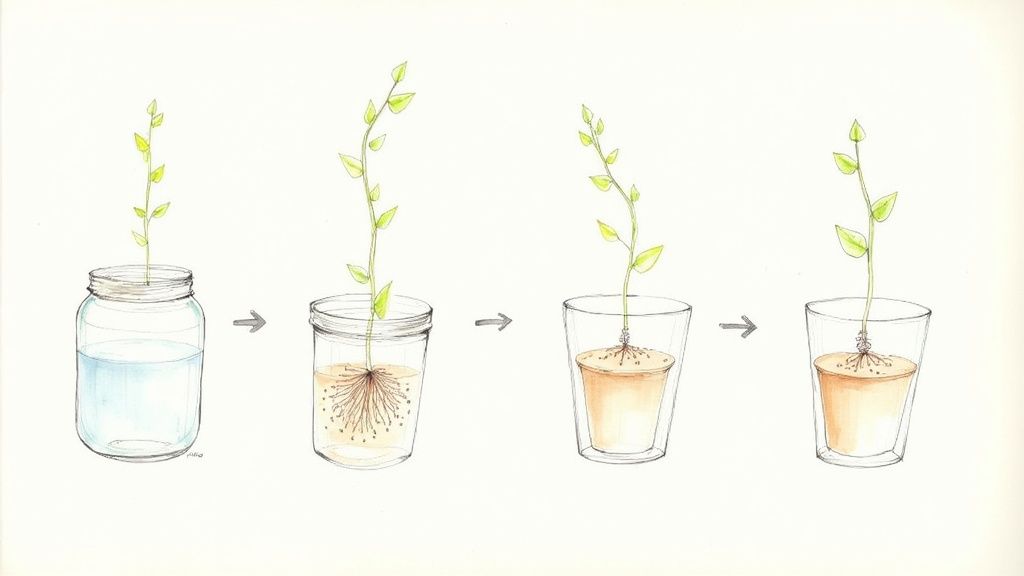
The secret to successful propagation all comes down to a small but vital part of the vine called the node. This is the little brown bump on the stem where a leaf and an aerial root sprout from. It's the magic spot where all new roots will emerge.
Here’s how to grab a great cutting:
- Find a healthy vine with at least four or five leaves.
- Look for the nodes along the stem.
- Make your cut about one centimetre below a node, using clean, sharp scissors or secateurs.
- Prep the cutting by snipping off the leaf closest to the cut end. This makes sure the node is completely exposed and can put all its energy into making roots, not supporting an extra leaf.
Think of the node as the plant's control centre. It holds all the specialised cells needed to grow a whole new root system, so cutting just below it is the single most important step for success.
Two Easy Propagation Methods
Once you've got your cutting, you have two incredibly simple options for turning it into a new plant. Both work a treat, so it really just boils down to what you prefer.
Water Propagation
This is hands-down the most popular method, mainly because it's so cool to watch. You get a front-row seat to the entire root-growing show, which makes it perfect for first-timers and kids.
- Pop your cutting into a jar or vase of clean, room-temperature water.
- Make sure the node is fully submerged, but keep the remaining leaves above the water line.
- Place the jar somewhere with plenty of bright, indirect light.
- Change the water every few days to keep it fresh and full of oxygen.
Within a couple of weeks, you should start seeing tiny white roots shooting out from the node. Once they’re about five centimetres long, your new plant is ready to be potted up in soil.
Soil Propagation
If you want a more direct route, you can plant your cutting straight into soil. This approach skips the transition from water to soil, which can sometimes give the new roots a little shock.
Just dip the cut end of your vine into a rooting hormone (this is optional, but it definitely helps speed things up) and plant it directly into a small pot with a fresh, well-draining potting mix. Keep the soil consistently moist but never soggy. Your cutting will get straight to work developing its root system in its forever home. It’s a fast, no-fuss way to multiply your pothos plant nz collection.
Where to Find Your Perfect Pothos in NZ
Alright, so you’re ready to bring a Pothos home. The fun part begins now – the hunt! Thankfully, finding a Pothos in NZ is a pretty straightforward mission, as these laid-back beauties are widely available right across the country. You’ve got options, from big-format retailers and your local garden centre to a fantastic growing scene of specialised online plant stores.
Even though they aren't native to our shores, the New Zealand nursery industry has made plants like Pothos incredibly easy to get your hands on. A strong network of growers, particularly in places like Auckland, Waikato, and Canterbury, keeps the market flush with healthy plants. It’s a thriving industry, and if you’re curious, you can explore the NZ Plant Producers Incorporated reports to see just how much it's grown.
Big Box Stores and Garden Centres
Your local garden centre or a trip to Bunnings or Mitre 10 is often the first port of call. They almost always have a steady supply of the classics – think Golden, Marble Queen, and Neon Pothos. This is a brilliant option if you’re the type who likes to see and hold a plant before committing.
The trade-off? The selection can sometimes be a bit limited, and these plants often get handled by a lot of people. It’s always a good idea to give any plant from a busy store a really thorough once-over before you bring it into your home.
The Rise of Online Plant Stores
For a much wider variety and plants that have had a bit more specialised attention, buying your Pothos online is a game-changer. Dedicated online nurseries and marketplaces like our own at Jungle Story are where you’ll find the less common and even rare varieties you just won’t see on a retail shelf. This is your best bet for tracking down a stunning 'Snow Queen' or a beautifully patterned 'Manjula'.
Online plant stores offer a curated experience. Plants are often grown in ideal conditions, meticulously checked for pests, and packed with expert care to ensure they arrive at your door healthy and ready to thrive.
The convenience is a huge plus – your new green friend gets delivered right to your doorstep. You also benefit from detailed care info specific to the plant you’ve chosen. And Pothos are just the beginning; there are so many other great indoor houseplants for your NZ home to discover as you grow your collection.
What to Look For When Buying a Pothos
No matter where you end up buying your plant, a quick health check is an absolute must. Starting with a strong, vibrant specimen sets you up for success right from the get-go.
Here’s a quick checklist of what to look for:
- Lush, Vibrant Leaves: You want to see foliage that’s firm and has good, strong colour for its variety. Steer clear of plants with lots of yellowing leaves, brown spots, or anything that looks limp and sad.
- Check for Pests: Have a good look under the leaves and around the base of the stems. You’re scanning for tiny insects, any sticky stuff, or fine, spidery webbing.
- Healthy Root System: If you can, gently ease the plant out of its pot for a peek at the roots. You’re looking for firm, white or light-tan roots. Anything dark, mushy, or smelly is a red flag.
- Good Growth: A plant that has a few new, unfurling leaves is a fantastic sign. It tells you the plant is healthy, happy, and actively growing.
Pothos FAQs
Even with a plant as chill as the Pothos, a few questions always seem to pop up. I’ve put together some of the most common queries from fellow Kiwi plant lovers to give you clear, practical answers. The goal is to help you care for your Pothos with total confidence.
Is Pothos Toxic to My Pets?
Yes, unfortunately, Pothos is toxic to both cats and dogs. The leaves and stems contain tiny calcium oxalate crystals, which can cause some nasty irritation, swelling, and discomfort in their mouth and stomach if they decide to have a nibble.
To keep your furry friends safe, it's best to place your Pothos somewhere out of reach. Think high shelves, hanging baskets, or even a room your pets can't get into. That way, everyone stays happy and you can enjoy your beautiful plant without a worry.
How Fast Will My Pothos Grow in a NZ Home?
Growth speed really depends on light and how well you're looking after it, but a happy Pothos is a pretty vigorous grower. During our main growing season here in New Zealand, from spring through summer (September to February), you can easily see its vines trail several centimetres each month.
Don't panic if growth slows right down during the cooler, darker winter months from June to August. This is totally normal. The plant is just having a rest and will get going again when the days get longer and warmer.
Do I Need a Special Fertiliser for My Pothos?
Nope, nothing fancy is needed to keep your Pothos happy. A standard, all-purpose liquid indoor plant food you can grab from any NZ garden centre will do the job perfectly.
The real key is not to overdo it. Always dilute the fertiliser to half the strength recommended on the bottle to avoid burning the roots. A little feed during its active growing season (spring through autumn) is great, but stop completely in winter to let it rest.
And if you're looking to add to your collection, you can explore more tips on how to buy plants online in NZ to make sure you start with the healthiest specimens.