
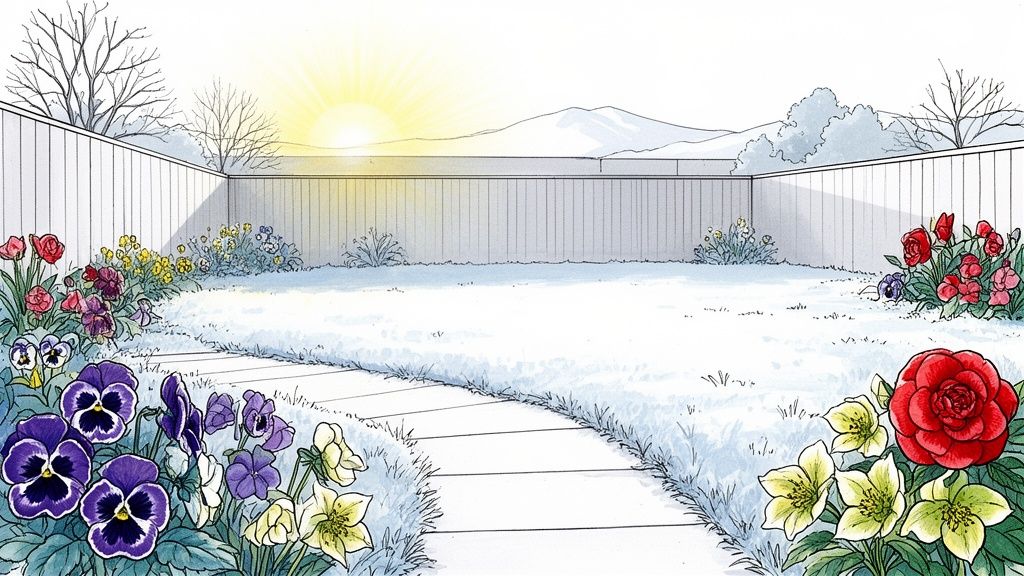
Picture this: you step out into your garden on a crisp, clear winter morning, and instead of muted tones, you’re greeted by an explosion of colour. It’s a common belief that New Zealand gardens have to shut down for June, July, and August, but a stunning floral display is more than possible. With the right mix of hardy native and exotic plants, you can create a garden that not only survives the winter chill but truly thrives in it.
Transform Your Garden With Winter Colour
Many of us assume that a Kiwi garden is destined to look bleak and grey during the cooler months. The reality couldn't be more different. The period from June to August is actually a unique opportunity to feature plants that come alive in lower temperatures.
These winter bloomers do more than just look pretty; they provide essential nectar for native birds like tūī and bellbirds when other food sources are thin on the ground. Your garden becomes a vibrant, living ecosystem, right when it's needed most. This guide will walk you through how to cultivate a jaw-dropping floral display that shines when the temperature drops, exploring both resilient native treasures and hardy exotic beauties.
Embrace New Zealand's Unique Flora
What makes a Kiwi winter garden so special is the incredible biodiversity we have right here in Aotearoa. This isn't just about sticking any old flower in the ground; it’s a chance to connect with a landscape that has evolved in isolation for millions of years.
New Zealand’s native flora is nothing short of extraordinary. An astonishing 85% of its 2,200 flowering plants grow nowhere else on the planet. This endemism creates a spectacle you won't find anywhere else, showcasing blooms that are perfectly adapted to our unique conditions, even in the middle of winter. You can learn more about New Zealand's unique plant life and its biodiversity from the Department of Conservation.
By choosing the right plants, you can create a sanctuary of colour and fragrance that lasts all season long. This guide will walk you through everything from selecting species for your region to mastering essential winter care.
You’ll soon see how easy it is to design beautiful arrangements for pots, garden beds, and larger landscapes, making sure your outdoor space is a source of joy all year round. Get ready to see your winter garden in a whole new light.
Discover Native Flowers That Brave The Cold
While most of the garden is taking a well-deserved nap, Aotearoa's native flora is just getting started. It puts on a spectacular winter show, proving just how resilient and beautiful our local plants are. These aren't just pretty faces; they are the heart and soul of our natural heritage, perfectly adapted over millennia to thrive in New Zealand's unique climate.
Bringing these native treasures into your garden is about creating a space that feels authentically Kiwi. Their magic is more subtle than the big, bold blooms of exotic species. Instead, you get elegant forms, interesting textures, and colours that harmonise beautifully with the soft winter light.
The Lifeblood Of The Winter Garden
One of the best reasons to plant native winter flowers is the crucial role they play in our local ecosystem. When the cold months of June, July, and August set in, food sources for our native birds become incredibly scarce. This is where your garden can step in and become a vital lifeline.
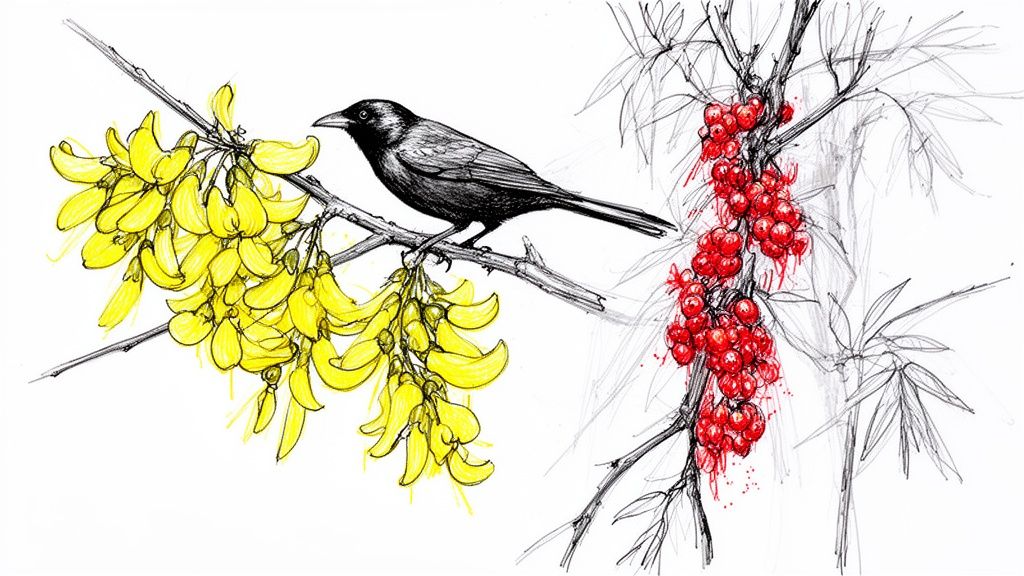
Take the winter-flowering kōwhai (Sophora microphylla), for example. It's an absolute ecological superstar. Just when little else is flowering, its brilliant yellow, nectar-packed blossoms appear, providing a high-energy feast for birds like tūī, bellbirds (korimako), and silvereyes (tauhou). Planting a kōwhai is like opening a bustling café for your feathered neighbours, and their birdsong is the best kind of thank you.
Top NZ Native Winter-Flowering Plants
To help you choose, here's a quick guide to some of our best native plants for bringing colour and life to your garden during the colder months.
| Plant Name | Common Name | Bloom Time (NZ Winter) | Flower Colour | Attracts |
|---|---|---|---|---|
| Sophora microphylla | Kōwhai | Late Winter to Early Spring | Bright Yellow | Tūī, Bellbirds, Silvereyes |
| Metrosideros fulgens | Climbing Rātā | Late Autumn through Winter | Fiery Red/Orange | Nectar-loving birds |
| Clianthus puniceus | Kakabeak | Late Winter to Spring | Striking Red | Tūī |
| Correa 'Kiwi Red' | a Correal hybrid | Autumn through Winter | Red, Bell-shaped | Birds |
| Xeronema callistemon | Poor Knights Lily | Late Spring (foliage is year-round feature) | Red 'Bottlebrush' | Birds |
These are just a few of the heroes that not only survive our winters but have evolved to truly shine in them.
Stars Of The Native Winter Show
Beyond the famous kōwhai, a few other natives bravely defy the cold to put on a stunning performance. Each brings its own unique character to the garden.
- Climbing Rātā (Metrosideros fulgens): Kicking off in late autumn and continuing through winter, this vine erupts in fiery clusters of red or orange. It’s a spectacular climber that can turn a plain wall or an old tree trunk into a vertical blaze of colour.
- Kakabeak (Clianthus puniceus): Known in Māori as kōwhai ngutu-kākā, this shrub is a real showstopper. Its large, dramatic red flowers are shaped just like a parrot's beak. As it's critically endangered, planting one makes you a guardian of a precious taonga (treasure).
- Poor Knights Lily (Xeronema callistemon): While technically a late spring bloomer, its dramatic, flax-like leaves provide incredible architectural interest all winter long. Then, as the weather warms, it sends up magnificent red flower spikes that look just like a bottlebrush.
These native plants don't just survive our winters; they have evolved to flourish in them. Their flowering cycles are intricately linked with the needs of native wildlife, creating a beautiful and self-sustaining ecological partnership.
If you're feeling inspired to create a garden filled with these local heroes, you can find more ideas for your NZ native garden and discover which plants will work best for your patch.
Practical Tips For Planting Natives
Getting these winter wonders to thrive is mostly about understanding what they like. The good news is that most natives are already adapted to our soils and climate, so they're pretty low-maintenance once they get settled.
The most important thing is good drainage. Many of our native plants absolutely hate having "wet feet," especially in cold, damp winter soil. While some, like kōwhai, need full sun to put on their best flower display, others are happy with a bit of shelter. It’s always worth checking the specific needs of your plant before digging. If you can mimic its natural environment, you’ll be rewarded with a healthy garden that’s a sanctuary for you and local wildlife all winter long.
Exotic Blooms For A Stunning Kiwi Winter
While our own native flora has a unique, subtle beauty, sometimes a garden just cries out for a bit of international drama. And thanks to New Zealand’s incredibly accommodating climate, we can grow a huge variety of stunning plants that put on their best show right in the middle of winter – June, July, and August. These global superstars bring bold colours, fascinating shapes, and heady scents that can turn a drab, chilly garden into something truly special.
From the frosty deep south right up to subtropical Northland, there’s an exotic winter flower that will happily make itself at home in your garden. This is where we get the big, bold, unapologetic colour. While our natives are often more delicate, these exotics provide a jolt of energy, a striking contrast to the muted tones of the winter landscape just when we need it most.
The Unrivalled Elegance Of Camellias
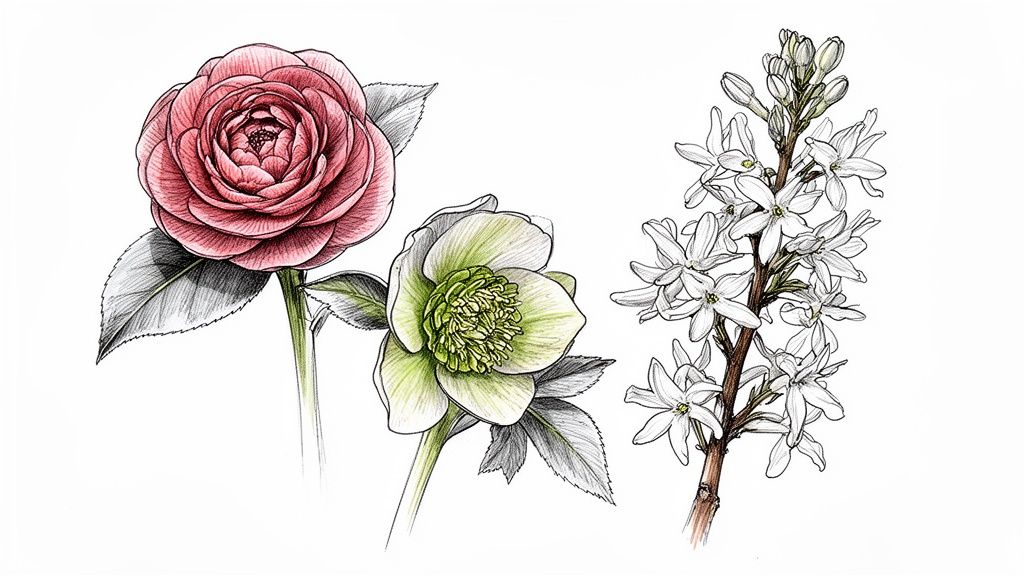
You simply can’t talk about exotic winter flowers in New Zealand without starting with the magnificent Camellia. These glossy-leaved, evergreen shrubs are the undisputed royals of the cool-season garden, putting on a breathtaking display in shades of white, pink, and deep, velvety red.
To get the most out of them, it helps to know the two main types:
- Camellia sasanqua: Think of these as the early birds. They usually start flowering in autumn and carry on into early winter. Their flowers are often smaller and fragrant, with a more open, graceful growth habit. This makes them perfect for training as an espalier flat against a wall or fence.
- Camellia japonica: Following close behind, the japonica varieties take centre stage from mid-winter right into spring. These are the ones known for their larger, more formal, and often perfectly symmetrical blooms. With their dense, lush foliage, they’re a fantastic choice for a screen or hedge, or just as a standout feature shrub.
The trick is to plant a mix of both. That way, you’re guaranteed a continuous, spectacular show of Camellia blooms for months on end.
Hellebores: The Enchanting Winter Roses
Often called the 'Winter Rose' or 'Lenten Rose', Hellebores are tough, shade-loving perennials that bring a quiet, moody elegance to the garden floor when not much else is going on. Their nodding, cup-shaped flowers pop up in an incredible range of colours – from pure white and soft green to dusky pinks, deep purples, and almost-black.
What’s really magical about Hellebores is their resilience. They will happily push their flowers straight up through frosty soil, their delicate-looking petals completely belying their hardy nature. They’re perfect for planting under deciduous trees or in shaded garden borders, where you can appreciate their speckled, intricate flowers up close.
Hellebores are a gardener’s secret weapon for creating those enchanting, woodland-style scenes. Their long-lasting flowers and handsome, leathery foliage provide interest from the depths of winter right through to spring, and they ask for very little in return.
Their ability to thrive in low-light spots makes them one of the most valuable winter flowers New Zealand gardeners can have in their toolkit.
Daphne: The Scent Of Winter
If you could bottle the scent of a crisp winter evening, it would smell exactly like Daphne. This small evergreen shrub is legendary for one thing: its intensely powerful and sweet perfume. Honestly, a single sprig of Daphne odora can fill an entire room—or a corner of your garden—with its unforgettable fragrance.
The plant produces tight little clusters of small, waxy flowers, usually pink or white, from late winter into early spring. It can be famously fussy, demanding perfect drainage and absolutely hating to be moved once it’s settled. But the reward is so worth the effort. Plant one near a doorway, window, or along a path where its glorious scent will catch you every time you pass by. It's one of winter's greatest simple pleasures.
Our ability to grow such diverse plants is backed by a strong local industry. Winter flower availability in New Zealand hinges on our robust floriculture sector, where calla lilies (Zantedeschia) bloom year-round in greenhouses. Varieties like Childsiana whites actually peak from autumn through winter, flowering for 12 months of the year except for spring. According to Auckland's UFG market calendars, winter lists over 10+ species thriving despite shorter days, all thanks to NZ's temperate climate—winter sunlight hours still average 9 daily in the North Island. You can discover more insights about New Zealand’s garden supplies industry.
Essential Care Tips For Your Winter Garden
A glorious winter garden doesn't just happen by magic. While winter-flowering plants are a tough bunch, the right care is what helps them shift from merely surviving the cooler months of June, July, and August to truly thriving.
Getting the fundamentals sorted—from what you do with your soil to how you fend off the frost—is the secret to a garden that bursts with life when everything else seems to be asleep. These steps are simple but they make all the difference. Think of it as setting the stage in autumn for a spectacular winter show.
Planting For Winter Success
The real work for a vibrant winter garden starts long before the first frost nips the air. Success is all about the prep work you put in during autumn. Get that right, and you're halfway there.
First things first: the soil. Winter soil can quickly become a cold, compacted, waterlogged mess, which is a death sentence for most plant roots. The non-negotiable first step is to enrich your garden beds with well-rotted compost or other organic goodies. This simple act improves drainage, lets the soil breathe, and provides a slow-release feed that will sustain your plants all winter long. For a deeper dive into creating the perfect base, check out our guide on potting mix and soil preparation.
Where you plant is just as crucial. Pay close attention to how the sun moves across your garden in winter. The sun sits much lower in the sky, casting long shadows. You’ll want to place your winter bloomers where they can soak up every last drop of that precious, low-angled light. A north-facing spot up against a wall or fence is often the perfect real estate—the structure absorbs warmth during the day and radiates it back out at night, creating a cosy microclimate.
Winter Watering Wisdom
Watering in winter is a delicate dance. It’s probably the easiest thing to get wrong, but it’s simple once you know the golden rule: less is more. Plants slow right down in the cold, so they just don't need as much water. Overwatering is the number one killer of winter plants, leading to root rot in cold, soggy soil.
Before you even think about grabbing the hose, do the finger test. Push your finger about five centimetres into the soil. If it feels damp, walk away. Only if it’s dry should you consider watering.
The best way to do it is to water deeply, but not very often. Give your plants a good, long drink in the morning on a mild day. This lets the water soak right down to the roots and gives the leaves plenty of time to dry off before the temperature drops overnight.
Frost Protection Strategies
For many of us, especially in the South Island and the central North Island, frost is the big winter baddie. A hard frost can wreck delicate flowers and tender new growth. But don't worry, a few simple tricks will keep your plants safe.
- Frost Cloth: This stuff is a gardener’s best friend. Just drape it over your precious plants in the late afternoon before a frost is due. It works by trapping the heat radiating up from the ground, keeping things a few crucial degrees warmer underneath. Just remember to take it off in the morning so your plants can get some sun and air.
- Mulching: A nice, thick blanket of mulch (think bark, pea straw, or compost) around the base of your plants works wonders. It acts like a duvet for the soil, insulating the roots from the cold and locking in moisture.
- Strategic Planting: Pick your battles. Plant your more frost-tender treasures in sheltered spots, like under the eaves of the house or beneath the canopy of a big evergreen tree. These spots offer natural protection from the worst of the cold.
Pest And Disease Control
While most garden pests have the good sense to lie low in winter, a few persistent critters are still on the prowl. Slugs and snails, in particular, absolutely love the damp conditions of a Kiwi winter and can make short work of your hellebore flowers and tender seedlings.
Luckily, you don’t need to reach for harsh chemicals. Pet-safe slug baits, beer traps, or even a nighttime hunt with a torch can be surprisingly effective.
Good garden hygiene is also massive. Fungal problems like mould and mildew love damp, still air. Make sure your plants have a bit of breathing room by not cramming them too close together. And always, always clear away fallen leaves and other dead plant material—it’s the perfect breeding ground for fungal spores. A simple tidy-up is one of the most powerful things you can do for a healthy garden.
Designing Beautiful Winter Landscapes And Pots
Creating a garden that truly shines in winter is about more than just dotting a few flowering plants around. It’s about stepping back and thinking like a designer, using colour, texture, and structure to create a living masterpiece that combats the grey of a New Zealand winter. With a bit of forethought, you can transform your garden from having a few lonely splashes of colour into a space with real visual punch that lasts the whole season.
The real secret? Layering. Think of your garden beds like a stage. Your evergreen shrubs are the permanent backdrop, providing that crucial structure and deep green colour year-round. Then come your winter-flowering stars—the Camellias, the Hellebores, the Daphne—taking centre stage from June through to August. And don't forget the supporting cast: the dormant perennials, whose bare stems and seed heads add a subtle, architectural texture while they wait for their spring comeback.
This simple layered strategy is what gives a garden year-round interest and saves it from looking bleak and empty in the cooler months. It turns your outdoor space into a dynamic, ever-changing canvas.
The Power Of Pots And Containers
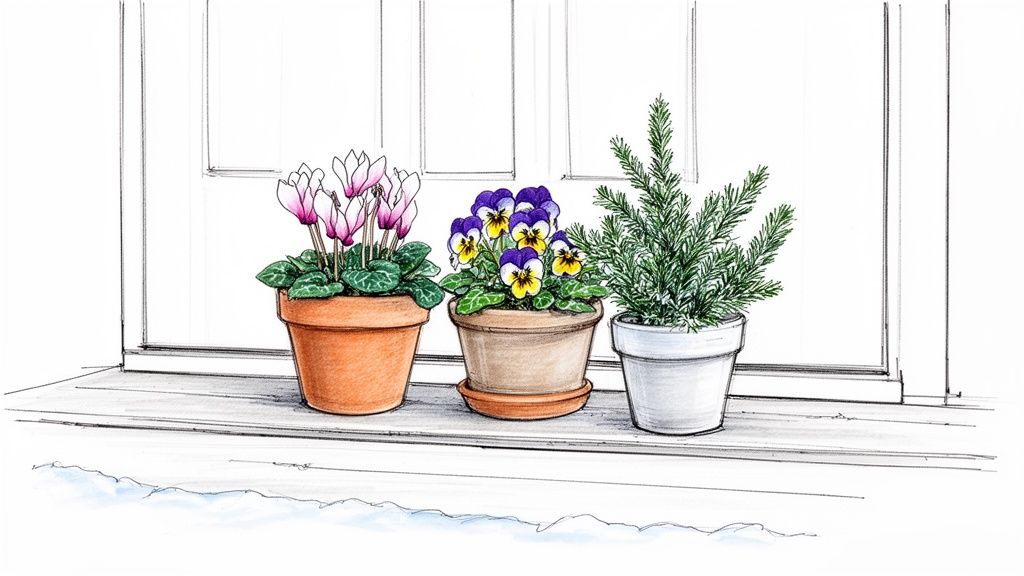
You don't need a huge backyard to create a knockout winter display. Even the smallest balcony, patio, or front step can be completely transformed with a few well-chosen pots. Container gardening gives you ultimate control over soil and placement, letting you create concentrated pops of vibrant colour exactly where you’ll see and enjoy them the most.
A brilliant rule of thumb for container design is the "Thriller, Filler, Spiller" method. It’s a foolproof recipe for a balanced, eye-catching arrangement every time.
- Thriller: This is your showstopper, the plant that provides height and a bit of drama. A small, elegant conifer or a brightly-hued Cordyline works perfectly as a strong vertical element.
- Filler: These are your mounding plants that flesh out the middle of the pot. Cheerful Pansies, Violas, or Primulas are fantastic for packing in colour around the base of your thriller.
- Spiller: Lastly, you need something that will cascade over the sides of the pot. Trailing ivy or the stunning silvery foliage of Dichondra 'Silver Falls' will soften the container's edges and complete the look.
For more ideas on crafting beautiful container gardens, check out our in-depth guide to the best plants for outdoor pots in NZ, which is packed with inspiration for every season.
Think of your pots as mobile garden vignettes. You can shift them around for maximum impact, bring them close to the house on a dreary day, and easily swap out plants as their blooms fade. This keeps your display looking fresh all winter long.
Bringing Winter Colour Indoors
Why should the garden have all the fun? Many winter-flowering plants are perfectly happy indoors, breathing life and colour into your home just when you need it most. A single flowering plant on a kitchen windowsill or a living room table can be an incredible mood-booster on a wet, grey day.
Cyclamen are a classic choice for indoor winter colour, and for good reason. Their delicate, butterfly-like flowers pop up in shades of white, pink, and deep red above beautifully patterned leaves. They just need a cool, bright spot away from direct sun and draughts to thrive.
Some orchids also put on their best performance during the cooler months. The elegant Cymbidium orchid, for instance, produces incredible sprays of long-lasting flowers and is quite content with the cooler indoor temperatures of a typical Kiwi winter. For a bit of creative inspiration on floral design, even in a different context, have a look at the stunning ideas in this Winter Wedding Floral Arrangements Guide.
When you start to see your garden—both inside and out—as a canvas for seasonal creativity, you'll find there are endless ways to design stunning displays that defy the winter chill.
Your NZ Winter Gardening Calendar
Staying on top of your garden jobs through the cooler months is the secret to keeping your plants healthy and ready for that big burst of growth in spring. Think of this month-by-month checklist as your seasonal roadmap, turning what can seem like a sleepy period into a surprisingly productive and rewarding time.
This guide helps you focus on what’s most important right now, from protecting your precious plants to prepping for the explosion of life just around the corner.
June: Your Midwinter Kick-off
June is here, and with it, the official start of winter. The days are shorter, the first real chills are in the air, and it's time to focus on protecting the garden and adding some instant colour to brighten things up.
- Plant Hardy Annuals: Now is the perfect time to get winter annuals like pansies, violas, and primulas into your pots or garden beds. They’re a cheerful, reliable source of colour that will see you right through to spring.
- Protect Tender Plants: The first frosts can be a real shock for delicate plants. Get into the habit of covering frost-tender species with frost cloth in the late afternoon, especially when a clear, cold night is on the forecast.
- General Tidy-Up: Rake up those fallen leaves before they smother your lawn and give pests a place to hide. Chuck them in the compost bin—they’ll break down into beautiful, rich humus for your garden.
July: The Heart Of Winter
July is often our coldest month, a time for maintenance and looking ahead. With strong winds and deep chills common across the country, making sure your garden's structure is secure becomes a top priority.
This is a crucial period for checking on the 'bones' of your garden. Strong winds can damage young trees and shrubs, so a quick check now can prevent significant problems later on.
This month, the main jobs centre on structural support and planting for the seasons to come.
- Check Tree Stakes: Winter gales can easily loosen or damage the stakes supporting young trees. Make sure they are firm and check that the ties aren't cutting into the bark, which can cause damage.
- Plant Lily Bulbs: Get your lily bulbs into the ground or into pots now for a spectacular summer display. Just be sure to plant them in a spot with excellent drainage to prevent rot in the wet winter soil.
- Prune Deciduous Trees: With their branches bare and structure fully visible, now is the ideal time to prune most deciduous trees and shrubs. The only exception is any that flower on old wood—leave those be for now!
August: The Transition To Spring
August is a month filled with anticipation. The days are getting noticeably longer, and signs of new life are popping up everywhere as late-winter stars like Daphne hit their peak. The focus now shifts to getting everything ready for the spring rush.
- Prepare Garden Beds: It's time to start preparing your vege and flower beds for spring planting. Weed them thoroughly, then dig in generous amounts of compost and other organic matter to enrich the soil.
- Sow Early Seeds: In warmer, protected spots—or under cloches if you have them—you can begin sowing early seeds like broad beans, spinach, and lettuces.
- Enjoy Late Blooms: Don't forget to take a moment to enjoy the incredible fragrance and colour from your late-winter bloomers. This is also a good time to give any native plants that have finished flowering a light trim.
Your Winter Flower Questions, Answered
Over the years, we've heard just about every question a Kiwi gardener can think of when it comes to keeping their spaces vibrant through winter. It can feel like a real challenge, but honestly, with a bit of know-how, anyone can pull it off. Let's dig into some of the most common queries we get.
What Are The Hardiest Flowers For A Frosty South Island Garden?
When you're dealing with a proper South Island frost, toughness is everything. You need plants that don't just survive the chill, but actually push on through it.
- Hellebores (Winter Roses): These are the undisputed champions of the cold garden. They’ll literally push their beautiful, nodding flowers up through frozen ground. Once they're established, they are incredibly resilient.
- Witch Hazel (Hamamelis): Famous for its quirky, spidery flowers in stunning yellows and oranges, this shrub is extremely frost-hardy. Plus, it throws a wonderful scent into the cold air.
- Viburnum tinus: This evergreen is an absolute workhorse. It reliably produces clusters of delicate pinkish-white flowers all through the coldest months and shrugs off frost like it's nothing.
Can I Actually Grow Winter Flowers On A Balcony?
Absolutely! A balcony or patio is the perfect spot for a splash of winter colour. The trick is simply getting the right combination of plant and pot.
Make sure your pot has fantastic drainage – soggy soil gets colder and is a death sentence for roots in winter. Fill it with a high-quality potting mix and choose plants that stay compact. Things like Pansies, Violas, Primulas, and Cyclamen are all brilliant choices that will give you vibrant, long-lasting blooms in a container.
How Can I Bring Native Birds To My Garden In Winter?
There's nothing more rewarding than seeing tūī and korimako (bellbirds) visit your garden during the lean winter months. The secret is to give them a reliable kai source when food is otherwise hard to come by.
Planting native, nectar-rich flowers is the single best thing you can do to create a haven for our local birdlife. Their survival can genuinely depend on finding these high-energy meals during the coldest time of year.
Winter-flowering kōwhai is a true superstar here, offering a vital nectar feast. Other natives like climbing rātā also provide much-needed food for them. And don't forget the simple things – a birdbath with fresh water will make your garden an irresistible stop for your feathered neighbours.
Ready to turn your garden into a winter wonderland? Explore the incredible selection of flowering plants at Jungle Story and find the perfect blooms to brighten your home and garden. Start your journey at https://junglestory.co.nz.