
Yes, you can absolutely grow delicious guavas right here in New Zealand. It's a common question, and the answer is a resounding 'yes'!
While the true tropical guavas are happiest in the warmer, frost-free pockets of the North Island, the incredibly popular and hardy Feijoa (or Pineapple Guava) flourishes across most of the country. It's become a beloved backyard staple for so many Kiwi gardeners for a good reason.
Bringing Guavas to Your New Zealand Garden
Just imagine stepping into your own backyard to pick sweet, aromatic guavas straight from the tree. Guavas are a wonderfully rewarding addition to any garden, offering not just incredible fruit but also attractive foliage and flowers.
From the familiar scent of feijoas carpeting lawns in autumn to the more exotic taste of their tropical cousins, growing guavas in New Zealand is a satisfying and totally achievable project. And don't worry if you're short on space – whether you have a sprawling section or a small urban balcony, there's a guava variety that will work for you.
Your Roadmap to a Bountiful Harvest
We've put together this guide to walk you through everything, specifically for our unique climate and soil conditions. We'll cover all the essentials, from picking the perfect tree for your region to the sheer joy of harvesting your very first crop.
Here’s what we’ll get into:
- Choosing the right variety for your local climate, whether you're in sunny Northland or the cooler parts of Canterbury.
- Planting techniques that will give your new tree the best possible start.
- Year-round care, including watering, feeding, and pruning schedules tailored for our Kiwi seasons.
- Managing common pests and diseases to keep your tree healthy and productive.
Guavas, particularly feijoas, have woven themselves into the fabric of Kiwi culture. Author Kate Evans notes their powerful nostalgic hold, where the distinct smell can instantly transport New Zealanders back home, highlighting the deep connection between people and plants.
Growing your own fruit is one of gardening’s greatest pleasures. For more inspiration on what you can grow at home, check out our comprehensive guide to the best fruit trees for NZ gardens, which covers a whole range of options beyond guavas.
Right then, let’s get started on bringing this delightful fruit to your garden.
Picking the Right Guava for Your New Zealand Garden
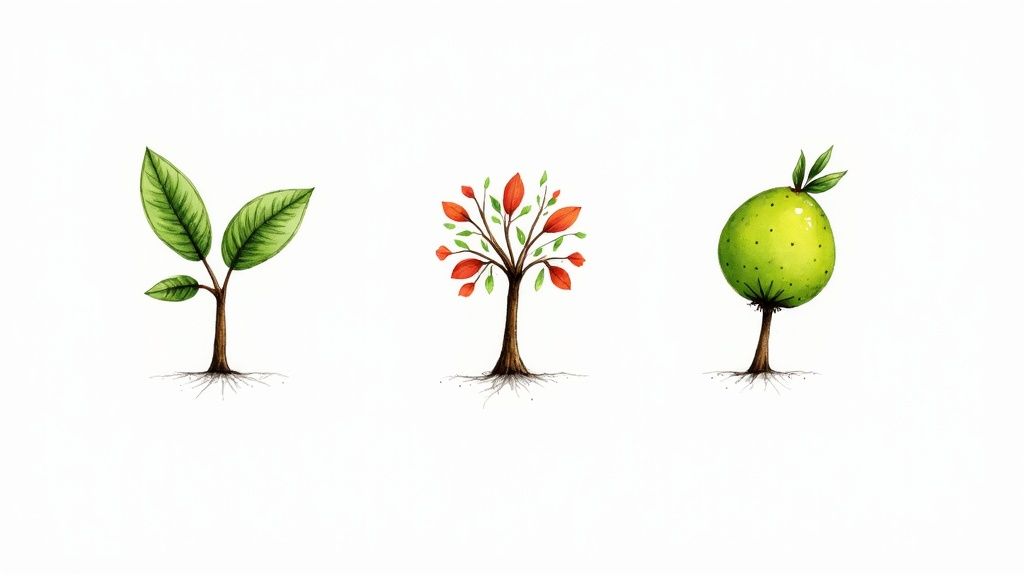
Getting this first step right is probably the most crucial part of your whole guava-growing journey. New Zealand’s climate is a real mixed bag, from the almost-tropical north to the chilly south, so you can’t just plant any old guava and expect it to thrive.
Matching the variety to your local microclimate will save you a world of heartache down the track. Let's break down the main players you'll come across.
Guava Varieties for New Zealand Gardens
To make sense of the options, it helps to see them side-by-side. Each type has its own personality, and what works wonders in a Kerikeri backyard might sulk in a Christchurch one.
| Variety | Ideal Climate | Fruit Profile | Key Considerations |
|---|---|---|---|
| Tropical Guava (Psidium guajava) | Warm, frost-free regions like Northland and Auckland. | Classic large, round or pear-shaped fruit. Intensely aromatic with sweet pink or white flesh. | Needs a sheltered, sunny spot. Will not tolerate frosts. |
| Feijoa (Acca sellowiana) | Highly adaptable; grows well throughout most of NZ. | Oval, green fruit with a complex pineapple-strawberry-mint flavour. | Extremely hardy and frost-tolerant once established. Self-fertile varieties are best for smaller gardens. |
| Cherry Guava (Psidium cattleyanum) | Tolerates cooler temps and light frosts. | Small, red or yellow berry-like fruit. Strawberry guavas have a sweet, tart flavour. | Warning: The red-fruited variety is a pest plant in some regions (like Auckland). Always check local regulations before planting. |
As you can see, choosing a guava is really about being honest about your local conditions.
The Classic: Tropical Guava (Psidium guajava)
This is the one that probably comes to mind when you picture a guava – big, aromatic, and bursting with that unmistakable sweet, musky flavour. These are true sun-worshippers and demand a warm, frost-free home to be happy.
They're a fantastic choice if you're gardening up in Northland, Auckland, or a cosy, sheltered spot on the coast. Give them plenty of sun and protection from cold snaps, and you'll be rewarded with a genuine taste of the tropics. If you’re keen on creating a lush, tropical vibe, check out our other recommendations for tropical plants that thrive in NZ.
The Kiwi Favourite: Feijoa or Pineapple Guava (Acca sellowiana)
Ah, the feijoa. While technically a different species, it's our unofficial national guava for a very good reason: it’s tough as nails. This is the plant that makes guava-growing possible for just about everyone in Aotearoa.
Feijoas shrug off the cold and can handle a decent frost once they're established, which is why you see them from the top of the North Island right down to the bottom of the South. They’re incredibly versatile and don’t mind a bit of coastal wind or salty air. That unique flavour – a bit like pineapple, guava, and mint all rolled into one – is the taste of autumn for so many of us.
Picking the right guava is about more than just fruit; it's about understanding your microclimate. A feijoa might be the safe bet for a Canterbury garden, while a true tropical guava could be a spectacular success in a sheltered Kerikeri backyard.
The Underdog: Cherry Guava (Psidium cattleyanum)
Cherry guavas, especially the popular red 'strawberry guava', are another hardy option. They produce little bite-sized fruits that are absolutely delicious, and they’re more cold-tolerant than their tropical cousins.
But there’s a serious catch you need to know about. This plant's resilience has allowed it to become a bit of a thug in some areas. In the Auckland region, for instance, strawberry guava (Psidium cattleyanum) is now classified as a pest plant, meaning you can't legally sell or distribute it.
It's a stark reminder to always do your homework on what's right for your local environment before you plant. Responsible gardening means protecting our native ecosystems.
How to Plant and Establish Your Guava Tree
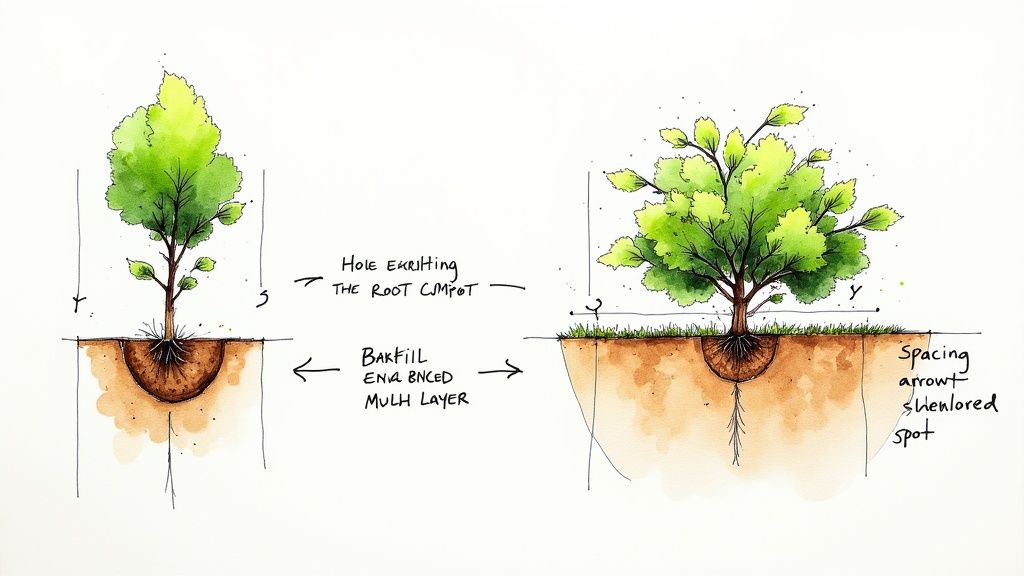
Giving your guava tree the best possible start is the single most important thing you can do to set it up for a long, fruitful life. The care you take on planting day really does lay the foundation for everything to come, helping it establish a strong root system to handle our classic Kiwi weather.
The great news is, it's not complicated. You just need to get a few key details right – timing, location, and soil prep – and you'll have a happy tree that's ready to thrive.
Timing and Location Are Everything
Here in New Zealand, the sweet spots for planting a guava are autumn or spring. An autumn planting is fantastic because the soil is still warm, which gives the roots a chance to get established over winter (June - August) before the big spring growth push. Of course, spring is also a great option, just as long as the last of the heavy frosts are behind you.
When you're picking a spot, try to think like a guava. They absolutely love sun and warmth. Your job is to find the sunniest, most sheltered position you can, preferably tucked away from those harsh prevailing winds that can shred leaves and knock off young fruit. A spot against a north-facing wall is often the perfect microclimate.
Preparing the Perfect Planting Site
Guavas aren't overly fussy plants, but they have one non-negotiable demand: they hate having wet feet. Good drainage is essential. If you're dealing with heavy clay soil, a common feature in many Kiwi gardens, you'll need to put in a bit of work to improve it.
- Dig a proper hole: Aim for a hole that's at least twice as wide and twice as deep as the pot the plant came in. Don't skimp on this.
- Enrich your soil: Mix the soil you dug out with a generous amount of good quality compost or well-rotted manure. This improves both the soil structure and fertility.
- Do a quick drainage test: After digging, fill the empty hole with water. If it hasn't drained away within an hour, you've got a drainage problem. You can fix this by working in more organic matter or gypsum for clay soils.
Getting the soil conditions right is a game-changer for the long-term health of your tree. This is where a little bit of knowledge on how to improve soil really pays off. If you’re faced with seriously poor drainage, an easy workaround is to use one of the many raised wooden garden beds available.
"A plant's success is determined long before it goes in the ground. Ninety percent of the effort should be in preparing the soil; the other ten percent is the planting itself."
Getting Your Tree in the Ground
With your site prepped, it's time for the main event. Gently ease the guava tree from its nursery pot, trying not to disturb the root ball too much. Pop it in the centre of the hole, making sure the top of the root ball sits level with the surrounding ground. Planting too deep is a classic mistake and can lead to the trunk rotting.
Backfill the hole with your amended soil mix, gently tamping it down as you go to get rid of any large air pockets. No need to stomp on it – that will just compact the soil.
Once it's in, give your new tree a really good, deep soaking to help settle the soil around the roots. The final, crucial step is to apply a thick layer of mulch (pea straw or bark chips are perfect) around the base, but be sure to keep it from touching the trunk itself. This is your secret weapon for locking in moisture, keeping weeds down, and giving those young roots a bit of protection.
A Year-Round Care Guide for Guava Trees
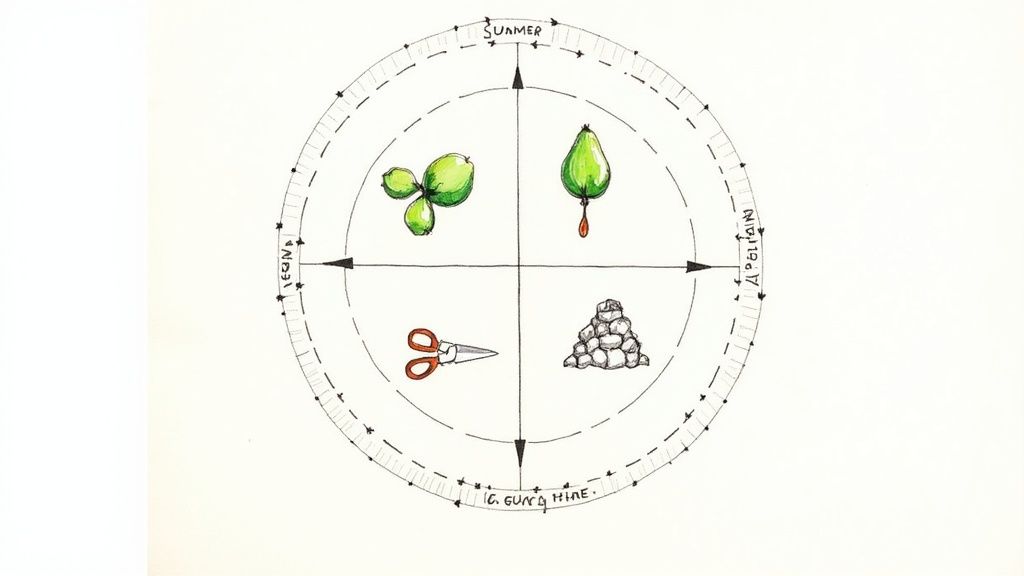
Once your guava tree is happily settled in its new home, a little ongoing TLC throughout the year will make all the difference. It’s what separates a tree that just survives from one that truly thrives and churns out bucketloads of delicious fruit.
Think of it as a simple annual rhythm that pays you back tenfold come harvest time. The trick is to understand what your tree needs as the seasons change, from the peak of a hot Kiwi summer right through to the cooler days of autumn.
Watering for Juicy Fruit
Being subtropical natives, guavas love consistent moisture, especially when they're working hard during the growing season. While established trees are pretty tough and can handle brief dry spells, you’ll get a far better, juicier harvest if you stick to a smart watering schedule.
During the hot, dry months from December to February, a good, deep watering once or twice a week is crucial. This is non-negotiable when the tree is flowering and as the fruit starts to swell up. If you let it get too dry at this stage, you’ll likely end up with smaller fruit, or worse, the tree might drop them altogether.
A good rule of thumb is to poke your finger into the soil – if the top few centimetres feel dry, it’s time for a drink.
Feeding Your Guava Tree
To get that vigorous growth and a heavy crop of fruit, your guava needs regular feeding. A well-fed tree isn't just more productive; it's also much better at fending off pests and diseases.
A balanced, general-purpose fertiliser is your best mate here. Just follow this simple schedule for the best results:
- Early Spring (September): As soon as you see new growth emerging, give it a feed. This kick-starts its energy for the busy season ahead.
- Early Summer (December): Feed it again just as the tree starts to flower and set fruit. This gives it the specific nutrients it needs to develop a quality harvest.
Always remember to water the fertiliser in well. This helps the roots absorb all that goodness and prevents any chance of root burn.
Guava trees are surprisingly hungry plants. Think of the spring and summer feeding as packing their lunchbox for the hard work of producing fruit. Skipping it is like asking them to run a marathon on an empty stomach.
Pruning for Shape and Production
Pruning often seems like the scariest job for gardeners, but it’s actually quite straightforward with guavas. Your main goal is to create an open, vase-like shape. This lets sunlight and air get right into the canopy, which works wonders for ripening fruit evenly and drastically cutting down the risk of fungal problems.
The best time to get the secateurs out is in late autumn or early winter (May to July), right after you’ve picked the last of the fruit. Understanding a few basic tree pruning techniques can really boost your confidence and the tree's health.
Focus on snipping out any branches that are dead, damaged, or crossing over each other. You can also trim back some of the longer, lanky branches to encourage a bushier, more productive shape for next season.
While guavas are a fantastic backyard fruit, they aren't a major player on the commercial scene here. New Zealand's horticulture industry is a powerhouse, reaching approximately $9.5 billion in 2019, but it's dominated by giants like kiwifruit and apples. The lack of specific stats for guavas tells us they remain a beloved, small-scale favourite rather than a commercial staple. You can dive deeper into our country's horticultural output in this comprehensive industry report.
Managing Common Pests and Diseases
Even the most well-cared-for guava tree can run into trouble now and then. The key to keeping your tree in top form is staying one step ahead of potential issues. Fortunately, most common problems you’ll find in New Zealand gardens are pretty straightforward to manage if you know what to look for.
Your first line of defence is always a healthy environment. A well-fed, properly watered tree growing in a sunny, airy spot is just naturally more resilient. Good garden hygiene, like clearing away fallen fruit and leaves, also makes a massive difference by removing potential hiding spots for pests and fungal spores.
Common Insect Pests on Guava Trees
Chances are, if you see any bugs, it'll be a few of the usual sap-sucking suspects. While a full-blown infestation can look scary, catching them early makes them easy to deal with.
- Aphids: These small, pear-shaped insects love to cluster on fresh new growth and under the leaves, often making them look a bit twisted or distorted. A strong jet of water from the hose is often all you need to knock them off.
- Scale Insects: These tricky little guys look like small, hard or soft bumps on the stems and leaves. You might not notice them at first, but you'll definitely see the sticky "honeydew" they leave behind, which often leads to a black, sooty mould.
- Whitefly: Tiny, moth-like insects that scatter in a cloud when you disturb the leaves. Just like aphids, they suck sap and can weaken the plant over time.
For any of these pests, especially if you've only got a small infestation, a simple spray of soapy water or neem oil works wonders. It's a much kinder solution for the good bugs in your garden, like ladybirds and bees, than reaching for harsh chemicals.
Proactive care is always better than reactive treatment. By ensuring good airflow through proper pruning and avoiding overhead watering, you can create a microclimate that is far less inviting for fungal diseases to take hold.
The Threat of Fungal Diseases
Fungal problems often pop up in damp, humid conditions—something most of us Kiwi gardeners are all too familiar with. For guava trees, the biggest worry by far is a disease called myrtle rust.
Myrtle rust (Puccinia psidii) is a serious problem because it doesn't just hit guavas and feijoas; it also attacks our iconic native plants like pōhutukawa and mānuka. You'll spot it as bright yellow or orange powdery spots on new leaves, shoots, and flowers. If you think you see myrtle rust, it’s crucial to report it to help stop it from spreading.
New Zealand's climate means we have to be on guard. Research has been done on the potential distribution of guava rust in New Zealand, highlighting just how important it is for gardeners to be vigilant.
Prevention really is the best cure here. Make sure you water your trees at the base to keep the leaves dry. Combine that with good pruning to maintain an open structure with plenty of air circulation, and you’ll dramatically reduce the risk of myrtle rust and other fungal headaches.
A Few Common Questions About Growing Guavas in NZ
Even with a solid plan, a few questions always pop up when you're trying something new in the garden. We get asked a lot about the specifics of growing guavas and feijoas, so we've put together some straightforward answers to the most common queries from Kiwi gardeners.
When Will My Guava Tree Actually Give Me Fruit?
It’s the first thing everyone wants to know after planting a new fruit tree! A bit of patience is required, but you won't be waiting for years on end.
Typically, a guava tree you've bought from a nursery will start fruiting within 2 to 4 years. Feijoas can be a little quicker off the mark, sometimes rewarding you with their first small harvest in just their second or third year in the ground.
Of course, a few things can speed this up or slow it down. The specific variety, how happy it is in its new home, and the care you give it all play a huge role. For the best shot at an early harvest, make sure your tree is basking in plenty of sun, gets a consistent drink during the growing season, and is fed a good fertiliser high in potassium.
Do I Need Two Guava Trees for Pollination?
This is a brilliant question, and getting it right is the difference between a tree full of fruit and a tree that just... sits there. The answer really depends on which type of "guava" you're growing.
- True Tropical Guavas (Psidium guajava): Good news for those with smaller gardens – most of these are self-fertile. This means you only need one tree to get a decent crop.
- Feijoas (Acca sellowiana): It's a bit different here. While a few feijoa varieties are self-fertile, almost all of them produce a much bigger, more reliable crop when they have a different variety nearby for cross-pollination. Honestly, it's always worth planting at least two different named varieties to guarantee you'll be swimming in fruit.
When you pick out a feijoa, always have a good look at the plant label or ask the garden centre team for a good pollinating partner. A classic Kiwi combo for success is planting a 'Unique' (which is self-fertile) alongside a 'Kaiteri' or an 'Apollo'.
Can I Grow Guavas in a Pot?
You absolutely can! This is the perfect workaround if you're short on garden space, or if you live in a cooler part of the country and want to grow tropical guavas. You can just move them into a sheltered spot over winter.
Dwarf varieties of both tropical guavas and feijoas are fantastic for pots. You’ll want to go for a big one—at least 50 litres—to give the roots enough space to spread out. Make sure it has plenty of drainage holes and use a top-quality potting mix formulated for fruit trees.
The main thing to remember is that plants in pots dry out much faster than those in the garden. You'll need to be on top of your watering and feeding game, especially through the heat of summer.
When Is the Best Time to Harvest Guavas in NZ?
Picking your fruit at that perfect moment of ripeness is what it's all about. The timing changes depending on what you're growing.
For feijoas, the season kicks off in autumn, running from about March to June. The sign that they're ready is beautifully simple: they drop from the tree. All you need to do is wander out every day or two and gather the fragrant fruit from the ground.
Tropical guavas are generally ready from late summer through autumn. You’ll know they’re ripe when the fruit gives a little when you gently squeeze it, the skin changes from green to a pale yellow or pink, and it gives off a rich, sweet perfume you can smell from a few feet away. A gentle twist is all it should take to pluck it from the branch.
We hope this guide has you excited to get a guava or feijoa tree into your own patch. With a little bit of care suited to our unique Kiwi climate, you'll be enjoying an incredible homegrown harvest. To find the perfect variety for your spot, check out the amazing selection from local growers at Jungle Story. Find your next tree and start your fruit-growing adventure today by visiting https://junglestory.co.nz.