
Step into just about any modern Kiwi home, from a slick Auckland apartment to a cosy Christchurch villa, and you’re bound to see the iconic, glossy leaves of a Monstera deliciosa. This plant is more than just a trend; it's a statement piece, affectionately known by New Zealanders as the 'fruit salad plant' thanks to its unique, edible fruit.
Why Every Kiwi Plant Lover Wants a Monstera
The pull of the Monstera deliciosa in NZ goes way beyond its good looks. It brings a little slice of the tropical jungle right into our living rooms, which fits perfectly with our national love for nature and all things green.
Its huge, fenestrated leaves—those famous splits and holes—create an instant architectural feature, turning any boring corner into a vibrant focal point. This adaptability has made it a massive favourite for interior designers and home decorators all across Aotearoa.
What's more, the Monstera is surprisingly forgiving, which makes it a fantastic companion for both seasoned gardeners and anyone just dipping their toes into the world of indoor plants. It's resilient enough to handle the occasional missed watering, a common reality in our busy lives. The plant is pretty good at telling you what it needs; a slight droop is a gentle nudge for a drink, and its steady growth is seriously rewarding to watch.
A Symbol of Growth and Style
For lots of Kiwis, owning a Monstera is about more than just keeping a plant alive. It’s become a symbol of contemporary living and a way to stay connected to the natural world.
Watching a new leaf slowly unfurl is one of those small, satisfying moments that brings a real sense of accomplishment. These plants grow with you, their own transformation mirroring the changes in your home and life.
A healthy Monstera deliciosa is a living sculpture. Each new leaf is a unique piece of art, showcasing nature's incredible design and rewarding the patient gardener with its ever-changing beauty.
This journey from a small pot plant to a magnificent specimen with sprawling leaves is deeply fulfilling. The key benefits that really resonate with New Zealanders include:
- Architectural Beauty: Those iconic split leaves add a dramatic, exotic structure to any room.
- Air Purification: Like many houseplants, it helps improve your indoor air quality by filtering out common airborne toxins.
- Ease of Care: It’s not fussy and thrives in a wide range of indoor conditions, making it super accessible for beginners.
- A Rewarding Experience: Seeing it grow and even propagating new plants from cuttings gives you a genuine sense of achievement.
How to Find and Choose a Healthy Monstera in NZ
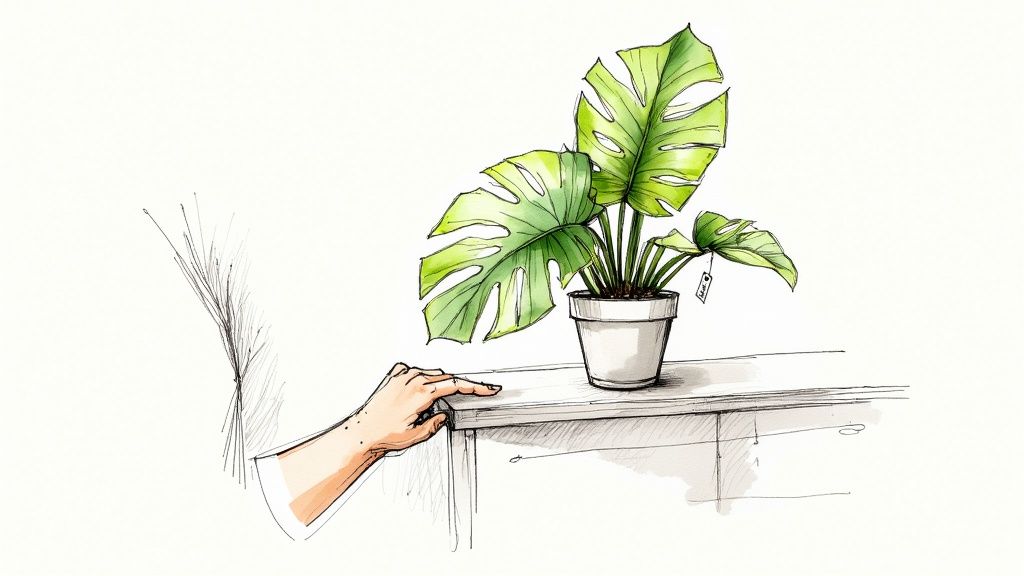
Bringing home a new Monstera deliciosa is the very first step in a long and happy plant journey. Think of it like picking a puppy from the litter—you want the one that’s bright-eyed, energetic, and full of life. A strong, healthy start gives your plant the best possible chance to grow into that magnificent, holey-leaved specimen you’ve been dreaming of.
Thankfully, finding the perfect Monstera in New Zealand isn't too hard. You just need to know where to look. Let's walk through where to source your new plant and exactly what to check for before you bring it home.
Where to Buy Your Monstera
Here in New Zealand, we're spoilt for choice when it comes to buying houseplants. Your best bet will depend on whether you're a hands-on shopper who likes to inspect things up close, or you prefer the convenience of having a plant delivered right to your doorstep.
- Large Garden Centres: Places like Mitre 10 or Kings Plant Barn are fantastic starting points. They usually have a good, steady supply of Monsteras in all sorts of sizes, so you can see exactly what you’re getting before you buy.
- Specialist Online Stores: This is where you'll often find really high-quality, well-cared-for plants. It’s also a great way to find less common varieties. If you're looking for inspiration, you can check out other great indoor houseplants that do well in Kiwi homes.
- Trade Me and Facebook Marketplace: Don't overlook these! They are absolute goldmines if you're on a budget or want to buy from a fellow plant lover. You can often find cuttings or small plants from local growers, meaning they're already used to our conditions.
What to Look For in a Healthy Plant
So, you've found a potential plant. Now what? Knowing the signs of good health is crucial and can save you a lot of hassle down the line. A quick once-over will tell you everything you need to know.
First, check the leaves. You're looking for a vibrant, deep green colour. A few little tears or marks are totally normal—plants live in the real world! But you'll want to steer clear of any with lots of yellowing, big brown spots, or crispy edges. These are all signs of stress, pests, or disease.
The next thing to look for is new growth. A tightly furled new leaf that’s about to unfurl is a brilliant sign. It tells you the plant is active, happy, and ready to grow in its new home.
A healthy Monstera doesn't need to be perfect, but it should look vigorous. Prioritise vibrant colour, signs of new growth, and a clean bill of health over sheer size. A small, thriving plant will quickly outgrow a larger, struggling one.
Your Monstera Health Checklist Before Buying
Before you head to the checkout, it’s time for a final, more detailed inspection. This is where you play detective to make sure you're not bringing home any unwanted guests or hidden problems. Use this checklist at the garden centre or when your online order arrives to give your new Monstera the best start.
| Health Indicator | What to Look For | Potential Red Flags |
|---|---|---|
| Leaves | Vibrant, deep green colour. Glossy surface. Minor imperfections are okay. | Widespread yellowing, brown spots, crispy edges, or drooping. |
| New Growth | A new, tightly rolled leaf emerging from the newest stem. | No signs of recent or impending growth on a mature plant. |
| Stems | Firm, strong, and upright. | Soft, mushy, or discoloured stems. |
| Pests | Clean leaf undersides and stem joints. No sticky residue or webbing. | Tiny webs (spider mites), white fluffy spots (mealybugs), or brown bumps (scale). |
| Roots | Firm, white or light tan roots. Smells earthy. | Dark brown, black, mushy, or foul-smelling roots (root rot). |
Giving the roots a quick check is so important. Don't be shy—gently slide the plant out of its nursery pot if you can. Healthy roots are the foundation of a healthy plant. If they look or smell bad, put it back immediately.
Finally, what about the price? Here in New Zealand, you can expect a small starter Monstera deliciosa to set you back somewhere between $20 - $40. Larger, more established plants can range anywhere from $60 to over $150. Prices vary a lot based on size, maturity, and where you buy, so it’s always a good idea to shop around. Just think of it as an investment in a beautiful, living piece of art for your home.
Getting to Know Your Monstera in New Zealand
To really help your Monstera thrive, it’s worth getting to know its backstory and how it fits into our local Kiwi environment. The Monstera deliciosa originally comes from the humid, tropical forests of Central America, but it’s made itself right at home in New Zealand gardens and living rooms, becoming a true crowd favourite.
Understanding its life here in Aotearoa is the secret to growing it well—and responsibly. It’s a plant with a pretty interesting history, one that explains why it does so well in our climate without becoming a problem for our precious native ecosystems.
A Welcome Guest, Not an Unruly Invader
One of the first things any Kiwi plant parent should know is where the Monstera stands. Is it a friend or a foe to our local environment? The good news is, you can grow your Monstera with total peace of mind.
While it’s an introduced, exotic species, it’s not considered invasive in New Zealand. Unlike some other plants that have jumped the garden fence and run wild in the native bush, the Monstera deliciosa pretty much keeps to itself. This means you can enjoy that stunning tropical look without worrying about it harming our local flora.
Its good behaviour mostly comes down to how it makes more of itself here.
How Monstera Spreads in New Zealand
Back in its native habitat, the Monstera deliciosa grows from seeds, which are often spread around by animals munching on its fruit. Here in New Zealand, however, things are a little different.
The main way this plant gets around is through vegetative propagation. Think of it less like starting new families from seed and more like making clones. This usually happens when people throw out garden clippings or unwanted plants. A small piece of stem with a node on it can easily put down roots and start a new plant if the conditions are right.
This is how the Monstera deliciosa NZ has become such a common sight in Kiwi gardens, especially in the warmer, frost-free parts of the North Island. It's officially classed as a long-lived, semi-scrambling perennial herb, loved for both its incredible leaves and its famous 'fruit salad' fruit. While you might occasionally spot a seedling in the wild, it’s human activity—mainly chucking out garden waste—that really moves it around. You can dig deeper into its place in our local environment over at the New Zealand Plant Conservation Network.
Knowing that Monsteras mainly spread from cuttings is key to being a responsible gardener. Always be thoughtful about how you dispose of prunings—pop them in your compost or green waste bin instead of dumping them over the fence or in a local reserve.
By getting your head around these parts of its life in New Zealand, you’re not just a plant owner; you're a clued-up guardian of this amazing plant. It helps you appreciate why it’s such a perfect fit for our homes and gardens, letting it be celebrated for the stunning ornamental it is, without posing any threat to the natural beauty of Aotearoa.
Mastering Monstera Care for the NZ Climate
So, you’ve brought a Monstera deliciosa into your New Zealand home. That’s the first step on a pretty rewarding journey. The secret to helping your plant thrive, not just survive, is understanding its needs through our unique Kiwi seasons. Don't worry, this isn't about memorising a bunch of complicated rules. It's more about finding a simple, natural rhythm that works with our local climate, from the long, bright days of summer to the cooler, wetter winter months.
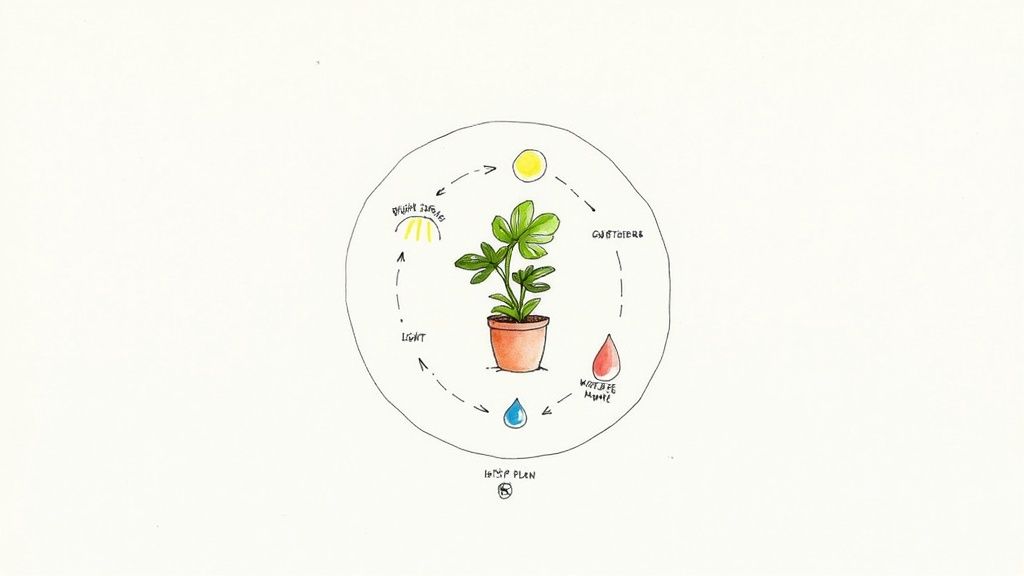
Think of your Monstera as a visitor from the tropics that just needs a little help settling in. If you get the basics—light, water, and soil—right, you're setting the foundation for a stunning, healthy plant that will quickly become a living centrepiece in your home. Let's map out a year-round care plan that’s perfectly tuned for New Zealand conditions.
Finding the Perfect Light
Honestly, light is probably the most crucial factor for a happy Monstera. Out in its native habitat, it scrambles up trees under the rainforest canopy, catching dappled sunlight. Your job is to mimic that inside your home, which means finding a spot with plenty of bright, indirect light.
The intense New Zealand sun, especially in summer, is just too much for a Monstera's leaves. Direct sun will scorch them, leaving nasty brown patches. A north-facing room, a couple of metres back from the window, is often the sweet spot. It provides that consistent brightness without the harsh, direct rays. An east-facing window that only catches the gentle morning sun is another fantastic option.
Is your plant not getting enough light? You'll know by its slow growth and new leaves that unfurl without those famous splits (the fenestrations). If you spot this, it's a simple fix—just move it somewhere a bit brighter.
Creating a Watering Rhythm for Kiwi Seasons
Watering is where a lot of new plant parents trip up, but it's easy once you learn to listen to your plant and pay attention to its environment. The golden rule is this: water thoroughly when the top 5-7 cm of soil feels dry, and then let it dry out again before its next drink. Overwatering is the number one enemy, especially during a damp Kiwi winter.
You'll quickly notice your watering routine changes with the seasons:
- Spring and Summer (September - February): This is go-time. Your Monstera is in its active growing season and will be thirsty. You might find yourself watering it once a week, maybe even more during a heatwave. But always, always check the soil first instead of just watering on a set schedule.
- Autumn and Winter (March - August): As growth slows right down, so does the plant’s need for water. You’ll need to back off on watering quite a bit, maybe to once every two or three weeks. Cool, damp air makes plants prone to root rot, so letting the soil dry out is absolutely vital.
A quick tip: when you do water, do it properly. Take your plant to the sink or shower and give it a really good soak until water is pouring out of the drainage holes. This makes sure all the roots get a drink and also helps to flush out any mineral build-up in the soil.
The Foundation of Good Health: Soil
The right soil mix is the bedrock of a healthy Monstera deliciosa NZ. These plants absolutely hate having "wet feet," so a dense, soggy soil is a total no-go. What they crave is a chunky, airy, and free-draining potting mix.
You’ve got two great choices here. The easy option is to grab a high-quality, pre-made aroid or indoor plant mix from your local garden centre. These are specially formulated with things like orchid bark, perlite, and coco coir to give that perfect balance of aeration and moisture retention.
If you're feeling a bit more hands-on, you can whip up your own mix. A fantastic starting recipe is:
- One part standard indoor potting mix.
- One part orchid bark for that chunky texture and airflow.
- One part perlite or pumice to stop the soil from compacting and boost drainage.
This DIY blend does a great job of mimicking the loose, organic-rich floor of a tropical forest. For a really deep dive into creating the perfect base for your indoor jungle, check out our detailed guide to crafting the ideal indoor potting mix.
Humidity and Feeding Your Monstera
Coming from humid rainforests, Monsteras definitely appreciate a bit of moisture in the air. Most New Zealand homes are perfectly fine, but giving your plant a humidity boost can encourage bigger, healthier leaves. An easy way to do this is to group it with other plants, run a humidifier nearby, or place it in a naturally humid spot like a bathroom or kitchen (as long as it gets enough light!).
Finally, let's talk food. Fertiliser provides the essential nutrients your plant needs to push out those massive, beautiful leaves. Use a balanced liquid indoor plant fertiliser every 2-4 weeks through the spring and summer growing season (September to February). Make sure you follow the dilution instructions on the packet to the letter—too much can burn the roots. Once autumn and winter roll around and growth stops, you can stop feeding altogether.
Growing a Monstera Outdoors in New Zealand
While the Monstera deliciosa is a superstar indoor plant across Aotearoa, its true potential is unleashed when you take it outside. For the ambitious Kiwi gardener, this is your chance to create a breathtaking tropical feature, turning a corner of your yard into a lush, exotic escape.
And yes, this is a very real possibility in the milder, frost-free parts of New Zealand. Think of those subtropical microclimates you find in Northland, Auckland, the Bay of Plenty, and other coastal spots where winter frosts are a rarity. In these places, a Monstera deliciosa can properly flourish.
Choosing the Right Outdoor Spot
Location is absolutely everything when planting your Monstera outside. Just like its indoor counterpart, it really dislikes the harsh, direct sun our Kiwi climate is famous for. It’s happiest in a sheltered position with dappled light, much like the conditions it would get under a rainforest canopy.
Try planting it at the base of a large, established tree or up against a shaded, protected wall. This strategy hits two birds with one stone:
- Protection from Sun Scorch: The tree canopy or wall will filter that intense midday and afternoon sun, stopping the leaves from getting fried.
- A Natural Climbing Frame: It gives the Monstera’s powerful aerial roots something to grab onto as it starts its impressive journey upwards.
Reaching New Heights
Give an outdoor Monstera the space and a structure to climb, and it will put on a spectacular show. It uses its thick aerial roots to anchor itself firmly to host trees or walls, climbing towards the light without harming its support. This is where you’ll see the plant truly live up to its magnificent potential.
In the right New Zealand microclimate, it’s not unheard of for these plants to reach staggering heights of up to 10 metres. The leaves transform, too, growing to an immense size you rarely see indoors. A single leaf can easily measure up to 70 cm across, creating a dramatic and genuinely tropical vibe in your garden. For more ideas on creating a lush garden, check out our guide to growing tropical plants in NZ.
The real magic of an outdoor Monstera is watching it revert to its wild, climbing nature. The fenestrations (those famous leaf splits) become deeper and more pronounced, and the plant's entire presence becomes more architectural and commanding.
The Famous Fruit Salad Plant
One of the most exciting rewards of growing a Monstera deliciosa outside is the chance it might fruit. The plant actually gets its name from this delicious fruit, which famously tastes like a mix of pineapple, banana, and mango.
But here’s the catch. While the fruit can and does form in New Zealand, our climate often stops it from ripening fully. The fruit needs a long, sustained period of warmth to mature, which usually takes about a year. Our cooler temperatures mean it often holds onto high levels of oxalic acid, making it inedible. So, while you might not get a reliable harvest, just seeing the unique, cone-like fruit appear is a fascinating reward in itself.
Solving Common Monstera Problems in NZ Homes
Even the most seasoned plant enthusiast hits a snag now and then. Don't panic! Think of this as your go-to guide for figuring out what's bugging your Monstera deliciosa, especially with our unique Kiwi conditions. Whether it's a mysterious yellow leaf or a few unwelcome guests, most issues are surprisingly easy to sort out once you know the signs.
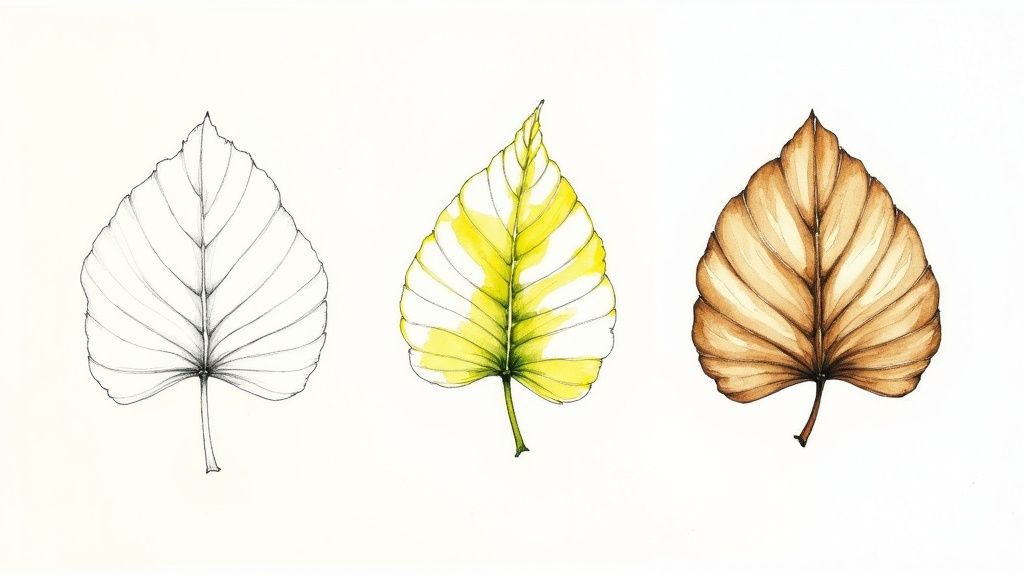
Let's break down what your plant is trying to tell you, why it's happening, and exactly how to get it back on track. A little know-how can nurse your plant back to health and make you a much more confident plant parent.
Decoding Your Monstera's Signals
Your Monstera talks to you through its leaves. Any sudden change is its way of saying, "Hey, something's not quite right over here!" Learning to read these signals is the real secret to great plant care.
Yellowing leaves are easily the most common cry for help we see. It looks alarming, but it’s usually a simple fix. Nine times out of ten, especially during a damp New Zealand winter (June to August), the culprit is overwatering. The soil just doesn't dry out as quickly in the cooler, darker months, and roots sitting in soggy soil can't breathe. This leads to root rot and, you guessed it, those sad yellow leaves.
On the flip side, brown, crispy leaf edges often signal the opposite: the air is too dry. Our homes, particularly when we've got the heat pump or a fire cranking, can become really arid. This dry air pulls moisture from the leaves faster than the roots can pull it from the soil.
A great tip is to look at the pattern. Is it just one old leaf at the very bottom turning yellow? That’s probably just the plant shedding an old leaf, which is perfectly normal. But if it’s happening to multiple leaves, or newer ones, it's a clear sign you need to investigate.
Monstera Problem Diagnostic Chart
To take the guesswork out of it, here’s a quick-reference chart. Just match the symptom to the cause and find a solution tailored for our local conditions.
| Symptom | Likely Cause | Solution for NZ Conditions |
|---|---|---|
| Yellowing Leaves | Overwatering, especially in winter. | Let the top 5-7 cm of soil dry out completely before watering again. Cut back on frequency from March to August when growth slows right down. |
| Brown, Crispy Tips or Edges | Low humidity. | Group plants together to create a humid microclimate, use a pebble tray, or give the leaves a light mist every few days. Keep it away from heaters. |
| Brown or Black Spots | Sunburn or fungal issues. | Move your plant out of any harsh, direct sun. If the spots are soft or spreading, it might be fungal—improve air circulation and avoid wetting the leaves. |
| Drooping or Wilting Leaves | Underwatering or severe overwatering. | Feel the soil. If it's bone dry, give it a good, deep soak. If it's soggy, you need to check for root rot and let it dry out completely. |
| Leggy Growth with Small Leaves | Not enough light. | The plant is literally stretching for light. Move it closer to a bright spot, like near a north-facing window, where it gets lots of indirect sun. |
This little guide should help you get straight to the remedy without any stress.
Dealing with Common Pests
Unfortunately, our lush indoor jungles can sometimes attract unwanted visitors. For Monsteras in New Zealand, the usual suspects are mealybugs and spider mites.
Mealybugs look like tiny bits of white fluff, almost like cotton, and love to hide where the leaf meets the stem. Spider mites are much harder to spot with the naked eye, but you'll notice their calling card: very fine, delicate webbing on the undersides of the leaves.
Honestly, the best defence is regular maintenance. Wiping down your Monstera's leaves with a damp cloth every so often not only keeps them glossy and dust-free but it's also your best chance to spot pests before they take hold.
If you do find them, an easy, eco-friendly fix is to spray the plant with a mix of water and a few drops of dish soap or a diluted neem oil solution. For most small infestations, that's all it takes to show them the door.
Right, let's clear up a few common questions that pop up for Kiwi Monstera parents. I've tailored these answers specifically for our local conditions, giving you some quick, practical advice you can use straight away.
When Is the Best Time to Repot My Monstera in New Zealand?
The sweet spot for repotting your Monstera is during its main growing season. Here in New Zealand, that means aiming for a window between September and December.
Repotting in spring or early summer gives your plant the best chance to bounce back quickly. It can settle into its new home and push out fresh growth before things slow down for the cooler months. Try to avoid repotting in autumn and winter; the plant is semi-dormant then, and disturbing its roots can cause stress when it doesn't have the energy to recover.
Are Monstera Deliciosa Plants Toxic to Pets?
Yes, unfortunately, they are toxic to both cats and dogs. The leaves and stems contain tiny, sharp crystals called insoluble calcium oxalates. If a curious pet has a chew, these crystals can cause some real discomfort—painful irritation and swelling in the mouth and throat, drooling, and an upset tummy.
To keep your furry friends safe, it's best to place your Monstera well out of their reach. Think high shelves, plant stands, or even a hanging basket to keep it elevated. It’ll give you peace of mind and keep your pets out of trouble.
Why Are My New Monstera Leaves Not Splitting?
Those iconic splits (the proper term is fenestrations) are a sign of a happy, maturing plant that's getting plenty of light. If your new leaves are coming through solid and heart-shaped, it's usually down to one of two things.
- It's still a baby: Young, juvenile plants naturally produce solid leaves. The splits will only start to appear as the plant gets older and more established.
- It needs more light: This is the most common culprit for a mature plant. If it’s not getting enough bright, indirect light, it simply won't have the energy needed to produce those beautiful fenestrated leaves. Try moving it to a brighter spot, but make sure to keep it out of harsh, direct sun which can scorch the leaves.
Can I Use Regular Garden Soil for My Indoor Monstera?
This is a classic mistake, and definitely not a good idea for an indoor Monstera deliciosa. Your standard garden soil from the backyard is way too heavy and dense for a pot plant. It compacts over time and holds onto far too much water, which is a fast track to root rot, especially in our sometimes-damp Kiwi homes.
Always go for a good quality, free-draining indoor potting mix. For the best results, look for a specialty aroid mix or create your own by adding chunky bits like orchid bark and perlite to a standard potting mix. This helps with aeration and drainage, mimicking its natural jungle-floor habitat and keeping the roots happy and healthy.
Ready to find the perfect addition to your indoor jungle? Jungle Story connects you with New Zealand's best growers, offering a stunning selection of healthy, vibrant Monstera plants and all the supplies you need to help them thrive. Explore our collection today at https://junglestory.co.nz.