
Welcome to the wild and wonderful world of philodendrons, a plant that’s captured the hearts of Kiwis and found a home in everything from sunny Auckland apartments to cosy Christchurch villas. It’s easy to see why the philodendron nz obsession is still going strong.
Your Guide To Growing Philodendrons In Aotearoa
For plant lovers in New Zealand, the pull of the philodendron is hard to ignore. With well over 450 species out there, their sheer diversity is mind-boggling, offering a massive range of colours, textures, and growth habits. You might be drawn to the classic, deep green, heart-shaped leaves of a climber, or maybe the wild, painterly splashes of a rare variegated type. Whatever your taste, there’s a philodendron for you.
But it’s not just about looks. These plants have a reputation for being pretty easy-going. They’re forgiving enough for a total beginner, but there's enough variety to keep even the most experienced collectors on the hunt for their next prize. On top of that, many philodendrons are fantastic air purifiers, quietly working away to freshen up your indoor space.
Philodendrons just seem to fit the Kiwi lifestyle. They bring that untamed beauty of nature inside, settling into our homes beautifully and rewarding just a little bit of effort with absolutely spectacular growth.
Think of this guide as your complete roadmap to getting a thriving philodendron in NZ. We’ll get into everything from picking the right one to looking after it, all with our unique Southern Hemisphere seasons and climate in mind.
What This Guide Covers
Our mission is to arm you with the confidence to grow healthy, stunning plants. We’ll be exploring:
- Choosing the Right Plant: We'll help you sort through the popular varieties to find one that’s a perfect match for your home and lifestyle.
- Mastering the Basics: Get the lowdown on light, water, and soil, tailored specifically for New Zealand conditions.
- Seasonal Care Routines: Learn the best times to fertilise and repot your plants based on our spring and summer growing seasons.
- Troubleshooting Common Issues: Find real, practical fixes for things like yellowing leaves, annoying pests, and other common headaches.
By the time you're done, you'll have all the know-how you need to kickstart your indoor jungle or add a new gem to your collection.
How To Choose The Perfect Philodendron For Your Home
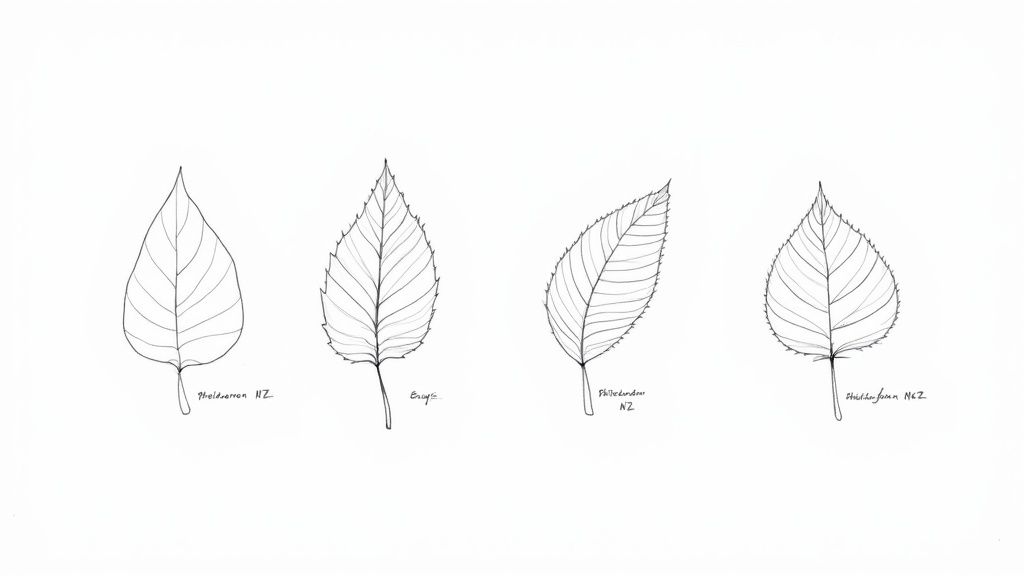
So, you're ready to bring a philodendron home. Fantastic choice! But with literally hundreds of varieties out there, picking just one can feel a bit daunting. The secret is to think of it like matchmaking – you want to pair the plant's personality with your space and lifestyle.
The easiest way to narrow it down is to start with how they grow. Philodendrons generally fall into two camps: the climbers and the upright growers.
Vining types, like the classic Heartleaf Philodendron, are born to climb. In their natural habitat, they'd be scaling trees. In your living room, they’ll happily cascade from a hanging basket or scramble up a moss pole. Pro tip: giving them something to climb actually encourages them to produce bigger, more impressive leaves.
Then you have the self-heading varieties. These grow outwards from a central point, forming a more contained, shrub-like plant. Think of stunners like the Philodendron 'Birkin' or the moody 'Rojo Congo'. They're brilliant for filling a corner or making a statement on a table without taking over your vertical space.
Understanding Growth Habits
Getting your head around the climber vs. upright distinction is your first big step. A vining philodendron gives you heaps of options – let it trail down a bookshelf for that lush jungle vibe, or train it up a wall to create a living piece of art. Upright types, on the other hand, offer a more structured, architectural feel.
Knowing this from the get-go is key to keeping your plant happy long-term. A climber without support might end up looking a bit sparse with small leaves, and an upright variety simply won't trail, no matter how much you wish it would. Have a good think about the spot you have in mind and the look you're going for before you fall in love.
If you're looking for clever ways to show off your new plant, it's worth finding the best indoor plant stands to really make it a feature in your home.
Popular Philodendron Varieties For Kiwi Homes
The plant scene in New Zealand has well and truly embraced the philodendron. You'll find everything from easy-going staples to those rarer gems that get plant collectors buzzing with excitement.
Here are a few popular picks you're likely to come across:
- Heartleaf Philodendron (Philodendron hederaceum): The quintessential beginner’s plant. It’s incredibly forgiving, grows fast, and its classic heart-shaped leaves look amazing in a hanging basket. You can't go wrong.
- Philodendron 'Birkin': A real show-stopper. Its dark green leaves are painted with delicate, creamy-white pinstripes. As an upright grower, it stays relatively compact and adds a touch of class to any space.
- Pink Princess Philodendron (Philodendron erubescens 'Pink Princess'): This one's a superstar for a reason. Famous for its dark, moody leaves splashed with vibrant hot pink, it’s a climber that needs good, bright light to keep that amazing colour.
- Philodendron 'Brasil': A colourful twist on the Heartleaf. This vining beauty has gorgeous green leaves with a painterly splash of lime and yellow right down the middle.
Philodendrons are a top pick for Kiwis because they're just so adaptable to our homes. Most philodendrons grown indoors here will top out at around 60 cm high, making them perfect for smaller spaces. The Heartleaf and Erubescens types tend to be speedy growers, while others like the Bird's Nest are loved for their bold, structural form.
Choosing a philodendron isn't just about what looks good today. It’s about picturing how it will grow and mature in your home over the years. That small climber could become the focal point of your room in no time with the right care.
Comparing Popular Philodendron Varieties In New Zealand
To help you find your perfect match, we've put together this quick-glance table. Use it to see which plant best suits your home's light conditions and how much attention you want to give it. Of course, these are just a handful of the many https://junglestory.co.nz/blogs/plant-blogs/great-indoor-houseplants available.
| Variety | Growth Habit | Ideal Light | Watering Needs | Perfect For |
|---|---|---|---|---|
| Heartleaf | Vining / Trailing | Low to Bright, Indirect | Let top inch of soil dry | Beginners and low-light spots |
| 'Birkin' | Self-Heading / Upright | Bright, Indirect | Let top half of soil dry | A statement desk or shelf plant |
| Pink Princess | Vining / Climbing | Bright, Indirect | Keep consistently moist | Collectors wanting a pop of colour |
| 'Brasil' | Vining / Trailing | Medium to Bright, Indirect | Let top inch of soil dry | Adding variegation to a collection |
| 'Rojo Congo' | Self-Heading / Upright | Medium to Bright, Indirect | Let top half of soil dry | Creating a bold, tropical look |
At the end of the day, the best philodendron is one you'll love having around and that fits into your life. Whether you start with a tried-and-true classic or go on the hunt for something a bit special, you're welcoming a truly beautiful and rewarding plant into your home.
Mastering Philodendron Care In The NZ Climate
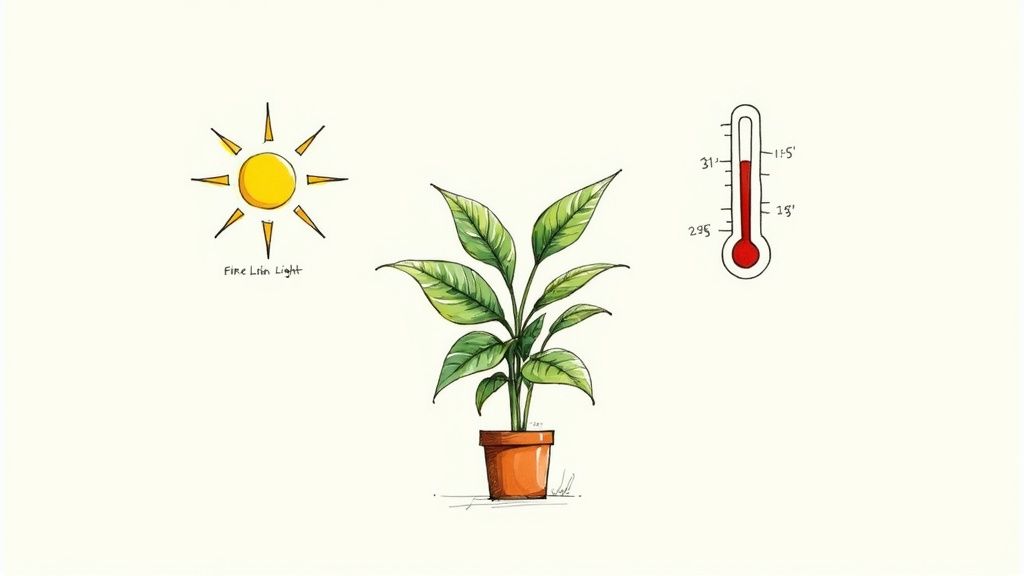
Getting a philodendron to truly thrive in New Zealand comes down to nailing a few simple fundamentals. While these plants are known for being pretty tough, tweaking their care to match our unique climate is the secret to unlocking their real potential. From the humid summers up north to the crisp winters down south, getting light, water, and soil right will make all the difference.
Let's break down these core elements, starting with the one that matters most: light.
Finding The Perfect Light In Your NZ Home
You’ll always hear that philodendrons need 'bright, indirect light'. But what does that actually look like in a Kiwi home? A good way to think about it is light that's bright enough to cast a soft, fuzzy shadow, not one with sharp, crisp edges.
Direct sun is a big no-no. That harsh afternoon sun from a north-facing window, especially in summer, will scorch their beautiful leaves, leaving behind white or yellow patches. That’s sunburn, and unfortunately, it's permanent damage. On the flip side, too little light causes slow, 'leggy' growth where the plant stretches out, leaving big gaps between small leaves. Variegated types might even start to lose their stunning patterns.
The sweet spot is often a few feet back from a north or west-facing window, or right next to an east-facing one that gets that gentle morning sun. Keep an eye on how the light moves through the day and changes with the seasons. A spot that’s perfect in winter might get a bit too intense as the summer sun gets higher in the sky.
Nailing Your Watering Routine
Overwatering is easily the most common mistake new plant owners make, and it’s a quick way to upset your philodendron. These plants absolutely hate having 'wet feet', which leads to root rot – a fungal issue that can be fatal. The trick is to let the soil dry out a bit between waterings.
The good old finger test is a foolproof method. Before you reach for the watering can, stick your finger about five centimetres into the potting mix. If it feels dry, go ahead and water. If you feel any moisture at all, give it a few more days and check again.
The goal is consistent moisture, not constant sogginess. When you do water, be thorough. Pour water over the soil until it streams out of the drainage holes. This ensures all the roots get a good drink and helps to flush out any mineral salts that have built up over time.
How often you water will change massively with the seasons here in NZ. During a warm, humid North Island summer, your plant will be growing like mad and much thirstier, maybe needing water once a week. But during a cool South Island winter, its growth will slow right down, and you might only need to water every two or three weeks.
Creating The Ideal Soil Mix
In the wild, philodendrons are aroids, growing in the loose, airy debris of the forest floor, not in dense, heavy soil. We need to copy that environment to keep their roots healthy and able to breathe. Standard potting mix straight from the bag is usually too dense and holds onto way too much water.
Luckily, it's easy to whip up a fantastic aroid mix yourself with ingredients from any local garden centre. This gives your plant the perfect balance of aeration and moisture retention.
Here’s a great starting recipe:
- One part high-quality potting mix: This is your base, providing structure and nutrients.
- One part orchid bark: This creates chunky air pockets, stopping the soil from becoming compacted and letting the roots breathe.
- One part perlite or pumice: These lightweight volcanic rocks are brilliant for improving drainage and preventing a waterlogged mix.
This simple blend creates a chunky, airy substrate that your philodendron’s roots will absolutely love. It lets water drain freely while holding onto just enough moisture, mimicking its natural home and dramatically cutting down the risk of root rot.
Managing Humidity Levels
Being tropical natives, philodendrons love high humidity – 60% or more is what they dream of. While many parts of New Zealand are naturally quite humid, our homes can get surprisingly dry, especially in winter when we crank up the heaters and heat pumps.
Low humidity often leads to those frustrating crispy, brown leaf tips and edges. Thankfully, it’s pretty easy to boost the moisture in the air around your plant. Grouping plants together creates a natural, humid microclimate as they all release moisture. Another simple trick is to place your plant on a pebble tray (a shallow tray with pebbles and water), as the evaporating water will increase local humidity. For the really serious collectors, a small humidifier is a fantastic investment for keeping your prized plants in perfect condition.
Your Seasonal Guide to Fertilising and Repotting
Beyond just giving them light and water, timing your care to the seasons is how you really get your philodendron to thrive. Think about our native pōhutukawa – it knows exactly when to burst into flower for summer. Your indoor jungle friend is no different; it has its own natural rhythm. The real secret to unlocking lush, healthy growth is to sync up your care routine, especially fertilising and repotting, with this cycle.
Here in New Zealand, the main growing season for our philodendrons kicks off in spring and powers right through the long, warm days of summer. This is their busiest time, usually from around September through to February, when they're pushing out new leaves and sending out those gorgeous vines. This is when they need to feast.
Think of fertiliser as a power-up. During this active growth phase, your plant is hungry for the nutrients it needs to fuel all that energy. But as autumn rolls in and the days get shorter and cooler, its metabolism slows right down for a well-earned rest.
A Simple Fertilising Schedule For Your Philodendron
Feeding your philodendron doesn't have to be a complicated affair. The golden rule is simple: only fertilise during the active growing season. Trying to feed it during its dormant winter period (June to August) is a bit like trying to force-feed someone who's fast asleep. The plant simply can't use the nutrients, which can lead to a chemical build-up in the soil that might even burn the roots.
Here’s a straightforward routine you can follow:
- Start in Spring: Begin feeding your philodendron around September, right as you start to see new growth emerging.
- Feed Regularly: Give it a dose of balanced liquid fertiliser every 4-6 weeks all the way through spring and summer.
- Dilute Correctly: Always follow the packet instructions, but a good rule of thumb is to dilute the fertiliser to half-strength. This prevents you from overwhelming the plant.
- Stop in Autumn: Start easing off the feeding schedule as autumn approaches in March, and stop completely over the winter months.
A good quality, balanced indoor plant food will provide that essential mix of nitrogen, phosphorus, and potassium your philodendron craves for beautiful foliage and a strong root system. If you want to get into the nitty-gritty of choosing the right product, have a look at our comprehensive guide on indoor plant fertilizer.
Knowing When It’s Time to Repot
Repotting is like giving your plant a bigger home; it provides fresh space and new resources to stretch out and grow. Most philodendrons are quite happy being a little bit snug in their pots, so you’ll likely only need to repot them every 18-24 months. Doing it too often can just cause unnecessary stress.
Keep an eye out for these tell-tale signs that your philodendron is feeling a bit cramped:
- Escaping Roots: This is the most obvious clue. If you see roots poking out of the drainage holes, it's a cry for help.
- Slowed Growth: If your plant seems to have stalled during the growing season despite you doing everything right, it might have simply run out of room.
- Water Rushes Through: When the pot becomes more roots than soil, water will just drain straight through without the soil getting a chance to absorb it.
- The Plant is Lifting: The root ball can become so dense that it physically pushes the plant up and out of its pot.
Repotting isn’t just about a bigger pot; it's a vital health reset. It’s your chance to refresh the soil, inspect the roots for any issues, and give your plant a solid foundation for the year ahead.
The absolute best time to repot is in late spring, just as the plant is hitting its peak growing phase. This gives it the entire summer to settle into its new home and establish a strong, happy root system. Try to avoid repotting in winter when the plant is dormant and won't recover as quickly from the move.
And when you do repot, only go up one pot size—that’s usually about 2-4 cm wider in diameter. A pot that’s too big can hold onto excess soil and moisture, which is a one-way ticket to root rot. Following this simple seasonal care will keep your philodendron thriving year after year.
Solving Common Philodendron Problems

Even with the best of intentions, every plant parent runs into a bit of trouble now and then. So, when your philodendron starts to look a bit sad, don't panic.
Think of it as your plant trying to talk to you. Its leaves are the clearest signals it has. This guide will help you figure out what it's saying so you can get your green mate back on track.
Decoding Yellowing Leaves
The sight of a yellowing leaf is probably the number one worry for philodendron owners. If it’s just a single, older leaf yellowing and dropping off, that’s totally normal – part of the plant's life cycle. But if you're seeing widespread yellowing, something's not quite right.
More often than not, the culprit is overwatering. When the soil stays soggy for too long, the roots can't breathe and start to rot. Damaged roots can't pull up water and nutrients, which is why the leaves turn yellow and mushy. Easy fix: always stick your finger in the soil to check if it's actually thirsty before you water again.
On the flip side, underwatering can also cause yellow leaves. The difference? They’ll usually feel dry and crispy, not soft. It all comes back to checking the soil and figuring out a watering rhythm that works.
Dealing With Pests And Other Issues
Even indoors, our plants aren't completely safe from pests. A few common culprits here in New Zealand can give philodendron owners a headache, but spotting them early makes a world of difference.
Here are a few common signs to look out for:
- Crispy Brown Tips: This is almost always a sign of low humidity. When the air gets too dry – especially in winter with the heaters on full blast – the leaves lose moisture faster than the roots can supply it. Try grouping your plants together or placing them on a pebble tray to create a more humid microclimate.
- Leggy Growth: If your vining philodendron has long, bare stems with tiny leaves spaced miles apart, it's screaming for more light. The plant is literally stretching itself out to find a brighter spot. Move it closer to a window with plenty of bright, indirect light.
- Fungus Gnats: These annoying little flies are a dead giveaway that your soil is staying too damp. Letting the top few centimetres of soil dry out completely between waterings is the best way to break their life cycle and send them packing.
- Spider Mites: These tiny pests are tricky to spot, but they leave tell-tale fine webbing on the undersides of leaves. They suck the life out of the plant, causing the leaves to look pale and stippled. A good wipe-down with a damp cloth and a spray of neem oil solution should get them under control.
Figuring out what’s wrong with a plant can feel like a tough gig. This is made even harder by the fact that expert knowledge on houseplants is becoming rarer in New Zealand. This just makes it more important for us home gardeners to get confident in diagnosing these common issues ourselves. You can learn more about the state of cultivated plant knowledge in NZ here.
By paying close attention to your philodendron’s leaves and its environment, you'll get pretty good at spotting and solving most problems that pop up. Every challenge is just a chance to get to know your plant a little better, turning you into a more confident and skilled plant parent along the way.
How To Propagate Your Philodendrons
One of the best things about owning a philodendron is discovering how easy it is to make more of them. Propagation is the simple, almost magical process of turning one beloved plant into many — perfect for filling out your own collection or sharing with friends and whānau.
It’s a fantastic way to connect more deeply with your plants, and it costs you nothing. The most common and reliable method is to take a stem cutting and pop it in water. This technique works brilliantly for vining philodendrons and lets you watch the entire root-growing process unfold, which is incredibly satisfying.
Taking The Perfect Cutting
First things first, you need to find a node. This is the secret to successful propagation. A node is simply a small bump or joint on the stem where a leaf grows from; it’s the special spot where all the new roots will sprout.
Follow these simple steps to get started:
- Select a Healthy Stem: Look for a vibrant, healthy vine with at least two or three leaves. Steer clear of any stems that look a bit weak or damaged.
- Locate the Node: Find a node on the stem. You'll often see a tiny aerial root nub starting to form there, which is a great sign.
- Make the Cut: Using clean, sharp scissors or secateurs, make your cut about a centimetre or two below the node. Make sure your cutting has at least one node and one leaf.
- Prepare the Cutting: If there's a leaf really close to the bottom of your cutting (near the node), carefully snip it off. This just stops the leaf from rotting in the water.
Rooting Your Cutting In Water
Once you have your cutting, the rest is just a waiting game.
Place the stem into a jar of clean, room-temperature water. You'll want to make sure the node is fully submerged but the remaining leaves are sitting well above the waterline. Using a clear glass vessel is a great idea, as it makes it easy to keep an eye on root growth and water quality.
Watching those first little white roots appear is a truly exciting moment for any plant parent. It’s a visible sign of new life and the promise of a whole new plant, grown entirely by you.
Set your propagation jar in a spot that gets bright, indirect light, just like the parent plant would enjoy. To keep the water fresh and full of oxygen, it’s best to change it every few days.
You should start seeing roots emerge from the node within a couple of weeks. Hold off on potting it up until the new roots are at least 2-3 centimetres long. Displaying your cuttings can be part of the fun, and a dedicated propagation station bench stand makes for a beautiful feature while you wait for those roots to grow.
Your Philodendron Questions, Answered
We’ve covered a lot of ground on how to choose and care for your philodendrons, but there are always a few questions that pop up for Kiwi plant parents. Here are some quick-fire answers to the most common queries we get.
Are Philodendrons Toxic To Pets?
Yes, unfortunately, all philodendrons are toxic to our furry friends. The leaves and stems contain tiny, sharp crystals called insoluble calcium oxalate. If a curious cat or dog decides to have a chew, these crystals cause immediate pain and irritation.
You’ll want to watch out for signs like swelling around the mouth or tongue, a lot of drooling, pawing at their face, or vomiting. To keep everyone safe and happy, it's best to place your philodendrons on high shelves or in hanging baskets, well out of reach. If you think your pet has had a nibble, give your local NZ vet a call straight away.
What’s The Difference Between A Philodendron And A Pothos?
Ah, the classic mix-up! It's an easy mistake to make, as they look so similar at a glance. While they have a similar vibe, they're actually from completely different plant families. The easiest way to tell them apart is to look at the leaves and how they grow.
- Philodendron Leaves: These are usually softer and thinner with a more distinct, classic heart shape.
- Pothos Leaves: These feel a bit thicker and waxier, and the heart shape is often a little lopsided.
But the dead giveaway is how a new leaf appears. A new philodendron leaf emerges from a little protective sheath, called a cataphyll. This sheath hangs around on the stem for a bit before drying up and falling off. A pothos, on the other hand, just unfurls its new leaf directly from the previous one—no sheath involved.
Once you learn to spot that cataphyll on a philodendron, you'll be able to tell them apart in a heartbeat. It's the one foolproof trick that separates these two trailing favourites.
How Can I Get My Philodendron’s Leaves To Grow Bigger?
If you want those huge, impressive leaves on vining varieties like the Heartleaf or Pink Princess, the secret is to let them climb. In the wild, these guys are climbers, scrambling up tree trunks to get closer to the sunlight in the rainforest canopy. As they climb, their leaves get bigger and bigger.
You can easily encourage this at home by giving them some support.
- A Moss or Coir Pole: This is the best option. The plant's aerial roots can grow right into the pole, just like they would a tree.
- A Trellis: A simple trellis gives the vines something to grab onto as they head upwards.
- Wall Hooks: You can train your plant to climb a wall using small, clear hooks for a stunning living art display.
Giving your plant something to climb, along with good, bright indirect light and a bit of fertiliser during spring and summer, tells it that it's in a great spot to mature. Your reward will be massive, stunning leaves that turn your plant from a simple trailer into a real showstopper.
Ready to grow your indoor jungle? At Jungle Story, we bring you an incredible selection of philodendrons and other houseplants from New Zealand's best growers, delivered right to your door. Find your next leafy friend today at https://junglestory.co.nz.