
Picking the best hedging plants NZ has to offer isn’t about finding one magical plant. It's about finding the perfect fit for your specific garden and what you need it to do. Sure, you've got lush native favourites like Griselinia littoralis or the timeless, formal structure of a Buxus hedge, but the best choice always comes down to your garden's purpose, the local climate, and how much time you're willing to spend on upkeep.
How to Choose the Right Hedge for Your Garden
Feeling a bit overwhelmed by the options? Let's simplify it. Start by asking one basic question: what job does this hedge need to do? Think of it like picking the right tool from the shed. You wouldn't use a sledgehammer for a delicate task, and you wouldn't choose a tiny border plant to create a massive privacy screen. Once you've defined its main role, the options start to narrow down nicely.
A hedge can be a living wall for privacy, a low decorative border, a tough-as-nails windbreak, or even all three. If you’re after a dense screen to block out the neighbours in a suburban backyard, you’ll be looking at vigorous, leafy evergreens. On the other hand, if you need a windbreak for a blustery rural property, you'll need something seriously hardy that can take a beating from the elements.
Key Factors for Your Selection
Before you fall in love with a plant you’ve seen online, it’s vital to take a hard look at your own backyard. A plant that thrives in the balmy, subtropical north will likely sulk and struggle in the frosty south.
Keep these essentials in mind:
- Climate and Location: Is your garden exposed to harsh coastal winds, or is it a sheltered urban spot? How bad do your winter frosts get?
- Soil Type: What are you working with underfoot? Is it heavy clay, free-draining sandy loam, or something in between? Most hedging plants need good drainage to be happy.
- Sunlight Exposure: Be realistic about how much sun the area gets. A plant that needs full sun won't flourish in deep shade, and vice-versa.
- Desired Maintenance Level: Are you a keen gardener who enjoys regular trimming, or would you prefer a low-fuss option that only needs a clip once or twice a year?
A great hedge is a long-term investment in your garden's structure and beauty. Matching the plant to the place is the most important step towards ensuring it thrives for years to come, becoming a valuable part of your overall landscape design.
It’s no surprise that native plants have become hugely popular for hedging here in New Zealand. They're already adapted to our conditions and are great for local wildlife. Species like Pittosporum tenuifolium, Corokia, and Olearia rani are fantastic choices. Pittosporum is a versatile, fast-growing favourite (though you do need to keep an eye out for pests). Corokia is a bit slower off the mark but forms a wonderfully dense hedge that's particularly loved in places like Canterbury. Olearia is another brilliant option for creating tight, dense hedges perfect for privacy or wind protection. Typically, these natives just need a couple of trims a year to keep them looking sharp.
If you're keen to see how natives can fit into your wider garden plan, check out our guide to NZ landscaping ideas.
Discover Top Native Hedging Plants
Choosing native plants for your hedge is like giving your garden a home-ground advantage. These are the species that have evolved with our unique climate and soils, which usually means they’re tougher, easier to look after, and perfectly in sync with our local wildlife. When you plant a native hedge, you're not just putting up a screen; you're cultivating a thriving little ecosystem.
This approach has some fantastic flow-on effects for the environment. Native hedges are a pantry and a safe house for local birds like the tūī and kererū, offering everything from nectar-rich flowers to berries and safe nesting spots. They also support countless beneficial insects, turning your garden into a crucial link in our local biodiversity.
Let's dive into some of the best native hedging plants you can find in NZ.
Griselinia Littoralis: The Evergreen Favourite
When you picture a lush, vibrant green screen, chances are you're thinking of something like Griselinia littoralis. Known to many as Kapuka or New Zealand broadleaf, this plant is an absolute star for good reason. Its glossy, apple-green leaves create a dense and cheerful backdrop all year round, making it one of the most popular hedging choices out there.
It’s a fantastic option if you need a solid privacy screen relatively quickly. While it can grow into a tree of 10-20 metres in the wild, it’s easily kept at a neat garden hedge height of around 2-8 metres. Griselinia performs best in well-drained, fertile soil and loves a spot with full sun or partial shade to keep its leaf colour rich and dense.
Just a heads-up for those in colder spots: young Griselinia can be a bit sensitive to heavy frosts. It’s a good idea to tuck them in with some frost cloth for their first couple of winters until they get established.
Pittosporum Tenuifolium: A Versatile Classic
Pittosporum, or kōhūhū, is another cornerstone of Kiwi hedging. With a huge range of varieties available, you can find a Pittosporum to suit just about any garden style. They’re known for their small, often wavy-edged leaves and dark, slender stems, which create a fine texture that clips beautifully into a formal shape.
Different cultivars offer unique features:
- 'Mountain Jade': Has a naturally upright, bushy form, making it a dream for a tidy, formal screen.
- 'Screen Master': The name says it all. This one is bred to grow fast and create a dense privacy hedge in no time.
- 'Little Kiwi': A dwarf variety that’s perfect for low borders and edging. It’s a brilliant native alternative to traditional Box hedging.
Most Pittosporums are hardy and adaptable, happy in a wide range of conditions from coastal spray to moderate frosts once they’ve settled in. If you want to see how plants like these can transform your space, have a look at our guide to creating a beautiful NZ native garden.
Comparing Popular NZ Native Hedging Plants
To help you choose the right fit, here’s a quick comparison of some top native hedging plants. This table breaks down their key features, letting you see at a glance which one might be best for your garden’s needs and your desired level of maintenance.
| Plant Name | Growth Rate | Ideal Height | Best For | Maintenance Level |
|---|---|---|---|---|
| Griselinia littoralis | Fast | 2-8m | Quick privacy, lush green screening | Medium |
| Pittosporum tenuifolium | Medium to Fast | 1-5m (Varies) | Formal hedges, versatile styles | Medium |
| Corokia | Slow to Medium | 1-3m | Windy/coastal sites, textured look | Low |
| Podocarpus totara | Slow | 2-10m | Grand formal hedges, long-term structure | Low (once established) |
Each of these plants brings its own character to the garden. Whether you need something that grows quickly to block out the neighbours or a tough, low-care option for a challenging spot, there’s a native hedge that’s up to the task.
Corokia: The Tough and Tidy Choice
For a hedge that combines intricate texture with incredible resilience, you can’t go past Corokia. Its wiry, interlocking branches and tiny leaves give it a unique, almost sculptural appearance. This toughness makes it a standout choice for windy, coastal, and dry areas where more delicate plants would simply give up.
Corokia is the perfect plant for creating a 'living fence'. Its dense, twiggy structure not only provides visual privacy but also acts as a formidable barrier, while its hardy nature means it asks for very little in return.
With foliage colours ranging from the silvery-green of 'Geenty's Green' to the bronze tones of 'Frosted Chocolate', Corokia lets you get creative. It can be clipped into a sharp, formal hedge or left to look a bit more natural and windswept. It might be a bit slow to get going, but your patience will be rewarded with a super low-maintenance hedge that lasts for years.
Podocarpus Totara: The Majestic Option
If you're after a hedge with a real sense of permanence and grandeur, Podocarpus totara is an incredible choice. We usually think of Tōtara as a mighty forest giant, but it responds remarkably well to clipping and can be shaped into a dense, formal hedge with a deep green, stately presence.
Its fine, yew-like needles create a texture that's soft to the touch but visually solid. Tōtara is incredibly long-lived and durable, handling a wide range of conditions once it’s established. It is a slower-growing option, which means it needs trimming less often than faster species once it reaches your desired height, making it a surprisingly low-maintenance choice in the long run.
Have a Look at Popular Exotic Hedging Plants
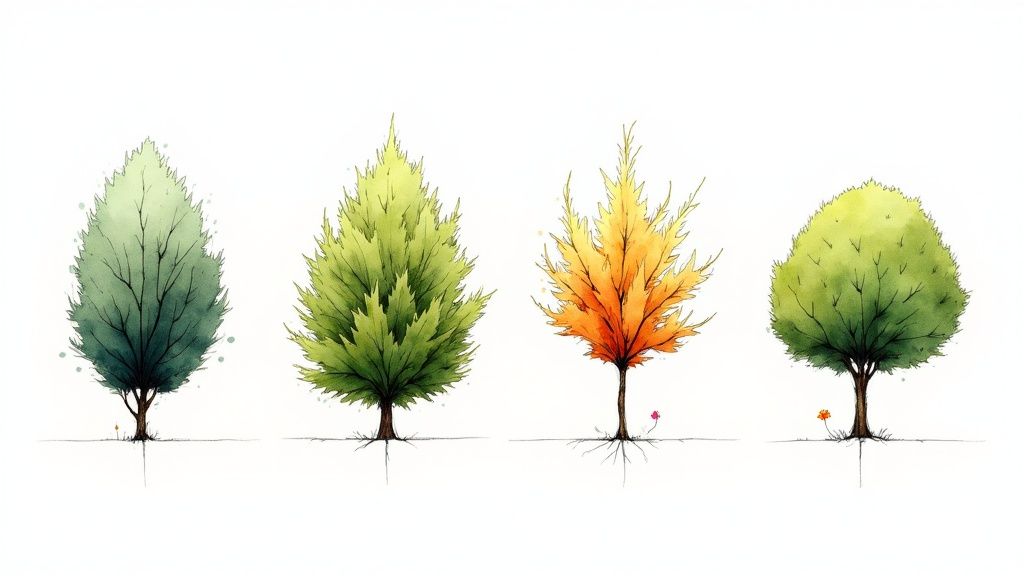
While our native plants are fantastic and have a real home-ground advantage, New Zealand’s climate is also incredibly welcoming to a huge range of plants from overseas. These exotic species can bring unique colours, textures, and forms to your garden, letting you create specific styles that might not be possible with natives alone. Think of it as expanding your garden’s design palette.
From the crisp, formal lines of a classic English garden to the vibrant floral displays of something more subtropical, exotic hedging plants give you the tools to bring your vision to life. Let’s dive into some of the most reliable and popular choices that really flourish in Kiwi gardens.
Buxus Sempervirens: The Classic Box Hedge
When you picture a perfectly clipped, low formal border, you’re almost certainly thinking of Buxus sempervirens, or the common Box hedge. This plant is the undisputed champion of formal hedging, loved for its dense, small-leaved foliage that can be shaped with incredible precision. It’s the go-to choice for edging garden beds, creating knot gardens, or neatly defining pathways.
One of its biggest selling points is its slow growth. While this means you need a bit of patience while it gets established, it also translates to minimal maintenance once it’s at the size you want. A quick trim once or twice a year is usually all it needs to stay looking sharp.
Camellia Sasanqua: A Flowering Spectacle
For a hedge that does more than just provide a green wall, you can’t go past the Camellia. While there are heaps of varieties, the sasanqua types are especially good for hedging. They generally have smaller leaves and a better tolerance for sun compared to their japonica cousins, making them more versatile in the garden.
Their real magic, though, is revealed from autumn through winter. Just as the rest of the garden is starting to look a bit bare, sasanqua camellias burst into a stunning display of flowers in shades of white, pink, and red.
Popular hedging varieties include:
- 'Setsugekka': Known for its elegant, large, single white flowers with golden stamens.
- 'Spring Festival': Produces masses of lovely double pink blooms.
- 'Cinnamon Cindy': Features fragrant, double white flowers with a hint of pink.
A key tip: to get the best from your flowering hedge, make sure you prune it just after the flowering season finishes in late winter or early spring. This ensures you don't accidentally snip off next year's flower buds.
Choosing an exotic hedging plant isn’t just about how it looks; it's about finding a plant that performs a specific job exceptionally well. Whether you need the precision of Buxus for a formal border or the rapid screening of a Leyland Cypress, there's an exotic option perfectly suited to your goal.
Photinia ‘Red Robin’: For a Splash of Colour
If you’re after a hedge with some real ‘wow’ factor, Photinia x fraseri 'Red Robin' is a standout choice. This hugely popular evergreen is famous for its brilliant, glossy red new growth that appears in spring and often flushes again throughout the year. The best part? Trimming the hedge actually encourages more of this spectacular red foliage, so you get rewarded for keeping it tidy.
Photinia is a vigorous grower, making it one of the best hedging plants in NZ for establishing a medium-to-tall screen pretty quickly. It’s hardy and adaptable, coping well with a range of conditions, although it really thrives in a sunny spot with well-drained soil. Regular pruning doesn’t just stimulate that red growth; it also keeps the hedge dense and compact, stopping it from getting thin and leggy.
Leyland Cypress: The Ultimate Privacy Screen
When you need height and you need it fast, very few plants can compete with the Leyland Cypress (Cupressus × leylandii). This conifer is legendary for its incredibly fast growth rate, capable of putting on up to a metre in height per year in the right conditions. This makes it an unbeatable choice for creating a tall privacy screen or windbreak in a hurry.
But, and this is a big but, this rapid growth comes with a serious trade-off: high maintenance. A Leyland Cypress hedge has to be trimmed regularly, at least twice a year, to keep it from getting out of control. If you let it go, it can quickly turn into a massive tree, and you can’t prune it back hard into old wood because it won’t regrow from there. It's the perfect solution for instant privacy, but it requires a real commitment to upkeep.
Planting Your Hedge for Long-Term Success
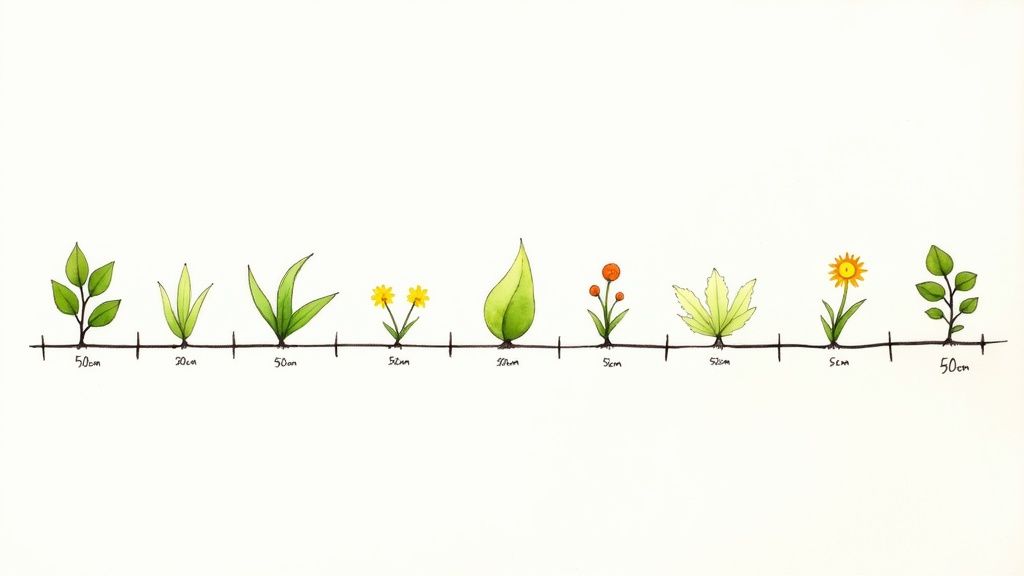
A beautiful hedge is a serious garden investment, and just like any good investment, it's all about getting the start right. You can pick the perfect plant, but how you put it in the ground is what really lays the groundwork for a dense, healthy living wall for years to come.
Think of it less like digging a few holes and more like laying the foundation for a house. If you nail this part, everything that follows becomes so much easier. The real secret isn't just the plant, but the soil it lives in.
Preparing the Perfect Planting Site
First things first, get to know your soil. Poor drainage is the arch-nemesis of most hedging plants, leading to root rot and sad, patchy growth. Here’s a quick test: dig a hole about 30 cm deep where you plan to plant, fill it with water, and watch. If it’s gone in a few hours, you’re golden. If that water is still sitting there the next day, you’ll need to work in some organic matter to improve the drainage.
When it comes to digging, forget individual holes. A continuous trench is the way to go, about 40-60 cm wide and a good spade’s depth. This gives the roots a clear, easy runway to spread out sideways, which is exactly what you want for fast, even growth along the whole hedge line.
Once the trench is dug, it's time to supercharge the soil.
- Boost with Organic Matter: Mix a generous amount of well-rotted compost or sheep pellets into the soil you dug out. This doesn’t just add nutrients; it improves the soil structure and its ability to hold moisture.
- Break Up Hardpan: Grab a garden fork and loosen the soil at the very bottom of the trench. This simple step ensures the roots can push down deep, anchoring the plant firmly.
Getting this prep done creates the perfect welcoming home for your new hedge, encouraging strong root growth from day one.
Timing and Spacing Your Plants
Here in New Zealand, the best time to plant a hedge is when the weather is cool and a bit damp. Autumn is the sweet spot—the soil is still warm enough for the roots to get established before winter kicks in. Your next best bet is spring, which gives the plants a decent head start before the summer heat arrives.
Spacing is another piece of the puzzle, and it’s completely dependent on your chosen plant. Too far apart, and you’ll be staring at gaps for years. Too close, and they’ll be fighting each other for light and nutrients.
The goal is to space your plants so their leafy tips will just touch after about two years of growth. This encourages them to knit together into that seamless screen you’re after.
As a general rule of thumb:
- Small, formal plants (like Buxus): Space them 30-40 cm apart.
- Medium-sized hedges (Griselinia, Photinia): Aim for 75 cm to 1 metre apart.
- Large, fast-growing screens (like Leyland Cypress): Give them more room at 1.5 metres apart.
For a deeper dive into getting that screen up quickly, check out our guide on fast-growing hedges in NZ.
Once you've placed your plants in the trench at the right spacing (make sure they’re at the same depth they were in the pot), backfill with your enriched soil. Gently firm the soil around each plant’s base, then give them a really good, deep watering. This helps settle the soil and gets rid of any pesky air pockets around the roots.
Mastering Hedge Pruning and Maintenance
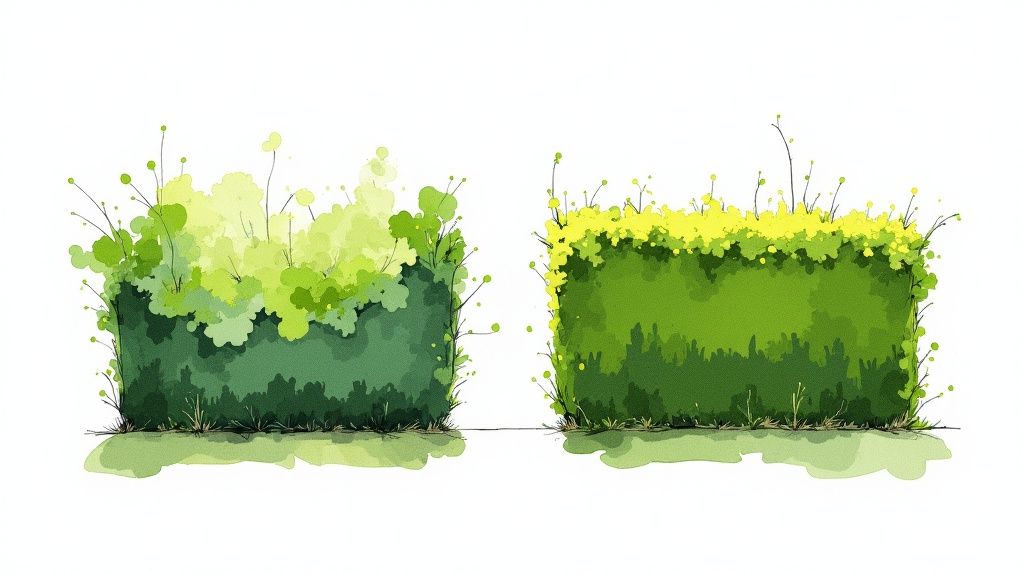
A perfectly manicured hedge doesn’t just happen—it’s the result of consistent care, and pruning is the most important job you’ll need to get right. Think of it less as just "cutting back" and more like having a conversation with your plants. Every snip sends a signal, telling the hedge where to put its energy to grow dense, healthy, and into that perfect shape you're after.
This whole process starts the moment you put your plants in the ground, and it changes as they grow up. The way you shape a young, spindly hedge is completely different from the regular haircut an established one needs to keep looking sharp.
Formative Pruning for Young Hedges
Those first couple of years are all about building a solid, bushy framework right from the soil up. We call this formative pruning. It’s tempting to let them shoot for the sky straight away, but that’s a classic mistake that leaves you with gappy, top-heavy hedges down the line.
The real secret is to encourage lots of growth at the base. Straight after planting, give your new hedge plants a surprisingly hard trim—often taking off as much as a third. I know it feels wrong, but this early haircut is what triggers all those new shoots low down, giving you a hedge that’s thick and private from ankle height to eye level.
Maintenance Trimming for Established Hedges
Once your hedge has hit the height and density you were aiming for, the job changes to simple maintenance. Now it’s all about regular, lighter trims to hold that shape and keep it looking full and vigorous.
A brilliant rule of thumb is to keep the hedge slightly tapered, so it’s wider at the bottom than the top. This ‘A-frame’ shape is a game-changer. It lets sunlight get right down to the lower branches, stopping them from dying off and leaving you with those ugly bare legs at the base.
A formal hedge might need a trim two or three times a year during the growing season. A more relaxed, informal hedge, on the other hand, might only need a single tidy-up annually to keep it in check. When you do it is just as important, and that all comes down to the plant species.
As a guiding principle, try never to remove more than one-third of the hedge's growth in one go. Hacking it back too hard can really stress the plant, and you want to leave enough foliage for it to bounce back quickly.
Even the prickliest plants have been tamed into incredible hedges with careful trimming. Take Gorse (Ulex europaeus), for example. Early English settlers brought it to New Zealand to create the familiar hedgerows of home. Those vicious spines make for a barrier no person or animal wants to cross. While it’s now a pest in many areas, regular trimming is what transforms it into a dense, functional windbreak, especially on our exposed coastlines. You can read more about the surprising history of gorse hedges in NZ.
Your Pruning Toolkit
The right tools make all the difference—the job becomes easier, safer, and you get a much cleaner result for the plant. You don’t need a shed full of gear, just a few quality basics.
- Hedge Shears: Good old-fashioned manual shears are fantastic for smaller jobs where you need a bit of precision.
- Hedge Trimmer: If you’ve got a big hedge, a powered trimmer (electric or petrol) will save your back. Just make sure the blades are sharp.
- Secateurs: Perfect for snipping any thicker stems that the trimmer blades missed.
- Loppers: You’ll need these for tackling any seriously overgrown, woody branches that are too chunky for secateurs.
And a final pro tip: always keep your tools clean and sharp. Blunt blades don't cut, they crush and tear the stems, which is an open invitation for pests and diseases to move in. A quick wipe with a disinfectant after you've finished is a simple step that makes a world of difference to your hedge's health.
Your Hedging Questions Answered
Even with the best plans laid out, a few questions always seem to surface right when you're about to get your hands dirty. Here are some of the most common queries we hear from Kiwi gardeners, with clear answers to help you get your hedge growing beautifully.
What’s the Fastest Growing Hedge for Privacy in NZ?
If you need a screen yesterday, Leyland Cypress is your go-to. It can shoot up by as much as a metre a year, which is incredible for privacy. The trade-off? You absolutely must keep on top of trimming, or it’ll quickly turn into a towering tree.
For a fantastic native option that’s a bit less demanding, you can’t go wrong with Griselinia littoralis (Kapuka). It’s still quick but far more manageable. Certain Pittosporum cultivars, like ‘Screen Master’, are also bred specifically for that speedy, dense growth that creates a living wall in no time.
How Far Apart Should I Plant My Hedging Plants?
Getting the spacing right from day one is the secret to a thick, uniform hedge. If plants are too close, they’ll compete for resources; too far apart, and you’ll be left with frustrating gaps. The perfect distance really depends on the plant’s ultimate size and shape.
- Small Formal Hedges: For tight, neat hedges using Buxus or Corokia, plant them about 30–40 cm apart.
- Medium Hedges: Your classic choices like Griselinia, Camellia, or Photinia do best when spaced 75 cm to 1 metre apart.
- Large Screens: Give the big guns like Leyland Cypress plenty of elbow room—plant them 1.5 metres apart to allow them to fill out properly.
As a rule of thumb, always check the plant label. The grower’s recommendation is your best guide for that specific variety. Nailing the spacing at planting time saves a lot of headaches later on.
When Is the Best Time to Trim My Hedge in New Zealand?
Good timing with the shears is what keeps a hedge looking sharp and healthy. For most evergreens, the main structural trim should happen in late summer or early autumn, once the big spring and summer growth spurt has settled down. This helps lock in a tidy shape for the winter months.
You can give it another light trim in late spring to tidy up any unruly new shoots. The big exception is flowering hedges. If you have Camellias or Michelia, hold off on pruning until right after they’ve finished their floral display. Pruning too early means you risk snipping off next season’s flower buds!
Ready to plant the perfect hedge for your garden? At Jungle Story, we link you directly with New Zealand's top growers, giving you a massive selection of native and exotic hedging plants delivered straight to your door. Start exploring what’s possible at https://junglestory.co.nz.