
Embark on a journey to revitalise your outdoor space with our curated collection of landscaping ideas, specifically tailored for New Zealand's unique environment. Whether you have a sprawling rural property, a compact urban courtyard, or a windswept coastal section, creating a garden that is both beautiful and functional is entirely achievable. This guide moves beyond generic advice, offering practical, region-specific insights to help you design a landscape that thrives in our local conditions, respects our natural heritage, and complements the Kiwi lifestyle.
We will explore ten distinct approaches, from celebrating indigenous flora and embracing water-wise principles to designing sophisticated entertainment zones and productive edible gardens. Each concept is packed with actionable tips, plant suggestions suitable for NZ climates, and real-world inspiration to get you started. This comprehensive look at landscaping ideas nz provides the tools you need to make informed decisions for your specific space and personal style.
Forget guesswork and generic solutions. Let's dig in and uncover the perfect design to transform your patch of Aotearoa into a personal paradise that is both stunning and sustainable. This listicle is your blueprint for creating an outdoor area you'll love for years to come.
1. Native New Zealand Plant Gardens
Embracing Aotearoa's unique botanical heritage, a native plant garden is one of the most rewarding landscaping ideas NZ homeowners can adopt. This approach focuses on using flora indigenous to New Zealand, creating a landscape that is both beautiful and deeply connected to the local environment. It's a sustainable choice that celebrates our natural identity, from the iconic silver fern to the vibrant blooms of the pōhutukawa and kōwhai.
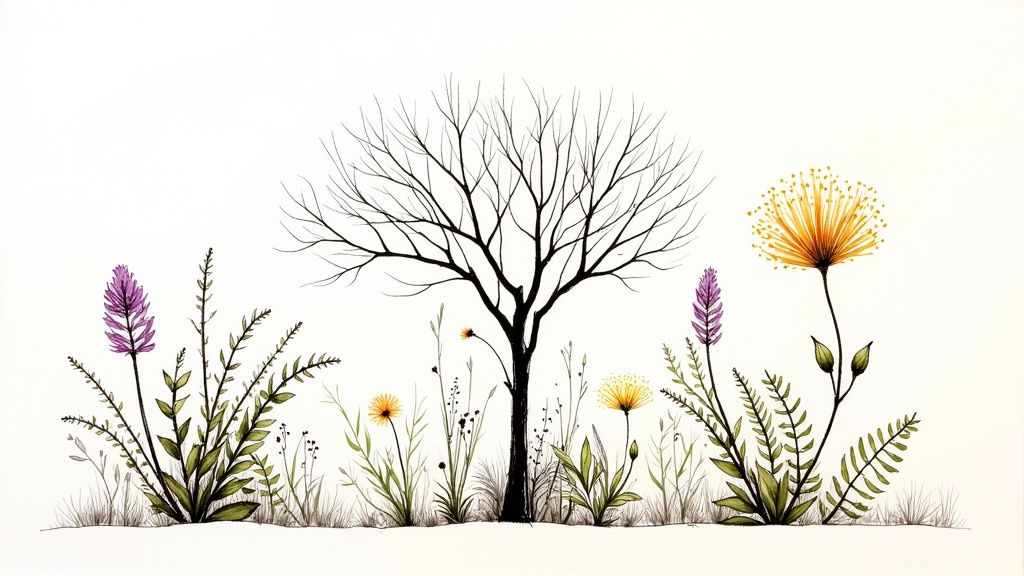
These gardens are inherently low-maintenance because the plants are perfectly adapted to New Zealand's climate and soil conditions. They require less water, fertiliser, and pest control than many exotic species, making them an eco-friendly and cost-effective option over the long term.
Why Choose a Native Garden?
A native garden does more than just look good; it actively supports local ecosystems. By planting natives, you provide essential food sources and habitats for indigenous birds like the tūī and kererū, as well as lizards and beneficial insects. This approach helps to restore biodiversity, turning your backyard into a small-scale ecological sanctuary. For inspiration, visit the native sections of the Auckland Botanic Gardens or Wellington's renowned Otari-Wilton's Bush.
Getting Started with Natives
- Regional Research: For the best results, select plants that are native to your specific region (eco-sourced). They will thrive with minimal intervention.
- Smart Grouping: Arrange plants with similar light, water, and soil needs together. Place drought-tolerant species like Astelia and tussock grasses in sunny, dry spots, and ferns in damp, shaded areas.
- Plan for Growth: Be mindful of the mature size of each plant. A small pōhutukawa sapling will grow into a large tree, so ensure it has adequate space away from buildings and power lines.
- Source Locally: Purchase your plants from a specialist native nursery. They can provide healthy, well-acclimatised specimens and offer expert advice tailored to your location.
2. Coastal Garden Design
With Aotearoa's extensive coastline, a coastal garden design is one of the most practical and beautiful landscaping ideas NZ homeowners can embrace. This approach is specifically tailored for properties exposed to the unique challenges of a maritime environment, such as salt-laden winds, sandy soils, and intense sun. It focuses on creating a resilient and stunning garden that harmonises with its seaside setting, as seen in the stunning beach house gardens of the Coromandel Peninsula and Raglan.
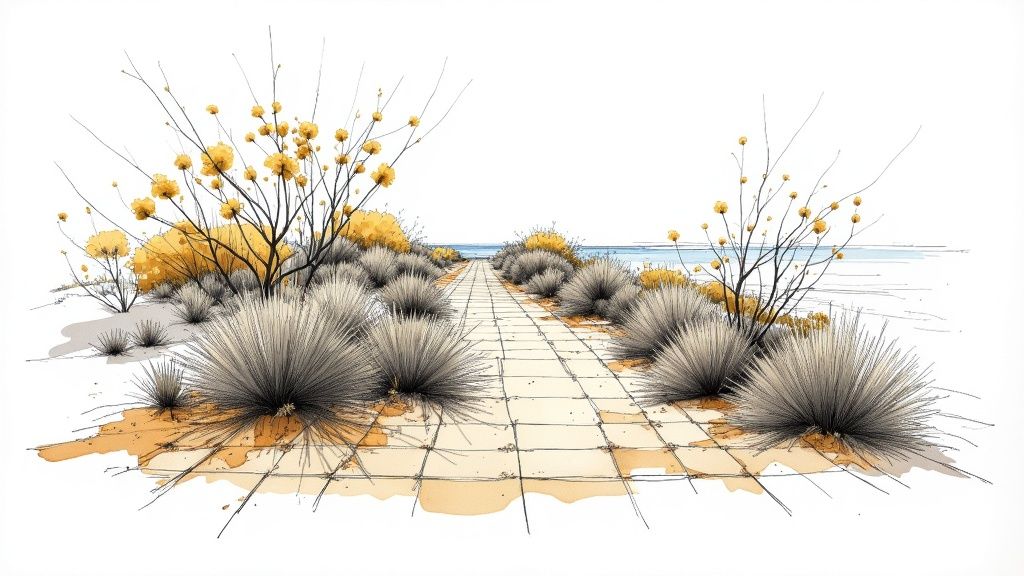
These gardens work with nature, not against it, by utilising hardy, salt-tolerant plants and clever design to mitigate the harsh conditions. The result is a landscape that feels like a natural extension of the beach, creating a seamless flow from your home to the sea while requiring less intensive intervention to survive.
Why Choose a Coastal Design?
A coastal garden is the ultimate low-stress solution for seaside properties. By selecting plants adapted to coastal life, you minimise plant loss and reduce the need for constant watering and soil amendment. This style protects your home and other less hardy plants by using strategic planting to create natural windbreaks. It celebrates the rugged beauty of the New Zealand coast, transforming a potentially difficult site into a thriving, picturesque retreat that connects you directly with the stunning local environment.
Getting Started with Coastal Gardens
- Establish Windbreaks First: Before planting, install windbreaks or plant a hardy shelterbelt using tough species like griselinia or coprosma. This protects more delicate plants while they establish.
- Improve Your Soil: Coastal soil is often sandy and low in nutrients. Improve its structure and water-holding capacity by incorporating generous amounts of compost and organic matter.
- Layer for Protection: Create layers with different plant heights. Use low-growing ground covers in front, with progressively taller shrubs and trees behind, to create a natural barrier that deflects wind up and over the garden.
- Select Salt-Tolerant Plants: Choose species that can handle salt spray. New Zealand natives like pōhutukawa, cabbage trees (tī kōuka), and coastal flaxes (harakeke) are excellent choices.
3. Sustainable Water-Wise Gardens
As New Zealand faces increasingly variable rainfall and seasonal water restrictions, creating a sustainable water-wise garden has become a vital landscaping idea. This approach, often called xeriscaping, focuses on minimising water usage through intelligent plant selection, efficient irrigation, and soil management techniques. The goal is to design a stunning garden that thrives with less water, reducing your reliance on the tap and creating a resilient, environmentally friendly outdoor space.
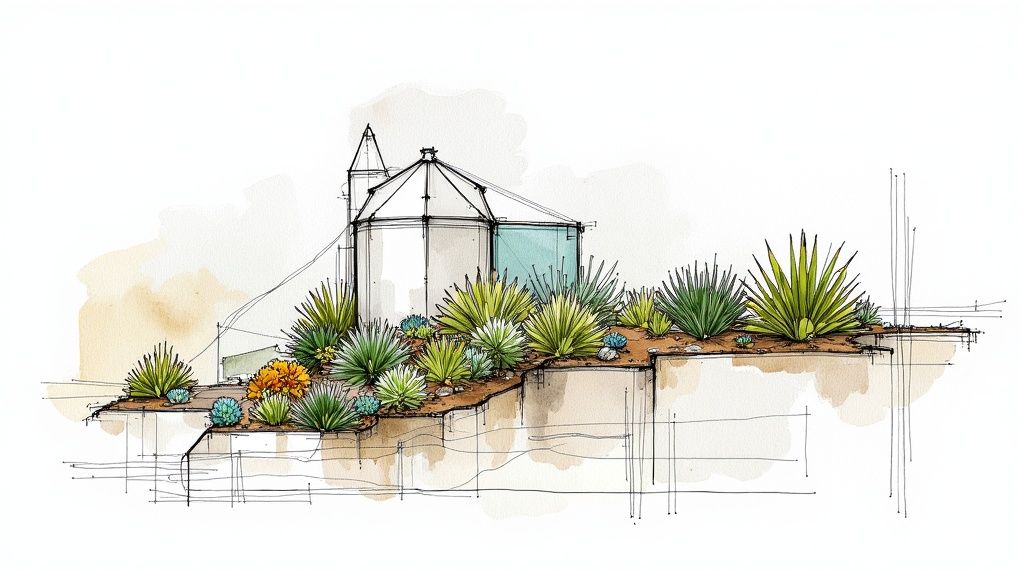
This method is perfect for sunny, exposed sites or for homeowners in regions like Hawke's Bay, Canterbury, or Auckland where summer water conservation is crucial. A water-wise garden is not just gravel and cacti; it can be lush and colourful, using drought-tolerant natives and well-chosen exotics to create a beautiful, low-maintenance landscape.
Why Choose a Water-Wise Garden?
Beyond lowering your water bills, a water-wise garden is fundamentally sustainable. It conserves a precious natural resource while reducing the runoff of fertilisers and pesticides into local waterways. These gardens require less mowing, pruning, and general upkeep once established, freeing up your time to simply enjoy your space. Many regional councils, like Auckland Council, have created demonstration gardens to showcase how beautiful and practical this approach can be.
Getting Started with Water Conservation
- Group by Thirst: Arrange plants with similar water needs together. This practice, known as hydrozoning, allows you to water efficiently, giving thirsty plants what they need without overwatering drought-tolerant neighbours.
- Harvest the Rain: Install rainwater tanks to capture runoff from your roof. This collected water is perfect for garden irrigation and can be connected to automated drip systems for maximum efficiency.
- Mulch Generously: Apply a thick layer of organic mulch like bark chip or pea straw around your plants. This insulates the soil, suppresses weeds, and significantly reduces water evaporation from the soil surface.
- Choose Hardy Plants: Select drought-tolerant species. Many NZ natives like flaxes (Phormium), tussock grasses (Chionochloa), and hebes are excellent choices, as are Mediterranean plants like lavender and rosemary.
4. Modern Minimalist Gardens
For those with a contemporary aesthetic, modern minimalist gardens offer a sophisticated and uncluttered approach to outdoor living. This style emphasises clean lines, geometric shapes, and a restrained, carefully curated plant palette. The focus is on creating a high-impact space using the principle of "less is more," a popular choice for New Zealand's urban homes and modern architectural settings from Auckland's waterfront apartments to Wellington's contemporary new builds.
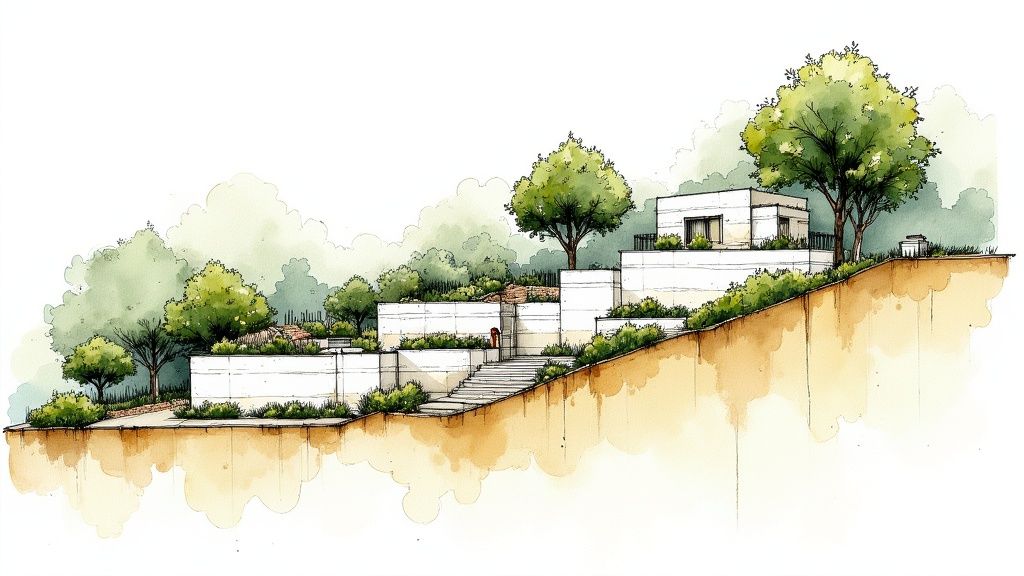
These gardens are defined by their structure and form, where hardscaping elements like concrete, steel, and timber are just as important as the plants. The result is a calm, organised, and elegant outdoor room that extends the living area of the home, offering one of the most stylish landscaping ideas NZ homeowners can choose.
Why Choose a Minimalist Garden?
A minimalist garden design creates a powerful sense of tranquility and order, making it an ideal retreat from busy modern life. Its structured nature is surprisingly low-maintenance, as fewer plant species mean simpler care routines. This approach prioritises quality over quantity, turning the focus to architectural plants and high-end materials that provide year-round interest and durability. It’s about creating a visually restful space that feels both intentional and effortlessly chic.
Getting Started with Minimalism
- Limited Plant Palette: Choose a small selection of plants and repeat them throughout the space. Focus on contrasting textures and forms, such as pairing the strong vertical lines of architectural flax with the soft mounds of mondo grass.
- Quality Hardscaping: Invest in high-quality materials for paths, patios, and retaining walls. Polished concrete, bluestone pavers, or hardwood decking will provide a clean, durable foundation that enhances the minimalist aesthetic.
- Group in Odd Numbers: When planting, arrange specimens in groups of three, five, or seven. This creates a more natural and visually appealing composition than even-numbered groupings.
- Integrated Lighting: Plan your lighting design from the beginning. Strategically placed uplights on specimen trees or subtle strip lighting under steps can dramatically transform the space after dark, highlighting its architectural features.
5. Edible Landscape Gardens
Blurring the lines between the vegetable patch and the flower bed, edible landscape gardens are a fantastic way to create a space that is both productive and beautiful. This approach integrates food-producing plants into ornamental garden designs, proving that you don't need a separate area for growing food. It’s one of the most practical landscaping ideas NZ homeowners are embracing, driven by a desire for food security, sustainability, and garden-to-table freshness.
This style of gardening, also known as 'foodscaping', transforms your entire yard into a potential source of sustenance. Imagine harvesting vibrant Swiss chard from a border, picking berries from a decorative hedge, or adding colourful nasturtium flowers from a hanging basket directly to your salad. It's a smart use of space for any Kiwi backyard, from a small urban courtyard to a larger lifestyle block.
Why Choose an Edible Landscape?
An edible garden offers more than just fresh produce; it provides a multisensory experience with diverse textures, colours, and fragrances. This approach encourages a deeper connection with your food and the seasons, making your garden a hub of activity and nourishment. Community gardens in Auckland and the urban farm developments in Christchurch showcase how productive and attractive these integrated spaces can be. By choosing this style, you create a dynamic, ever-changing landscape that rewards you with healthy, homegrown food.
Getting Started with Edibles
- Start Simple: Begin with easy-to-grow crops like lettuces, silverbeet, and herbs. These can be tucked into garden beds or pots and provide quick, rewarding harvests.
- Aesthetic Integration: Use attractive edible plants as design elements. The deep purple foliage of a 'Red Rubin' basil can add contrast, while the cascading stems of a rosemary plant can soften the edge of a raised bed.
- Focus on Fertility: The foundation of a productive edible garden is healthy soil. Invest in quality compost and consider setting up your own composting system to continually enrich your garden beds and ensure long-term fertility.
- Plan for Year-Round Appeal: Combine annual vegetables with perennial choices like feijoa hedges, citrus trees, and evergreen herbs to maintain structure and interest throughout the year. You can discover more about creating productive and beautiful Edible Landscape Gardens on junglestory.co.nz.
6. Sloped Garden Terracing
New Zealand's dramatic, hilly terrain presents a unique landscaping challenge that can be transformed into a stunning feature with sloped garden terracing. This technique involves creating a series of level tiers or steps on a slope, held in place by retaining walls. It’s an essential landscaping idea for NZ properties in areas like Wellington's hillside suburbs or along Auckland's volcanic slopes, turning a difficult incline into a functional and visually striking garden.
Terracing not only prevents soil erosion and manages water runoff but also creates usable flat spaces for planting, outdoor living, and pathways. By breaking a steep grade into manageable levels, you can cultivate a productive garden, a lush floral display, or a series of outdoor 'rooms' on land that would otherwise be unusable.
Why Choose Terracing for Slopes?
A terraced garden maximises your property's potential by creating stable, plantable surfaces. This structured approach provides better control over soil quality and irrigation on each level, allowing for diverse planting schemes. From a practical standpoint, it makes maintenance safer and easier. Moreover, the strong architectural lines of retaining walls, whether made from timber, stone, or concrete, add significant aesthetic and monetary value to your home.
Getting Started with Terracing
- Engineering First: For any retaining wall over 1.5 metres in height, or if it is load-bearing, you will likely need a building consent and a structural engineer's design to ensure it is safe and built to code.
- Drainage is Key: Install proper drainage, such as scoria backfill and drainage pipes, behind each retaining wall. This prevents water pressure from building up and compromising the structure.
- Stabilise with Plants: Use deep-rooting groundcover plants like Muehlenbeckia axillaris or certain native grasses on the tiers to help bind the soil and prevent erosion between levels.
- Plan Your Access: Integrate steps and clear pathways into your design from the beginning. This ensures you can easily access all parts of your garden for planting, weeding, and enjoyment.
7. Small Space Urban Gardens
With urban living on the rise and section sizes shrinking, especially in cities like Auckland and Wellington, creating a lush garden in a limited area has become a popular and creative challenge. Small space urban gardening maximises the potential of balconies, courtyards, and tiny backyards by using smart techniques like vertical growing and container planting to create a green oasis without needing a large plot of land. This approach transforms compact areas into vibrant, functional, and productive outdoor spaces.
This style of gardening proves that you don't need a sprawling lawn to enjoy the benefits of a garden. By thinking vertically and choosing the right plants and containers, even the smallest Auckland apartment balcony or Christchurch townhouse courtyard can host everything from herbs and vegetables to beautiful ornamental flowers and dwarf shrubs, making it a key strategy in modern landscaping ideas NZ wide.
Why Choose a Small Space Garden?
A small space garden is the ultimate solution for urban dwellers wanting to connect with nature. It’s highly manageable, making it perfect for busy professionals or those new to gardening. Container and vertical gardens offer flexibility; you can easily change your layout or take your garden with you if you move. This approach allows you to control the soil and growing conditions precisely, often resulting in healthier plants and fewer pest problems.
Getting Started with Urban Gardening
- Go Vertical: Utilise wall space with trellises, wall-mounted planters, or tiered shelving. This draws the eye upward and frees up valuable floor space for seating or larger pots.
- Choose the Right Containers: Select pots with excellent drainage holes. The material matters too; terracotta dries out faster than glazed ceramic or plastic. Ensure the container size is appropriate for the plant's mature root system.
- Use Quality Potting Mix: Opt for a lightweight, high-quality potting mix specifically formulated for containers. Garden soil is too dense and can become waterlogged, starving roots of oxygen.
- Select Smart Plants: Choose compact or dwarf varieties of your favourite plants. Many herbs, leafy greens, strawberries, and flowering annuals thrive in pots. For an easy vertical option, find out more about how to create beautiful hanging baskets in NZ.
8. Mediterranean Climate Gardens
Drawing inspiration from the sun-drenched landscapes of Southern Europe, a Mediterranean-style garden is a perfect match for many of New Zealand's warmer, drier regions. This landscaping idea embraces drought-tolerant plants, gravel pathways, and terracotta accents to create a relaxed, rustic, and water-wise outdoor space. It’s particularly well-suited to areas with hot, dry summers and mild winters, such as Hawke's Bay, Marlborough, and parts of Canterbury.
These gardens are defined by their resilience and textured beauty, featuring silvery-green foliage, aromatic herbs, and tough, vibrant blooms. By choosing plants adapted to low rainfall, you create a garden that thrives with minimal irrigation, making it a sustainable and practical choice for the Kiwi lifestyle, especially in areas facing water restrictions.
Why Choose a Mediterranean Garden?
A Mediterranean garden offers a stunning aesthetic while being incredibly practical. The focus on drought-resistant plants like lavender, rosemary, olive trees, and succulents means less time spent watering and more time enjoying your outdoor haven. This style of garden also evokes a sense of holiday and relaxation, turning your backyard into a personal retreat. The use of gravel, stone, and paved areas helps to suppress weeds and conserve soil moisture, further reducing maintenance.
Getting Started with Mediterranean Style
- Prioritise Drainage: The number one rule for Mediterranean plants is excellent drainage. Most cannot tolerate "wet feet," especially during our often wet winters. Amend heavy clay soils with sand and compost, or build raised garden beds.
- Use Gravel Mulch: Instead of bark or organic mulches that retain moisture, use gravel or crushed stone. This helps keep the plant crowns dry, suppresses weeds, and reflects heat, which many of these sun-loving plants enjoy.
- Plant in Spring: Planting in spring allows new additions to establish a strong root system throughout the warm growing season before facing their first, wetter winter.
- Group Wisely: Arrange plants with similar water needs together. This simplifies irrigation and ensures all plants get the right amount of moisture without overwatering others.
9. Wildlife-Friendly Habitat Gardens
Transforming your backyard into a bustling ecosystem is one of the most impactful landscaping ideas NZ has to offer. A wildlife-friendly habitat garden is intentionally designed to attract and support New Zealand's unique native fauna. This approach moves beyond simple aesthetics, focusing on creating a layered environment that provides crucial food, water, shelter, and nesting sites for birds, lizards, and beneficial insects.
By carefully selecting plants and incorporating specific features, you can create a safe haven that helps restore local biodiversity. This style of garden rewards you with the daily joy of watching tūī sip nectar, hearing the rustle of skinks, and seeing bees and butterflies thrive, directly contributing to conservation efforts from your own property.
Why Choose a Habitat Garden?
A habitat garden fosters a direct connection with the natural world and plays a vital role in creating 'green corridors' for wildlife, especially in urban areas. This concept is championed by organisations like Forest & Bird and supported by Department of Conservation (DOC) programmes. By creating one, you are actively helping to combat habitat loss and support fragile native populations, turning your garden into a living sanctuary.
Getting Started with Habitat Gardening
- Provide Tiered Food Sources: Plant a mix of species that offer food year-round. Include nectar-rich flowers like kōwhai and harakeke (flax) for bellbirds and tūī, and fruit-bearing trees like coprosma and kahikatea for kererū.
- Offer Water and Shelter: A simple bird bath or a shallow dish of water with pebbles for insects to land on can make a huge difference. Create dense plantings of shrubs like hebe and pittosporum to provide safe shelter and nesting spots for small birds.
- Embrace 'Messy' Areas: Leave a pile of logs or rocks in a quiet corner to create a "lizard lounge" or a home for wētā. Allowing leaf litter to accumulate provides a rich foraging ground for many creatures.
- Go Pesticide-Free: Avoid using chemical pesticides and herbicides, which can harm beneficial insects, poison birds, and disrupt the delicate food web you are trying to build.
10. Outdoor Entertainment Spaces
Kiwis love the outdoors, and creating a dedicated entertainment space is one of the most popular landscaping ideas NZ homeowners are embracing. This approach extends your living area into the garden, crafting functional zones for cooking, dining, and relaxing that can be enjoyed almost year-round. It’s about more than just a deck; it’s a seamless integration of indoor comfort with the beauty of the New Zealand landscape, perfect for everything from a family barbecue to quiet evening drinks.
A well-designed outdoor room blurs the lines between house and garden, significantly increasing your home's usable footprint and value. From sophisticated suburban outdoor kitchens in Auckland to sheltered alfresco nooks in wind-prone Wellington, these spaces are tailored to our unique climate and relaxed lifestyle.
Why Choose an Outdoor Entertainment Space?
An outdoor entertainment area is a social hub that maximises your property's potential. It encourages you to spend more time outside, enjoying fresh air and connecting with nature without sacrificing comfort. These spaces are incredibly versatile, serving as a tranquil morning coffee spot, a lively weekend gathering place, or a peaceful evening retreat. They enhance the Kiwi tradition of hospitality and a strong connection to the outdoors.
Getting Started with Your Outdoor Room
- Consider the Elements: In New Zealand, shelter is key. Position your space to get maximum sun while being protected from the prevailing wind. Consider adding a pergola, louvre roof, or clear screens for all-weather use.
- Light it Right: Plan for layered lighting. Task lighting is essential for cooking areas, while ambient string lights or subtle uplighting on plants creates a warm, inviting atmosphere for evening entertaining.
- Choose Hardy Materials: Select furniture and decking materials that can withstand NZ’s harsh UV rays and variable weather. Hardwoods like kwila, vitex, or composite decking are durable options.
- Add Greenery: Use plants to define the space and add softness. Large outdoor plant pots can create a sense of enclosure and introduce texture and colour. Find inspiration and options for your space with these large outdoor plant pots in NZ.
Top 10 NZ Landscaping Ideas Comparison
| Garden Type | Implementation Complexity 🔄 | Resource Requirements ⚡ | Expected Outcomes 📊 | Ideal Use Cases 💡 | Key Advantages ⭐ |
|---|---|---|---|---|---|
| Native New Zealand Plant Gardens | Moderate - requires specialist knowledge | Moderate - sourcing native plants can be costly | Sustainable, supports biodiversity, low ongoing maintenance | Sustainable native landscaping, wildlife support | Climate resilient, attracts native birds, low water use |
| Coastal Garden Design | High - soil prep, windbreaks needed | Moderate - salt-tolerant plants and materials | Durable gardens resistant to salt spray and wind damage | Coastal properties exposed to maritime conditions | Protects against harsh coastal environment, low maintenance |
| Sustainable Water-Wise Gardens | Moderate - irrigation and water systems install | Moderate to high - irrigation tech and storage tanks | Significant water savings, drought resilience | Urban and dry regions with water restrictions | Up to 70% water savings, low maintenance during droughts |
| Modern Minimalist Gardens | Moderate - precision planting and maintenance | Low to moderate - fewer plant varieties, quality materials | Clean, sophisticated aesthetic with low plant variety | Urban modern homes, small urban gardens | Timeless look, low plant maintenance, cost-effective |
| Edible Landscape Gardens | High - complex planting, pest control | Moderate to high - ongoing food crop care | Produces fresh food, educational, attractive and productive spaces | Food security-focused gardens, family gardens | Fresh produce, sustainable, multi-purpose utility |
| Sloped Garden Terracing | High - engineering and structural work | High - retaining walls and drainage infrastructure | Functional garden on steep slopes, erosion control | Hilly or steep terrain properties | Soil stabilization, increased usable space, property value boost |
| Small Space Urban Gardens | Moderate - vertical systems and container setup | Moderate - quality containers and soil mixes | Maximizes limited space, flexible and easily maintained | Urban apartments, small backyard spaces | Enables gardening in small spaces, easy to adapt/change |
| Mediterranean Climate Gardens | Moderate - plant selection critical | Low to moderate - drought-tolerant plants | Low water use, aromatic and pollinator friendly landscapes | Warm, dry climate zones like Hawke's Bay & Marlborough | Very low water needs, culinary and aromatic benefits |
| Wildlife-Friendly Habitat Gardens | Moderate to high - habitat creation and management | Moderate - native plants and water features | High biodiversity support, promotes native wildlife | Conservation-focused gardens and urban biodiversity corridors | Supports native species, natural pest control |
| Outdoor Entertainment Spaces | High - structural elements and utilities | High - outdoor kitchens, fire features, seating | Extends living space and increases property value | Homes prioritizing outdoor social and dining areas | Year-round usability, entertainment focus, lifestyle enhancement |
Bringing Your Vision to Life
From the rugged, natural beauty of a native New Zealand plant sanctuary to the structured elegance of a modern minimalist retreat, the possibilities for transforming your outdoor space are as diverse as our nation's landscapes. We have journeyed through ten distinct landscaping concepts, each offering a unique way to connect with nature and enhance your home's character. The common thread weaving through all these landscaping ideas nz is the principle of right plant, right place, tailored specifically for our Aotearoa environment.
Whether you are carving out a productive edible garden, engineering clever terracing on a steep slope, or designing a water-wise oasis to withstand dry spells, the success of your project hinges on thoughtful planning and informed choices. The most rewarding gardens are those that not only reflect your personal style but also work in harmony with your local climate, soil, and sunlight conditions.
Your Path Forward: From Idea to Reality
Embarking on a landscaping project can feel daunting, but breaking it down into manageable steps makes the process achievable and enjoyable. Your journey from inspiration to implementation starts now:
- Assess and Analyse: Revisit your property with a fresh perspective. Take note of the sun's path, identify damp or dry spots, test your soil, and measure your space accurately. This groundwork is crucial for selecting plants and materials that will thrive.
- Define Your Purpose: What is the primary function of your garden? Is it for relaxation, entertaining, growing food, or creating a habitat for wildlife? A clear purpose will guide every decision you make, from layout to plant selection.
- Create a Master Plan: Start with a simple sketch. You don't need to be a professional designer, just a visionary for your own space. Map out key areas like patios, pathways, planting beds, and feature elements. This visual guide will help you phase your project and manage your budget effectively.
Key Takeaway: A truly successful New Zealand garden is a partnership between your creative vision and the natural environment. By embracing sustainable practices, celebrating our unique native flora, and designing for your specific microclimate, you create a resilient and beautiful landscape that will bring you joy for years to come.
Ultimately, crafting your ideal outdoor space is a rewarding investment in your property and your wellbeing. It’s about more than just aesthetics; it's about creating a living, breathing extension of your home where you can relax, connect, and make lasting memories. Take the inspiration you've gathered from these ideas and start planting the seeds of your dream garden today.
Ready to start planting? Find everything you need to bring your landscaping ideas to life at Jungle Story. From rare native specimens and architectural feature plants to hardy shrubs and lush groundcovers, we offer an extensive, curated selection of high-quality plants perfect for New Zealand gardens. Explore our collection online and get premium plants delivered directly to your door.