
Keen to transform your living space into a vibrant, green sanctuary? Choosing the right indoor plants can feel overwhelming, but it doesn't have to be. For Kiwis, our temperate climate is a blessing, allowing a huge variety of international flora to thrive right here in our homes. This guide is tailored for New Zealand plant lovers, keeping our specific seasons in mind.
We're not just listing plants; we're providing a roadmap to success. This guide will explore 10 of the best, most resilient, and most visually appealing options, from foolproof beginner plants to stunning statement pieces. We will detail specific care requirements, styling tips, and common pitfalls to avoid for each one. Whether you have a sun-drenched lounge in Auckland or a cosy, low-light apartment in Wellington, you'll discover the perfect green companion to match your lifestyle and skill level.
Finding the ideal greenery is the first step, and showcasing it effectively is the next. To beautifully display your chosen plants and enhance your home's aesthetic, explore options for the best indoor plant stands. Let's dig in and find the good household plants that will flourish in your home.
1. Pothos
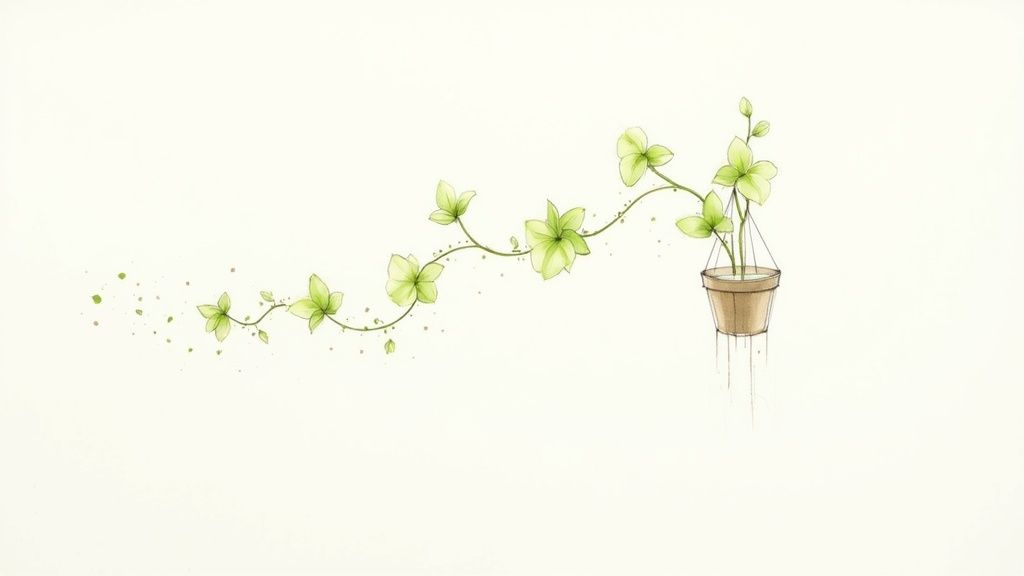
Often hailed as the ultimate beginner's plant, Pothos, or Devil's Ivy (Epipremnum aureum), is a trailing vine celebrated for its resilience and adaptability. Its lush, heart-shaped leaves, often variegated with splashes of yellow, cream, or white, make it a visually appealing addition to any space. Pothos earns its place as one of the best household plants because it thrives on neglect, tolerates a wide spectrum of lighting conditions from low to bright, indirect light, and is known for its air-purifying capabilities.
Why It's a Top Choice
Pothos is incredibly forgiving, making it perfect for new plant parents or those with a less-than-green thumb. It's a fantastic communicator; its leaves will visibly droop when it needs water, bouncing back quickly after a good drink. This versatility extends to its display options. You can let it cascade elegantly from a hanging basket, train it to climb a moss pole for a vertical accent, or simply place it on a shelf to let its vines trail naturally.
Essential Care Tips
- Lighting: Prefers bright, indirect light but adapts well to lower light levels. Note that highly variegated varieties may lose some of their colour in less light.
- Watering: Water thoroughly when the top 5cm of soil feels dry. Reduce watering during the cooler winter months (June to August).
- Soil: A well-draining mix is crucial to prevent root rot. For optimal health, consider a quality indoor potting mix designed for aroids.
- Maintenance: To encourage a fuller, bushier plant, pinch back the stems just after a leaf node. These cuttings can be easily propagated in water to create new plants.
2. Snake Plant (Sansevieria trifasciata)
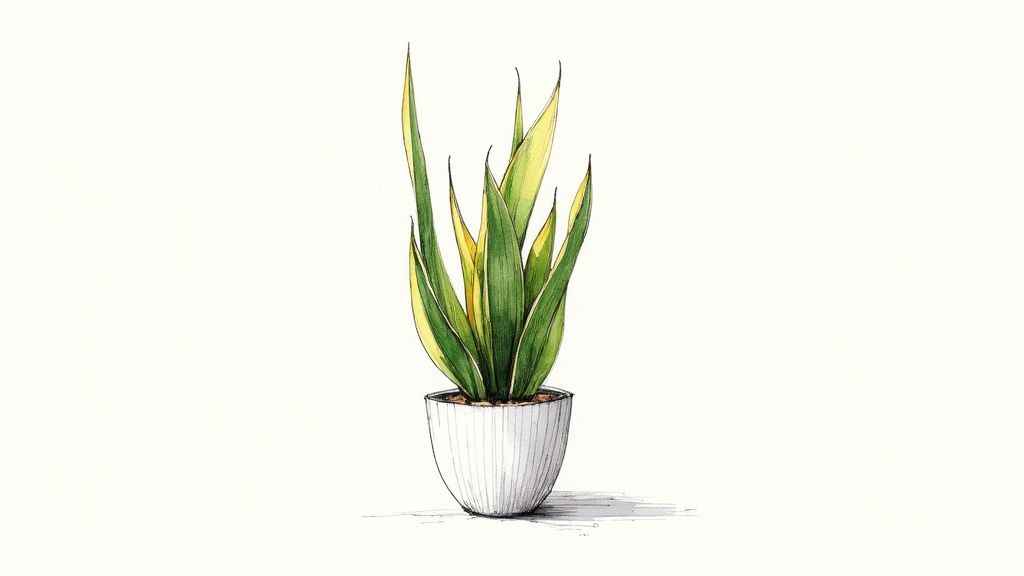
Known for its architectural beauty and near-indestructibility, the Snake Plant, or Sansevieria trifasciata, is a striking succulent featuring upright, sword-like leaves. Its bold, structural form makes it a favourite in modern and minimalist interior design, while its hardiness makes it one of the most reliable and good household plants available. The Snake Plant is exceptionally low-maintenance and is celebrated for its air-purifying qualities, uniquely converting CO2 into oxygen at night, making it an ideal bedroom companion.
Why It's a Top Choice
The Snake Plant's resilience is legendary; it can tolerate low light, infrequent watering, and general neglect, making it perfect for busy individuals, frequent travellers, or first-time plant owners. This adaptability allows it to be placed almost anywhere, from a dim corner to a bright, sunlit room. Its vertical growth habit is a great space-saver, providing a touch of green without taking up much floor space, which is why it's often seen in corporate offices and compact living areas.
Essential Care Tips
- Lighting: Thrives in bright, indirect light but is highly tolerant of low-light conditions. Direct sun can scorch its leaves.
- Watering: This is a drought-tolerant plant. Allow the soil to dry out completely between waterings. In winter, reduce watering to as little as once a month.
- Soil: Excellent drainage is essential to prevent root rot. Use a fast-draining cactus or succulent mix. Pairing it with the right container is also vital; explore a range of indoor plant pots to ensure proper drainage.
- Maintenance: Dust the leaves with a soft, damp cloth every month or so to keep them clean and aid photosynthesis. Repot only when it becomes severely root-bound, typically every 2-3 years.
3. Spider Plant (Chlorophytum comosum)
The Spider Plant, or Chlorophytum comosum, is a cheerful and resilient classic, instantly recognisable by its fountain-like arching leaves and the cascading "spiderettes" or baby plants that dangle from its long stems. This fast-growing plant is renowned for its easy-going nature and powerful air-purifying qualities, making it a fantastic and functional addition to any home. Its playful appearance and non-toxic nature also make it one of the best pet-friendly household plants for homes with curious cats and dogs.
Why It's a Top Choice
The Spider Plant is exceptionally rewarding for both beginners and experienced plant owners. It adapts well to various conditions and communicates its needs clearly, often through the colour of its foliage or the dreaded brown tips. It’s an ideal choice for brightening up office cubicles, adding a splash of green to kitchens, or creating a lush display in a hanging basket where its spiderettes can trail freely. Its ability to produce offspring so readily makes it a plant that keeps on giving.
Essential Care Tips
- Lighting: Thrives in bright, indirect light, which encourages vibrant leaf colour and the production of plantlets. It can tolerate lower light, but growth may slow. North or east-facing windows are ideal.
- Watering: Water well when the top few centimetres of soil are dry. Spider plants are sensitive to fluoride in tap water, which can cause brown leaf tips; using filtered or distilled water can help.
- Soil: A well-draining, all-purpose potting mix is perfect. Ensure the pot has drainage holes to prevent waterlogging.
- Maintenance: Propagate the baby plantlets by placing their base in water or soil until roots form. To encourage bushier growth in the mother plant, you can snip off the runners. Repot every couple of years if it becomes root-bound.
4. Monstera Deliciosa (Swiss Cheese Plant)
A true icon of the houseplant world, the Monstera Deliciosa, or Swiss Cheese Plant (Monstera deliciosa), is celebrated for its dramatic, glossy leaves that develop unique splits and holes, a phenomenon known as fenestration. This tropical climbing plant brings an instant, lush jungle aesthetic to any interior, making it a favourite among designers and plant influencers on platforms like Instagram and Pinterest. Its ability to grow into an impressive statement piece makes it one of the most rewarding and good household plants for enthusiasts.

Why It's a Top Choice
The Monstera is more than just a trendy décor element; it's a relatively straightforward plant that rewards proper care with vigorous growth and stunning foliage. Watching a new leaf unfurl and reveal its unique pattern of splits is a genuinely exciting experience for any plant owner. As it matures, it can be trained to climb, adding a spectacular vertical element to a room and solidifying its role as a living work of art.
Essential Care Tips
- Lighting: Thrives in bright, indirect light. Direct sun can scorch its leaves, while too little light may result in smaller leaves with fewer fenestrations.
- Watering: Water thoroughly when the top 5-7cm of soil is dry. Allow the pot to drain completely and reduce watering frequency during the cooler months.
- Support: As a natural climber, providing a moss pole or trellis encourages larger leaf development and supports its upward growth.
- Maintenance: Gently wipe the leaves with a damp cloth monthly to remove dust and help them photosynthesise efficiently. You can explore more options for large indoor potted plants to find the perfect statement piece for your space.
5. Peace Lily (Spathiphyllum wallisii)
The Peace Lily stands out as a symbol of elegance and tranquillity, making it one of the most popular and good household plants available. Known for its glossy, dark green leaves and iconic white flowers, which are actually a modified leaf called a spathe, this plant adds a touch of sophistication to any indoor setting. Spathiphyllum wallisii is not just a pretty face; it's a powerful air purifier, renowned for its ability to filter common indoor toxins, and it thrives in lower light conditions where other flowering plants might struggle.
Why It's a Top Choice
The Peace Lily is exceptionally communicative, making it an ideal choice for beginners learning to understand plant needs. It will dramatically droop when thirsty, providing a clear visual cue for watering, and then quickly spring back to life once hydrated. This forgiving nature, combined with its preference for shade, makes it perfect for office environments, bedrooms, and even bathrooms with sufficient ambient light. Its air-purifying qualities are particularly beneficial in spaces like hospital rooms or for allergy sufferers seeking to improve their home's air quality.
Essential Care Tips
- Lighting: Prefers medium to low, indirect light. It can tolerate very low light but may not produce its signature white spathes. Keep it out of direct sunlight, which can scorch its leaves.
- Watering: Water thoroughly when the plant begins to wilt or the top 2-3cm of soil is dry. Use filtered, room-temperature water to avoid brown leaf tips.
- Soil: Requires a well-draining, peat-based potting mix that retains some moisture. A high-quality indoor potting mix will provide the right balance of aeration and water retention.
- Maintenance: Gently wipe the leaves with a damp cloth or give the plant a quick shower occasionally to remove dust, which helps it breathe and absorb light more efficiently.
6. Rubber Plant (Ficus elastica)
For those seeking a bold, architectural statement, the Rubber Plant (Ficus elastica) is an exceptional choice. Known for its large, glossy, and leathery leaves, this plant brings a touch of sophisticated drama to any room. Its robust, upright form makes it one of the best good household plants for adding vertical interest, fitting seamlessly into contemporary and minimalist interior designs. The Rubber Plant is relatively low-maintenance and can grow into an impressive floor-standing specimen over time.
Why It's a Top Choice
The Rubber Plant offers significant visual impact without demanding constant attention, making it ideal for plant owners who want a high-impact, low-effort addition. It's a powerful natural air purifier, effectively removing airborne toxins. Its versatility allows it to serve as a striking feature in modern office lobbies, loft apartments, or any living space needing a strong focal point. Popular varieties like 'Tineke' or 'Burgundy' offer stunning variegated or deep, dark foliage, respectively.
Essential Care Tips
- Lighting: Thrives in bright, indirect light. Direct sun can scorch its leaves, while very low light can cause leggy growth and leaf drop.
- Watering: Water thoroughly when the top 5cm of soil is dry. Be mindful of overwatering, especially during the cooler winter months when its growth slows.
- Soil: Use a well-draining potting mix. A mixture designed for indoor plants or aroids works perfectly to prevent waterlogged roots.
- Maintenance: Gently wipe the leaves with a damp cloth monthly to keep them glossy and free of dust. Prune the top to control its height and encourage a bushier shape. Rotate the plant quarterly for even growth.
7. Boston Fern (Nephrolepis exaltata)
Renowned for its lush, feathery fronds that create an elegant cascade of green, the Boston Fern (Nephrolepis exaltata) is a classic houseplant that brings a touch of woodland charm indoors. Its dense, arching foliage adds texture and a feeling of freshness to any room. The Boston Fern secures its spot among good household plants not only for its beauty but also for its air-purifying qualities, effectively filtering common airborne toxins.
Why It's a Top Choice
The Boston Fern is perfect for adding a soft, natural aesthetic to interior spaces. It thrives in high humidity, making it an ideal choice for brightening up bathrooms or steamy kitchens where other plants might struggle. Its graceful, drooping form is especially striking in a hanging basket, allowing its delicate fronds to be fully appreciated. While it requires more attention to humidity than some other plants on this list, its visual impact is well worth the effort.
Essential Care Tips
- Lighting: Prefers bright, indirect light. Direct sunlight will scorch its delicate fronds, while too little light can cause sparse growth.
- Watering: Keep the soil consistently moist but not waterlogged. Water when the top of the soil feels slightly dry to the touch. Using filtered or distilled water can prevent leaf tip burn from minerals in tap water.
- Humidity: High humidity is crucial. Mist the fronds daily, place the pot on a pebble tray with water, or use a humidifier to keep the plant happy, especially in drier homes.
- Maintenance: Keep your fern away from draughts and heating vents which can dry it out. Trim any yellow or brown fronds to encourage healthy new growth. You can divide overcrowded plants in spring to propagate them.
8. Philodendron
A close cousin to the Pothos, the Philodendron is a vast and beloved genus of tropical plants, cherished for its classic heart-shaped leaves and remarkably easy-going nature. Available in both vining and non-climbing (or "self-heading") varieties, these plants offer incredible versatility in home styling. From the deep green, velvety leaves of the Philodendron micans to the iconic split leaves of the larger varieties, they are undoubtedly one of the most adaptable and good household plants for any interior.
Why It's a Top Choice
Philodendrons are renowned for their forgiving disposition and ability to communicate their needs clearly, often drooping slightly when thirsty. Their adaptability makes them a fantastic choice for nearly any room, thriving in offices, living rooms, and even sheltered spots on apartment balconies. Trailing varieties are stunning in hanging baskets, while climbing types can be trained up a moss pole to create a dramatic vertical feature, making a bold statement in any space.
Essential Care Tips
- Lighting: Thrives in medium to bright, indirect light but can tolerate lower light conditions. Direct sunlight can scorch their delicate leaves.
- Watering: Water when the top few centimetres of soil feel dry. They are sensitive to overwatering, so ensure good drainage and reduce watering frequency during winter.
- Soil: A chunky, well-aerated, and fast-draining potting mix is ideal to prevent waterlogging and promote healthy root growth.
- Maintenance: To create a fuller, more compact plant, pinch back the long stems just after a leaf node. Wipe the leaves with a damp cloth occasionally to remove dust and help them photosynthesise efficiently.
9. ZZ Plant (Zamioculcas zamiifolia)
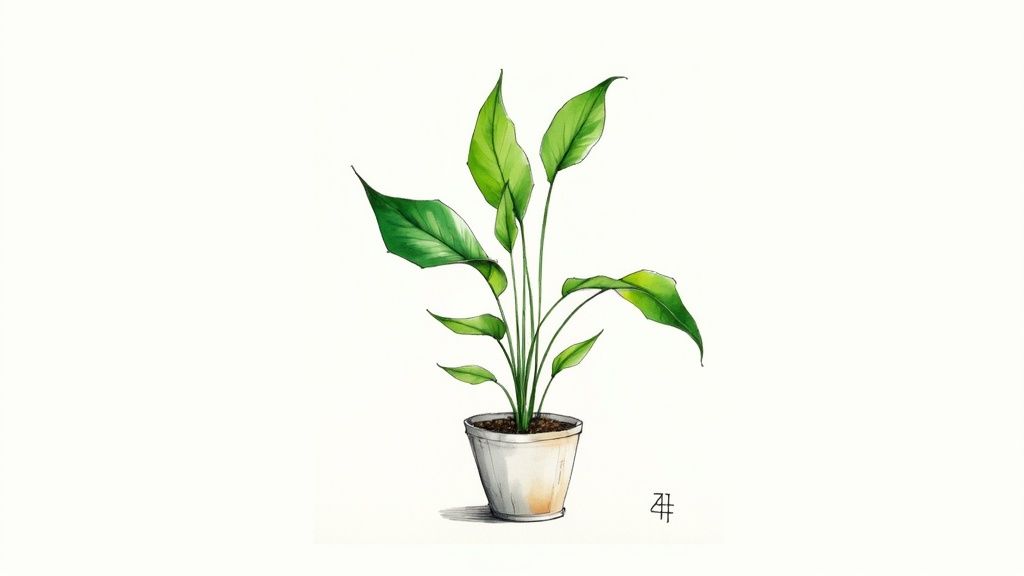
The ZZ Plant, or Zamioculcas zamiifolia, is a striking architectural plant known for its deep green, glossy leaflets that grow upwards on graceful, wand-like stems. It’s the epitome of a low-maintenance plant, making it one of the best household plants for those with busy schedules or less-than-ideal growing conditions. Its ability to tolerate exceptionally low light and infrequent watering has made it a favourite in corporate offices and homes where natural light is a luxury.
Why It's a Top Choice
The ZZ Plant's near-indestructible nature makes it a perfect choice for beginners or frequent travellers. It stores water in its underground rhizomes, allowing it to survive long periods of neglect without showing signs of distress. This resilience means it can thrive in places where other plants might fail, such as a bathroom with no windows or a dimly lit hallway. Its upright, sculptural form adds a touch of modern elegance to any décor scheme, providing a bold visual impact with minimal effort.
Essential Care Tips
- Lighting: Thrives in low to bright, indirect light. Avoid direct sunlight, which can scorch its leaves.
- Watering: Water only when the soil is completely dry. It’s far better to under-water than over-water this plant. Reduce watering significantly during the cooler winter months.
- Soil: A fast-draining potting mix is essential. A mix designed for cacti and succulents or a quality indoor aroid mix works perfectly to prevent waterlogging.
- Maintenance: Dust the leaflets with a damp cloth every month or so to keep them glossy and help with photosynthesis. Repot only when it becomes severely root-bound, typically every 3-4 years.
10. Fiddle Leaf Fig (Ficus lyrata)
A true icon of modern interior design, the Fiddle Leaf Fig (Ficus lyrata) is a statement plant celebrated for its dramatic, sculptural form. Its huge, violin-shaped leaves, deeply veined and glossy, create an immediate architectural impact, making it a favourite among designers and style-conscious homeowners. Originally from the tropical rainforests of West Africa, this plant brings a touch of lush, sophisticated jungle to any room, easily becoming a living work of art and a central focal point.
Why It's a Top Choice
While not as forgiving as a Pothos, the Fiddle Leaf Fig's unparalleled aesthetic appeal earns it a spot among good household plants for those ready for a bit more commitment. Its upright, tree-like growth habit adds vertical interest that few other indoor plants can match. Its popularity on social media and in design magazines has made it a symbol of refined taste. Successfully growing one provides an immense sense of satisfaction, rewarding dedicated care with impressive and vigorous growth.
Essential Care Tips
- Lighting: Thrives in several hours of bright, indirect sunlight. A spot near an east-facing window is often ideal. Rotate the plant quarterly for even growth.
- Watering: Water thoroughly when the top 5-7cm of soil is dry. Be cautious of overwatering, which can lead to root rot. Reduce frequency in the winter.
- Environment: Fiddle Leaf Figs despise draughts and sudden temperature changes. Find a stable location away from vents or opening doors and avoid moving it frequently.
- Maintenance: Wipe the large leaves with a damp cloth monthly to remove dust, which helps with photosynthesis. Pruning the top can encourage a bushier shape and control its height.
Top 10 Houseplants Comparison
| Plant | Care complexity 🔄 | Resources & maintenance ⚡ | Expected impact 📊 / Quality ⭐ | Ideal use cases 💡 | Key advantages ⭐ |
|---|---|---|---|---|---|
| Pothos (Devil's Ivy) | 🔄 — Very low (forgiving) | ⚡⚡⚡ — Low water, low light | ⭐⭐⭐ — Good air purifier; fast growth | Hanging baskets, offices, beginner homes | Extremely forgiving; low-light tolerant; fast grower; easy propagation |
| Snake Plant (Sansevieria) | 🔄 — Minimal | ⚡⚡⚡ — Very low watering & care | ⭐⭐⭐⭐ — Excellent purifier (including night CO2) | Bedrooms, corporate offices, low-light spots | Extremely drought-tolerant; architectural form; long-lived |
| Spider Plant (Chlorophytum) | 🔄🔄 — Low–moderate | ⚡⚡ — Moderate watering; occasional humidity | ⭐⭐⭐ — Fast-growing; good toxin removal; pet-safe | Hanging baskets, pet-friendly homes, bright indirect light | Easy to propagate; pet-safe; shows quick results |
| Monstera Deliciosa | 🔄🔄 — Moderate | ⚡⚡ — Needs space, staking, moderate humidity | ⭐⭐⭐⭐ — High aesthetic impact; vigorous growth | Trendy apartments, large rooms, statement pieces | Dramatic foliage; trainable climber; fast-growing |
| Peace Lily (Spathiphyllum) | 🔄🔄 — Low–moderate (wilts when thirsty) | ⚡⚡ — Regular moisture; benefits from humidity | ⭐⭐⭐⭐ — Excellent air purifier; produces flowers | Bedrooms, offices, healthcare settings | Flowers in low light; signals watering needs; strong purifier |
| Rubber Plant (Ficus elastica) | 🔄🔄 — Moderate | ⚡⚡ — Needs space; occasional cleaning | ⭐⭐⭐ — Bold visual statement; air-purifying | Minimalist interiors, lobbies, floor-plant focal points | Large glossy leaves; relatively low maintenance once established |
| Boston Fern (Nephrolepis) | 🔄🔄🔄 — High (humidity-sensitive) | ⚡ — High moisture & humidity needs | ⭐⭐⭐ — Excellent humidifier & purifier; lush texture | Bathrooms, humid rooms, hanging baskets | Adds soft texture; pet-safe; thrives in humidity |
| Philodendron (genus) | 🔄 — Low | ⚡⚡⚡ — Very adaptable and low-resource | ⭐⭐⭐ — Versatile aesthetic; good purifier | Offices, hanging/trailing displays, beginner collections | Extremely adaptable; many varieties; easy propagation |
| ZZ Plant (Zamioculcas) | 🔄 — Minimal | ⚡⚡⚡ — Very low watering; tolerant of neglect | ⭐⭐⭐ — Sculptural, hardy, long-lived | Low-light offices, homes of frequent travellers | Extremely hardy; pest-resistant; low watering needs |
| Fiddle Leaf Fig (Ficus lyrata) | 🔄🔄🔄 — High (finicky) | ⚡ — Needs bright stable light and attention | ⭐⭐⭐⭐ — Strong focal point; high visual impact | Bright living rooms, designer spaces, photo staging | Striking large leaves; creates dramatic focal points |
Cultivate Your Indoor Oasis with Confidence
Selecting the right plant for your home can feel like a significant decision, but as we've explored, the journey is more about discovery than perfection. From the near-indestructible nature of the Snake Plant and ZZ Plant to the dramatic foliage of the Fiddle Leaf Fig and Monstera Deliciosa, there is a perfect green companion for every New Zealand home, lifestyle, and level of experience. The key takeaway is to harmonise your choice with your environment. A sun-drenched Auckland apartment will make a Fiddle Leaf Fig happy, while a cooler, shadier villa in Dunedin is an ideal spot for a lush Boston Fern.
The most crucial step you can take now is to honestly assess your own space and habits. Before bringing a plant home, spend a day observing the light in your chosen spot. Is it bright, indirect light perfect for a Philodendron, or a lower-light corner where a Pothos would thrive? Recognising these nuances is the foundation of successful plant parenthood. Remember that caring for good household plants is a dynamic process of observation and response. Learning the unique visual cues of your plants, like the drooping leaves of a thirsty Peace Lily or the vibrant new growth on a Spider Plant, transforms routine care into a rewarding relationship.
As you build your indoor jungle, think about creating a holistic ecosystem. Providing the right light and water is essential, but enriching your soil can elevate your plant care to the next level. To truly cultivate your indoor oasis with confidence and provide optimal nourishment for your good household plants, explore the benefits of vermicomposting to turn waste into garden gold. This sustainable practice creates nutrient-dense fertiliser that will help your green companions flourish. Armed with this knowledge and a clear understanding of your home’s potential, you are now fully equipped to choose with confidence and grow with joy. Go ahead and bring that green magic indoors; your home will be healthier, happier, and more vibrant for it.
Ready to find your perfect green companion? Explore the curated collections at Jungle Story, New Zealand's premier online marketplace for indoor plants. We connect you with trusted local sellers, offering everything from the hard-to-kill starter plants to rare collector's items, delivered right to your door. Start building your dream jungle today at Jungle Story.