
Picking the right pot for your indoor plant is one of the most important things you can do for its long-term health. It’s about so much more than just looks; you're creating the perfect little home for your plant to thrive in, giving it stability, the right amount of moisture, and access to all the good stuff in the soil.
Why Your Plant Pot Choice Matters
Think of a plant pot as the foundation of a house. A dodgy foundation will cause endless problems, and it’s the same with a bad pot. An unsuitable pot is a one-way ticket to a whole heap of plant problems, with the dreaded root rot being the most common culprit.
Choosing a pot is a bit of a balancing act. You have to weigh up what the plant needs against the conditions in your home and, of course, your own personal style. Every single detail—from the material it's made from to its size and drainage—plays a massive part in the little ecosystem you're building.
The New Zealand Context
For us Kiwis, being thoughtful about pot selection has become more important than ever. As more of us move into apartments and townhouses, the classic backyard is becoming a bit of a luxury. This has kicked off a huge boom in indoor gardening, where every centimetre counts.
This isn't just about cramming greenery into small spaces; it’s a reflection of a deep, long-standing passion for gardening that runs through generations of New Zealanders. The garden supplies industry here has really caught on, with a much bigger focus on indoor pots and gear designed for compact living. You can get a better sense of these trends and how they're shaping the market over on IBISWorld.
A plant pot isn’t just a container. It's a carefully chosen habitat that directly impacts your plant's ability to thrive. Getting it right from the get-go is the secret to a happy, vibrant indoor jungle.
Setting Your Plants Up for Success
At the end of the day, the goal is pretty simple: try to mimic a plant’s natural environment as best you can inside a pot. This guide is here to walk you through all the essentials, so you can feel confident you're picking the perfect home for your green mates. We’ll dive into:
- Material Matters: How different materials like terracotta, ceramic, and plastic change how moisture and air move through the soil.
- Sizing and Drainage: Why bigger isn’t always better, and why drainage holes are an absolute non-negotiable for healthy roots.
- Plant-Specific Needs: We'll match up popular houseplants with the kinds of pots they love most.
Once you get a handle on these basics, you can sidestep the common mistakes and give your plants the stable, nurturing home they need. It’s all about empowering you to create a beautiful, healthy indoor garden that brings a bit of life and colour to your New Zealand home.
Decoding Pot Materials for Kiwi Homes
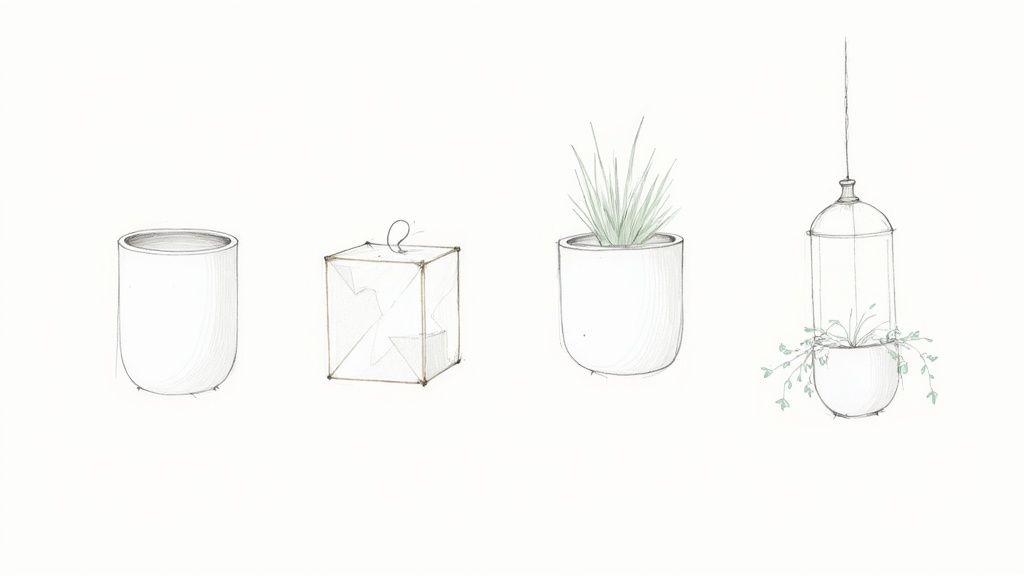
Choosing a pot for your houseplant isn't just about what looks good on the shelf. The material you pick actually changes the tiny world around your plant’s roots, affecting everything from how wet the soil stays to how much air can get in. Get it right, and you’ve got a happy plant; get it wrong, and you might be wondering why it’s struggling.
Think of a pot as your plant's clothing. Some fabrics are breathable and dry out fast, while others hold in warmth and moisture. Your job is to pick the right outfit for your plant's personality and the conditions in your home. Let's look at the most common options you'll find at garden centres around New Zealand.
The Timeless Classic: Terracotta
Terracotta is that classic, reddish-brown unglazed clay pot you see everywhere, and for good reason. It’s one of the oldest materials used for pots because it's porous, which simply means air and water can pass right through its walls. That breathability is a game-changer for a lot of plants.
This means the soil dries out more evenly and helps you avoid the dreaded waterlogging that leads to root rot. Terracotta is basically the linen shirt of the pot world—perfect for plants that hate having constantly damp soil, or "wet feet."
That's why terracotta is a brilliant choice for:
- Succulents and Cacti: These desert dwellers need their soil to drain and dry out quickly.
- Plants Prone to Root Rot: If you're a bit heavy-handed with the watering can, terracotta offers a great safety net.
- Mediterranean Herbs: Think rosemary, thyme, and sage – they love the drier conditions these pots provide.
Elegant and Versatile: Ceramic
Ceramic pots are just clay pots that have been fired at a super high temperature and then sealed with a glaze. That glaze makes them non-porous and waterproof. So, unlike terracotta, a glazed ceramic pot is more like a raincoat, holding moisture in the soil for much longer.
This makes them a fantastic pick for plants that like to stay consistently moist (but not soggy). Plus, they come in an endless variety of colours and patterns, so you can always find one to match your decor. They're also heavier, which adds stability for those top-heavy plants that might otherwise topple over.
For many tropical foliage plants, a glazed ceramic pot hits the sweet spot. It keeps enough moisture in the soil to make them happy, mimicking their humid jungle homes, without the rapid drying you get with porous materials.
Practical and Modern: Plastic
Plastic pots are the undisputed champions of being lightweight, affordable, and practical. Just like glazed ceramic, they are non-porous, so they hold onto water really well. This makes them a lifesaver for thirsty plants that tend to wilt dramatically, like Peace Lilies or Ferns.
Their lightness is a huge bonus, especially for large plants you might need to shift around or for hanging baskets where every gram counts. Most of the time, the thin black pots your plants come in from the nursery are plastic. You can easily slip these directly into a more decorative pot, a handy technique called using a 'cachepot'.
Lightweight and Durable: Composites
Lately, you'll have seen a lot more pots made from materials like fibreglass, resin, and fibrestone. These composites offer the best of both worlds: they’re incredibly light like plastic but can be made to look just like heavy stone, concrete, or ceramic.
They’re also super durable and won't easily chip or crack, making them a great long-term investment, especially if you're after a big, statement floor planter. Because they're non-porous, they retain moisture well, which works for a huge range of houseplants, from Fiddle Leaf Figs to Monsteras. Their durability also means they can handle the fluctuating Kiwi temperatures, even if you place them near a draughty window.
Indoor Plant Pot Material Comparison
To make it even easier, here's a quick rundown of how these materials stack up against each other.
| Material | Pros | Cons | Best For |
|---|---|---|---|
| Terracotta | Breathable, prevents overwatering, classic look, affordable. | Dries out quickly, fragile, can build up mineral salts. | Succulents, cacti, herbs, and plants that need dry soil. |
| Ceramic | Excellent water retention, stable, huge variety of styles. | Can be heavy, no airflow through pot walls, can be expensive. | Thirsty tropical plants, plants that prefer consistently moist soil. |
| Plastic | Lightweight, affordable, retains water very well, durable. | Less breathable, can look cheap, may fade in direct sun. | Water-loving plants, hanging baskets, and as inner pots (cachepots). |
| Composite | Lightweight yet looks premium, very durable, retains moisture. | Can be more expensive, quality can vary between brands. | Large floor plants, statement pieces, and a wide range of houseplants. |
Ultimately, the best material depends on the plant you've chosen and your own watering habits. Don't be afraid to experiment to find what works for you and your green friends.
Getting Pot Size And Drainage Right
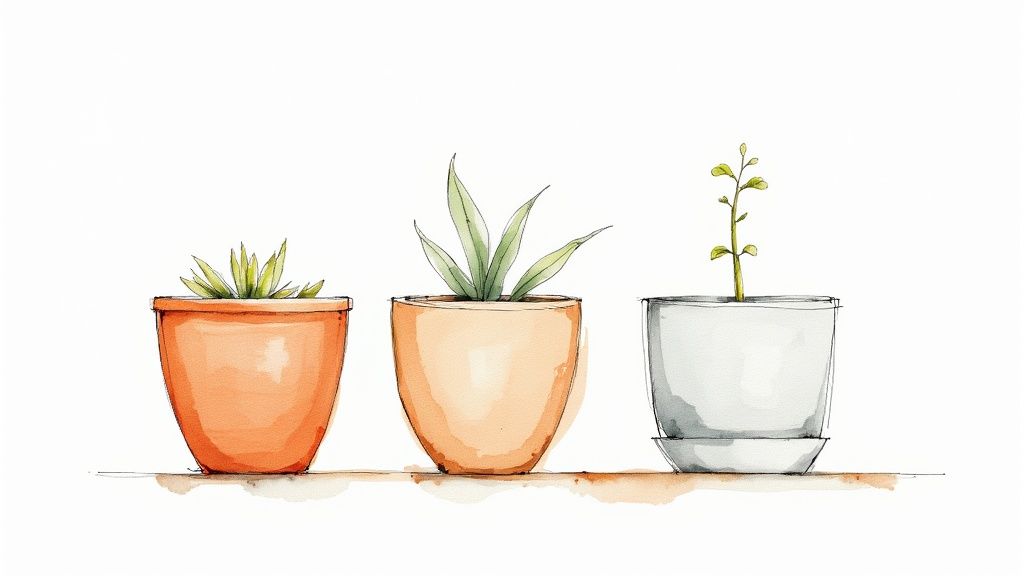
So, you’ve settled on the perfect material for your new indoor plant pot. The next two hurdles are getting the size and drainage right. These aren’t just minor details; they’re absolutely fundamental to your plant's survival. Get them right, and you’ve built your best defence against the most common houseplant killer: root rot.
Think of a plant's roots as its lungs. They need to breathe. When soil stays soaking wet because there's nowhere for the excess water to go, the roots literally suffocate and start to decay. That's why a drainage hole at the bottom of a pot is non-negotiable if you're planting directly into it.
Why Drainage Holes Are Essential
A pot without drainage is like a bathtub without a plug—water just pools at the bottom with no escape. This stagnant, swampy environment creates an anaerobic (oxygen-free) zone that’s the perfect breeding ground for the fungi and bacteria that cause roots to rot. A healthy root system is the engine of a healthy plant, and proper drainage is what keeps that engine running smoothly.
This is the number one reason why having at least one drainage hole is so critical for almost every houseplant. It lets gravity do its thing, pulling excess water out of the soil after you’ve given your plant a good drink. This ensures the roots get that perfect balance of moisture and air they crave.
To give your plant an extra layer of protection and stop your precious potting mix from washing out, you can pop a simple filter over the hole. Using something like a dedicated pot filter leakproof mesh is an easy and effective way to keep everything tidy and contained.
The Cachepot Workaround
But what if you've fallen head-over-heels for a stunning decorative pot that has no drainage hole? Don't despair. This is where the clever cachepot (pronounced ‘cash-po’) method comes to the rescue. A cachepot is simply a decorative outer pot used to hide a less attractive, but far more functional, inner pot.
Here's how it works:
- Plant Directly: Pot your houseplant in a basic plastic nursery pot that has plenty of drainage holes.
- Nest It Inside: Simply place this plastic pot inside your beautiful, hole-free decorative pot.
- Water Smart: When it’s watering time, just lift the inner plastic pot out. Water it thoroughly in a sink or outside, and let all the excess water drain away completely before popping it back inside the cachepot.
This simple technique gives you the best of both worlds: the flawless look you want and the essential drainage your plant desperately needs to thrive.
Debunking The Bigger Is Better Myth
When it's time to repot, it’s so tempting to grab a much larger pot, thinking you’re giving your plant tonnes of room to grow. This is one of the most common and damaging mistakes a plant parent can make. A pot that’s too big is just as dangerous as one with no drainage.
An oversized pot holds a huge volume of soil that the plant's current root system simply can't reach. All that unused soil holds onto moisture for far too long, creating a cold, damp environment that inevitably leads to root rot. The plant just can't absorb the water fast enough, and its roots end up sitting in a bog.
The goal of repotting is to provide a small amount of fresh space for new root growth, not to house the plant in a mansion of soil it can't manage.
To avoid this all-too-common pitfall, just follow the simple '2-4 centimetre rule'. Choose a new indoor plant pot that is only 2-4 cm wider in diameter than its current one. This small increase provides just enough space for healthy root expansion without overwhelming the plant with excess, waterlogged soil. It's a small step up that makes a huge difference.
Pairing Popular Plants with Perfect Pots
Okay, so we've covered the theory behind pot materials and sizes. That's all well and good, but seeing it in action is where you really start to feel confident.
Let's make this simple. We’ll take some of New Zealand’s most-loved houseplants and pair them with their ideal pots. I'll walk you through the 'why' for each match, connecting the pot’s features to what the plant actually needs to thrive. It’s all about mimicking their natural home.
This way, you can ditch the guesswork and start matching plants to pots like you've been doing it for years.
For Succulents and Cacti That Crave Dryness
Succulents, cacti, and their tough-as-nails cousin, the Sansevieria (Snake Plant), have one non-negotiable rule: they absolutely despise wet feet. Their roots are built for dry, arid places where rain is rare and disappears fast. The single biggest killer for these guys in a Kiwi home is overwatering, which leads to root rot in a flash.
This is why unglazed terracotta pots are their undisputed best friend. The raw, porous clay literally pulls moisture out of the soil and lets air flow freely around the roots. It’s the closest you can get to the fast-drying, sandy soil they’d have in the wild. Think of it as your safety net against a heavy-handed watering can.
For Tropical Foliage Plants Like Monstera and Fiddle Leaf Figs
Big, leafy tropicals like the Monstera Deliciosa, Fiddle Leaf Figs, and Philodendrons are a different story. They come from humid jungle floors where the soil stays consistently moist, but not soggy. They're much thirstier than desert plants and really don't appreciate drying out completely.
For these plants, a glazed ceramic or a high-quality composite pot (like fibreglass) is often the perfect match. These materials are non-porous, which means they hold onto moisture in the soil for much longer. This helps create that stable, damp environment they love, cutting down on your watering duties and stopping them from drying out too quickly, especially during our hot Kiwi summers.
For Thirsty Plants Like Ferns and Peace Lilies
Then you have the drama queens of the plant world—elegant Peace Lilies (Spathiphyllum) and delicate ferns. They’ll let you know the second they're thirsty with a dramatic wilt. These guys prefer their soil to stay evenly damp pretty much all the time.
For these moisture-lovers, a self-watering pot can be a total game-changer. These clever indoor plant pots have a built-in reservoir that lets the plant sip water as it needs it, keeping the soil perfectly moist without ever getting waterlogged. They’re also a fantastic solution if you're a bit forgetful with watering or lead a busy life.
The indoor plant scene in New Zealand is booming, thanks to more of us living in cities and realising just how good plants are for our air quality. This has led to some cool new pot designs, especially in the self-watering category. You can read more about these market trends over at Custom Market Insights.
For Orchids with Unique Aerial Roots
Orchids, especially the popular Phalaenopsis (Moth Orchid), are in a league of their own. In nature, they're epiphytes, which is a fancy way of saying they grow on other trees, not in soil. Those thick, silvery roots you see are designed to cling to bark and pull moisture right out of the humid air.
Because of this, those aerial roots need incredible airflow to stay healthy and avoid rot. A standard pot just won't cut it.
The ideal home for an orchid is a specialised slotted orchid pot. These pots are designed with plenty of vents or holes on the sides, which gives the roots the superior air circulation they need—just like they'd get in their breezy, natural environment. Plant them in a chunky bark mix inside one of these pots, and you’ve got the secret to getting them to re-flower year after year.
Once you start thinking about where your plant comes from, choosing a pot becomes so much easier. This simple, habitat-first approach turns pot selection from a confusing chore into an intuitive and genuinely rewarding part of caring for your plants.
How to Style Pots in Your Home
Alright, you’ve got the practical side of choosing pots sorted. Now for the fun part. Think of your pots as more than just homes for your plants; they’re key pieces of your home’s decor. They’re the final touch that can pull a whole room together, turning your plant collection into a living art installation.
By picking pots that click with your home's aesthetic, you create a look that feels deliberate and stylish. Whether your vibe is sleek and modern or a bit more relaxed and bohemian, the right pot elevates your space from just "having plants" to being beautifully styled with plants. Let's dig into how you can use colour, texture, and scale to get that stunning, professional look.
Matching Pots to Your Design Style
Every home has its own personality, and your plant pots should feel like they belong. In New Zealand, a few design styles really shine, and finding the perfect pot can make all the difference in making your greenery part of the bigger picture.
- Minimalist and Scandi: This look is all about clean lines, calm colours, and natural materials. Go for pots with simple shapes and matte finishes in white, grey, or black. The clean, understated design of something like the sleek black Oslo Pot is a perfect fit, adding to the aesthetic without creating any clutter.
- Bohemian and Eclectic: If your home is a happy jumble of patterns, textures, and treasures, lean into it! Choose pots with plenty of character—think terracotta, patterned ceramics, or even woven baskets. Don’t be shy about mixing and matching different styles and materials. It all adds to that lush, collected-over-time feeling.
- Modern and Contemporary: This style loves bold shapes and sophisticated finishes. Hunt for pots made from fibrestone or glazed ceramics in a single-colour scheme, or find one with a striking pop of colour. Geometric patterns and metallic details also work a treat here.
The Power of Grouping and Vignettes
A single plant is lovely, but grouping a few together? That creates some real visual impact. This trick, often called a 'plant vignette', is one of the easiest ways to style your pots like a pro. The secret is to create balance and interest by playing with scale, texture, and colour.
Try to think in odd numbers—groups of three or five plants just tend to look more natural and appealing than even-numbered groups. A good rule of thumb is to vary the height, shape, and size of both the plants and their pots. This creates a dynamic, layered look that really draws you in.
A well-crafted plant vignette does more than just fill a corner; it tells a story. By combining different forms and textures, you create a focal point that adds depth, personality, and life to any room.
For example, you could pair a tall, slender Fiddle Leaf Fig in a simple pot with a bushy, medium-sized Calathea in a textured ceramic one. Then, finish it off with a small, trailing Pothos in a smooth, low bowl. That variety in height and form makes for a beautifully balanced display.
Elevating Your Greenery
Don't just stick your plants on windowsills and floors. Using different levels is the key to creating that lush, immersive indoor jungle feel. This is where stands, shelves, and hangers become your best friends.
- Plant Stands: A simple plant stand can instantly lift a plant off the floor, giving it more presence. They come in all sorts of materials, from classic wood to modern metal, helping to tie the pot right into your decor.
- Shelving: Bookshelves aren't just for books! Dedicate a shelf or two to your plant collection. Mix in trailing plants like String of Pearls with more upright ones like a Snake Plant to create a bit of movement and interest.
- Hanging Planters: For smaller spaces, hanging planters are an absolute game-changer. They draw the eye upward, which can make a room feel taller and more open. Try grouping them at different heights in a corner to create a stunning floating garden.
By putting these styling ideas into practice, you can transform your indoor plant pots from simple necessities into standout decorative features that breathe life and personality into every corner of your Kiwi home.
Knowing When and How to Repot
Your job isn't quite done once you've picked the perfect pot. Looking after your indoor plant pots is an ongoing gig that keeps your plants healthy and nips potential problems in the bud. Over time, all pots can get a build-up of mineral salts from water and fertiliser, which is why giving them a regular clean is a great habit to get into.
A quick scrub with a stiff brush and some soapy water between plantings is usually all it takes. This simple step stops any lingering pests or diseases from hitching a ride to the next plant, giving everyone a clean, healthy start in their new home.
Spotting the Signs Your Plant Needs a New Pot
Just like we outgrow our clothes, plants eventually outgrow their pots. When a plant becomes root-bound, its roots have completely filled the pot, leaving no room for new soil, water, or air to circulate. Learning to spot the tell-tale signs is a key skill for any plant parent.
Here’s what to look out for:
- Escaping Roots: The most obvious clue is seeing roots poking out of the drainage holes at the bottom or even creeping up over the soil surface. They're literally trying to escape.
- Stunted Growth: Has your once-thriving plant slowed right down or stopped putting out new leaves altogether, especially during the main growing months? It might have simply run out of room.
- Rapid Drying: A root-bound plant has very little soil left to hold moisture. If you find yourself watering way more often than usual because the soil is bone-dry in a flash, that’s a massive hint.
A root-bound plant is essentially telling you it’s feeling cramped and needs more room to stretch its legs. Repotting isn't just about giving it a bigger pot; it’s about providing fresh soil and the space it needs for a new burst of healthy growth.
Timing Your Repotting in New Zealand
Timing is everything when it comes to a successful repot. Moving house is a bit of a shock to a plant’s system, so you want to do it when the plant is at its strongest and ready for a growth spurt.
For most houseplants here in New Zealand, the sweet spot for repotting is during late winter or early spring — think August through to October. This timing lines up perfectly with the start of their main growing season. By giving your plant a fresh home and some nutrient-rich soil just as it’s waking up from its winter dormancy, you’re setting it up for a season of strong, healthy growth.
Using a quality medium like a premium indoor potting mix during this process will give it the best possible fresh start. This allows the roots to get settled quickly in their new space, ready to support all the lush new foliage that spring will bring.
Got Questions About Indoor Pots?
Even the most seasoned plant parents have questions now and then. When you're standing in front of a wall of pots, it's easy to get a bit stuck. We’ve pulled together a couple of the most common queries we hear from Kiwi plant lovers to help you feel more confident in your choices.
Do all my pots really need drainage holes?
In an ideal world, yes. Good drainage is your number one weapon against root rot, which is hands-down the most common reason houseplants don't make it. When water sits at the bottom of a pot, it literally drowns the roots, causing them to decay.
But what if you've fallen head-over-heels for a stunning decorative pot that has no holes? No worries. These are often called 'cachepots' (a fancy French term for 'hide a pot'). The simple trick is to keep your plant in its original plastic nursery pot – the one with all the drainage holes – and just pop it inside the decorative one.
When it's watering time, lift the inner pot out, take it to the sink for a good soak, and let all the excess water drain away completely before putting it back. This way, you get the beautiful look you want without compromising your plant's health.
Think of a cachepot as a stylish jacket for your plant's functional inner pot. It provides the look you want while the inner pot does all the hard work of keeping the roots healthy and aerated.
How do I clean old pots before I use them again?
Giving old pots a proper clean before you reuse them is a crucial step. It gets rid of any lingering pests or diseases from the previous occupant and also clears away that crusty mineral build-up you get from tap water and fertilisers.
For most pots, a good scrub with a stiff brush, hot soapy water, and a bit of elbow grease will do the trick. If you're dealing with terracotta and see a white, chalky film on the outside, a quick soak in a mild vinegar solution (about one part vinegar to ten parts water) will help dissolve it.
Just be sure to rinse every pot thoroughly with fresh water before introducing it to its new plant.
Ready to find the perfect home for your green companions? Explore a huge range of high-quality indoor plant pots at Jungle Story and give your plants the foundation they need to thrive. Discover our collection at https://junglestory.co.nz.