
Indoor potting mix is a specialised, soilless medium crafted to give container plants the perfect balance of air, moisture, and nutrients. It’s nothing like the soil in your garden. Instead, it's a lightweight, sterile blend designed to prevent the compaction that can easily suffocate roots in the tight confines of a pot.
Why Your Houseplants Need a Specialised Potting Mix
Ever been tempted to just scoop some soil from your garden to pot up a new plant? It seems like a natural thing to do, but it's one of the biggest mistakes a new plant parent can make. Using outdoor soil is a recipe for disaster and almost always leads to sad, struggling houseplants.
The reason why comes down to the huge difference between a garden bed and a pot.
Think of a good indoor potting mix as a perfectly stocked pantry for your plant—it has everything it needs to thrive in a small space. Garden soil, on the other hand, is part of a massive, living ecosystem. It relies on worms, microbes, and natural drainage over a large area to stay healthy and loose. The moment you shovel that soil into a pot, that entire support system collapses.
The Problem with Garden Soil Indoors
Once it's in a pot, garden soil becomes heavy, dense, and compacted after just a few waterings. This creates a really stressful environment for your plant's roots.
- Poor Drainage: Dense soil holds onto way too much water, leaving the roots sitting in a soggy, muddy mess. This is the number one cause of root rot, a fatal condition for most houseplants.
- Lack of Aeration: As the soil compacts, it squeezes out all the tiny air pockets that roots desperately need to breathe. Without oxygen, roots can't function properly to take up water and nutrients.
- Unwanted Guests: Garden soil is teeming with life, which is great outside but not so much in your living room. It can bring in pests like fungus gnats, along with weed seeds and fungal diseases.
A high-quality indoor potting mix is engineered to mimic the perfect conditions of a forest floor—light, airy, and full of organic matter—but in a sterile, controlled way that's safe for your home and ideal for container living.
Creating the Ideal Home for Roots
A specialised potting mix is carefully formulated to be the complete opposite of compacted garden soil. It gives roots the structure they need to anchor the plant, while making sure they always have access to both water and oxygen.
Getting this foundation right is the first and most critical step towards a thriving indoor garden. Understanding this key difference sets you up to choose—or even create—the perfect home for your green companions.
Decoding the Ingredients of a Perfect Mix
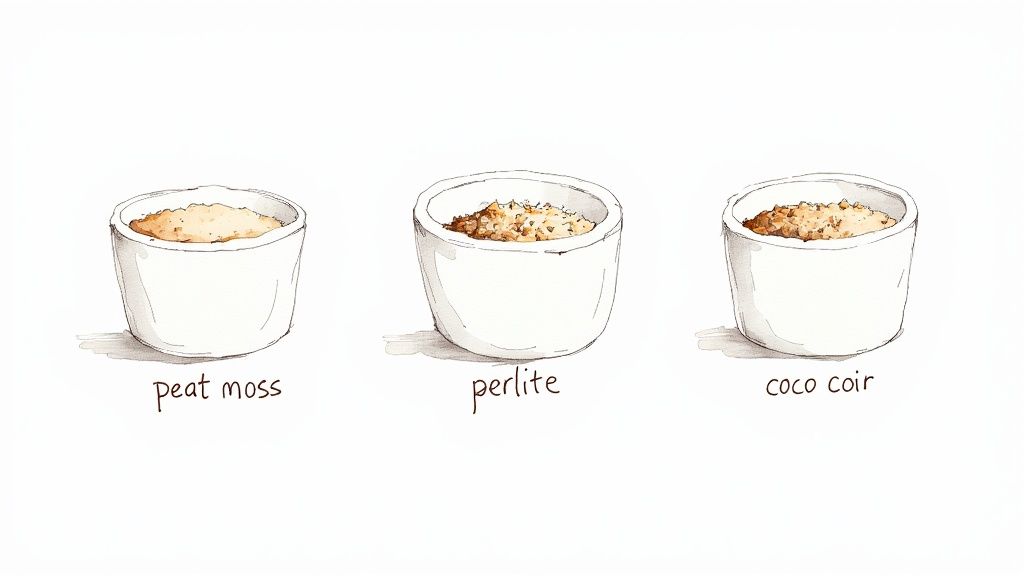
Ever peeked inside a bag of good potting mix and felt like you were looking at a secret recipe? That's not far from the truth. A premium mix is a carefully considered blend of different materials, and each one has a specific job to do. Figuring out what those bits and pieces are is the key to understanding what your plants are really living in.
At its core, any successful potting mix has to pull off three jobs at once. It needs to give roots something to hold onto (structure), let air circulate and water drain away (aeration), and provide a bit of a feed (nutrition). Getting this balance right is what separates a fantastic mix from a bag of dirt.
You can think of it like building a house for your plant's roots: you need a solid foundation, good ventilation, and a well-stocked pantry. Let's pull back the curtain on the key players you'll find in most quality indoor mixes.
To make sense of it all, it helps to see what each component brings to the party. Every ingredient has a role, from providing the main structure to adding those crucial air pockets or a gentle dose of nutrients.
Common Indoor Potting Mix Ingredients and Their Functions
| Ingredient | Primary Function | What It Does for Your Plant |
|---|---|---|
| Coco Coir | Structure & Moisture Retention | A sustainable alternative to peat moss, this coconut husk fibre holds water well without getting soggy, giving roots a consistent supply of moisture. |
| Peat Moss | Structure & Moisture Retention | A classic ingredient known for its ability to hold many times its weight in water, though environmental concerns are leading many to seek alternatives. |
| Perlite | Aeration & Drainage | Those little white specks are popped volcanic glass. They're super light and create tiny air pockets, stopping the mix from becoming a dense brick. |
| Pumice | Aeration & Drainage | A porous volcanic rock that adds aeration but is heavier than perlite. It doesn’t break down, ensuring great drainage for the long haul. |
| Orchid Bark | Aeration & Structure | Chunky pieces of bark, often from pine trees, create large air gaps. Perfect for plants like aroids that love airflow around their roots. |
| Worm Castings | Nutrition | Basically, it’s worm poo. This stuff is a powerhouse of gentle, slow-release nutrients and beneficial microbes that won't burn sensitive roots. |
| Compost | Nutrition & Structure | Decomposed organic matter that provides a rich source of nutrients and helps improve the overall texture and water-holding capacity of the mix. |
Seeing it laid out like this really shows how a great mix is more than the sum of its parts—it's a team effort. Each ingredient works with the others to create that perfect, balanced home for your plants.
The Foundation: Structure and Moisture
The bulk of any indoor potting mix is the base material. This is what gives the mix its body and holds onto moisture for your plant's roots.
One of the most popular and sustainable choices these days is coco coir. Made from the fibrous husk of coconuts, it’s brilliant at retaining moisture without becoming a waterlogged swamp. If you've got plants that prefer to stay consistently moist, a mix heavy on the coco coir is a great bet. You can even get it in a compact form and prepare it yourself with a coco coir briquette.
Another classic base is peat moss, usually from Sphagnum moss. It has fantastic water-holding abilities, but its harvest raises environmental concerns. Because of this, many Kiwi gardeners and brands are shifting towards more renewable options like coir.
Let it Breathe: Creating Air Pockets
A solid foundation is great, but without air, roots will suffocate and rot. This is where amendments come in. Their job is to create little air pockets and channels for excess water to escape freely.
-
Pumice: This lightweight, porous volcanic rock is a total star. Its honeycomb-like structure doesn’t compact over time, guaranteeing long-lasting drainage and airflow for happy, healthy roots.
-
Perlite: You’ve definitely seen these little white bits in your potting mix. Perlite is volcanic glass that's heated until it pops like popcorn. It’s incredibly light and does a fantastic job of creating air pockets and preventing compaction.
-
Bark: Usually from pine trees, orchid bark adds a chunky, open texture to a mix. It creates bigger air gaps that are perfect for plants like Monsteras and Philodendrons, which in nature grow on trees and love airflow around their roots.
A Bite to Eat: Delivering Nutrients
Finally, every living thing needs food. While many soilless mixes don't have many nutrients on their own, they often include ingredients to give plants a gentle start.
The most common organic go-to is worm castings. It’s a gentle, slow-release fertiliser packed with beneficial microbes that won't shock delicate new roots. You might also find other additives like rich compost or slow-release fertiliser pellets mixed in.
Once you know what to look for, you can read any bag of potting mix with confidence. You’ll no longer see a confusing list of words, but a clear recipe designed to help your indoor jungle thrive.
How to Choose the Right Commercial Mix
Walking into a garden centre can feel a bit overwhelming, can't it? The shelves are stacked high with bags of indoor potting mix, all promising the happiest, lushest plants. With so many choices, how do you figure out which one is the perfect match for your green friends at home?
The secret isn’t about grabbing the most colourful bag. It’s about understanding what your specific plant needs to feel right at home. Different plants evolved in wildly different parts of the world, so their preferences for soil and moisture are baked right into their DNA. Your job is to pick a mix that mimics their natural habitat as closely as possible.
Think of it this way: you wouldn't put a desert dweller in a swamp. The same logic applies to your houseplants. Matching the mix to the plant is the most direct route to giving its roots the ideal balance of air and water they need to really thrive.
Matching the Mix to Your Plant's Needs
In most New Zealand homes, you'll find a wide variety of plants, each with its own distinct personality and needs. A one-size-fits-all approach just doesn't cut it.
Here’s a quick guide to what some common houseplants prefer:
-
Succulents & Cacti: These sun-lovers, like Haworthias and classic cacti, come from arid regions. They absolutely hate having "wet feet" and are prone to root rot if they stay damp for too long. Look for a gritty, fast-draining mix, often labelled as "Succulent & Cacti Mix," which will be packed with pumice or sand.
-
Ferns & Calatheas: These tropical beauties, including the popular Boston Fern and Prayer Plant, thrive in consistently moist soil that feels like a humid forest floor. They need a mix that holds onto moisture without ever becoming a waterlogged bog. A blend rich in coco coir or peat moss is usually perfect.
-
Aroids (Monsteras, Philodendrons): Plants like the iconic Monstera deliciosa are epiphytes, meaning they naturally grow on other trees. Their chunky roots crave fantastic airflow. A premium, chunky indoor potting mix loaded with orchid bark and perlite is exactly what they're looking for.
By simply considering your plant's origin story, you can make a much better decision from the get-go.
All-Purpose vs Specialised Formulas
You’ll see bags labelled "All-Purpose Indoor Potting Mix" right next to others designed for specific plants. So, which should you choose?
An all-purpose mix is a great starting point for many easy-going houseplants like Pothos or Spider Plants. It offers a decent balance of moisture retention and drainage that suits a broad range of common plants. For a reliable option that covers most bases, a high-quality premium indoor and outdoor potting mix works wonderfully for general use.
However, specialised formulas are absolutely worth the investment for plants with more particular tastes. These mixes have been expertly blended with the precise ratios of ingredients needed to help specific plant families flourish.
If you’re caring for fussy plants like orchids, or you have a prized collection of succulents, using a specialised mix takes all the guesswork out of it. It provides the exact environment they need, helping prevent common problems like root rot.
Actionable Tips for Choosing Your Mix
When you're at the garden centre, don't just rely on the marketing on the front of the bag. It’s time to become a soil detective.
-
Check the Ingredients List: Flip the bag over and see what's actually inside. Look for the key components we talked about earlier—coco coir, pumice, bark, and worm castings. A quality mix will be transparent about its contents.
-
Feel the Texture: If the bag has a small hole or if you can gently press on it, try to get a feel for the texture. Does it feel light and airy, or heavy and dense? A good indoor potting mix should feel surprisingly light for its size.
-
Look for Signs of Compaction: Avoid bags that feel like a solid, hard brick. This can be a sign that the mix is old, has been stored improperly, or is so compacted that it will offer poor aeration for your plant's roots.
Choosing the right commercial indoor potting mix is one of the most important decisions you can make for your houseplants. By taking a moment to match the mix to your plant, you’re setting it up for a long, healthy, and beautiful life in your home.
Creating Your Own DIY Potting Mix at Home
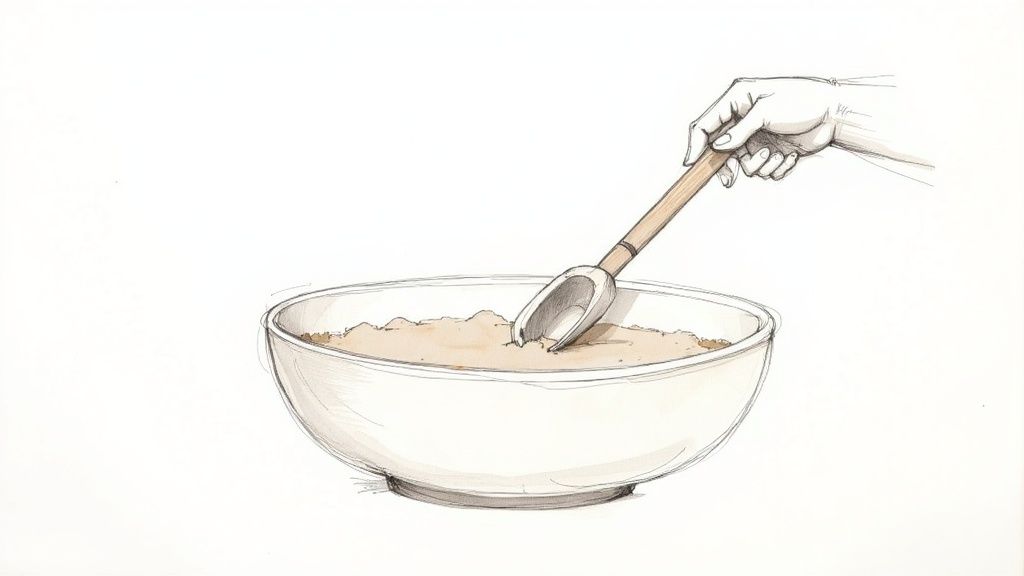
For the hands-on plant enthusiast, there’s nothing quite like getting your hands dirty and crafting your own bespoke indoor potting mix. When you move beyond pre-made bags, you get total control over your plant's environment, letting you fine-tune the blend to perfectly suit their needs. It’s also surprisingly gentle on the wallet, especially as your collection of green friends starts to grow.
Making your own mix is a bit like baking. It’s all about combining a few core ingredients in the right ratios to get the perfect result. Once you understand what each component does, you can confidently create a fantastic foundation for just about any houseplant you own.
Essential DIY Ingredients and Where to Find Them
Before you start, you'll need to gather your ingredients. Most of these are easy to find at garden centres across New Zealand or from online specialty suppliers. When you see 'part' in a recipe, it just refers to your unit of measurement—it could be a scoop, a small pot, or even a bucket, as long as you stick to the same one for everything.
- Base: Coco coir is a brilliant, sustainable foundation for any mix.
- Aeration: Pumice, perlite, and orchid bark are your best friends for creating those vital air pockets.
- Nutrition: Worm castings offer a gentle, slow-release feed that won't overwhelm your plants.
Having these on hand means you’re always ready to whip up a fresh batch whenever a plant needs a new home. Let’s get stuck into three reliable recipes that cover the needs of most common houseplants.
Recipe 1: The All-Purpose Houseplant Mix
This is a fantastic, do-it-all blend that will keep a huge range of common houseplants happy, from Pothos and Spider Plants to Peace Lilies. It hits that sweet spot of holding just enough moisture to keep roots hydrated while providing plenty of aeration to stop them from getting waterlogged.
Ingredients:
- 3 parts Coco Coir
- 2 parts Pumice or Perlite
- 1 part Worm Castings
Instructions:
- In a large tub or on a tarp, combine the coco coir and pumice (or perlite). Mix them thoroughly with your hands or a small trowel until the white specks are spread evenly throughout.
- Add the worm castings to your mixture.
- Keep mixing until you have a uniform, light, and fluffy blend. It helps to moisten it slightly before you use it.
Recipe 2: The Gritty Succulent and Cacti Mix
Succulents, cacti, and other desert dwellers are super sensitive to overwatering and need a mix that drains in a flash. This recipe is designed to be gritty and lean, just like the dry, rocky soils of their native homes, ensuring their roots never sit in water for too long.
Ingredients:
- 2 parts Pumice
- 1 part Coco Coir
- 1 part Coarse Sand or Fine Gravel
Instructions:
- Start by mixing the pumice and coarse sand together. This creates the fast-draining mineral base of your mix.
- Slowly add the coco coir, blending it in until it’s evenly incorporated. The idea is to have just enough organic matter to hold a tiny bit of moisture without sacrificing that all-important drainage.
Why so gritty? The high ratio of pumice and sand in this indoor potting mix creates large air spaces that let water flow straight through. This is absolutely critical for preventing root rot, the number one killer of succulents and cacti in home environments.
Recipe 3: The Chunky Aroid Mix
Aroids like Monsteras, Philodendrons, and Anthuriums have thick, fleshy roots that absolutely crave oxygen. In the wild, they often climb trees with their roots exposed to the air. This chunky, airy mix gives them the exceptional aeration they need to thrive indoors.
Ingredients:
- 2 parts Orchid Bark
- 1 part Pumice or Perlite
- 1 part Coco Coir
- 1 part Worm Castings
Instructions:
- Combine the orchid bark and pumice first. These larger pieces are what create the essential air pockets.
- Mix in the coco coir, which will help hold onto a little bit of moisture around the roots.
- Finally, add the worm castings for a gentle nutrient boost. The final product should feel very light, open, and chunky.
Storing Your Homemade Mix
Once you’ve made your mix, it’s a good idea to store it properly to keep it fresh. Pop any unused indoor potting mix into a container with a lid, like a bucket or a sturdy storage bag. Keep it somewhere cool and dry, like a garage or shed. Stored correctly, your homemade mix will be ready to go for months.
Mastering the Art of Potting and Repotting
Choosing or blending the perfect indoor potting mix is a massive win for your indoor jungle, but that's just the beginning. The real magic happens when you pair that ideal soil with the right potting techniques and ongoing care. Knowing when and how to repot your plants is a skill that will genuinely keep them healthy and growing for years to come.
Repotting is so much more than just giving a plant a bigger home. Think of it as a vital health check. It’s your chance to refresh the growing medium, inspect the root system for any trouble spots, and give your plant the room it needs to truly flourish. Getting this process right sets your plant up to make the most of its new, nutrient-rich environment.
This hands-on part of plant care is where many of us really get hooked on indoor gardening. With more Kiwis living in homes with little to no garden space, the focus has moved indoors, creating a huge demand for quality houseplants and the specialised mixes they need.
When to Repot Your Houseplants
Plants are surprisingly good at telling us when they need a change of scenery. The trick is knowing what signals to look for. One of the most obvious signs is when you see roots starting to creep out of the drainage holes at the bottom of the pot—that’s a clear cry for more space.
Other tell-tale signs include:
- Stunted Growth: If your plant seems to have hit a plateau and stopped growing during its active season, it might be root-bound.
- Water Runs Straight Through: When water immediately rushes out the bottom, it often means the pot is so packed with roots there’s very little mix left to soak up moisture.
- Lifting Out of the Pot: A severely root-bound plant might even start to push itself up and out of its container.
In New Zealand, the best time to repot is during the main growing season, which is spring (September to November). Repotting during this active phase helps the plant bounce back quickly and settle into its new home.
A Step-by-Step Guide to Repotting
Once you've decided it’s time for an upgrade, the process itself is pretty straightforward. A little gentle care goes a long way in minimising stress for your plant. For a seamless transition, you might want to explore our guide on choosing the best indoor plant pots to match your plant's needs.
- Prepare Your New Home: Choose a new pot that’s only slightly larger—about 2-5 cm wider in diameter—than the current one. Add a layer of your fresh indoor potting mix to the bottom.
- Gently Remove the Plant: Tip the plant on its side and gently squeeze or tap the pot to loosen it. Carefully slide the plant out while supporting the base of the stems with your hand.
- Inspect the Roots: This is your chance for a quick health check. Gently tease apart any tightly wound roots at the bottom of the root ball. Trim away any that look brown, mushy, or dead.
- Settle It In: Place the plant in the centre of the new pot, making sure the top of the root ball sits just below the rim. Fill in the gaps around the sides with your fresh mix, gently firming it down to get rid of any large air pockets.
- Water Thoroughly: Give the plant a good drink until you see water running from the drainage holes. This helps the mix settle nicely around the roots.
Aftercare for a Happy Plant
After the move, your plant will need a little time to adjust to its new surroundings. It's best to keep it out of direct, harsh sunlight for about a week to let it recover from the shock of being transplanted.
Hold off on fertilising for at least four to six weeks after repotting. Your fresh indoor potting mix has plenty of nutrients to support the plant initially, and adding fertiliser too soon can burn the sensitive, recovering roots.
Proper watering is also key. The goal is to water thoroughly but then allow the top few centimetres of the mix to dry out between sessions. This simple step encourages strong root growth without compacting your carefully chosen, airy mix.
Common Questions About Indoor Potting Mix
Diving into the world of indoor potting mix can feel a bit overwhelming. With so many opinions out there, it's easy to get confused and worry you're not giving your houseplants the best care. A few common myths can lead to unhappy plants, but a little clarity makes all the difference.
We get a lot of questions from Kiwi plant parents, so let's clear up some of the most frequent ones. Getting this stuff right will help you solve problems before they start and feel way more confident in your plant care routine.
Can I Reuse Old Potting Mix?
It’s tempting, I know. You want to be resourceful and save a bit of money, but reusing old potting mix for your indoor plants is almost always a bad idea. Over time, all the good stuff in the mix breaks down, and it loses that light, airy structure your plants love. It becomes dense and compacted, which basically suffocates the roots by squeezing out all the vital air pockets.
On top of that, an old mix is usually stripped of its essential nutrients, so it offers very little to a new plant. The biggest risk, though, is that it can be a hiding place for pests, their eggs, or fungal diseases left behind by the last plant. You can try to sterilise old mix by baking it in the oven and adding a heap of fresh amendments, but honestly, for most of us in New Zealand, the risk just isn't worth the hassle.
Starting fresh with a quality indoor potting mix is the safest bet to keep your plants healthy and thriving.
How Often Should I Change the Mix?
A good rule of thumb is to completely change your houseplant's potting mix every one to two years. This timing usually lines up perfectly with when most plants need to be repotted into a bigger home anyway. A fresh batch of mix gives them a renewed supply of nutrients and restores that perfect structure for drainage and airflow that gets tired over time.
Here in New Zealand, the best time to tackle this is during the main growing season in spring (September to November). Repotting then gives your plant the whole season to recover and happily settle into its new environment.
Keep an eye out for these signs that it's time for a change:
- Growth has slowed right down or stopped altogether during the growing season.
- Water seems to rush straight through the pot without soaking in. This means the mix is either hydrophobic (water-repellent) or just a solid mass of roots.
- You can see roots poking out of the drainage holes at the bottom.
- The mix itself looks pale, compacted, or has a crusty white layer on top from mineral buildup.
Potting Mix vs Potting Soil
You’ll hear these terms thrown around interchangeably, but there's a crucial difference between "potting mix" and "potting soil"—and it really matters for your indoor plants.
Potting mix is a specially designed soilless medium. Think of it as a lightweight, sterile recipe of ingredients like coco coir, pumice, and bark, all blended to give perfect aeration and drainage inside a pot.
Potting soil, on the other hand, often contains actual garden soil or topsoil. This makes it far too heavy for a container, where it quickly compacts, drains poorly, and creates a high risk of root rot for indoor plants.
For any plant living in a pot inside your home, a soilless indoor potting mix is always the way to go. It’s engineered to create that ideal, controlled environment roots need to thrive when they can't spread out in the garden.
Dealing with Fungus Gnats
Ah, fungus gnats. Those tiny, dark flies that love to buzz around your plants are a common pest in many New Zealand homes. They’re drawn to consistently damp soil, where they lay their eggs in the top layer of the mix. While the adult flies are mostly just annoying, it's their larvae living in the soil that can nibble on and damage your plant's delicate roots.
The single most effective way to beat them is to adjust your watering. By letting the top 2-5 cm of the potting mix dry out completely between waterings, you make the soil a terrible place for their larvae to live.
If you've already got an infestation, yellow sticky traps are great for catching the flying adults. For a more direct attack, treating the soil with a neem oil solution can help get rid of the larvae and break their life cycle for good.
At Jungle Story, we provide everything you need to create a thriving indoor garden. Explore our premium selection of plants, pots, and specialised potting mixes to give your green companions the perfect start.