
When you think of the best large indoor plants for Kiwi homes, what comes to mind? For many, it's classics like the Fiddle Leaf Fig, the iconic Monstera Deliciosa, or a graceful Kentia Palm. These botanical giants are so much more than just plants; they're like living architecture, capable of turning any room into a vibrant, green sanctuary. Not only do they make a huge visual statement, but they also get to work improving your indoor air quality and general wellbeing.
Bringing the Outdoors In: The Rise of Indoor Jungles in NZ
There’s a quiet green revolution happening across New Zealand. From compact city apartments in Auckland to sprawling homes in Christchurch, Kiwis are wholeheartedly embracing large indoor plants and turning their living spaces into personal jungles. This isn't just a fleeting decorating trend; it’s a real shift in how we want our homes to feel.
These magnificent plants act as living, breathing sculptures. A towering Fiddle Leaf Fig can instantly anchor a living room design, while the huge, sprawling leaves of a Monstera Deliciosa can transform a forgotten corner into a tropical escape. They’re a powerful way to reconnect our modern lives with the natural world.
A Growing Passion for Greenery
For many New Zealanders, this enthusiasm for indoor gardening is more than just a hobby—it’s a full-blown cultural movement. There's a deep satisfaction that comes from nurturing a plant from a modest pot into a magnificent feature piece. It taps into that fundamental human need to connect with nature, something experts call biophilia.
This passion is pretty clear when you look at the numbers. The 2022 Great NZ Indoor Plant Parent Survey found that 19% of us own between 31 and 50 indoor plants. A seriously dedicated 17% have cultivated an indoor jungle with over 100 plants! With over 70% of plant parents growing their collection in just six months, it’s a trend that’s clearly here to stay. You can dive deeper into these fascinating Kiwi plant trends and survey findings.
More Than Just a Pretty Leaf
Beyond just looking good, large indoor plants offer some real, tangible benefits that fit perfectly with our modern focus on health and wellness. They're natural air purifiers, quietly filtering out common household toxins and pumping out fresh oxygen. The result is a healthier, more invigorating space to live in.
The perks extend to our mental health, too. The simple act of caring for a plant can be a calming, mindful ritual—a welcome break from the daily grind. In fact, just being around greenery has been shown to:
- Reduce stress and anxiety
- Improve focus and productivity
- Give your mood and creativity a boost
At the end of the day, bringing large indoor plants into your home is an investment in both your space and your health. It’s all about creating a home that doesn’t just look beautiful but feels alive, restorative, and deeply connected to the natural world just outside our windows.
Finding Your Perfect Green Companion
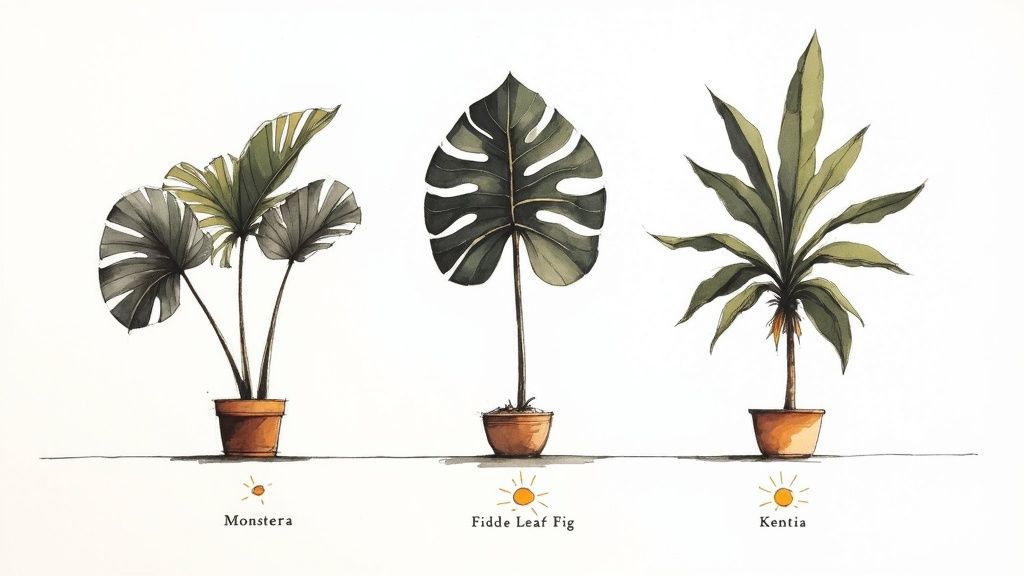
Choosing a large indoor plant is a bit like adopting a leafy flatmate. It's going to share your space, have its own personality and needs, and completely change the atmosphere of your home. To make sure it's a happy relationship, it's crucial to look beyond what's trendy and find a plant that genuinely fits your home and lifestyle.
The whole process starts with taking a good, honest look at your home's unique environment. Before you fall in love with a stunning plant on Instagram, take a moment to figure out what you can actually offer it. This one step is the secret to making sure your new green friend doesn't just survive, but truly thrives.
Analyse Your Home's Light Conditions
Light is everything to a plant—it’s literally their food. Getting a handle on the quality and amount of natural light in your home isn't just a good idea, it's non-negotiable. Don't just guess; spend a day watching how the sunlight moves through your rooms.
Think of yourself as a light detective. Notice which windows face north, getting that intense, direct sun, and which face south, offering cooler, more gentle light. This is especially important here in New Zealand, as the sun’s path is the opposite of the Northern Hemisphere.
A classic mistake is thinking a room is "bright" just because it feels bright to us. A spot where you can see perfectly fine might be considered low light for a sun-loving tropical plant. A good rule of thumb? If you can comfortably read a book without turning on a lamp for most of the day, you probably have medium to bright indirect light.
To help you map things out, here are the basic light categories:
- Bright, Direct Light: This is intense sunlight that streams right through a window for hours. Think of a classic Kiwi north-facing window. It can easily scorch the leaves of many popular indoor plants.
- Bright, Indirect Light: This is the sweet spot for so many of our favourite large indoor potted plants. It's a lovely, well-lit area that doesn't get hit with harsh, direct rays, often found a metre or two back from a north-facing window or near an east-facing one.
- Medium Light: This describes spots that get a bit of filtered sun or are set further back from the windows. An east-facing window that gets morning sun or a space near a west-facing window usually fits the bill.
- Low Light: These are the dim corners, hallways, or rooms with small, south-facing windows. While some plants can tolerate low light, remember that no plant can survive in no light.
Consider Your Available Space
Large plants need room to stretch out, not just upwards but outwards too. Before you even think about bringing one home, grab a measuring tape and check the spot you have in mind. Don't just measure the floor space; look up and consider the vertical height. A plant that looks perfectly reasonable in a spacious nursery can quickly take over a small living room.
Always think about the plant's mature size. That cute little Fiddle Leaf Fig might fit perfectly now, but what about when it hits its full, magnificent height of two or even three metres? You also need to consider foot traffic. A plant with delicate, sprawling fronds like a Kentia Palm probably isn't the best choice for a busy hallway where it’s likely to get bumped and bruised.
Match the Plant to Your Lifestyle
Lastly, be honest with yourself about how much time you're willing to commit. Some large plants are famously easy-going, practically thriving on a bit of neglect, while others need consistent, loving attention to look their best. There’s no right or wrong answer—just what’s right for you.
If you travel a lot or are just starting your plant journey, a forgiving choice like a Snake Plant or ZZ Plant is a fantastic starting point. But if you genuinely enjoy the ritual of watering, misting, and pruning, a more demanding (but incredibly rewarding) showpiece like a Calathea orbifolia could be your perfect match.
For a deeper dive into different houseplants and their specific needs, you can find some great info on great indoor houseplants for New Zealand homes. By matching a plant's needs to your lifestyle, you're setting yourself up for a wonderful and rewarding journey.
Top Statement Plants That Thrive in New Zealand
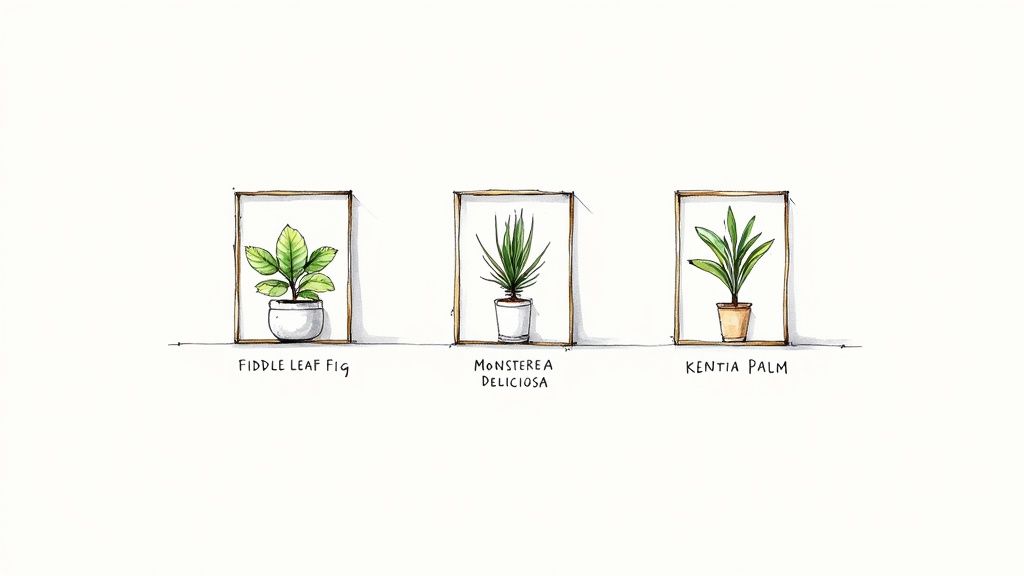
Alright, this is the fun part – choosing your magnificent green centrepiece. Thanks to New Zealand's temperate climate, we can actually grow an amazing variety of large indoor plants from all over the world. This isn't just about picking any old plant; it's about finding a living sculpture, something with a personality that feels right for your home.
We've pulled together a few proven winners that not only look incredible but genuinely flourish in typical Kiwi homes. Think of the profiles below as a quick snapshot of each plant's character, what it needs to be happy, and a simple difficulty rating to help you find your perfect match.
The Fiddle Leaf Fig (Ficus lyrata)
Let's be honest, the Fiddle Leaf Fig is the undisputed rock star of the indoor plant world. People love it for those huge, violin-shaped leaves and its strong, tree-like vibe. It’s the very definition of a statement plant and has a knack for making any room look like it’s straight out of a magazine.
But despite its fame, the Fiddle Leaf can be a bit of a diva. It really craves consistency and absolutely hates being moved around, sudden temperature drops, or draughts. It’s dramatic, too – it will let you know it’s unhappy by dropping leaves. But once you find its happy place, you'll be rewarded with stunning growth. For anyone ready to master its particular quirks, our detailed Fiddle Leaf Fig care guide has all the tips you'll need.
- Light: Needs loads of bright, indirect sunlight. A spot near a north or east-facing window is usually perfect.
- Water: Give it a good soak when the top 5-7 cm of soil is dry. Good drainage is non-negotiable, as it’s prone to root rot.
- Difficulty: Moderate to Hard. This one requires attention to detail and a stable environment.
The Monstera Deliciosa (Swiss Cheese Plant)
If the Fiddle Leaf is the rock star, the Monstera Deliciosa is the effortlessly cool, bohemian artist. Its iconic, split leaves bring an instant lush, tropical jungle feeling to any space. As it gets older, it loves to climb, so giving it a moss pole or trellis will encourage those incredible, big leaves and a more impressive vertical shape.
The Monstera is generally much more forgiving than the Fiddle Leaf, which makes it a fantastic choice if you’re new to large indoor plants but still want something with serious visual impact. It’s great at telling you what it needs – droopy leaves usually mean it’s thirsty, while yellowing leaves can be a sign you’ve been a bit too generous with the watering can.
- Light: Thrives in bright to medium indirect light. It can handle lower light, but you won't see as many of its famous splits in the leaves.
- Water: Water when the top few centimetres of soil feel dry. It handles being a little too dry better than being too wet.
- Difficulty: Easy to Moderate. A resilient and fast-growing plant that’s super rewarding for beginners.
The Kentia Palm (Howea forsteriana)
For a touch of timeless elegance, you really can’t go past the Kentia Palm. Its graceful, arching fronds create a soft, sophisticated look that works beautifully in both modern and traditional Kiwi homes. It’s a slow grower, but its refined appearance brings a real sense of calm and luxury to a room.
One of the Kentia Palm’s best features is its tolerance for lower light conditions, especially compared to other large plants. This makes it a brilliant choice for those corners or rooms that don’t get a lot of direct sun. It’s also non-toxic, which is a huge plus for homes with curious pets or children.
- Light: Prefers medium to low indirect light. Keep it out of direct sun, which will scorch its delicate fronds.
- Water: Water once the top layer of soil is dry. It likes to stay consistently moist but definitely not waterlogged.
- Difficulty: Easy. It's famously resilient and a very low-fuss palm.
Quick Comparison of Popular Large Indoor Plants
To make things a bit easier, here’s a quick table to help you compare the basic needs and features of our top plants at a glance. It's a simple way to see which one might be the best fit for your home's conditions and your lifestyle.
| Plant Name | Light Needs | Watering Frequency | Difficulty Level | Key Feature |
|---|---|---|---|---|
| Fiddle Leaf Fig | Bright, Indirect | Medium | Moderate to Hard | Large, violin-shaped leaves |
| Monstera Deliciosa | Bright to Medium Indirect | Medium | Easy to Moderate | Iconic split leaves |
| Kentia Palm | Medium to Low Indirect | Medium | Easy | Elegant and shade-tolerant |
| Bird of Paradise | Bright, Direct/Indirect | High | Moderate | Huge, banana-like leaves |
Hopefully, seeing them side-by-side helps clarify which plant's personality and needs align best with what you're looking for.
The Bird of Paradise (Strelitzia nicolai)
If you're looking to bring a proper tropical holiday feel into your home, the Bird of Paradise is the one for you. With its enormous, banana-like leaves fanning out majestically, it creates an instant sense of drama and escape. This plant wants to be the star of the show, so make sure it has plenty of room to spread its wings.
The Bird of Paradise is a total sun-worshipper, thriving in the brightest spots you can offer. In New Zealand, a north-facing window where it can soak up hours of light is ideal. It's also a thirsty plant, especially during the warmer growing months from spring through to summer.
- Light: Loves bright light, including a few hours of direct sun. The more light it gets, the faster it will grow.
- Water: Keep the soil consistently moist (but not soggy) during the growing season. You can ease up on the watering during our cooler winter months.
- Difficulty: Moderate. Its main demands are plenty of light and water, but it's pretty straightforward otherwise.
Seasonal Care for Your Leafy Giants in New Zealand
Bringing a big, beautiful plant home is just the start. The real joy comes from watching it thrive, and that just means getting in sync with its natural rhythms as the New Zealand seasons change. It's not as complicated as it sounds—it’s mostly about paying attention to what your plant is telling you.
Think of it this way: your plant has a slow, predictable life cycle. It's full of energy in spring and summer, pushing out new growth. Then, as autumn and winter roll in with their shorter, darker days, it settles in for a good long rest. Our job is simply to support this natural flow.
The Art of Watering Your Large Indoor Potted Plants
Watering is where most people go wrong. It’s so easy to kill a plant with kindness, and overwatering is a much bigger issue than letting it get a bit thirsty. The secret isn’t a strict schedule, but simply checking the soil first.
The finger test is the most reliable method out there. Just push your finger about 5-7 cm deep into the potting mix. If you feel any moisture, hold off. If it feels dry down there, it's time for a drink.
When you do water, give it a proper soak. Pour water evenly over the soil until you see it running out of the drainage holes. This makes sure the entire root ball gets hydrated, which encourages strong, deep roots. Just be sure to tip out any excess water from the saucer afterwards. No plant likes to sit with wet feet—it’s a fast track to root rot.
You'll notice your plant's needs change quite a bit through the year:
- Spring & Summer (September - February): This is prime growing season. Your plant will be much thirstier, and you’ll likely find yourself watering it every week or so.
- Autumn & Winter (March - August): Growth slows right down, so your plant needs far less water. You might only need to water it every few weeks. Always do the finger test first.
Feeding and Fertilising Your Green Giant
Fertiliser is like a multi-vitamin for your plant, giving it the nutrients needed for lush leaves and sturdy stems. But timing is key. Only feed your large indoor potted plants when they’re actually growing.
Think of it this way: feeding a plant in winter is like trying to serve a big meal to someone who is sleeping. The plant can't use the nutrients, and the excess fertiliser salts can build up in the soil and burn the roots.
During our Kiwi spring and summer, a balanced liquid indoor plant food every 2-4 weeks is perfect. Just follow the directions on the bottle—if in doubt, it’s always better to use a slightly weaker mix. Once autumn hits, stop feeding completely and let your plant rest until things warm up again next spring.
Pruning for Health and Shape
Pruning can feel a bit scary at first, but it’s one of the best things you can do for your plant. A good trim keeps it looking tidy, encourages it to grow fuller and bushier, and gets rid of any old, tired leaves so the plant can put its energy into fresh growth.
The best time for a haircut is late winter or early spring, right before that new growth spurt begins. Always use clean, sharp scissors or secateurs to get a nice clean cut.
Simple Pruning Tasks:
- Remove Yellow or Brown Leaves: These are past their prime. Snip them off at the base of their stalk.
- Trim Leggy Stems: If you've got long, sparse stems, cut them back to encourage the plant to branch out and fill in.
- Maintain Shape: Don’t be afraid to trim branches to keep your plant a size and shape that suits your space.
Beyond watering and feeding, good light is crucial all year round. If your space feels a bit on the dark side, you can look into strategies to increase natural light to keep your green giant happy. Once you master these seasonal basics, you’ll have the confidence to keep any large plant looking its best for years.
Designing Your Home with Living Art
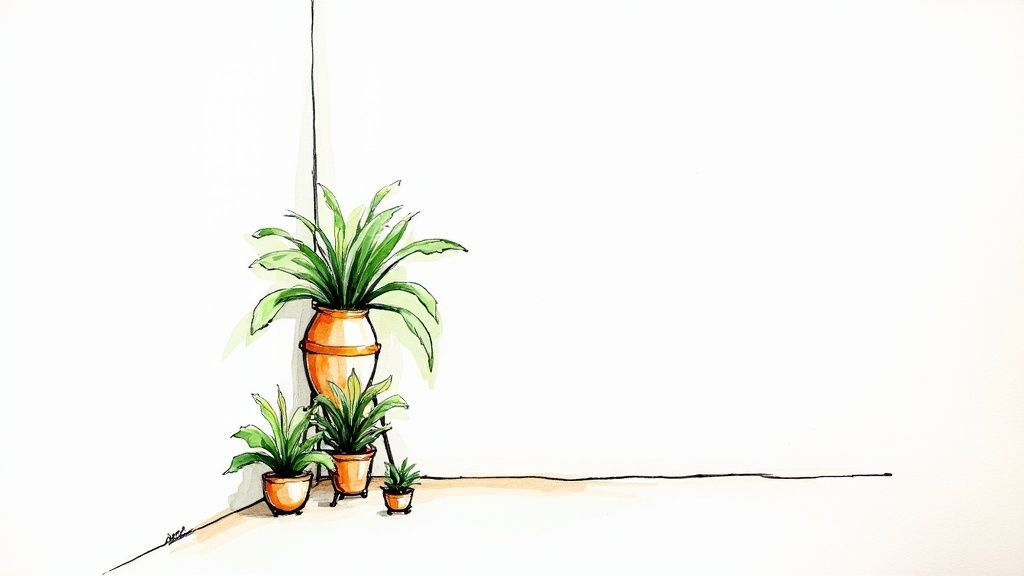
Large indoor plants are so much more than just green accessories. They're living, breathing sculptures that can completely redefine the feel of a room. When you start thinking like an interior designer, you can harness their natural beauty to create stunning, dynamic spaces. This isn't just about filling an empty spot—it’s about strategic placement to create real impact.
A well-placed plant can wear many hats in your home's design. It can be a bold focal point, drawing your eye and anchoring the room’s decor. It can soften harsh architectural lines, beautifully frame a window view, or breathe life and energy into a forgotten corner.
Creating a Stunning Focal Point
The simplest way to make a statement is to turn your plant into the star of the show. Position a tall, dramatic plant—think Bird of Paradise or a Fiddle Leaf Fig—where it naturally commands attention. This could be beside a sofa, next to the fireplace, or in a spacious entryway.
The secret is to give it some breathing room. Try to avoid cluttering the area around your statement plant with too much furniture or small decor. That little bit of visual space allows its unique shape and form to really stand out, transforming it from just a plant into a piece of living art.
To really lean into this idea, you can explore the principles of art inspired by nature and biophilic design, which is all about strengthening that human-nature connection right inside our homes.
Choosing the Right Pot and Position
The pot your plant lives in is just as important as the plant itself. Think of it as the frame for your artwork. It’s a great opportunity to complement your existing interior style, whether that’s minimalist, bohemian, or modern.
A sleek, neutral-coloured pot can create a sophisticated vibe, while a textured, earthy terracotta or ceramic pot adds rustic warmth. It's all about matching the container to your decor. If you need some more ideas, you can find a huge range of stylish and functional indoor plant pots to elevate your design.
Consider using plant stands to add extra height and dimension. Lifting a plant off the floor not only gives it more prominence but can also help it catch more light and improve air circulation around its base. This simple trick can make a medium-sized plant feel much larger and more impactful.
Layering Plants for an Indoor Jungle Vibe
If one statement plant is good, a carefully curated group can be even better. You can create a layered, jungle-like effect by grouping plants with different heights, textures, and leaf shapes. This technique adds incredible depth and creates a rich, immersive green space.
For a beautifully layered look, just follow these simple principles:
- Go for variety: Combine a tall, tree-like plant with a bushy, medium-sized one and a few smaller plants at the base to fill things out.
- Play with texture: Mix the large, glossy leaves of a Monstera with the delicate, feathery fronds of a palm and the sharp, architectural lines of a Snake Plant.
- Unify with pots: Stick to pots from the same colour family or material. This creates a cohesive look, even when you have a really diverse collection of plants.
By using these design strategies, you can move beyond simply owning plants and start actively styling your home with them. It’s an approach that transforms your space into a vibrant, personalised sanctuary that truly celebrates the beauty of living art.
Got Questions About Your Big Indoor Plants? We've Got Answers
Even the most experienced plant collectors get stumped now and then. Getting into the world of large indoor plants can feel a bit much at first, but thankfully, most of the common head-scratchers have pretty simple fixes. Here are a few of the questions we hear most from our fellow Kiwi plant lovers.
How Do I Know When It’s Time to Repot My Plant?
This is a classic! Knowing exactly when your green giant needs a bigger home can feel like a guessing game, but your plant will usually drop some pretty clear hints when it’s feeling squished.
Keep an eye out for these tell-tale signs:
- Root Escape: You can literally see roots poking out of the drainage holes at the bottom of the pot.
- Water Sieve: When you water, it feels like it runs straight through without the soil soaking any of it up.
- Stalled Growth: The plant has stopped putting out new leaves during its growing season (that’s spring and summer here in NZ).
As a general rule of thumb, repotting every 2-3 years at the beginning of spring is a good rhythm. When you do, choose a new pot that's only 5-10 cm wider than the old one. Giving it too much space at once can actually overwhelm the roots.
What Are Those Tiny Flies Buzzing Around My Plant?
Ah, the dreaded fungus gnat. If you've spotted tiny, annoying flies hovering around your plant's soil, that's likely who you're dealing with. The good news is they're harmless to your plant, but they are a massive nuisance. They absolutely love soil that’s constantly damp, so your best line of defence is to switch up your watering routine.
The most effective way to break their life cycle is to simply let the top 5-7 cm of soil dry out completely between waterings. This makes it impossible for their larvae to survive.
For a bit of extra backup, you can pop a few yellow sticky traps in the pot. They're brilliant for catching the adult flies.
Are Large Indoor Plants Safe for My Pets?
They absolutely can be, but you have to be selective. Many of the most popular large indoor potted plants, like the stunning Fiddle Leaf Fig or Monstera, are toxic if nibbled on by cats, dogs, or even curious little ones. Picking a safe option from the get-go is key to a happy and harmonious home.
For total peace of mind, go for varieties known to be non-toxic. A few fantastic, pet-safe choices are the elegant Kentia Palm (Howea forsteriana), the tropical Banana Plant (Musa), and the lush Areca Palm (Dypsis lutescens). It's always a good idea to double-check a plant's toxicity before you bring it into your space.
Ready to find your next green statement piece or need a bit of expert advice? Explore the incredible selection of plants and pots at Jungle Story, New Zealand’s premier online plant marketplace. Find your perfect match at https://junglestory.co.nz.