
Thinking about adding a large mature tree to your NZ garden? It's the single quickest way to create that instant impact we all crave, giving your property a sense of character and establishment that would normally take a lifetime to grow. Thanks to New Zealand's fantastic climate, you can plant a living sculpture that delivers shade, privacy, and beauty right from day one.
The Instant Impact of Mature Trees in NZ Gardens
Imagine this: you go from a bare, open section to a lush, established sanctuary overnight. That’s the incredible power of investing in a large, mature tree. While there's a certain romance to planting a sapling, choosing a mature specimen lets you skip the years—often decades—of waiting. It’s an investment in immediate satisfaction for your landscape.
You can think of it like hanging a finished masterpiece in a new home instead of starting with a blank canvas and a pencil. A mature tree instantly brings a sense of history and structure to any garden, making it feel like it has been cherished for generations.
Immediate Shade and Shelter
One of the biggest wins is instant shade. A well-placed mature tree can cast a cool shadow over your deck or patio, making your outdoor spaces far more usable during our warm Kiwi summers. This isn't the flimsy shade you get from a young tree; we're talking a deep, dappled coolness that's just perfect for summer barbies or a quiet afternoon with a good book.
Beyond shade, a large tree is also a fantastic natural windbreak. It can shelter more delicate plants from harsh winds and create a calmer, more pleasant microclimate in your garden.
Creating Instant Privacy
With sections getting smaller and houses getting closer, privacy is more valuable than ever. A strategically planted mature tree can work as an immediate and beautiful privacy screen, shielding your home and garden from nosy neighbours or a less-than-perfect view. Unlike a hard fence, a tree is a living, breathing barrier that actually adds to the beauty of your property while doing a very practical job.
Planting a mature tree is less about gardening and more about landscape architecture. You aren't just putting a plant in the ground; you're installing a major structural element that defines spaces, creates focal points, and shapes the entire feel of your property from the moment it arrives.
New Zealand’s temperate climate is ideal for this, happily supporting a huge range of both native and exotic species. Whether you’re dreaming of the iconic silhouette of a native Pōhutukawa or the elegant canopy of an exotic maple, there’s a mature tree that can thrive in your corner of Aotearoa. This guide will walk you through everything you need to know, from picking the perfect species to handling the logistics of getting it home and in the ground.
How Large Trees Support New Zealand's Ecosystem
A mature tree is so much more than a beautiful feature in your garden; it’s a living, breathing nature reserve. When you bring one onto your property, you're doing more than just improving the view—you’re actively boosting the ecological health of your neighbourhood and Aotearoa as a whole.
These giants are what we call keystone structures in the local environment. Think of a single large tree as a high-rise apartment building for wildlife. Its canopy, bark, and intricate root system provide shelter, food, and nesting spots for a huge range of native birds, insects, and other tiny creatures.
Guardians of the Land and Air
One of the biggest jobs mature trees do is helping to regulate our climate. They are absolute powerhouses when it comes to absorbing carbon dioxide, locking it away in their wood, leaves, and roots. A single large tree can store hundreds of kilograms of carbon over its lifetime, making it a crucial ally in our fight against climate change.
But their work doesn't stop there. The sprawling canopy of a mature tree acts like a giant umbrella, catching heavy rain before it hits the ground. This reduces stormwater runoff, prevents soil from washing away, and eases the burden on our drainage systems. It also helps filter out pollutants, meaning cleaner water ends up in our streams and rivers.
A mature tree is an environmental powerhouse. It purifies the air we breathe, manages water with incredible efficiency, and builds the foundation of a healthy local food web. Investing in one is an investment in the long-term ecological resilience of your own backyard.
The benefits extend deep underground, too. A tree's sprawling root network is brilliant for soil structure, improving aeration and helping the ground hold onto moisture. This creates a healthier environment for all the surrounding plants in your garden, not just the tree itself.
The Powerhouses of Our Native Forests
It's hard to overstate the ecological importance of large mature trees in NZ, especially within our native bush. Research really drives home just how critical these giants are. In central North Island forests, trees with a diameter of 30 centimetres or more make up only about 5% of all living stems. Yet, incredibly, they store over 50% of the entire forest's biomass.
These established trees are the undisputed champions of carbon storage. If you want to dive deeper, you can explore the detailed findings of this 42-year study to understand their vital role. What this data shows is that a single large specimen does the environmental heavy lifting of hundreds of smaller ones. By planting a mature tree, you’re fast-tracking the creation of a vital ecological asset.
Creating a Thriving Habitat
The presence of a large tree completely changes the dynamic of a garden. It creates a multi-layered habitat that supports a diverse cast of wildlife.
- For Native Birds: Our beloved tūī, kererū, and pīwakawaka (fantail) depend on mature trees for food, safe nesting sites, and protection from predators. The flowers, fruits, and insects a tree supports provide a year-round buffet.
- For Beneficial Insects: Trees host a whole community of insects, including crucial pollinators like bees and native moths. They also attract predatory insects that help keep garden pests in check naturally.
- For Soil Life: Beneath the surface, the area around a tree’s roots is teeming with life. It's a bustling hub for beneficial fungi and microorganisms essential for cycling nutrients and keeping the soil healthy.
Ultimately, choosing a large mature tree shifts your thinking from just decorating a space to becoming a guardian of a small but vital piece of New Zealand's unique ecosystem.
Choosing the Right Mature Tree for Your Property
Choosing a mature tree isn't just a purchase; it's a long-term relationship. This decision will literally shape your landscape for decades, maybe even for generations to come. Unlike a misplanted rose bush, you can't just dig it up and move it if you have a change of heart.
That’s why the homework you do before you even look at a single tree is the most critical part of the whole journey. It’s what ensures your new living feature becomes a treasured asset, not a future problem. Think of yourself as a detective, getting to know the unique personality of your property first.
Assessing Your Site Conditions
Every garden has its own microclimate, its own set of quirks. A tree that thrives in a sheltered Auckland backyard might give up the ghost in a windy, clay-heavy section in Wellington. A proper site assessment isn't just a good idea—it's non-negotiable.
First up, become a sun-chaser. Spend a day watching how the light moves across your property. Where does it bake all day? Where is it dappled and gentle? Where does it stay cool and shady? This is a deal-breaker, as a sun-lover will get weak and leggy in the shade, while a shade-dweller will get fried in the open.
Next, get a feel for the wind. Is your spot exposed to that classic south-westerly or whipped by coastal breezes? Some trees are built for it, with flexible branches and rock-solid root systems. Planting a delicate specimen in a wind tunnel is simply asking for broken branches and a stressed-out tree.
The golden rule of planting is "right plant, right place." This is never more true than with large mature trees. Your goal isn't just to make the tree survive; it's to find a location where it will truly thrive with minimal intervention.
Finally, look down. What’s going on with your soil? Is it heavy clay that stays boggy for days, sandy stuff that drains in a flash, or that beautiful dark loam every gardener dreams of? A simple test is to dig a hole, fill it with water, and see how long it takes to disappear. Most trees absolutely hate having "wet feet" from sitting in waterlogged ground, so knowing your drainage is vital.
Space Above and Below Ground
Here’s one of the biggest rookie mistakes: underestimating just how big that tree will get. That gorgeous 4-metre tree on the truck can easily become a 20-metre giant with a canopy just as wide. You absolutely have to plan for its mature dimensions, not what it looks like today.
Get out the tape measure. Look up—are there power lines, windows, or the edge of your roof in the flight path? A tree that needs constant, aggressive pruning just to keep it off your house is the wrong tree for that spot.
But don't forget what's happening underground. A tree's root system can be a hidden giant, often spreading two to three times the width of its canopy. Planting too close to foundations, driveways, septic tanks, or pipes can lead to eye-wateringly expensive damage years from now. Always ask about the tree’s root habits—are they aggressive surface-feeders, or does it have a well-behaved, deep taproot?
Natives Versus Exotics
One of the best things about gardening in New Zealand is our incredible range of both native and exotic trees. Each brings something different to the table.
- NZ Natives: Our own Pōhutukawa, Tōtara, and Rimu are perfectly tuned to our environment. They provide crucial food and shelter for our native birds like tūī and kererū, weaving your garden into the wider fabric of Aotearoa.
- Well-Suited Exotics: On the other hand, things like Japanese Maples, Magnolias, and Oaks offer a different kind of magic—spectacular autumn colour, show-stopping spring flowers, or classic European structure. Many have been proven performers in Kiwi gardens for over a century.
If you're after quicker results, you can explore some of the fast growing trees suitable for NZ, which include fantastic options from both camps.
Ultimately, the choice comes down to your personal style and what you want the tree to achieve. A deciduous exotic lets that precious winter sun stream into your home, while an evergreen native offers a solid screen all year round.
To help you get a clearer picture, the table below breaks down some of our favourite options.
Mature Tree Species Comparison for NZ Gardens
Choosing between the incredible diversity of native and exotic trees can be a challenge. This table compares some popular, reliable choices for New Zealand gardens, laying out their key characteristics to help you find the perfect match for your property's conditions and your aesthetic goals.
| Tree Species (Common/Scientific) | Type (Native/Exotic) | Mature Height & Spread | Key Features (e.g., Flowers, Foliage, Bark) | Ideal Conditions (Sun, Soil, Climate Zone) | Growth Rate |
|---|---|---|---|---|---|
| Pōhutukawa (Metrosideros excelsa) | Native | 15-20m H, 10-15m W | Crimson flowers in summer, leathery grey-green leaves, multi-trunked form. | Full sun, well-drained soil, coastal and frost-free areas (North Island). | Moderate |
| Tōtara (Podocarpus totara) | Native | 20-30m H, 5-8m W | Yew-like foliage, reddish-brown flaky bark, small red fruit. | Sun to part shade, adaptable to most soils except waterlogged. | Slow |
| Silver Birch (Betula pendula) | Exotic | 15-20m H, 6-8m W | Distinctive white peeling bark, delicate weeping branches, yellow autumn colour. | Full sun, well-drained soil, tolerates cold climates. | Fast |
| Japanese Maple (Acer palmatum) | Exotic | 5-8m H, 5-8m W | Stunning autumn foliage (red, orange, yellow), delicate leaf shapes, graceful form. | Part shade (protect from harsh sun/wind), moist, well-drained soil. | Slow-Moderate |
| Kōwhai (Sophora microphylla) | Native | 8-10m H, 4-6m W | Bright yellow drooping flowers in spring, fine fern-like foliage, attracts tūī. | Full sun, adaptable to a wide range of soils. | Moderate |
| Flowering Cherry (Prunus spp.) | Exotic | 6-10m H, 5-8m W | Abundant pink or white blossoms in spring, attractive bark, good autumn colour. | Full sun, fertile, well-drained soil. | Moderate-Fast |
This comparison is just a starting point. The real joy is in finding that one tree that not only fits the physical space but also captures the feeling you want to create in your garden for many years to come.
New Zealand's Iconic Native Trees
Choosing a big tree for your garden is about more than just filling a space; it’s a chance to plant a piece of Aotearoa’s living history. New Zealand's native trees are woven into the very fabric of our national identity, holding deep cultural significance for Māori and shaping the incredible landscapes we call home. When you plant one, you become a guardian of that heritage.
These aren't just plants; they're storytellers. Every species carries its own tales of resilience, adaptation, and connection to the whenua. From the towering giants of the forest to our beloved coastal icons, our native trees have personalities that can bring a real sense of depth and meaning to your garden.
The Forest Giants: Kauri and Tōtara
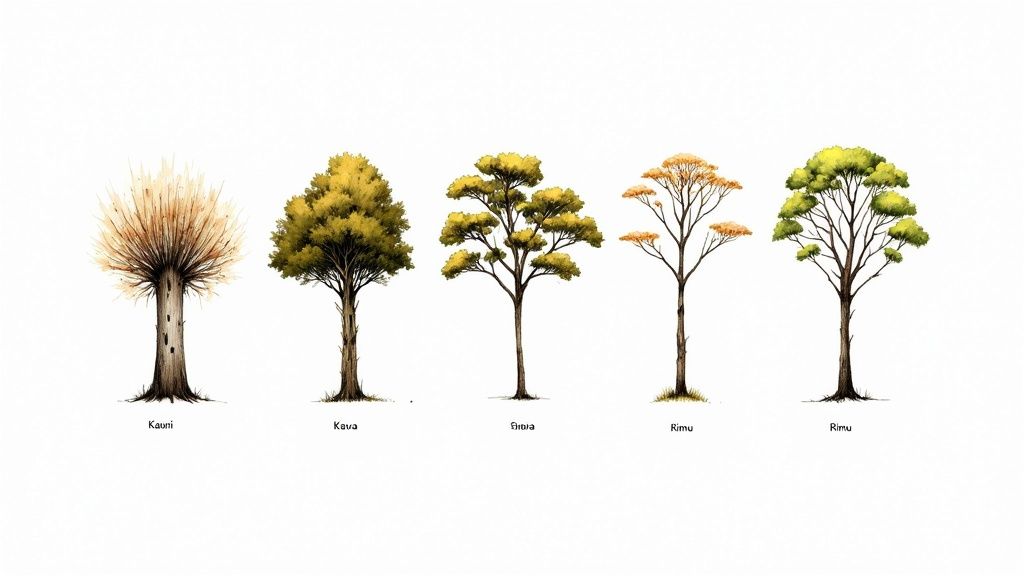
When you think of large mature trees NZ, two names immediately come to mind: Kauri and Tōtara. These are the true titans of the forest, revered as ngā taonga tuku iho (treasures handed down) for their immense strength, longevity, and spiritual importance.
The Kauri (Agathis australis) is a genuine legend of the ngahere (forest). Its colossal trunk grows straight and true for metres before the first branch even appears, making it a powerful symbol of strength. As New Zealand's largest native tree by volume, a Kauri can soar up to 50 metres high. Just look at Tāne Mahuta, the 'Lord of the Forest'—he boasts an unbelievable girth of 13.77 metres and stands over 51 metres tall. It's a living reminder of the sheer scale these trees can reach, once covering around 1.5 million hectares of the North Island. You can read more about the Kauri on Wikipedia to get a sense of its incredible history.
Just as revered is the Tōtara (Podocarpus totara), easily recognised by its reddish-brown, stringy bark and famed for its incredible durability. Tōtara wood was the material of choice for Māori, prized for carving everything from waka (canoes) to wharenui (meeting houses). A mature Tōtara in your garden connects you directly to this legacy of craftsmanship and endurance.
Planting a native giant like a Kauri or Tōtara is more than just gardening; it's an act of restoration. You're growing a piece of ancient New Zealand and creating a future landmark that will stand as a tribute to Aotearoa's unique natural history for generations.
Coastal and Forest Favourites: Pōhutukawa and Rimu
Moving beyond the absolute giants, we have other iconic natives that bring their own unique character to a garden, connecting your space to different corners of the New Zealand environment.
The Pōhutukawa (Metrosideros excelsa) is, without a doubt, New Zealand’s Christmas tree. Every summer, it erupts in a magnificent display of crimson flowers, a sight that has become synonymous with Kiwi holidays spent by the coast. Its gnarled, multi-trunked form tells a story of battling coastal winds, making it a dramatic and powerful feature plant. Having a Pōhutukawa brings that classic Kiwi summer feeling right to your back door.
If you head back into the forest, you'll find the Rimu (Dacrydium cupressinum), an elegant giant with fine, weeping foliage that gives it a graceful, almost prehistoric look. For centuries, Rimu was a dominant canopy tree in our lowland forests, its timber highly sought after. Today, planting a Rimu helps restore a key piece of that forest ecosystem, providing essential food and habitat for native birds like the kererū.
Embracing these species is a fantastic way to create a garden that feels authentically New Zealand. For more ideas on using these and other natives, check out our guide to creating an NZ native garden for a bit of inspiration. Choosing one of these iconic large mature trees nz ensures your garden not only looks stunning but feels deeply connected to the land.
Sourcing and Planting Your Mature Tree
Alright, you’ve picked your perfect tree. Now for the exciting part: getting it home and settled into your garden. This is where things get serious. It’s less like your average weekend gardening project and more like performing delicate surgery on your landscape. You’ll need specialised knowledge, the right gear, and a healthy dose of professional expertise to nail it.
When you’re sourcing large mature trees in NZ, you need to look beyond your local garden centre. You're entering the world of specialist nurseries, the ones with the space and experience to raise these giants. A good supplier will be proud to show you their stock and will have healthy, beautifully formed trees with powerful root systems ready for their new home.
Finding a Healthy Specimen
When you’re inspecting a potential tree, it’s time to put your detective hat on. Don't be shy about asking a heap of questions. A mature tree is a massive investment, both in time and money, so you want to be sure it has every chance of thriving once it leaves the nursery.
Here’s what to keep an eye out for:
- Strong Trunk and Structure: Look for a solid, straight trunk free from any big wounds, cracks, or odd-looking blemishes. The branches should be well-spaced and balanced, giving the tree a natural, strong silhouette.
- Vibrant Foliage: The leaves should be the right colour for the species and look full of life. Steer clear of trees with lots of yellowing leaves, dead branches, or sparse, weak-looking growth.
- A Healthy Root Ball: This is the engine room of the tree. The root ball should feel firm, be evenly moist, and look proportionate to the tree's size. A well-cared-for root system is absolutely critical for a successful transplant.
Think of it like you're interviewing the tree for a very important job. You need to ask the nursery about its history, its health checks, and exactly how they plan to get it to you and into the ground. A professional, transparent supplier is your most important partner in this.
The Logistics of Transport and Planting
Getting a multi-tonne tree from the nursery to your backyard is a full-blown logistical mission. This is definitely not a job for a ute and a few mates. It almost always involves heavy machinery and a skilled team of professional arborists.
Your tree will likely arrive on a hi-ab truck or be lifted into place by a crane. The team will carefully secure it for the journey and then gently manoeuvre it into position. Property access is a huge factor here. The crew needs to do a full site assessment, checking for things like overhead power lines, tight driveways, and underground pipes before they even think about starting.
Planting itself is a precise art. The hole needs to be dug to just the right dimensions—usually two to three times wider than the root ball, but no deeper. This encourages the roots to grow outwards into the surrounding soil, rather than spiralling down. For some of our special natives, like the striking Puka Tree (Meryta sinclairii), getting the soil preparation and drainage perfect is non-negotiable.
Ensuring Successful Establishment
Once the tree is gently placed in its new home, the job is far from done. The team will backfill the hole, mixing the existing soil with quality compost to get rid of air pockets and create a nutrient-rich environment for the roots to explore.
Staking is usually a must for the first year or two, giving the tree the stability it needs to anchor itself firmly. The final, crucial steps are to build up a small basin around the trunk to hold water and to apply a thick layer of mulch. This locks in precious moisture, keeps the soil temperature stable, and stops weeds from competing for resources, giving your magnificent new tree the best possible start.
Long-Term Care for Your Established Tree
Getting your magnificent mature tree into the ground is a huge milestone, but it's really just the beginning of your journey together. The real success story is written in the years and decades that follow. Think of it less as a one-off project and more as a long-term guardianship.
Proactive, ongoing care is what ensures your living investment doesn't just survive, but truly flourishes. The first year is all about intensive care, helping the tree recover from the shock of the move. After that, your role shifts to providing consistent support through the seasons, helping it fend off pests, withstand droughts, and grow into its full, glorious potential.
A Seasonal Care Calendar for NZ
New Zealand's distinct seasons call for a tailored approach to tree care. Following this natural rhythm means you’re giving your tree the right support at the right time.
-
Summer (December – February): This is all about hydration. During those hot, dry spells, deep watering is essential. Forget a quick daily sprinkle; give the tree a long, slow soak once a week. This encourages the roots to grow deep down into the soil, building resilience.
-
Autumn (March – May): Time to focus on feeding and tidying up. This is the perfect opportunity to apply a thick layer of organic mulch around the root zone. Just be sure to keep it from touching the trunk itself. This will protect the soil over winter and slowly release nutrients.
-
Winter (June – August): This is the dormant season, which makes it the ideal time for any major structural pruning. With the branches bare, an arborist can clearly see the tree’s framework and make the best cuts. Plus, the tree is less stressed when it's "asleep".
-
Spring (September – November): As new growth starts to burst forth, keep a close eye out for any signs of pests or disease. A slow-release fertiliser applied now can give the tree a welcome boost for the busy growing season ahead.
When to Call in the Professionals
While you can easily handle the mulching and watering, some jobs are best left to the experts. Knowing when to call a qualified arborist is a key part of being a responsible tree owner. They can spot things you can't, like hidden structural weaknesses, and perform health assessments that go far beyond a simple visual check.
This isn't just about making the tree look pretty. Professional pruning is a science that ensures a tree’s long-term health and safety. Arborists are trained to make precise cuts that improve structure, remove dangerous limbs, and encourage vigorous, healthy growth.
This expert care is a vital investment. Even the most ancient and revered large mature trees in NZ are vulnerable without proper stewardship. Take Te Matua Ngahere, a giant kauri estimated to be up to 2,000 years old. This 'Father of the Forest' survived for millennia, but damage from a storm in 2007 significantly shortened its life expectancy. It’s a powerful reminder that even our toughest trees need protection. You can discover more about this magnificent tree's story and its vulnerability.
By investing in professional care, you help safeguard your own tree against similar risks, ensuring it remains a safe and majestic presence for many years to come.
Your Questions Answered: What to Know Before You Buy
Bringing a mature tree into your garden is a huge decision, and it’s natural to have a few questions swirling around. Let's tackle some of the most common ones we hear from Kiwis thinking about taking the plunge.
How Much Does a Mature Tree Cost in NZ?
This is the big one, and the honest answer is: it varies wildly. The price depends on the tree's species, its size, and how tricky it is to get to your property.
A smaller mature tree, say around 4-5 metres tall, might start at a few thousand dollars. But for those truly spectacular, one-of-a-kind specimens, the investment can climb well into the tens of thousands.
That price tag isn’t just for the tree itself. It usually includes specialised transport (often a hi-ab truck) and the crucial installation by qualified arborists. Always ask for a detailed quote that breaks everything down so there are no surprises.
What Is the Best Time to Plant in New Zealand?
Timing is everything. For large mature trees in NZ, the sweet spot for planting is during the cooler, wetter months. Think autumn through to late winter, generally from about May to August.
Planting during this dormancy period gives the root system a chance to settle in and get established in moist soil. It’s a much gentler start, letting the tree recover from the move without the stress of summer heat, setting it up for a burst of growth come springtime.
Will a Mature Tree Damage My House Foundations?
A very fair question. The risk really comes down to two things: the type of tree you choose and where you plant it. Some species are notorious for having aggressive, far-reaching root systems, while others are much better behaved.
The key is proper planning. Choose a species with root habits that suit the space you have, and plant it a safe distance from your house, driveway, and any underground pipes. A good arborist is your best friend here—they can give you specific advice on safe planting distances for different trees, helping you avoid very costly headaches down the track.
Ready to find the perfect living sculpture for your garden? Explore the incredible selection of plants from trusted sellers across New Zealand at Jungle Story. Find your next garden centrepiece at https://junglestory.co.nz.