
Choosing a tree for a small garden might feel like a huge commitment, but honestly, it's one of the best things any Kiwi gardener can do. The trick is simply to pick trees that have a manageable height, well-behaved roots, and look good through the seasons. This guide is all about cutting through the noise, showing you that a smaller section doesn't mean you have to skimp on beauty or impact.
Why a Small Garden is a Perfect Home for a Tree
Thinking you just don't have the room for a tree is a classic gardener's hang-up, but it’s usually not true. The right tree doesn't just squeeze into a small garden; it completely transforms it. A carefully chosen specimen adds that all-important vertical layer, gives the eye a place to land, and can even make a tight space feel bigger and more interesting.
It all comes down to that old but golden rule: 'right plant, right place'. Instead of getting stuck on what you can't do, this approach gets you to look at what makes your garden unique—its microclimate, soil, and how much sun it gets—and use that as a map to find the perfect tree.
Finding Your Native Advantage
New Zealand's own flora is an incredible place to start your search. Aotearoa is famous for its biodiversity, with about 80% of its trees, ferns, and flowering plants being endemic—you won't find them growing wild anywhere else on the planet. This natural taonga is already perfectly tuned to our local conditions.
And here’s the best part for those of us with tiny backyards: a huge number of our native trees are naturally compact. Of the 215 native tree species that grow to 6 metres or more, an amazing 171 (that’s nearly 80%!) are classed as 'small', finishing up at 15 metres or less. That gives you a fantastic range of options that are already set up to thrive here. You can dig deeper into NZ's unique plant life on the Department of Conservation website.
A tree in a small garden isn't just another plant; it's living architecture. It gives you structure, a bit of shade, and a connection to the seasons, quickly becoming the heart of your outdoor space.
This guide will walk you through sizing up your garden like a pro, and I'll introduce you to some of the best native and exotic trees for small gardens NZ has to offer. With a few practical tips on planting and care, you'll have everything you need to see your new tree flourish for years to come.
How to Confidently Assess Your Garden Space
Before you even dream of wandering through a nursery, the single most important job is to get to know your own backyard. It sounds simple, but truly understanding your garden’s unique character is the secret to choosing a tree that will flourish, not just survive. A little bit of thoughtful observation now prevents a world of headaches later on.
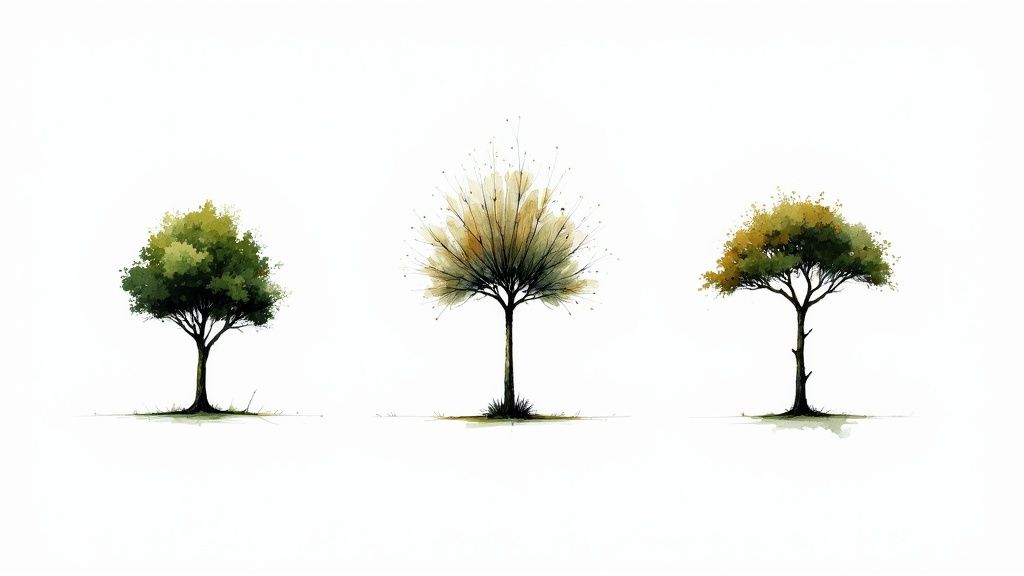
This all starts with mapping your garden's sunlight. It's a critical first step. A sun-loving tree will just sulk in a shady corner, while a plant that prefers cool shade will get completely scorched in an exposed, north-facing spot.
Spend a day watching where the sun lands—in the morning, at midday, and late in the afternoon. You’ll quickly discover the sunny hotspots and the cool, sheltered pockets. Remember, the sun’s path is much lower during our Kiwi winter months (June, July, and August), casting surprisingly long shadows you might not expect in summer.
Understanding Your Foundations
Next up, it’s time to get your hands dirty and investigate the soil. You don’t need a fancy science kit for this, just a spade and a bucket of water. Dig a small hole about 30cm deep and fill it up.
Now, watch what happens.
- If it drains away in under an hour, you're likely working with sandy or loamy soil that drains freely.
- If it takes several hours to vanish, you’ve probably got heavy clay, which holds onto moisture for a long time.
This little test is a game-changer. Some trees absolutely demand good drainage and will rot if their roots are constantly wet, while others are quite happy to have "wet feet." Knowing your soil type instantly narrows down your options to trees that will thrive in your specific conditions.
Planning for the Future
Honestly, the biggest mistake people make is underestimating how big a tree will get. That adorable little sapling in the garden centre can quickly grow into a monster that dwarfs your house, cracks your driveway, and steals all your precious sunlight. You absolutely have to think about the tree's mature size—how tall and wide it will be in 10 or 20 years.
Think of it like buying a puppy; you need to plan for the full-grown dog, not just the tiny ball of fluff. A tree's label will always state its estimated mature dimensions, so pay close attention to this information.
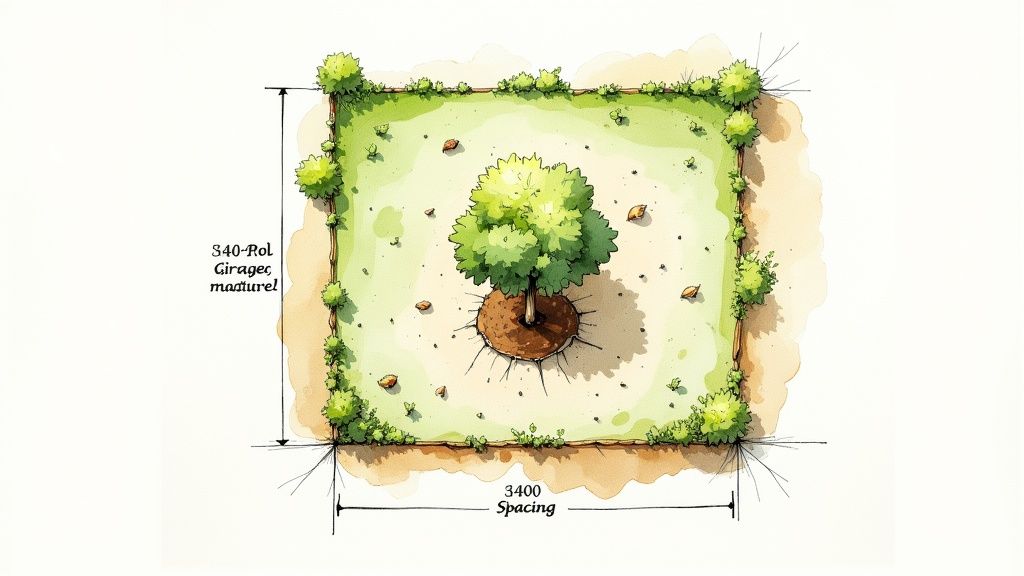
Before you make a final decision, you need to accurately measure your space. Get the tape measure out and check the distance from your house, fences, and any underground pipes. This foresight ensures your new tree becomes a beautiful feature, not a costly future problem. Also, think about your local climate—is your garden blasted by strong southerlies or prone to nasty frosts? Having this complete picture will give you the confidence to pick the perfect tree.
Stunning Native Trees for Compact NZ Gardens
There's something truly special about choosing a native tree. It's like inviting a piece of Aotearoa's unique landscape into your own backyard, creating a haven for local wildlife and bringing that authentic Kiwi character right to your doorstep. These home-grown heroes are already perfectly in tune with our climate, which often means less fuss for you and more natural beauty to enjoy.
Let's dive into some standout native trees that NZ gardeners with smaller spaces absolutely love.
Kōwhai (Sophora species)
You can't talk about Kiwi gardens without mentioning the Kōwhai. As our unofficial national flower, its brilliant yellow, nectar-filled flowers are a sight to behold in late winter and spring. This vibrant display is basically a dinner bell for native birds like tūī and bellbirds, filling your garden with their beautiful songs.
Thankfully, you don't need a huge section to grow one. Sophora prostrata, or prostrate kōwhai, is a brilliant compact choice with a distinctive tangled form that usually only reaches about 2 metres. If you're after a more classic tree shape, cultivars like 'Dragons Gold' are perfect, growing to a very manageable 3-4 metres.
Pittosporum Tenuifolium Cultivars
Pittosporum, or kōhūhū, is the dependable workhorse of the New Zealand garden. It's loved for its dense foliage and wonderfully fragrant, deep-red flowers that release their scent at night. While the standard species can grow quite large, plant breeders have gifted us with some incredible compact varieties.
These cultivars are ideal for creating a screen or adding year-round structure:
- 'Mountain Green': A tough and popular pick, this one forms a neat pyramid shape up to 4 metres tall. Its fresh green leaves create a lush, vibrant backdrop.
- 'Golf Ball': Just as the name suggests, this little gem naturally grows into a tight, round ball about 1 metre high and wide. It needs next to no pruning to keep its perfect shape.
- 'Silver Sheen': Known for its fine, silvery-green leaves on dark stems, this variety creates a beautiful shimmering effect in the garden. It can be easily pruned to stay around 4-5 metres.
Lancewood (Pseudopanax crassifolius)
If you want a tree that tells a story, look no further than the Lancewood, or horoeka. This plant has one of the most dramatic transformations in the botanical world. As a juvenile, it's a single, skinny trunk with long, stiff, downward-pointing leaves—a truly striking architectural statement.
Then, after about 10-15 years, it completely changes, morphing into a round-headed tree with more conventional leaves, eventually reaching a mature height of 5-6 metres. Its unique form makes it a fantastic focal point, especially in a modern or minimalist garden design.
To make picking the right one a bit easier, here’s a quick comparison of our top native picks.
Quick Guide to NZ Native Trees for Small Gardens
This table summarises our top native tree recommendations, comparing their key features to help you choose the best fit for your garden's needs.
| Tree Name | Mature Height | Key Feature | Best For |
|---|---|---|---|
| Kōwhai (Sophora prostrata) | 2 metres | Tangled form, yellow flowers | Attracting birds, unique shape |
| Kōwhai ('Dragons Gold') | 3-4 metres | Classic tree shape, yellow flowers | Feature tree, attracting birds |
| Pittosporum ('Mountain Green') | 4 metres | Neat pyramid shape, dense foliage | Screening, formal structure |
| Pittosporum ('Golf Ball') | 1 metre | Naturally round, minimal pruning | Low hedge, container planting |
| Pittosporum ('Silver Sheen') | 4-5 metres | Shimmering silver-green leaves | Screening, adding light to the garden |
| Lancewood (Pseudopanax) | 5-6 metres | Dramatic juvenile form | Architectural feature, modern gardens |
Choosing a tree bred for a smaller size from the get-go is always the best strategy for a compact garden. It means less pruning and a healthier, happier plant in the long run.
By planting native species, you’re doing more than just adding a tree; you're helping to restore the local ecosystem and creating a garden that feels genuinely Kiwi. For more ideas, be sure to check out our guide on designing a beautiful NZ native garden.
Exceptional Exotic Trees for Smaller Urban Spaces
While our native flora has so much to offer, New Zealand’s temperate climate means we can also grow some absolutely stunning trees from around the world. Bringing a carefully chosen exotic species into your garden can add a whole new layer of interest – think dramatic seasonal colour or unique shapes that you might not find in our natives.
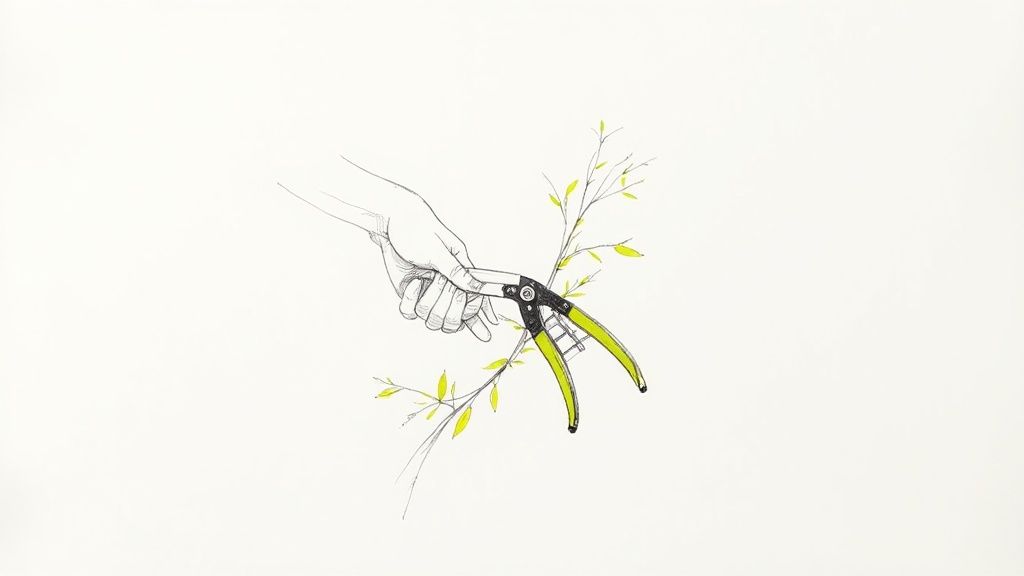
These international superstars are brilliant for adding flair and a real sense of the seasons to your outdoor space. Let’s look at a few proven performers that are well-behaved and perfectly suited to the scale of a smaller urban garden.
Japanese Maples (Acer palmatum)
When it comes to autumn, Japanese Maples are the undisputed stars of the show. They’re treasured for their elegant, almost sculptural forms and their breathtaking seasonal colour, making them ideal trees for small gardens in NZ. As the weather cools, their delicate leaves put on an unforgettable display, shifting through incredible shades of crimson, orange, and gold.
Best of all, their root systems are non-invasive, so you can safely plant them relatively close to patios or pathways without worry. With literally hundreds of cultivars available, you’re guaranteed to find one that fits your space perfectly.
- Upright Varieties: Cultivars like 'Sango Kaku' (the Coral Bark Maple) offer fantastic winter interest with their bright red stems, growing to a very manageable 5-6 metres.
- Weeping Varieties: Smaller, cascading forms like 'Dissectum Inaba Shidare' are perfect for popping in a container or as a graceful feature next to a small pond, rarely getting bigger than 2-3 metres.
These maples are happiest in a spot that gets morning sun but is sheltered from the harsh afternoon heat and strong winds, which can scorch their delicate leaves. If you're keen to dive deeper, you might like our detailed guide on the best Japanese Maple trees for NZ gardens.
Ornamental Crabapples (Malus species)
For an explosion of spring beauty, it’s hard to go past an ornamental Crabapple. Come mid-spring, they are absolutely smothered in blossoms, ranging from pure white to soft pink and even deep magenta. This floral show is a huge magnet for bees, bringing a buzz of life and energy to the garden.
But their charm doesn’t stop there. Once the flowers fade, they produce clusters of tiny, jewel-like fruits that hang on into winter, providing a welcome feast for birds like waxeyes and blackbirds.
Many Crabapple varieties also put on a fantastic autumn foliage display, with leaves turning golden-yellow or orange. This makes them true multi-season performers, offering something to look at nearly all year round.
Cultivars like 'Jack Humm' are known for their reliable flowering and big red fruits, while 'Gorgeous' really lives up to its name with its pink-tinged white blossoms. Most varieties stay within a 4-6 metre height range and develop a rounded shape that’s easy to look after.
Ornamental Pears (Pyrus calleryana)
When you need a bit of height without sacrificing too much ground space, the ornamental pear is a fantastic solution. Certain varieties have what’s called a 'fastigiate' or columnar growth habit. This just means they grow straight up in a narrow column, making them perfect for lining a driveway or squeezing into a tight side yard.
The most popular choice by far is 'Chanticleer', which is loved for its tidy, upright form. It gives you a beautiful display of white blossoms in spring and then finishes the year with a spectacular autumn show of reddish-purple leaves. It grows to about 8 metres tall but only gets 3-4 metres wide, providing that vertical lift without casting too much shade or bothering the neighbours.
Planting and Caring for Your New Tree
You’ve found the perfect tree – now it’s time to give it the best possible start in its new home. Getting the planting and early care right is the secret to helping your tree settle in quickly and grow into a strong, healthy garden feature for decades to come.
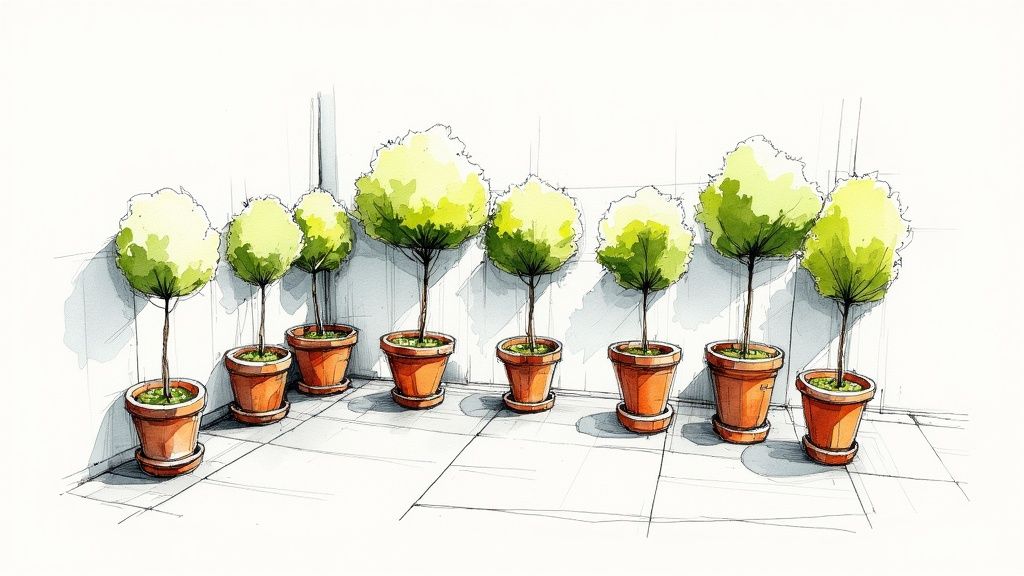
Here in New Zealand, the best times to plant are generally autumn and winter. The cooler weather and reliable rain put less stress on the young tree, giving its roots plenty of time to get established before the heat of summer kicks in. Timing it right makes a massive difference to its chances of thriving.
Getting the Planting Right
When you grab your spade, remember this golden rule: go wide, not deep. The hole should be at least twice as wide as the tree's root ball, but no deeper. This gives the roots room to spread out into the surrounding soil, rather than forcing them to grow straight down.
Getting the height right is also crucial. You want the point where the trunk meets the roots (known as the root flare) to sit just slightly above ground level. Planting too deep is one of the most common mistakes people make, and it can cause the trunk to rot over time.
A well-planted tree needs minimal intervention. By getting the depth, width, and timing right, you are setting your tree up for a lifetime of resilience and beauty with very little ongoing effort required.
Nurturing Your Tree in the First Two Years
The first couple of years are all about helping your tree find its feet. Consistent watering is non-negotiable, especially during its first summer from December to February. A good, deep soak once or twice a week is far better than a light sprinkle every day. This encourages the roots to grow deep into the soil to find moisture, making the tree more resilient.
A layer of mulch, like bark chip or compost, around the base of the tree is an absolute game-changer. It helps the soil hold onto precious moisture, keeps weeds at bay, and regulates the temperature around the root zone. Just be sure to leave a small gap right around the trunk to prevent it from staying damp and potentially rotting.
Shaping for Strength with Formative Pruning
Formative pruning sounds technical, but it’s really just about making small, clever cuts in the tree's early years to guide it into a strong, balanced shape. This isn't about hacking bits off; it's gentle guidance. The aim is to encourage a single, strong central leader (the main upward-growing trunk) and well-spaced branches.
A few simple rules to follow:
- Remove any branches that are crossing or rubbing against each other, as this can create wounds and let disease in.
- Trim off branches growing at a very narrow angle to the main trunk. These can become weak points as the tree gets bigger.
- Snip off any suckers that pop up from the base of the tree.
For a broader look at keeping your plants healthy, these general plant care resources are fantastic. And if you're tempted by the idea of homegrown fruit, our guide on choosing and caring for fruit trees in NZ has plenty of great advice.
Your Top Questions Answered
When you’re working with a smaller backyard, a few questions always seem to pop up. Getting the right advice from the start makes all the difference between a tree that thrives and one that causes headaches down the road. Here are some of the most common queries we hear from Kiwi gardeners.
How Close to My House Can I Plant a Small Tree?
This is probably the most critical question of all, and for good reason! As a general rule of thumb, a small tree that will top out at under 8 metres should be planted at least 3-4 metres away from your house’s foundation.
If you’ve chosen a species known for a more enthusiastic root system, it’s wise to give it even more space—think 5-6 metres to be safe.
Remember, it’s not just about what’s happening underground. You’ve got to picture the tree at its full size. A canopy that’s too close can mean branches scraping your roof, blocking light from your windows, or constantly clogging your gutters. Trees like Japanese Maples tend to have less aggressive, fibrous roots, which makes them a safer bet for planting a bit closer to buildings. Always do your homework on the specific variety you’re considering and have a quick check of your local council's rules, just in case.
What Are the Best Evergreen Trees for Privacy Screening?
You’re in luck—New Zealand has some fantastic options for creating a beautiful, year-round green screen.
Upright Pittosporum varieties are a go-to choice. They’re dense, they grow quickly, and they take beautifully to a good trim. Cultivars like 'Silver Sheen' or 'Stephens Island' are incredibly popular for exactly this reason.
Got a really narrow space you need to fill? A native Tōtara like 'Matapouri Blue' is a brilliant pick, thanks to its naturally slender, upright shape. Another great option is Sasanqua camellias; they give you a dense wall of glossy leaves plus the bonus of stunning flowers through autumn and winter. When you’re looking at plant labels, keep an eye out for words like ‘fastigiate’ or ‘columnar’—that’s your clue that the plant grows up, not out.
Choosing the right screening tree is about more than just height; it's about finding a plant with a growth habit that matches your available width. A narrow, upright tree provides excellent privacy without stealing valuable garden space.
Can I Grow Fruit Trees in a Small Garden?
Absolutely! The dream of picking your own fruit is completely achievable, even in a compact garden.
The secret lies in choosing trees grown on a 'dwarfing' rootstock. This clever nursery technique keeps the tree to a manageable 2-3 metres tall and wide, so you don't end up with a monster.
Columnar apple trees, often sold as 'Ballerina' apples, are perfect for slotting into tight corners or even growing in large pots on the deck. You can also get creative by training your trees. Espalier, where you train a tree to grow flat against a sunny wall or fence, is a classic space-saving method that looks incredible. Don’t forget citrus, either—many lemon and lime trees are naturally compact and live happily in a container for years.
What Is the Lowest Maintenance Tree for an NZ Garden?
If you’re after a truly low-effort tree, it's hard to go past a well-chosen New Zealand native.
Our iconic cabbage tree (Cordyline australis) is incredibly tough. It gives you a strong, sculptural look with pretty much zero work required on your part.
Smaller varieties of kōwhai are also fantastic, low-maintenance picks. They generally only need an optional light trim after they've finished their spectacular spring flowering. Slow-growing conifers, like a dwarf Hinoki Cypress, are another ‘plant-and-forget’ option. The real key, though, is matching your tree to your site’s conditions—sun, soil, and wind—from day one. A happy tree is always a low-maintenance tree.
Ready to find the perfect tree to complete your garden? At Jungle Story, we connect you with New Zealand’s best growers, offering a huge selection of native and exotic trees ideal for smaller spaces. Explore our collection and bring your garden vision to life. https://junglestory.co.nz