
Picture this: stepping out into your own backyard to grab a handful of fresh, sun-warmed blueberries. It’s a simple pleasure that’s surprisingly easy to achieve, especially since growing blueberries in NZ is perfectly suited to our temperate climate. The only real catch? They’re fussy about their soil. Get that right, and you're golden.
Why Grow Blueberries in Your Kiwi Garden

There’s just no comparing the flavour of a berry picked straight from the bush to one from the supermarket. Beyond the amazing taste, these shrubs look great in the garden all year round—from their delicate spring blossoms and lush summer leaves to their stunning autumn colours.
Growing your own also means you’re in complete control. You decide what goes on your plants, so you can stick to organic practices that are better for your family and the local environment.
A Thriving Local Industry
It's not just us home gardeners who are obsessed with blueberries. New Zealand's commercial growers are having huge success, recently producing around 4,000 tonnes across 1,000 hectares, mostly in the Waikato and Hawke's Bay. That kind of growth shows just how well these berries do here.
The pros have it figured out: choose the right variety and perfect your soil. By following those same core principles, you can easily replicate their success on a smaller scale right in your own backyard.
If you’re keen to get your whole garden producing and want to expand your skills beyond berries, a Certificate in Home Food Gardening can give you a solid foundation for growing all sorts of delicious produce.
Choosing the Best Blueberry Varieties for NZ
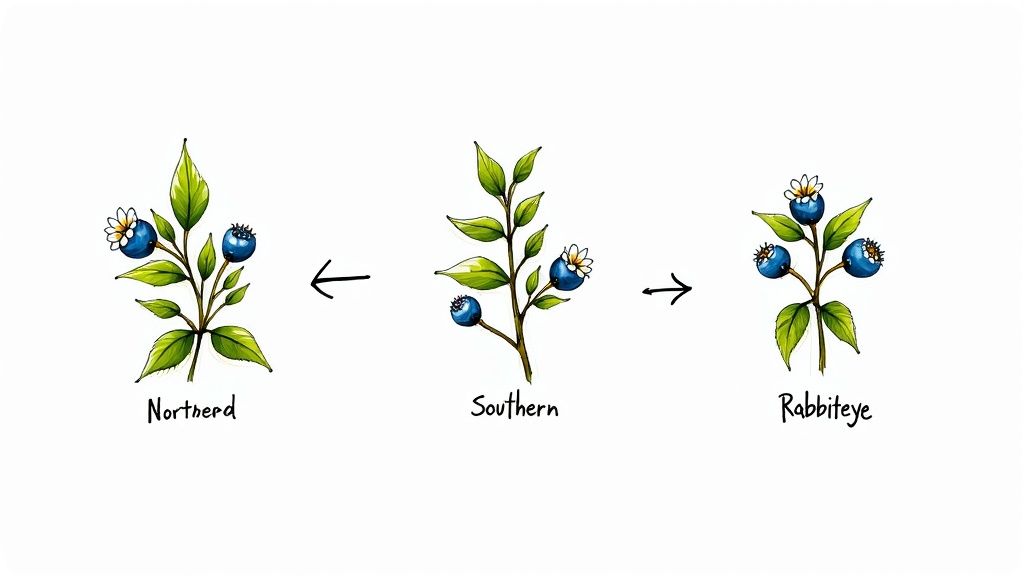
The secret to a bumper blueberry harvest starts long before you even touch a spade. It begins with picking the right plant. New Zealand’s diverse climate means there’s a perfect blueberry variety for just about everyone, but success with growing blueberries in NZ hinges on matching the plant to your specific region.
Blueberries are broadly split into three main groups, and the deciding factor is their "chill hour" requirement – essentially, how much cold winter weather they need to produce fruit.
-
Northern Highbush: These are for the proper cold spots. They need a significant winter chill (over 800 hours below 7°C), making them perfect for gardeners in the South Island and the cooler parts of the lower North Island.
-
Southern Highbush: A brilliant all-rounder for the top half of the country. With low-to-medium chill needs, they thrive in warmer regions like Auckland, Waikato, and the Bay of Plenty.
-
Rabbiteye: The toughest of the lot. Rabbiteyes are incredibly forgiving, tolerating a wider range of soils and putting up with more heat, which makes them a reliable choice for the upper North Island.
To make it a bit easier to see what might work for you, here’s a quick breakdown of some popular options.
Popular Blueberry Varieties for New Zealand Gardens
| Variety Type | Example Cultivars | Ideal NZ Region | Key Characteristics |
|---|---|---|---|
| Northern Highbush |
Duke, Reka, Bluecrop
|
South Island, cooler North Island areas | Needs significant winter chill. Produces large, firm berries. |
| Southern Highbush |
Misty, O'Neal, Blueberry Burst
|
Northland, Auckland, Bay of Plenty | Low-chill requirement. Fruits early in the season. |
| Rabbiteye |
Tifblue, Climax, Powderblue
|
Upper North Island | Very hardy and heat-tolerant. Often fruits later in the season. |
Choosing a variety that feels at home in your local climate is the single best thing you can do to ensure a healthy, productive plant.
The Power of Pollination
Here’s a tip that can easily double your harvest: plant more than one. While some blueberry varieties are self-fertile, you will get a far heavier and healthier crop by planting two or more different varieties that flower at the same time. This is called cross-pollination, and it results in more berries, and much larger ones, too.
A great real-world example of this is the recent 60% jump in Northland's blueberry production. This incredible increase was largely down to growers strategically planting low-chill cultivars suited to the local climate. It's a powerful reminder of how picking the right plant for your area really pays off. If you're interested, you can learn more about this regional success and its market impact.
The rule of thumb is simple: plant at least two different cultivars from the same group (e.g., two different Northern Highbush varieties) to make sure their flowering times overlap. Think of it as matchmaking for your plants.
Getting the pollination partners right turns a few scattered berries into a truly abundant crop, ensuring all your effort in the garden is worthwhile.
Creating the Perfect Acidic Soil Environment
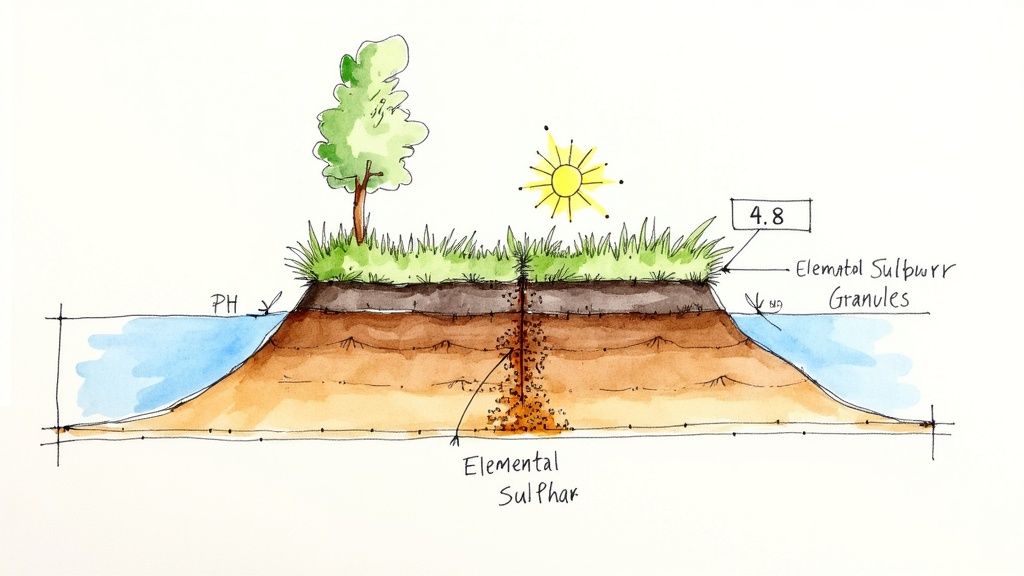
If there’s one non-negotiable for growing great blueberries, this is it. Blueberries are acid-loving plants, a trait that makes them a bit different from most other things you’ll grow in your garden. They absolutely thrive in soil with a pH between 4.5 and 5.5, which is quite a bit more acidic than the typical Kiwi garden patch.
Getting this right is the difference between a sad, struggling plant and one that’s dripping with fruit. Before you even think about planting, test your soil’s pH. You can grab a simple, cheap testing kit from any garden centre – it’ll give you a clear reading in minutes.
Once you know your starting point, you can get to work creating the perfect acidic home for your new plant. Don't stress if your soil is neutral or even alkaline; creating an acidic pocket for blueberries is easier than it sounds.
Amending Your Soil for Blueberries
To get your soil’s pH down, you've got several fantastic organic options. The trick is to mix these amendments into the planting area well before your blueberry bush goes in, giving them a bit of time to start working their magic.
Here are a few of the most effective methods I've used:
- Elemental Sulphur: This is the slow-and-steady, reliable choice. Just sprinkle it over the soil following the packet directions and work it into the top 15-20 cm.
- Pine Needles and Bark: A brilliant, free resource! Pine needles, bark, or even well-rotted sawdust will gradually lower the pH as they break down. It’s a great way to mimic the natural forest floor where blueberries are happiest.
- Peat Moss: Digging some peat moss into your planting hole is another excellent trick for an instant acidity boost and better soil structure.
Blueberries have shallow, fibrous roots that hate competition and demand good drainage. It’s just as vital to pick a spot that gets at least six hours of direct sun and won’t turn into a bog in winter.
The Ultimate Fix for Tough Soils
Are you battling heavy clay or very alkaline soil? Sometimes, the fight to keep the pH down just isn't worth it. In these cases, growing your blueberries in pots or raised beds is easily the best way to go, giving you total control over their environment.
For a pot, you'll want something that’s at least 50 litres to give the roots plenty of room to spread out. If you're looking to build a dedicated spot in the garden, you can find heaps of inspiration for designing raised wooden garden beds that look great and do the job perfectly.
You can create your own perfect acidic potting mix by blending:
- 50% quality acidic potting mix
- 30% peat moss or coco coir
- 20% pine bark mulch
This custom blend delivers the acidity, drainage, and moisture retention your blueberries need to flourish, no matter what your native garden soil is like.
Mastering Seasonal Care: Watering, Feeding, and Pruning
Once your blueberry bush is settled into its acidic home, the real work begins. Your focus shifts to the ongoing seasonal care that will turn a plant that's just surviving into one that's truly thriving. Nailing the balance between watering, feeding, and pruning is the secret to a bumper crop, year after year.
Blueberries have shallow, fibrous roots that hang out right near the soil's surface. This means they can dry out in a flash, especially during a scorching Kiwi summer from December to February. Consistent moisture is absolutely critical, but they hate having "wet feet," so top-notch drainage is just as important.
It's better to give your plants a good, deep soak every now and then, rather than little and often. The best test? Just poke your finger about 5 cm into the soil. If it feels dry, it's time to give it a thorough watering. A generous layer of mulch, like pine bark or needles, is a gardener's best friend here—it helps hold onto that precious moisture and means less time spent with the hose.
Feeding Your Acid-Loving Plants
To keep your bushes healthy and loaded with berries, you'll want to get them on a regular feeding schedule. Blueberries aren't what you'd call heavy feeders, but they do need the right kind of nutrients to flourish in their acidic soil. The easiest way is to use a specialised fertiliser made for acid-loving plants like azaleas or rhododendrons.
The perfect time to feed is late winter or early spring (think August or September), right as you see the first signs of new growth. This gives the plant a much-needed boost of energy to push out strong new canes and set plenty of fruit. A second, lighter feed after the harvest is done can also help the plant recover and get ready for next season.
One of the most common mistakes I see is over-fertilising, which can easily scorch the sensitive roots. Always, always follow the packet instructions. Water the fertiliser in well straight after you apply it—this stops the leaves from burning and helps the nutrients get right down to the root zone where they're needed.
If you're into making your own garden goodies, well-rotted compost is an excellent addition. For those new to creating this "garden gold," our guide explains how to start composting with some simple, practical steps.
Pruning for a Better Harvest
Pruning can seem a bit daunting, but it's honestly one of the most important jobs for successfully growing blueberries in NZ. The whole point is to encourage the plant to produce new, vigorous wood, because that’s where you’ll get the best fruit. Get your secateurs ready in winter (June to August) when the plant is dormant.
For the first couple of years, you can take it easy. Just snip off any dead or damaged wood. From the third year on, you’ll get a bit more strategic:
- Tidy up the base: Remove any low-hanging branches that are trailing on the ground.
- Open it up: Cut out any dead, diseased, or crossing branches. This really helps with air circulation.
- Renew the plant: Prune out the oldest, thickest canes right down at the base of the plant. This makes room for fresh, new shoots to come through.
Giving your bush this annual trim keeps it healthy and open, letting plenty of sunlight in to ripen the berries and making them much easier to pick.
Protecting Your Berries from Pests and Birds
You've put in all the hard work, and your blueberry bushes are finally starting to look the part. Fantastic! But now comes the real challenge: protecting your precious future harvest from the local wildlife who love blueberries just as much as you do.
While growing blueberries in NZ is a pretty cruisy experience for the most part, a few common pests and our feathered friends can make short work of your crop if you're not careful.
Managing Common Problems
Thankfully, most insect issues are nothing to lose sleep over and can be managed with simple, organic methods. Aphids and scale insects might pop up now and then, but they're often kept in check by beneficial insects like ladybirds.
If you find you’ve got a more stubborn problem on your hands, a targeted application of a natural pest control spray is usually all it takes.
A common headache for Kiwi gardeners, especially when it's damp and humid, is botrytis (or grey mould). Good pruning to keep air flowing through the bush is your best defence. If you spot it, act fast and snip off any affected bits.
For a great all-rounder, you might want to explore our guide on the benefits and uses of Neem oil for plants. It's a fantastic organic option for keeping your bushes healthy and pest-free.
Outsmarting the Birds
In the great berry battle, your biggest rivals will, without a doubt, be the birds. Blackbirds, silvereyes, and sparrows can strip a bush clean in what feels like minutes.
The single most effective way to protect your harvest is with physical netting. It’s really the only foolproof method.
A simple frame made from a bit of timber or some PVC pipe that sits over your bushes works a treat. This lets you drape bird netting over the top without it actually touching the plants, which stops the birds from just pecking through the holes.
Another tactic is to distract them with other food sources. You could try using bird feeders with appropriate food placed well away from your blueberry patch.
Even commercial growers face these same challenges. Weather and environmental pressures can have a huge impact on their production volumes. You can discover more about these market fluctuations and see just why protecting your own home crop is so worthwhile.
Harvesting, Storing, and Enjoying Your Harvest
This is it—the moment all your hard work pays off. The secret to a truly perfect blueberry is knowing exactly when to pick it. It's tempting to grab them the second they turn blue, but a bit of patience goes a long way. They really need another few days on the bush to develop that incredible sweetness.
A perfectly ripe berry will be a uniform, deep blue-purple. Look for a frosty, silvery coating on the skin, which is known as a "bloom." This natural waxy layer is a great sign of freshness and helps protect the fruit. Another clue? It should detach from the stem with just the slightest tug.
Perfect Picking and Storage
When you're ready to harvest, gently roll the berry between your thumb and forefinger. If it's ripe, it will practically fall right into your hand. This gentle touch is key to avoiding bruised fruit and making sure you don’t disturb the other berries still ripening nearby.
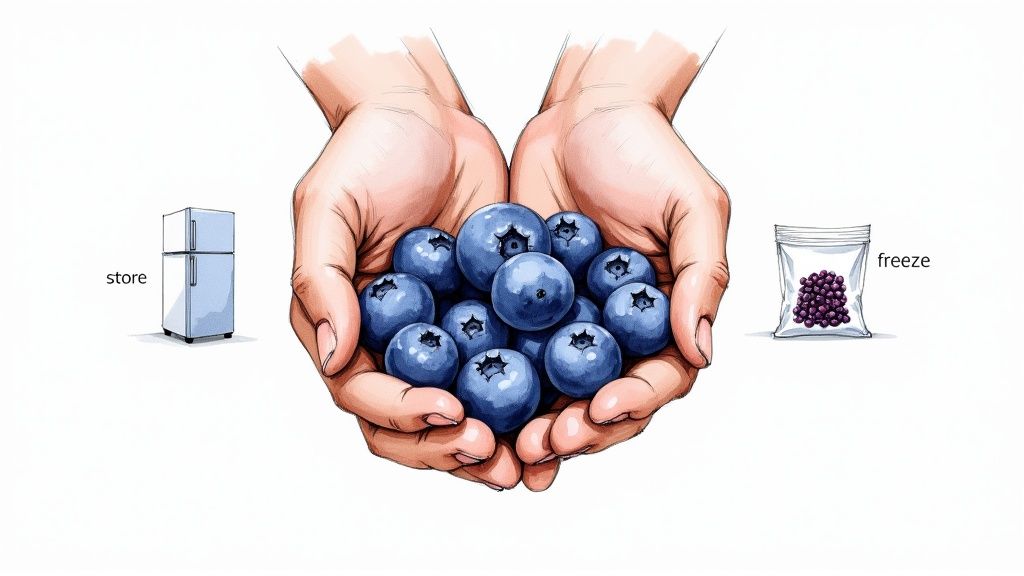
Once you’ve gathered your haul, pop the berries in the fridge as soon as you can. Your best bet is to store them unwashed in a covered, breathable container—this way, they’ll stay fresh for up to a week. Washing them immediately actually makes them spoil faster, so hold off until just before you're ready to eat.
Got a massive harvest you can’t possibly eat fresh? Freezing is your friend. Spread the unwashed berries in a single layer on a baking tray, freeze them until they’re solid, and then tip them into a freezer bag.
This simple trick stops them from clumping into a solid block. It means you can easily grab a handful for a smoothie or sprinkle them over your morning yoghurt, giving you a taste of summer right in the middle of a Kiwi winter.
Got Questions About Growing Blueberries?
To wrap things up, let's get into a few of the most common questions that pop up when you're just getting started with growing blueberries in NZ. Nailing these basics early on will set you up for success down the track.
How Long Until My Blueberry Bush Produces Fruit?
A little patience is required in the beginning. While you might spot a few curious berries in the first year, a blueberry bush really starts hitting its stride and producing a decent crop in its third season. By year five or six, you can expect it to be in full, bountiful production.
Your main job in those first couple of years is to help the plant establish a strong, healthy root system and vigorous canes. Think of it as a long-term investment that will pay off with massive harvests later.
Do I Really Need Two Different Blueberry Plants?
Even though some modern varieties are technically self-fertile, the answer is a resounding 'yes' if you're after the best possible harvest. Planting at least two different varieties that flower around the same time is the single best thing you can do to get more fruit.
This is called cross-pollination, and it results in way more fruit and noticeably larger, juicier berries. It's like giving your plant a friend—they just perform better together. A small effort for a massive reward.
Can I Still Grow Blueberries If My Soil Isn't Acidic?
Absolutely! This is a super common problem in New Zealand gardens, but luckily, there's a simple fix. Growing blueberries in large containers or dedicated raised beds is the perfect way to get around unsuitable soil, as it gives you total control over their growing environment.
Using this method means you can create the ideal acidic growing mix from scratch. A quality acidic potting mix blended with a bit of peat moss and pine bark is a fantastic recipe for happy blueberries. Aim for a pot that’s at least 50 litres—this gives a mature plant plenty of room to thrive without having to fight against your garden's native soil.
At Jungle Story, we're passionate about helping Kiwis succeed in their gardening adventures. Explore our full range of edible plants and garden supplies to get started on your own delicious harvest.