
Chances are you’ve seen those stunning, waxy-leafed vines taking over Kiwi homes and popping up all over your social media feeds. If so, you’ve met the Hoya. A Hoya plant in NZ is so much more than just another houseplant; it’s a beautifully resilient companion that asks for very little but rewards your patience with incredible clusters of star-shaped, fragrant flowers. Their forgiving nature makes them a perfect starting point for beginners and a firm favourite for busy Kiwis.
Why Kiwis Are Obsessed with Hoya Plants
It's no secret that Hoyas, often called 'wax plants', have well and truly captured the hearts of New Zealanders. Their popularity isn’t just a passing trend—it’s a perfect match for the modern Kiwi lifestyle, blending gorgeous looks with refreshingly simple care.
Unlike some of their fussier tropical cousins, Hoyas are semi-succulent. This means their thick, waxy leaves are brilliant at storing water, making them incredibly forgiving if you happen to forget a watering session now and then. This resilience makes them ideal for both nervous new plant parents and seasoned collectors alike. They thrive in the bright, indirect light that’s common in many NZ homes and don't demand constant attention.
Hoyas are more than just decorative objects; they are living sculptures that evolve with you. Their trailing vines can be trained up a trellis or left to cascade from a shelf, adding a touch of soft, natural beauty to any room.
Their slow and steady growth teaches a gentle lesson in patience, where each new leaf feels like a small victory.
A huge part of the obsession also comes down to their sheer diversity. With hundreds of species out there, collecting Hoyas can quickly become an addictive hobby. You can find varieties with quirky heart-shaped leaves (Hoya kerrii), fascinating crinkled foliage (Hoya carnosa 'Compacta'), or leaves splashed with stunning pink and white variegation (Hoya carnosa 'Krimson Queen'). This incredible variety means there’s a perfect Hoya for every taste and every space.
As more of us embrace apartment living, these compact and adaptable plants have become a go-to choice, fitting beautifully into smaller homes without kicking up a fuss. For more ideas on greenery that suits indoor living, check out our guide to great indoor houseplants.
This surge in demand is being seen right across the country, where trends are favouring exotic yet low-maintenance houseplants. The horticultural trade has seen demand for a hoya plant nz grow by 10-15% annually over the past few years, a boom partly fuelled by their star power on social media. You can learn more about Hoya cultural notes for New Zealand growers to get the best out of your plant.
Choosing the Best Hoya Species for Your NZ Home
Picking your first (or next) hoya plant in NZ is a bit like matchmaking. The goal isn't just to find a pretty plant, but to find one whose personality fits your home and your lifestyle. With so many incredible varieties out there, just knowing where to start can feel like the biggest challenge.
The trick is to look beyond a beautiful leaf and really get to know each plant's character. Some Hoyas are energetic climbers, practically begging for a trellis to scale, while others prefer to hang back and cascade elegantly from a basket. Understanding these little quirks, along with their foliage and flower types, is the key to choosing a plant that won't just survive, but truly flourish with you.
The Classics Every Kiwi Collector Loves
If you're just dipping your toes into the world of Hoyas, you really can't go wrong with the tried-and-true classics. These species are popular for a good reason—they're resilient, beautiful, and you can usually find them in local garden centres and online stores across New Zealand.
-
Hoya carnosa 'The Original Wax Plant': This is the quintessential Hoya, the one most people picture. Its deep green, almond-shaped leaves are a familiar sight, and it's famous for being exceptionally hardy. It's a fantastic starting point for beginners because it can handle a range of conditions and eventually rewards your patience with stunning clusters of pale pink, star-shaped flowers that smell uncannily like chocolate and vanilla.
-
Hoya carnosa 'Krimson Queen': A truly stunning take on the classic, the 'Krimson Queen' has lush green leaves edged in creamy white or even pink. What really makes it a showstopper is the new growth, which often comes through in a vibrant, deep pink. Its care needs are pretty much the same as the standard carnosa, though it might grow a touch slower because of its beautiful variegation.
-
Hoya carnosa 'Krimson Princess': Don't get her mixed up with the 'Queen'! The 'Princess' cleverly reverses the pattern, showing off variegation in the centre of the leaf with solid green margins. It's a subtle difference that gives her a completely distinct look, and just like her royal counterpart, she’s a beautiful and dependable grower.
Unique Hoyas for the Adventurous Grower
Once you've got a feel for the basics, you might be ready to branch out and explore some of the more unusual species. These varieties bring unique shapes, textures, and personalities to a collection, adding a whole new layer of interest.
Hoya kerrii 'The Sweetheart Hoya': You'll know this one the second you see it. With its perfect heart-shaped leaves, Hoya kerrii has become a symbol of love for plant people everywhere. While it's often sold as a single rooted leaf (which is a bit of a novelty), a full, vining plant is a genuinely spectacular sight. It is, however, a slow grower, so it definitely teaches a valuable lesson in patience!
Hoya obovata 'The Splashy Gem': If you're a fan of chunky, robust foliage, you'll fall head over heels for Hoya obovata. Its large, dark green, paddle-shaped leaves are often flecked with gorgeous silvery 'splash' markings. It’s a fairly vigorous grower that produces beautiful pink flowers, making it an incredibly rewarding plant to have around.
Choosing a Hoya is less about finding a perfect plant and more about finding the perfect plant for you. Each one offers a different journey—some are fast and dramatic, others are slow and steady. The real joy is in watching them grow and finding the rhythm that works for both of you.
To help you get started, here's a quick rundown of some of the most popular varieties you'll find here in New Zealand.
Comparing Popular Hoya Varieties in NZ
| Hoya Species | Foliage Type | Flower Scent | Light Needs | Beginner Friendly? |
|---|---|---|---|---|
| Hoya carnosa | Waxy, almond-shaped green leaves | Sweet, chocolate-vanilla | Bright, indirect light | Yes, very! |
| 'Krimson Queen' | Variegated leaves, white/pink edges | Sweet, chocolate-vanilla | Bright, indirect light | Yes |
| 'Krimson Princess' | Variegated leaves, white/pink centre | Sweet, chocolate-vanilla | Bright, indirect light | Yes |
| Hoya kerrii | Thick, heart-shaped green leaves | Sweet, caramel-like | Very bright, indirect light | Yes (but slow growing) |
| Hoya obovata | Round, paddle-shaped leaves with silver 'splash' | Sweet, floral | Bright, indirect light | Yes |
Ultimately, the best Hoya for your home is one that excites you. Whether you start with a dependable classic or jump straight to a quirky variety, the journey of watching it grow and thrive is what makes these plants so special.
Mastering Hoya Care Through Our New Zealand Seasons
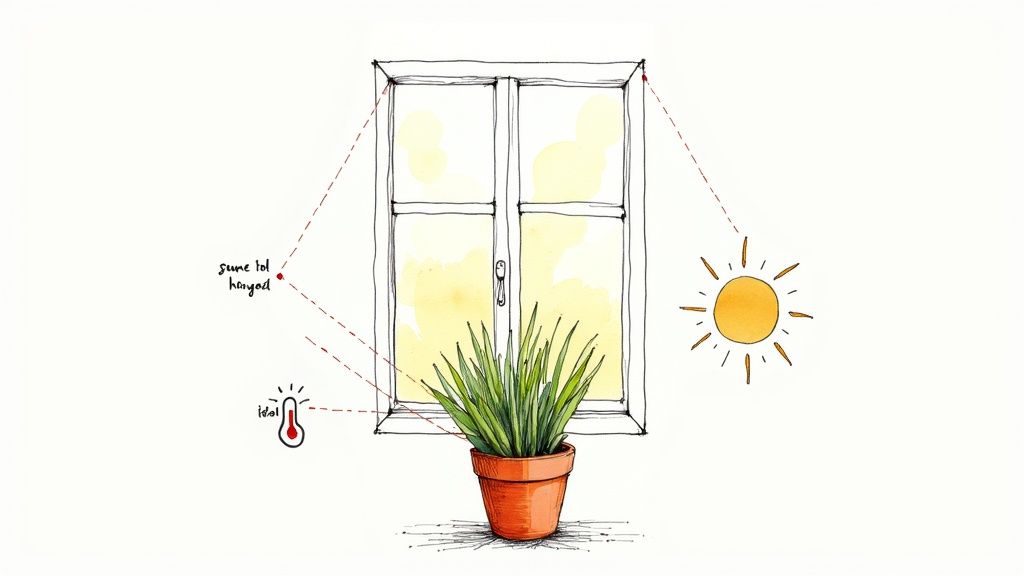
Successfully growing a hoya plant in NZ is all about learning to work with our unique climate, not against it. A lot of the generic advice you find online comes from the Northern Hemisphere, where their summer is our winter. Following it blindly can lead to some very unhappy plants.
This guide is about translating those vague instructions into practical, season-specific actions for Kiwi homes. It’s less about a strict set of rules and more about learning to observe your plant and respond to its needs. Once you get the hang of a few key areas—light, water, soil, and humidity—you’ll have a thriving Hoya all year round.
Decoding “Bright, Indirect Light”
It’s the most common phrase in Hoya care, but what does "bright, indirect light" actually look like in a New Zealand home?
Think of it this way: direct, harsh sun—like the kind blasting through a north-facing window at midday in summer—will easily scorch those beautiful waxy leaves, leaving behind permanent pale or brown patches. On the flip side, not enough light will give you a leggy, stretched-out plant that flat-out refuses to flower.
The sweet spot is that gentle, dappled light you’d find under a forest canopy. That’s the vibe Hoyas absolutely love.
To get it right, try these spots in your home:
- Near an east-facing window: Perfect for gentle morning sun that won’t cause any damage.
- A few feet back from a west-facing window: This lets your plant enjoy the afternoon brightness without getting hit by the harshest rays.
- In a north-facing room with a sheer curtain: A simple sheer curtain is brilliant for diffusing that intense sun into a soft, filtered glow.
Finding Your Kiwi Watering Rhythm
If there’s one mistake Kiwi Hoya growers make, it’s overwatering, especially during our cooler, damp months. Hoyas store water in their fleshy leaves, making them far more tolerant of being a bit dry than sitting in soggy soil. Getting into a seasonal watering rhythm is the key.
Winter (June - August): Growth slows right down. The days are short and cool, so the soil takes ages to dry. You might only need to water every 3-4 weeks. Always, always check the soil first. If it’s still damp an inch or two down, just wait.
Spring/Summer (September - February): As things warm up, your Hoya kicks into its active growing season. It'll need a drink more often, probably every 1-2 weeks. The rule is the same, though: let the top few centimetres of soil dry out completely before giving it a proper soak.
When in doubt, don't water. It’s a fantastic rule of thumb for any season. Trust me, it’s always easier to save an underwatered Hoya than it is to rescue one from root rot.
Creating the Perfect Chunky Soil Mix
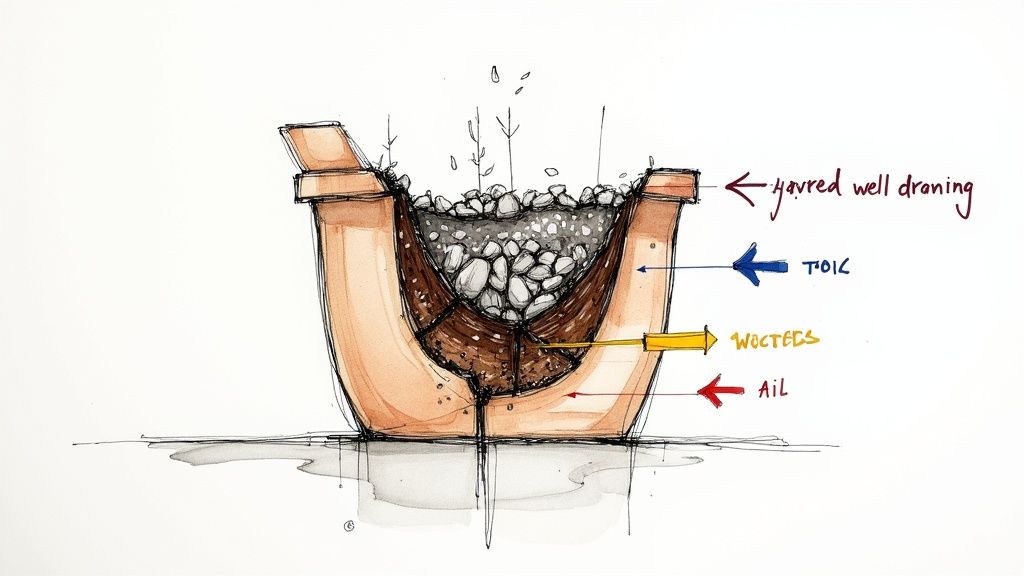
Out in nature, many Hoyas are epiphytes, which means they grow on other trees instead of in dense soil. This tells us they need a potting medium that’s airy, chunky, and drains exceptionally well so their roots can breathe. Standard potting mix straight from the bag is usually too heavy and holds way too much moisture.
Thankfully, whipping up your own perfect Hoya mix is easy. Just grab these from any local garden centre:
- One part high-quality potting mix
- One part orchid bark
- One part perlite or pumice
Mix them together, and you've got a light, chunky blend that stops waterlogging and mimics the airy conditions your Hoya is dreaming of.
Boosting Humidity for a Happy Hoya
Hoyas come from humid, tropical places, so they really appreciate a bit of moisture in the air. Our New Zealand homes can get incredibly dry, especially in winter when we’ve got heat pumps and fireplaces cranked up. Low humidity often leads to crispy leaf edges and can make your plant a target for pests.
Luckily, boosting the humidity is simple. You can group your plants together to create a little microclimate, pop a humidifier nearby, or go with the classic pebble tray method. Just fill a shallow tray with pebbles and water, then sit the pot on top. Make sure the bottom of the pot isn't actually touching the water—as it evaporates, it will raise the humidity right around your plant.
How to Encourage Your Hoya to Flower
There's nothing quite like the moment your Hoya produces its first cluster of stunning, star-shaped flowers. It’s the ultimate reward, a sign that your plant isn't just surviving but truly thriving in your care.
That said, Hoyas bloom on their own schedule, teaching a gentle lesson in patience. While you can't force it, you can definitely create the perfect conditions to coax those beautiful flowers into making an appearance. The journey to flowering a hoya plant in NZ is less about grand gestures and more about consistent, thoughtful care that signals to your plant it's safe and well-established enough to put energy into reproducing.
Time Your Feeding with the Seasons
Just like us, Hoyas have periods of active growth and periods of rest, and their nutritional needs change with our Kiwi seasons. Nailing the right nutrients at the right time is a game-changer for encouraging blooms.
Think of it as a seasonal menu for your plant.
- Spring & Summer (September - February): This is go-time. During their active growing season, feed your Hoya every 2-4 weeks with a balanced liquid fertiliser, diluted to half-strength. This provides the fuel needed for new leaves, stems, and eventually, those coveted flower spurs (peduncles).
- Autumn & Winter (March - August): As the days get shorter and cooler, your Hoya’s growth slows right down. Stop feeding completely. This allows the plant a much-needed rest, a vital part of its natural cycle that helps it gear up for the next flowering season.
Unlocking the Secrets to Hoya Blooms
Beyond a smart feeding schedule, a few other simple tricks can dramatically increase your chances of seeing those gorgeous flowers. These tips work together to create an environment where your Hoya feels secure and mature enough to bloom.
Let It Get a Little Crowded
Hoyas have a surprising quirk—they actually enjoy being slightly root-bound. When their roots are snug in the pot, it sends a signal to the plant that it's time to focus on flowering rather than pumping out more roots. Resist the urge to repot your Hoya too often; every 2-3 years is usually plenty.
One of the most important rules for Hoya flowers is to never, ever remove the old flower stalks, known as peduncles. These are the short, woody spurs where new flower clusters will form year after year. Cutting them off means you’re removing future blooms.
Consistency is Your Best Friend
Hoyas are creatures of habit. They thrive on consistency, especially when it comes to light. Find a spot with plenty of bright, indirect light and try to leave your plant there. Moving it around can cause stress, which makes it less likely to flower. A happy, settled hoya plant in NZ is a blooming Hoya.
Finding and Propagating Hoyas in New Zealand
Once you've fallen for Hoyas, it’s pretty much inevitable that you'll want more. The good news is that finding a new hoya plant in NZ is a bit of an exciting treasure hunt, and multiplying the ones you already have is a surprisingly easy and rewarding process.
From specialist nurseries to online communities, New Zealand offers plenty of places to find your next leafy friend. You can connect with other Kiwi enthusiasts and track down varieties you just won't find in the big chain stores.
Where to Find Your Next Hoya
The Hoya community in New Zealand is vibrant and really welcoming. Whether you’re someone who likes to see a plant in person before buying or you enjoy the thrill of an online auction, there are some great options out there.
- Specialist Nurseries and Garden Centres: Many independent nurseries now stock a decent selection of Hoyas, especially the popular ones like Hoya carnosa. It's always worth checking in with your local garden centre first.
- Online Marketplaces: Websites like Trade Me are absolute hotspots for Hoya collectors. You can find everything from common cuttings to rare, well-established plants from sellers all over the country.
- Social Media Groups: Facebook is home to heaps of New Zealand-based plant groups where members buy, sell, and swap Hoyas. These communities are a fantastic source of knowledge and a great way to find those rarer gems.
A quick note on buying online: always try to purchase from reputable, domestic sellers. New Zealand has very strict biosecurity measures in place to protect our country's unique ecosystem. The Ministry for Primary Industries carefully controls the importation of many Hoya species to prevent pests from getting in. You can learn more about these important biosecurity controls for plants and see why supporting local growers is always the safest bet.
Propagating Hoya Cuttings A Simple Guide
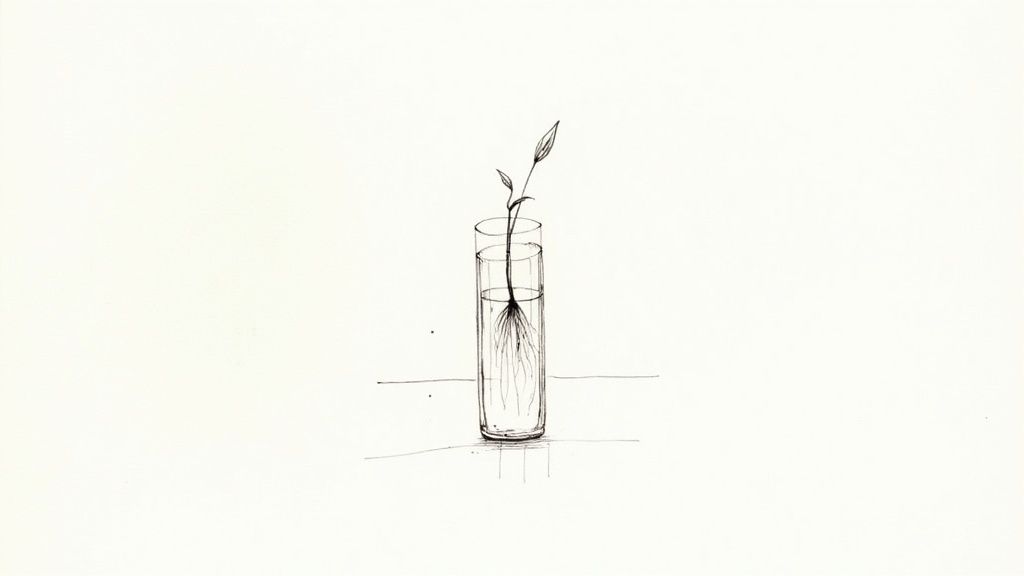
Propagating is a brilliant—and free—way to create more plants, either to expand your own jungle or to share with friends. Hoyas are incredibly easy to propagate from stem cuttings, and you can root them in either water or soil.
Step 1 Select Your Cutting
Using clean, sharp scissors or snips, take a cutting from a healthy, mature vine. You want a piece that has at least two nodes (those are the small bumps on the stem where leaves and roots grow out from) and 2-4 leaves.
Step 2 Prepare the Cutting
Carefully snip off the leaves from the bottom node. This is where the new roots are going to pop out, and leaving the leaves on can cause them to rot when they're underwater or in soil.
Step 3 Choose Your Method
- Water Propagation: Pop the cutting into a jar of clean, room-temperature water. Make sure the bottom node is fully submerged but the remaining leaves are sitting above the waterline. Change the water every few days to keep it fresh and place it in a spot with bright, indirect light.
- Soil Propagation: You can dip the bottom node in rooting hormone if you have some (it's optional, but it definitely helps), and then plant it directly into a small pot filled with your chunky Hoya mix. Water it lightly and find it a warm, bright spot.
Roots will typically start to form within 4-8 weeks. If you've gone the water route, you can pot your cutting into soil once the roots are a few centimetres long. Just like with other treasured houseplants, patience is the key. And if you're looking for more indoor plant inspiration, our guide to caring for an indoor olive tree might be right up your alley.
Solving Common Hoya Problems for NZ Growers
Even the most bulletproof plants can have a bad day, but don't panic—most Hoya issues are surprisingly easy to sort out. For a hoya plant in NZ, problems often pop up because of our unique seasonal swings. Those cool, damp winters, in particular, can catch even seasoned growers off guard. The trick is learning to read the signs your plant is giving you.
Think of it like being a plant detective. Yellowing leaves are by far the most common cry for help, and nine times out of ten, they're pointing straight at overwatering. When the soil stays soggy for too long, especially between June and August when growth has slowed right down, the roots just can't breathe.
Diagnosing Leaf Issues
Before you do anything drastic, get up close and personal with the leaves. Are they yellow, but also a bit soft and floppy? That’s the classic sign of a plant that's had too much to drink. The fix is simple: let the soil dry out completely before you even think about reaching for the watering can again.
On the other hand, if the leaves are yellowing but also feel dry and crispy to the touch, your Hoya might be getting a bit sunburnt or is desperately thirsty. Check where it's sitting and poke a finger into the soil to see how dry it is. For some more general advice on troubleshooting houseplants, our detailed guide on Fiddle Leaf Fig care has some great tips that apply to many different plants.
The golden rule for Hoyas in New Zealand is simple: when in doubt, let it dry out. It’s always easier to bring a thirsty plant back from the brink than it is to rescue one with root rot.
Tackling Common Pests
Hoyas are pretty good at shrugging off pests, but every now and then, you might spot some unwanted guests setting up camp, especially on indoor plants.
- Mealybugs: These fuzzy little white insects love to tuck themselves away in leaf joints and crevices. You can see them off with a cotton bud dipped in a bit of rubbing alcohol or treat the whole plant with a neem oil spray from your local garden centre.
- Aphids: These tiny pests usually go for the fresh, tender new growth. A quick blast with a gentle spray of water will often send them packing, or you can use a bit of insecticidal soap for more stubborn clusters.
Getting into the habit of regularly checking your Hoya’s leaves—both the tops and the undersides—is the best defence. A quick inspection every week or so will help you catch any potential issues before they become big problems. By understanding these common hiccups and their simple fixes, you'll keep your Hoya happy and healthy through every New Zealand season, building your confidence one leaf at a time.
A Few Common Hoya Questions
We've gone through a lot, but you might still have a couple of lingering questions about looking after your Hoya here in NZ. Let's tackle some of the most common queries we hear from fellow Kiwi Hoya lovers.
Are Hoya Plants Toxic to Pets in New Zealand?
Good news for all the pet parents out there! Hoya plants are widely considered non-toxic to cats and dogs, which is a big reason they're such a popular choice for homes with furry friends. Of course, it’s always a good idea to discourage your pets from having a nibble on any of your houseplants.
How Often Should I Repot My Hoya in NZ?
Hoyas are a bit different from other plants – they genuinely enjoy being a little snug and root-bound in their pots, so they don't need repotting very often. For New Zealand conditions, a good rule of thumb is to repot every 2-3 years. You'll know it's time when you start seeing roots making a great escape out of the drainage holes. The best time to tackle this job is in spring, just as the plant is kicking into its main growing season.
Hoyas really do thrive on a bit of neglect and feel most secure in a tight-fitting pot. Bumping them up into a container that’s way too big can actually shock the plant and lead to soggy, waterlogged soil. When you do repot, only go up one pot size.
Can I Grow My Hoya Plant Outside in New Zealand?
For most of New Zealand, Hoyas are definitely indoor plants. They can't handle frost at all. If you live in the warmest, completely frost-free parts of the far north, a tough species like Hoya carnosa might just make it outside. But it would need a very sheltered, warm spot with dappled, filtered light. Honestly, it's a bit of a risky move.
Ready to dive in and start or expand your own Hoya collection? Explore the incredible range of houseplants from trusted local growers at Jungle Story. Find your perfect plant and we'll deliver it right to your door. Visit us at https://junglestory.co.nz today.