
If you've ever found yourself scratching your head over what a 'money plant' actually is, you're not alone. It’s a common puzzle for Kiwi plant lovers. Here in New Zealand, the name isn’t tied to one single plant. Instead, it’s a nickname for a few different houseplants, all rumoured to bring a bit of luck, prosperity, and good vibes into your home.
Figuring out which one you have is the crucial first step to helping it thrive.
Solving The Money Plant Mystery In New Zealand
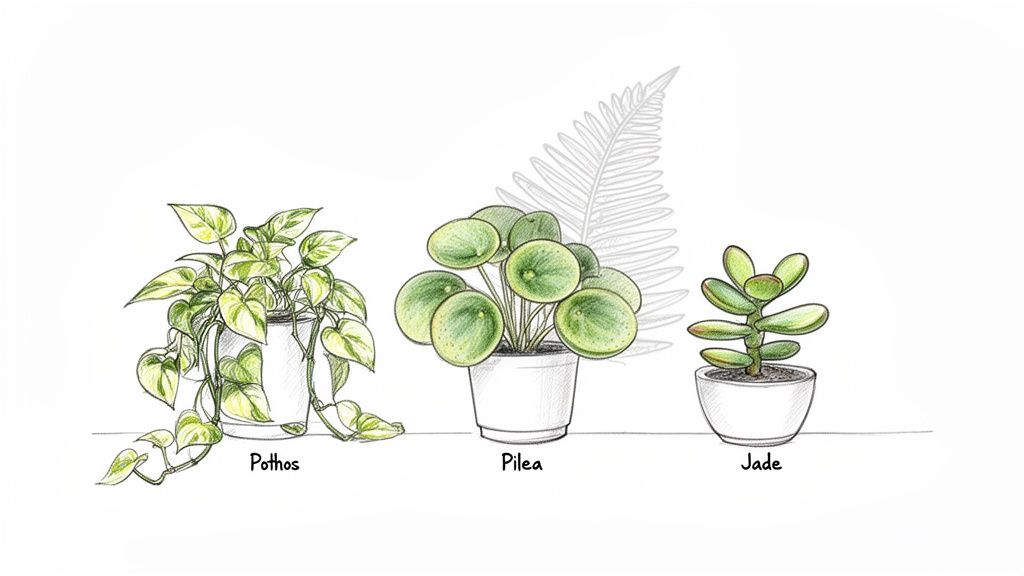
The confusion comes from old folklore and feng shui, where plants with coin-like leaves or a tough, can-do attitude were seen as symbols of wealth. Because of this, the 'money plant' title became a catch-all term.
The trouble is, the care that makes one of these plants flourish could spell disaster for another. That's why getting the ID right is so important.
The Main Contenders For The Title
Pop into any NZ garden centre or scroll through plant groups online, and you’ll see a few usual suspects wearing the 'money plant' crown. Let’s get to know the main players.
- Epipremnum aureum: You probably know this one as Pothos or Devil's Ivy. With its trailing vines and classic heart-shaped leaves, it's a super hardy favourite for beginners.
- Pilea peperomioides: This is the Chinese Money Plant, or Pancake Plant. Its perfectly round, flat leaves are a dead giveaway. It’s also famous for popping out little 'pups' or babies around its base.
- Crassula ovata: More commonly known as the Jade Plant or Money Tree. This one’s a succulent with thick, glossy, coin-shaped leaves growing on a chunky, tree-like stem.
While these are the big three, a few others sometimes get thrown into the mix. The main thing to remember is that "money plant" is more of an idea than a specific botanical name.
Getting the ID right unlocks the secret to proper care. Think of it like this: each plant has its own personality. One might love its soil to dry out completely, while another gets thirsty more often.
Quick Guide To Identifying Your NZ Money Plant
To make things even easier, here’s a quick-glance table to help you pinpoint which lucky plant you have sitting on your windowsill.
| Common Name | Scientific Name | Leaf Shape And Texture | Growth Habit |
|---|---|---|---|
| Pothos / Devil's Ivy | Epipremnum aureum | Heart-shaped, often variegated. Can be waxy or smooth. | A classic vining or trailing plant. Will happily climb or hang. |
| Chinese Money Plant / Pancake Plant | Pilea peperomioides | Perfectly round, flat leaves on long, thin stems. Smooth texture. | Upright growth, sprouting new "pups" from the base. |
| Jade Plant / Money Tree | Crassula ovata | Thick, glossy, and fleshy oval or coin-shaped leaves. | A sturdy, branching succulent that grows like a miniature tree. |
Once you've matched your plant to one of these, you're well on your way to becoming an expert carer.
Why Knowing Your Plant Matters
Knowing you have a Pothos versus a Pilea changes everything. It tells you how often to water, where to put it for the best light, and what kind of soil it needs. This is especially true here in New Zealand, where our homes change with the seasons. The long, bright days of a Kiwi summer (December to February) demand a different care routine than the cooler, darker winter months (June to August).
This guide will walk you through everything you need to know about these amazing plants. We’ll cover identification, care, and even how to make more of them through propagation, with tips tailored for our unique NZ climate. Let’s get started by getting to know each of these green treasures a little better.
Comparing The Two Most Popular Money Plants: Pothos And Pilea
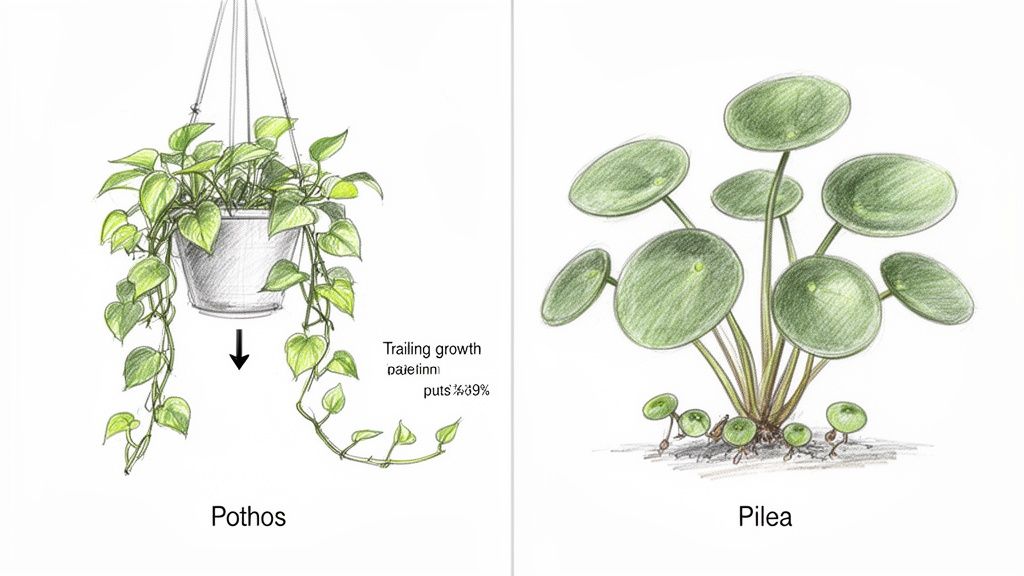
Alright, so now you can tell your Pothos from your Pilea. Let's get into their unique personalities. While they both get called a 'money plant', they couldn't be more different in how they grow, where they're from, and the kind of vibe they bring to your space.
You could think of it like comparing two flatmates. One is a cruisey, low-maintenance traveller who's happy pretty much anywhere, while the other is a stylish homebody who loves to share its space (and babies!) with friends. Nailing these differences is the secret to giving them both the best care.
The Hardy Explorer: Pothos
Epipremnum aureum, or Pothos, is the undisputed champ of easy-care indoor plants. Its sheer resilience has earned it the nickname "Devil's Ivy"—it’s famously hard to kill, staying green even when you forget about it in a dim corner. This toughness is baked in from its origins in the tropical forests of French Polynesia, where it learned to thrive by climbing trees and spreading across the forest floor.
This history really defines how it grows. Pothos is a born adventurer, a vining plant that just wants to explore. Its long, trailing stems will happily cascade from a high shelf, climb up a moss pole, or creep along a mantelpiece, bringing a lush, wild feel indoors.
Here in New Zealand, you'll find a fantastic range of Pothos varieties, each with its own distinct look.
- Golden Pothos: This is the classic, with those familiar heart-shaped green leaves splashed with golden-yellow.
- Marble Queen Pothos: Just stunning. Its creamy white and green marbled leaves need a bit more light to keep their colouring vibrant.
- Neon Pothos: An almost fluorescent lime-green stunner that adds a brilliant pop of colour to any room.
- Jessenia Pothos: A bit like the Marble Queen but with a softer, more chartreuse-style variegation.
Because Pothos is so adaptable, it’s a perfect choice for pretty much any home in New Zealand, from a bright Auckland apartment to a cosier spot down in Dunedin. Its forgiving nature makes it a beginner's absolute best friend. For a deeper dive, our comprehensive guide to looking after Pothos in NZ covers everything you need to know.
The Generous Friend: Pilea
On the other side of things, we have Pilea peperomioides, the Chinese Money Plant. This plant brings a completely different energy. With its perfectly round, pancake-like leaves sitting on slender stems, the Pilea has a playful, almost quirky look that adds a real touch of modern style to your space.
Hailing from the Yunnan province of China, Pilea’s most charming trait is its generosity. It’s known as the 'pass-it-on plant' for good reason—it’s constantly pushing out little offsets, or 'pups', from its base. These are perfect for propagating and sharing with friends and family, spreading the good fortune around.
Unlike the trailing Pothos, Pilea grows upright from a central stem. Its unique leaf shape and growth habit make it a striking focal point on a desk or side table, where its quirky form can be fully appreciated.
While not as varied as Pothos, you can still find different forms. The classic is that vibrant green, but you might also come across varieties like the 'Mojito', which features cool, speckled variegation. Pilea's sociable nature and unique look have made it a modern icon in the houseplant world. It's a plant that loves to give back, making it a truly rewarding addition to any Kiwi home.
Mastering Plant Care For The New Zealand Climate
Right, let’s get our hands dirty. Knowing your plant's backstory is one thing, but giving it the right care is what will really make it flourish. New Zealand's distinct seasons mean your plant’s needs will shift throughout the year, from the long, bright days of summer (December to February) to the cooler, dimmer months of winter (June to August).
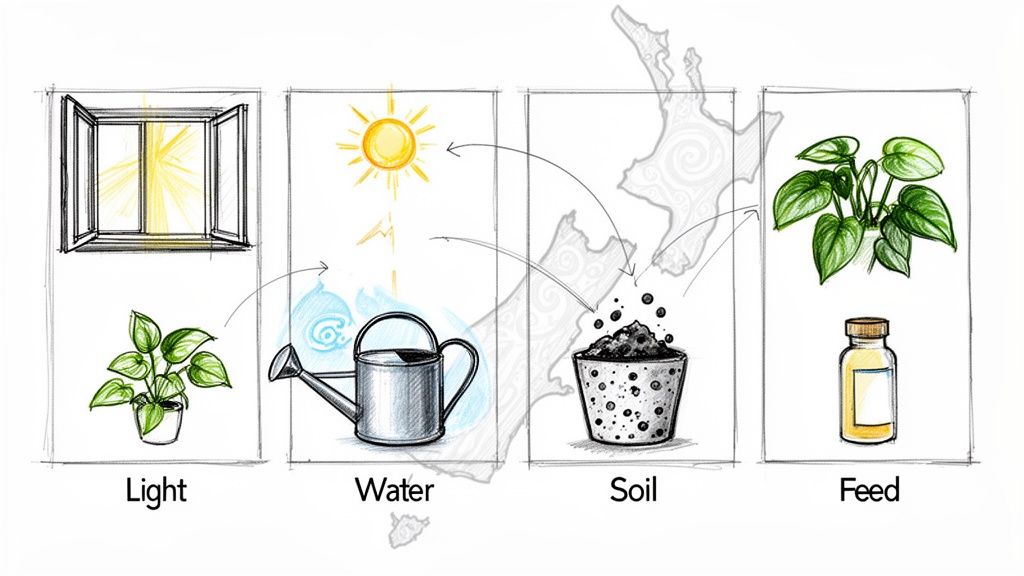
We'll break down the four pillars of plant health—Light, Water, Soil, and Feeding—with specific advice for both Pothos and Pilea. Get these fundamentals right, and you'll have a happy, thriving money plant in your NZ home.
Finding The Perfect Spot For Light
Light is literally the fuel your plant runs on. Nailing the lighting is probably the most important part of plant care, but that common instruction, "bright, indirect light," can be a bit vague.
Just think of it as the kind of light you’d find in a well-lit room a metre or two back from a window. It should be bright enough to comfortably read a book, but without harsh sunbeams hitting the leaves directly.
- Pothos (The Hardy Explorer): This plant is a champion of adaptability. While it loves bright, indirect light to keep its colours popping (especially for variegated types like the Marble Queen), it can also handle lower light. This makes it a fantastic choice for those less-than-perfect spots, like a hallway or a room with a south-facing window.
- Pilea (The Generous Friend): Your Pilea is a little more particular. It needs consistent, bright, indirect light to maintain those classic, pancake-flat leaves. Give it too little light and it will start to stretch and get ‘leggy’ as it reaches for the window. Too much direct sun, on the other hand, will scorch its delicate leaves, leaving behind nasty brown marks.
Here’s a pro tip for Pilea owners: give the pot a quarter-turn every week. This little ritual ensures all sides get even light, which stops it from leaning and helps it keep that beautiful, symmetrical shape we all love.
During a classic New Zealand winter, especially down in Otago and Southland, the natural light levels take a serious dip. You might need to shift your plants closer to a north-facing window just to soak up what little light is available. Don't be surprised if growth slows right down—that's just your plant's natural response to the shorter days.
Mastering Your Watering Routine
Overwatering is the number one killer of houseplants, hands down. Every plant has a different level of thirst, and learning to ‘read’ what yours needs is a crucial skill. The type of pot it's in, the warmth of your home, and the time of year all play a part in how often you'll need to reach for the watering can.
The Pothos 'Dry Out' Method Pothos is a bit of a drought-tolerant soul and prefers its soil to dry out almost completely between drinks.
- Check the Soil: Stick your finger about 5 cm deep into the potting mix. If it feels dry down there, it’s go time.
- Water Thoroughly: When it's time, give it a proper drench. Pour water evenly over the soil until you see it running freely from the drainage holes at the bottom.
- Drain Completely: This is key! Let the pot drain fully before you put it back in its decorative pot. Pothos absolutely hates having "wet feet," which is a fast track to root rot.
The Pilea 'Consistent Moisture' Method Your Pilea, on the other hand, likes its soil to stay more consistently moist—but never, ever soggy.
- Check the Top Layer: Just wait for the top 2-3 cm of soil to feel dry to the touch.
- Water Gently: Water the soil until it just starts to drain from the bottom.
- Avoid Extremes: The goal here is balance. Don't let your Pilea dry out completely, but also make sure it's never left sitting in a puddle of water.
Crafting The Ideal Soil Mix
The right soil is more than just dirt; it's a home for your plant’s roots, giving them the perfect mix of water, air, and nutrients. That standard potting mix straight from the bag at the garden centre is often too dense and heavy. It can hold onto too much water, essentially suffocating the roots.
Mixing your own chunky, free-draining blend is surprisingly easy and makes a world of difference.
You can whip up a fantastic all-purpose mix for your money plant using ingredients you can find locally:
- Premium Potting Mix: This forms a good, nutrient-rich base.
- Pumice: Creates tiny air pockets, letting the roots breathe.
- Orchid Bark: Adds that all-important chunky texture and stops the mix from getting compacted.
A great starting recipe is roughly 60% potting mix, 20% pumice, and 20% orchid bark. This custom blend gives both Pothos and Pilea the excellent drainage they crave.
When And How To Fertilise
Think of fertiliser as a vitamin boost for your plants. It gives them the essential nutrients they need to push out lush new leaves and stay in top health. Here in New Zealand, the main growing season runs through spring and summer, roughly from September through to February.
During this active period, feed your Pothos and Pilea every 4-6 weeks. Use a balanced liquid indoor plant food, but dilute it to half the strength recommended on the bottle. Always water your plant before you fertilise to avoid burning the roots.
Once autumn and winter roll around (March to August), your plants will naturally go into a dormant phase. Their growth slows, and they won't need any feeding at all. To see how great plant care can fit into a bigger picture of a healthy home, you can explore some eco-friendly interior design principles that complement your green-fingered efforts.
A Simple Guide To Propagating Your Plants
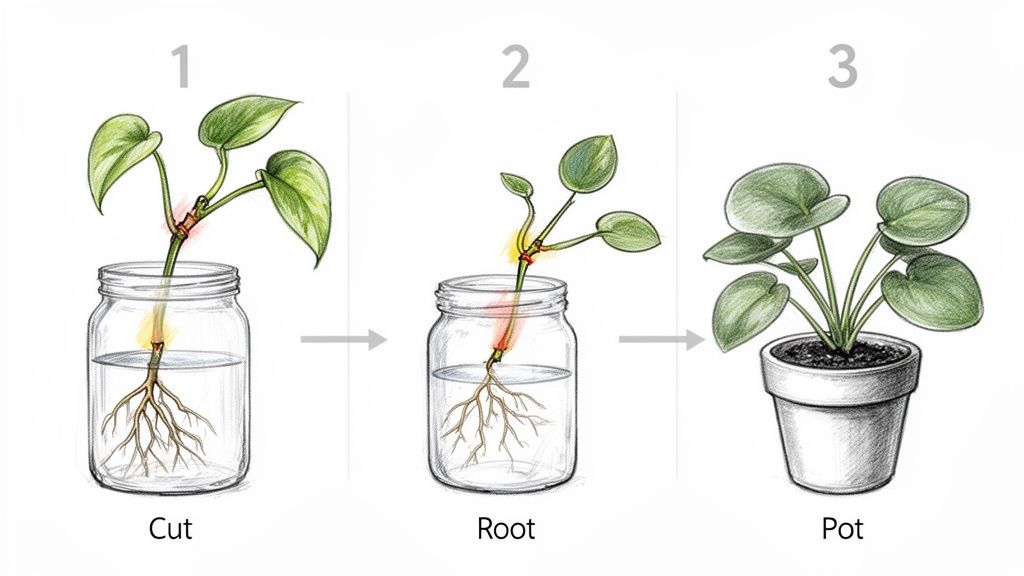
Ready to multiply your greenery and share the good fortune? Propagation is just a fancy word for creating new plants from an existing one, and it's much simpler than it sounds. It’s easily one of the most rewarding parts of being a plant parent, letting you grow your own collection for free or gift little plant babies to your friends.
For our two favourite money plants here in NZ, the Pothos and Pilea, the methods are quite different but equally easy to master. We’ll walk you through the exact steps for each, so you can start making more plants with confidence.
Propagating Pothos: The Water Method
Pothos is famous for being one of the easiest plants to propagate, which makes it perfect if you're just starting out. The most reliable way to do it is by rooting stem cuttings in water. You can technically try this any time of year, but you'll get the fastest results during the warmer growing season, from spring through to late summer in New Zealand.
Step-by-Step Guide to Pothos Cuttings:
- Find Your Node: This is the most crucial part. A node is that little raised bump on the stem where a leaf and an aerial root grow from. New roots will sprout from this exact spot, so every single cutting must have at least one.
- Make The Cut: Grab some clean, sharp scissors and snip the vine about 1-2 cm below a node. Try to get a cutting with at least two leaves and two nodes for the best chance of success.
- Prep The Cutting: Gently pinch off the leaf from the lowest node—the one that will be sitting in water. This stops the leaf from rotting, which can spoil the water.
- Pop it in Water: Place your cutting into a jar or vase of clean, room-temperature water. Make sure the node is completely submerged, but keep the remaining leaves well above the waterline.
- Wait and Watch: Find a spot with bright, indirect light for your jar. Remember to change the water weekly to keep it fresh and full of oxygen. Before you know it, you should see new white roots emerging from the node in just a few weeks.
Once the new roots are about 3-5 cm long, your little plant is ready for its own pot! Moving from water to soil is a big change, so be sure to keep the soil lightly moist for the first couple of weeks to help the new roots settle in.
Propagating Pilea: The Pup Method
Pilea peperomioides, our beloved Chinese Money Plant, multiplies in a completely different but equally charming way. It naturally sends out small baby plants, or 'pups', that pop up from its root system or along the main stem. Separating these pups is a super easy and effective way to create new plants.
How to Separate Pilea Pups:
- Wait for the Right Size: Let the pups grow until they are at least 5-7 cm tall and have a few of their own leaves. This gives them the best chance of surviving on their own once separated.
- Locate and Separate: With a clean, sharp knife, gently trace the pup’s stem about 2-3 cm under the soil and slice it away from the mother plant's root system.
- Pot Up Your Pup: You've got options here. You can plant the new pup directly into its own small pot with a good-draining soil mix. Or, you can place it in water for a couple of weeks to let its own roots develop a bit more before potting.
- Aftercare: Give the newly potted pup a drink of water and place it in bright, indirect light. It might look a bit droopy for a few days as it recovers from the shock, but don't worry—it will perk up soon enough.
The Pilea method is a world away from propagating vining plants. If you find these different techniques interesting, you might also like learning how to propagate snake plants, as they have their own unique way of making babies too.
Troubleshooting Common Plant Problems In NZ
Even the most bulletproof plants can have an off day. If your money plant is looking a little down in the dumps, don't hit the panic button. The trick is learning to read the signs it's giving you and acting on them quickly. This is your first-aid guide for figuring out what’s wrong and fixing the most common issues we see with Pothos and Pilea here in New Zealand.
Think of it as becoming fluent in your plant’s language. A yellow leaf isn't just a yellow leaf—it’s a cry for help. Once you understand these signals, you'll feel way more confident and ready to bring your green friends back to their happy, thriving selves.
Decoding Leaf Signals
Your plant's leaves are like its personal billboard, telling you exactly how it’s feeling. Pay close attention to any changes in colour or texture, and you’ll be able to nip problems in the bud before they get serious.
-
Yellowing Leaves: This is the classic sign of overwatering. When the soil is perpetually soggy, the roots can't get any oxygen, which is a fast track to root rot. Before you even think about reaching for the watering can, check the soil. For a Pothos, let it get pretty dry between waterings. For a Pilea, just the top few centimetres need to be dry.
-
Brown, Crispy Spots or Edges: This usually points to sunburn. Direct, harsh sunlight, especially during our intense Kiwi summers, can easily scorch the foliage. The fix is simple: move your plant somewhere it can get plenty of bright, but indirect, light.
-
Leggy Growth: Is your Pothos or Pilea sending out long, gangly stems with leaves few and far between? It's practically screaming for more light. This is a super common problem during our darker winters. Shift it closer to a bright spot, like a north-facing window, to encourage bushier, more compact growth.
Tackling Common Indoor Pests
Unfortunately, our warm, comfortable homes are just as inviting for a few unwelcome little critters. Spotting them early is half the battle.
Fungus Gnats These tiny black flies are more annoying than anything else, but their larvae, which live in the soil, can nibble on your plant's roots. They absolutely love damp soil, so your best defence is your watering routine. Let the top layer of soil dry out completely between waterings to make it a much less attractive place for them to set up camp.
Mealybugs Look for small, white, fluffy-looking insects tucked into the nooks and crannies of your plant stems and leaves. They feed by sucking the sap out of your plant. For a small infestation, dip a cotton bud in rubbing alcohol and touch it directly to the bugs. If they've really moved in, a spray with a neem oil solution is a great organic way to show them the door.
The explosion in houseplant popularity has really put a spotlight on biosecurity and the importance of healthy growing practices. The ornamental plant sector is a huge part of New Zealand's horticulture industry, which is a massive contributor to our national economy.
In fact, the category that includes popular houseplants like our money plants makes up a big slice of New Zealand's horticultural exports. Ornamental cultivars accounted for a whopping 61% of the nearly 5,450 Plant Variety Rights (PVR) applications submitted by December 2022. It really highlights their value, both economically and in our homes. This commercial-level focus on plant health is a great reminder of the care we should take with our own plants. You can read more about New Zealand's impressive horticultural export growth on Statista.com.
Where To Find Healthy Money Plants In New Zealand
So, you're ready to add a money plant to your collection or maybe gift one to a friend? Fantastic choice! Knowing where to look is the first step to bringing home a plant that’s healthy and ready to thrive.
While you can always pop down to your local garden centre, exploring a curated online marketplace like Jungle Story opens up a whole new world. It connects you with trusted Kiwi growers from all over the country, so you can have a huge variety of plants delivered right to your doorstep.
The big advantage here is choice. You'll find a much wider selection online, including some of the more unusual or harder-to-find Pothos and Pilea varieties that might not be on the shelves locally. Plus, there's something special about buying directly from a passionate grower who has cared for that specific plant since it was just a cutting.
Buying Your Money Plant Online
Shopping for a money plant in NZ online is easy, but a little bit of homework will ensure you get a great plant.
- Check the Photos: Have a good look at the pictures. You want to see vibrant, healthy-looking leaves. Steer clear of any plants that have yellowing leaves, brown spots, or any visible creepy crawlies. Good sellers will always show clear, recent photos from a few different angles.
- Read the Reviews: See what other plant parents are saying. Honest reviews from other Kiwis will tell you a lot about the seller's plant quality and how well they package their plants for shipping. Lots of happy customers is always a good sign.
- Understand the Policies: Quickly check the seller’s shipping and returns info. Reputable sellers put a lot of effort into careful packaging to make sure their plants arrive looking as good as they did when they left.
Settling Your New Plant In
Once your new green mate arrives, remember it’s just had a big journey in a dark box! Give it a bit of time to adjust to its new home. It’s always a good idea to keep it separate from your other plants for a week or two, just to make sure it hasn't brought any unwanted pests with it. Try to resist the urge to repot it straight away unless it’s absolutely bursting out of its current pot.
This careful approach mirrors the high standards of New Zealand's horticultural industry. It's a massive part of our economy, with specialised plant growing being a seriously impressive and expanding sector. You can get a sense of the scale of New Zealand's plant-based industries on Stats NZ. And if you're looking for more inspiration on what to get next, have a look at our guide to other great indoor houseplants.
Got Questions? We've Got Answers
Got a specific puzzle you're trying to solve with your money plant? You're not alone. We've rounded up some of the most common questions from plant parents around Aotearoa to give you clear, straightforward answers.
Is The Pothos Money Plant Toxic To Pets?
Yes, unfortunately, the Pothos (Epipremnum aureum) is toxic to both cats and dogs if they decide to have a nibble. The leaves and stems contain tiny crystals called insoluble calcium oxalates, which cause a pretty nasty reaction. Think immediate irritation, a burning sensation in the mouth, swelling, drooling, and even vomiting.
To keep your furry mates safe, it's super important to place your Pothos well out of their reach. Hanging baskets are a brilliant solution, as are high shelves. If you'd rather not risk it, the Pilea peperomioides is a fantastic, non-toxic alternative that gives a similar vibe and is completely safe for curious pets.
How Often Should I Repot My Money Plant In NZ?
For most money plants here in New Zealand, giving them a new home every 1-2 years is a solid routine. But your plant will give you the real clues. Have a peek at the drainage holes—if you see roots making a great escape, or if they're wound up in a tight coil at the bottom of the pot, it's definitely time for an upgrade.
The best time for the big move is during the growing season. In NZ, that’s spring (September to November). This gives your plant the whole summer to stretch out and get comfy in its new space. When you do repot, just go one size up—a new pot that's about 2-5 cm wider is perfect. This stops the plant from being overwhelmed by too much damp soil, which is a common cause of root rot.
Repotting is like a spa day for your plant. It gets more room for its roots to breathe and a fresh batch of nutrient-rich soil to fuel its growth for the season ahead.
Can I Grow My Money Plant Outside In New Zealand?
In most parts of the country, it's best to keep these tropical beauties indoors. Both Pothos and Pilea are not fans of the cold and simply can't handle a frost.
You might get away with a Pothos outdoors in a very sheltered, completely frost-free spot in the balmy Far North. But for the rest of us, it’s much safer to treat it as a houseplant. The Pilea peperomioides is even more sensitive to our changeable weather and should be kept inside all year round to stay happy and healthy.
Ready to start your indoor jungle or add another money plant to your collection? Explore a huge range of healthy, happy plants from trusted Kiwi sellers at Jungle Story. Find your perfect Pothos, Pilea, and more, all delivered safely to your door. Start browsing now at https://junglestory.co.nz.