
The Philodendron Pink Princess is an absolute showstopper, famous for its incredible splashes of hot pink variegation set against deep green, heart-shaped leaves. That unique colouring isn't a paint job—it's a natural genetic mutation, which means that no two plants will ever be the same.
Your Guide to Growing a Stunning Pink Princess
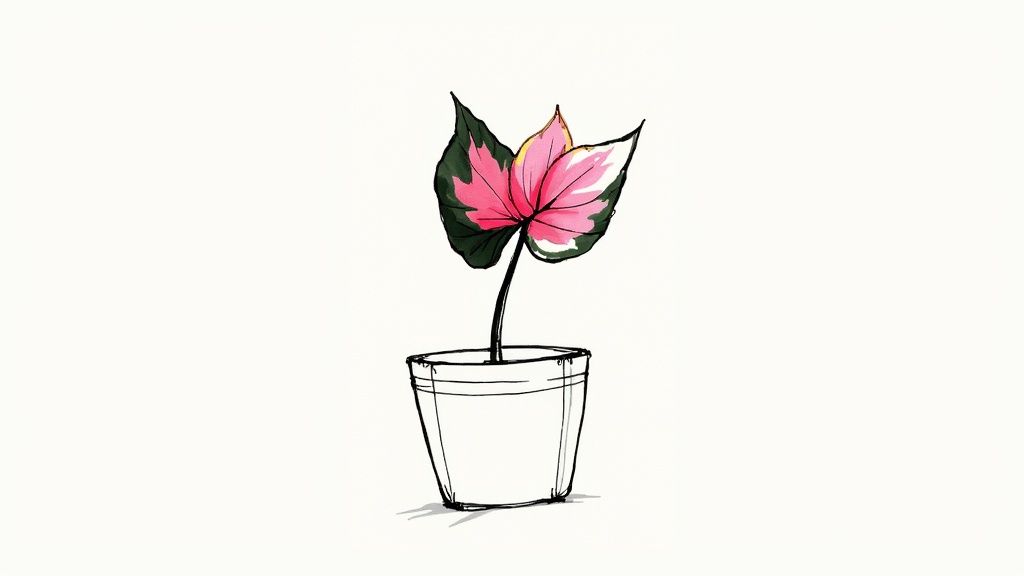
If you've been anywhere near the New Zealand houseplant scene lately, you’ve definitely come across the Philodendron Pink Princess. It's hard to miss. Those dramatic splashes of bubblegum pink on dark, almost black, leaves make it a standout in any collection and have cemented its place as a must-have for plant lovers all over Aotearoa.
What makes growing this plant so addictive is its sheer unpredictability. Every new leaf is a surprise, unfurling to reveal a completely unique pattern of pink. It’s like watching a living piece of art change right before your eyes, and that's a huge part of its appeal.
Why Is This Plant So Popular in New Zealand?
The Pink Princess is a cultivar of Philodendron erubescens, a plant originally from the rainforests of Colombia, but it has adapted beautifully to our Kiwi homes. Its popularity exploded thanks to social media and its "rare" status. That sought-after pink colour comes from a genetic quirk that makes it trickier to produce on a mass scale compared to your standard green houseplants.
But here's the good news: despite its fancy looks and sometimes hefty price tag, the Pink Princess is not a diva. It's surprisingly easy to look after. Its care needs are very similar to other common Philodendrons, making it a great choice whether you're just starting your plant journey or you're a seasoned pro.
Key Takeaway: Don't let its spectacular foliage intimidate you. The Philodendron Pink Princess is a manageable and incredibly rewarding plant to grow, and its care routine is achievable for most people without needing a green thumb.
This guide will cover everything you need to know to get your Pink Princess thriving—from finding the perfect spot in your home to getting its watering and feeding just right. For a broader look at this amazing plant family, check out our complete guide to Philodendrons in New Zealand.
Creating the Ideal Indoor Environment

If there's one secret to getting those stunning, hot pink splashes on your Philodendron Pink Princess, it's getting the environment right. You’re essentially trying to mimic its native rainforest home, right here in New Zealand. Nail these conditions, and you'll be rewarded with a healthy, vibrant plant that truly lives up to its name.
The term "bright, indirect light" gets tossed around a lot, but what does it really look like in a Kiwi home? Think of it this way: it’s a spot where you could comfortably read a book during the day without needing to switch on a light, but where the sun’s rays never actually touch the leaves. Our harsh sun, especially in the afternoon, will scorch the delicate pink and green foliage, leaving ugly brown spots.
Finding the Perfect Spot for Your Plant
So, where is this magic spot? Start by looking at your windows. A place a metre or two back from a north-facing window is often the jackpot, providing consistent, bright light throughout the day. An east-facing window is another great option, as it offers gentle morning sun that won't burn the leaves.
On the other hand, you'll want to steer clear of south-facing windows. They're usually too dim, which can cause your Pink Princess to lose its variegation and grow long, spindly stems—a classic sign it's stretching for more light. West-facing windows can also be a problem, as the intense afternoon sun can be too much for it to handle.
Managing Humidity and Temperature
Being a tropical native, your Pink Princess craves warmth and humidity. It’s happiest in temperatures between 18°C and 27°C. While it can handle slightly cooler temps, it's definitely not frost-tolerant, so keep it well away from draughty doors and windows, especially during our cold winters (June - August).
Humidity is often the biggest hurdle for us here in NZ, particularly when we've got heat pumps or dehumidifiers running that dry out the air. Your plant will thrive with humidity levels around 50% to 60%. Don’t worry, this is easier to achieve than it sounds:
- Group your plants together. Clustering plants creates a mini humid microclimate as they release moisture.
- Try a pebble tray. Just place the pot on a tray filled with pebbles and water. The evaporation will boost humidity right where it’s needed. Make sure the bottom of the pot isn't sitting in the water!
- Mist every now and then. A light spray a few times a week can give a temporary lift, but it’s not a long-term fix.
For tropicals like this, consistent humidity is just as important as the right light. If your home is on the dry side, it's worth learning how to control indoor humidity effectively to keep those leaves looking lush.
To help you get everything just right, here's a quick reference table with the key environmental factors your plant needs to thrive.
Philodendron Pink Princess Environmental Needs
| Factor | Ideal Condition | NZ-Specific Tip |
|---|---|---|
| Light | Bright, indirect light for 6-8 hours daily. | A spot near a north or east-facing window is perfect. Avoid direct sun. |
| Temperature | 18°C - 27°C. Avoid sudden drops. | Keep it away from draughty windows or doors, especially in winter. |
| Humidity | 50% - 60% or higher. | Group with other plants or use a pebble tray, particularly if you run a heat pump. |
| Airflow | Good air circulation to prevent pests. | Don't crowd it too tightly, but avoid placing it directly in a fan's path. |
Getting these basics sorted will set your Philodendron Pink Princess up for a long, healthy, and beautifully pink life.
The final piece of the environmental puzzle is what your plant is actually living in. A standard potting mix is a no-go; it's far too dense and holds moisture for too long, which is a fast track to root rot. Your Pink Princess needs a chunky, well-draining aroid mix that lets the roots breathe. You can find pre-made mixes or easily make your own by combining potting soil with orchid bark, perlite, and a touch of charcoal.
Mastering Your Watering and Feeding Routine
Getting your watering and feeding schedule just right is often the final piece of the puzzle for a thriving Philodendron Pink Princess. So many new owners get nervous about this part, but it’s simpler than you might think. The real secret is to ditch the rigid calendar and learn to respond to your plant’s actual needs.
The biggest mistake I see people make is overwatering. These philodendrons need their roots to breathe a little between drinks, and constantly soggy soil is a one-way ticket to root rot. To avoid this, get into the habit of the ‘soak and dry’ method. It’s exactly what it sounds like: give your plant a thorough drenching, but only when it’s truly ready for it.
The Right Way to Water
Before you even reach for the watering can, do a quick check. Stick your finger about 2-5 centimetres deep into the potting mix. If it feels dry down there, it’s go-time. If you feel any dampness at all, give it another day or two and check again. Simple as that.
When it is time for a drink, water it properly. Pour water evenly over the soil until it runs freely out of the drainage holes. This ensures the entire root ball gets hydrated, not just the top layer. The most important step? After it’s done draining, always tip out the excess water from the saucer. Never, ever let your Pink Princess sit in a puddle.
Pro Tip: Your watering routine will naturally change with the seasons. During New Zealand's warmer growing season, roughly September through to March, your plant is active and thirsty. You might find yourself watering every 7-10 days. But when the cooler, darker months of autumn and winter roll around, its growth slows right down. It'll need water far less often—maybe only every two or three weeks.
Fertilising for Vibrant Pink Growth
Feeding your plant gives it the fuel it needs to push out those incredible pink leaves. A good quality, balanced liquid fertiliser is your best bet here. You’ll want one designed for indoor plants, containing a healthy mix of nitrogen, phosphorus, and potassium (NPK), plus other essential micronutrients.
During the spring and summer growing season, a regular feed is key. For us here in New Zealand, that's from early spring (September) through to late summer (March). In these months, feeding your Pink Princess every 4-6 weeks is perfect.
Once autumn and winter arrive, you’ll want to pull back. Reduce feeding to once every 8-12 weeks to avoid fertiliser building up in the soil, which can burn the roots while the plant is resting.
When you do feed your plant, always dilute the fertiliser to half the strength recommended on the bottle. It's much safer to under-fertilise than to overdo it. If you're wondering which product to choose, have a look at our guide on selecting the best indoor plant fertilizer. And remember, only apply fertiliser to soil that's already damp—never to bone-dry soil, as this can scorch the roots.
How to Prune and Propagate for More Pink
Pruning your Pink Princess isn't just a haircut; it's your secret weapon for encouraging a fuller plant and, most importantly, more of that incredible pink variegation. It can feel a little nerve-wracking taking scissors to such a beautiful plant, but trust me, a well-placed snip can work wonders.
When you prune, you’re essentially redirecting the plant's energy. By trimming off leggy stems or sections that are putting out all-green leaves, you force it to sprout new growth from further down. This creates a much more compact and bushy shape, which is especially effective during the main growing season here in New Zealand, from spring through to summer.
The Art of the Perfect Cut
Timing is everything. You'll want to do your pruning in spring or early summer when the plant is raring to go. Always, always use a clean, sharp pair of scissors or secateurs—this prevents a messy cut and stops diseases from getting in.
The trick is to find a node. That's the little bump on the stem where a leaf and its aerial root emerge. You want to make your cut about a centimetre above a healthy, well-variegated leaf node. This is where new growth will pop out, and cutting above a colourful leaf gives you the best chance that the new shoots will also have that stunning pink colouring.
Pruning is also the best way to manage your plant's variegation. If you see it producing solid green leaves (reverting) or even all-pink leaves (which can't photosynthesise and will eventually die off), just trim that stem back to the last leaf that showed a good, healthy balance of pink and green.
Propagating Your Pink Princess
Here's the best part: every piece you snip off is a potential new plant! Propagation is surprisingly easy and a fantastic way to expand your collection or share with friends, especially when you consider how sought-after these plants are.
Industry analysts reckon over 60% of Pink Princesses sold are from tissue culture to guarantee variegation, but doing it at home is totally achievable. Limited supply and high demand are what keep its price up, making your home-propagated plants even more special. You can get more insight into its commercial value from local plant suppliers.
This image of a Philodendron erubescens shows exactly what you're looking for—those little swollen joints along the stem are the nodes, and they're the key to success.
To get your cuttings to root, you've got a few great options:
- Water Propagation: The classic for a reason. Just pop your cutting into a jar of water. Make sure the node is underwater but keep the leaves out of it. Swap the water every few days and find a spot with bright, indirect light. You should start seeing roots in a couple of weeks.
- Sphagnum Moss: This is my personal favourite method. Get some sphagnum moss nice and damp (not soaking), place it in a clear container, and gently nestle the cutting's node into the moss. It creates a perfect humid microclimate for root growth.
- Perlite: Works much like moss. Fill a container with damp perlite and stick the cutting in. It gives the new roots fantastic aeration while holding onto moisture.
The basic idea of taking a cutting with a node works for so many houseplants. If you're keen to try it with another plant, check out our guide on how to propagate snake plants for another easy-to-follow project.
Once your Pink Princess cutting has grown roots that are a few centimetres long, it’s ready for its own pot with a good, chunky aroid mix.
Troubleshooting Common Pink Princess Problems
Even the most dedicated plant parent will run into a hiccup now and then. Don't worry if your Philodendron Pink Princess starts looking a bit unhappy; most problems are pretty simple to diagnose and fix once you learn to read the signs. Think of it as your plant's way of telling you what it needs.
One of the most common sights that sends owners into a spin is a yellowing leaf. Nine times out of ten, this is your plant screaming "I'm drowning!" Before you do anything else, stick your finger into the soil. If it feels soggy or wet a few days after you last watered, you've found your culprit. Simply let the soil dry out completely before you even think about watering it again, and always make sure you empty any excess water from the cache pot or saucer.
Diagnosing Leaf and Colour Issues
What if the leaves have crispy, brown edges? That tells a completely different story. This is almost always a sign that the air is too dry. Our New Zealand homes can get surprisingly dry, especially in winter when we've got the heat pump cranking. An easy fix is to group your plant with some other leafy friends, pop its pot on a tray of wet pebbles, or run a small humidifier nearby.
Perhaps the biggest frustration is when your Pink Princess forgets it's supposed to be pink. If new leaves are emerging completely green, your plant is reverting. While this is a natural tendency, it's usually a direct result of not getting enough light. Your plant needs plenty of energy to push out that gorgeous variegation, so move it to a spot where it gets more bright, indirect sunlight.
A quick word of warning: all-pink leaves might look incredible, but they can't sustain the plant. They have no chlorophyll, which means they can't photosynthesise. So, while you should definitely enjoy their fleeting beauty, don't be surprised when they eventually wither and die back.
Tackling Common Pests in NZ
Your indoor oasis can sometimes attract a few unwanted guests. For Pink Princesses here in New Zealand, the two troublemakers you're most likely to meet are spider mites and fungus gnats. Spotting them early is your best bet for getting them under control quickly.
Fungus gnats are those tiny, annoying flies you see buzzing around the top of the soil. They absolutely love consistently moist conditions, so your first line of defence is simply letting the soil dry out more between waterings. If you've already got an infestation, those yellow sticky traps you can grab from any garden centre are brilliant for catching the adult flies.
Spider mites are a bit stealthier. You might first notice their fine, silky webs on the underside of leaves, or maybe just some tiny pale dots on the foliage. These pests thrive in dry air, so boosting humidity is a great preventative measure. To get rid of them, give the leaves a good wipe with a damp cloth, then spray the entire plant down with a neem oil solution or a good insecticidal soap.
A Quick Diagnostic Guide
When you're not sure what's wrong, a little process of elimination can help. I've put together this quick table to help you match the symptom to the likely cause and, most importantly, the solution.
Common Problems and Solutions
| Symptom | Likely Cause | Solution |
|---|---|---|
| Yellowing Leaves | Overwatering | Allow soil to dry out completely. Check soil moisture before watering. |
| Crispy Brown Edges | Low Humidity | Group with other plants, use a pebble tray, or run a humidifier. |
| Loss of Pink Colour | Not Enough Light | Move to a spot with brighter, indirect sunlight to encourage variegation. |
| Small Flying Insects | Fungus Gnats | Let soil dry out. Use yellow sticky traps to catch adult gnats. |
| Fine Webbing on Leaves | Spider Mites | Increase humidity. Wipe leaves and treat with neem oil or insecticidal soap. |
With these tips, you should be able to tackle most issues and get your Pink Princess back to its beautiful, thriving self in no time.
Got Questions? We've Got Answers
Even with the best care guide, you're bound to have a few questions about a plant as unique as the Philodendron Pink Princess. It happens to all of us! Here are some of the most common queries we get from fellow Kiwi plant enthusiasts, with practical answers to help you and your plant thrive.
How Do I Get More Pink on My Pink Princess?
This is the number one question everyone asks! The secret to vibrant pink splashes is almost always light. Your plant needs a generous amount of bright, indirect sunlight to have enough energy to produce those stunning pink cells. If your Pink Princess is looking more green than pink, a lack of light is the most likely culprit.
Another trick you can try is strategic pruning. Take a look at your plant and find a leaf with a nice, even balance of pink and green variegation. Snip the vine just above that leaf. This encourages new growth from that spot, and often, that new growth will carry on the beautiful variegation. Just remember, the pink gene is naturally unstable – a bit of a genetic lottery – so there are no guarantees.
A Little Dose of Reality: You can definitely influence the amount of pink, but every plant is different. Some are just genetically predisposed to be more vibrant than others. Part of the fun is embracing the unique personality of your own plant!
Is the Philodendron Pink Princess Toxic to Pets?
Yes, it absolutely is. Like all members of the Philodendron family, the Pink Princess contains insoluble calcium oxalate crystals, which are toxic to cats and dogs if ingested.
If a curious pet decides to chew on a leaf or stem, it can cause some nasty and immediate discomfort. Look out for symptoms like:
- Intense irritation and burning of the mouth, tongue, and lips.
- Excessive drooling or pawing at their face.
- Difficulty swallowing and vomiting.
To keep your furry family members safe, it's essential to place your Pink Princess well out of their reach. A high shelf, a hanging basket, or a room they don't have access to are all great options.
When Is the Right Time to Repot My Pink Princess?
As a general rule, plan to repot your Philodendron Pink Princess every one to two years, but only when it’s actually outgrown its current home. The ideal time to do this in New Zealand is during the peak growing season, which for us is spring and early summer (roughly September to January).
Your plant will give you a few clues when it's feeling cramped. You might spot roots peeking out of the drainage holes, notice that its growth has stalled, or find yourself watering far more frequently because the soil dries out in a flash.
When you do give it an upgrade, choose a pot that's only a wee bit bigger – about 2-5 cm wider in diameter is perfect. Moving it into a massive pot might seem kind, but it can lead to soggy soil and the dreaded root rot.
Ready to bring one of these beauties home? Check out the stunning collection of Philodendron Pink Princess from our trusted New Zealand sellers at Jungle Story. Find your perfect plant at https://junglestory.co.nz.