
Of all the plants you can pop into a hanging basket in New Zealand, the colourful, cascading annuals are the real show-stoppers. Think of things like Petunias, Calibrachoa, and Lobelia – they create that spectacular 'spiller' effect, tumbling beautifully over the sides. For a bit of lushness in the middle, 'filler' plants like Begonias and Pansies are fantastic choices, and a dwarf Fuchsia makes a striking central 'thriller'. These guys just love New Zealand's temperate climate and will give you a vibrant display right from spring through to autumn.
Why Hanging Baskets are Perfect for Kiwi Homes
Whether you've got a sprawling garden out in the Waikato or a tiny balcony in central Wellington, hanging baskets are a brilliant way to add a burst of life and colour. They’re such a clever solution for creating vertical interest, drawing your eye upwards and turning a plain old wall, fence, or veranda into a living piece of art.
A well-planted basket is so much more than just a pot on a hook; it's like a miniature, elevated garden that brings so much joy without taking up precious ground space.
This is especially true as more of us Kiwis embrace city living. Gardening is pretty much in our DNA, so finding ways to connect with nature in smaller spaces is a big deal. You can see this trend in the numbers, too – the garden supplies industry was valued at around NZ$621.9 million in 2024, partly driven by people in apartments and townhouses looking for these kinds of compact gardening fixes. You can read more about NZ's gardening industry trends here.
Your Guide to Thriving Hanging Baskets in New Zealand
This guide is put together specifically for our unique Kiwi conditions and our Southern Hemisphere seasons. We’ll walk you through everything you need to know to get stunning displays going and keep them looking great all year round.
Here’s a taste of what we’ll cover:
- The 'Thriller, Filler, Spiller' Method: A simple but super effective design trick to create balanced, professional-looking arrangements.
- Top Plant Choices for NZ: We’ll get into the best native and exotic plants that really flourish in our climate, from sunny Northland right down to the cooler South.
- Seasonal Care Calendar: A practical, month-by-month plan for watering, feeding, and planting that’s perfectly timed for our seasons.
- Step-by-Step Planting Guide: Clear, easy-to-follow instructions for putting your basket together, from picking a liner to placing your plants for the best effect.
Follow these pointers, and anyone can grow a spectacular hanging display that will become a real feature of their home.
Choosing the Best Plants for Your NZ Hanging Basket
Picking the right plants is the most important part of creating a stunning hanging basket. Think of it like casting a play – each plant has a specific role to bring the whole production to life. Here in New Zealand, our temperate climate is a dream for a huge variety of plants, which can make the options feel a bit overwhelming.
The trick is to choose plants that not only look fantastic together but are also proven performers in our unique Kiwi conditions.
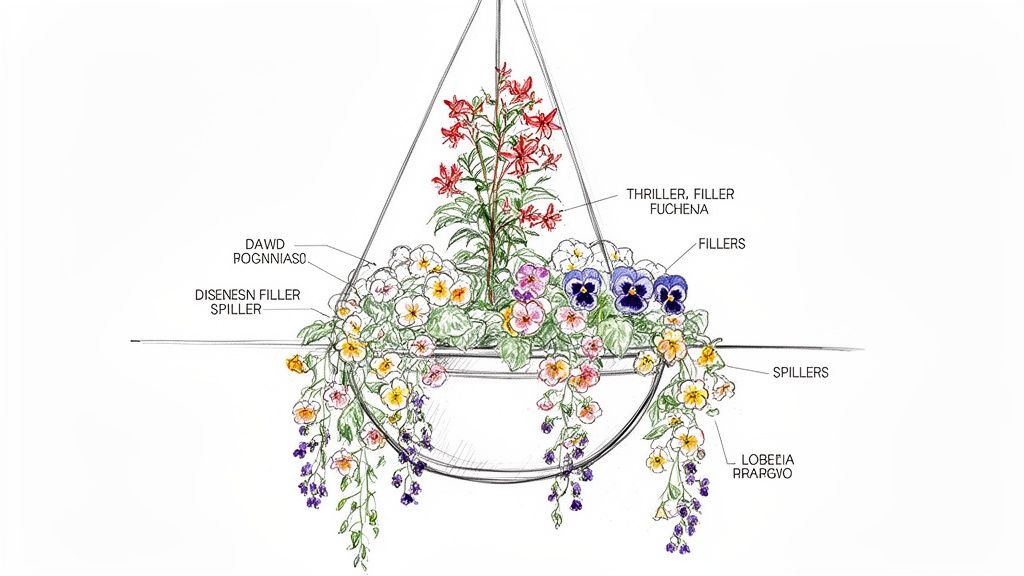
To make the design process a whole lot easier, professional gardeners swear by a simple formula: the ‘Thriller, Filler, Spiller’ method. This approach is your secret weapon for creating a basket with balance, structure, and that gorgeous, overflowing look everyone loves. It's a surprisingly simple yet effective way to guarantee a well-rounded and visually stunning display.
The 'Thriller, Filler, Spiller' Philosophy:
This design principle is all about creating layers of visual interest. The 'Thriller' is your tall, eye-catching centrepiece. The 'Filler' adds bulk and mid-level colour, filling in the gaps. The 'Spiller' is the trailing plant that tumbles gracefully over the sides, softening the basket's edges.
To help you get started, here's a quick look at some of the best plants for hanging baskets in NZ, organised by their role.
Top Plant Choices for NZ Hanging Baskets
| Plant Name | Role (Thriller, Filler, Spiller) | Best NZ Season | Sun Exposure |
|---|---|---|---|
| Petunia / Calibrachoa | Spiller | Spring, Summer | Full Sun |
| Ivy-Leaf Geranium | Spiller | Spring, Summer, Autumn | Full Sun |
| Lobelia | Spiller | Spring, Summer | Full Sun to Part Shade |
| Tuberous Begonia | Filler | Summer, Autumn | Part Shade / Shade |
| Pansy / Viola | Filler | Autumn, Winter, Spring | Full Sun to Part Shade |
| Impatiens (Busy Lizzy) | Filler | Summer, Autumn | Shade |
| Upright Fuchsia | Thriller | Summer, Autumn | Part Shade |
| Zonal Geranium | Thriller | Spring, Summer, Autumn | Full Sun |
| Dwarf Cordyline | Thriller | Year-round (foliage) | Full Sun to Part Shade |
| New Zealand Violet | Spiller (Native) | Spring, Summer | Part Shade / Shade |
This table is just a starting point, of course. The real magic happens when you start mixing and matching to suit your own personal style and the specific spot you have in mind.
Spillers: The Cascading Stars
Let's be honest, the 'Spiller' is what makes a hanging basket truly iconic. These are the trailing plants that create a waterfall of colour and foliage, tumbling over the edges and giving your basket that lush, abundant feel. For Kiwi gardeners, there are a few absolute standouts that perform beautifully from spring right through to autumn.
- Petunias and Calibrachoa (Million Bells): These are the undisputed champions of the hanging basket world. They pump out a huge number of trumpet-shaped flowers in nearly every colour you can imagine. They adore the sun and will reward you with non-stop blooms if you keep them deadheaded.
- Lobelia: If you're after a delicate cascade of intense blue, purple, or white, you can't go past Lobelia. Its fine foliage and tiny flowers create a soft, cloud-like effect that looks amazing alongside bolder plants.
- Ivy-Leaf Geraniums (Pelargoniums): With their waxy, ivy-shaped leaves and bright clusters of flowers, these geraniums are incredibly tough. They are especially good for handling those sunny, windy spots where more delicate plants might give up.
You only need to look at our public spaces for proof of what works best. Towns like Whanganui, which has been famous for its public hanging baskets for around 30 years, provide a real-world test of plant resilience. Their displays consistently feature cool-tolerant annuals and trailing ornamentals like petunias and geraniums, showing these varieties can handle New Zealand's strong UV, wind, and rain. You can find out more about these impressive public displays and the plants that make them possible.
Fillers: The Heart of the Basket
Once you've got your spillers sorted, it's time for the 'Fillers'. These are mounding plants that fill the space between the thriller and the spillers, adding bulk, texture, and colour to the middle of the arrangement. They're the supporting cast that makes the star performers shine.
Some excellent filler choices you'll find in any good New Zealand garden centre include:
- Begonias: Tuberous begonias are fantastic for hanging baskets, especially in spots with partial shade. They offer lush foliage and huge, spectacular flowers in shades of red, pink, orange, and white.
- Pansies and Violas: Perfect for cooler season baskets, pansies and violas provide cheerful colour from autumn right through to spring when not much else is flowering. They're hardy and can handle a light frost, making them a top choice for gardeners in the lower North Island and the South.
- Impatiens (Busy Lizzies): For those shady corners, nothing beats the vibrant, non-stop flowering of Impatiens. They create a dense mound of colour that fills a basket quickly and looks brilliant all summer long.
Thrillers: The Eye-Catching Centrepiece
Every great design needs a focal point, and in a hanging basket, that's the 'Thriller's' job. This is an upright plant, placed in the centre to add height and a bit of drama. It draws the eye in and provides a vertical line to contrast with all those cascading spillers.
A good thriller doesn't have to be massive; it just needs a more upright growth habit than its basket-mates. Give these options a go:
- Dwarf Fuchsias: Upright fuchsias with their elegant, dangling flowers make a stunning centrepiece. Their two-toned blooms add a real touch of class.
- Zonal Geraniums (Pelargoniums): Don't get these mixed up with their trailing ivy-leaf cousins! Zonal geraniums have an upright, bushy habit and bold flower clusters, making them a sturdy and reliable thriller.
- Cordyline or Dwarf Grasses: For a more modern look that focuses on foliage, a small, colourful Cordyline or a compact ornamental grass like Carex can create a striking architectural centrepiece.
Adding a Kiwi Touch with Native Plants
While lots of popular hanging basket plants are exotic, weaving in some New Zealand natives can give your creation a unique local flavour. Many of our native plants have a subtle beauty and are perfectly adapted to our conditions.
A wonderful native option is the New Zealand Violet (Viola hederacea), a delicate groundcover that works beautifully as a spiller. Its tiny, kidney-shaped leaves form a dense mat, dotted with sweet little mauve and white flowers. Another great choice is Muehlenbeckia axillaris, a tough, wiry plant with small, round leaves that creates a fantastic trailing effect. Using these plants for hanging baskets in NZ not only looks great but also helps support our local biodiversity.
How to Plant Your Hanging Basket Step by Step
Alright, ready to get your hands dirty? This is where the magic happens – turning a pile of plants and soil into a stunning, living feature. Getting the planting right from the start is the key to a lush, season-long display. Think of it as building a little home for your plants; a strong foundation makes all the difference.
Planting a hanging basket is a simple, satisfying job that anyone can master. It really just comes down to a few key decisions: picking the right basket, using good soil, and arranging your plants so they have room to shine.
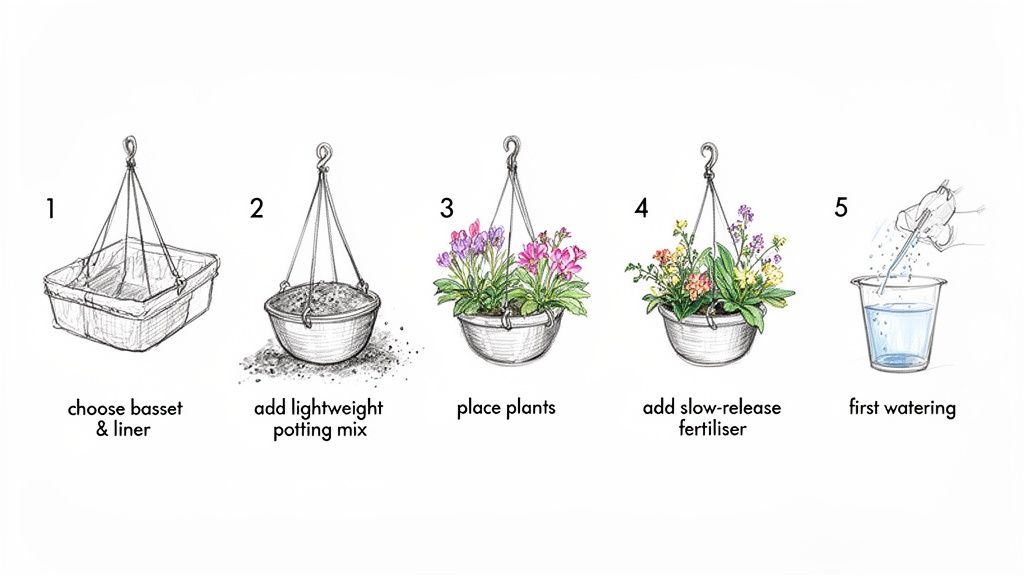
Step 1: Choose Your Basket and Liner
Before you even glance at the plants, you need to sort out the basket itself. In most Kiwi garden centres, you’ll find two main options: traditional wire baskets and solid plastic or ceramic ones. Each has its quirks, especially when it comes to watering.
- Wire Baskets with Liners: These are the classic choice, usually lined with coconut coir or sphagnum moss. They give you fantastic drainage, which is great for preventing soggy roots, but they also dry out incredibly fast on a hot, windy day.
- Solid Plastic Baskets: These hold onto moisture for much longer, which means you won't have to water as often. The catch? You absolutely must ensure they have good drainage holes, otherwise your soil will turn into a swamp after a bit of rain.
For a wire basket, the liner is non-negotiable. A coir liner is a brilliant, natural choice that holds its shape well. Here’s a pro tip: to help it retain more water, some gardeners tuck a piece of plastic (like a bit of an old compost bag with a few holes poked in it) inside the liner before adding the soil.
Step 2: Select the Perfect Potting Mix
The soil is the lifeblood of your hanging basket. Whatever you do, don't just scoop soil from the garden – it’s far too heavy and dense. It will compact down, choke the roots, and drain poorly. You need a dedicated, lightweight potting mix designed specifically for containers.
A quality mix will feel light and fluffy, usually containing ingredients like peat, coir, and perlite or vermiculite. This combination holds onto moisture and nutrients without becoming waterlogged, giving the roots a perfect environment to spread out and thrive. Starting with the right foundation is one of the most critical steps for growing healthy plants for hanging baskets in NZ.
Think of it like baking a cake. You wouldn't swap flour for sand and expect a light, fluffy sponge. A premium potting mix gives your plants the ideal structure and nutrition they need to flourish in such a small space.
Many of the principles for outdoor containers apply to indoor ones, too. For a deeper dive into what makes a great growing medium, check out our guide to choosing the right indoor potting mix.
Step 3: Layer and Plant Your Basket
Now for the fun bit! Find a steady surface to work on. Popping your basket on top of a bucket or an empty pot is a great way to stop it from wobbling around.
- Prep the Liner: If you're using a coir liner, soak it in a bucket of water for 10-15 minutes. This makes it more pliable and helps it mould to the basket’s shape. Plus, it gives your plants an initial source of moisture.
- Add Your Mix: Fill the basket about a third of the way with your potting mix. Now is the perfect time to mix in a handful of slow-release fertiliser granules. This is like a packed lunch for your plants, feeding them slowly over the months to come.
- Arrange Your Plants: Gently ease the plants out of their nursery pots. Start with your 'Thriller'—the main, central plant. Pop it right in the middle. Next, arrange your 'Filler' plants around it, giving them a bit of space to grow into.
- Tuck in the 'Spillers': Your trailing 'Spiller' plants go around the very edge of the basket. To get that really full, overflowing look with a wire basket, you can carefully cut small slits in the sides of the liner and poke the root balls of a few extra trailers through from the outside.
- Top Up and Settle: Fill in all the gaps with more potting mix, gently firming it down around the root balls to get rid of any air pockets. Make sure to leave a 2-3 cm gap at the top so soil and water don't spill over the edge every time you water.
- Water In Well: This is the final, crucial step. Give your new basket a really deep drink of water. Keep going until you see it running freely from the bottom. This settles the soil and gives your plants the best possible start in their new home.
Right, keeping a hanging basket looking incredible isn't a 'set and forget' job. Think of it more like a living sculpture that changes with the seasons. To get that lush, vibrant look year-round, you've got to tune into New Zealand's unique seasonal rhythm. A little bit of the right attention at the right time is what separates a basket that truly thrives from one that just limps along.
It's a bit like being a coach for your plants. Spring is pre-season training, getting them ready for the big show. Summer is game day, where you're the support crew keeping them hydrated and fuelled. Autumn is the gentle cool-down, and winter is all about rest and recovery. Following a seasonal calendar will make sure your baskets are a knockout feature, no matter what month it is.
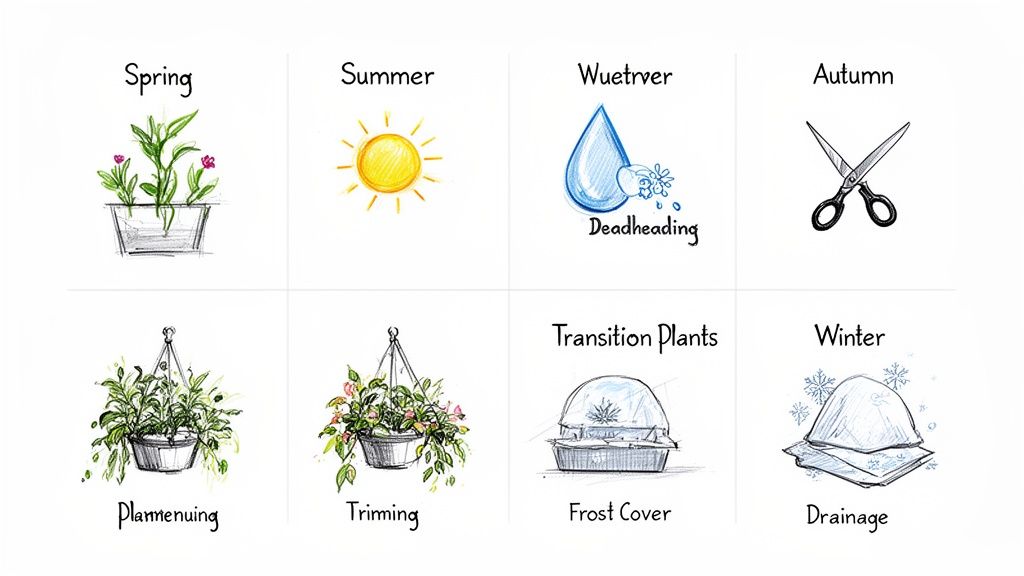
Spring (September – November)
Spring in New Zealand is an explosion of life. As the days get longer and the soil finally warms up, your hanging baskets will practically burst into action. This is the perfect window to plant up those summer-flowering stunners like petunias, calibrachoa, and lobelia to give them a really strong head start.
Your main jobs in spring are pretty straightforward:
- Planting: Get those baskets refreshed with new potting mix and plant your chosen summer annuals. Now is also the time to mix some slow-release fertiliser granules into the soil for steady feeding through the season.
- Watering: You'll need to start watering more often. As the temperatures climb and the plants kick into high gear, their thirst will ramp up significantly. Get in the habit of checking the soil every couple of days.
- Early Pinching: For that really bushy, compact look, pinch out the very tips of your new plants. It sounds a bit harsh, but this encourages them to branch out from the base, giving you a much fuller, flower-packed display later on.
Summer (December – February)
Summer is when your hard work pays off. Your baskets should be at their absolute peak – a glorious, cascading waterfall of colour. But the long, hot days and that powerful Kiwi sun also mean they’re at their most vulnerable. Your number one priority is managing heat and water stress.
A hanging basket baking in the full summer sun can dry out completely in just a few hours. Daily checks aren't just a good idea; they're absolutely essential to keep your plants alive and flowering.
During these peak months, it's all about maintenance:
- Daily Watering: Seriously, check your baskets every single morning. During a proper heatwave, you might even need to give them a drink twice a day. Water deeply until you see it running from the drainage holes at the bottom.
- Consistent Feeding: All that watering flushes nutrients out of the soil pretty quickly. To keep the flowers coming, give them a boost with a fortnightly dose of a liquid seaweed or tomato feed.
- Deadheading: This is the non-negotiable summer chore. You have to regularly snip off the spent flowers to stop the plant from putting its energy into making seeds. This is the signal that tells the plant to produce more blooms, keeping the show going all season long.
Autumn (March – May)
As the summer heat finally eases off, autumn gives everyone a bit of a breather. Your summer annuals might be starting to look a little past their best, making it the perfect time for a refresh. It’s all about a graceful transition into the cooler months.
Autumn care is mostly about tidying up and replanting for the next season:
- Trimming Back: Prune back any lanky or straggly growth on your summer plants. This can often encourage one last flush of flowers before the cold really sets in.
- Replanting for Winter: It's time to say goodbye to the tired summer annuals and swap them out for hardy, cool-season options. Think pansies, violas, primulas, and cyclamens for a fantastic splash of winter colour.
- Reduce Watering: With cooler, shorter days, your baskets won't dry out nearly as fast. Adjust your watering schedule and always check the soil before adding more water to avoid the dreaded root rot.
Winter (June – August)
How you care for your hanging baskets in a New Zealand winter really depends on where you live. A basket in subtropical Northland faces very different challenges to one in frosty Central Otago. The main goals are pretty universal, though: protection from the elements, ensuring good drainage, and enjoying the tough plants that shine when it's cold.
Your key winter tasks are:
- Frost Protection: If you're in a colder region, move your baskets to a sheltered spot – under a veranda or against a house wall is perfect to protect them from the harshest frosts.
- Check Drainage: Winter rain can easily waterlog a basket. Make sure the drainage holes are clear and the basket isn’t sitting in a saucer full of water. Soggy soil is the number one enemy of winter plants.
- Choose Hardy Plants: Embrace the tough guys! Plants that provide a bit of cheer on grey days are a must. Polyanthus, winter-flowering pansies, and even small evergreen shrubs or native grasses can look fantastic and require minimal fuss through the coldest months.
To make it even easier, here’s a quick-glance calendar of what to do and when.
NZ Hanging Basket Care Calendar
| Season | Key Task 1 | Key Task 2 | Key Task 3 |
|---|---|---|---|
| Spring | Plant summer annuals & add slow-release fertiliser | Increase watering frequency as weather warms | Pinch out new growth for bushier plants |
| Summer | Water daily (sometimes twice in heatwaves) | Feed fortnightly with a liquid fertiliser | Deadhead spent flowers religiously |
| Autumn | Trim back leggy summer plants for a final flush | Replace tired annuals with winter-hardy varieties | Reduce watering as temperatures cool down |
| Winter | Move baskets to sheltered spots to avoid frost | Ensure drainage holes are clear to prevent waterlogging | Enjoy low-maintenance colour from hardy plants |
Sticking to a simple seasonal routine like this takes the guesswork out of it and ensures your hanging baskets look stunning all year long.
Watering, Fertilising, and Placement Essentials
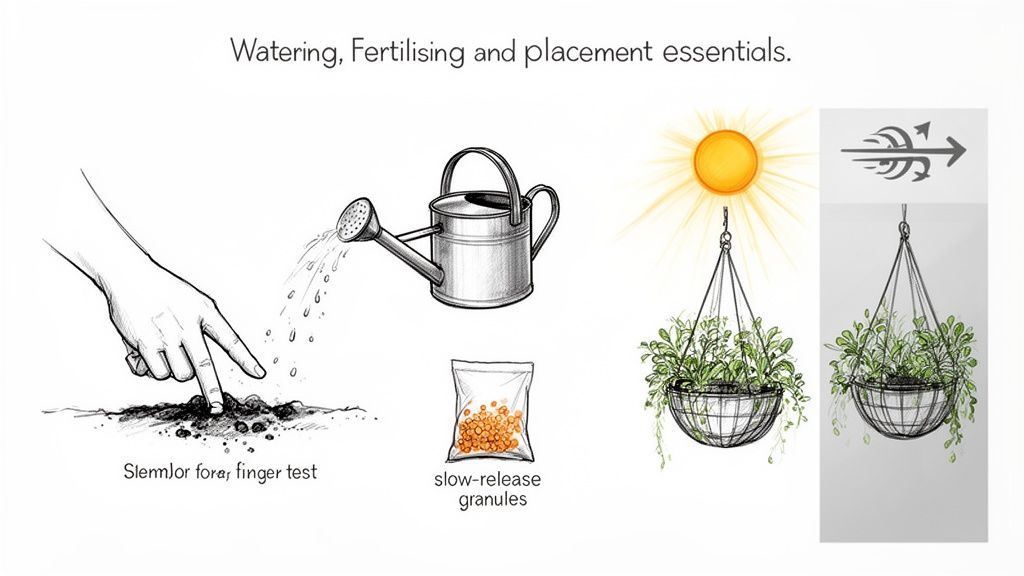
Once you've got your masterpiece planted, the real relationship begins. Keeping that basket looking incredible all season long comes down to three things: watering, feeding, and where you hang it. Get these right, and you'll have a display that doesn't just survive but puts on a real show.
The thing about hanging baskets is they're exposed to the elements on all sides. This is fantastic for creating a floating ball of colour, but it's also their biggest vulnerability. They dry out so much faster than a pot sitting on the patio, especially on a classic hot and windy Kiwi summer day.
The Art of Watering Your Hanging Basket
Inconsistent watering is probably the number one mistake people make with hanging baskets. The soil volume is tiny, and air is constantly whipping around it, sucking out moisture at an alarming rate. Forget to water for just one hot afternoon, and you’ll come home to a very sad, wilted-looking plant.
The easiest way to check if your basket is thirsty is the good old finger test. Just poke your finger about 2-3 cm into the potting mix. If it feels dry, it's time for a drink.
When you do water, do it properly. Give it a good soak until you see water running out of the drainage holes at the bottom. This ensures the entire root ball is hydrated, not just the top layer. On the hottest days of summer, be prepared to water every single morning, and you might even need to give it a top-up in the evening, too.
Fuelling the Flowers: The Lowdown on Fertiliser
Think of your flowering basket plants as elite athletes—all that blooming takes a massive amount of energy and nutrients. They’re stuck in a small pot and can't send roots out searching for more food, so it’s entirely up to you to keep them fuelled.
This is where a two-pronged feeding strategy works wonders:
- Slow-Release Granules: Pop these into the potting mix when you first plant your basket. They act like a well-stocked pantry, slowly releasing a balanced diet to your plants over several months and providing a solid nutritional foundation.
- Liquid Feeds: This is the plant equivalent of an energy drink. A liquid feed, applied every fortnight during the peak growing season (spring and summer), gives an instant, easily absorbed boost. This is the secret to getting those non-stop, prolific flowers.
By combining both methods, you set your plants up for success. The slow-release granules provide the long-term, steady energy, while regular liquid feeding gives them the immediate kick needed to produce that constant cascade of vibrant blooms.
For a deeper dive into plant foods and how they work, our guide on understanding indoor plant fertilizer has some fantastic insights that apply just as well to container gardening.
Perfect Placement for Healthy Plants
Where you hang your basket is just as important as how you look after it. The right spot gives your plants the conditions they need to thrive, while the wrong one can lead to stress, poor growth, and a constant battle to keep them happy.
The two biggies to consider are sun and wind. Before you hang that hook, watch the spot for a day. Does it get gentle morning sun or the full force of the harsh afternoon heat? Is it a sheltered corner or right in the path of the prevailing nor'wester?
Matching your plant choices to the light conditions is non-negotiable. Sun-worshippers like Petunias and Geraniums will be in heaven with at least six hours of direct sun. Shade-loving Impatiens or Begonias, on the other hand, will quickly scorch and sulk in that same spot.
Wind is the silent killer of hanging baskets. It doesn't just thrash delicate stems and flowers; it acts like a hairdryer, stripping moisture from the leaves and soil at an incredible speed. Tucking your basket into a spot sheltered from strong winds will dramatically cut down on water stress and keep your display looking full and lush.
Troubleshooting Common Hanging Basket Problems
Even with the best of intentions, sometimes a hanging basket just looks a bit... sad. Don't panic! Most of the common issues are surprisingly easy to sort out once you learn to read the signs. Think of it as your plants trying to tell you what they need.
One of the most frequent complaints we hear from Kiwi gardeners is about ‘leggy’ plants – those long, gappy stems with very few leaves or flowers. This is almost always a classic sign that your plant is desperately stretching for more sunlight. The first fix is simple: move it to a brighter spot.
To sort out the existing straggly growth, you’ll need to be brave and get the snips out. Pruning these long stems back by about a third will shock the plant into action, encouraging it to send out fresh, bushy growth from its base. You'll end up with a much fuller, healthier-looking basket for your efforts.
Diagnosing Common Pests and Diseases
Nothing spoils a beautiful display quite like pesky insects or a dusting of mildew. The real key here is to catch them early, so get into the habit of having a quick look over the leaves and stems every time you water.
- Aphids: You’ll spot these little sap-suckers clustered on new growth and flower buds. Often, a sharp jet of water is enough to blast them off. For a more stubborn infestation, a store-bought insecticidal soap from your local NZ garden centre will do the trick.
- Powdery Mildew: This looks exactly like it sounds – a fine white or grey powder on the leaves. It absolutely loves damp, still conditions, so try to water the soil, not the foliage, and make sure there’s plenty of air moving around your basket.
Another common annoyance is finding little fungus gnats buzzing around your indoor baskets. These tiny flies are a tell-tale sign that your soil is staying too wet for too long. We've got a whole guide on this, which you can check out here: how to get rid of fungus gnats.
Solving Aesthetic and Growth Issues
Beyond pests and diseases, a few other common problems can throw off the look of your basket. Learning to spot these visual cues will make you a hanging basket pro in no time.
Why are my leaves turning yellow? This is the million-dollar question! Nine times out of ten, it’s a sign of overwatering, which leads to suffocating, soggy roots. But it can also signal that the plant is hungry. If you check the soil and it feels dry, it's probably time to give your basket a good feed.
Here’s a simple trick for a perfectly balanced display: give your basket a quarter-turn once a week. It’s that easy. This stops one side from getting all the sun and growing lush while the other side gets sparse and sad. It’s a tiny bit of effort that makes a massive difference to the overall look.
Your Hanging Basket Questions Answered
We get some fantastic questions from fellow Kiwi gardeners about making their hanging baskets shine. Here are a few of the most common ones that pop up in our inbox.
How often should I replace the soil?
Think of it like this: your plants are hungry, and old soil is like an empty pantry. For the absolute best results, it’s a great idea to start with fresh, high-quality potting mix every time you plant a new basket, which is usually once a year. After a season of hard work, the old mix is often compacted and completely drained of nutrients, making it tough for new plants to get a good start.
What are the toughest plants for a windy NZ balcony?
Ah, the classic Kiwi problem! A stiff breeze can really thrash delicate flowers and dry out a basket in no time. If your spot is a bit exposed, you need to pick plants that can handle the rough and tumble.
- Ivy-Leaf and Zonal Geraniums: These are incredibly tough cookies and don't seem to mind a good blowy day.
- Trailing Verbena: A brilliant, low-growing choice that's surprisingly resilient and covered in vibrant flowers.
- Dwarf Phormium (Flax): As a native 'thriller', its strong, leathery leaves are practically designed for our windy conditions.
Can I grow edibles in a hanging basket?
You absolutely can! Baskets are a fantastic, space-saving way to grow a surprising amount of kai. Trailing strawberries, tumbling varieties of cherry tomatoes, and herbs like thyme, oregano, and mint do incredibly well. Just make sure they get plenty of sun and you keep up with the watering, as they can be thirsty.
Top Tip: When growing anything you plan to eat, always stick to a food-safe potting mix and fertiliser. This makes sure your harvest is not only delicious but also perfectly safe to pop in your mouth.
At Jungle Story, we link you up with New Zealand's best growers to find the perfect plants for your next hanging basket masterpiece. Check out our huge range and get everything you need for a stunning display delivered right to your door at https://junglestory.co.nz.