
To really get rid of fungus gnats for good, you need a plan that targets both the annoying flying adults and the larvae living in the soil. The classic, most effective approach is a two-pronged attack: use yellow sticky traps to catch the adults, and let the top few centimetres of your potting mix dry out completely between waterings. This simple combo breaks their life cycle right in its tracks and is your first and most important step to reclaiming your plants.
First, Are You Sure It’s Fungus Gnats?
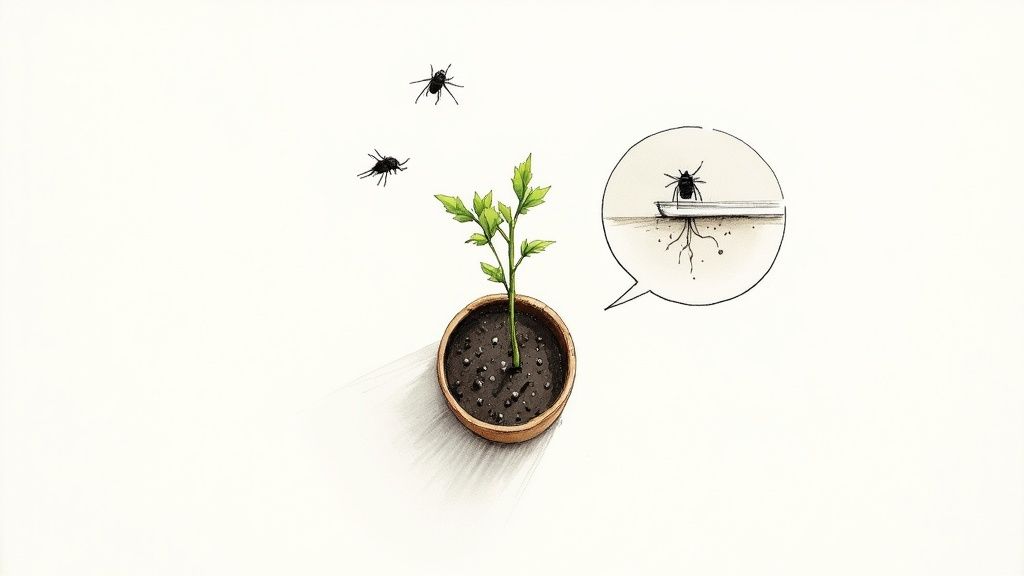
Before you declare war, you need to be certain about your enemy. For a lot of New Zealand plant enthusiasts, the first sign of trouble is a tiny, dark fly buzzing past their face or hovering around a favourite houseplant. It's easy to get confused at this point—is it a fruit fly, a sandfly that’s found its way inside, or something else?
Confirming you're dealing with fungus gnats is a crucial first step. The right solution is tailored to their specific lifecycle, so if you misidentify them, you could waste time on treatments that don't work while the real problem festers just under the soil.
What to Look For
Fungus gnats (from the Bradysia species) have a few distinct tells that set them apart from other common household pests. If you pay close attention, you'll know exactly what you're up against.
Here are the key identifiers:
- Appearance: They’re delicate little flies, only about 2-3mm long, with a dark grey or black body. They look a lot like tiny mosquitos, thanks to their long legs and slender antennae.
- Flight Pattern: Their flying style is pretty clumsy and weak. You’ll notice them flying in erratic, short bursts, usually staying very close to the source of the infestation—your plant pots.
- Location: This is the biggest giveaway. Unlike fruit flies, which are drawn to your compost caddy or overripe bananas, fungus gnats are almost exclusively interested in your houseplants. You'll find them hanging out on or right around the potting mix.
Telling Gnats and Fruit Flies Apart
It's really common to mix up fungus gnats and fruit flies, but they hang out in completely different parts of your home. The easiest way to tell them apart is just by watching where they congregate.
If the flies are buzzing around your fruit bowl, that glass of wine, or the rubbish bin, you’ve almost certainly got fruit flies. They have a more robust, brownish body and are attracted to anything fermenting. But if the flies are dancing around your monstera, fiddle-leaf fig, or seedlings, then fungus gnats are the culprit.
Fungus gnats aren't just an airborne annoyance. Their presence is a clear signal that something is off in your plant's soil—usually, it's too wet. The real damage is done out of sight, where their larvae are feeding on your plant's roots.
Understanding Their Life Cycle and the Damage They Cause
The adult flies you see flitting about are irritating, but they don't bite you or eat your plants. Their only purpose is to reproduce, laying up to 200 eggs at a time in the top layer of moist potting mix.
Those eggs hatch into tiny, translucent larvae with black heads, and this is where the real trouble begins. While the larvae mainly feast on fungi and decaying organic bits in the soil, they don't stop there. They'll also happily chew on the delicate, fine root hairs of your plants.
For a big, healthy plant, this might only cause a bit of stress. But for seedlings, fresh cuttings, or young plants, this root damage can be devastating. It can stunt their growth and leave them vulnerable to disease. If you've noticed wilting or yellowing leaves even though you're watering regularly, it could be a sign of larval damage happening below the surface.
Why Fungus Gnats Love Your Indoor Plants
If you're suddenly dealing with a cloud of tiny black flies hovering around your houseplants, you might just put it down to bad luck. But a fungus gnat infestation is never random. It’s actually a clear signal that the conditions inside your plant pots have become a perfect nursery for them.
Figuring out what makes your home so inviting to these pests is the first real step towards getting rid of them for good.
The root cause of almost every single fungus gnat problem boils down to one thing: excess moisture. These little pests aren't actually interested in your plants. They're drawn to the damp, organic-rich soil they're potted in. When your potting mix stays consistently wet, it creates a thriving environment for the fungi and decaying matter that their larvae need to eat.
The Ideal Breeding Ground
Here in New Zealand, our climate can make managing soil moisture a real challenge, especially at certain times of the year. During the more humid months, or in winter when indoor heating is on but airflow is low, potting mix can take a lot longer to dry out.
This prolonged dampness is exactly what fungus gnats are looking for. An adult female can lay up to 200 eggs in the top few centimetres of moist soil. If that soil stays wet, the population can absolutely explode in just a few weeks. The issue is rarely about the specific plants you own; it's almost always about the environment you've created for them.
The crucial takeaway here is that seeing fungus gnats is a symptom, not the core problem. The real issue is an underlying moisture imbalance in your potting mix. Solving that imbalance is the key to getting rid of them for good.
Your Potting Mix is Their Buffet
The type of potting mix you use also plays a huge part. Many commercial mixes are loaded with organic materials like peat moss, coir, or bark, which are great for holding moisture for your plants. Unfortunately, that same quality makes them an all-you-can-eat buffet for fungus gnat larvae.
When these materials stay damp, they start to break down and grow fungi, providing a constant food supply that fuels the gnat lifecycle. This is often why they seem to appear out of nowhere after you bring a new plant home or repot with fresh mix—these soils are usually damp and packed with the organic goodies they love.
Your Action Plan for Eliminating Fungus Gnats
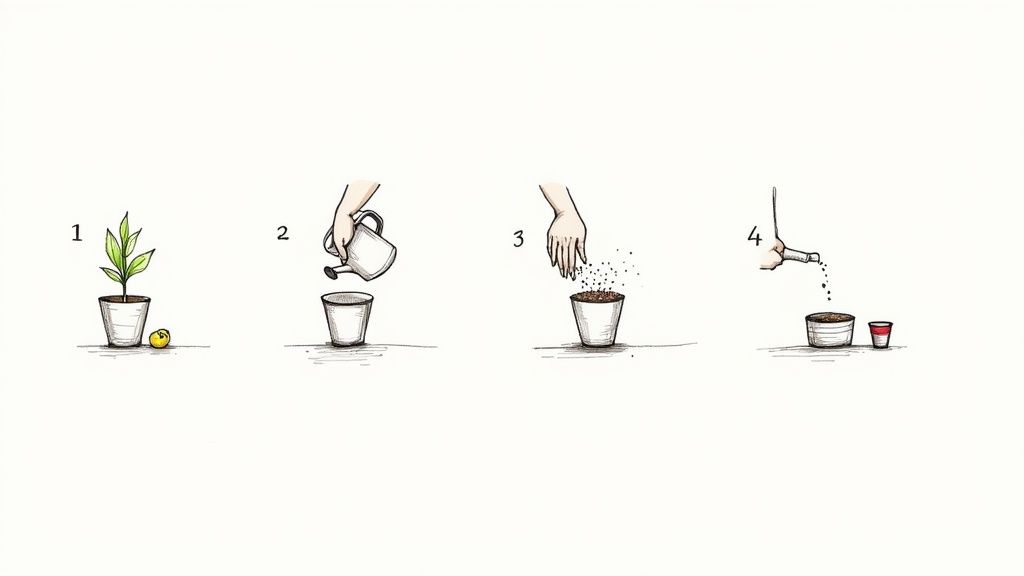
Right, you’ve identified the enemy. Now it’s time to take back your indoor jungle. A truly effective battle plan needs to hit fungus gnats from two sides: you need to target the adult flies you see buzzing around and the hidden larvae breeding in the soil. By disrupting both stages of their lifecycle at once, you’ll break the cycle for good.
This plan is all about simple, powerful, and safe methods you can start using today. Forget harsh chemicals—often, a few tweaks to your routine and some handy home remedies are all it takes to get an infestation under control.
Fungus Gnat Control Methods At a Glance
Feeling a bit overwhelmed by the options? Don't be. This quick table breaks down the most common methods so you can see what targets what and choose the best approach for you.
| Method | Targets | Effectiveness | Effort Level |
|---|---|---|---|
| Yellow Sticky Traps | Adults | High | Low |
| Letting Soil Dry Out | Larvae & Eggs | High | Low |
| Soil Top Dressing | Adults & Larvae | Medium | Low |
| Hydrogen Peroxide Drench | Larvae | High | Medium |
| Neem Oil | Larvae & Adults | Medium | Medium |
Ultimately, a combination of these methods—one for the adults and one for the larvae—is your ticket to a gnat-free home.
Tackling the Adult Flies
Those little black flies are the most obvious part of the problem, and catching them is the first step to stopping them from laying more eggs. While it’s tempting to swat them one by one, a more strategic approach works much better.
Your best weapon here is the humble yellow sticky trap. For some reason, fungus gnats find that bright yellow colour irresistible. They think it's fresh new foliage and fly straight into the sticky surface. You can find these at any good garden centre across New Zealand.
For the best results, place your sticky traps strategically:
- Lay them flat: Put a few horizontally on the potting mix to catch adults as they hatch and crawl out.
- Stake them upright: Use the little stakes that come with the traps to position them just above the leaves, catching gnats flying between plants.
- Near windows: Gnats love to hang around light sources, so placing traps on or near windows is always a good move.
Remember to check them every few days and swap them out when they get full. Not only does this keep the population down, but it also gives you a great visual on how well your battle plan is working.
Eliminating the Larvae in the Soil
Catching the adults feels good, but the real victory is won down in the soil. The larvae are the root of the problem, so wiping them out is absolutely crucial for long-term success. The best way to do this is to make the soil a terrible place for them to live.
Master Your Watering Habits
Honestly, the most powerful tool you have is letting the soil dry out. Fungus gnat eggs and larvae simply can't survive without constant moisture. Before you even think about watering, stick your finger in the pot and check that the top 5–7 cm of potting mix is completely dry.
This one simple change throws a massive spanner in their lifecycle. It might feel wrong, especially in summer, but trust us—most houseplants are far more tolerant of being a little dry than they are of being constantly waterlogged.
A classic mistake is watering on a strict schedule. Ditch the calendar and start watering based on what your plant actually needs. Lift the pot to feel its weight or use the finger test. This is how you stop the chronic overwatering that fuels gnat infestations.
For a wider look at tackling common pests, this is a great action plan for eliminating common household gnats.
Create a Physical Barrier
Here's another great trick: add a top layer of something that dries out fast and is hard for adult gnats to dig through. This creates a physical barrier that stops them from laying their eggs in the moist soil below.
Try adding a 1–2 cm layer of one of these materials to the top of your potting mix:
- Coarse sand: A popular and really effective choice. It creates a dry, abrasive layer that gnats hate.
- Horticultural grit or fine gravel: This works just like sand, creating a dry barrier while also giving your pots a nice, finished look.
This method works best when you’re also being careful with your watering. If you drench the top layer every time, it won't be as effective.
Use a Hydrogen Peroxide Drench
For a more direct attack on the larvae, a hydrogen peroxide solution is a safe and incredibly effective option. When you pour it on the soil, it fizzes and bubbles, aerating the mix and killing gnat larvae on contact without harming your plant’s roots.
Here’s the simple recipe:
- Mix one part 3% hydrogen peroxide (the standard stuff from any chemist) with four parts water.
- Wait until the top layer of your soil is properly dry, just as you would before a normal watering.
- Completely drench the soil with the mixture. Make sure it soaks all the way through and you see it draining out the bottom.
You might hear a faint fizzing sound as the peroxide goes to work. This is perfectly normal! You can repeat this treatment every 7–10 days until the gnats are gone.
By combining these soil-focused strategies with sticky traps for the adults, you’ll have a complete plan to get rid of fungus gnats for good.
Advanced Controls For Stubborn Infestations
Sometimes, no matter how diligent you are with your yellow sticky traps and careful watering, a fungus gnat problem just refuses to go away. It’s frustrating, but it’s also the point where you need to bring out the big guns. We don’t mean harsh chemicals, but rather nature's own highly effective, targeted solutions.
For those really persistent infestations, biological controls are a game-changer. They offer a powerful and safe way to wipe out fungus gnat larvae without harming your plants, pets, or any beneficial critters hanging around. Think of it as recruiting a microscopic army to fight the battle for you, right where it’s happening—in the soil. This is how you finally break the cycle for good.

Harnessing The Power of Bti
One of the best and most widely used biological controls is a special type of bacteria called Bacillus thuringiensis israelensis, or Bti for short. This naturally occurring soil microbe is a fungus gnat larva's worst nightmare but is completely harmless to pretty much everything else.
The way Bti works is pretty clever. When a gnat larva eats it, a protein in the Bti activates inside their gut, essentially paralysing their digestive system. The larva stops feeding almost immediately and dies within 24–48 hours.
The best part? It’s incredibly specific. Bti only targets the larvae of gnats, mosquitoes, and blackflies. It won’t cause any harm to:
- Your plants or their delicate root systems
- Earthworms and other beneficial soil life
- Pets, children, or you
- Pollinators like bees and butterflies
This makes it an ideal solution for indoor plant lovers in New Zealand who want a potent treatment without resorting to broad-spectrum chemical insecticides.
Finding and Using Bti Products in New Zealand
Here in New Zealand, you'll most commonly find Bti in products sold to control mosquito larvae, like "mosquito dunks" or "mosquito bits". You can pick these up at most garden centres or hardware stores. While they're marketed for ponds and birdbaths, they work perfectly for fungus gnats in your houseplants.
Here’s our go-to method for applying it:
- Create Your Bti Brew: Break off a piece of a mosquito dunk or measure out the recommended amount of bits. A good ratio to start with is about a quarter of a dunk or one tablespoon of bits per four litres of water.
- Let it Steep: Pop the product into your watering can and let it soak for at least 30 minutes. We often leave ours overnight just to make sure the Bti has fully infused into the water.
- Water Your Plants: Fish out the solid pieces of the dunk or bits (you can reuse them a couple of times) and use the treated water to give the soil of all your affected plants a thorough drenching.
- Stay Consistent: This is the most important part. You need to use the Bti-treated water for every single watering over the next few weeks. Consistency is absolutely key to killing off newly hatched larvae and completely breaking the gnat lifecycle.
Don't get discouraged if you don't see results instantly. Bti only kills the larvae in the soil. You’ll still need your yellow sticky traps to catch the remaining adult flies, which will die off within a week or two once they can no longer lay viable eggs.
Introducing Beneficial Nematodes
Another brilliant organic weapon you can add to your arsenal is beneficial nematodes, specifically the species Steinernema feltiae. These are microscopic, worm-like organisms that are natural-born hunters of fungus gnat larvae.
When you introduce nematodes to your soil, they immediately get to work, seeking out gnat larvae. They enter the larvae and release a symbiotic bacterium that swiftly kills their host from the inside out, providing a food source for the nematodes to reproduce. They are completely safe for plants, pets, and people, focusing solely on their soil-dwelling prey.
Applying nematodes is easy. They usually come in a refrigerated packet that you simply mix with water and apply as a soil drench. They thrive in moist soil, so applying them when you would normally water your plants is perfect. This is a truly fantastic, nature-based solution for getting rid of fungus gnats for good.
Keeping Your Home Gnat-Free for Good

It’s a great feeling to finally get rid of an active fungus gnat infestation, but the real victory is making sure they never feel welcome in your home again. This is where you switch from a reactive battle to a proactive, long-term care strategy. The goal is simple: make your indoor environment a place where fungus gnats just can't get a foothold.
From here on out, your focus should be entirely on prevention. This comes down to a few key habits that will not only keep pests away but also lead to healthier, happier plants overall. It’s all about being mindful of what you bring into your home and how you manage the soil environment.
Fine-Tune Your Watering Technique
The single most important factor in preventing fungus gnats is managing soil moisture. Honestly, overwatering is the number one invitation for these pests to move in. A few simple adjustments to your watering routine can make all the difference.
A fantastic habit to get into is bottom-watering. Instead of pouring water over the topsoil, just place your plant pot (it must have drainage holes!) in a tray or sink with a few centimetres of water. The plant soaks up exactly what it needs through capillary action, leaving the top layer of soil relatively dry.
This technique helps in two big ways:
- It encourages strong, deep root growth as the roots actively seek out moisture downwards.
- It keeps the topsoil dry, which is the prime real estate fungus gnats need to lay their eggs. No moisture on top means no new generation of gnats.
Shifting your mindset from a rigid watering schedule to watering based on your plant’s actual needs is crucial. Always check the soil first. If the top 5-7 cm are still damp, put the watering can down and wait another day or two.
Choose Your Potting Mix Wisely
The right potting mix can make your prevention efforts so much easier. Fungus gnats absolutely thrive in dense, heavy soils that hold onto moisture and are full of decomposing organic matter like peat moss.
When potting or repotting, always opt for a mix that promotes excellent drainage and aeration. Look for ingredients like perlite, pumice, or orchid bark. These create little air pockets in the soil, allowing it to dry out more evenly and quickly between waterings. For a detailed guide on what to look for, check out our advice on potting plants for indoor success. This simple choice can make your pots far less attractive to pests right from the start.
Be Vigilant With New Additions
Fungus gnats are expert hitchhikers. They often sneak into our homes on new plants from the garden centre or in bags of contaminated potting mix. A little bit of caution now can prevent a lot of headaches later.
Set up a simple quarantine routine for any new green friends you bring home. Keep them isolated from your existing plant collection for at least a couple of weeks. This gives you plenty of time to monitor them closely for any signs of pests, whether it's adult gnats flying around or suspicious activity in the soil. It's a small step that can save you from having to treat your entire collection down the line.
Common Questions About Fungus Gnats
Even with a solid plan, a few questions are bound to pop up. Pest problems can throw some unique situations your way, and getting clear, straightforward answers is the best way to feel confident you're on the right track. Here are a few of the most common queries we hear from fellow Kiwi plant lovers.
Sorting out these details will help you fine-tune your approach and know what to expect on your mission to a gnat-free home.
Can Fungus Gnats Harm My Bigger Established Houseplants?
For most of your big, healthy houseplants—think a mature fiddle-leaf fig or a thriving monstera—fungus gnats are more of an annoyance than a real threat. Their larvae are mostly interested in the fungi and decaying bits in the soil, which doesn't directly harm a strong, robust plant.
That said, a really severe infestation can become a problem. If the larval population absolutely explodes, they can start munching on the fine, delicate root hairs of even an established plant. This is especially true if the plant is already stressed for some other reason. This kind of damage can get in the way of nutrient uptake and even open the door to secondary infections, causing a slow decline in health.
It's seedlings, fresh cuttings, and young plants with tiny root systems that are most at risk. For these little guys, larval damage can be a very big deal, and sometimes even fatal.
Do I Need to Repot My Plant to Get Rid of Fungus Gnats?
Repotting should be your absolute last-ditch effort. It's incredibly stressful for your plant, and honestly, it’s almost never necessary just to solve a fungus gnat problem. It’s usually an overreaction that can do more harm than good.
Before you even think about grabbing a new bag of potting mix, you need to try all the less invasive methods first. That means:
- Fix your watering habits so the top few centimetres of soil can dry out completely.
- Put up yellow sticky traps to catch the flying adults.
- Treat the soil with something like Bti or a hydrogen peroxide drench to knock out the larvae.
The only time you should even consider repotting is if you have a truly out-of-control infestation and clear signs of root rot from constantly waterlogged soil. In that very specific scenario, repotting into fresh, well-draining mix is more about saving the plant from the rot than it is about the gnats. If you do go down this path, make sure you get rid of all the old, infested soil and give the pot a thorough clean.
Are There Any Plants That Naturally Repel Fungus Gnats?
It’s a lovely thought, having a plant that just magically keeps pests away. But the truth is, no common houseplant will repel fungus gnats effectively enough to stop an active infestation. The problem isn’t in the air around the leaves; it’s buried in the soil.
The most effective "repellent" isn't a plant—it's a condition: dry topsoil. By consistently managing soil moisture, you make the environment unwelcoming for fungus gnats. That’s far more powerful than what any single plant can do.
However, some plants can be fantastic allies in your fight. Carnivorous plants, especially Butterworts (Pinguicula) and Sundews (Drosera), are brilliant at trapping adult gnats on their sticky leaves. They make a great, natural addition to your sticky traps and are fascinating plants to have around. Just remember they're part of the solution, not the whole thing. Your main focus has to stay on the soil.
To keep your plants healthy and expand your pest control knowledge, staying informed with good gardening resources is key. You can explore more general plant care and pest solutions on the Dreamyard blog.
At Jungle Story, we're passionate about helping you create a thriving indoor jungle. From expert advice to the perfect plants and supplies, we're here to support your journey. Explore our full range of beautiful, healthy houseplants and start building your dream green space today at https://junglestory.co.nz.