
Welcome to the weird and wonderful world of Venus flytraps! If you're a Kiwi gardener keen to get one of these incredible plants, you've come to the right place. We're going to skip the generic, one-size-fits-all advice and get straight into what actually works here in Aotearoa.
Let's make sure your Venus flytrap journey is a roaring success from day one.
A Kiwi Gardener's Guide to Venus Flytraps
Growing a Venus flytrap (Dionaea muscipula) is one of the most rewarding projects you can take on. These famous carnivorous plants, with their iconic snap-shut traps, bring a bit of the extraordinary to a sunny windowsill or garden. They have a reputation for being fussy, but honestly, once you get your head around their unique needs and how they fit our local climate, they're surprisingly straightforward.
Think of this guide as your go-to manual for raising a happy, healthy Venus flytrap. We'll cover everything from their quirky history in NZ horticulture to the day-to-day practicalities.
A Carnivorous Plant with a Local Past
You might be surprised to learn that Venus flytraps aren't from around here. In fact, their only native habitat is a tiny patch of coastal land in the United States. So, how did they end up in New Zealand? Pure fascination.
Digging back through old records, it seems they first hit the Kiwi market in the 1970s. I've seen old Christchurch newspaper ads from the time promoting them as an "amazing and incredible plant actually catches flies and eats them too!". They were sold as special, limited-supply imports for as little as $1.25 each. It just shows Kiwis have always had a soft spot for weird and wonderful plants. It's fascinating to see how this "deadly little oddity" was first introduced to the country.
The secret to success isn't some complex formula. It’s all about mimicking their native bog environment. This boils down to three golden rules: mineral-free water, heaps of direct sun, and nutrient-poor soil. Basically, forget everything you know about caring for regular houseplants!
What You'll Learn in This Guide
Our whole focus here is on practical advice that works for New Zealand growers. It doesn't matter if you're in subtropical Auckland or dealing with frosty southern mornings; we’ll help you handle the unique challenges and opportunities our climate throws at you.
Here's a taste of what we'll cover:
- Creating the perfect home: We'll walk you through mixing the right soil and picking the best pot for your plant.
- Getting water and sun right: Learn the absolute non-negotiables for watering and sunlight.
- To feed or not to feed: Find out when (and more importantly, when not) to feed your flytrap.
- Navigating winter dormancy: Get specific tips for managing their rest period in our Southern Hemisphere seasons.
For a great starting point, check out our dedicated Venus flytrap growing instructions. This guide will then build on that solid foundation with all the NZ-specific details you need to really help your plant thrive.
Creating the Perfect Habitat for Your Plant
Getting the right setup from day one is really where the magic happens with a Venus flytrap. Forget almost everything you know about regular houseplants; these guys are a bit different, and they need an environment that closely mimics their native boggy homes. Nail this part, and you're already halfway to success.
The number one rule? Rethink your soil. Absolutely no standard potting mix, no fertiliser, and definitely no soil from the garden. These are loaded with minerals and nutrients that will scorch the plant’s delicate roots, leading to a quick and sad end. Your mission, should you choose to accept it, is to create a growing medium that’s as nutrient-poor as you can get it.
The Ideal Soil Mix for a Venus Flytrap
The go-to recipe for a thriving Venus flytrap in NZ is a simple one-to-one mix of sphagnum peat moss and perlite. You can find both of these at pretty much any garden centre around New Zealand.
- Sphagnum Peat Moss: This creates the acidic, damp base that your flytrap will absolutely love.
- Perlite: This stuff is a type of volcanic glass, and it's fantastic for adding aeration and drainage. It stops the soil from becoming a compacted, waterlogged bog.
Before you get mixing, it’s a really good idea to give both the peat and perlite a good rinse with rainwater or distilled water. This flushes out any stray mineral salts left over from processing. Just pop them in a bucket, add your pure water, give it a stir, and drain it out. Do this a couple of times to be safe.
A word of warning: the most common mistake I see new owners make is accidentally buying enriched products. Always double-check the bag to make sure you’re getting pure sphagnum peat and perlite. Anything with added fertilisers or wetting agents is a no-go.
Choosing the Right Pot
When it comes to picking a pot, drainage is everything. A simple plastic pot, somewhere around 10-15 cm across, is the perfect starter home. It gives the plant’s long, black roots enough room to grow and should have plenty of holes at the bottom for water to escape.
Steer clear of terracotta or any unglazed ceramic pots. Because they're porous, they can slowly leach minerals into the soil over time—and we already know that’s bad news for your flytrap. Your safest bet is always plastic or a fully glazed ceramic pot.
To make things easier, here’s a quick checklist of the essentials you'll need to get your Venus flytrap settled in its new home.
Essential Supplies Checklist for Venus Flytrap Care in NZ
| Item | Specification | Why It's Essential | Where to Find in NZ |
|---|---|---|---|
| Potting Medium | A 1:1 mix of pure sphagnum peat moss and perlite | Provides a nutrient-free, acidic, and airy environment that mimics their native soil. | Most garden centres like Bunnings or Mitre 10. Check for "fertiliser-free". |
| Pot | A 10-15 cm plastic or glazed ceramic pot | Needs excellent drainage to prevent root rot and won't leach minerals into the soil. | Garden centres, The Warehouse, or specialty plant shops. |
| Water | Rainwater, distilled, or reverse osmosis water | Tap water contains minerals that are toxic to the plant's sensitive root system. | Collect rainwater, or buy distilled water from supermarkets or hardware stores. |
| Plant | A healthy Venus flytrap | Starting with a strong plant from a good source gives you the best chance of success. | Reputable NZ nurseries, specialist carnivorous plant sellers, or some garden centres. |
With all your supplies gathered, potting is straightforward. Fill your chosen pot with the pre-moistened peat and perlite mix. Make a small hole in the middle and gently settle the plant’s rhizome (the white, bulb-like bit at the base) and its roots inside. You want the rhizome to be just under the surface. Don’t pack the soil down too hard—the goal is a light, airy home where the roots have room to breathe.
Getting Water and Sun Just Right in NZ
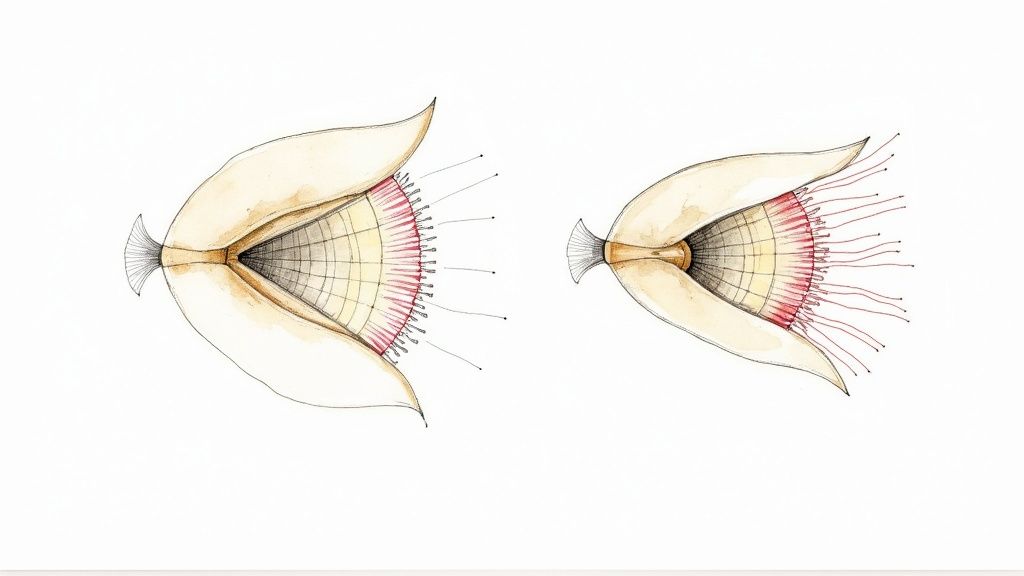
Water and sunlight are the two non-negotiables for a happy Venus flytrap, and getting them right in New Zealand’s unique climate is everything. These aren't your average houseplants that can shrug off a bit of neglect. Their needs are specific, but once you get the hang of it, they’re actually pretty straightforward to look after.
The biggest mistake I see people make is with water. Venus flytraps evolved in boggy, nutrient-lacking soils, so their roots are incredibly sensitive to the minerals, salts, and chemicals lurking in our tap water. Using tap water, even just once, can be a slow death sentence for your plant.
The Only Water Your Flytrap Should Ever Touch
For a thriving Venus flytrap in NZ, you absolutely must use mineral-free water. I can't stress this enough – there are no exceptions to this rule. Your plant's survival depends on it.
Here are your best bets for a safe, pure water supply:
- Rainwater: This is the absolute gold standard. It's free, naturally soft, and exactly what these plants would get in the wild. All you need to do is pop a bucket or tub outside during the next downpour to collect your stash.
- Distilled Water: If collecting rainwater isn't practical, distilled water is the next best thing. You can easily grab it from most supermarkets or hardware stores like Mitre 10 or Bunnings.
- Reverse Osmosis (RO) Water: Another type of purified water that's perfectly safe for your flytrap.
Forget about bottled "spring water" or even some "purified" drinking waters. These often have minerals added back in for taste. If the label shows a mineral content analysis, put it back on the shelf. Stick to rainwater or distilled water for guaranteed safety.
Once you’ve sorted your water source, the next trick is the watering technique itself.
The Best Way to Water Your Plant
Venus flytraps love consistently moist soil, but they absolutely hate being waterlogged, which is a fast track to root rot. The easiest and most effective way I’ve found to get this balance right is using the tray method.
It’s simple: place your potted plant in a shallow saucer or tray and keep about 1-2 cm of water in it during the growing season (spring and summer, from September to February). The soil will wick up just the right amount of moisture through the pot’s drainage holes, keeping the roots hydrated without drowning them. A good rule of thumb is to let the tray dry out for a day or so before topping it up again – this lets a bit of air get to the roots.
Finding That Sweet Spot for Sunlight
After water, sunlight is the next key ingredient for a vibrant, energetic plant. Venus flytraps are total sun-worshippers and need at least six hours of direct, bright sunlight every day to power their photosynthesis and operate those fascinating traps.
Here in New Zealand, the ideal spot is usually a north-facing windowsill, a sunny spot on the deck, or in a conservatory where it can soak up that strong Kiwi sun. If you notice your flytrap’s new leaves look a bit weak, floppy, or pale green, that's a dead giveaway it's crying out for more light.
On the flip side, a happy, well-lit plant will show off some stunning colours. The inside of the traps on many varieties will turn a deep red or burgundy, which is a sign it has plenty of energy stored up. That rich colour is your best indicator that you’ve absolutely nailed its lighting needs.
A Realistic Guide to Feeding Your Venus Flytrap
The famous snapping traps are what draw most of us to Venus flytraps, but there's a lot of myth and confusion around how to actually feed them. Let's cut through the noise and look at what really works for a Venus flytrap in NZ.
First, the most important thing to realise is this: if your plant lives outside, it will catch all the food it needs on its own. You don’t need to lift a finger.
Our Kiwi backyards are teeming with little flies, spiders, and other creepy-crawlies that your plant will happily lure into its traps. This is how they get the crucial nutrients—especially nitrogen—that their boggy, nutrient-poor soil lacks. It’s a brilliant evolutionary trick that lets them thrive where other plants would simply starve.
The Do's and Don'ts of Feeding
Your main job is simply to avoid the common mistakes. Never, ever use fertiliser on your Venus flytrap. And please resist the urge to feed it human food like hamburger meat or cheese; this will only burn the trap and could kill the entire plant.
If your plant lives strictly indoors where it can't hunt, you might need to step in now and then. But think of it as a supplement, not a daily meal.
- What to feed: Stick to small, live insects like flies and spiders. A recently deceased insect can work in a pinch, but you’ll need to stimulate the trap correctly.
- Size matters: The bug should be no bigger than one-third the size of the trap. If it’s too large, the trap won't seal properly, causing both the meal and the trap itself to rot.
- How often: For an indoor plant, one or two bugs a month during the growing season (spring and summer) is more than enough.
A very common mistake is poking the traps just to watch them snap shut. Each trap can only open and close a handful of times before it withers and dies. Triggering them for fun wastes the plant's precious energy, so only do it when you're offering a proper meal.
How to Feed an Indoor Plant
To feed your plant, carefully place a suitable insect inside an open trap. It won't snap shut until the bug starts moving around and brushes against the tiny trigger hairs inside—this is why live prey works best.
If you're using a dead bug, you'll need to gently tickle the inside of the trap with a toothpick after it closes. This tricks the plant into thinking it has live prey, prompting it to begin digestion.
This need for nitrogen is at the very core of their biology. Studies have shown that insect-derived nitrogen can make up 46% to 80% of a plant’s total nitrogen intake, depending on its environment. It really highlights how much they depend on carnivory to grow.
Learning about their feeding is a bit like understanding the unique needs of other carnivores, such as the fascinating Australian pitcher plants, which have their own specialised ways of getting nutrients.
Navigating Winter Dormancy in the Southern Hemisphere
If you want your Venus flytrap to live a long, healthy life, its winter rest period is non-negotiable. This isn’t just a suggestion; it's a critical part of its annual cycle. For those of us growing them here in New Zealand, this means we need to align their care with our Southern Hemisphere seasons.
As autumn arrives between March and May, you'll start noticing some changes. Your plant’s growth will slow right down, and you’ll see many of the older, larger traps turn black and wither away. This can look pretty alarming if you're a new owner, but please don't panic! It’s a perfectly normal and healthy sign that your plant is gearing up for its big sleep.
What Dormancy Looks Like in New Zealand
During our Kiwi winter, from about June to August, your plant will look quite sparse. It often keeps just a few small, low-lying leaves and traps sitting close to the soil, but it will stop putting out those impressive, vigorous traps you see in summer. This is your signal to switch up its care routine.
To get dormancy right, you need to provide the right conditions to both trigger and sustain this rest. It all comes down to a combination of cooler temperatures, less light, and a change in how you water.
- Cool Temperatures: The plant needs a proper cold snap to tell it winter is here. You're aiming for a consistent period where temperatures hover between 2°C and 10°C. For most Kiwis, an unheated garage, a chilly porch, or even a sheltered spot outside against a south-facing wall will do the trick perfectly.
- Reduced Watering: Since the plant isn't actively growing, it needs far less water. Stop sitting it in a tray of water and instead, only water enough to keep the soil slightly damp to the touch. It's okay to let the soil dry out a bit more between waterings, but never let it become completely bone dry.
It's crucial to know the difference between a dormant plant and a dying one. A dormant plant will have a firm, white rhizome (the bulb-like base) just below the soil surface. Blackening leaves are normal; a soft, mushy rhizome is a sign of rot, which is almost always fatal.
Preparing for Spring Growth
Once winter starts to fade and the days get longer and warmer around September, you can gently reintroduce your plant to its sunny spot. Start using the tray watering method again, and you'll soon be rewarded with an explosion of fresh, new growth as it wakes up for the season.
Properly managing this winter sleep is the real secret to keeping a Venus flytrap in NZ for years to come. It ensures the plant banks enough energy for robust growth, season after season. Just remember to snip off any black leaves throughout winter to prevent mould, and your plant will be ready for a spectacular comeback in spring.
If you’re interested in other unusual plants with unique growing needs, you might enjoy our guide on the peculiar Devil's Claw plant.
Right, so you’re hooked and ready to bring one of these incredible little carnivores home. Getting your hands on a healthy Venus flytrap is the first, most crucial step to a long and happy life together. The great news is, they're pretty widely available across NZ, provided you know where to look.
https://www.youtube.com/embed/fQwx8wqpG_M
First thing's first: you won't stumble across these growing wild in the Kiwi bush. They are strictly cultivated exotics, native only to a tiny patch of land in the United States. In fact, official records show zero wild populations in New Zealand, confirming their status is purely horticultural. A quick search of databases like the New Zealand Organisms Register shows a complete absence of distribution data, meaning every single flytrap here is in a pot or a dedicated collection.
Where to Look for Your Plant
Your absolute best bet is a specialist carnivorous plant nursery. These people live and breathe these plants. Buying from them almost guarantees you’ll get a vigorous, well-cared-for specimen, and they often stock a fantastic range of unique cultivars you just won’t find anywhere else.
Of course, many general garden centres also carry Venus flytraps, especially through spring and summer. The quality here can be a bit of a lottery, though. I've often seen them overwatered, sitting in dim light, or even planted in standard potting mix—a death sentence for a flytrap. Keep an eye out at weekend markets or in local plant groups on social media, too. These can be goldmines for finding plants from passionate hobbyists.
A word of warning: Steer clear of any plant sold in a sealed plastic cube, often called a "death cube." These little terrariums create a stuffy, low-light environment that’s a fast track to rot. A healthy plant needs to be in an open pot with plenty of fresh air circulation.
What to Inspect Before You Buy
Once you’ve got a potential plant in your hands, give it a quick health check. A strong start makes all the difference.
Here are the good signs to look for:
- Vibrant Colour: The traps should be a bright, lively green. For many varieties, a deep red or burgundy blush inside the traps is a fantastic sign it’s been getting lots of sunshine.
- New Growth: Peer into the centre of the plant. Can you see tiny new leaves and traps unfurling? That’s a clear sign the plant is active and growing.
- Firm Traps: The leaves and traps should look turgid and healthy, not floppy, limp, or wilting.
And here are a few red flags that should make you put the plant back down:
- All-Green Traps: If you know the variety is supposed to have red interiors but it’s just pale green, it's likely been starved of light.
- Mostly Black Traps: A few black, dying traps are perfectly normal—it's part of their life cycle. But if the majority of the plant is black and decaying, something is seriously wrong.
- Soggy, Smelly Soil: This is a classic sign of root rot, a condition that is very difficult, and often impossible, to recover from.
Choosing your first Venus flytrap carefully sets you up for a fascinating and rewarding experience from day one.
Ready to start your carnivorous plant collection? At Jungle Story, we connect you with New Zealand's best growers to ensure you get a healthy, thriving plant delivered right to your door. Explore our amazing range today!