
Staring at a bare, boring wall or fence? It’s a common sight, but it’s also a blank canvas. The trick to finding the best climbing plants for NZ gardens is playing matchmaker. You need to consider everything from our wild climates—from subtropical Northland down to frosty Southland—and, just as importantly, how the plant actually climbs.
Get that right, and you'll transform a dull space into a stunning vertical feature, bursting with vibrant colour and life.
How to Choose the Right Climbing Plants for Your NZ Garden
Picking a climber isn't just about falling for a pretty flower at the garden centre. For a successful, long-lasting display, you need to understand what different plants need to truly flourish in your specific corner of New Zealand.
First, think about your end goal. What are you trying to achieve? Are you after a dense, leafy screen for a bit of privacy from the neighbours, or is it more about a delicate tracery of flowers to soften a wall?
Your answer shapes your choice. A vigorous, fast-growing vine is perfect for quick coverage, whereas a more restrained climber is a much better fit for smaller spots or intricate designs. Thinking through this initial vision is a key part of good garden landscape design.
Understanding How Climbers Climb
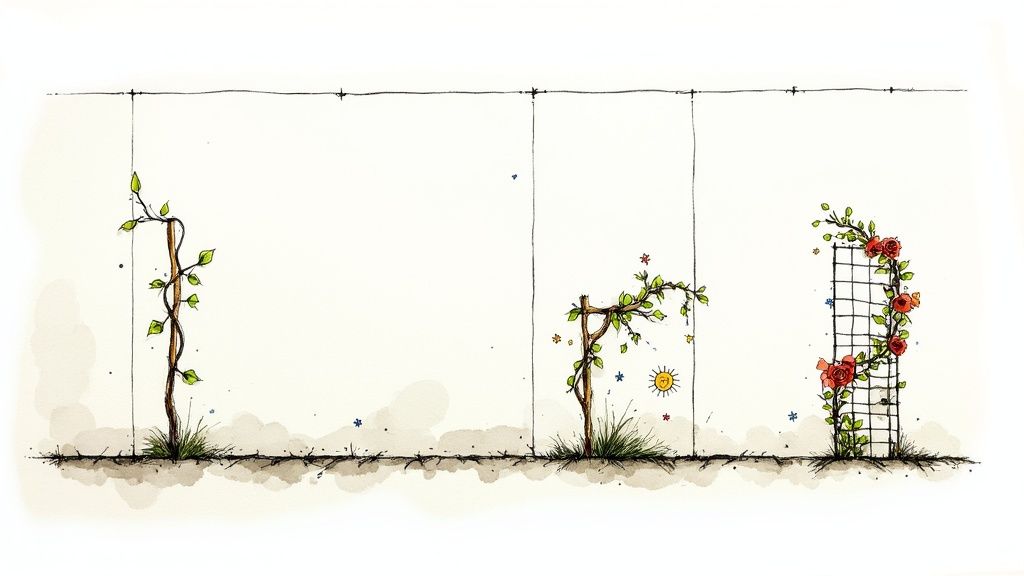
Here’s a crucial bit of garden wisdom: not all climbers get the job done the same way. The way a plant naturally grows dictates the kind of support it needs to grab onto. Getting this right from day one saves a world of frustration down the track.
You’ll generally come across three main types of climbers:
- Twiners: Think Star Jasmine or Wisteria. These plants climb by wrapping their stems around something. They need a support that’s slender enough for them to grip, like wires, thin poles, or a narrow trellis.
- Clingers: Plants like Boston Ivy are the real self-starters. They use tiny aerial roots or sticky little pads to attach themselves directly onto surfaces like brick walls or big rocks. They don’t need any help from you.
- Scramblers: Rambling roses and bougainvillea are classic scramblers. They have long, flexible stems that don’t actually climb on their own. Instead, you need to give them a hand by weaving and tying them onto a support structure.
By understanding whether a plant twines, clings, or scrambles, you can provide the ideal framework for it to grow strong and healthy, creating the exact vertical effect you envision for your garden.
Once you know how a plant climbs, you can confidently pick the perfect spot and structure for it. It's the foundation of any beautiful vertical garden.
Discover New Zealand's Stunning Native Climbers
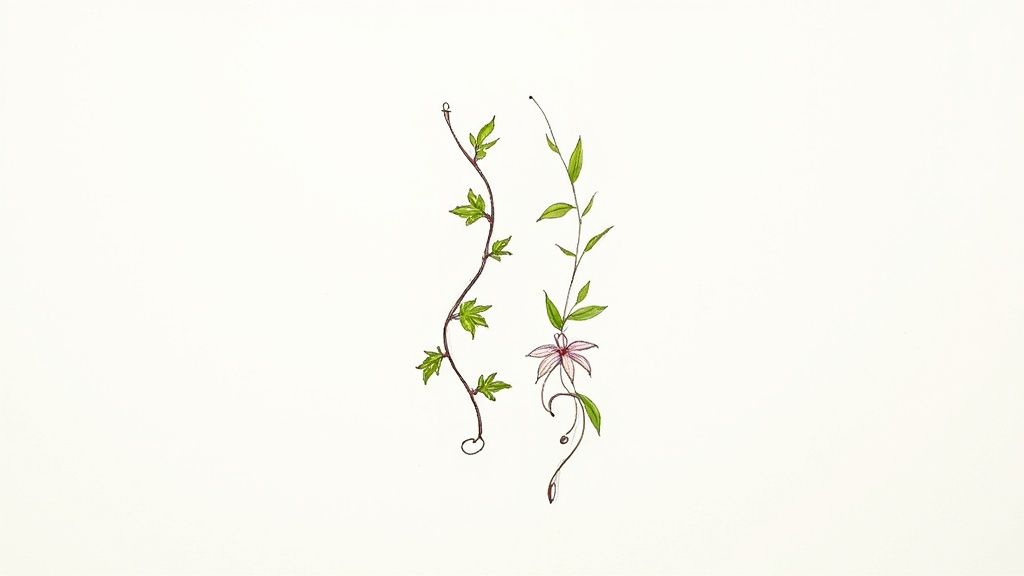
To bring a truly authentic Aotearoa feel to your garden, you can't go past our own native climbers. These plants are so much more than just pretty faces; they're taonga (treasures) that are woven into our local ecosystems, offering food and shelter for our unique birds and insects. Choosing native climbing plants nz is like weaving a little piece of the wild right into your backyard.
One of our most celebrated natives has to be Puawananga (Clematis paniculata). Its cascade of brilliant white, star-shaped flowers is a true sign that spring has arrived in New Zealand, often seen blanketing forest canopies and, of course, garden structures. Seeing it in full bloom from late winter into spring is just a breathtaking sight.
We're actually home to nine unique species of Clematis, all naturally adapted to climb. Five of these are found in the Wellington Conservancy alone, which just goes to show the incredible diversity in our native flora. While Puawananga is a familiar friend, some of its relatives, like Clematis marmoraria, are now Nationally Endangered, reminding us of the importance of conservation. If you're keen to learn more, the Department of Conservation guide to Wellington's Clematis is a fantastic resource.
Hardy and Unique Native Options
Beyond the show-stopping Puawananga, we've got other native climbers that bring their own special character to the garden. These guys are tough, adaptable, and carry that distinct Kiwi charm perfectly suited for any vertical space.
- Kaihua (Parsonsia heterophylla): You might know this one as New Zealand Jasmine. It's an incredibly hardy, vigorous woody climber that produces lovely clusters of small, fragrant, creamy-white flowers in summer. Afterwards, you'll see long, bean-like seed pods develop. Its glossy green leaves provide fantastic coverage all year round.
- Aka kiore (Parsonsia capsularis): A close cousin to Kaihua, this species is a little smaller but every bit as resilient. It’s a great choice for covering a fence or letting it scramble through other shrubs, where its delicate, scented flowers will work their magic on native pollinators.
Both of these Parsonsia species are brilliant picks if you're looking for reliable, attractive evergreen cover. They tend to be much less fussy than many exotic climbers and are perfectly in tune with our local conditions.
When you plant native climbers like Kaihua and Puawananga, you're doing more than just decorating a space. You're actively helping to restore local habitats and creating a garden that's not just beautiful, but buzzing with life.
An Intriguing Leafless Wonder
For gardeners who love something a bit out of the ordinary, Clematis afoliata is a real standout. This curious plant, aptly named Leafless Clematis, looks like a tangled bundle of wiry, green-gold stems for most of the year. It's a fantastic solution for those hot, dry, sunny spots where other climbers just give up.
Then, come spring, its seemingly lifeless stems suddenly burst forth with small, bell-shaped, fragrant yellow flowers. It’s a delightful surprise! This clematis is happiest when it can scramble over rocks or low walls, showing off its unique form. It's a testament to the sheer variety of climbing plants nz has to offer, proving you don't always need lush foliage to make a big impact.
Find Exotic Climbers That Flourish in New Zealand
While our native plants bring that special Aotearoa charm, New Zealand’s temperate climate is also a welcoming stage for a huge cast of international stars. Choosing an exotic climber opens up a world of different colours, fragrances, and growth habits, giving you the freedom to create almost any garden style you can dream up. The great news is that many of these plants are perfectly suited to Kiwi conditions and will put on a reliable performance year after year.
These international performers can fill specific roles in the garden with truly spectacular results. Whether you're dreaming of the classic beauty of an English cottage garden or the vibrant punch of a tropical paradise, there’s an exotic climber that fits the bill. The secret is matching the plant not just to your garden's look, but also to your local climate.
Fragrance, Colour, and Classic Charm
For many gardeners, the first exotic climber that springs to mind is the wonderfully fragrant Star Jasmine (Trachelospermum jasminoides). This evergreen twiner is a true workhorse. It provides glossy green foliage all year round, then completely covers itself in intoxicatingly scented, star-shaped white flowers all through summer. It’s incredibly versatile and, for very good reason, one of the most popular climbing plants in NZ.
If you’re chasing dramatic colour, especially in the warmer, frost-free parts of the country like Northland or the Bay of Plenty, Bougainvillea is simply unbeatable. What look like vibrant pink, purple, or orange flowers are actually modified leaves called bracts, and they create a fiery display that can last for months. These are scramblers, so you’ll need to tie their thorny stems onto a sturdy support. For those lucky enough to garden in these warmer regions, our more detailed guide on caring for Bougainvillea in New Zealand will help you get the most out of these stunning plants.
Choosing an exotic climber is about more than just looks; it's about selecting a plant with traits that have been celebrated in gardens worldwide. You’re tapping into a global palette of proven performers that can thrive right here in your Kiwi backyard.
Choices for Cooler Climates
Don't fall into the trap of thinking all exotic climbers need tropical heat. Far from it! Many classic beauties are perfectly happy with a southern frost.
Climbing roses, for instance, are the heart and soul of a cottage-style garden and thrive in cooler regions from Canterbury right down to Otago. With countless varieties available, you can choose from a huge range of different colours, fragrances, and flowering seasons.
Similarly, certain varieties of Wisteria and the big, showy Clematis hybrids actually put on their best shows after a cold winter dormancy. These deciduous climbers lose their leaves in autumn but reward you with an absolutely unforgettable floral display in spring before the foliage returns. By selecting wisely, you can enjoy the beauty of exotic climbing plants nz gardeners have loved for generations, no matter where in the country you live.
How to Plant and Train Your Climbers for Success
A truly spectacular vertical garden doesn’t happen by accident. It all starts with getting your plant in the ground properly and giving it a bit of gentle guidance from day one. Nail these early steps, and you’re giving your climber the best possible shot at a long, healthy life.
Whether you're planting into a garden bed or a big container, getting the basics of planting fundamentals right is non-negotiable. How you prepare the soil and position the plant is just as important as which climber you’ve chosen.
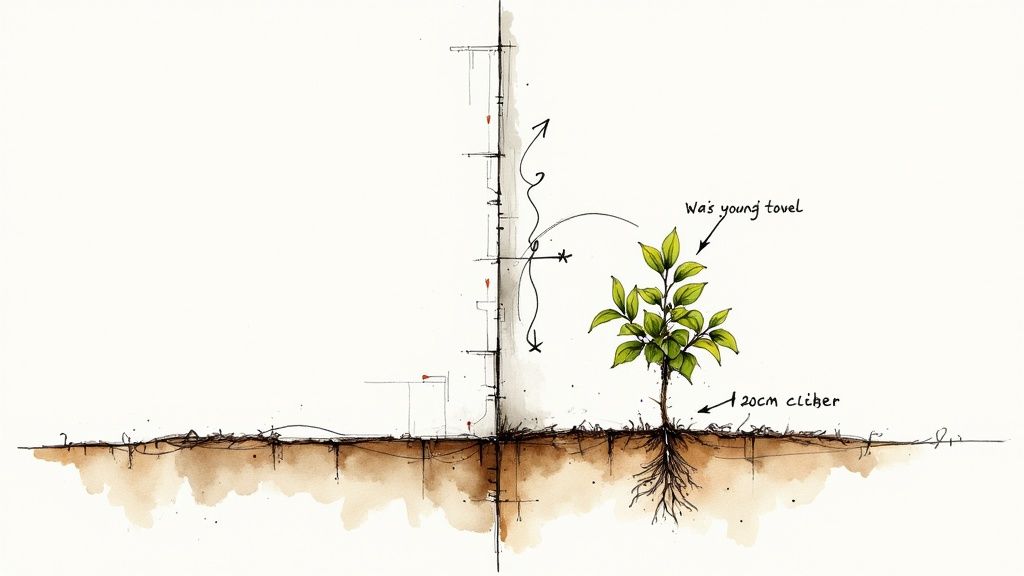
One of the most common mistakes I see is someone planting their climber flush against a wall or fence. This spot is what we call a ‘rain shadow’—it’s often bone dry because the structure blocks most of the rain from ever hitting the soil.
Instead, give it some breathing room. Plant your climber at least 30-45cm away from the base of the wall or trellis.
This simple shift in positioning makes a world of difference. It means the roots can actually catch some natural rainfall and, just as importantly, you can get in there easily to water it. This is absolutely critical during that first year while the plant is getting established.
Setting Up for an Upward Journey
Once your climber is in the ground, its next big task is to find its support. This is where you step in. Think of yourself as a friendly guide, gently encouraging it in the right direction to avoid a tangled, messy start. This early training is what sets the scene for that lovely, even growth you're after.
Don't wait until you’ve got a sprawling mess on your hands. The best time to start training is right away, while the stems are still young, green, and bendy.
Here’s a simple game plan to get you started:
- Angle Towards Support: When you pop the plant in the hole, angle the root ball just slightly so the main stem is already leaning towards its new home—be it a trellis, wire, or wall.
- Initial Guidance: A simple bamboo cane or stake makes a perfect bridge from the plant to its main support. It gives those first new shoots an obvious path to follow.
- Tie Loosely: Use soft garden ties, twine, or even strips of old pantyhose to secure the main stems. Make sure you tie them in a figure-eight loop; this gives the stem room to thicken up without the tie cutting into it.
Think of it like setting up guide ropes for a tent. You're creating a clear and stable framework that the plant will use to build its structure, ensuring it grows exactly where you want it to.
Remember that different climbers have different personalities. A twiner like Star Jasmine will happily wrap itself around wires with minimal fuss. But a scrambler, like a climbing rose, needs you to actively tie its canes onto the support as it grows. It's a bit different from managing indoor climbers; if you're curious about that, our guide to the ever-popular Pothos plant in NZ is a great place to start.
Ultimately, by working with your plant’s natural habits, you’ll create a far more stunning display.
Seasonal Care for Climbing Plants in New Zealand
Right then, let's get your climbers looking their best all year round. The secret isn't about constant fussing; it’s about tuning into the rhythm of the seasons and giving your plants what they need, when they need it. Think of it less as a list of jobs and more as a simple, year-long partnership with your garden.
Here’s a look at how to time your care for New Zealand’s climate, making sure your vertical garden is always a standout feature.
Autumn and Winter Care
As we head into autumn (that’s March to May), you'll notice the garden starting to wind down. Your climbers are getting ready for their winter rest, which makes it the perfect moment for a gentle tidy-up and a bit of prep for the cooler days ahead.
- A Good Tidy: Snip off any stems that are dead, look a bit dodgy, or are clearly damaged. This simple step helps air flow freely and stops pests from finding a cosy spot to spend the winter.
- Tuck Them In: Pop a generous layer of compost or bark mulch around the base of your plants. It acts like a warm blanket, shielding the roots from frost, locking in moisture, and feeding the soil as it breaks down.
Come winter (June to August), it’s time to be brave with the secateurs. This is the main pruning season for many deciduous climbers like wisteria and climbing roses. With all the leaves gone, you can really see the plant's framework. This is your chance to get in there and shape it, encouraging a flush of flowering stems for a truly stunning spring show.
Spring and Summer Care
Once September rolls around, you can feel the energy in the air. The garden is waking up, and your climbers are about to put on a massive growth spurt. Now’s the time to give them the fuel they need.
A dose of a balanced, slow-release fertiliser is just the ticket. It'll provide a steady supply of nutrients for strong new shoots and plenty of flowers. Keep an eye out for early signs of pests like aphids, too—they absolutely love feasting on that tender new growth.
Summer is all about keeping things ticking over so you can sit back and enjoy the show. Watering is key, especially for plants tucked into those dry 'rain shadow' spots right up against a house wall.
From December to February, your focus shifts to watering and deadheading. Snipping off spent flowers from plants like climbing roses tells them to produce even more blooms, keeping the display going for longer.
When the summer heat is really on, a deep, thorough soaking once in a while is far better than a quick daily sprinkle. This encourages the roots to search deeper for water, down where the soil stays cooler and holds moisture. It’s a simple routine that ensures your climbing plants nz look incredible right through summer.
Invasive Climbers to Avoid in Your Kiwi Garden
While climbers are a fantastic way to add a bit of vertical magic to your garden, not all are created equal. Here in New Zealand, responsible gardening means being a guardian of our one-of-a-kind ecosystems. Unfortunately, some plants, introduced for their good looks, have jumped the garden fence and become serious environmental weeds.
These aggressive climbers can quickly smother our precious native forests. They form dense, light-blocking blankets that stop native seedlings from ever seeing the sun and destroy vital habitats for our wildlife.
Choosing non-invasive climbing plants nz is probably one of the most important things you can do as a Kiwi gardener. It’s a simple choice that helps protect the natural heritage of Aotearoa for generations to come.
The Most Notorious Invaders
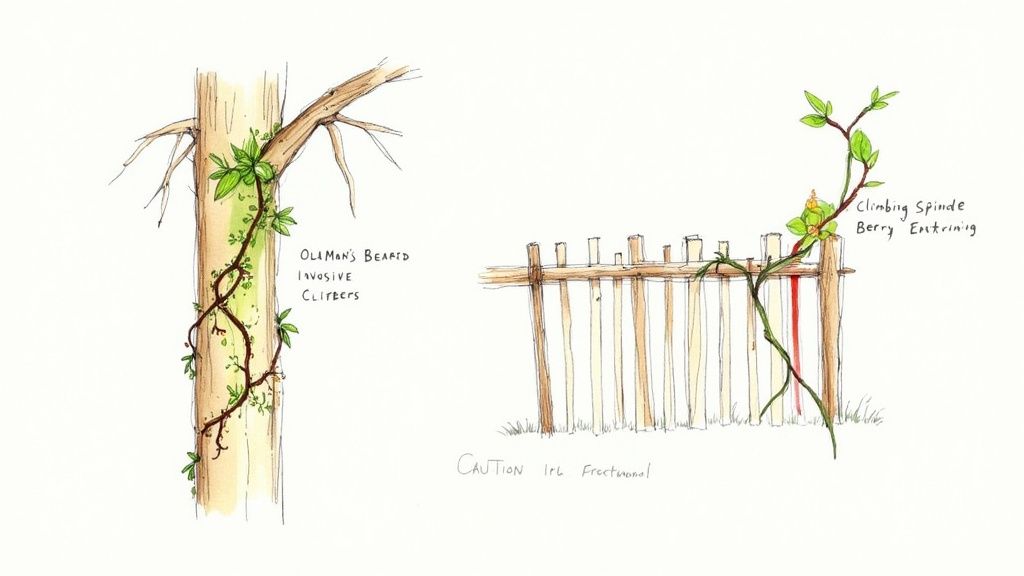
Two of the worst offenders you’re likely to come across are Old Man's Beard and Climbing Spindle Berry. Getting to know them, and making sure they stay out of your garden, is crucial.
- Old Man's Beard (Clematis vitalba): This deciduous vine is a true forest killer. In winter, it blankets trees with fluffy, wispy seed heads that look just like an old man's beard—hence the name. It grows terrifyingly fast, weighing down and breaking mature native trees while completely smothering anything trying to grow on the forest floor.
- Climbing Spindle Berry (Celastrus orbiculatus): You'll recognise this one by its bright yellow-orange berries in autumn. It’s a woody vine that twists itself tightly around host trees, strangling them over time. It can totally take over a canopy, stealing all the sunlight and space from our native species.
Why They Cause So Much Damage
You can’t overstate the ecological harm these plants cause. Invasive climbers, often brought in for ornamental reasons, have done immense damage in places like the Bay of Plenty. Thugs like climbing spindle berry and Madeira vine smother native plants, halt forest regeneration, and completely alter habitats, which leads to a heartbreaking decline in our native biodiversity.
Madeira vine, for instance, can grow up to a staggering 40 metres long, spreading with fleshy rhizomes that simply crush the native understorey. If you want to dive deeper, you can explore more on the impact of these invasive species.
By actively choosing not to plant these climbers, you are breaking the cycle of spread. Your garden can be a safe haven for biodiversity rather than a source of environmental weeds that threaten our native bush.
Instead of planting these destructive species, why not opt for beautiful, well-behaved alternatives? Our stunning native Kaihua or the ever-popular Star Jasmine will look just as good. Your garden will still be a showstopper, and our environment will thank you for it.
Common Questions About Growing Climbers in NZ
Even the most carefully laid plans can hit a snag. When it comes to growing climbers, a few common questions always seem to pop up. Here are some straightforward answers to the queries we hear most often from Kiwi gardeners.
Can I Grow Climbing Plants in Pots?
You absolutely can! Many of the climbing plants NZ gardeners adore, like the fragrant Star Jasmine or some of the more compact Clematis varieties, thrive in large containers. It’s a fantastic solution if you’re working with a patio, a balcony, or even a rental property.
The real secret is to go big with the pot. You'll want something that’s at least 40-50cm across to give the roots plenty of space to stretch out. Just remember that plants in pots rely entirely on you, so you'll need to be a bit more on top of watering and feeding. They dry out much faster and can't search for nutrients like their garden-bound cousins.
Why Is My Climber Not Flowering?
Ah, the classic frustration: a whole lot of green leaves but not a single bloom in sight. It’s a common headache, but the cause is usually one of a few simple things.
- Not Enough Sun: Most flowering climbers are sun-worshippers. Think roses and bougainvillea – they really need a solid six hours of direct sun to get the energy to produce flowers.
- Wrong Pruning Time: It’s easy to get a bit scissor-happy, but if you prune at the wrong time of year, you might be cutting off the very stems that were destined to flower.
- Too Much Nitrogen: If you're feeding your climber a high-nitrogen fertiliser, you're telling it to grow lush, leafy foliage. That's great, but it comes at the expense of flowers.
A quick fix is to switch to a feed that's higher in potassium (often called potash) when spring rolls around. Potassium is the key nutrient that encourages plants to switch their focus to flowering and fruiting. It's often the little nudge a reluctant bloomer needs.
How Do I Revive a Tangled Old Climber?
Staring down a woody, tangled mess of a climber can feel daunting, but don't give up on it! For deciduous plants like Wisteria or an old climbing rose, a brave, hard prune in winter while it's dormant can work wonders.
This is what we call a "renovation prune." You'll want to cut the main framework right back to a strong, manageable shape and clear out all the thin, weak, and congested stems. It feels drastic, but this encourages a burst of fresh, vigorous new growth in the spring. From there, you can train the new shoots properly right from the start, ending up with a much healthier and more beautiful plant.
Ready to transform your vertical spaces? Find the perfect climber for your garden at Jungle Story, New Zealand's premier online plant marketplace. Explore our huge selection of native and exotic climbing plants and get them delivered right to your door. Visit us today at https://junglestory.co.nz.