
For Kiwi homeowners looking to create a bit of privacy or a shelterbelt without waiting years, some of the best fast-growing hedges NZ has on offer are classics for a reason. Think Griselinia, Pittosporum, and even some of the vibrant Photinia varieties. These aren't just plants; they're a fast-track solution to adding privacy, breaking up the wind, and seriously upping your property's street appeal in just a couple of seasons.
Why a Fast-Growing Hedge Is Your Garden's Best Friend
Picture this: you're reclaiming your backyard from prying eyes, and you're not waiting five years to do it. That’s the real magic of a fast-growing hedge and why so many Kiwis are choosing them. They offer a living, breathing answer to the challenges of modern living.
In many new subdivisions, houses can feel a bit on top of each other. A fast-growing hedge completely changes that dynamic. It quickly turns a bare, exposed section into your own private sanctuary, far more effectively than a stark fence ever could. This is about more than just blocking a neighbour's window; it's about carving out a personal, secluded space for your family to enjoy.
A Living Shield Against the Elements
We all know New Zealand's weather can be all over the place. A sturdy hedge is your garden’s first line of defence. Unlike a solid fence, which can actually make wind turbulence worse on the other side, a hedge breathes. It filters and slows the wind, creating a much calmer microclimate for your garden.
This "living fence" brings a few key perks to the party:
- Creates a windbreak: It’s a lifesaver for more delicate plants, stops your outdoor furniture from taking flight, and makes your weekend BBQ much more pleasant.
- Reduces noise pollution: That dense foliage is surprisingly good at muffling traffic noise and the general hum of the neighbourhood, making your home feel more peaceful.
- Provides a natural habitat: A good hedge is a bustling little ecosystem. It offers food and shelter for native birds and helpful insects, turning a simple boundary line into something much more valuable.
A well-chosen hedge is so much more than a line of shrubs. It's a savvy investment in your lifestyle and your property's value. It adds structure, colour, and life to your garden, making it a more enjoyable and useful space from day one.
When it comes down to it, opting for one of the many fast-growing hedges NZ gardeners have come to love is a strategic move. It's the quickest way to build that green, private, and sheltered oasis you've been dreaming of.
New Zealand's Top Native Hedging Champions
If you're after a hedge that just feels right for your garden, you really can't go past our native species. Choosing a plant that's already from here is like picking a local legend for your team—they're already used to our unique Kiwi conditions, from salty sea spray right through to our varied soils and temperamental weather.
These homegrown heroes do more than just stand up to the elements; they bring a kind of effortless beauty that slots perfectly into the New Zealand landscape. When you plant a native hedge, you're doing more than just putting up a privacy screen. You're cultivating a little slice of Aotearoa and building a habitat that supports our precious local birdlife.
Quick Guide to Native NZ Hedging Plants
Choosing the right native hedge can feel like a big decision. To make it a little easier, we've put together this quick-glance table. It compares some of our most popular natives to help you find the perfect fit for your garden's needs, whether you're after towering height, rapid growth, or a particular look.
| Plant Name | Average Annual Growth | Ideal Height | Best For | Sunlight Needs |
|---|---|---|---|---|
| Griselinia littoralis (Kapuka) | 20–40 cm | 2–5 metres | Lush, formal screens; coastal areas | Full sun to partial shade |
| Pittosporum tenuifolium (Kōhūhū) | 30–50 cm | 2–4 metres | Fine-textured, elegant hedges; fast screening | Full sun to partial shade |
| Corokia 'Geenty's Green' | 20–30 cm | 1.5–3 metres | Hardy, dense hedging; windy spots | Full sun |
| Podocarpus totara (Tōtara) | 15–25 cm | 3–10+ metres | Tall, stately screens; formal clipped hedges | Full sun |
This table should give you a solid starting point. Remember to consider your specific climate, soil type, and how much maintenance you're willing to do when making your final choice.
The Undisputed Favourite: Griselinia Littoralis
If there's one native that wins the popularity contest time and again, it has to be Griselinia littoralis. Known to many as Kapuka or New Zealand Broadleaf, its vibrant, apple-green leaves and dense growth make it an absolute star for creating a thick, formal-looking screen.
Griselinia is one of the most dependable fast-growing hedges NZ gardeners turn to, and for good reason. It's particularly brilliant for coastal properties, handling salt spray like a true professional. It’s also not fussy about soil, which makes it incredibly versatile. You can expect it to grow between 20 to 40 centimetres a year, allowing it to bulk up into a decent hedge quite quickly.
Choosing a native hedge is an active invitation for nature to come back into your garden. The flowers and berries on plants like Kōhūhū and Kapuka are a crucial food source and shelter for native birds like the tūī, pīwakawaka (fantail), and silvereye, creating a living, breathing boundary.
The Versatile Pittosporum Tenuifolium
Another absolute superstar is Pittosporum tenuifolium, or Kōhūhū. This isn't just a single plant; it’s an entire family of incredible hedging options, with dozens of different cultivars bred for specific looks and jobs. Their smaller leaves and often dark, slender stems give a finer texture than Griselinia, creating a more sophisticated and elegant backdrop for your garden.
Pittosporum cultivars are loved for their quick growth and amazing adaptability. It doesn't matter if you have a tiny urban courtyard or a sprawling country garden—there’s almost certainly a Pittosporum that will fit the space perfectly.
A few popular choices include:
- 'Stephens Island': Well known for being tough as nails with vibrant green foliage. A fantastic, reliable all-rounder.
- 'Silver Sheen': If you're after a more delicate, shimmering look, this one's for you. It has small, silvery-green leaves on dark stems.
- 'Screen Master': The name says it all. This cultivar was bred specifically for fast, dense screening.
Planting for a Flourishing Native Hedge
To get your native hedge not just to survive, but to really thrive, a bit of prep work will go a very long way. Think of it as laying the perfect foundation for a lifetime of healthy growth.
First up, clear the entire planting area of any weeds and grass, as they’ll only compete for precious water and nutrients. Next, give your soil a boost by digging in plenty of compost or sheep pellets. This gives your young plants the rich, nutritious start they need to get established fast. For a really thick, gap-free screen, aim to space your Griselinia or Pittosporum plants about 75cm to 1 metre apart.
For an even deeper dive into looking after your plants, you might find it helpful to browse the various plant blogs from Jungle Story for more tips.
Popular Exotic Hedges For Maximum Speed
While native hedges are beautifully adapted to Kiwi gardens, sometimes you just need privacy or a windbreak, and you need it yesterday. This is where a few popular exotic contenders enter the picture, offering supercharged growth rates that can establish a dense screen in what feels like record time.
These imported plants are usually chosen for one main reason: sheer speed. If you've got a new build on a bare section or a sudden need for seclusion, the promise of a tall, thick barrier in just a couple of seasons is incredibly tempting. But be warned, this vigorous growth is a classic double-edged sword, bringing both rapid results and a serious commitment to upkeep.
The Trade-Off For Instant Impact
Opting for an exotic speedster means you get that visual barrier faster, but it comes with a non-negotiable maintenance schedule. Think of it like owning a high-performance car; it's thrillingly fast, but it demands more frequent and precise servicing to keep it running well and looking sharp.
Ignoring this upkeep doesn't just result in a messy hedge. It can lead to an overgrown, out-of-control giant that causes issues with neighbours and becomes a massive, expensive headache to wrangle back into shape. It's vital to understand what you're signing up for before you commit.
The main appeal of fast-growing exotics is achieving near-instant results. The trade-off is that their vigorous nature requires you to be equally vigorous with your trimming shears to maintain control and shape.
Photinia 'Red Robin': A Colourful Contender
One of the most recognisable and popular exotic hedging plants in New Zealand is Photinia 'Red Robin'. Its defining feature is the brilliant, glossy red new growth that bursts out after each trim, providing a stunning splash of colour against the older, dark green leaves.
Photinia is a fantastic choice for a fast, formal screen that offers a bit more personality than just plain green. It's relatively hardy and responds exceptionally well to regular clipping—in fact, trimming is what encourages more of that vibrant red foliage. It’s a plant that actively rewards you for keeping it tidy.
Leyland Cypress: The Undisputed Speed King
When it comes to pure, unadulterated speed, nothing in the hedging world really comes close to the Leyland Cypress, often known simply as Leylandii. It's the undisputed champion of fast growing hedges NZ gardeners turn to for maximum height in minimum time.
In New Zealand, these popular exotic hedge plants are mainstays for achieving quick privacy and robust wind protection. The Leyland Cypress can put on an astonishing 60 centimetres of growth per year. This makes it one of the most aggressive and rapid screening conifers available, while the colourful Photinia can achieve a respectable 30 to 45 centimetres annually. To better understand their role in local landscaping, you can explore more about these popular hedging choices and their specific benefits for Kiwi gardens.
But this phenomenal growth rate is exactly what makes Leylandii so demanding. It needs, at a bare minimum, two firm trimmings per year. If you skip a season, it can quickly get out of hand, becoming woody and developing bare patches if you try to cut it back too hard later.
A well-maintained Leylandii hedge is a magnificent, dense green wall; a neglected one can become a neighbourhood headache. This makes it a choice best suited for those who are fully prepared for a lifelong commitment to regular, disciplined maintenance.
How to Plant Your Hedge for a Powerful Start
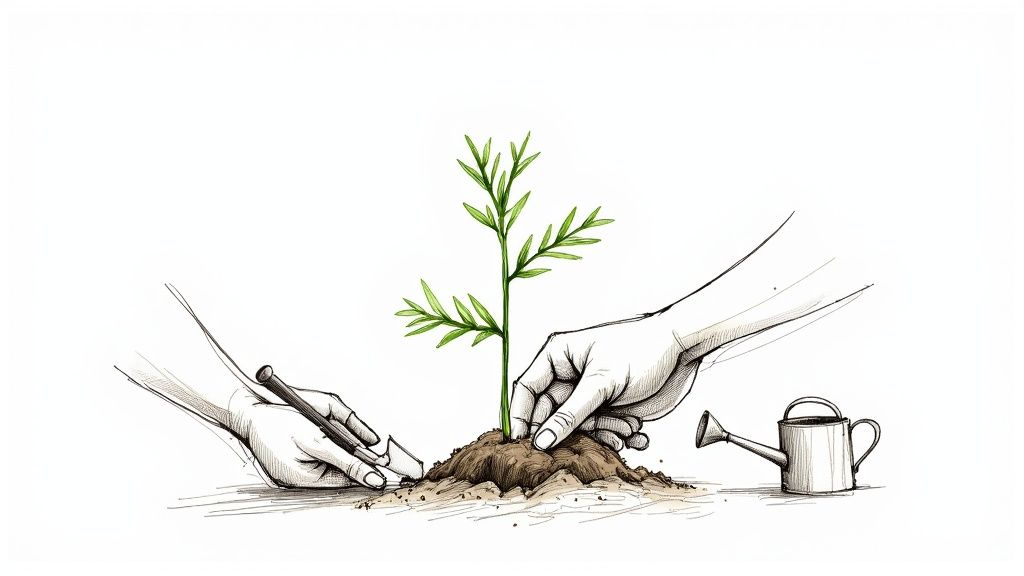
Getting your new hedge in the ground properly is the single most important thing you can do for fast, healthy growth. A bit of mahi now pays off hugely down the track, giving your plants the strong start they need to become a lush, dense screen in record time.
Think of it as giving your new plants a gourmet first meal instead of a quick takeaway. A well-prepared spot provides everything they need to establish deep roots and really take off.
Prepping Your Site Like a Pro
Before a single shovel hits the dirt, you need to create a clean slate. Clear out a strip at least 50cm to 1 metre wide where your hedge will go. Get rid of every last bit of grass and any pesky weeds—these guys are thieves, and they'll steal water and nutrients directly from your new plants.
Once the area is clear, it's time to supercharge the soil. Most Kiwi soils can do with a boost of organic matter. Dig a trench along your planting line, making it about twice as wide and deep as the plant pots. Then, mix in generous amounts of quality compost or well-rotted manure. This not only enriches the soil but also improves drainage, creating a soft, welcoming place for new roots to explore.
The Golden Rules of Spacing and Timing
Spacing is the secret sauce for a thick, gap-free hedge. Plant them too close, and they'll just fight each other for light and space. Plant them too far apart, and you'll be staring at gaps for years to come.
For most of the popular fast growing hedges NZ gardeners love, like Griselinia and Pittosporum, a spacing of 75cm to 1 metre between each plant is the sweet spot. If you're planting something extra vigorous like a Leyland Cypress, you can push that out to 1-1.5 metres.
In New Zealand, autumn (March to May) is the absolute best time to plant a hedge. The soil is still warm from summer, but the air is getting cooler and we generally see more rain. This combo lets your hedge grow a solid root system over winter without the stress of summer heat, setting it up for an explosion of growth come spring.
Essential First Steps After Planting
Right, your hedge is in the ground—awesome! But don't put the tools away just yet. These first few actions are crucial for helping your plants settle in.
- Water Deeply: As soon as you’ve finished planting, give your hedge a really deep, thorough soaking. This settles the soil around the roots and gets rid of any air pockets that could dry them out. Keep watering regularly through that first summer.
- Mulch Generously: Spread a thick layer of bark chip or pea straw mulch around the base of your plants. This is a game-changer. It helps the soil hold onto moisture, stops weeds from popping up, and keeps the roots cool.
- Feed for Success: A dose of slow-release fertiliser at planting time gives your hedge a steady supply of nutrients for the first few months. It's the VIP treatment your hedge needs to put all its energy into growing strong.
These principles of good soil, proper watering, and feeding aren't just for hedges. If you're keen to apply them indoors, check out our guide on Fiddle Leaf Fig care, where these same fundamentals make all the difference.
Taming the Green Giant: Keeping Your Hedge in Check
The secret to a gorgeous, dense hedge isn't just how fast it grows, but how you channel that energy. A "fast-growing" hedge comes with a non-negotiable partner in crime: regular trimming. If you skip this, your beautiful privacy screen can quickly turn into a sparse, leggy, and frankly, untidy mess.
Think of it like this: managing a new hedge is a two-step dance. First, there's formative pruning. This is all about shaping the young plants to build a strong, bushy framework right from the ground up, encouraging them to grow outwards as well as upwards.
Then comes maintenance trimming. This is the regular haircut that keeps your established hedge looking sharp, staying healthy, and not invading your neighbour's garden.
Your NZ Seasonal Trimming Calendar
Timing your trims with our Kiwi seasons is the key to promoting that thick, lush growth we all want. Cutting at the wrong moment can stress the plant and leave you with a patchy-looking hedge.
- Late Spring (October/November): This is the perfect time for the first big trim of the year. It catches the hedge just after its initial spring growth spurt, encouraging it to thicken up beautifully before the summer sun hits.
- Late Summer/Early Autumn (February/March): A second trim tidies up all that summer growth and gets the hedge looking sharp for winter. This stops it from getting too woody and ensures it looks neat through the cooler months.
The real goal of trimming isn't just about controlling size; it's about forcing the plant to produce dense, multi-stemmed growth. A well-trimmed hedge becomes a solid wall of green, while an untrimmed one is just a loose collection of spindly, individual plants.
Ongoing Care for a Thriving Hedge
Beyond a good trim, a little consistent care will ensure your hedge remains a handsome and healthy garden feature for years to come. It just takes a few key tasks tailored to our climate.
First up, feeding. A quality slow-release fertiliser applied in early spring gives your hedge all the nutrients it needs for vigorous growth. A second, lighter feed in autumn can also help it bunker down and strengthen up for the winter ahead.
Next is watering, which is especially critical during those long, dry Kiwi summers. A deep, infrequent soak is so much better than a light daily sprinkle. This simple trick encourages the roots to drive deeper into the soil, making the whole plant tougher and more drought-tolerant. Even our hardy natives like Pittosporum tenuifolium, which can shoot up by 30 to 50 centimetres a year, benefit hugely from this approach.
Finally, keep a keen eye out for common pests, like psyllids on your Pittos or aphids on tender new growth. Spotting these little problems early means you can deal with them simply, before they turn into a big headache. This all-around approach to care will ensure your fast growing hedges nz investment truly thrives.
For more inspiration on weaving beautiful, healthy plants into your outdoor space, have a look at our guide on landscaping ideas for NZ gardens.
Right, you've got your plan sorted, but a few niggling questions always seem to pop up just as you're about to get stuck in. It happens to everyone. To give you a bit of a head start, we’ve gathered some of the most common queries we hear from Kiwi gardeners about getting their living fences established.
What Is the Absolute Fastest Growing Hedge Plant in NZ?
For sheer, unadulterated speed, nothing really comes close to the exotic Leyland Cypress (Leylandii). In the right spot, this thing can absolutely rocket upwards by over 60cm a year, sometimes even more. It's the go-to for anyone who needed a tall screen yesterday.
But, and this is a big but, that incredible growth rate comes with a serious commitment. Leylandii demands a strict, regular trimming routine—at least twice a year—to stop it from morphing into a monstrous, out-of-control tree. If you let it get away on you, pulling it back into shape is a massive, often impossible, task.
If you're after a fast-growing native that's a whole lot more forgiving, you simply can't look past Pittosporum tenuifolium varieties. They give you that quick growth without the high-maintenance headache of Leylandii, making them a brilliant and deservedly popular choice for most gardens around New Zealand.
When Is the Best Time of Year to Plant a Hedge in NZ?
The sweet spot for planting a new hedge here in New Zealand is autumn, between March and May. This timing isn't just a random suggestion; it's based on a perfect storm of growing conditions:
- Warm Soil: The ground is still holding onto the summer's warmth, which is perfect for encouraging new roots to get established and start spreading out.
- Cooler Air: The milder days mean less stress on the young plants. They aren't having to battle intense heat while trying to settle in.
- Consistent Rain: Autumn usually brings more reliable rain, which means you'll spend a lot less time dragging the hose around.
This combination lets your new hedge put all its energy into building a robust root system over winter. Come spring, it’ll be ready to burst into a flurry of healthy new growth. You can plant in spring, of course, but just be prepared for a much more demanding watering schedule through that first summer.
Think of it this way: planting in autumn gives your hedge a nine-month head start. It gets to focus entirely on building a solid underground foundation before it even thinks about producing lush foliage up top.
How Far Apart Should I Plant My Hedge for a Dense Screen?
Getting the spacing right is the secret to creating that lush, gap-free wall of green you're picturing. If you plant them too close, the shrubs are forced into a desperate competition for light, water, and nutrients, which often results in patchy, weak growth. Plant them too far apart, and you'll be staring at gaps for years, waiting for them to fill in.
For popular hedging plants like Griselinia and Pittosporum, a spacing of 75cm to 1 metre between each plant is bang on. This gives each one enough room to breathe and grow strong, while still being close enough to merge into a solid screen. For the real power-growers like Leylandii, you can push that out to 1-1.5 metres.
Can I Grow a Fast Growing Hedge in a Large Pot?
Absolutely! Growing a "hedge" in a large trough or a line of big containers is a brilliant way to screen off a patio, deck, or balcony. It's also a perfect solution for renters who want some privacy but can't go digging up the garden.
The trick is to pick a more compact variety—a dwarf Pittosporum, for example—and plant it in a very large container with plenty of drainage holes. Just remember that potted plants are a bit more high-maintenance. They dry out much quicker in the sun and wind, and they're completely reliant on you for nutrients. You’ll need to be on the ball with regular watering and feeding to keep them looking their best, and consistent pruning will be key to maintaining a tidy shape and size.
Ready to find the perfect plants for your garden sanctuary? Jungle Story connects you with New Zealand's top growers, with a huge range of native and exotic hedging plants delivered straight to your door. Start creating your private oasis today by exploring the full collection at https://junglestory.co.nz.