
When it comes to keeping your indoor plants looking their best, the secret weapon is often a good quality, balanced liquid fertiliser. It's the key to replacing all those essential nutrients that your plant simply can't get from its potting mix alone. Think of it as a crucial part of their diet, especially during the active growing seasons of spring and summer, for lush leaves, strong roots, and a happy, healthy plant.
Why Your Houseplants Are Secretly Hungry
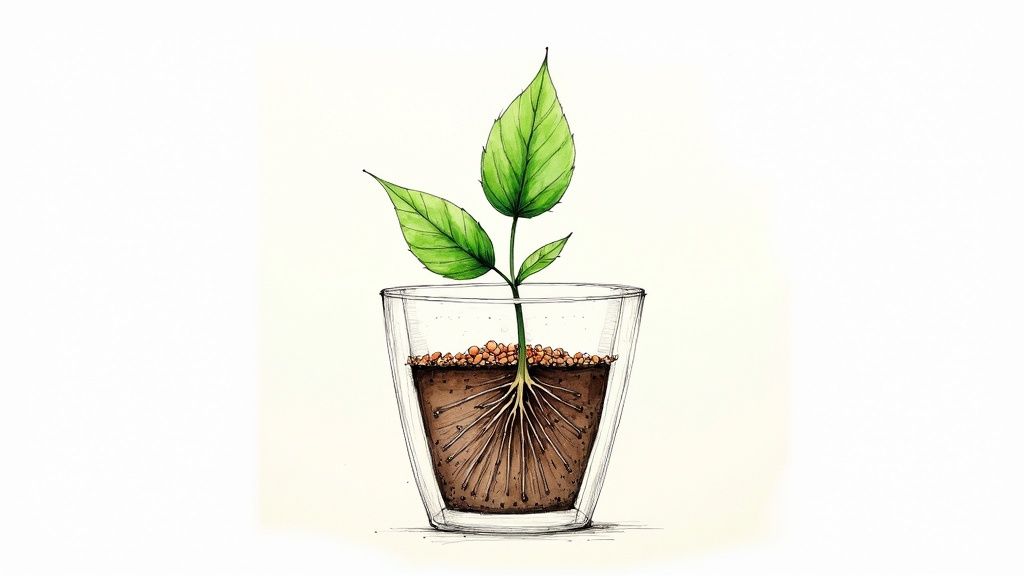
Ever had a plant that started off looking amazing, only to slowly become pale and sad, even though you’re sure the watering and light are spot on? The culprit is very often an empty pantry.
Unlike plants growing wild in a garden, which can pull nutrients from a huge ecosystem, your potted friends are stuck with what's in their pot. It’s a finite world.
Every time you water, you're not just hydrating the plant; you're also washing a tiny amount of nutrients out of the soil. At the same time, the plant is constantly using up what's available to push out new leaves and grow stronger roots. Sooner or later, the supply just runs out, and your plant is left starving. This is where a good fertiliser for indoor plants becomes your best friend.
The Role of Fertiliser in Plant Health
Instead of thinking of fertiliser as some kind of magic growth potion, it's much more helpful to see it as a well-balanced meal. It’s simply putting back what's been lost or used up. It provides the fundamental building blocks your plant needs to really thrive indoors.
Without this regular top-up, you’ll likely start to see a few tell-tale signs:
- Slow or Stunted Growth: It feels like your plant just isn't getting any bigger.
- Yellowing Leaves (Chlorosis): This is a classic sign, especially on the older leaves, that something is missing from its diet.
- Weak Stems: The plant might look a bit floppy or struggle to hold itself up.
- Lack of Flowers: Flowering plants need a huge amount of energy, and a nutrient shortage means they won’t have enough fuel to produce blooms.
For Kiwi plant lovers, whether you're in a sunny Auckland apartment or a cosy Dunedin living room, getting this right is everything. Feeding your plants is the difference between a struggling bit of green and a flourishing indoor jungle.
The love for gardening across New Zealand highlights just how vital proper plant nutrition is. In fact, our appetite for fertilisers is so strong that in 2022, consumption hit 305% of what we produce locally. This shows we rely heavily on imported products to keep our gardens and houseplants happy. You can dive deeper into these trends in this report from Trading Economics.
This guide is all about helping you understand your plant's diet so you can give it exactly what it needs to flourish.
Decoding the Numbers on the Bottle
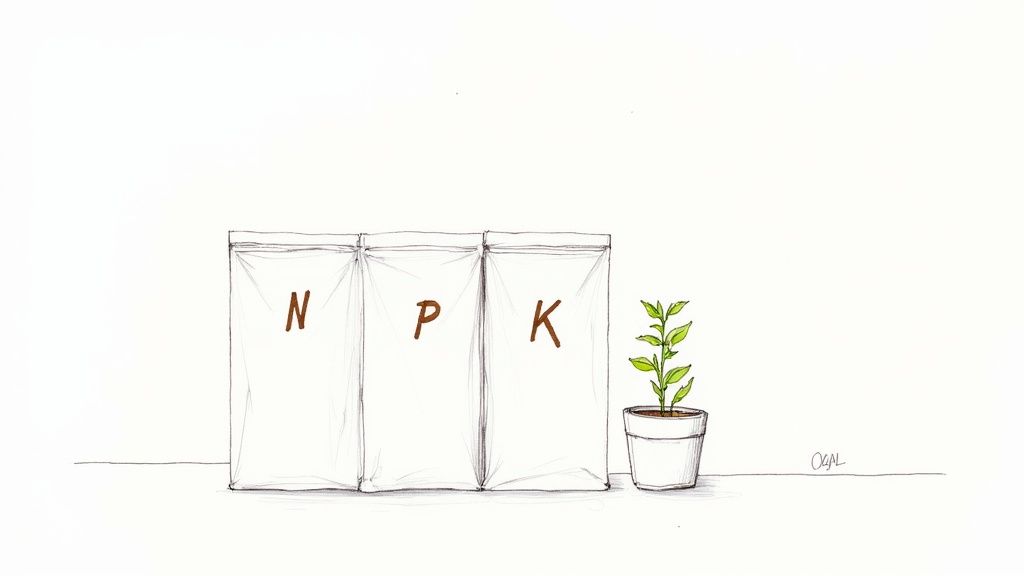
Picking up a bottle of plant food can feel a bit like reading a secret code. But those three big numbers you see on the label – the N-P-K ratio – are actually pretty straightforward once you know what you’re looking at.
Think of it as the nutritional panel for your plant's dinner. These numbers always show the percentage of three essential macronutrients, and always in this order: Nitrogen (N), Phosphorus (P), and Potassium (K). So, a bottle labelled 10-5-5 is simply telling you it contains 10% Nitrogen, 5% Phosphorus, and 5% Potassium. Cracking this simple code is the first big step toward picking the perfect food for your indoor jungle.
Once you know what each of these elements does, you can stop guessing and start giving your plants a precisely balanced meal tailored to their needs.
N is for Nitrogen: The Green Growth Engine
Nitrogen is all about the green bits. It’s the main ingredient for producing lush, vibrant leaves and strong, sturdy stems. You can think of it as the fuel that powers photosynthesis, helping your plants turn sunlight into the energy they need to grow.
A fertiliser with a higher first number (the N) is an excellent choice for leafy houseplants like your Fiddle Leaf Fig, Monstera, or Philodendrons. If you want your plant to put its energy into pushing out big, beautiful new leaves, a nitrogen-rich diet is the way to go.
P is for Phosphorus: The Root and Bloom Builder
Phosphorus is the quiet achiever, working its magic below the soil and getting your plant ready for its big floral show. It’s absolutely vital for developing a strong, healthy root system – and a robust root network is the foundation of any happy plant, allowing it to soak up water and nutrients much more efficiently.
On top of that, phosphorus is the key player when it comes to encouraging flowers and fruit. If you've got a flowering plant like an Orchid, Peace Lily, or a Hoya that's being a bit shy, a fertiliser with a higher second number (the P) can give it the nudge it needs to start producing those gorgeous blossoms.
By understanding the roles of N, P, and K, you can customise your plant's diet. A balanced formula works well for general health, but a specialised blend can target specific needs, like encouraging a shy Hoya to flower or helping a Pothos grow long, trailing vines.
K is for Potassium: The Plant's Immune System
Potassium is your plant’s all-around health tonic. It basically acts like its immune system, helping it fight off diseases, cope with temperature changes, and manage all its internal processes, like moving water around. It also strengthens the plant’s cell walls, making it more durable and resilient from top to bottom.
While you might not see the effects as obviously as new leaves or bright flowers, potassium is absolutely crucial for your plant's long-term health and overall vigour. A good, balanced level of K ensures your plant is tough enough to handle the little stresses that come with indoor life.
For a deeper dive, you can explore more about choosing the right indoor plant fertilizer in our comprehensive guide.
Choosing the Right Fertiliser for Your Plants
Stepping into a garden centre can feel a bit overwhelming when faced with a wall of different plant foods. But honestly, choosing the right fertiliser for your indoor plants doesn't have to be complicated. It really just comes down to your plants, your lifestyle, and your own personal gardening philosophy.
By getting to know the main types available here in New Zealand, you can easily pick the perfect match for your routine. The three most common forms you'll find are liquids, slow-release granules, and organic options, and each one has its own distinct advantages.
Liquid Concentrates for Quick Results
Liquid fertilisers are a hugely popular choice for indoor plant enthusiasts, and for good reason. They act fast. Because the nutrients are already dissolved in water, your plant's roots can absorb them immediately.
Think of it like giving your plant a revitalising smoothie—the goodness gets to work straight away. This makes them perfect for giving a hungry plant a quick boost during its peak growing season from spring through summer.
They also give you excellent control. You can easily adjust the strength by diluting more or less, tailoring the feed to the specific needs of different plants, from a delicate fern to a robust Monstera. The only real drawback is that you need to apply them regularly, usually every couple of weeks, which requires a bit of consistency.
Slow-Release Granules for Convenience
If you've got a busy schedule or tend to be a bit forgetful (we've all been there!), slow-release fertilisers are a fantastic solution. These come as small pellets or granules that you simply mix into the top layer of your potting mix.
Each time you water your plant, a tiny amount of the fertiliser's nutrient coating dissolves, delivering a steady, gentle feed over an extended period. This 'set and forget' approach can keep your plants nourished for anywhere from three to nine months, depending on the product.
This method seriously reduces the risk of over-fertilising and burning your plant's roots. It's an ideal, low-maintenance choice that ensures your plants get a consistent diet without you needing to remember a strict feeding schedule.
Organic Options for Gentle Nurturing
For those who prefer a more natural approach, organic fertilisers like seaweed tonics, fish emulsion, or worm castings are wonderful alternatives. Widely available across New Zealand, these options are brilliant because they feed the soil as well as the plant.
Organic fertilisers work by nourishing the beneficial microbes in the potting mix. These microbes then break down the organic matter into nutrients that the plant can easily absorb, creating a healthier soil environment for the long term.
They release nutrients slowly and gently, making it almost impossible to burn your plant’s roots. While they might have a subtle earthy scent, they are an excellent, sustainable choice for building strong, resilient plants from the soil up. Seaweed tonics, in particular, are brilliant for reducing transplant shock and promoting robust root health.
Fertilizer Types at a Glance
Feeling a bit overwhelmed by the options? This quick comparison should help you choose the right one for your indoor plants and routine.
| Fertilizer Type | Best For | Application Frequency | Pros | Cons |
|---|---|---|---|---|
| Liquid Concentrates | Quick boosts during growing season, precise nutrient control | Every 2-4 weeks | Fast-acting, easy to adjust strength | Requires regular application, easy to overdo it if not careful |
| Slow-Release Granules | Busy or forgetful plant parents, consistent feeding | Every 3-9 months | 'Set and forget' convenience, low risk of fertiliser burn | Less control over nutrient release |
| Organic Options | Improving soil health, gentle long-term feeding | Varies (e.g., monthly for seaweed) | Builds healthy soil, almost impossible to burn roots | Can have a noticeable smell, may act slower than synthetics |
Ultimately, the best fertiliser is the one you’ll actually use. Whether you prefer the hands-on approach of liquid feeding or the convenience of slow-release, consistency is what will make your plants truly thrive.
A Feeding Schedule for New Zealand Seasons
When it comes to feeding your houseplants, timing is everything. The real secret is to work with their natural growth cycles, not against them. Here in New Zealand, our distinct seasons tell your plants when it’s time to grow and when it’s time to take a well-deserved rest. Nailing this rhythm is the key to giving them the right amount of fertiliser at exactly the right time.
For most indoor plants, the main growing season kicks off in spring and runs right through summer – think September to February. As the days get longer and the light gets stronger, your plants wake up and start pushing out new leaves, stems, and even flowers. This is when they're at their hungriest and will get the most out of a regular feeding schedule.
Spring and Summer: The Growing Season
From September onwards, your houseplants are in full swing. This is their peak performance period, and they need a consistent supply of nutrients to fuel all that growth. It’s their most energetic, productive time of the year.
- Frequency: For most common houseplants, a diluted liquid fertiliser every 2-4 weeks is a great place to start.
- What to Look For: You’ll see new leaves unfurling, notice faster growth, and might even be treated to some flowers. These are all clear signs your plant is actively using the nutrients you’re giving it.
It's so important to follow the dilution instructions on your fertiliser. A weak, regular feed is far better and safer for your plant than a strong, infrequent dose, which can easily scorch the roots.
Autumn and Winter: The Resting Period
As we head into autumn and winter, from about March to August, the days shorten and the light levels drop. This is nature’s signal to your plants that it’s time to slow down and conserve energy. They slip into a state of dormancy, where growth becomes minimal or stops altogether.
Continuing to fertilise during this resting phase can do more harm than good. Because the plant isn't actively using the nutrients, they can build up in the soil, potentially burning the roots and causing damage. It’s best to significantly cut back or completely stop feeding your plants during these cooler, darker months. Some people might offer a very weak, diluted feed once every 6-8 weeks, but for most plants, stopping completely is the safest bet.
It's interesting to see how bigger-picture factors can influence our gardening habits. In 2023, economic pressures actually saw many Kiwi farmers and gardeners reduce their fertiliser use by about 20%. It’s a good reminder of how things like supply and cost can directly impact how we care for everything from huge farms to our own indoor jungles. You can read a bit more about these agricultural trends and their effects.
By tuning into this simple seasonal calendar, you take the guesswork out of feeding and make sure you're supporting your plants exactly when they need it most.
Common Feeding Mistakes You Can Easily Avoid
It's one thing to love your plants, but it's another to love them to death. We’ve all been there. When it comes to using a fertiliser for indoor plants, it’s surprisingly easy to get a little too enthusiastic, and sometimes that extra "love" does more harm than good. A few common slip-ups can lead to some very unhappy houseplants, but knowing what to look for is half the battle.
The biggest pitfall by far is simply over-feeding. It’s a classic case of too much of a good thing. Passionate plant owners often figure that more food equals more growth, but this can quickly overwhelm a plant’s delicate root system. Excess fertiliser salts build up in the soil, scorching the roots and blocking them from absorbing water properly. The result? A stressed, dehydrated plant, even if you’re watering it perfectly.
Spotting the Signs of Over-Feeding
If you've been a bit heavy-handed with the plant food, your plant will start sending out distress signals. Learning to read these clues means you can step in quickly and fix the problem before any real damage is done.
Keep an eye out for these tell-tale signs:
- Burnt or Crispy Leaf Tips: A classic symptom of fertiliser burn is when the edges of the leaves turn brown and feel dry and brittle.
- White Crust on the Soil: See a salty, white film forming on the surface of your potting mix? That’s a dead giveaway of nutrient build-up.
- Yellowing Lower Leaves: While yellow leaves can mean a few different things, if the lower leaves suddenly start yellowing and dropping off right after you’ve fed your plant, root damage is a likely culprit.
- Stunted or Limp Growth: An over-fed plant might suddenly stop putting out new growth, or just look weak and droopy because its roots are struggling to function.
If you think you've overdone it, the best thing to do is flush the soil. Just pop your plant in the sink or shower and let lukewarm water run through the pot for a few minutes. This helps wash away all those excess mineral salts and gives the roots a much-needed fresh start.
The Problem with Fertilising Dry Soil
Here’s another mistake that’s incredibly common: applying liquid fertiliser when the potting mix is bone dry. Think of your plant’s roots like tiny, delicate sponges. When they’re completely parched, they soak up liquid way too fast.
Pouring a concentrated nutrient solution onto that parched soil is a massive shock to the system and can easily burn the sensitive roots. The fix is simple: always water your plant thoroughly first. Give it about an hour to properly hydrate, and then apply your diluted fertiliser. This little bit of prep ensures the roots absorb the nutrients gently and safely.
Using the Wrong Formula for the Job
Not all fertilisers are created equal, and using the wrong one is like trying to fit a square peg in a round hole. Giving a high-nitrogen lawn feed to your flowering Hoya, for instance, will probably give you lots of lush leaves but no beautiful blooms. On the flip side, a bloom-booster formula won’t do much for a leafy Monstera that you want to grow big and jungle-like.
Always try to match the fertiliser to what the plant is trying to do. Most general-purpose indoor plant foods have a great balance for foliage plants, while you can find specialised formulas for flowering species, cacti, and citrus. Taking a moment to choose the right N-P-K ratio makes all the difference. For a deeper dive, you can learn more about picking the perfect https://junglestory.co.nz/blogs/plant-blogs/indoor-plant-fertiliser in our detailed guide.
Embracing Organic and Sustainable Options
For the eco-conscious Kiwi gardener, feeding your indoor plants can feel both effective and deeply responsible. Making the switch to organic and sustainable options means you can nourish your greenery in a way that aligns with the values of kaitiakitanga—guardianship—for your own indoor world.
Instead of giving your plants a quick chemical fix, organic solutions actually work with the soil. They build a healthier ecosystem right there inside the pot.
Gentle Alternatives for a Healthier Home
Unlike synthetic fertilisers, which can sometimes be a bit harsh, organic alternatives release their nutrients slowly and gently. This gradual process dramatically reduces the risk of burning your plant’s delicate roots, making them a much safer choice, especially if you're new to this. Think of it as giving your plant a slow-cooked meal rather than a fast-food fix.
Some of the best options you can find here in New Zealand include:
- Seaweed Tonics: A fantastic all-rounder, seaweed is less of a fertiliser and more of a plant tonic. It's packed with beneficial trace elements and growth hormones that stimulate strong root development and boost your plant's overall resilience to stress.
- Worm Castings (Vermicast): Gardeners often call this 'black gold', and for good reason. Worm castings are a powerhouse of nutrients and beneficial microbes. Mixing them into your potting mix enriches the soil, improves aeration, and helps it hold onto moisture.
- Compost Tea: This is a liquid brew made by steeping compost in water. It delivers a rich blend of nutrients and beneficial microorganisms straight to your plant's roots, improving soil health with every watering.
Embracing these organic methods means you're not just feeding the plant; you're nurturing the entire potted ecosystem. This holistic approach creates a more robust and self-sustaining environment for your plants to thrive in for years to come.
This growing preference for sustainable care is something we're seeing across the board. The gardening supplies industry in New Zealand has seen a real shift as rising environmental awareness influences what people buy, with many Kiwis now opting for eco-friendly fertilisers. You can see more insights about these consumer trends at IBISWorld.
Choosing an organic path for your plants contributes to a healthier home and a healthier planet. You can learn more about finding the right plants to pair with this approach in our guide to great indoor houseplants.
Your Houseplant Fertilising Questions Answered
Even with a solid plan, a few questions always seem to sprout up. Here are some quick, clear answers to the queries we hear most often from Kiwi plant parents, so you can feel confident you’re on the right track.
Can I Use the Same Fertiliser on All My Plants?
While a good-quality, all-purpose fertiliser is a fantastic starting point, it isn’t always a one-size-fits-all magic bullet. Different plants have different appetites.
For instance, plants prized for their flowers, like orchids or peace lilies, will thank you for a feed that’s higher in phosphorus (the 'P' in N-P-K) to help them produce those beautiful blooms. On the other hand, leafy giants like Monsteras and Fiddle Leaf Figs are all about that lush foliage, so they crave more nitrogen (the 'N') to power green growth. For the best results, it really pays to match the feed to the plant.
What’s the Difference Between Fertiliser and Plant Food?
You’ll hear these terms thrown around a lot, and for all intents and purposes, they mean the same thing in the gardening world. Both "fertiliser" and "plant food" are just names for products that give your houseplants the essential nutrients they can’t get from their potting mix alone.
Think of it this way: plants actually make their own food through photosynthesis. Fertiliser is more like a multivitamin, giving them the raw mineral ingredients they need to do their job properly. So, don't get hung up on the name—focus on what’s inside, especially the N-P-K ratio.
Is It Possible to Revive a Plant With Fertiliser Alone?
Fertiliser is a great tool for supporting plant health, but it’s not a miracle cure. If your plant is struggling because of something else—like soggy soil from overwatering, a pest infestation, or not enough light—adding fertiliser won’t fix the root cause. In fact, it can sometimes make things worse.
Your first step should always be to play detective and sort out the real problem. Once your plant is stable and on the mend, a gentle, diluted dose of fertiliser can be a great way to support its recovery and encourage strong new growth.
Ready to give your indoor jungle the balanced diet it deserves? Explore the wide range of plants and care products at Jungle Story, New Zealand’s top online marketplace for every green thumb. Find your next leafy friend at https://junglestory.co.nz today.