
You've seen them, haven't you? Those iconic, sculptural plants holding court in the corner of a stylish living room or sunny café. With their huge, violin-shaped leaves and commanding presence, the Fiddle Leaf Fig (Ficus lyrata) has well and truly become a statement piece in homes all over Aotearoa. If you're thinking of bringing one home, you've come to the right place for a complete guide, tailored specifically for our unique Fiddle Leaf Fig NZ climate.
Welcoming a Fiddle Leaf Fig into Your Kiwi Home
That stunning plant you admired was almost certainly a Fiddle Leaf Fig. Hailing from the warm, humid rainforests of West Africa, it's captured the hearts of plant lovers worldwide, and Kiwis are no exception. There's just something about its dramatic form that can instantly lift a room from nice to wow.
But let's be honest, they also come with a bit of a reputation. The Fiddle Leaf is often called a diva, and many new owners feel a little nervous after hearing stories of dropped leaves and fussy behaviour. My goal here is to cut through the drama and show you that with the right know-how, anyone in New Zealand can grow one successfully. Think of me as your local plant expert, here to translate its needs for our specific Kiwi conditions.
What to Expect From This Guide
We're going to walk through everything you need to know, from picking out the perfect plant to keeping it happy long-term, all with a distinct New Zealand focus. We get it – looking after a plant through a scorching Hawke's Bay summer is a world away from managing it through a damp Dunedin winter.
Here’s what we’ll cover:
- Understanding Core Needs: We’ll look at how its tropical origins shape its needs for light, water, and humidity right here in NZ.
- Sourcing in NZ: Real-world tips on where to buy your plant, from big-box stores to your local specialist nursery.
- Seasonal Care: A year-round game plan for our Southern Hemisphere seasons, tackling everything from feeding in spring to dealing with dry air from winter heat pumps.
- Troubleshooting Common Issues: Clear, simple fixes for problems like brown spots and droopy leaves, which are often tied to our unique environment.
The aim is to give you confidence. Whether you’re starting small with something like a Fiddle Leaf Fig 'Bambino' or going all-in on a mature specimen, you'll have the tools to help it do more than just survive – you'll help it thrive. Once you understand its personality and give it a bit of consistent care, you'll find this supposed diva can be a surprisingly tough and rewarding green mate. Let's get started.
Understanding Your Fiddle Leaf Fig's Core Needs
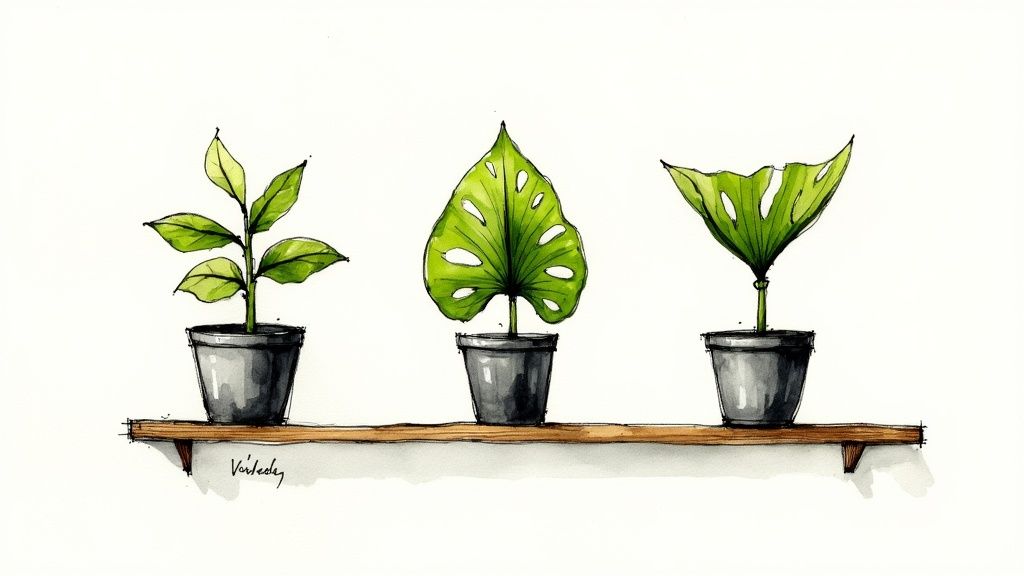
To get your Fiddle Leaf Fig not just surviving but thriving, you need to get inside its head a little. Think of it as a special guest visiting from the warm, humid rainforests of West Africa. In its natural home, it’s used to a very particular lifestyle, and our job is to recreate that vibe in our Kiwi homes.
This isn’t about memorising botanical terms; it’s about having a bit of empathy for your plant. Once you understand where it comes from, you unlock the secrets to keeping it happy. It all boils down to three main things: light, water, and humidity. Each one needs a special Kiwi translation.
At its core, the goal is to mimic its native environment. Back in the rainforest, it gets loads of bright, dappled sunlight filtered through the canopy of taller trees. Its roots are in soil that stays consistently moist but never soggy. And it's always surrounded by warm, humid air. Now, let’s figure out how that translates to your living room in Wellington or Auckland.
Mastering the Art of Light
Your Fiddle Leaf Fig is a total sun-worshipper, but a cautious one. It loves bright light but will get a nasty sunburn from the harsh, direct rays of the New Zealand sun, especially during our intense summer months. The sweet spot is that gentle, filtered light you'd find on the forest floor.
To get this right, pop your plant near a window that gets plenty of light, but not direct, scorching sun. A spot a metre or two back from a north or west-facing window is usually perfect. A good way to check is to look at its shadow – if it’s soft and a bit blurry, the light is spot on. If it's a sharp, dark shadow, the sun is too direct and you risk burning those beautiful big leaves.
Key Takeaway: Think "bright but indirect." The goal is to give it enough energy to grow without causing any damage. It’s also a great idea to give your plant a quarter turn each week to make sure all sides get their share of the light. This encourages it to grow straight and even.
The Delicate Balance of Water and Soil
This is where so many new Fiddle Leaf Fig owners stumble. The plant’s rainforest home isn't a swamp; the soil there drains really well, letting the roots breathe while staying moist. The absolute biggest mistake is overwatering, which leads to root rot – the number one killer of Fiddles.
The golden rule is to let the top 5-7 centimetres of soil dry out completely before you even think about watering again. Don't get stuck in a rigid routine like "watering day is Saturday." Instead, get your hands dirty and stick a finger into the soil. If it feels dry down to your second knuckle, then it's time for a good drink.
When you do water, be thorough. Pour water evenly over the soil until you see it running freely from the drainage holes at the bottom. This makes sure the entire root ball gets properly hydrated. Just be sure to tip out any excess water from the saucer afterwards. Leaving your plant sitting in a puddle is a fast track to root problems. A good, well-draining potting mix is absolutely non-negotiable for a happy Fiddle Leaf Fig in NZ.
Creating a Humid Haven
This can be the trickiest part for us Kiwi plant parents. Our homes, especially in winter with heat pumps blasting, can get incredibly dry. Fiddle Leaf Figs are tropical natives, so they crave humidity levels around 40-60%.
Unfortunately, New Zealand horticultural surveys show our indoor humidity often sits around 35%, which really pushes the plant to its limits and can slow down its growth. To give it a boost, you can:
- Mist the leaves every few days with a spray bottle for a quick moisture hit.
- Place the pot on a pebble tray with some water in it. As the water evaporates, it’ll create a more humid pocket around the plant.
- Group your plants together. They naturally create a more humid microclimate just by being near each other.
- Use a humidifier in the room. This is the most effective way to keep the humidity consistent.
Making this extra effort to mimic its humid home makes a huge difference. You'll see fewer crispy brown edges on the leaves and a lot more lush, healthy new growth. You can discover more insights about Fiddle Leaf Fig care in New Zealand and see how other Kiwi growers are adapting.
Right, you’ve got the basics down and you're ready for the fun part – actually bringing one of these beauties home. Finding the right plant is the first, and maybe most important, step to success. Luckily for us Kiwis, there are plenty of places to look, from big hardware chains to those charming local nurseries.
Where you decide to buy your fiddle leaf fig in NZ often comes down to balancing price, the size of the plant, and whether you want some solid advice to go with it. A little bit of thought now can save you a whole lot of drama later on.
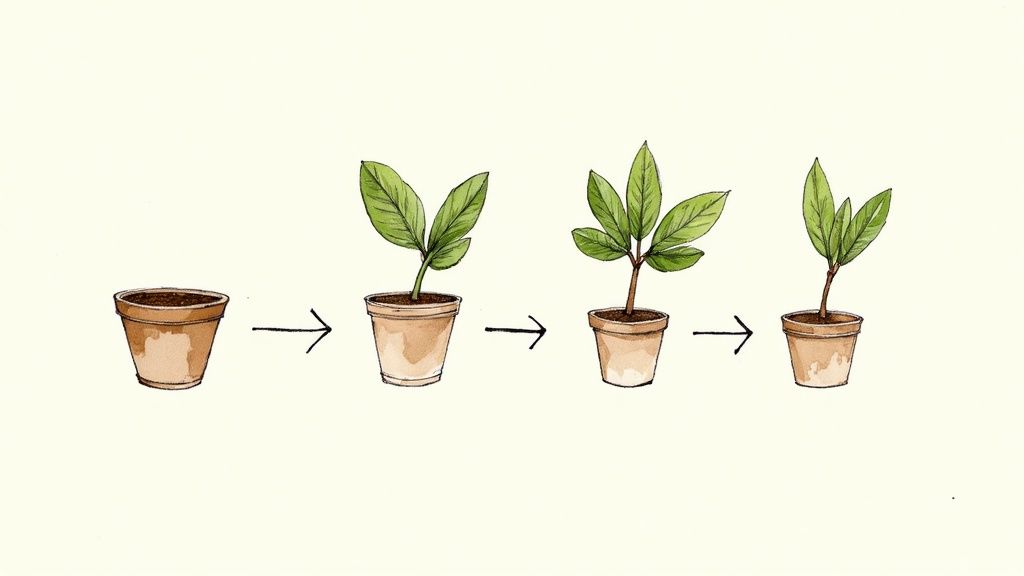
These plants have absolutely exploded in popularity here. They really hit the New Zealand scene in a big way between 2015 and 2018, right when the indoor plant craze was taking off globally. Since then, local nurseries have stepped up their game. Now, about 65% of the young fiddle leaf figs sold here are grown right on our shores, which means we’re not as reliant on imports.
Big-Box Stores Versus Local Nurseries
Big chain stores like Bunnings or Mitre 10 are often the first port of call for many of us. They usually have decent prices and you can grab everything else you need in one go. The catch? The plants might have had a long journey to the store and could be a bit stressed out from it all.
Specialist local nurseries or online plant shops, on the other hand, are a different story. The plants are often healthier and have been given a lot more love and attention. Plus, the staff are usually genuine plant people who can give you some real, practical advice.
Expert Tip: If you have the choice, always go for a plant that’s been grown locally in New Zealand. They're already used to our light and seasons, which gives them a massive head start over imported ones. It just makes your job as a plant parent that much easier.
And if you’re really looking to make a statement, you can find some incredible decorative fig trees that will instantly elevate your space.
To help you weigh up your options, here’s a quick comparison of the most common places to find your new plant buddy.
Where to Buy Your Fiddle Leaf Fig in NZ
| Retailer Type | Typical Price Range | Plant Maturity | Pros | Cons |
|---|---|---|---|---|
| Large Hardware Stores | $30 - $100 | Young to Medium | Convenient, affordable, frequent stock. | Plants can be stressed; less expert advice. |
| Local Garden Centres | $50 - $200+ | All stages | Healthier, well-cared-for plants; expert staff. | Can be more expensive; less selection. |
| Online Plant Shops | $40 - $180 | Young to Medium | Wide variety, delivered to your door. | Can't inspect before buying; shipping risks. |
| Facebook Marketplace | $20 - $150 | Cuttings to Mature | Good deals, can find mature plants. | No guarantees on plant health; buyer beware. |
Ultimately, there's no single "best" place—it all depends on your budget, confidence, and how much of a hands-on experience you want.
Your Pre-Purchase Inspection Checklist
Before you get to the checkout, you need to play plant detective. Don’t be shy about it – pick the plant up, spin it around, and get a good look from all angles. A couple of minutes of inspection now can save you from the heartache of bringing home a struggling plant.
Here’s what to keep an eye out for:
- Lush, Vibrant Leaves: You want to see leaves that are a deep, glossy green. Steer clear of any with lots of brown spots, crispy edges, or yellowing – these are red flags for watering issues or sunburn.
- A Sturdy Trunk: The main stem should feel firm and be able to hold the plant up without looking sad and droopy. A wobbly trunk often means the root system isn't well-developed.
- Pest-Free Foliage: Check under the leaves and where the leaves meet the main stem. You’re looking for tiny webs (spider mites), little white cottony bits (mealybugs), or small brown bumps (scale).
- Healthy Roots: If you can, gently ease the plant out of its plastic pot and have a peek at the roots. They should be firm and a healthy white or light tan colour. If they’re dark, mushy, or smell a bit off, that's a classic sign of root rot. Pop that one straight back.
Taking the time to choose a strong, healthy plant is the best thing you can do to set yourself up for a long and happy life together. And if you're looking for more ideas to green up your home, have a look at our guide to other great indoor houseplants for Kiwi homes.
Mastering Seasonal Care for a NZ Climate

Just like we Kiwis swap our jandals for winter boots, your Fiddle Leaf Fig’s needs change dramatically with our distinct seasons. A care routine that works wonders in a balmy Northland summer can spell disaster during a frosty Canterbury winter. Getting in sync with this Southern Hemisphere rhythm is the real secret to a happy fiddle leaf fig nz all year round.
Think of the year as two distinct phases for your plant: the active growing season and the dormant rest period. For us, the growing season kicks off in spring (September to November) and hits its peak in summer (December to February). This is when your plant is full of energy, pushing out new leaves and reaching for the sky.
On the other hand, autumn (March to May) and winter (June to August) are its time for a well-earned rest. Its growth slows right down, and it becomes much more sensitive to over-care, especially too much water.
Spring and Summer: The Growing Season
From September onwards, as the days get longer and warmer, your Fiddle Leaf Fig wakes up from its winter slumber. This is its power-up phase, and your job is to give it the fuel it needs to flourish.
Watering becomes more frequent as the plant’s thirst increases with the heat and extra daylight. You might find yourself watering every 7-10 days, but always remember the golden rule: check the top 5-7cm of soil first. If it's dry to the touch, it’s time for a drink.
This is also the time to start feeding. Your plant is using up a lot of energy to produce those big, beautiful leaves, so it needs a top-up. A good quality, balanced liquid fertiliser, applied at half-strength every second or third watering, is perfect. If you're unsure what to pick, check out this great guide on indoor plant fertiliser.
One of the biggest challenges during a New Zealand summer is our intense sun. The UV rays can be incredibly harsh, even through a window. Keep an eye out for any signs of leaf scorch—brown, crispy patches—and pull your plant back from the glass if needed. It wants bright light, but not a direct sunburn.
Autumn and Winter: The Dormant Period
As we head into autumn and winter, your Fiddle Leaf Fig enters a state of dormancy. Growth will slow to a crawl or stop completely, which is perfectly normal. It’s just conserving energy for the next growing season, and your care routine needs to shift down a gear.
The most critical change is to cut back on watering. A lot. With less light and cooler temperatures, the soil will stay damp for much longer, and overwatering in winter is the fastest way to cause root rot. You might only need to water every 3-4 weeks, but again, let the soil be your guide.
You should also stop fertilising completely around April. Feeding a dormant plant is like trying to force-feed someone who is asleep; the nutrients won't be used and can build up in the soil, potentially burning the roots.
Another winter challenge in Kiwi homes is the dry air from our heat pumps, fireplaces, and dehumidifiers. This can make the leaf edges turn brown and crispy. You can help by:
- Misting the leaves every few days with a spray bottle.
- Grouping your Fiddle Leaf Fig with other plants to create a more humid microclimate.
- Placing its pot on a tray of pebbles filled with a little water (just make sure the pot isn't sitting in the water).
Here's a simple schedule to help you keep track of your Fiddle Leaf Fig's needs throughout the Kiwi year.
Year-Round Fiddle Leaf Fig Care Schedule for New Zealand
| Season | Watering Frequency | Light Requirements | Feeding Schedule | Key Considerations |
|---|---|---|---|---|
| Spring (Sep-Nov) | Every 7-10 days as soil dries. | Bright, indirect light. Rotate plant for even growth. | Start feeding with half-strength liquid fertiliser. | Watch for new leaf growth. Good time for pruning. |
| Summer (Dec-Feb) | Every 7-10 days; check soil often in heat. | Protect from harsh, direct afternoon sun to prevent scorch. | Feed every 2-3 waterings. | High growth period. Monitor for pests. |
| Autumn (Mar-May) | Reduce to every 2-3 weeks as growth slows. | Still needs bright, indirect light as days shorten. | Taper off feeding; stop by end of April. | Prepare for dormancy. Reduce watering gradually. |
| Winter (Jun-Aug) | Infrequently, every 3-4 weeks or less. | Maximise available light. Keep near a bright window. | No fertiliser. | Watch for overwatering and low humidity from heaters. |
By tailoring your care to our specific seasons, you give your Fiddle Leaf Fig the consistency it craves. This simple adjustment is the key to helping it not just survive, but truly thrive in your New Zealand home.
Solving Common Fiddle Leaf Fig Problems
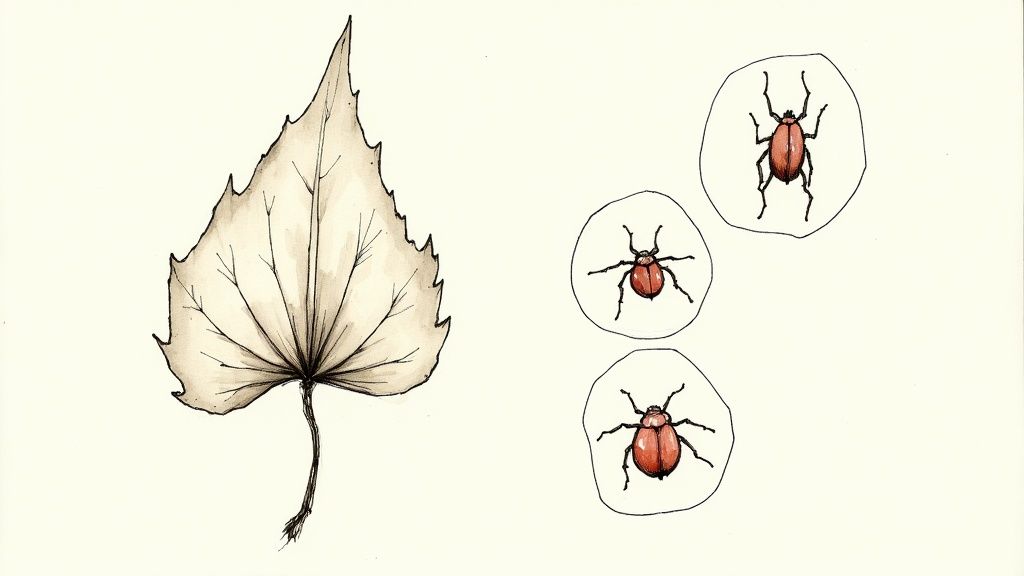
Even with the best intentions, your Fiddle Leaf Fig will sometimes show you it’s not happy. Don’t panic! This is just its way of asking for a small adjustment.
Think of yourself as a plant detective. The leaves are your clues, and by learning what they mean, you can figure out exactly what your Fiddle needs to thrive again. Most issues with a fiddle leaf fig in NZ usually boil down to one of three things: light, water, or its location.
Symptom: Brown, Crispy Leaf Edges or Spots
Seeing brown, dry patches on your Fiddle’s leaves can be worrying, but it’s one of the most common things Kiwi plant parents run into. It’s your plant’s way of flagging a couple of potential problems.
The most likely culprit is underwatering. If the soil gets bone dry and stays that way too long, the plant simply can’t get enough moisture up to those massive leaves, causing the edges to dry out and go crispy. A good rule of thumb is to check the top 5-7cm of soil; if it feels totally dry, it's definitely time for a good drink.
Another very Kiwi-specific cause is sunburn. Our UV rays here in New Zealand are incredibly strong, especially in summer. If your plant is sitting too close to a north or west-facing window, the direct sun can easily scorch the leaves, leaving behind those brown, burnt-looking spots.
How to Fix It:
First, check your watering. If the soil is always dry, you’ll need to water a bit more often. If you reckon it’s sunburn, just shift the plant a metre or two back from the window or pop up a sheer curtain to diffuse that harsh light.
Symptom: Yellowing Leaves and Leaf Drop
There’s not much sadder than watching those big, beautiful leaves turn yellow and fall to the floor. While it looks dramatic, this is almost always a sign of one thing: too much water.
Overwatering is the number one mistake people make with Fiddle Leaf Figs. When the soil is constantly soggy, the roots can’t get any oxygen and start to rot. The plant’s response is to shed leaves it can no longer support. This is especially common during our cooler, darker winters (June - August) when the plant is resting and needs way less water.
A sudden change in its environment can also trigger leaf drop. Fiddles really are creatures of habit and hate being moved. A cold draught from a nearby window or door, particularly in winter, can also shock the plant and make it drop its leaves.
Symptom: Small Brown or Reddish Spots on New Leaves
Ever noticed tiny, reddish-brown freckles all over a new leaf as it unfurls? This is a condition called oedema, and it looks much scarier than it is. It’s not a disease, but rather a sign that your watering has been a bit inconsistent.
Oedema happens when the roots drink up water faster than the leaves can release it through transpiration. This pressure causes some of the cells inside the leaf to burst, creating those little rust-coloured spots. While the spots won’t disappear from that particular leaf, they’re a great signal to get your watering routine sorted.
- Be more consistent: Try to let the soil dry out properly between waterings, rather than letting it get bone-dry and then flooding it.
- Check the airflow: Stagnant air can make the problem worse, so make sure the room has some decent air circulation.
- Don't stress about old leaves: This issue mainly affects new growth. As the leaf gets bigger and your watering evens out, the next leaves should come through perfectly fine.
By learning to read these signs, you can fix most problems before they get serious. Your Fiddle Leaf Fig is always talking to you; you just need to learn its language.
Right, you've got the basics sorted. Your fiddle isn't just surviving; it's part of the furniture. But now it's time to go from simply keeping it alive to helping it truly flourish.
Think of it like this: knowing when to water and where to place your plant is like learning the basic chords on a guitar. Pruning, repotting, and propagating? That's when you start playing the full song. These are the skills that give you creative control, helping you shape your plant into the stunning centrepiece you’ve always imagined.
Getting a Fuller Shape with Pruning and Notching
So many of us in NZ want that classic, tree-like fiddle leaf fig—a strong, bare trunk with a lush, bushy canopy up top. That look doesn't just happen on its own; it’s all about strategic pruning. The best time to get the secateurs out is during the main growing season here, which is roughly from late spring to early summer (October to January). That’s when the plant is full of energy and ready to bounce back with new growth.
To prune, grab a clean, sharp pair of secateurs and snip the top of the main stem, just above a node (that little bump where a leaf emerges). This simple cut signals the plant to push out new branches from the nodes just below, creating that much-desired fuller, more balanced shape.
If you're a bit hesitant to chop the top off your plant, there's a less dramatic method called notching. This involves making a small, shallow cut into the trunk right above a dormant leaf node where you'd like to see a new branch. It’s a clever little trick that sends growth hormones to that exact spot, often coaxing out a new branch without any major surgery.
Repotting for Healthy, Happy Roots
Sooner or later, your plant is going to need a bigger home. You'll know it's time when you see roots peeking out of the drainage holes or starting to spiral around the inside of the pot. When that happens, it’s time to repot—a vital step for its long-term health. The best time to do this is during the spring growing season, roughly every 1-2 years.
When you pick a new pot, resist the urge to go massive. Just go up one size, about 5cm wider in diameter. A pot that's too big holds excess soil that stays wet for too long, which is a one-way ticket to root rot.
The Perfect Potting Mix: Fiddle leaf figs are fussy about their feet; they need a mix that drains incredibly well. Head to your local NZ garden centre and grab a quality indoor plant mix. To make it perfect, supercharge it by adding about one part perlite or orchid bark to every three parts of the potting mix. This creates little air pockets, letting the roots breathe and preventing the soil from becoming a swamp.
The Art of Propagation
This is easily one of the most rewarding skills to master. Propagation is all about turning a single cutting into a brand new plant, and it’s a fantastic way to put your pruning offcuts to good use. The process is surprisingly simple and a huge part of the plant-sharing culture we have here in New Zealand.
Propagation of fiddle leaf figs via water cuttings is a common practice in New Zealand, with over 20% of owners attempting this method to clone their plants during pruning cycles in spring and early summer. This reflects both an economic and community-sharing trend in the country. You can read more about the popularity of fiddle leaf fig propagation in NZ.
Here’s a quick guide to get you started:
- Take a Cutting: After pruning, select a healthy piece of stem that’s at least 15cm long with 2-3 good leaves on it.
- Prep the Cutting: Gently remove the lowest leaf to expose the node. This is where the new roots will grow from.
- Place in Water: Pop the cutting into a jar of clean, room-temperature water. Make sure the node is underwater, but the remaining leaves are high and dry.
- Wait for Roots: Find a spot with bright, indirect light for your jar and remember to change the water every week. After a few weeks, you should start to see little white roots appearing.
- Pot It Up: Once the roots are about 5cm long, your new baby fiddle leaf fig is ready to be planted in a small pot with some of that lovely well-draining soil mix.
Your Fiddle Leaf Fig NZ Questions Answered
Even with the best guide in hand, there are always a few tricky questions that pop up. Here are the answers to the most common queries we get from Fiddle Leaf Fig owners all over New Zealand, designed to help you solve those little problems and get your care routine just right.
How Fast Will My Fiddle Leaf Fig Grow in New Zealand?
In a typical Kiwi home, you can expect a slow to moderate growth rate. When things warm up during spring and summer (that’s September to February for us), a happy, healthy plant might shoot up by 30-60cm.
Don't be alarmed if it all grinds to a halt during the cooler, darker months, though. It’s completely normal for your plant to have a ‘nap’ from May to August. This is its natural dormant period, so just let it be.
Is Tap Water Safe for My Fiddle Leaf Fig in NZ?
For the most part, yes. Tap water across New Zealand is generally of a high quality and won't harm your Fiddle Leaf Fig. We're lucky not to have the harsh minerals in our water that can be a problem in other parts of the world.
However, if you're in an area with heavily chlorinated water, your plant might be a bit sensitive. An easy fix is to fill your watering can and let it sit out for 24 hours before you water your plant. This gives the chlorine a chance to evaporate, making the water much gentler on the roots.
Pro Tip: What's more important than the type of water is your watering technique. The golden rule is to let the top 5-7cm of soil dry out completely before giving it a thorough soak. This is the single best thing you can do to avoid root problems.
What Is the Best Fertiliser to Buy in New Zealand?
You don’t need anything fancy or specialised. Just pop down to your local garden centre or hardware store and look for a balanced liquid fertiliser made for indoor plants. The key is to find a formula that encourages lush foliage.
When you do feed it, use it at half-strength with every second or third watering, but only during the growing season (spring and summer). Once autumn rolls around, stop feeding it altogether until the following spring.
Can I Put My Plant Outside During an NZ Summer?
This is a risky move, and honestly, we wouldn't recommend it. While the warmth and humidity might seem like a good idea, the direct New Zealand sun is incredibly harsh and will scorch those beautiful big leaves in no time.
If you’re determined to give it some fresh air, it must be in a spot that is completely sheltered and shaded, like a covered deck where it gets zero direct sun. For almost every Kiwi home, the safest and best place for your fiddle leaf fig nz is indoors, in a spot with plenty of bright, indirect light.
Ready to start your own Fiddle Leaf Fig journey or add another beautiful plant to your collection? Explore a huge range of healthy, locally-sourced indoor plants at Jungle Story. Find your perfect green companion and have it delivered right to your door. Visit us at https://junglestory.co.nz today