
Choosing the perfect flowering shrubs for your garden is a bit like matchmaking. It’s all about finding the right plant for your specific spot, taking everything from your local climate to the amount of sun it gets into account. The goal is to pick shrubs that don’t just survive, but absolutely thrive, giving you vibrant colour and structure for years to come. Get this first step right, and you're laying the foundation for a stunning, resilient garden that brings you joy season after season.
Why The Right Shrub Matters In Your NZ Garden

Starting a garden in New Zealand is an exciting venture, a blank canvas full of possibilities. You might find yourself drawn to our iconic native plants that tell the story of Aotearoa, or maybe the bold, dramatic colours of exotic shrubs from overseas are more your style. Whichever way you lean, the secret to a flourishing garden is making smart, well-informed choices right from the get-go.
Think of yourself as a garden detective. Your first mission, before you even set foot in a nursery, is to get to know your own backyard and understand its unique personality. This means looking closely at your local climate and the specific conditions in your garden. Nailing this foundation is the difference between a garden that bursts with life and one that always seems to be struggling.
Understanding Your Unique Garden Environment
Every garden has its own microclimate—a little ecosystem all its own, shaped by its immediate surroundings. A sheltered, north-facing spot in Dunedin, for example, can be surprisingly warmer than an exposed, windswept site up in Auckland. Real success with flowering shrubs starts with noticing these subtle differences.
Here are the key clues to look for:
- Sun Exposure: Does your spot get full sun all day, a bit of afternoon shade, or is it mostly shady? Most flowering shrubs need at least six hours of direct sun to put on a good show.
- Soil Type: Is your soil a heavy clay, free-draining sand, or a rich, dark loam? The soil’s texture dictates how well it drains and holds onto nutrients—both crucial for happy plants.
- Wind and Shelter: We all know New Zealand can get a bit breezy. Is your garden bed exposed to harsh winds, or is it nicely protected by a fence, the house, or some larger trees?
- Regional Climate: From the subtropical warmth of Northland down to the crisp, defined seasons of the South Island, your region is the biggest factor in deciding which plants will perform best.
By getting a clear picture of your garden's conditions first, you can choose plants that are naturally wired to thrive there. This simple, proactive approach saves a lot of gardening heartache down the line and sets you up for a beautiful, low-stress outdoor space.
Native Beauties and Exotic Wonders
New Zealand is blessed with a stunning variety of native flowering shrubs, many of which can’t be found anywhere else on the planet. In fact, around 80% of New Zealand's trees, ferns, and flowering plants are endemic. This incredible lineup includes beauties like pōhutukawa, rātā, and countless hebe species that are perfectly adapted to our unique conditions. The Department of Conservation is a fantastic resource for learning more about these treasures.
But it’s not just about natives. Our temperate climate is also incredibly welcoming to a huge range of plants from all over the world. This gives you the creative freedom to mix and match, designing a garden that truly reflects your personal taste. You could create a lush, tropical-style retreat with hibiscus and gardenias, a formal space with classic camellias and rhododendrons, or a tough, low-maintenance border using hardy exotics.
If you’re looking to create structure and privacy quickly, exploring options for fast growing hedges in NZ is a great starting point for ideas that deliver both beauty and function.
To help you get started, here's a quick look at which shrubs tend to do best in different parts of the country.
Quick Guide to Flowering Shrubs by NZ Climate Zone
This table offers a starting point, breaking down shrub types that are well-suited to New Zealand's diverse climatic regions. Think of it as a cheat sheet to help you narrow down your choices before heading to the garden centre.
| NZ Climate Zone | Characteristics | Recommended Shrub Examples |
|---|---|---|
| Northland & Auckland | Subtropical, warm, humid summers, mild winters. | Hibiscus, Gardenia, Vireya Rhododendrons, Tibouchina |
| Waikato & Bay of Plenty | Warm, temperate, some frost in winter. | Camellias, Azaleas, Magnolias, Hydrangeas |
| Central North Island | Colder winters with significant frost, warm summers. | Hebes, Mānuka, Lilac, Weigela, Spiraea |
| Wellington & Lower NI | Windy, temperate, mild winters, cool summers. | Escallonia, Corokia, Griselinia, Choisya (Mexican Orange Blossom) |
| Nelson & Marlborough | High sunshine hours, dry summers, cool winters. | Lavender, Rosemary, Cistus (Rock Rose), Ceanothus (California Lilac) |
| Canterbury & Otago | Dry, hot summers, cold winters with frost/snow. | Roses, Forsythia, Berberis, Deutzia, Philadelphus (Mock Orange) |
| West Coast | High rainfall, mild temperatures, acidic soil. | Rhododendrons, Pieris, Fuchsias, Ferns (as underplanting) |
| Southland | Cool, damp, distinct seasons, late frosts. | Hebes, Olearia, Southern Rātā, certain hardy Rose varieties |
Remember, this is just a guide! Microclimates within each region can make a huge difference, so always consider the specific conditions of your own garden.
A Seasonal Showcase of Top Performing Shrubs
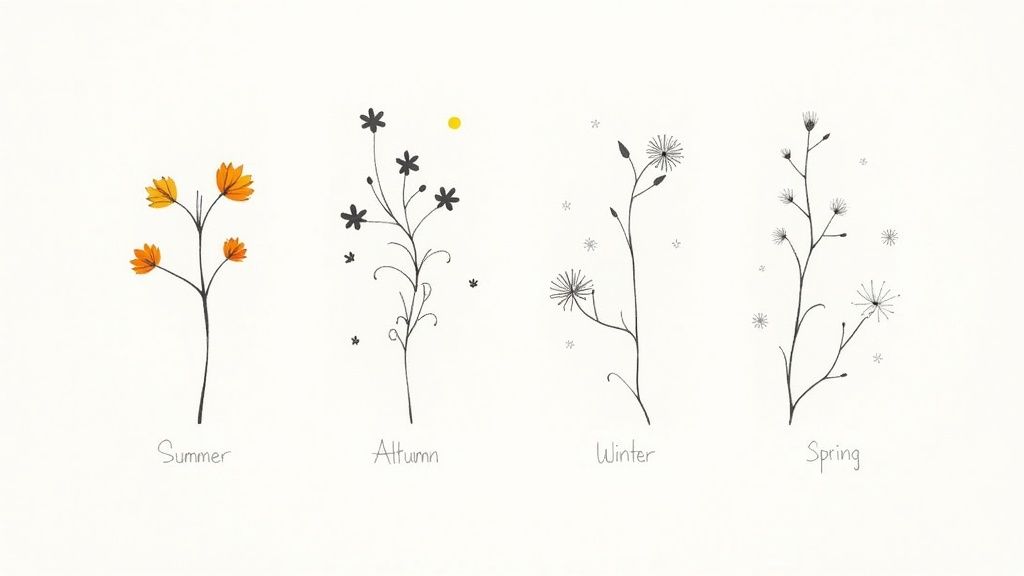
One of the most satisfying parts of gardening is creating a garden that puts on a constant show of colour. The real secret isn't some complex trick; it's just clever layering. By choosing a cast of flowering shrubs that take turns in the spotlight, you can make sure your garden is never dull, offering a vibrant display from the peak of summer to the quietest days of winter.
Think of your garden beds like a stage. Each shrub is a performer with its own specific time to shine. If you understand the flow of the New Zealand seasons, you can orchestrate a year-long performance of breathtaking blooms. Let's walk through the seasons and highlight some of the top-performing flowering shrubs that Kiwi gardeners can rely on.
Summer Stars (December – February)
New Zealand's summer is all about bold, spectacular displays that match the long, sunny days. This is when many shrubs put on their most impressive show, creating the perfect backdrop for backyard barbies and relaxing outdoors.
- Pōhutukawa (Metrosideros excelsa): Fondly known as the New Zealand Christmas tree, the Pōhutukawa bursts into a blaze of crimson flowers right on cue for the holiday season. It’s a coastal icon, incredibly tough, and loves a sunny, well-drained spot where it can just soak up the heat.
- Hydrangeas (Hydrangea macrophylla): A classic summer favourite for a reason. Hydrangeas give you those generous, globe-like flower heads in stunning shades of blue, pink, purple, and white. They thrive with morning sun and a bit of afternoon shade. Their flower colour famously changes with the soil pH—you'll get blue in acidic soil and pink in alkaline.
- Hibiscus (Hibiscus rosa-sinensis): For a touch of the tropics, nothing beats the Hibiscus. Its large, flamboyant flowers bring an exotic feel to the warmer parts of the country. They do demand a sunny, sheltered position to keep them happy and protected from frost and wind.
Autumnal Hues (March – May)
As the days shorten and the light softens, the garden's colour palette naturally shifts to warmer, richer tones. Autumn-flowering shrubs provide a graceful transition, offering up their beauty just as other plants begin to wind down.
A real standout for this season is the Camellia sasanqua. These elegant shrubs produce a flurry of delicate flowers, arriving earlier than their spring-blooming cousins, the japonicas. Their blooms, in shades of white, pink, and red, often have a subtle fragrance and are a welcome sight in the cooling weather. They're incredibly versatile, working well as standalone feature plants, hedges, or even in large containers.
Winter Wonders (June – August)
Winter in the garden doesn't have to be a bleak affair. This is when fragrance and subtle pops of colour become especially precious, and certain shrubs are perfectly adapted to brighten the shortest days of the year.
The quiet beauty of a winter garden is often found in the small details. A pop of unexpected colour or a waft of sweet fragrance on a crisp day can be just as impactful as a full summer border in bloom.
Some of the best performers for a Kiwi winter include:
- Daphne (Daphne odora): Famous for its intensely fragrant pinkish-white flowers, Daphne is a true winter jewel. Just a small cluster of its blooms can perfume an entire garden. It needs a spot with good drainage and some protection from the harsh afternoon sun.
- Australian Correa (Correa species): Often called the 'Australian Fuchsia', Correas produce charming, bell-shaped flowers throughout winter. They are tough, bird-attracting shrubs that are particularly great for drier, coastal conditions and come in a range of colours from creamy white to vibrant red.
- Viburnum tinus: This hardy evergreen is a real workhorse. It produces clusters of pink buds that open into small white flowers all through winter and into spring, making it an excellent choice for a low-maintenance hedge or background shrub.
Spring's Grand Finale (September – November)
Spring is the season of explosive growth and renewal. Many flowering shrubs save their most dramatic performance for this time of year, and after a long winter, these vibrant displays are a spectacular reward for any gardener's patience.
Spring is the perfect time to think about adding more layers to your garden. If you're looking for companions to your shrubs, you might be interested in exploring our guide on perennial plants in NZ to help fill in the gaps and create a truly dynamic garden.
The undisputed stars of the spring show include:
- Rhododendrons and Azaleas: These spring icons are famous for their magnificent trusses of flowers in nearly every colour you can imagine. They prefer acidic soil and a spot with dappled light, which makes them perfect for planting under large trees.
- Hebe (Veronica species): A diverse group of native NZ shrubs, Hebes are incredibly versatile and put on a fantastic flowering display in spring. Their flower spikes range from pure white to deep purple and are a magnet for bees. They're adaptable to a wide range of conditions, which is why they're a staple in so many Kiwi gardens.
- Kōwhai (Sophora species): Another native treasure, the Kōwhai signals the arrival of spring with its cascading clusters of bright yellow, nectar-rich flowers. It's a vital food source for native birds like the tūī and bellbird, bringing life and movement right into your backyard.
Year-Round Colour Seasonal Shrub Planner
Planning for continuous blooms can feel a bit like putting a puzzle together. To make it easier, here's a quick reference table to help you select shrubs that will keep your garden looking lively, no matter the season.
| Shrub Name | Primary Flowering Season | Sun Needs | Ideal For |
|---|---|---|---|
| Pōhutukawa (Metrosideros) | Summer (Dec-Feb) | Full Sun | Coastal gardens, holiday colour, large spaces |
| Hydrangea (macrophylla) | Summer (Dec-Feb) | Morning Sun/Part Shade | Classic borders, cottage gardens |
| Camellia (sasanqua) | Autumn (Mar-May) | Part Shade | Hedges, feature planting, early colour |
| Daphne (odora) | Winter (Jun-Aug) | Part Shade | Fragrant gardens, near walkways, containers |
| Correa (species) | Winter (Jun-Aug) | Full Sun/Part Shade | Dry spots, attracting native birds |
| Rhododendron & Azalea | Spring (Sep-Nov) | Dappled Light/Shade | Woodland gardens, spectacular mass planting |
| Hebe (Veronica) | Spring (Sep-Nov) | Full Sun | Low-maintenance borders, native gardens |
| Kōwhai (Sophora) | Spring (Sep-Nov) | Full Sun | Attracting birds, feature trees |
By mixing and matching a few selections from each season, you're well on your way to creating a garden that offers something special all year round.
How to Plant Your Shrubs for Lasting Success
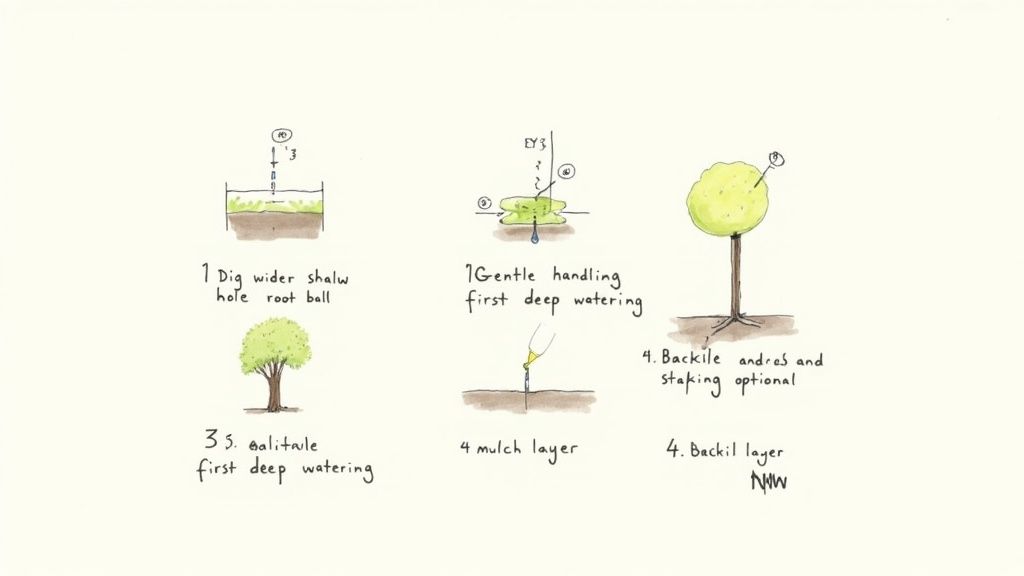
Giving your new flowering shrubs the best possible start is the single most important thing you can do for them. Proper planting isn’t just about digging a hole; it’s about creating a welcoming home where your plant can put down strong roots and really take off for years to come.
Getting this step right sets the stage for everything else—vigorous growth, buckets of flowers, and a tough, resilient plant. We'll walk through the whole process, from picking the right time of year here in New Zealand to preparing the soil and handling your new plant with care.
The Best Time to Plant in New Zealand
Timing is everything in the garden. While you can technically plant shrubs at any time of year, some seasons give your new addition a massive head start.
In New Zealand, autumn is the undisputed champion of planting seasons. During March, April, and May, the soil is still lovely and warm from the summer sun, which is exactly what new roots need to get growing. At the same time, the cooler air temperatures mean less stress and transplant shock for the plant. It's the perfect gentle transition.
Planting in autumn allows the shrub to focus all its energy on establishing a robust root system over winter. Then, when spring arrives, it’s ready for an explosion of growth. Spring (September to November) is your next best bet, but just be ready with the watering can as the weather warms up fast.
Preparing the Perfect Planting Site
Before you even grab the spade, take a moment to prepare the soil. Think of it as making the bed before your guest arrives—it’s your chance to create the ideal environment for those all-important roots.
Start by clearing the area of all weeds and grass, which will only compete for water and nutrients. If you’re dealing with heavy clay or compacted soil, now is the time to sort it out. Dig in plenty of organic matter like compost or well-rotted manure to improve drainage and add valuable nutrients. Getting the soil chemistry right is also a game-changer; you can learn more about understanding soil pH.
Digging the Right Hole
This is where so many gardeners go wrong. A common mistake is digging a hole that’s too deep and not nearly wide enough. Remember, roots grow outwards, not just straight down, so they need plenty of room to stretch their legs.
Just follow this simple rule:
- Dig a hole that is twice as wide as the pot the shrub came in.
- Make sure the hole is only as deep as the root ball. You want the top of the root ball to sit level with, or even slightly above, the surrounding ground. Planting too deep is a classic way to cause the stem to rot.
Once the hole is dug, gently firm the soil at the bottom. This creates a stable little platform for the shrub to sit on.
Planting, Watering, and Mulching
Now for the main event! Carefully slide the shrub out of its pot. If you see roots circling around the bottom, gently tease them out to encourage them to grow outwards into their new home.
Pop the shrub in the centre of the hole, making sure it’s standing up straight. Backfill the hole with the soil you dug out, firming it gently around the root ball to get rid of any sneaky air pockets. Once it’s full, I like to build a small rim of soil around the edge to create a watering basin. This handy trick directs water straight to the roots where it’s needed most.
Next, give your new plant a deep, thorough watering. This first soak is crucial for settling the soil and giving the roots a good drink.
Finally, apply a generous layer of mulch (like bark chip or compost) around the base of the plant, but be sure to keep it from touching the main stem. Mulch is a gardener's best friend—it holds in moisture, keeps weeds down, and helps regulate the soil temperature. Unless your shrub is particularly top-heavy or in a super windy spot, staking is rarely necessary.
Mastering Essential Shrub Care and Pruning
Once your flowering shrubs are happily settled into their new home, a little ongoing care will transform them from simply surviving to truly thriving. Think of it as building a long-term relationship with your plants. The right maintenance rhythm rewards you with vigorous growth, lush foliage, and, of course, spectacular flower displays year after year.
Let's dive into the essential care routines tailored for our unique New Zealand environment. From smart watering that respects our variable seasons to feeding for maximum blooms, this is your guide to keeping your flowering shrubs looking their absolute best.
Smart Watering and Fertilising Strategies
Watering is more of an art than a science, especially with our country's diverse weather patterns. A shrub in a dry Canterbury summer has very different needs from one on the damp West Coast. The real trick is to water deeply but less frequently. This encourages roots to grow down in search of moisture, making the plant far more resilient in the long run.
Not sure when to water? Just poke your finger about 5 cm into the soil near the base of the shrub. If it feels dry at that depth, it’s time for a good, long soak. This is so much more effective than a light daily sprinkle, which only encourages shallow, weak roots near the surface.
When it comes to feeding, timing and what you use are everything. Fertilising is what fuels healthy growth and abundant flowers, but the wrong approach can easily backfire.
- When to Feed: The best time to fertilise most flowering shrubs is in early spring, just as they’re waking up and putting on new growth. An extra light feed in autumn can also help them recover and store up energy for the next season.
- What to Use: Look for a balanced, slow-release fertiliser formulated for flowering plants. It's wise to avoid anything too high in nitrogen, as that can lead to a lot of leafy green growth at the expense of the flowers you’re waiting for.
The Art and Science of Pruning Shrubs
Pruning can feel a bit intimidating, but it's one of the most powerful tools for keeping your shrubs healthy, well-shaped, and productive. It’s like giving your plant a strategic haircut that directs its energy exactly where you want it to go—towards producing more flowers.
The main reasons we prune are to:
- Remove any dead, damaged, or diseased wood.
- Improve air circulation to reduce the risk of pests and diseases.
- Maintain a good shape and manageable size.
- Encourage a spectacular show of flowers and fruit.
If your shrubs form a hedge, getting the timing right is crucial. While based across the ditch, this guide has some excellent universal principles for understanding when to prune hedges that apply perfectly to Kiwi conditions.
When to Make the Cut
The golden rule of pruning is all about timing, and it depends entirely on when your shrub flowers. Getting this right is the difference between a shrub loaded with blooms and one with barely any at all.
Pruning Tip: Prune shrubs that flower in spring and early summer immediately after they finish flowering. Prune shrubs that flower in late summer and autumn in late winter or early spring, before new growth starts.
Why? Because spring-flowering shrubs (like Rhododendrons and Forsythia) produce their flowers on wood that grew the previous year. If you prune them in winter, you’ll be cutting off all the potential flower buds.
On the other hand, late-summer bloomers (like Hydrangeas and Buddleia) flower on fresh growth they produce in the current season. Pruning them back in late winter encourages a big flush of new, flower-bearing stems.
For specific plants like the ever-popular Hydrangea, mastering the technique can make a huge difference. You can find detailed instructions in our comprehensive guide on pruning Hydrangeas in NZ, which covers different varieties and their unique needs. By following these simple principles, you can approach pruning with confidence, ensuring your flowering shrubs put on their best possible performance, year after year.
Embracing Native NZ Shrubs in Your Garden Design

When you garden with native shrubs, you’re doing so much more than just prettying up your space. You’re weaving your own backyard into the unique natural story of New Zealand. Choosing indigenous plants is a celebration of our local treasures, tapping into their incredible resilience while bringing powerful ecological benefits right to your doorstep.
Planting natives isn't just about adding another shrub to your collection. It’s about creating a small sanctuary that supports local biodiversity, provides food and shelter for our unique wildlife, and connects your garden to the wider landscape of Aotearoa.
The Ecological Advantage of Going Native
Native shrubs are the absolute backbone of our local ecosystems. They’ve spent thousands of years evolving to thrive in our specific climate and soil, which makes them wonderfully low-maintenance choices for any Kiwi gardener.
These plants are perfectly in tune with our local wildlife. The nectar-rich flowers of Kōwhai and Mānuka, for instance, are a vital food source for native birds like the tūī and bellbird (korimako). It won't be long before their cheerful songs become the soundtrack to your garden as they feast on the blooms you've provided.
Choosing native flowering shrubs means you're creating a living habitat, not just a static display. Your garden becomes a buzzing, chirping extension of the natural world, supporting the intricate web of life that makes our country so special.
Iconic Natives for Every Garden Style
Whether you’re after a structured formal hedge or a wild, naturalistic vibe, there’s a native shrub to suit every design you can dream of. Their incredible diversity in form, texture, and flower type offers endless creative possibilities.
Here are a few beloved icons to get you started:
- Hebe (Veronica species): Incredibly versatile and varied, Hebes are a cornerstone of New Zealand gardens. They come in a huge range of sizes, foliage colours, and flower spikes in shades of white, pink, and deep purple, attracting bees and butterflies in droves.
- Kōwhai (Sophora species): As our unofficial national flower, Kōwhai lights up the garden in spring with its cascading, bright yellow blooms. It’s a must-have for attracting nectar-feeding birds and bringing a truly Kiwi feel to your space.
- Mānuka (Leptospermum scoparium): This hardy shrub is famous for its prolific, delicate white or pink flowers that appear in summer. It’s tough, adaptable, and its dense, slightly prickly foliage provides excellent shelter for small birds.
Discovering Lesser-Known Native Gems
Beyond the well-known favourites, there’s a whole world of lesser-known native shrubs that can bring unique character to your garden. These hidden treasures often have fascinating forms and textures that create real points of interest.
One of the most culturally and ecologically significant is the shrubby tororaro (Muehlenbeckia astonii). This intriguing plant has a distinctive tangled, zig-zagging branch structure that forms a dense, airy mound. While its flowers are tiny and inconspicuous, its unique form provides architectural interest all year round. It's classified as 'Nationally Endangered,' with a wild population of only around 2,800 individuals, making it a precious taonga (treasure) to cultivate. You can learn more about its conservation status from the Department of Conservation.
By planting rare natives like tororaro, you can play a direct role in conservation, helping to preserve Aotearoa's precious biodiversity for future generations—right from your own garden.
Got a Few Questions About Flowering Shrubs?
Even the most seasoned gardeners run into questions now and then. Don't worry, it's all part of the journey! Here are some of the most common queries we hear from fellow Kiwi gardeners, with straightforward answers to help you get your shrubs thriving.
When Is the Best Time to Plant Flowering Shrubs in New Zealand?
The absolute sweet spot for planting most flowering shrubs here in New Zealand is in autumn, from about March to May. The soil is still holding onto that lovely summer warmth, which really gets the roots growing strong before the winter chill sets in.
At the same time, the cooler air means less stress and transplant shock for the plant. Giving it this head start lets the shrub establish its root system all winter, so it's ready for an explosion of growth come spring. If you miss the autumn window, spring (September to November) is your next best bet, but just be prepared to water a bit more often as things start to heat up.
How Do I Know if I Am Watering My New Shrubs Enough?
For the first year, consistent watering is absolutely key to getting your new shrub settled in. A good rule of thumb is to give it a deep, thorough watering two to three times a week, especially during those dry summer spells. You want to properly soak the entire root zone, not just sprinkle the surface.
Not sure if it's time for a drink? The old-school method is still the best. Just poke your finger about 5–10 cm into the soil near the base. If it feels dry down there, it's time to give it a good soaking. After that first year, your shrub will be much tougher, but it will still thank you for a deep watering during the peak of summer.
My Shrub Has Lots of Leaves but No Flowers. What's Going On?
Ah, the classic "all leaves, no flowers" dilemma. It's a common frustration, but the culprit is usually one of three things: incorrect pruning, not enough sun, or the wrong kind of plant food.
- Pruning: It's surprisingly easy to accidentally snip off the very stems that were getting ready to produce this season's flowers. Different shrubs need pruning at different times, so it's worth a quick search for your specific plant.
- Sunlight: Most flowering shrubs are sun-worshippers. They generally need at least six hours of direct sunlight each day to store up enough energy to produce those beautiful blooms.
- Fertiliser: If your plant food is too high in nitrogen, you'll get heaps of lush, green leaves, but at the expense of flowers. Try switching to a fertiliser made specifically for flowering plants—it'll be higher in phosphorus and potassium, which is just what they need to bloom.
What Are Some Low-Maintenance Flowering Shrubs for a Busy NZ Gardener?
If you're after a gorgeous garden without a mountain of work, the trick is to choose tough, resilient plants that love our local conditions. Native Hebes are a brilliant choice; they're perfectly adapted to our climate and need very little pruning to keep looking sharp.
A couple of other fantastic, fuss-free options include Camellias, which provide absolutely stunning colour through winter and spring with almost no effort. Grevilleas are another tough-as-nails beauty. Once they're established, they're incredibly drought-tolerant and will bring all the tūī and bellbirds to your yard.
Ready to create a garden that’s bursting with colour all year round? At Jungle Story, we connect you with New Zealand's best growers, offering a stunning selection of native and exotic flowering shrubs to bring your vision to life. Find your perfect plants and have them delivered right to your door.