
It's easy to think of indoor plant fertiliser as 'food', but it's much more like a multivitamin. It's a supplement packed with the essential minerals your houseplants need to really flourish, replenishing what gets used up from the potting mix over time. Think of it as the secret ingredient for strong roots and lush, vibrant foliage.
Why Your Houseplants Are Hungry
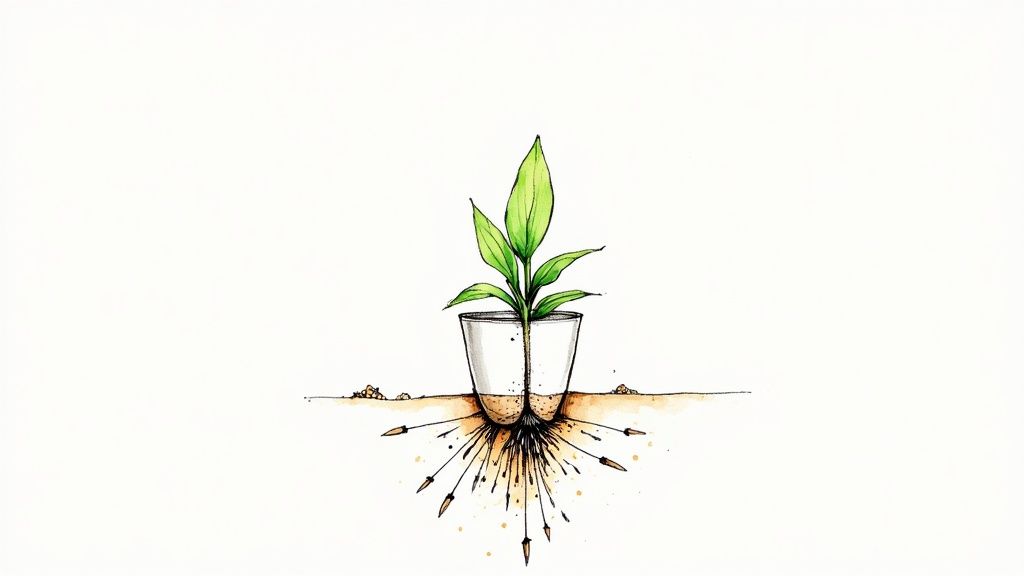
Ever look at your favourite houseplant and feel like it’s lost its spark? Maybe the leaves aren't that deep green anymore, or it just seems to have stopped growing altogether. While we all know light and water are vital, they're only part of the story.
Picture your plant's pot as a little pantry. When you first bring your plant home, that pantry is fully stocked with nutrients. But as your plant grows, it's constantly dipping into that supply, and eventually, the shelves go bare.
Unlike their counterparts in the garden, which benefit from a whole ecosystem of decaying leaves and busy microbes constantly enriching the soil, our indoor plants are in a closed loop. Watering alone can't restock those minerals. This is exactly why a good indoor plant fertiliser is non-negotiable.
Fertiliser Is a Vitamin, Not a Meal
There's a common mix-up that fertiliser is "plant food." Plants are actually amazing little chefs—they make their own food! Through photosynthesis, they use sunlight to turn water and carbon dioxide into the sugars they need for energy.
So, where does fertiliser fit in? It provides all the crucial minerals and micronutrients that act as the tools and helpers for photosynthesis and every other planty process, from building new cells to fending off pests. Without these "vitamins," your plant just can't function at its peak.
In short, fertiliser doesn't hand over the energy. Instead, it provides the essential building blocks the plant needs to create its own fuel and grow strong, healthy structures.
Spotting the Signs of a Hungry Plant
Your plants are pretty good at telling you when they need a feed. Learning to read their signals is a great skill for any Kiwi plant parent, helping you step in before a small issue becomes a big one.
Here are a few classic signs of a nutrient deficiency to watch out for:
- Yellowing Leaves (Chlorosis): If you see the lower, older leaves starting to turn yellow, it's a textbook sign of a nitrogen shortage.
- Stunted or Slow Growth: Has your plant stopped putting out new leaves during its growing season (spring and summer here in NZ)? It's probably hungry.
- Weak, Leggy Stems: This can point to a lack of the key nutrients needed for sturdy, structural growth.
- Pale or Washed-Out Colour: When the foliage loses its vibrancy, it's a hint that the plant is missing the minerals required to produce that rich, green chlorophyll.
Of course, for your plants to actually use the fertiliser you give them, they need to be in the right home. Proper pots, like these Charming Porcelain Indoor Plant Pots With Saucers, are designed with drainage and root health in mind. Once the pot is sorted, adding the right supplement is the simplest way to bring back that healthy sparkle.
Decoding the Numbers on a Fertiliser Label
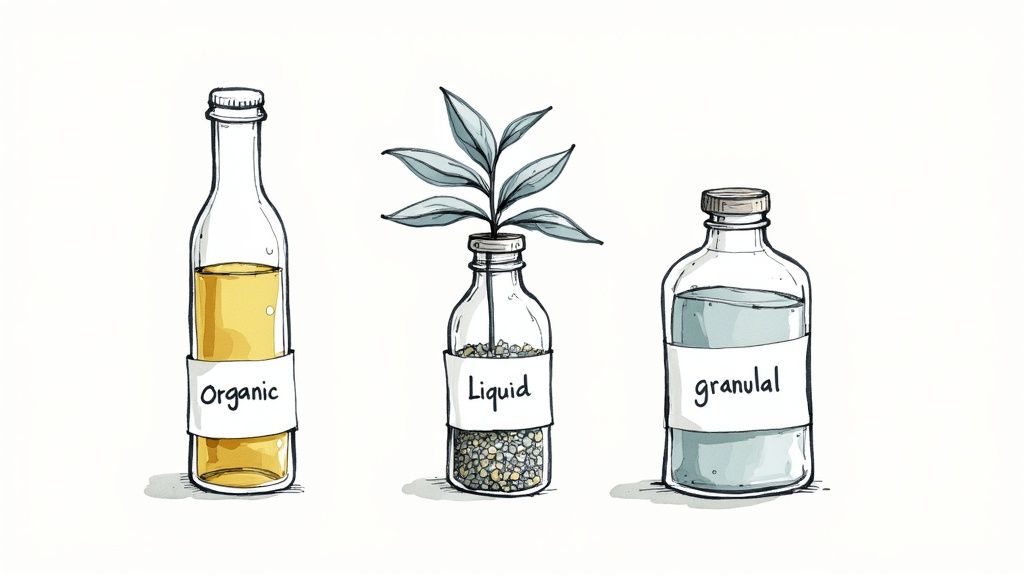
When you grab a bottle of plant food, you’ll almost always see three numbers printed proudly on the front. Something like 10-10-10 or maybe 5-10-5. This isn't just marketing jargon; it’s the most critical piece of information on the entire label.
This sequence is the N-P-K ratio, and it’s the secret code that tells you exactly what kind of meal you're about to serve your plant. Think of it as a recipe. Understanding what these numbers mean is the first real step to feeding your indoor jungle with confidence.
The Big Three Macronutrients Explained
The N, P, and K stand for Nitrogen, Phosphorus, and Potassium. These are the "big three" macronutrients that plants crave the most. Each one plays a unique and vital role in keeping your plant happy and healthy.
Let's break down what each one brings to the table.
| Macronutrient | Symbol | Primary Role in Plants | Signs of Deficiency |
|---|---|---|---|
| Nitrogen | N | Drives lush, green foliage growth. A key part of chlorophyll for photosynthesis. | Yellowing leaves (especially older ones), stunted growth, weak stems. |
| Phosphorus | P | Powers strong root development, flowering, and fruit production. | Dull, dark green or purplish leaves, poor flowering, slow growth. |
| Potassium | K | Manages overall plant health, water movement, and disease resistance. | Yellowing or brown edges on leaves, weak stems, poor fruit quality. |
By getting a handle on this simple NPK ratio, you can move from just guessing to making a smart, informed choice. You’re no longer just buying "plant food"; you're picking a specific nutrient profile to get more leaves, bigger flowers, or just better overall health.
This targeted approach to plant nutrition is a big deal. In New Zealand, our reliance on getting these blends right is huge, with fertiliser consumption recorded at a massive 305% of what's produced locally. It just shows how much Kiwi gardeners depend on these nutrients for great results.
Beyond the NPK Ratio
While Nitrogen, Phosphorus, and Potassium are the stars of the show, they don't work in isolation. A truly top-notch fertiliser will also include a supporting cast of secondary nutrients and micronutrients. Plants need these in smaller amounts, but they are no less essential.
Secondary Nutrients to Look For:
- Calcium (Ca): Just like for our bones, calcium is vital for building strong cell walls in plants. It’s what gives them a sturdy, robust structure.
- Magnesium (Mg): This is the heart of the chlorophyll molecule. Without enough magnesium, your plant can’t photosynthesise properly, which often shows up as yellowing between the leaf veins.
- Sulphur (S): Important for creating essential proteins and enzymes, Sulphur also helps the plant make the most of the nitrogen it gets.
These extra nutrients ensure your plant gets a properly balanced diet. For a deeper look into finding the right mix, check out our guide on choosing the best fertiliser for indoor plants.
Once you’re comfortable reading a fertiliser label, you’ll be able to confidently pick the perfect formula for every plant in your home, from a leafy Monstera that needs more nitrogen to a flowering Peace Lily that will thank you for a little extra phosphorus.
Choosing the Right Fertiliser Style
Once you’ve cracked the NPK code, the next decision is how you’ll actually serve up those nutrients. Head down the garden centre aisle and you'll find two main camps: quick-acting liquids and long-lasting granules or spikes. Each has its own rhythm and suits a different type of plant parent.
I like to think of it like this: choosing a fertiliser is a bit like deciding between a quick energy shot and a long-term savings plan. One gives you an immediate kick, while the other offers a steady, reliable supply over many months. Figuring out which one works for you—and your plants—is key.
Liquid Fertilisers: The Instant Energy Boost
Liquid fertilisers are basically nutrient concentrates that you dilute in your watering can. The moment you water your plant, the roots start absorbing them. It’s a fast-acting dose of goodness, making them the perfect ‘energy shot’ for your houseplants, especially when they’re in a growth spurt.
This instant availability is their biggest selling point. When your plants are actively pushing out new leaves and stems—usually through our Kiwi spring and summer from September to February—a regular liquid feed gives them the fuel they need, right when they need it.
But that speed comes with a catch. Because the nutrients are water-soluble and easy for the plant to access, they also wash out of the potting mix pretty quickly. This just means you’ll need to feed them more often, typically every two to four weeks during the growing season, which requires a bit more hands-on effort.
Slow-Release Fertilisers: The Nutrient Savings Account
On the other hand, you have slow-release fertilisers. These usually come as little granules, pellets, or spikes that you either mix into the soil or just push in. They’re designed to break down gradually, releasing a slow, consistent trickle of nutrients every time you water.
This makes them a brilliant ‘set-and-forget’ option. Think of it as setting up a direct debit into your plant’s nutrient bank; a single application can keep your plant fed for anywhere from three to nine months. It’s an ideal approach for busy people or anyone who’s a bit forgetful.
The real beauty of slow-release formulas is how gentle and consistent they are. By releasing nutrients bit by bit, they practically eliminate the risk of over-fertilising and burning your plant’s sensitive roots.
The only downside is that you have less immediate control. You can’t give your plant a quick boost if it suddenly looks like it needs one, as the release rate is already set. They provide a steady nutritional baseline rather than a targeted, on-the-spot treatment. This is something to think about, especially as the cost of gardening supplies goes up. We're seeing a trend across New Zealand where even large-scale farmers are cutting back on fertiliser due to expense, which encourages all of us to be more mindful. Efficient, long-lasting options like slow-release formulas are becoming more and more appealing. You can read more about New Zealand's fertiliser trends and their economic drivers to see the bigger picture.
Making the Right Choice for You
So, which one should you go for? The best choice really comes down to your plants, your personality, and your schedule.
-
Choose Liquid Fertiliser if:
- You enjoy the ritual of plant care and don't mind a regular feeding routine.
- You want precise control for fussy plants that need feeding at specific times.
- You have heavy feeders like a Fiddle Leaf Fig or a flowering African Violet that get really hungry during the growing season.
-
Choose Slow-Release Fertiliser if:
- You’ve got a busy lifestyle and know you’ll probably forget to fertilise regularly.
- You’re new to houseplants and worried about accidentally overdoing it.
- You just want a simple, low-effort way to make sure your plants are consistently fed for months on end.
At the end of the day, there’s no single "best" fertiliser. The right one is whichever fits into your life and keeps your green mates happy. Plenty of Kiwi plant lovers (myself included) actually use a bit of both—a slow-release formula for that baseline nutrition, with a few liquid feeds during peak growth for an extra boost.
Organic vs Synthetic Fertiliser Explained

Choosing a fertiliser for your indoor plants can feel a bit like standing at a crossroads. Down one path, you've got synthetic options, and down the other, organic ones. Both promise to feed your plants, but they go about it in completely different ways.
Figuring out this difference is really the key to developing a plant care routine that feels right for you and your leafy friends. It’s not about one being definitively "better" than the other, but more about picking an approach that fits your goals—whether that’s getting the fastest growth possible or building up healthy, vital soil for the long haul.
Synthetic Fertilisers: The Targeted Multivitamin
Synthetic fertilisers are precisely engineered in a lab to deliver a concentrated, specific dose of nutrients. The best way to think of them is like a targeted multivitamin for your plant. They contain exact ratios of Nitrogen, Phosphorus, and Potassium (the NPK you see on the label), plus other minerals, all in a form that plant roots can soak up almost instantly.
This rapid delivery means you see results, fast. We're talking greener leaves, quicker growth, and more impressive flowers. Because they're highly concentrated and dissolve easily in water, they give your plant an immediate, powerful boost. This is perfect if you’ve got a plant showing obvious signs of a deficiency and it needs a quick rescue mission.
But this efficiency does come with a trade-off. Synthetic fertilisers feed the plant directly but do next to nothing to improve the potting mix itself. Over time, their use can lead to a build-up of mineral salts in the soil, which can eventually damage sensitive roots if you don't flush the pot with water every now and then.
Organic Fertilisers: A Wholefood Meal for Your Plant
On the other hand, organic fertilisers—things like seaweed solution, compost, or worm castings—come from natural, living sources. Instead of a direct vitamin shot, they’re more like a nourishing, wholefood meal for your plant and its soil. These products don't just contain nutrients; they actively improve the structure and health of the potting mix.
They work by feeding the tiny, beneficial microbes living in the soil. These microbes then break down the organic matter, releasing nutrients slowly and gently for the plant to use. This whole process creates a healthy soil microbiome, building a more resilient and self-sustaining ecosystem right there in the pot. The results are often slower and more subtle, but the long-term benefit is healthier, more robust soil that supports a stronger plant.
An organic approach is all about building a foundation of healthy soil, which in turn supports a healthy plant. It’s a holistic method that nurtures the entire potted environment, not just the plant's immediate hunger pangs.
This move towards more eco-friendly plant care is really taking off across New Zealand. There's a clear and growing demand for organic options, driven by a wider awareness of sustainable gardening at home.
Organic vs. Synthetic Fertiliser At a Glance
The choice between organic and synthetic often just comes down to your personal preference and plant care style. Sometimes, exploring the differences between natural and synthetic ingredients in other products we use at home can help clarify the decision, as the same principles often apply.
To make it even clearer, here’s a quick side-by-side comparison to help you decide what's best for your indoor jungle.
| Feature | Organic Fertiliser | Synthetic Fertiliser |
|---|---|---|
| Nutrient Speed | Slow and steady release | Fast-acting and immediate |
| Soil Health | Improves soil structure and microbial life | Does not improve soil; can cause salt build-up |
| Nutrient Source | Derived from natural plant or animal matter | Manufactured from minerals and chemicals |
| Risk of Burn | Very low risk of burning plant roots | Higher risk if over-applied |
| Environmental Impact | Generally lower, improves soil sustainability | Higher energy to produce; potential for runoff |
In the end, many plant lovers find a happy medium. They might use a base of organic matter in their potting mix for long-term soil health and then supplement with a targeted synthetic feed during the peak growing season for an extra boost.
If you're leaning towards a more natural approach, a high-quality natural organic liquid fertiliser can give you the best of both worlds—gentle nutrition that also supports the life in your soil. Ultimately, the best fertiliser is the one that helps you grow a thriving indoor jungle in a way that you feel good about.
When and How to Fertilise Your Plants
Knowing what to feed your plants is one thing, but knowing when is where the real magic happens. In plant care, timing is everything. Giving your plant a dose of fertiliser at just the right moment can be the difference between a plant that just hangs on and one that truly thrives.
The trick is to sync up with your plant's natural rhythm. Think of it like a hibernating bear—you wouldn’t try to force-feed it in the middle of winter. In the same way, you shouldn't push nutrients on a plant when it's dormant. Feeding should always align with its active growth cycle.
Follow the Seasons in New Zealand
For us here in New Zealand, the plant care calendar is the opposite of what you might see in guides from the Northern Hemisphere. Our plants are waking up and ready for a feed just as theirs are settling down for winter.
The golden rule is simple: fertilise during the active growing season. This is when your plants are busy pushing out new leaves, stems, and flowers.
-
Growing Season (Spring to Summer): This is roughly from September through to February. As the days get warmer and brighter, your plants go into overdrive. This is the prime time to feed them regularly, as they're actively using those nutrients to fuel all that new growth.
-
Dormant Season (Autumn to Winter): From about March to August, things slow right down. Shorter days and cooler temperatures are a signal for your plants to rest. Their growth slows, and so does their appetite. During this period, you’ll want to cut back on feeding dramatically, or even stop altogether.
Timing your fertilising to match our Kiwi seasons is the single most effective way to give your plants what they need, exactly when they need it. It prevents waste and stops you from accidentally harming them with too much food.
Tailoring Your Approach to Different Plants
Not all houseplants have the same appetite. Just like a marathon runner needs a different diet to a weightlifter, different plants need different feeding strategies. Customising your approach will take your plant care to the next level.
For a deeper dive into picking the perfect formula, our complete guide to indoor plant fertiliser can help you match the NPK ratio to what your specific plant craves.
Foliage-Focussed Plants
Plants we love for their stunning leaves—like Monstera, Pothos, and Fiddle Leaf Figs—are big fans of nitrogen. Nitrogen is the main ingredient for lush, green growth. During spring and summer, a balanced fertiliser or one with a slightly higher nitrogen number will keep their foliage looking vibrant and full.
Flowering Houseplants
If you're trying to coax some blooms out of your Orchids, Peace Lilies, or African Violets, you’ll need a fertiliser with more phosphorus (the 'P' in NPK). Phosphorus is the key that unlocks flowering and strong root development. Using a "bloom booster" formula during their flowering season gives them the energy they need to produce those beautiful flowers.
The Right Way to Apply Fertiliser
How you apply fertiliser is just as important as when. Getting this wrong can do more harm than good, but luckily, the right technique is simple to master.
1. Always Water First: This is the most important rule. Never apply fertiliser to dry soil. The salts in the fertiliser can easily scorch your plant's delicate roots if they aren't protected by moisture. Water your plant thoroughly, let it sit for 15-30 minutes, and then apply the diluted fertiliser.
2. Dilute, Dilute, Dilute: Always follow the directions on the packet, but when in doubt, it’s far safer to under-fertilise than over-fertilise. A good rule of thumb for many liquid fertilisers is to use them at half or even quarter strength, especially for sensitive plants. The "weakly, weekly" method—using a very diluted solution every week during peak season—is a popular and effective approach.
3. Apply Evenly: Pour the fertiliser solution evenly across the entire soil surface, trying to avoid splashing the leaves. This ensures all the roots get access to the nutrients. Keep pouring until you see a little bit of liquid start to drain out of the bottom of the pot.
By mastering these simple timing and application tips, you can be sure your houseplants are getting the perfect meal every time, setting them up for a long and healthy life.
Common Fertilising Mistakes and How to Fix Them
Even the most dedicated plant parents can get it wrong with fertiliser sometimes. The good news? Most common mistakes are easily fixable, especially if you catch them early. Think of this as your troubleshooting guide to get your plants back on the right track.
One of the most frequent mishaps is fertiliser burn. This isn't a heat burn, but damage caused by too many mineral salts in the soil from over-fertilising. It's a bit like serving your plant a meal that's way too salty; the roots can't absorb water properly and actually start to dehydrate.
Spotting and Fixing Fertiliser Burn
Recognising the signs of fertiliser burn is the first step. Your plant will give you some pretty clear distress signals when it's been overfed.
What to look for:
- Crispy, Brown Leaf Edges: The very tips and edges of the leaves might look burnt, dry, and feel brittle.
- Yellowing Lower Leaves: Older leaves at the base of the plant could turn yellow and drop off suddenly.
- A White Crust on the Soil: You might see a visible white, salty build-up on the surface of the potting mix.
- Stunted Growth: The plant may stop putting out new leaves, or its growth slows right down, even during its active season.
If you spot these signs, don't panic. The solution is to give the soil a good rinse to wash away all those excess mineral salts. This process is known as leaching or flushing.
How to flush the soil:
- Take your plant to a sink, the shower, or outside where water can drain away freely.
- Slowly pour lukewarm water over the entire soil surface, letting it run straight through the pot and out the drainage holes.
- Keep this up for several minutes. A good rule of thumb is to use a volume of water that's about four times the volume of the pot itself.
- Let the pot drain completely before putting it back in its usual spot. Do not fertilise again for at least a month to give the roots time to recover.
Other Common Fertilising Errors
Beyond simply giving too much, a few other common errors can trip up even experienced gardeners. Getting your head around them will help you build a much better feeding routine.
Mistake 1: Fertilising a Dormant Plant
- What Happened: You've kept your summer feeding schedule going into the cooler months. In autumn and winter, most plants are resting and don't need the extra nutrients.
- How to Fix It: Easy. Just stop fertilising around March and wait until you see signs of active growth in spring (usually September) before you start up again.
Mistake 2: Feeding a Bone-Dry Plant
- What Happened: You applied fertiliser when the soil was completely dry. This concentrates the mineral salts right against the roots, which can cause an immediate burn.
- How to Fix It: Always water your plant thoroughly first. Wait about 15-30 minutes, and then apply your diluted fertiliser. This gives the roots a protective barrier of moisture.
Mistake 3: Using the Wrong Formula
- What Happened: You've used a strong outdoor garden fertiliser on a delicate indoor plant, delivering an overwhelming dose of nutrients.
- How to Fix It: Flush the soil as we described above. Going forward, stick to formulas specifically designed for houseplants. When in doubt, it’s always safer to dilute to half the recommended strength.
Your Indoor Fertiliser Questions Answered
Even when you feel like you've got a handle on the basics, feeding your plants can still throw up a few tricky questions. It's totally normal. Here are some quick, clear answers to the most common queries we hear from plant lovers all over New Zealand.
Can I Use Outdoor Fertiliser on My Indoor Plants?
I really wouldn't recommend it. Fertilisers blended for the garden are usually way too strong for the contained, sensitive root systems of our indoor plants.
Using them, even if you try to dilute them, is a shortcut to fertiliser burn. The high concentration of mineral salts can overwhelm a potted plant in no time. Your best bet is to always stick with a formula made specifically for houseplants – they're much gentler.
Is Seaweed Solution a Complete Fertiliser?
Nope, it isn't. Think of seaweed solution as more of a health tonic or a biostimulant, not a square meal.
It's brilliant for encouraging strong root growth and boosting a plant's overall resilience, but it has very low levels of the core NPK macronutrients. Use it as a fantastic supplement alongside your regular, balanced fertiliser, but never as a replacement for it.
A common mistake is relying solely on seaweed solution for nutrition. For lush, sustained growth, your plants still need a proper feed that provides Nitrogen, Phosphorus, and Potassium.
How Do I Know If I've Over-Fertilised?
Oh, your plant will definitely let you know it's unhappy. Keep an eye out for some classic signs of distress.
You might see crispy, brown leaf tips and edges, or notice a white, crusty layer forming on the surface of the soil. Another big clue is the sudden yellowing and dropping of the lower leaves. If you spot these symptoms, the best thing to do is flush the soil by watering it thoroughly and letting it drain completely. This helps wash away the excess salts.
Should I Fertilise a Plant I Just Brought Home?
It's best to hold off for a bit. Most plants you buy from a nursery or garden centre are potted in a fresh mix that already has some slow-release fertiliser mixed in.
Adding more fertiliser straight away is a recipe for over-fertilising. Just give your new green friend at least a few months to settle into its new home before you start it on your own feeding schedule.
Ready to give your houseplants the balanced nutrition they've been craving? Explore the premium selection of indoor plant care products at Jungle Story and find the perfect fertiliser to help your green friends thrive. Find the perfect fertiliser at Jungle Story