
Successful landscape garden design is all about shaping your outdoor space to be both beautiful and practical. It’s that sweet spot where nature and creativity meet, turning a plain bit of lawn into a genuine extension of your home. A great design isn't just about sticking some plants in the ground; it's about crafting a cohesive space that fits your lifestyle and thrives in New Zealand's unique environment.
Laying the Groundwork for Your Dream Garden
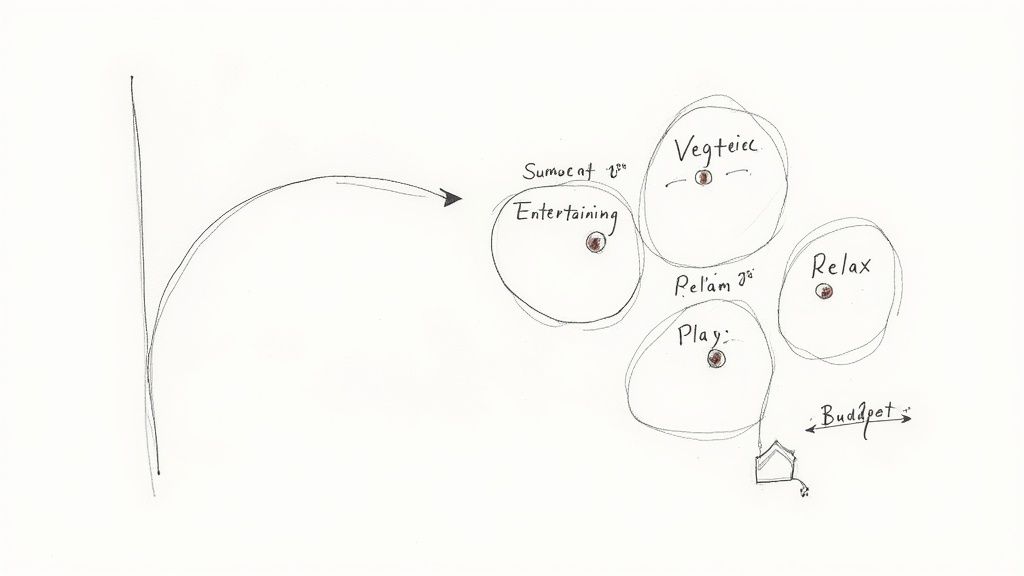
Before you even think about picking up a spade, the most important work happens with a pen and paper. A solid plan is the bedrock of any amazing, long-lasting garden. It’s what separates a random collection of plants from a harmonious outdoor sanctuary that you can enjoy all year round. This is where you turn those vague ideas into a clear, actionable vision.
Think of your property as a blank canvas. Your first job is to get to know it inside and out. Spend time outside at different times of the day to see how the sun tracks across your section. Where are the sun-drenched spots perfect for a summer veggie patch? Which areas stay in cool shade, ideal for a quiet reading nook? Getting a feel for your garden's microclimate is absolutely essential.
Analysing Your Site Like a Professional
A thorough site analysis is your first big step. It means looking past the surface to really understand the unique conditions you're working with. And don't worry, this isn't just for the pros; anyone can do it with a bit of careful observation.
Start by mapping out these key elements:
- Sun Exposure: Jot down which parts of your garden get full sun (6+ hours), partial sun, or full shade. Keep in mind the sun's path is lower and weaker during the Kiwi winter (June to August), which will definitely affect where you place certain plants.
- Soil Type: Is your soil heavy clay, sandy, or a rich loam? A quick test is to grab a handful of moist soil. If it squishes into a tight ball, it’s probably clay; if it feels gritty and falls apart, it's sandy. Knowing this will steer your plant choices and tell you what you need to do to improve it.
- Drainage: After a good downpour, where do puddles form and hang around? These are your poorly drained spots that might need a solution like raised beds or plants that don't mind wet feet.
- Existing Features: Map out everything you want to keep, like mature trees, the shed, or existing paths. On the flip side, note any unsightly views you might want to screen with some clever planting.
A great landscape garden design doesn't fight the natural conditions of a site; it works in harmony with them. By understanding your sun, soil, and slope, you set yourself up for a garden that requires less effort and resources to thrive.
Mapping Out Functional Zones
Once you've got a handle on your site, it's time to think about how you actually want to use the space. A garden should work for your lifestyle. Do you see yourself hosting summer barbecues, needing a safe play area for the kids, or carving out a quiet spot for your morning coffee?
A simple but really effective technique is to create a 'bubble diagram'. Grab a rough sketch of your property and draw circles or 'bubbles' to mark out different functional zones. This isn't about getting the shapes perfect; it's about allocating space and making sure everything flows logically. For example, your outdoor dining area should probably be close to the kitchen door, while the compost bin is best tucked away in a less obvious corner.
This process helps you visualise the garden's layout and ensures the different areas connect in a way that makes sense. For a deeper dive into balancing looks and function, checking out comprehensive guides on garden design and landscaping can offer some great perspectives tailored to NZ conditions.
Setting a Realistic Budget
Finally, let's talk money. It's so easy to get carried away with grand ideas, but a realistic budget is key to keeping the project enjoyable and stress-free. Your budget will shape every decision you make, from the materials you choose for a patio to whether you buy mature plants or smaller ones that will grow over time.
Break down your potential costs into a few main categories:
- Hardscaping: This covers all the non-plant stuff like paving, decks, fences, and paths. These are often the biggest expenses.
- Plants: Costs here can vary massively, from a few dollars for small perennials to hundreds for a large, established tree.
- Labour: Are you a DIY champion, or will you need to hire professionals for the heavy lifting?
- Extras: Don't forget to factor in soil improvers, mulch, irrigation systems, and garden lighting.
Having a clear budget from the get-go helps you prioritise what's truly important and make smart choices you'll be happy with. This planning phase is your blueprint for success.
Bringing Your Garden Design to Life on Paper
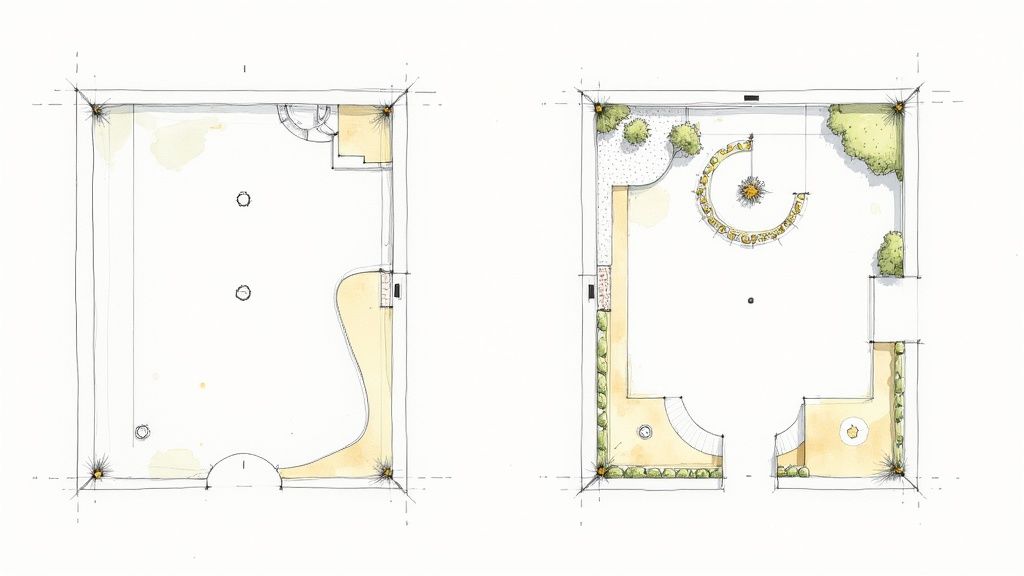
You’ve walked the site, you know how you want to use it, and you’ve got a head full of ideas. Now for the exciting part—getting it all down on paper. This is where your dream garden starts to feel real, shifting from a vague concept to a concrete layout you can actually work with.
Don't panic if you're not a natural artist. The goal here is clarity, not a masterpiece. A simple, to-scale drawing is one of the most powerful tools in your entire landscape garden design toolkit.
It lets you play around without lifting a single spade. You can test out different spots for paths, patios, and garden beds, and see how the spaces flow into one another. It's far easier to erase a pencil line than it is to dig up and move a row of newly planted shrubs. Think of this sketch as your blueprint—it’ll guide every move you make and ensure the final result feels cohesive and well-proportioned.
Core Principles of Great Design
To create a plan that feels intentional and just right, it helps to have a few design fundamentals up your sleeve. These aren't rigid rules, but more like guiding principles that create harmony and visual appeal. Weaving them into your sketch will elevate your design from just a collection of nice plants to a truly unified landscape.
- Balance: This is all about the visual weight in your garden. You can go for formal, symmetrical balance—like two identical pots flanking a doorway. Or, you might prefer an informal, asymmetrical balance, which feels stable but less rigid, like a large tree on one side offset by a cluster of smaller shrubs on the other.
- Proportion: This simply means getting the size relationships right. A massive pergola, for example, will overwhelm a small courtyard. On the other hand, a tiny water feature could get completely lost in a huge, open lawn.
- Focal Points: Every great garden needs something to draw the eye and create a bit of drama. This could be anything from a striking specimen tree or a cool sculpture to a brightly coloured pot or a cosy seating nook. Use focal points to guide people through the garden and show off its best features.
Using Lines to Define Your Space
Lines are the unsung heroes of landscape design. They carve out shapes, direct how you move through the space, and set the whole mood of the garden. The kinds of lines you use for your paths, lawn edges, and garden beds will have a massive impact on how the space feels.
Straight lines and geometric shapes like squares and rectangles create a sense of order and formality. This approach works beautifully for classic English-style gardens, modern courtyards, or even just a very tidy, productive veggie patch.
In contrast, curved, flowing lines give off a more relaxed, natural, and informal vibe. They invite you to slow down as you wander through the garden and can make a space feel bigger and more mysterious by partially hiding what’s around the next bend.
Great landscape garden design is a conversation between your creative vision and the practical realities of your space. Your paper plan is the script for that conversation, allowing you to direct the narrative and ensure every element plays its part beautifully.
Thinking about local history can also be a rich source of inspiration. Here in New Zealand, professional landscape garden design has deep roots stretching back to the 19th and early 20th centuries. Of course, early Pākehā settlers were initially more focused on clearing land than creating intricate gardens.
But by the late 1800s, public gardens and the estates of wealthy landowners started needing more professional expertise. This led to the rise of skilled designers like Alfred Buxton, whose firm was instrumental in shaping many of our significant gardens. You can read more about the history of New Zealand's landscape architecture on Te Ara.
This heritage gives us a long tradition of thoughtful design to draw upon. Whether you’re inspired by the formal layouts of historic homesteads or the flowing, naturalistic style of more contemporary designs, your paper plan is where it all comes together. It’s your chance to create a stunning sanctuary, perfectly tailored to your little corner of New Zealand.
Choosing the Right Plants and Materials for NZ Conditions
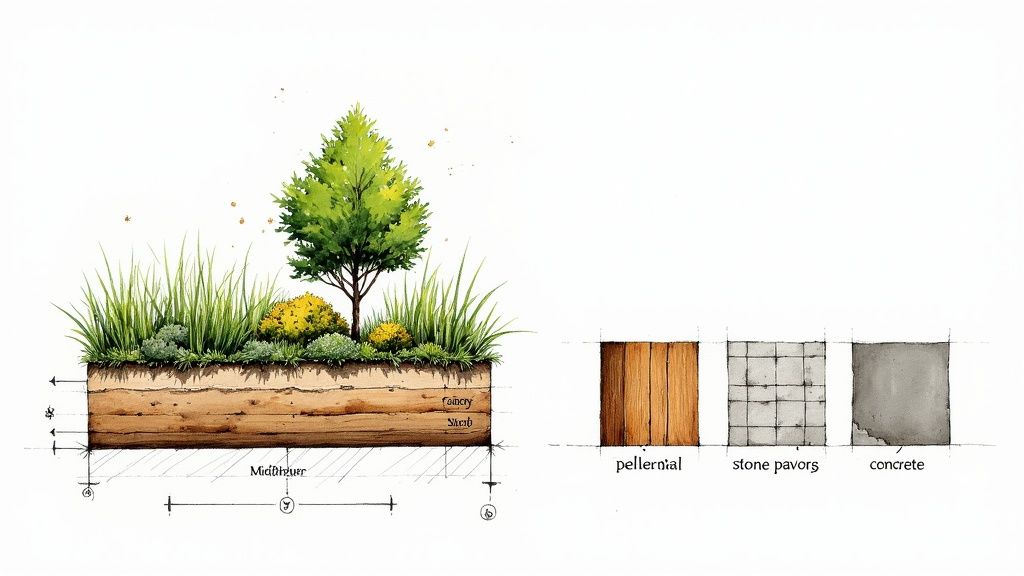
With a solid plan in hand, you get to the best part of any garden project: choosing the plants and materials that bring it all to life. This is where your garden gets its personality, transforming your sketch into a real, vibrant space you can see and touch every day.
For us Kiwis, this stage is particularly exciting because our diverse climate allows for an incredible range of plants. But it also means making smart, site-specific choices is absolutely crucial for long-term success. A plant that thrives in the subtropical warmth of Northland might really struggle through a frosty Southland winter.
Embracing the "Right Plant, Right Place" Philosophy
If you take one piece of advice away, let it be this: "right plant, right place." It's a simple idea that means matching a plant’s natural needs to the specific conditions of your garden—your soil type, how much sun it gets, and the moisture levels.
Fighting against your environment by planting a sun-loving perennial in a shady, damp corner is a recipe for a weak, unhappy plant and a whole lot of frustration for you.
Instead, work with what you’ve got. Take another look at your garden beds:
- Sunny, dry spots? These are perfect for Mediterranean plants like lavender and rosemary, or tough succulents that can handle the heat.
- Shady, damp areas? Ferns, hostas, and certain heucheras will feel right at home here, giving you lush green foliage where other plants would just give up.
- Got clay soil? It can be challenging, but plants like Corokia or certain flaxes (Phormium) are well-adapted to heavier soils once they’re established.
Getting this right from the start means less work for you down the track. Your plants will be healthier, more resilient to pests and diseases, and require far less fuss to look their best. If you're looking for inspiration, these drought-friendly rock garden design ideas can often be adapted for various New Zealand climates.
Creating Layers for Year-Round Interest
A truly captivating garden has depth and structure that looks good all year, not just for a few weeks in summer. The key is layering. Think of it like painting a picture, using different plant types to create a rich, textured scene.
- The Canopy (Trees): These are the 'bones' of your garden. They provide height, shade, and a backdrop for everything else. A flowering cherry gives spectacular spring colour, while a native Tītoki provides year-round structure and food for birds.
- The Understorey (Shrubs): Shrubs add mass and form at eye level. Think camellias for winter flowers (that’s June to August for us) or hydrangeas for that classic summer show.
- The Herbaceous Layer (Perennials & Grasses): This is where you can really play with seasonal colour and texture. Perennials like salvias and echinaceas provide flowers from spring through autumn, while ornamental grasses add movement and winter interest.
- The Ground Layer (Groundcovers): Low-growing plants like mondo grass or Acaena are brilliant for suppressing weeds, covering bare soil, and softening the edges of paths and beds.
By combining these layers, you create a dynamic garden that offers something beautiful in every season—from the fresh growth of spring to the stark beauty of winter silhouettes.
Selecting Hardscaping Materials That Last
Hardscaping—the non-living stuff like paths, patios, and decks—forms the functional skeleton of your garden. The materials you pick will really define the style and feel of the space, so it’s worth taking your time to consider the options.
Choosing the right hardscaping is a balancing act between looks, longevity, and your budget. The table below breaks down some common choices to help you find the best fit for your garden.
Choosing Hardscaping Materials for Your Garden
| Material | Best For | Pros | Cons |
|---|---|---|---|
| Timber Decking | Creating a warm, natural transition from house to garden; elevated areas. | Warm underfoot; blends well with plants; versatile for different styles. | Requires regular staining/sealing; can become slippery when wet. |
| Pavers (Concrete) | Cost-effective patios and paths; modern, clean designs. | Huge range of colours/sizes; durable; relatively easy to install. | Can fade over time; some colours can look stark or artificial. |
| Natural Stone | Classic, high-end patios, paths, and feature walls. | Beautiful, unique character; extremely durable and long-lasting. | Expensive; can be difficult and costly to install; uneven surfaces. |
| Gravel/Pebbles | Informal paths, low-maintenance garden beds, and drainage areas. | Inexpensive; excellent drainage; easy for DIY installation. | Can be messy and spread into other areas; uncomfortable to walk on barefoot. |
Ultimately, the best hardscaping materials are the ones that not only look great but will also stand up to New Zealand’s weather for years to come. Whether it’s timber decking for a classic feel or stone pavers for a permanent, timeless look, a thoughtful choice here will pay off in the long run.
Building Your Garden From the Ground Up
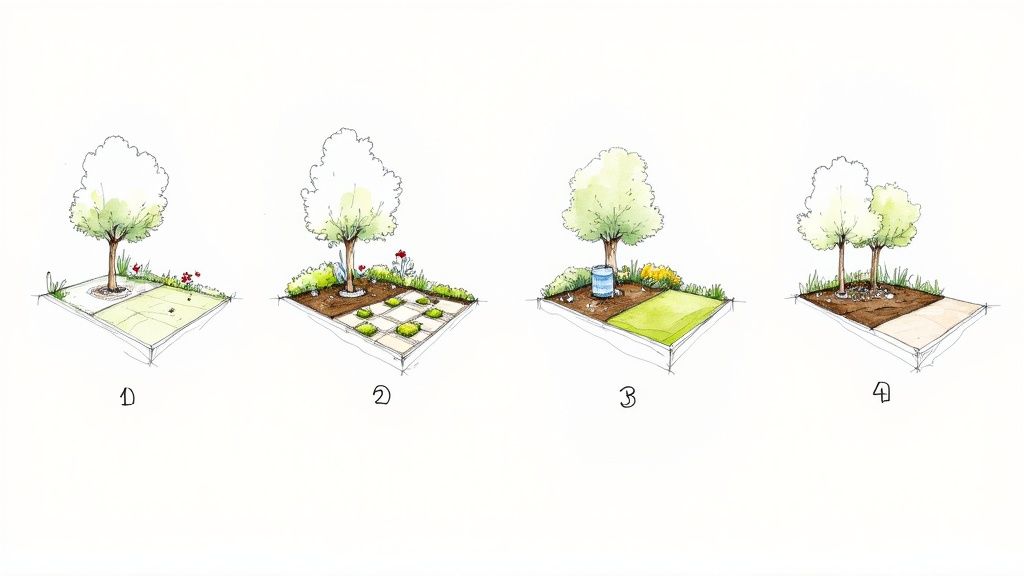
Right, this is where the magic happens. All that time spent planning and sketching is about to pay off as you move your landscape garden design from paper to property. It’s an incredibly rewarding process, watching the vision in your head start to take shape right in your own backyard. The key is to break it down into manageable chunks—that way, what seems like a massive project becomes a series of satisfying tasks.
Before you even think about planting, you need to prepare your canvas. Honestly, thorough site prep is probably the single most important part of creating a healthy, vibrant garden. I’ve seen people rush this stage, and it almost always leads to headaches down the line. So, take your time. Clear the entire area of weeds, rocks, and any other debris until you have a completely clean slate to work with.
Preparing the Site for Success
With the site cleared, it’s all about the soil. It's the lifeblood of your garden, after all. Most Kiwi gardens can do with a bit of a boost. Work plenty of quality compost or well-rotted manure through the topsoil to improve its structure, add nutrients, and help it hold onto moisture. If you’re dealing with heavy clay, adding some gypsum will do wonders for breaking it up and improving drainage.
Once your soil is in good nick, it’s time to mark out your design. Grab your scale drawing and use whatever you have on hand—stakes and string, or even just a garden hose—to lay out the shapes of your garden beds, paths, and patio areas. This gives you a real-world visual and helps you check that the proportions feel right before anything becomes permanent. If you're creating defined planting areas, it's worth looking into the benefits of raised wooden garden beds; they offer fantastic drainage and give you total control over the soil quality.
The Right Sequence for Installation
To keep things running smoothly, there's a definite order to the installation: hardscaping first, planting second. It’s far more practical to get all the structural, non-living elements in place before you bring in any plants. This way, you avoid damaging your new shrubs and flowers with wheelbarrows, heavy foot traffic, and general construction mess.
This hardscaping phase usually involves:
- Building Structures: This is your patios, decks, pergolas, and retaining walls. Especially if your section is on a slope, understanding the different types of retaining walls is crucial for both stability and style.
- Laying Paths and Edging: Next up are your pathways and any solid edging for garden beds. This really helps to clearly define the different zones within your garden.
- Installing Utilities: If you’ve planned for an irrigation system or outdoor lighting, now’s the time to get the necessary pipes and wiring in the ground.
By getting all the "heavy lifting" of hardscaping done first, you set the stage perfectly. You’re left with a clean, organised, and safe space to move on to the best part: bringing in the plants.
Planting for a Thriving Garden
With the hardscaping all sorted, you can finally get your hands dirty with the planting. A good rule of thumb is to start with the biggest items first—your trees. This lets you get them positioned perfectly without having to manoeuvre around smaller, more delicate plants. After the trees, move on to shrubs, then your perennials and groundcovers, and finish it all off with annuals and bulbs.
When you're putting a plant in, dig a hole that’s roughly twice as wide as the root ball but no deeper. Gently tease out any roots that are circling the bottom before you place it in. Make sure the top of the root ball sits level with the surrounding soil. Then, just backfill the hole, gently firm the soil around it, and give it a really deep watering to help it settle in and get rid of any air pockets.
Keeping Your NZ Garden Healthy and Beautiful
So, you’ve put the last plant in the ground. Congratulations! But your landscape garden design isn't finished—it's just started its story. A garden is a living, breathing space, and the secret to one that truly thrives is smart, consistent care.
The goal isn't to spend every weekend toiling away. It's about getting into a simple rhythm, working with the natural cycles of our New Zealand seasons to give your garden what it needs, when it needs it. A little foresight now prevents bigger headaches later and keeps your outdoor space a place of joy, not a list of chores.
A Seasonal Rhythm for Your Kiwi Garden
In New Zealand, our distinct seasons give us a natural checklist. Tuning your garden care into this calendar makes the whole process feel less overwhelming and much more intuitive.
Here’s a rough guide to what that looks like:
- Spring (September - November): Everything is bursting with life! This is the time to give your plants a boost with a good slow-release fertiliser. Snip back any frost-damaged stems and lay down a fresh layer of mulch to get ahead of the weeds and lock in moisture before summer hits.
- Summer (December - February): Now the focus shifts to watering and simply enjoying the space. Water deeply and consistently, especially during those classic Kiwi dry spells. Keep deadheading spent flowers to encourage many perennials to give you a second show.
- Autumn (March - May): Time for a good tidy-up before things cool down. Rake up fallen leaves for the compost bin, get your spring-flowering bulbs in the ground, and divide any perennials that are getting a bit too big for their boots. It’s also the perfect time to plant new trees and shrubs.
- Winter (June - August): The garden might seem sleepy, but there’s still plenty to do. This is the prime season for pruning deciduous trees and roses while they’re dormant. Keep on top of winter weeds and turn over your veggie patch, mixing in plenty of compost to get it ready for spring.
To make things even easier, here's a simple calendar to help you keep track of the key tasks season by season.
Seasonal Garden Maintenance Calendar for New Zealand
This quick-glance table outlines the essential garden chores for each New Zealand season, helping you stay organised and ensure your landscape gets the right care at the right time.
| Season | Key Tasks |
|---|---|
| Spring | Feed plants with slow-release fertiliser. Prune frost damage. Apply fresh mulch. Sow seeds for summer flowers and veggies. |
| Summer | Water deeply and consistently. Deadhead spent flowers. Monitor for pests. Harvest summer vegetables and fruit. |
| Autumn | Rake leaves for compost. Plant spring bulbs. Divide overgrown perennials. Plant new trees and shrubs. |
| Winter | Prune deciduous trees, shrubs, and roses. Keep weeds under control. Plan for the spring garden. Add compost to garden beds. |
Following this simple rhythm helps break down maintenance into manageable chunks, making garden care a rewarding part of your year rather than a daunting task.
Smart Watering and Mulching Habits
Good watering isn’t about frequency; it’s about technique. A light sprinkle every day only encourages shallow roots, which makes plants vulnerable when the weather gets hot and dry.
The key is to water deeply and less often. This pushes roots to grow further down into the soil, creating much stronger, more drought-resilient plants. Before you reach for the hose, stick a finger into the soil. If it's damp an inch or two down, you can probably wait.
A thick layer of mulch is your garden's best friend. Think of it as a protective blanket that dramatically reduces evaporation, keeps roots cool, and smothers weeds. It’s a total game-changer.
Applying a 5-7 cm layer of organic mulch like bark chips, pea straw, or good compost will work wonders. As a bonus, it slowly breaks down and feeds the soil. Just remember to keep it from piling right up against the stems of your plants, as this can cause them to rot.
Feeding, Pruning, and Pest Management
Just like us, plants need good food to perform their best. Early spring is the ideal time to feed most plants as they wake up and push out new growth. A balanced, slow-release fertiliser is usually the easiest and most effective way to go. One important note: be cautious with high-phosphate fertilisers on our native plants, as many have adapted to low-nutrient soils and don't appreciate the extra kick.
Pruning can feel a bit daunting, but it's vital for keeping your plants healthy and well-shaped. The golden rule for flowering shrubs is to prune them right after they’ve finished their floral display. For things like fruit trees and roses, a more decisive prune in winter will encourage strong new growth and a better harvest next season. Always, always use sharp, clean tools to make clean cuts that heal fast.
Finally, remember that a healthy garden is the best defence against pests. If you've chosen the right plants for your spot and you keep them well-fed and watered, you’re already winning. When pests do show up, try the gentle approach first—a spray of soapy water often deals with aphids, and encouraging beneficial insects like ladybirds and hoverflies gives you a free pest-control service.
Common Landscape Design Questions
Embarking on a landscape garden design can feel like a massive undertaking, and it's totally normal to have a few questions swirling around. From budgets to timelines, knowing what to expect can make the whole process a lot smoother and way more enjoyable. Let's dig into some of the most common queries we hear from Kiwi homeowners.
One of the first things on everyone's mind is, of course, the cost. And the honest answer is: it varies. A simple garden refresh with a few new plants might only set you back a few hundred dollars. On the other hand, a complete overhaul with patios, paths, and retaining walls could easily run into the tens of thousands.
A decent rule of thumb is to set aside 10-15% of your home's value for a comprehensive landscape project. It's a realistic starting point that helps frame what's possible from the get-go.
How Long Will My Project Take?
Just like the budget, the timeline for a landscape project can be all over the place. A small planting job? You could knock that over in a weekend. But a full-scale design and build involving decks, paving, and extensive planting can take several months from the first sketch to the final plant going in the ground.
A few things can really influence how long it all takes:
- The sheer scale of it: Bigger, more complex designs just take more time. Simple as that.
- Hardscaping bits: Things like patios, retaining walls, and decks are big jobs that require proper construction time.
- The weather: Here in New Zealand, you know how it is. An unexpected downpour can halt progress, especially when you're digging or pouring concrete.
- Council consents: Some structures, like high retaining walls or certain decks, might need a tick from the council. That can add weeks, or even months, to your schedule.
It always pays to build a little buffer time into your plan for those "just in case" moments.
DIY or Hire a Professional?
Deciding whether to roll up your sleeves or call in the experts is a big one. It really comes down to your skills, your time, and your budget.
Going the DIY route can be incredibly satisfying and save you a bundle on labour, which often chews up over 50% of a project's cost. If you have a clear vision, don't mind a bit of hard yakka, and are tackling a smaller project, it's a fantastic option.
But there’s a reason the pros are pros. A professional landscape designer brings a level of knowledge that's hard to beat. They get the nuances of site analysis, understand construction methods, and know their plants inside and out. This ensures the garden not only looks stunning but is also practical and built to last.
For really complex jobs—the ones with major earthworks, tricky drainage, or structural elements—hiring a professional is a smart move. Their expertise can save you from expensive mistakes down the line and create a cohesive design that genuinely adds value to your home.
You could even try a bit of both. Why not hire a designer to draw up the master plan, then tackle the planting and simpler jobs yourself in stages? It gives you expert guidance while still letting you get your hands dirty. Whichever way you go, a well-planned garden will bring you joy for years to come.
Ready to create your own beautiful outdoor space? Find the perfect plants for your vision at Jungle Story, New Zealand's leading online plant marketplace. https://junglestory.co.nz