
There's something truly captivating about bringing a slice of nature indoors, and for a lot of Kiwis, a terrarium is the perfect way to add that touch of green to our modern living spaces. Forget thinking of them as just plants in a jar. A terrarium is a whole miniature world, a self-contained ecosystem that brings the quiet beauty of nature right into your home or office.
This guide is your complete walkthrough for creating your own thriving indoor garden, specially tailored for New Zealand homes and our unique climate.
Bringing Aotearoa's Nature Indoors
Picture a tiny, lush landscape flourishing on your desk, a bookshelf, or the coffee table. That's the simple magic of a terrarium. It’s a small, enclosed glass container holding a curated collection of plants, soil, and maybe a few decorative touches, all designed to create its own self-sustaining little world. It’s no surprise these beautiful indoor gardens are becoming so popular all over New Zealand.
As more of us move into apartments or downsize, the classic backyard garden isn't always an option. Terrariums step in beautifully to fill that gap, letting anyone cultivate a pocket of nature, no matter how much space they have. They're a fantastic way to reconnect with the botanical world and offer a stunning, low-maintenance alternative to your average houseplant.
Why Terrariums Are Perfect for Kiwi Homes
The appeal of a terrarium runs much deeper than just looking good. These are dynamic, living pieces of art that change and grow over time, offering a constant source of calm and fascination. For anyone with a busy schedule, they're a rewarding hobby that doesn't demand hours of your time.
Think of a terrarium as a tiny biome you get to create yourself. It's a chance to play designer with nature, mixing textures, colours, and shapes to build a unique piece of living décor that's all you.
This isn't just a local trend, either. It’s part of a worldwide shift towards biophilic design—the idea of weaving nature into our homes and workplaces to boost our well-being. The global market for terrariums is set to grow significantly, with a predicted compound annual growth rate of 4.75% between 2025 and 2032. Here in New Zealand, that growth is being driven by the demand for easy-care greenery in our cities, with local artisans often using recycled glass and native plants to create one-of-a-kind pieces. You can dig into the full research on terrarium market trends to learn more.
Whether you’re dreaming of a misty, rainforest-like world or a clean, minimalist desertscape, there’s a terrarium style that will match your vision. This guide will walk you through it all, from picking the right container and plants—including some gorgeous NZ natives—to mastering the art of assembly and seasonal care. Let's get started on building your own miniature green world.
Choosing Your Miniature World: Open vs Closed
Before you even think about getting your hands dirty with soil and plants, you've got a big decision to make: are you creating an open or a closed terrarium? This first choice really sets the stage for everything else, from the kinds of plants you can grow to how much attention your little ecosystem will need. The two styles create entirely different environments, and that’s the key.
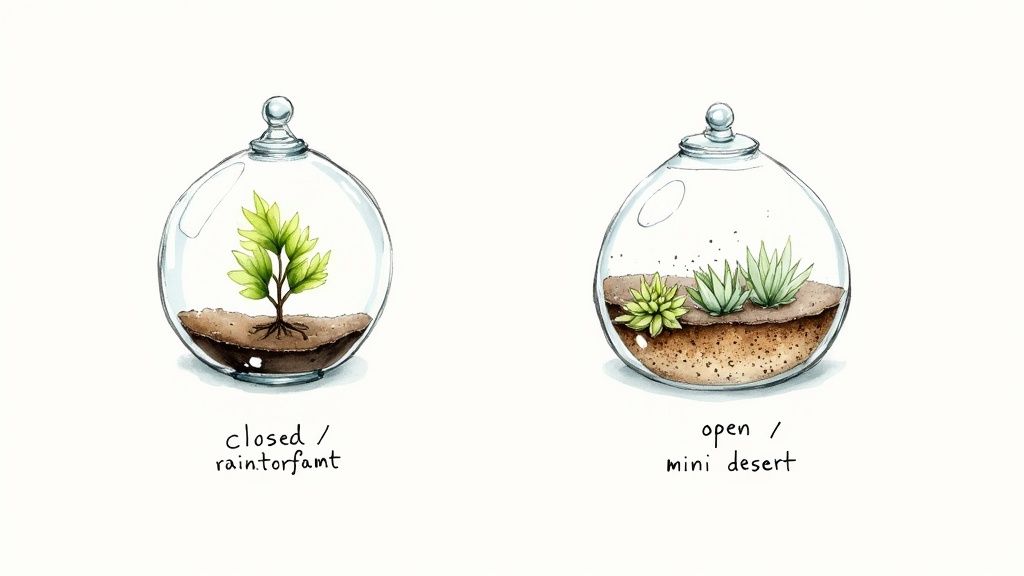
Think of a closed terrarium as your own private rainforest in a jar—a sealed, steamy little biome that creates its own water cycle. On the other hand, an open terrarium is more like a tiny desert landscape, perfect for plants that need fresh air and much drier conditions.
Nailing the difference between these two worlds is your ticket to a thriving terrarium here in New Zealand. It’s all about matching your creation to your home’s vibe and your own personal style.
The Self-Watering Rainforest Jar
A closed terrarium is a bit of everyday magic. By popping a lid on the container, you trap moisture inside, creating a humid, tropical paradise. When you first give it a water, the plants drink what they need and then release moisture back into the air through their leaves—a process called transpiration.
This water vapour hits the cool glass walls, turns back into droplets, and trickles down into the soil to water the plants all over again. It’s a beautiful, self-sustaining system that needs almost no help from you once it settles in. This high-humidity world is the perfect home for lush ferns, mosses, and other tropicals that love to stay consistently damp.
This style is a fantastic fit for many Kiwi homes, especially in humid spots like Auckland or Waikato where the air inside already has a bit of moisture. A well-balanced closed terrarium can happily look after itself for months, sometimes even years, without you ever needing to pick up a watering can.
The Breezy Miniature Desert
An open terrarium is simply any glass container without a lid. It’s an easy concept, but that lack of a lid is crucial. It allows for constant airflow, which means moisture can’t build up and make things soggy inside.
This breezy environment is the only way to go for succulents, cacti, and air plants—all species that have adapted to life in dry, arid climates. They need their soil to dry out completely between waterings and simply can't stand the soupy humidity of a sealed jar. An open setup gives you total control, so you can avoid the waterlogged soil these plants hate.
If you’re living in a drier part of New Zealand, like Central Otago or Canterbury, an open terrarium can be much easier to manage. The lower humidity in the air helps the soil dry out properly, creating the perfect desert-like conditions your plants need to flourish.
Your choice between open and closed isn't just about what looks good; it's about creating the right microclimate. Get this right, and your plants won't just survive—they'll truly thrive in their new glass home.
Making the Right Choice for Your Home
So, which way should you go? It really comes down to your lifestyle, the environment in your house, and how much hands-on care you’re up for.
To make it a bit clearer, here's a quick rundown of what sets these two tiny worlds apart.
Open vs Closed Terrariums: A Quick Guide for Kiwis
| Feature | Closed Terrarium (The Rainforest) | Open Terrarium (The Desert) |
|---|---|---|
| Environment | Humid, moist, and self-contained. Traps moisture and heat. | Dry, with excellent airflow. Allows moisture to escape freely. |
| Best Plants | Ferns, mosses, Fittonia, Calathea, and other tropicals. | Succulents, cacti, and air plants (Tillandsia). |
| Maintenance | Very low. Water every few months or even yearly once balanced. | Low to moderate. Needs watering every 2-4 weeks, depending on the plant. |
| Light Needs | Bright, indirect light. Direct sun will cook the plants inside. | Bright, indirect to direct light. Many succulents love a bit of sun. |
| Ideal For | Busy people, beginners, or anyone wanting a lush, green look. | Plant lovers who enjoy succulents and cacti, or those in drier homes. |
At the end of the day, there’s no wrong answer—only what’s right for you and the plants you want to grow.
- For a set-and-forget option: The closed terrarium is your champion. Once established, it pretty much takes care of itself.
- If you're a succulent fanatic: It has to be an open terrarium. Succulents will quickly rot and perish in the damp of a closed system.
- For homes in humid regions: Both can work, but a closed terrarium will feel especially at home.
- For dry, well-ventilated houses: An open system is often the path of least resistance. You might find yourself constantly wiping away condensation in a closed one.
Finding the Perfect Plants for Your NZ Terrarium
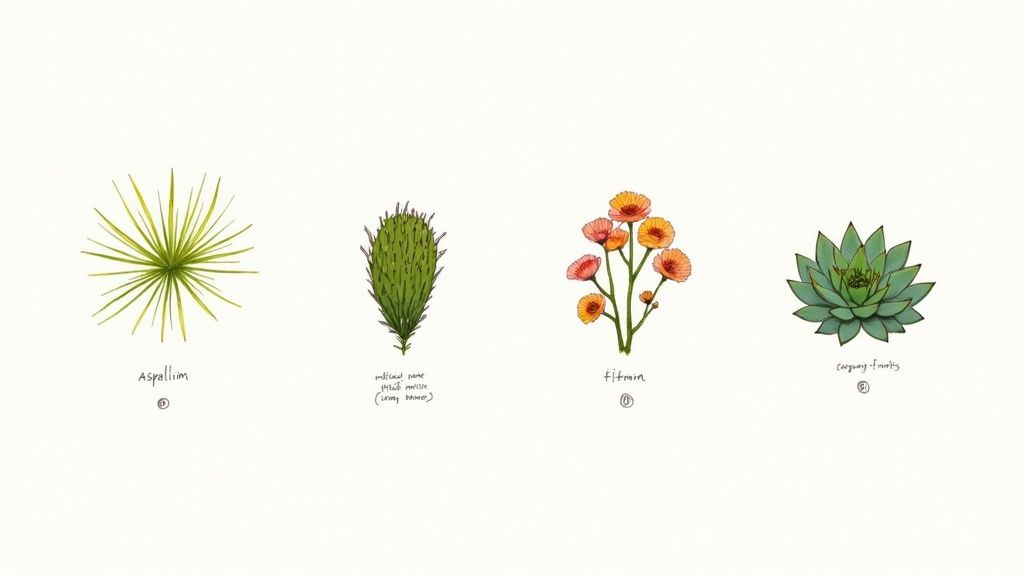
Alright, you’ve picked your world—either a misty, closed ecosystem or a dry, open one. Now for the really fun part: choosing the plants. They are the living heart of your terrarium, and getting this choice right is the single most important step to creating a miniature landscape that will actually thrive for years to come.
When you're building a terrarium in New Zealand, your options are wonderfully diverse. You can create an authentic slice of Aotearoa with our incredible native flora, or you can go for popular, hardy houseplants from around the world that are already perfectly suited to indoor life.
Think of this section as your local guide to the best plants you can get your hands on, with tips specifically for our conditions—like how to manage those lower light levels during a classic Kiwi winter from June to August.
Embracing Aotearoa's Native Plants in Your Terrarium
There's something genuinely magical about growing a tiny piece of New Zealand's own landscape indoors. Using native plants connects your terrarium directly to the natural world right outside your window, creating a display that feels both beautiful and uniquely Kiwi.
Our incredible biodiversity offers some fantastic contenders for terrarium life. In fact, using endemic species is becoming more and more popular, partly because a staggering 85% of our country's seed plants are found nowhere else on Earth. As institutions like the University of Auckland highlight, this unique botanical heritage makes a native terrarium a genuine conservation piece right in your living room.
Here are a few native stars that really shine in a terrarium:
- Asplenium Ferns (Spleenworts): Many of the smaller Asplenium species, like the delicate Shore Spleenwort, are absolutely perfect for the humid, sheltered conditions inside a closed terrarium. Their intricate fronds add an immediate lush, forest-floor vibe.
- Native Mosses: From the velvety green of Pukeweka moss to the complex patterns of Sphagnum, our local mosses are essential for creating an authentic scene. They thrive in high humidity and low light, acting as a living carpet.
- Small Puka (Meryta sinclairii): In its juvenile stage, the Puka has these huge, glossy leaves that give off a stunning tropical look. It makes a fantastic centrepiece for a larger closed terrarium, but keep in mind it will eventually outgrow the space.
A quick note on sourcing: if you're foraging for moss or plants, please do it responsibly. Never take from protected areas like national parks, and only collect tiny amounts from private land with permission. Honestly, the best approach is to find them at a reputable local nursery that specialises in native plants.
Perfect Plants for a Closed Terrarium
A closed terrarium is a high-humidity paradise, so you need to pick plants that love a steamy, tropical atmosphere. Think of species that naturally grow on the forest floor, tucked away from direct sun and harsh winds.
These plants need soil that stays consistently moist, but they will rot in a heartbeat if things get waterlogged. It’s all about balance.
Top Picks for a Humid Environment
- Fittonia (Nerve Plant): A terrarium classic for a reason! Famous for its striking veined leaves in pink, white, or red, the Fittonia absolutely adores the high humidity of a closed system. It will even wilt dramatically to let you know it's too dry.
- Peperomia Species: So many of the smaller Peperomia varieties, like Peperomia prostrata (String of Turtles), are excellent choices. They stay compact and really appreciate the stable, humid conditions inside a sealed jar.
- Small Ferns: Besides our natives, varieties like the Maidenhair Fern bring a soft, delicate texture to the mix. They just need consistent moisture and indirect light to keep their fine fronds from scorching.
- Mosses: Just like in native setups, mosses are brilliant for adding that lush, green base layer. Cushion moss and sheet moss are easy to find and create a beautiful, natural ground cover.
Choosing the right plant isn't just about survival; it's about telling a visual story. Try combining plants with different heights, textures, and colours to build a miniature landscape that’s truly captivating.
Thriving Plants for an Open Terrarium
Open terrariums are all about airflow and dry conditions, which makes them the perfect home for plants that hate having "wet feet." This is the domain of succulents and other arid-climate species that are masters at storing water in their leaves and prefer their soil to dry out completely.
For us Kiwis, an open terrarium is a fantastic way to grow a stunning collection of succulents, especially if your home has drier air or you've got a sunny windowsill that's just waiting for a new resident.
Best Choices for a Dry, Airy Setup
- Echeveria: These rosette-forming succulents are wildly popular, and for good reason. They come in a massive range of colours—from pastel blues and pinks to deep purples—and stay relatively small.
- Haworthia: Often called Zebra Plants, Haworthias are incredibly tough. They handle lower light better than most succulents and have striking striped or speckled patterns on their architectural leaves.
- Sedum (Stonecrop): Trailing types like Sedum 'Burrito' (Burro's Tail) look incredible spilling over the edge of an open bowl. They're hardy, a breeze to care for, and propagate easily.
- Air Plants (Tillandsia): These guys are the ultimate low-maintenance terrarium dwellers. They don't even need soil, so you can just place them on a piece of driftwood or some decorative stones. They get their moisture from the air and only need a light misting every week or two.
The most common mistake with open terrariums? Overwatering. Always, always check that the soil is bone dry before giving your succulents a drink. During the New Zealand winter (June-August), their growth slows right down, so you’ll need to water even less.
How to Build Your Terrarium Layer by Layer
Alright, you’ve picked your container and your plants are lined up and ready to go. Now for the fun part: getting your hands dirty and building your tiny world from the ground up.
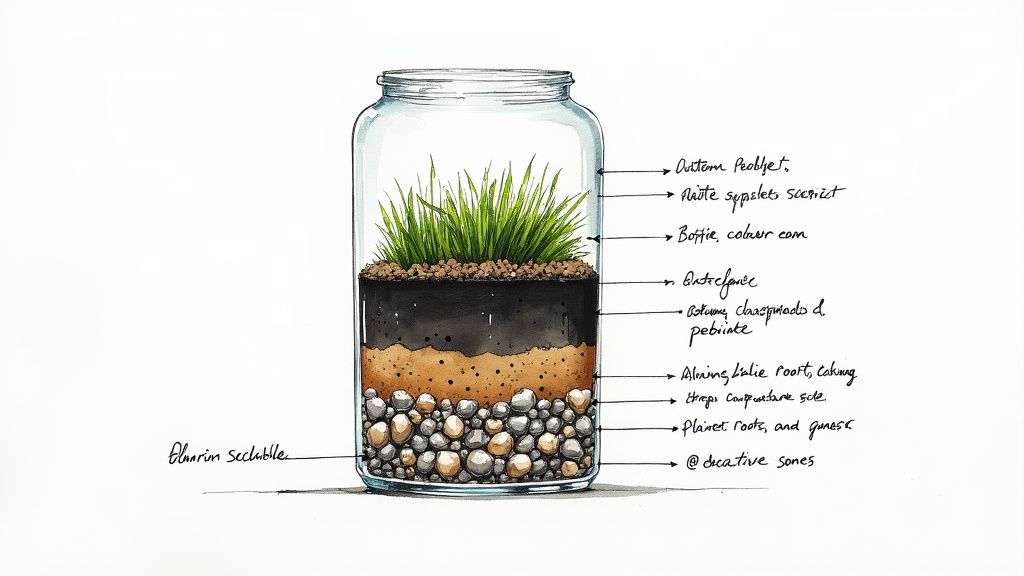
Think of building a terrarium a bit like baking a layered cake. Every single layer has a job to do, and they all work together to keep the whole system happy and healthy. This is the secret sauce to a terrarium that doesn’t just survive, but truly thrives.
We'll go through it step-by-step, covering the why behind each material so you understand exactly how your little ecosystem works.
The Foundation: Your Drainage Layer
First things first, you need somewhere for the water to go. Your glass vessel doesn't have drainage holes, so this bottom layer acts as a reservoir. It’s where any excess water can hang out without turning the soil into a swamp. Without this, you’re pretty much guaranteed root rot, which is the number one killer of terrarium plants.
For this base layer, you can use:
- Pebbles, small stones, or gravel: These create the perfect air pockets for water to collect. You can grab a bag from any garden centre in New Zealand, like Mitre 10 or Bunnings.
- Leca (Lightweight Expanded Clay Aggregate): These are fantastic. They’re super light and actually absorb extra moisture, which is a nice little bonus.
You’re aiming for a layer that’s about 2-5 centimetres deep, depending on the scale of your container. You should be able to see a clear buffer zone at the bottom.
The Filtration Layer
Next, we need a barrier to stop the soil from sneaking down into your drainage layer. It’s a simple step, but absolutely critical for keeping your system from turning into a muddy mess. If soil gets down there, it clogs everything up, and your drainage layer becomes useless.
You've got a couple of easy options here:
- Mesh or screen: Just cut a piece of fly screen or shade cloth to fit the shape of your container. Job done.
- Sphagnum moss: A thin layer of dried sphagnum moss works brilliantly as a natural filter. It also helps hold a bit of humidity, which is great for a closed terrarium.
Pop your chosen material down flat over the pebbles, making sure it’s all covered before you move on.
The Cleansing Layer: Activated Charcoal
This is your terrarium’s personal water filter. Activated charcoal is incredibly porous, and its job is to soak up impurities, odours, and any other nasties that might build up in the water and soil. It’s the key to keeping a closed terrarium smelling fresh and free from mould and bacteria.
Think of activated charcoal as the purifier for your miniature ecosystem. It keeps the environment clean and healthy, much like a filter in a fish tank, ensuring your plants have a pristine world to live in.
Just sprinkle a thin, even layer about 1 centimetre deep over your mesh or moss. This is a non-negotiable step for any closed system, but I’d recommend it for open terrariums too, just to keep the soil in top condition. You'll find horticultural charcoal at most local garden supply stores.
The Growing Medium: Your Substrate Layer
Now for the main event: the soil. This is where your plants will set down their roots and get all their nutrients. You have to match the soil to your plants, though—what works for a moisture-loving fern will be a disaster for a desert-dwelling succulent.
- For Closed Terrariums (Ferns & Tropicals): You’ll want a quality indoor potting mix that holds moisture but still drains well. Look for something with peat moss, perlite, and a bit of coir.
- For Open Terrariums (Succulents & Cacti): These guys need a gritty, fast-draining mix. A specialty succulent and cactus soil is perfect, or you can mix your own using potting mix, sand, and pumice.
Make this layer deep enough to comfortably fit your plants’ root balls—at least 5-7 centimetres is a good starting point. You can learn more about creating the ideal indoor potting mix in our detailed guide. As you add the soil, try sculpting little hills and valleys to give your landscape a more natural feel.
Planting and Final Touches
This is where your inner artist comes out. Gently ease your plants out of their pots, tickle the roots to loosen them up, and start arranging them in the soil. For tricky, narrow-necked jars, a pair of long tweezers or even chopsticks can be a lifesaver.
Once your plants are settled, it’s time for the finishing touches. A top layer of sand, decorative stones, or a cool piece of driftwood from a Kiwi beach can bring it all together. Some people even add little figurines.
Finally, give it its very first watering. For a closed system, a light misting is all you need. For an open one, water carefully around the base of each plant. Then, pop the lid on your closed terrarium, find the perfect spot for your creation, and step back to admire your handiwork.
Caring for Your Terrarium Through the Seasons
You’ve built your miniature world, and it looks fantastic. Now, the real fun begins as you shift from creation to cultivation. Caring for a terrarium isn’t about constant work; it’s more about gentle observation and making small tweaks as your tiny ecosystem settles in and responds to New Zealand's changing seasons.
Long-term success is a delicate dance of watering, lighting, and a little bit of troubleshooting now and then. Whether you've got a humid, closed jungle or a dry, open desertscape, learning to read its subtle cues is the secret to keeping it thriving for years to come.
Mastering the Art of Watering
Watering is where most new terrarium owners go wrong, usually by being a bit too kind. Overwatering is a much bigger risk than underwatering, especially in a closed system.
A happy closed terrarium should almost never need water. You’re looking for a bit of light condensation on the glass in the morning that clears up by the afternoon. If the glass is constantly fogged up, it's too wet inside—just take the lid off for a few hours to let it breathe. If you don't see any condensation for a few days and the soil looks pale, it's time for a light misting.
For an open terrarium, the rule is much simpler: let the soil dry out completely between waterings. You can check by touching the soil or popping a wooden skewer in to see if it comes out clean. In a typical Kiwi summer (December to February), this might mean a drink every few weeks. But during the cooler, darker winter months (June to August), you might only need to water it every four to six weeks.
A common mistake is watering on a fixed schedule. Instead, let your terrarium tell you what it needs. Observation is your most powerful tool for maintaining a healthy, balanced environment.
Finding the Right Light All Year Round
Light is your terrarium's power source, and its needs will change as the seasons shift here in New Zealand.
-
Summer Sun (December - February): Our summer sun is fierce. Direct sunlight can act like a magnifying glass on your terrarium, scorching leaves and basically cooking the whole system. Find a spot with plenty of bright, indirect light, like a room with a north-facing window or a few metres back from an east-facing one.
-
Winter Light (June - August): During winter, the sun is lower and weaker, and the days are shorter. You might need to move your terrarium a bit closer to a window to make sure it’s getting enough light to photosynthesise. An east-facing window that catches that gentle morning sun is often perfect.
Troubleshooting Common Terrarium Issues
Even with the best care, you might run into a few little problems. Don’t worry, most are easy to fix.
Pests and Mould
The humid world inside a closed terrarium can sometimes attract mould or tiny pests like fungus gnats. Mould usually shows up as white fuzz on the soil or on decaying leaves. Just wipe it away with a cotton bud dipped in a little water and improve the air circulation by leaving the lid off for a day.
For any stubborn pests, you could introduce beneficial insects like predatory mites, or use a gentle, plant-safe insecticidal soap. A good habit is to promptly prune any yellowing or dead leaves, as this removes potential food sources for both mould and pests.
Leggy Plants and Fertilising
If you notice your plants are stretching towards the light with long, gappy stems, that’s a classic sign they’re "leggy" and need more light. Gradually move them to a brighter spot.
While terrariums are designed to be slow-growing, a little nutrient boost can help, especially in spring. You can explore our guide on indoor plant fertiliser to find a gentle solution that’s right for your miniature garden. A heavily diluted liquid feed applied just once or twice a year is usually more than enough.
Where to Find Terrarium Supplies in New Zealand
Building your own terrarium is a fantastic project, and finding all the right bits and pieces is the first step. Luckily for us Kiwis, getting your hands on everything you need is pretty straightforward, whether you're hunting down individual components or looking for a simple all-in-one kit. You can find materials everywhere from your local garden shop to the big national chains.
This guide will show you exactly where to look for everything from the perfect glass vessel and healthy plants to all the essential layers of substrate, helping you support some great New Zealand businesses along the way.
Your Local Garden Centres and Nurseries
Your local garden centre is always a brilliant place to start. Spots like Palmers and Kings Plant Barn are treasure troves for small, terrarium-friendly plants. When you're browsing, be picky and look for the healthiest ones—give anything with yellowing leaves, pests, or weak-looking stems a miss. These stores also stock the basics like pebbles, sphagnum moss, and different types of potting mix.
For something a bit more unique or even native, specialist plant nurseries are a gem. The staff there are usually plant gurus and can give you personalised advice on what will genuinely thrive in your little glass world. If you need some more ideas on what to look for, you might find our guide to great indoor houseplants that flourish in Kiwi homes useful.
Big Retailers and DIY Kits
Don't forget about the big players like Bunnings and Mitre 10. They're super reliable for the foundational stuff like drainage stones, horticultural charcoal, and tools. Have a wander through their homeware sections, too—you can often find affordable glass vases or jars that make for a budget-friendly alternative to specialised containers.
If you're just starting out, a DIY terrarium kit can be a fantastic, stress-free option. You'll find them online or in boutique plant shops, and they come with pre-measured amounts of everything you need. It takes all the guesswork out of the process and makes sure you have the right ratios for a healthy, happy ecosystem.
It's great to see Kiwis supporting local. The New Zealand garden supplies industry, valued at around $621.9 million in 2025, has seen a 4.5% annual growth in business numbers. This is partly because retailers are branching out into niche products like terrariums and DIY kits to meet the growing demand from city-dwellers.
Finding the Perfect Glass Vessel
The container is the home for your terrarium, so it pays to choose a good one. You're looking for clear, un-tinted glass that lets as much light as possible reach your plants. Charity shops and second-hand stores like The Salvation Army or Habitat for Humanity ReStores are absolute goldmines for unique and cheap glass jars, vases, and bowls. An old-school sweet jar or a cool apothecary container can add so much personality to your creation.
Got a Few Terrarium Questions? We've Got Answers
Even after you've built your masterpiece, a few little questions can pop up. It's all part of the fun of learning! Here are some of the most common queries we get from fellow terrarium enthusiasts across New Zealand.
Can I Just Use Soil from My Garden?
It’s a tempting shortcut, but definitely one to avoid. Soil straight from the garden is usually far too dense and heavy for a terrarium. It compacts down, starving the roots of air, and often brings in a whole host of unwanted guests like pests, fungi, and bacteria – the last thing you want in a pristine, sealed ecosystem.
For a happy, healthy terrarium, always use a sterile, specialised potting mix designed for the job.
Why Is My Closed Terrarium Always Foggy?
A bit of condensation is a good sign! It means your little water cycle is working as it should. You’ll often see some fog on the glass in the morning that clears up as the day warms.
But if the glass is constantly dripping and you can barely see inside, you've got a bit too much moisture. The fix is easy: just take the lid off for a few hours, or even a full day, to let the excess evaporate. Once things look clearer, pop the lid back on.
How Often Should I Clean the Glass?
Over time, you might notice the inside of the glass getting a little grubby with water spots or a touch of algae. To get your crystal-clear view back, a quick clean every few months will do the trick.
Simply wrap a lint-free cloth around the end of a stick or some long tweezers, dampen it with a little distilled water, and give the inside a gentle wipe. Steer clear of any chemical cleaners, as their fumes can be harmful to your plants.
Help! My Plants Are Getting Too Big!
While terrariums are designed to slow down growth, your plants will eventually need a little tidy-up. When a plant starts touching the glass or crowding its neighbours, it’s time for a trim.
Think of it as giving your miniature world a haircut. Using a pair of clean, sharp scissors or small snips, carefully prune back any overgrown stems or leaves. This not only keeps your landscape looking neat but also encourages fuller, healthier growth.
Ready to dive in and create your own little green world? Jungle Story has everything you need to get started, from gorgeous terrarium-ready plants and all the essential supplies to complete DIY kits delivered right to your door. Check out our collection and bring a piece of nature inside today at https://junglestory.co.nz.