
Known for its absolutely stunning, violin-shaped leaves, the Fiddle Leaf Fig can be a bit of a diva. It needs consistent care to really thrive, especially when it comes to light, water, and humidity. I know they have a reputation for being challenging, but honestly, once you master the basics, you'll find it's one of the most rewarding plants to have in your New Zealand home.
Your Guide to a Thriving Fiddle Leaf Fig in New Zealand
So, you've brought home a Fiddle Leaf Fig (or Ficus lyrata if we're being formal). Congratulations! This iconic plant can be a true showstopper, but I've seen many plant parents get discouraged. This guide is here to cut through all the confusing advice and give you the foundational knowledge you need for success, specifically tailored for our unique Kiwi climate.
We're going to focus on the non-negotiables: light, water, and humidity. Getting these right from day one is the real secret to avoiding those dreaded brown spots and sudden, dramatic leaf drop. Think of this as your practical starting point for raising a happy, healthy Fiddle Leaf, no matter where you are in NZ.
Getting the Basics Right from Day One
Your Fiddle Leaf Fig originally comes from the lowland rainforests of West Africa, and it's always trying to replicate that environment inside our homes. Success in New Zealand means understanding how our local conditions—from a sticky Auckland summer to a dry, chilly Christchurch winter—affect its needs.
A common mistake I see is people treating it like other, more forgiving houseplants. Your Fiddle Leaf Fig is not a "set and forget" plant; it demands attention and, most importantly, a stable environment to truly shine.
Your journey starts by nailing three core elements:
- Consistent Bright Light: Fiddles are sun-worshippers, but they burn easily. They crave lots of bright, indirect sunlight. A spot near a north or east-facing window is often perfect, but you have to be mindful of that intense Kiwi sun, which will scorch its leaves in a heartbeat.
- A Solid Watering Routine: This is where most people go wrong. More Fiddle Leaf Figs are killed by kindness (overwatering) than neglect. The key is to let the soil dry out a good bit between deep, thorough waterings. We'll get into the specifics of this technique later.
- Sufficient Humidity: Our homes, especially with heat pumps blasting in winter, can become far too dry for these tropical beauties. A few simple adjustments can make a world of difference in keeping that lush foliage looking its best.
Here's a quick reference table to keep the essentials top of mind for your Fiddle Leaf Fig here in New Zealand.
| Care Aspect | NZ-Specific Recommendation |
|---|---|
| Light | Bright, indirect light. Near a north or east-facing window is ideal. Avoid harsh, direct afternoon sun. |
| Watering | Water thoroughly when the top 5-7 cm of soil is dry. Check every 1-2 weeks. Reduce watering in winter. |
| Humidity | Aim for 40-60%. Mist regularly, use a pebble tray, or group with other plants, especially in dry winters. |
| Temperature | Prefers stable temperatures between 18°C and 24°C. Avoid cold draughts from windows or doors. |
| Soil | Use a premium, well-draining indoor potting mix. Adding perlite or orchid bark improves aeration. |
| Fertiliser | Feed with a balanced liquid fertiliser every 2-4 weeks during spring and summer (the growing season). |
Mastering these fundamentals will set you up for a long and happy relationship with your plant, making it a resilient and beautiful addition to your home. And while they have a reputation for being fussy, they are just one of many great indoor houseplants you can grow successfully with a bit of know-how. Don't be intimidated; just be prepared. This guide will walk you through everything you need to know.
Finding the Perfect Light for Your Fiddle Leaf Fig
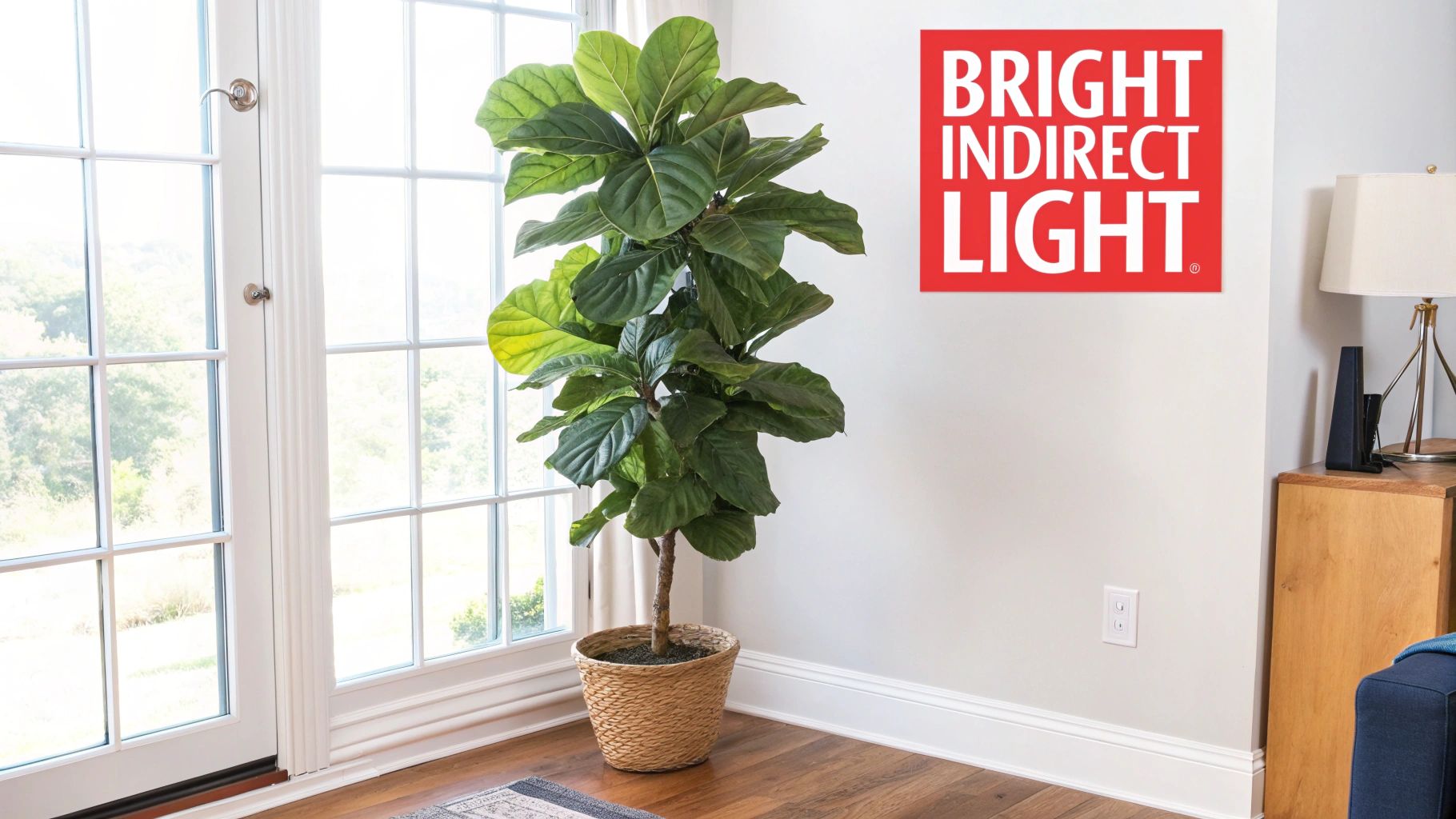
When you're getting to know your fiddle leaf fig, the single most important thing to get right is the light. These stunning plants are basically solar-powered, and without enough fuel, they just won't thrive. Here in New Zealand, where our sun and seasons can be quite intense, finding that sweet spot is the key to a happy plant.
The goal is bright, indirect light. But what does that really look like in a Kiwi home? Think about the light you'd get a metre or two back from a big north-facing window. It’s bright enough to read a book by all day, but the sun's actual rays aren't scorching the leaves.
Decoding the Light in Your Home
Figuring out which window is best is your first task. The direction your windows face completely changes the light your plant gets, especially as the sun’s path shifts from a hot Hawke's Bay summer to a cool Dunedin winter.
- North-Facing Windows: In New Zealand, this is often prime real estate for fiddle leaf figs. They give strong, consistent light for most of the day. Our summer sun can be a bit much, though, so a sheer curtain is a fantastic idea to soften those harsh afternoon rays and prevent leaf burn.
- East-Facing Windows: These are an excellent second choice. They offer gentle morning sun that's far less likely to scorch the leaves, giving your plant a perfect start to the day.
- West-Facing Windows: Approach with caution. The afternoon sun, especially from November to March, is incredibly strong and can easily burn the leaves, leaving behind brown, crispy patches that won't ever heal. If a west-facing spot is your only option, place the plant several metres back from the glass or hang a thick curtain.
- South-Facing Windows: These typically provide the weakest light and aren't ideal. A fiddle leaf placed here will probably struggle and get "leggy" as it desperately stretches for the light.
Quick tip: A fiddle leaf fig will physically lean towards its light source. To encourage even, upright growth, just give the pot a quarter turn every time you water. It’s a simple habit that stops it from looking lopsided and makes sure all the leaves get their moment in the sun.
For fiddle leaf fig care in New Zealand, getting the light right is non-negotiable. Experts recommend a minimum of 6 to 8 hours of bright, filtered light every day. If your plant doesn't get this, you’ll start seeing signs of distress like leggy stems, disappointingly small new leaves, or drooping foliage.
Learning to Read Your Plant's Signals
Your fiddle leaf will tell you exactly how it feels about its lighting situation. You just have to learn its language.
Signs of Not Enough Light:
- Leggy Growth: Long, bare stretches of stem between the leaves.
- Small New Leaves: New foliage is noticeably smaller than older leaves.
- Leaf Drop: The plant might start shedding its lower leaves to save energy.
- Leaning: A dramatic lean towards the window is a clear cry for more light.
Signs of Too Much Direct Sun:
- Scorched Spots: Crispy, brown, or bleached-out patches on the leaves.
- Drooping Leaves: The leaves wilt during the hottest part of the day.
- Faded Colour: The lovely deep green starts to look washed-out or dull.
When Natural Light Just Isn't Enough
What if your home is a bit on the shady side, or you need to help your plant through a gloomy Waikato winter? Don't worry. A simple grow light can be a total game-changer, giving your fiddle leaf the full-spectrum light it's missing.
You don't need a complicated, expensive setup. A single full-spectrum LED bulb in a regular lamp, placed about 30-50 cm from the plant, can make a huge difference. Let it run for 8-10 hours a day to supplement the natural daylight and you'll keep your plant happy all year round.
For more general advice on plant placement and care, you can explore our other plant care guides.
Mastering the Art of Watering in the NZ Climate
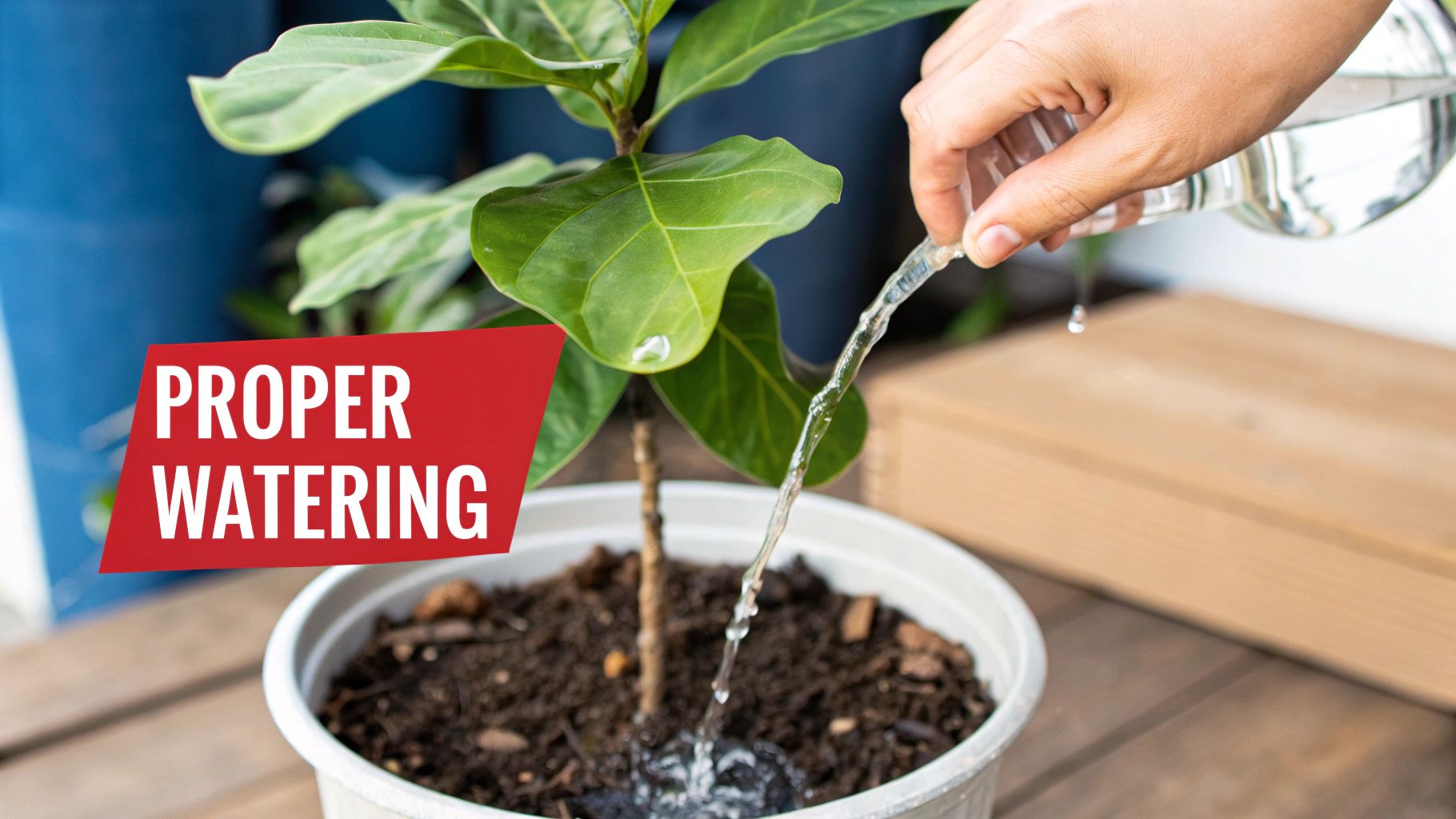
Of all the things involved in fiddle leaf fig care, watering is hands-down where most Kiwi plant parents trip up. It's the number one source of drama, but it really doesn't need to be so complicated. The secret isn't a strict schedule; it's about learning to read your plant and adjusting to our country's unique and often unpredictable conditions.
So, forget the idea of watering every Saturday on the dot. Your Fiddle Leaf's thirst will change dramatically from a hot, dry Auckland summer to a damp, cool Wellington winter. The only real way to know is to check the soil first, every single time.
The Foolproof 'Finger Dip' Test
This is the most reliable trick in the book. Don't just poke the surface; you need to get a feel for what’s happening deeper down where the main roots live.
Gently push your index finger into the soil, aiming to go down about 5 to 7 centimetres. If you feel any dampness or coolness at your fingertip, leave it for another day or two. If it feels completely dry, it's time to give your plant a drink. This simple habit is your best defence against the most common killer of Fiddle Leaf Figs: root rot from overwatering.
The biggest mistake I see is "death by a thousand sips"—giving the plant small, frequent splashes of water. Fiddle Leaf Figs would much rather have a deep, thorough soak followed by a chance to properly dry out. This mimics the drenching rains and dry spells they'd experience in their native habitat.
While many guides suggest watering every 7 to 10 days as a starting point, you have to let your plant and your home's conditions be the final judge. You can find more foundational watering advice from seasoned gardeners who have perfected how to take care of a Fiddle Leaf Fig plant.
How to Water the Right Way
Once you’ve established the soil is dry, it's time to water properly. The aim is to completely and evenly saturate the entire root ball.
- Slowly pour lukewarm water over the whole soil surface.
- Keep going until you see water flowing freely from the drainage holes at the bottom. This is how you know all the roots have had a chance to drink.
- Let the pot drain for a good 15-20 minutes.
Now for the non-negotiable step in fiddle leaf fig care: always, always empty the saucer or cache pot. Letting your plant sit in a puddle of water is a one-way ticket to root rot, especially in New Zealand’s more humid regions where things take an age to dry out. Your plant's roots need oxygen, and soggy soil will suffocate them.
Battling Dry Air and Boosting Humidity
Fiddle Leaf Figs come from humid environments, but our homes in New Zealand can get surprisingly dry, particularly in winter when the heat pump is going full blast. If you're seeing brown, crispy edges on the leaves, low humidity is the likely culprit.
Thankfully, giving your plant a humidity boost is pretty straightforward.
- Regular Misting: A light misting with a spray bottle a couple of times a week can make a big difference. It gives a temporary humidity boost and helps keep the leaves clean and dust-free.
- Pebble Trays: Pop your pot on a tray filled with pebbles and a bit of water. As the water evaporates, it creates a little humid microclimate right around your plant. Just be sure the pot is sitting on the pebbles, not in the water.
- Group Your Plants: Plants naturally release moisture through transpiration. Clustering your Fiddle Leaf Fig with other houseplants creates a more humid little bubble for all of them.
By getting a handle on these watering and humidity techniques, you’ll have conquered the trickiest part of fiddle leaf fig care. You'll be well on your way to raising a happy, thriving plant that looks stunning in your home for years to come.
The Best Soil and Feeding Routine for Robust Growth
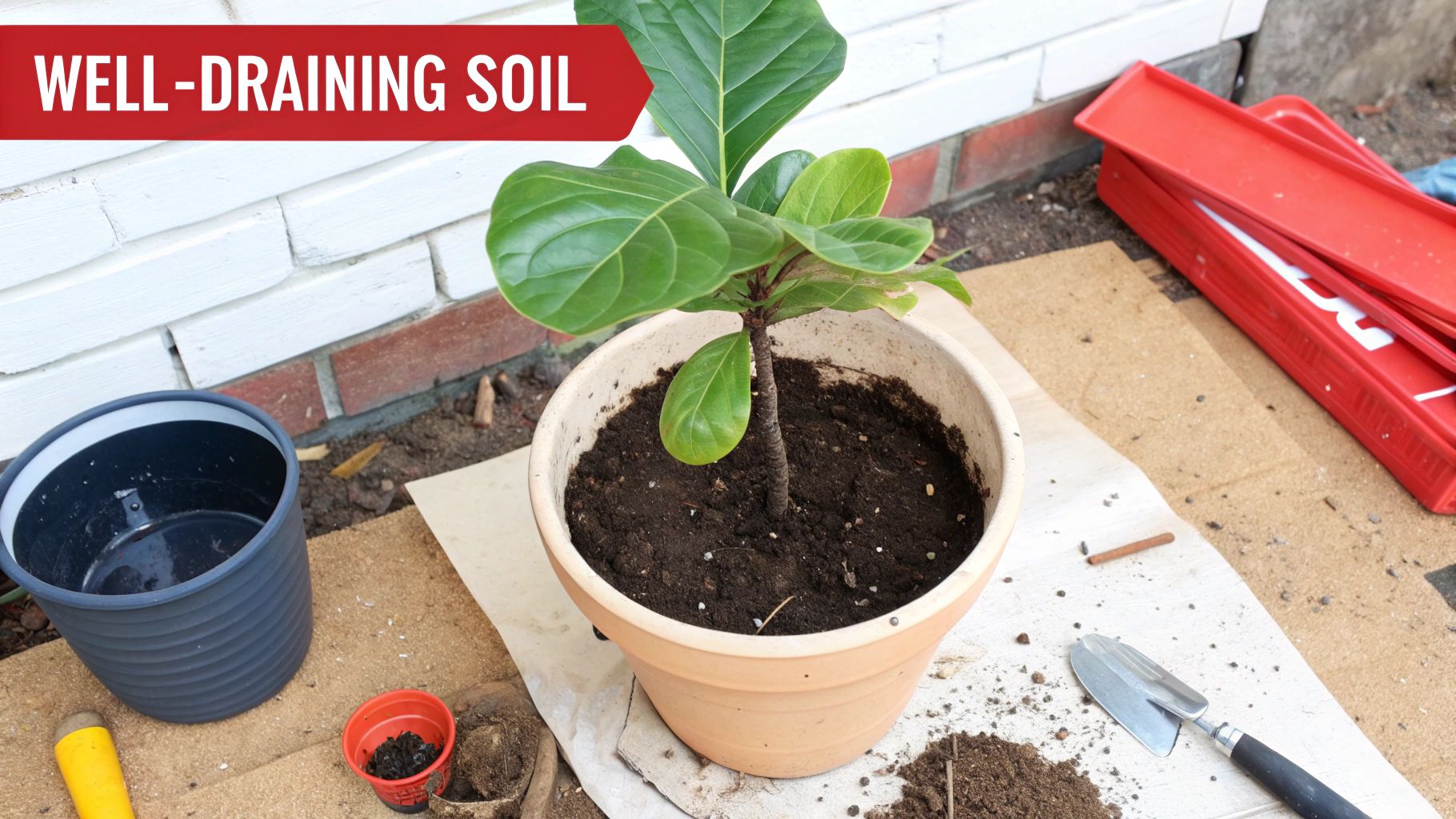
A happy, thriving fiddle leaf fig truly starts from the ground up. The right soil and a smart feeding schedule are what will take your plant from just surviving to absolutely flourishing. Good fiddle leaf fig care is all about what’s happening below the surface – creating a healthy root environment that fuels that lush, vibrant foliage we all love.
Think of the soil as your plant’s entire life support system. It's not just dirt; it provides structure, nutrients, and, most critically, excellent drainage. Fiddle leaf figs absolutely hate having "wet feet," and the wrong soil is a one-way ticket to root rot, especially given New Zealand's often-humid climate.
Crafting the Perfect Potting Mix
The ideal soil for a fiddle leaf fig needs to be chunky, airy, and fast-draining. This structure is designed to mimic their native environment in the West African rainforests, where rainwater quickly drains away from their roots. Your standard, dense potting mix from the garden centre just won't cut it – it holds far too much moisture for far too long.
You’ve got a couple of great options here:
- Buy a Specialised Mix: Many Kiwi garden centres now offer premium indoor plant or aroid mixes specifically designed for excellent drainage. This is a fantastic, no-fuss choice if you want to get it right without the mess.
- Create Your Own Blend: If you're a bit of a DIYer, making your own mix is surprisingly easy and very effective. A winning recipe is one part high-quality indoor potting mix, one part perlite, and one part orchid bark. The bark creates essential air pockets, while the perlite keeps the whole mix light and stops it from compacting over time.
A word of warning: never use soil straight from your garden. It’s often far too heavy, lacks proper drainage, and can introduce a whole host of pests and diseases into your home. Always start with a fresh, sterile potting mix for your indoor plants.
Whatever you choose, the goal is a soil that lets water flow through easily but holds on to just enough moisture for the roots to have a good drink. Getting this balance right is absolutely fundamental to your plant's long-term health. For more deep dives on soil and other essentials, our extensive plant care guides are packed with information.
Your NZ-Specific Fertilising Schedule
Fertiliser is basically food for your plant, giving it the energy it needs to unfurl those magnificent leaves. But timing is everything. You only want to feed your fiddle leaf fig during its active growing season, which here in New Zealand runs from spring through to the end of summer (roughly September to March).
During these warmer, brighter months, your plant is actively pushing out new growth and can actually use the extra nutrients. A balanced liquid indoor plant fertiliser is perfect for the job. The key is to dilute it to half-strength to avoid the risk of chemical burn on its sensitive roots. A good rhythm is to feed it once every 2-4 weeks with its regular watering.
Once autumn rolls around, it’s time to stop feeding. The plant's growth naturally slows for winter as it enters a dormant phase. Fertilising a dormant plant isn't just a waste; it can cause serious damage to the root system.
When and How to Repot Your Fig
Repotting can feel like a big, daunting task, but it’s a necessary step for your fig's continued growth. Fiddle leaf figs actually prefer to be a little bit snug in their pots, so you don't have to do it too often—typically every 1-2 years or so.
Keep an eye out for these tell-tale signs that it's time for a new home:
- Roots are starting to poke out of the drainage holes.
- The plant looks top-heavy and feels a bit wobbly.
- Water seems to run straight through the pot without soaking in.
- You can see a thick mat of roots on the surface of the soil.
When you do repot, choose a new pot that is only about 5 cm wider in diameter than its current one. Going too big, too fast can mean the soil stays wet for too long, risking root rot. Make sure the new pot has plenty of drainage holes. A classic terracotta pot is an excellent choice, as the porous clay helps the soil breathe and dry out more evenly.
Pruning and Pest Control for a Healthy Fig
Right, let's talk about the hands-on maintenance that takes your fiddle leaf fig from simply surviving to truly thriving. Beyond just getting the light and water right, regular pruning and keeping an eye out for pests are what will keep your plant looking lush and sculptural.
Think of it less as a chore and more as a way to guide your plant's growth and head off any potential problems before they get a foothold.
I know, the idea of taking shears to your beautiful plant can feel a bit daunting. It seems counterintuitive to cut it back, but trust me, it’s one of the best things you can do to encourage a fuller, bushier shape and stop it from getting too tall and gangly. It's also just good plant hygiene to remove any dead or dying leaves that are pointlessly draining its energy.
Pruning with Purpose and Confidence
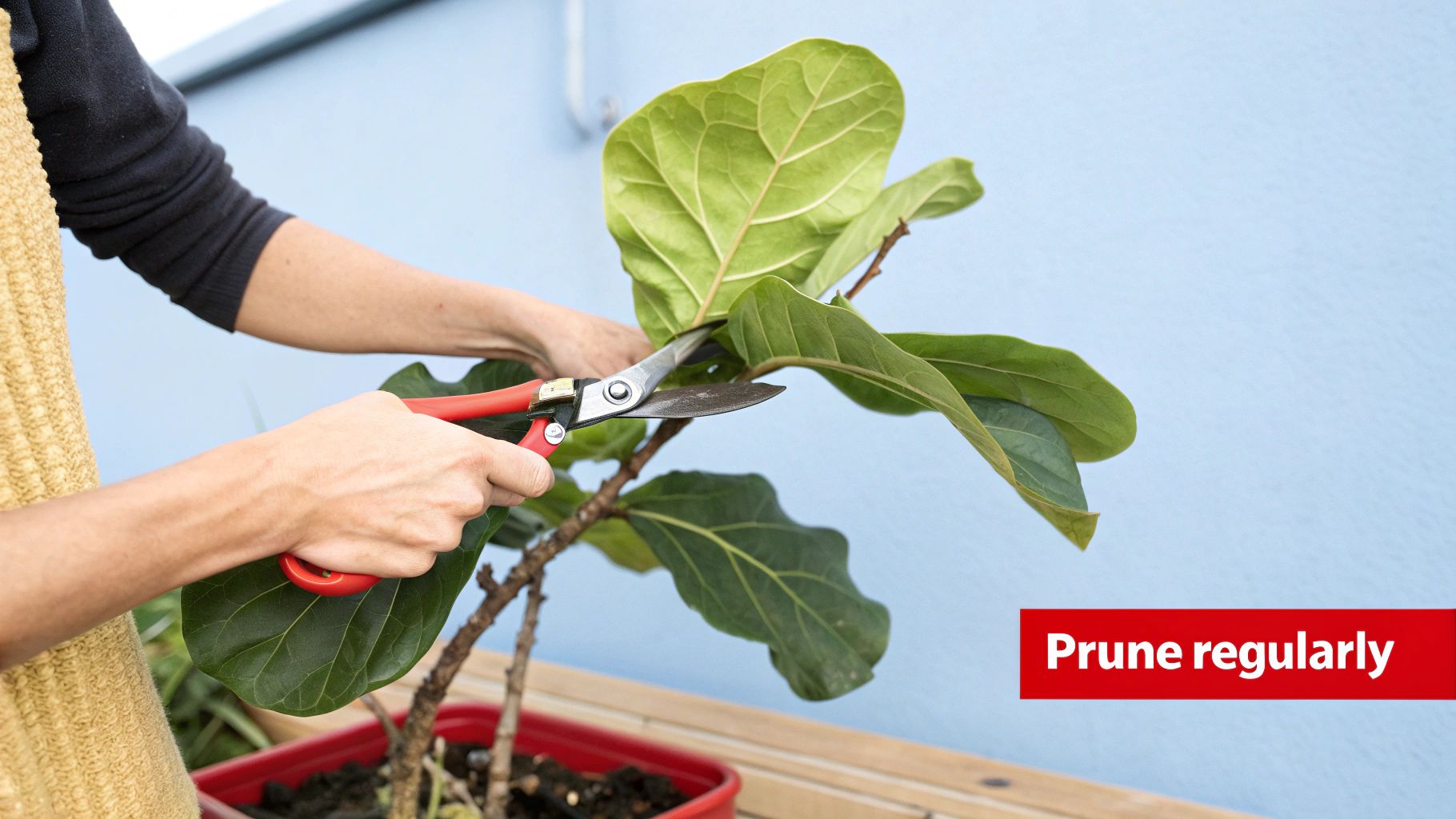
The absolute best time to prune your fiddle leaf here in New Zealand is during its main growing season, which runs from spring through to late summer (September to March). This is when the plant is full of vigour and will bounce back quickly, pushing out fresh new growth from where you've made the cut.
A strategic trim can completely transform a leggy, top-heavy plant. Pruning the main stem actually signals the plant to branch out, often resulting in two new shoots sprouting from just below the cut. This is the secret to achieving that full, tree-like silhouette so many of us are after.
Here's how to go about it:
- Know Your Goal: First, decide what you want to achieve. Are you trimming to control its height, encourage a fuller shape, or just tidy up some unhealthy leaves?
- Get Your Tools Ready: Always, always use a sharp, clean pair of pruning shears or a sterile knife. A quick wipe of the blade with some rubbing alcohol beforehand is a simple step that prevents spreading any nasty bacteria.
- Make the Cut: To get it to branch out, find a node (that little bump where a leaf meets the stem) and snip the main stem about 2-3 cm above it.
- Tidy Up Damaged Leaves: Any yellow or brown leaves can be snipped off right at their base. This instantly cleans up the look of your plant and, more importantly, redirects its energy to making healthy new leaves.
Hold on, don't just chuck those cuttings in the green bin! If you have a healthy piece of stem with at least one leaf, you can often propagate it. Pop the cut end into a jar of water, change the water every week, and in a month or two, you should see roots start to form. It’s a brilliant way to get a brand new plant for free.
Staying Ahead of Common Pests
A healthy, well-cared-for plant is its own best defence against pests, but even the most attentive of us will likely face a bug or two at some point. The trick is to catch them early.
Make it a habit to give your plant a quick once-over every time you water. Your main job is to inspect the leaves, especially the undersides and the little crevices where the leaf stalk joins the main stem—these are favourite hiding spots for pests. The usual suspects for fiddle leaf figs are mealybugs, spider mites, and scale.
Here in New Zealand, a good preventative routine is to wipe the foliage down with a cloth dipped in soapy water, followed by a spray of neem oil if needed. Simply cleaning the big leaves with a damp cloth every month or so also does wonders; it removes dust and helps the plant absorb more light for photosynthesis.
If you do spot an infestation, here’s how to handle the most common culprits:
Spider Mites: These pests are absolutely tiny and tough to see, but you can’t miss the fine, spidery webbing they leave on the undersides of leaves.
- Treatment: First, give your plant a good shower under the tap or with a hose to physically blast them off. Then, wipe down every single leaf with a mix of water and a few drops of dish soap, followed by a thorough spray with neem oil.
Mealybugs: These look like tiny bits of white, cottony fluff, often clustered in the nooks and crannies of the plant.
- Treatment: For a small outbreak, dip a cotton bud in rubbing alcohol and dab it directly onto the mealybugs. It gets rid of them on contact. If you’re dealing with a larger infestation, an insecticidal soap spray is your best bet.
This proactive approach to fiddle leaf fig care is what really separates the novices from the experts. Keeping on top of pruning and pests will ensure your fig stays healthy, resilient, and a stunning feature in your home for years.
Troubleshooting Common Fiddle Leaf Fig Problems
Even with the best intentions and meticulous fiddle leaf fig care, these dramatic plants can sometimes throw a tantrum. It’s disheartening to see a new brown spot or a fallen leaf, but don't panic. Most issues are surprisingly easy to sort out once you know what you’re looking for.
This section tackles the most common dramas that Fiddle Leaf Fig owners face across New Zealand. We’ll walk through how to diagnose the issue so you can get your plant back on the path to vibrant health.
Why Are My Fiddle Leaf Fig's Leaves Turning Brown and Crispy?
This is the number one complaint I hear, and nine times out of ten, it’s a problem with water or humidity. Those brown, crispy edges are a classic sign of thirst. This is especially common in New Zealand homes during summer or when a heat pump is running, sucking all the moisture from the air.
First, take a hard look at your watering routine. Is the soil truly getting a good soak? You need to give it a deep, thorough drenching every time the top 5-7 cm of soil feels completely dry. Don't be shy – saturate the root ball until you see water flowing freely from the drainage holes.
If you’re confident that your watering is on point, the culprit is almost certainly low humidity. Your Fiddle Leaf craves a far more humid environment than the average Kiwi lounge offers. You can easily fix this by misting the leaves a few times a week, running a humidifier nearby, or simply clustering it with other plants to create a more humid little microclimate.
Help, My Fiddle Leaf Fig Just Dropped a Bunch of Leaves!
Sudden leaf drop is your Fiddle Leaf’s most theatrical reaction to shock or stress. They are creatures of habit and absolutely hate change. The usual suspects for this alarming behaviour are a sudden move to a new location, a cold draught from a window or door, or a big shift in your watering schedule.
Did you just bring the plant home from the nursery? If so, some leaf drop is completely normal as it acclimatises. Just give it some time to settle in. Otherwise, it’s time to play detective. Is it sitting near a frequently opened door or a draughty old window? Have you recently started a totally different watering routine?
Fiddle Leaf Figs crave stability above all else. Find a bright, warm, draught-free spot and try to keep it there. Once you remove the source of stress, the plant should stabilise. Consistency is the absolute key to good fiddle leaf fig care.
Is NZ Tap Water Okay for My Fiddle Leaf Fig?
For the most part, yes. The tap water across most of New Zealand is perfectly fine for these plants. They’re generally quite resilient when it comes to water quality.
However, they can sometimes be a bit sensitive to chlorine or other minerals found in some municipal water supplies. If you're seeing stubborn brown spots or just general poor health despite doing everything else right, it might be worth experimenting with your water source.
A simple fix is to let your tap water sit out in the watering can for 24 hours before using it. This allows some of the chlorine to evaporate. An even better option is to collect and use rainwater, which is naturally soft and free of any additives. Ultimately, though, a consistent and correct watering technique is far more critical than the specific type of water you use.
When Should I Fertilise My Plant in New Zealand?
Knowing when to feed your plant is crucial, and the timing is tied directly to our Southern Hemisphere seasons. You should only be feeding your Fiddle Leaf Fig during its active growing season, which in New Zealand runs from spring through summer—typically September to March.
During this window, a balanced liquid fertiliser diluted to half-strength every 2-4 weeks gives it the perfect boost for new growth. It is vital that you stop feeding in autumn and winter when the plant's growth naturally slows right down. Fertilising a dormant plant won’t encourage it to grow; instead, you risk burning the delicate root system and causing serious damage.
Always remember this golden rule: water the plant before you fertilise. Applying fertiliser to dry soil is a sure-fire recipe for root burn. A quick drink of plain water first helps protect the roots and allows them to absorb the nutrients much more effectively.
For an incredible selection of beautiful indoor plants, including the magnificent Fiddle Leaf Fig, and all the pots and care accessories you need to help them thrive, explore the marketplace at Jungle Story. We connect you with trusted local growers from all over New Zealand. Find your next leafy friend at https://junglestory.co.nz.
Article created using Outrank