
When it comes to the best hanging basket plants NZ gardeners can grow, it’s all about mixing cascading, flowering, and foliage varieties that are tough enough for our unique climate. Think of Kiwi favourites like Fuchsias, Petunias, and Lobelia – these guys are brilliant for creating vibrant, long-lasting displays that bring a pop of vertical colour to balconies, patios, and verandas anywhere in New Zealand.
Creating Your First Stunning Hanging Basket
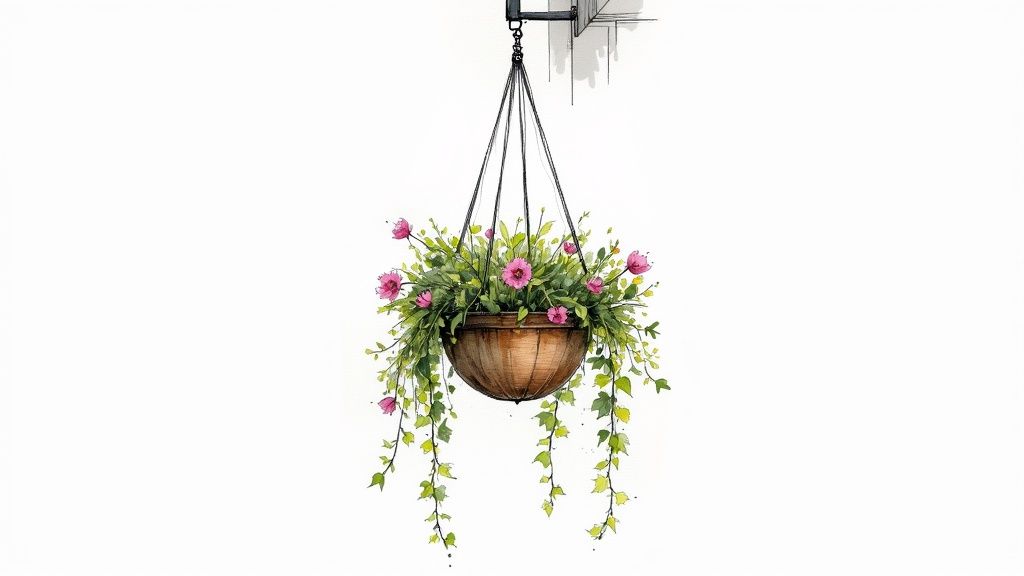
Picture your outdoor space transformed by waterfalls of brilliant colour. Whether you've got a sun-drenched Auckland balcony or a sheltered Christchurch patio, hanging baskets are a fantastic way to add life and personality to any garden, no matter the size. They literally elevate your planting, drawing the eye upwards and making even the most compact areas feel lush and full of energy.
Gardening is just part of our DNA here in New Zealand. A national survey back in 2007/2008 found that a whopping 43% of New Zealanders had got their hands dirty in the garden in the previous year. That passion is exactly why hanging baskets are so popular right across the country.
The Thriller, Filler, Spiller Method
Want to get that professional-looking, beautifully balanced design? There’s a simple but incredibly effective trick called the 'Thriller, Filler, Spiller' method. It's an easy-to-remember way of combining different plants to create a truly stunning arrangement.
Here’s the basic idea:
- Thriller: This is your star player. A tall, eye-catching plant that sits in the centre of the basket, giving it height and a dramatic focal point.
- Filler: These are mounding plants that snuggle in around the thriller. They fill out the space, adding texture and a sense of fullness.
- Spiller: These are the trailing plants you pop around the edges. They’ll gracefully cascade over the sides of the basket, softening the whole look.
Think of this guide as your starting point for creating beautiful displays that will thrive in New Zealand's varied conditions. We’ll walk you through practical, straightforward advice made for Kiwi gardeners, whether you're a complete beginner or have been gardening for years. By getting the fundamentals right – from container choice to plant selection and care – you’ll be creating your own masterpieces in no time. If you need a hand with the first step, check out our guide on choosing the right plant containers in NZ.
Choosing the Right Plants for Your NZ Basket
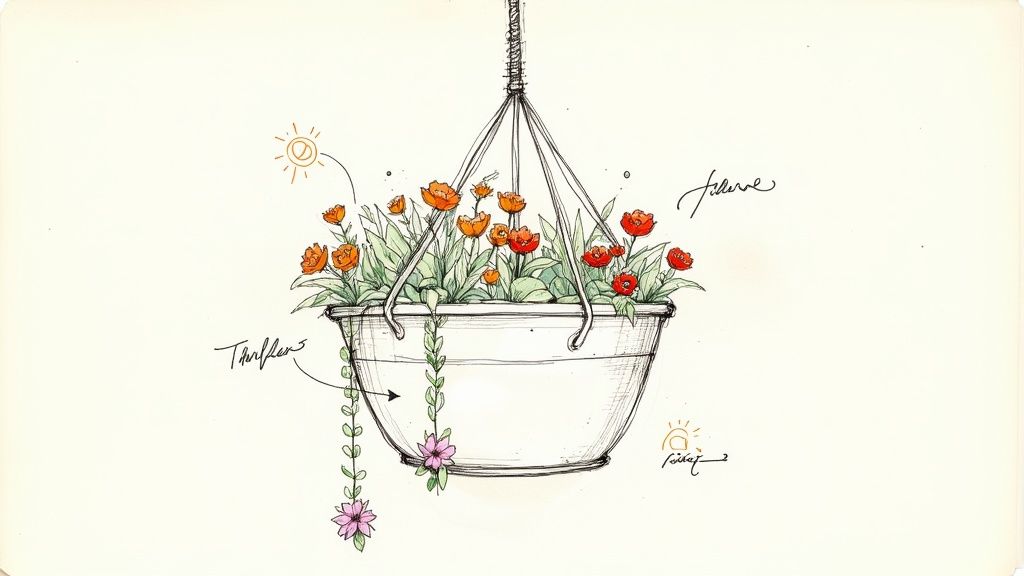
The secret to a jaw-dropping hanging basket isn’t finding one perfect plant. It’s about creating a living sculpture with a team of plants that play well together. The easiest way to get this right is by using the simple ‘Thriller, Filler, Spiller’ technique, which helps you design a dynamic, multi-layered display that looks lush and vibrant from every angle.
This classic method gives your basket structure, ensuring it has height, volume, and those elegant cascading bits we all love. Think of it like putting together a bouquet: you start with a bold centrepiece, add complementary blooms to fill out the middle, and finish with delicate greenery that drapes over the sides. It’s the exact same idea for the best hanging basket plants NZ gardeners can grow.
Thrillers: The Stars of the Show
Every great display needs a focal point, and that’s the job of the Thriller. These are your upright, eye-catching plants that bring height and a pop of drama right in the middle of the basket. They’re the first thing people will notice, setting the whole mood for your arrangement.
When you’re picking a thriller, look for something with a strong vertical shape, interesting leaves, or knockout flowers. Keep in mind that New Zealand’s wind can be a real challenge, so plants with sturdy stems that won’t snap in a gust are always a smart choice for more exposed spots.
A few excellent Thriller options for Kiwi gardens:
- Fuchsias: With their delicate, lantern-like flowers, fuchsias bring a touch of real elegance. They thrive in partial shade, perfect for sheltered patios, and will flower from late spring right through autumn.
- Geraniums (Zonal Pelargoniums): These are sun-loving powerhouses. Their strong stems and big, vibrant flower heads make them incredibly wind-resistant and a reliable choice for non-stop colour all summer long.
- Miniature Phormium (NZ Flax): For a more modern, architectural vibe, a small flax gives you striking, structural foliage in shades of green, bronze, or red. They're incredibly tough and can handle a wide range of NZ conditions.
Fillers: Creating Lush Fullness
Next up are the Fillers, the hardworking plants that create that gorgeous sense of lushness and abundance. These mounding plants snuggle in around your thriller, filling the gaps and connecting the star of the show to the edges of the basket. They add texture, bulk, and often a secondary layer of colour that makes the whole thing pop.
Fillers are absolutely essential for avoiding that sparse, leggy look. They make the basket feel full and healthy, creating a dense canvas of foliage and flowers. Just choose fillers that will happily mingle without completely taking over their neighbours.
Great Filler choices for New Zealand baskets:
- Petunias: A classic for a reason! Petunias produce a staggering number of trumpet-shaped flowers in nearly every colour you can imagine. They adore the sun and will bloom their hearts out from spring to autumn if you keep up with deadheading.
- Begonias: Tuberous begonias are brilliant for shadier spots, offering large, rose-like blooms in glowing shades of orange, yellow, and red. They provide fantastic, non-stop colour through the warmer months.
- Lobelia: While often used as a spiller, the upright types of lobelia work beautifully as a filler, creating a dense cloud of tiny, intense blue, purple, or white flowers.
Pro Tip: When you're planting, don't be afraid to gently tease the roots of your filler plants and position them at a slight angle, pointing outwards. This encourages them to grow towards the edge of the basket, helping you get that perfectly rounded, full shape.
Spillers: The Cascading Finish
Finally, we have the Spillers. These are the trailing plants that soften the edges of the basket and create that beautiful, overflowing effect. You’ll plant these around the rim, where they can cascade gracefully over the sides, adding length, movement, and a truly professional finish to your design.
Spillers are what turn a simple pot of plants into a proper hanging display. They connect the basket to the space below it, drawing your eye downward in a waterfall of colour and texture. For a deeper dive into trailing varieties, check out our detailed guide on the best hanging plants in NZ.
Top Spiller selections for NZ conditions:
- Trailing Lobelia: The cascading version is a firm favourite for its delicate yet prolific blooms that create a curtain of colour. It does best when protected from the harsh afternoon sun.
- Dichondra 'Silver Falls': This foliage plant is a must-have for sunny spots. Its stunning, silvery, kidney-shaped leaves trail on stems that can grow over a metre long, creating a spectacular shimmering waterfall effect.
- Bacopa (Sutera cordata): Covered in masses of tiny white, blue, or pink flowers, Bacopa is a resilient spiller that flowers for months on end. It’s wonderfully versatile, tolerating both sun and partial shade.
Top Plant Choices for New Zealand Hanging Baskets
To make it even easier, here's a quick-reference table to help you mix and match plants for a stunning basket every time.
| Plant Type | Plant Name | Best For Sun/Shade | NZ Flowering Season |
|---|---|---|---|
| Thriller | Geranium (Pelargonium) | Full Sun | Spring–Autumn |
| Thriller | Fuchsia | Partial Shade | Spring–Autumn |
| Thriller | Miniature Phormium (Flax) | Sun/Partial Shade | (Foliage Interest) |
| Filler | Petunia | Full Sun | Spring–Autumn |
| Filler | Begonia | Partial Shade | Summer–Autumn |
| Filler | Lobelia (Upright) | Sun/Partial Shade | Spring–Summer |
| Spiller | Dichondra 'Silver Falls' | Full Sun | (Foliage Interest) |
| Spiller | Bacopa (Sutera cordata) | Sun/Partial Shade | Spring–Autumn |
| Spiller | Trailing Lobelia | Partial Shade | Spring–Summer |
By combining one thriller, a few fillers, and several spillers from this list, you've got a foolproof recipe for a hanging basket that will be the envy of the whole neighbourhood.
Weaving NZ Native Plants into Your Hanging Baskets
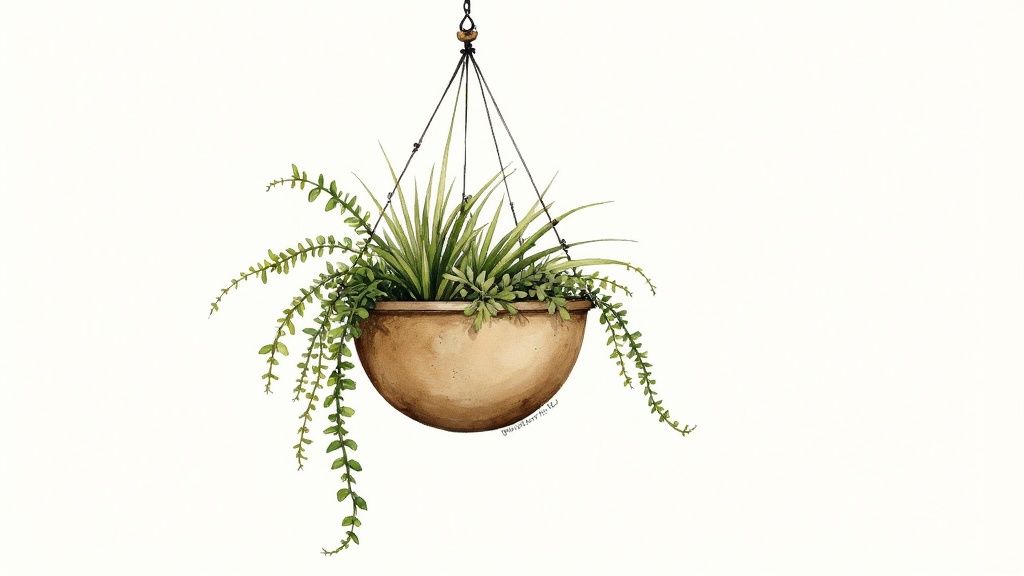
While big, bold annuals are always a showstopper, there’s a special kind of magic in creating a display that feels like it truly belongs here. Bringing New Zealand native plants into your hanging baskets is a fantastic way to celebrate the unique beauty of Aotearoa, resulting in arrangements that look incredible and are perfectly in tune with our local conditions.
Plants that have evolved here are just naturally tougher. They’re built for our climate, which often means they’re more resilient, need less fussing over, and are better at shrugging off local pests and diseases. This built-in hardiness makes them brilliant choices for the sometimes-demanding environment of a hanging basket.
Plus, when you choose native species, you’re essentially creating a mini-ecosystem that gives back to local wildlife. These plants offer food and shelter for our native birds, bees, and insects, turning your balcony or patio into a welcome pit-stop for nature.
Incredible Native Spillers and Fillers
You might be surprised at just how many native plants work wonders as spillers and fillers. They bring a different kind of style to the party—less about loud colour and more about interesting textures, forms, and subtle hues that create a really sophisticated, modern vibe.
Here are a few of my go-to native choices:
- Muehlenbeckia (Pōhuehue): A fantastic spiller, this tough-as-nails scrambling vine creates a dense, tangled cascade. Its wiry stems and tiny round leaves provide a wonderful textural contrast against bigger, bolder plants.
- Scandia geniculata (Native Aniseed): If you’re after a more delicate, airy look, this is a superb choice. The fine, almost fern-like foliage has a gentle aniseed scent and will trail gracefully over the basket's edge.
- Scleranthus biflorus (Canberra Grass): Don't let the name fool you; this isn't a grass at all but a mounding cushion plant. Its firm, mossy appearance is brilliant as a filler, forming a vibrant lime-green hummock that looks amazing all year round.
- Asplenium flabellifolium (Necklace Fern): This small, hardy native fern is perfect for a shadier spot. Its fronds have a unique trailing habit, with tiny new plantlets forming at the tips—hence the name.
Architectural Thrillers with Kiwi Flair
To give your basket height and structure, think beyond flowers and look to the strong, sculptural forms of our native flora. A miniature flax or a structural grass can serve as a stunning, low-maintenance thriller that provides interest no matter the season.
It’s pretty remarkable just how unique our native plants are. A staggering 80% of New Zealand's trees, ferns, and flowering plants are endemic, meaning you won’t find them growing wild anywhere else on the planet. You can learn more about this incredible biodiversity on the Department of Conservation website. Tapping into this is a powerful way to create a garden with a true sense of place.
A brilliant way to mix natives with exotics is to use a dwarf Phormium (NZ Flax) as your central thriller. Its strong, sword-like leaves provide a dramatic architectural element that contrasts beautifully with the soft, flowering fillers and spillers planted around it.
Finding and Combining Native Plants
When you’re on the hunt for hanging basket plants NZ natives, your best bet is a specialist nursery or the native section of your local garden centre. The staff there can point you towards varieties that will stay compact and thrive in a container.
And don’t feel like you have to stick to an all-native theme. Some of the most stunning baskets mix and match! Try combining the textural foliage of a Muehlenbeckia with the bright pop of a trailing Verbena, or pair a dwarf flax with the shimmering cascade of Dichondra 'Silver Falls'. This fusion approach creates a display that’s both uniquely Kiwi and bursting with vibrant colour.
Your Seasonal Care Calendar for NZ Gardens
A gorgeous hanging basket is one thing, but keeping it looking lush and full all year round isn’t about luck—it’s about timing. Just like any Kiwi garden, your basket’s needs will shift dramatically with the seasons. Getting in sync with a simple care calendar, one that’s tailored to our Southern Hemisphere climate, is the secret to non-stop colour and healthy plants.
Think of it as a natural rhythm. In spring, your baskets are waking up and absolutely starving. Come summer, they’re thirsty and putting on their big show. Autumn is a time for a refresh, and winter is all about protection and rest. Nailing these straightforward seasonal jobs will make all the difference.
Spring Planting and Feeding (September – November)
Spring in New Zealand is go-time for hanging baskets. Once the last frost has safely passed (and you might need a bit of patience in cooler spots like Canterbury!), it’s the perfect moment to plant out your summer-flowering annuals. This is when you’ll pop in your Petunias, Geraniums, and Lobelia for a season of unbelievable colour.
After planting, you need to get into a consistent feeding routine. Because you have to water them so often, nutrients wash out of the potting mix incredibly fast. To keep your plants performing at their peak, you have to put that goodness back in.
- Action Plan: Start feeding your baskets with a balanced liquid fertiliser every two weeks.
- The Goal: This gives them a steady stream of energy to build strong roots and, most importantly, produce a massive amount of flowers.
- Watch For: Fresh, vigorous green growth and the first few buds popping up are great signs your feeding schedule is spot on.
Summer Watering and Deadheading (December – February)
Kiwi summers can be brutal for hanging baskets. Exposed to sun and wind on all sides, they can dry out in just a few hours. Your number one job through these hot, dry months is watering, watering, watering.
A basket in a hot, sunny spot in Hawke's Bay or Northland will almost certainly need a good, deep soak every single day. On those real scorchers, you might even need to water twice. The best trick is to water thoroughly first thing in the morning to set the plants up for the day’s heat.
To keep the flowers coming nonstop, deadheading is your most powerful tool. It just means pinching or snipping off the old, spent flowers. This stops the plant from wasting energy on making seeds and tells it to produce more blooms instead.
This is also the peak flowering time for most annuals. Staying on top of deadheading will reward you with a basket that looks fresh right through until autumn, instead of getting all tired and leggy by late January.
Autumn Transition and Tidy-Up (March – May)
As the summer heat starts to ease off and the days get shorter, your summer annuals will begin to look a bit past their best. Autumn is the perfect time to give your baskets a refresh and get them ready for the cooler months. It's all about switching from summer brights to hardy winter colour.
Gently pull out the spent summer annuals and pop in some cool-season troopers. This is the ideal time to plant things like Pansies, Violas, and Polyanthus, which will give you cheerful colour even on the greyest winter days. It's also a great chance to add some tough foliage plants for extra texture.
Winter Protection and Maintenance (June – August)
How you care for your hanging baskets in winter really depends on where you live in New Zealand. If you're gardening in a milder, frost-free spot like Auckland, your winter-flowering baskets will probably just keep on ticking with very little fuss.
But for those in colder parts of the country, like Otago, Southland, or inland areas, frost protection is non-negotiable. A single hard frost can easily wipe out your entire display overnight.
Winter Protection Strategy:
- Relocate: If you can, move your baskets to a more sheltered spot, like under the eaves of the house or onto a covered porch.
- Cover Up: On nights when a frost is forecast, throw a layer of frost cloth or even an old sheet over your baskets. Just remember to take it off in the morning so the plants can get light and air.
- Reduce Watering: Plants use far less water when it’s cold. Check the soil by feel, but you’ll probably only need to water every week or two just to stop it from drying out completely.
By following this seasonal cycle, you can easily keep your displays of hanging basket plants NZ style looking their absolute best, giving you a year-round source of joy and colour for your home.
Getting the Basics of Potting and Watering Right
You can pick the most stunning plant combinations in the world, but without a solid foundation, they’re destined to fail. When it comes to hanging baskets, success almost always boils down to two things: potting and watering. These are the areas where things most often go wrong.
Nailing these fundamentals from the get-go is the secret to a display that doesn't just survive, but truly thrives all season long. It’s about giving your plants the right home, the perfect soil, and a watering routine that works for their unique needs. Skipping these steps is like building a house on shaky ground—it just won’t last.
Choosing Your Container
First things first, what kind of basket are you going to use? Every type has its own quirks, especially when you’re dealing with New Zealand’s famously changeable weather, from a sticky Auckland summer to a dry Canterbury nor'wester.
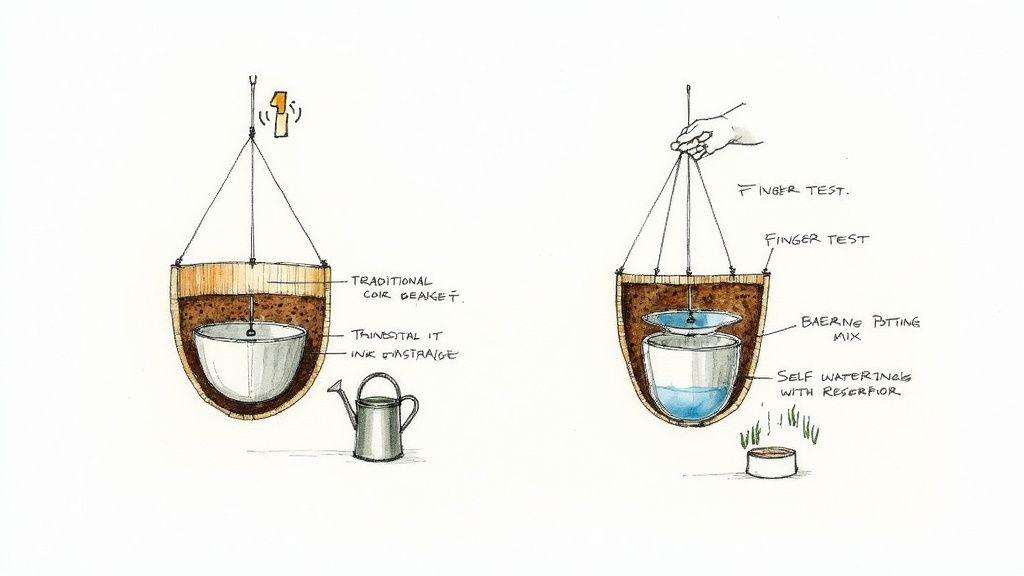
- Traditional Coir-Lined Baskets: These are the classics for a reason. The wire-and-fibre combo offers fantastic drainage and lets the roots breathe. The catch? They dry out incredibly fast, often needing a daily drink in the height of summer.
- Self-Watering Baskets: A brilliant modern solution. These have a built-in water reservoir at the bottom that wicks moisture up into the soil as needed. This is a game-changer if you’re short on time or your baskets are in a hot, windy spot, as it provides a crucial buffer against drying out.
Think of a coir-lined basket like a high-performance car that needs frequent refuelling. A self-watering one is more like a fuel-efficient hybrid—it still needs topping up, but it can go a lot longer between drinks. The best choice really comes down to your lifestyle and local climate.
Crafting the Perfect Potting Mix
The soil in a hanging basket has a really tough job. It needs to be light enough not to drag the whole thing down, but it also has to hold onto moisture without becoming a soggy mess. Your average garden soil or a cheap bag of potting mix just won’t do; it’ll compact into a solid brick and suffocate the roots.
The ideal mix is a triple-threat: a premium potting compost for nutrients, a moisture-retaining agent like perlite or vermiculite, and a slow-release fertiliser to keep them fed. This magic combination gives you structure, aeration, hydration, and nutrition all in one lightweight package.
Mixing your own blend gives you total control over quality. If you're looking for a bit more guidance, our detailed guide on how to create the perfect potting mix is a fantastic place to start. Getting this step right gives your plants the best possible shot at establishing strong, healthy roots.
The Art and Science of Watering
If there’s one thing that brings down a hanging basket, it’s watering—or a lack thereof. Because they’re exposed to sun and wind from all sides, the small amount of soil they hold can dry out at a frankly astonishing rate.
In places like Whanganui, where hanging baskets are a brilliant way to add greenery to small courtyards and balconies, it's a common problem. A local Whanganui Chronicle report pointed out that under-watering is the culprit in an estimated 70% of failed baskets.
So, how do you know when it’s time? The foolproof method is the good old finger test. Just push your index finger into the soil up to the first knuckle. If it feels dry, it’s time for a drink. If it’s still damp, you can hold off and check again later.
During a New Zealand summer, you have to be prepared to water thoroughly every single day. On those scorching hot or windy days, you might even need to do it once in the morning and again in the late afternoon. When you do water, be generous. Keep going until you see water running freely from the drainage holes—that’s how you know the entire root ball is properly saturated.
Got a Hanging Basket Question? We've Got Answers
Even the greenest thumbs can get stumped by hanging baskets. One minute they're thriving, the next you're scratching your head wondering what went wrong. From leaves suddenly turning yellow to figuring out which plants are genuinely low-fuss, a few common questions pop up for Kiwi gardeners time and again.
Don't worry, we've heard them all. Let's get into some of the most frequent queries and give you some straightforward advice to keep your baskets looking brilliant.
"Why Are the Leaves on My Basket Plants Turning Yellow?"
Ah, the classic yellow leaf problem. Nine times out of ten, this is your plant sending out an SOS about water or food.
Because hanging baskets dry out so fast, the most likely culprit is simply underwatering. The plant gets thirsty and starts sacrificing its older leaves to channel precious moisture into new growth.
But what if you're sure you've been watering enough? Then it's almost certainly a nutrient deficiency. All that frequent watering is great for hydration, but it also washes essential nutrients straight out of the potting mix. Your plants are literally starving.
- Do the finger test: Push your finger into the soil up to the first knuckle. If it’s bone dry, it’s time for a drink. Give the basket a really good soak until you see water running out the bottom.
- Time for a feed: If the soil feels moist but the leaves are still yellow, your plants need a meal. Get on a regular feeding schedule with a balanced liquid fertiliser every couple of weeks through spring and summer. That'll replace everything that's been washed away.
"How Often Should I Really Water My Basket in a NZ Summer?"
Honestly? In a typical New Zealand summer, you’ll probably need to water your hanging basket at least once every single day. The small amount of soil, combined with being exposed to all that sun and wind, means they can dry out in a flash.
On those really hot, blustery days—especially if you're in warmer spots like the Bay of Plenty or Hawke's Bay—you might even need to water twice a day. The best routine is a deep soak first thing in the morning to set the plants up for the day, and then check again in the late afternoon to see if they need a top-up.
The real secret is consistency. If you let a basket dry out completely, the plants get incredibly stressed. Even if you water them later, they can struggle to bounce back.
"What Are the Easiest, Most Forgiving Plants for a Hanging Basket?"
If you want a basket that looks amazing without demanding all your attention, the key is to pick plants that are naturally tough. Think drought-tolerant, no-fuss bloomers that don't need constant deadheading.
Here are a few of my go-to, easy-care champions for Kiwi conditions:
- Trailing Pelargoniums (Ivy Geraniums): These are the absolute kings and queens of neglect. Their slightly succulent stems hold onto water, so they’ll forgive you if you forget a watering day here and there. Plus, they flower for months on end.
- Dichondra 'Silver Falls': For pure foliage drama, this is your plant. It thrives in full sun, handles dry spells like a champ, and creates the most incredible silvery cascade with basically zero effort from you.
- Succulents: Got a hot, dry, sunny spot? You can't beat succulents. A Burro's Tail (Sedum morganianum) or a String of Pearls (Senecio rowleyanus) will look incredible, asking for little more than bright light and a drink every now and then.
Ready to create your own stunning hanging basket display? Explore a huge range of vibrant annuals, unique foliage plants, and tough natives at Jungle Story. Find everything you need to bring your vertical garden to life, delivered right to your door anywhere in New Zealand. Start your next gardening project today at https://junglestory.co.nz.