
If you've ever crushed a glossy, dark green leaf and been hit with an explosion of pure, vibrant lime fragrance, you've probably met the Kaffir lime. Known to botanists as Citrus hystrix, this small, thorny citrus tree from Southeast Asia is a real treasure for both the garden and the kitchen. It’s prized for its incredibly aromatic leaves and bumpy, zest-packed fruit, and lucky for us, it's surprisingly well-suited to growing right here in New Zealand.
The Aromatic World of Citrus hystrix
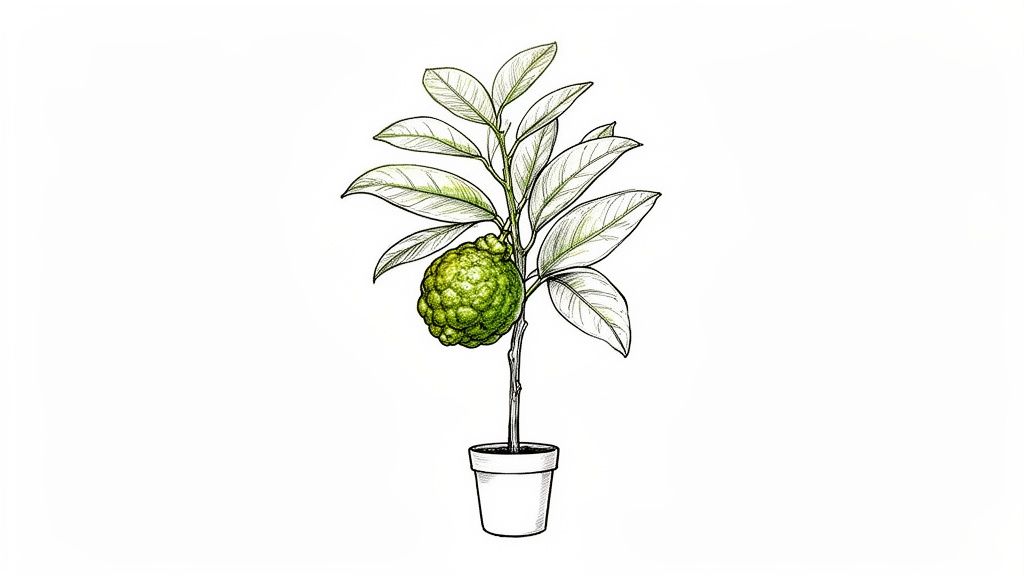
This isn't your average backyard lime tree. The 'Kaffir' lime is a compact powerhouse of flavour and a cornerstone of Southeast Asian cooking, but here's the twist: it's not really about the juice, or even the fruit at all. The real point of growing a Kaffir Lime is for the the leaves (though the zest of the fruit can be great also). Those unique double-lobed leaves, shaped a bit like a figure-eight, release an intense, fresh perfume that can completely transform a curry, soup, or marinade.
A Note on Names
You'll often see this plant sold as "Kaffir lime," but it's worth knowing that this name is considered a deeply offensive slur in some cultures. As gardeners and food lovers, it’s good to be mindful. That's why the name Makrut lime is becoming the preferred and more respectful alternative. We'll use both terms in this guide so everyone can find the info they need, but we encourage you to embrace the shift to "Makrut."
This plant's adaptability makes it a fantastic choice for Kiwi gardeners. While it's a frost-tender specialty, it thrives in the same subtropical pockets as our commercial citrus orchards. Think of New Zealand's citrus heartlands—Northland, Bay of Plenty, and Gisborne—which each make up about 30% of the country's nearly 2,000 hectares of citrus groves. The Makrut lime is gaining a real following here, prized by home cooks for its fragrant leaves rather than a huge fruit harvest. This growing interest is making it easier than ever for enthusiasts to get their hands on one, with suppliers like Jungle Story helping to bring this tropical gem to gardeners across the country. You can explore more about citrus growing in New Zealand to get a feel for our unique climate.
The real magic of the Makrut lime lies in its versatility. It’s a plant that connects the garden directly to the kitchen, offering a sensory experience that transforms everyday cooking into something special.
Whether you have a big backyard in the warm north or just a sunny balcony further south, this tree can flourish. It does beautifully planted in the ground where conditions are right, but it's just as happy in a pot. Growing it in a container is actually a great strategy, as it lets you easily move it to a sheltered spot to ride out the colder winter months. This guide will walk you through everything you need to know to grow your own Citrus hystrix and fill your home with its incredible aroma.
Creating The Perfect Environment For Your Plant
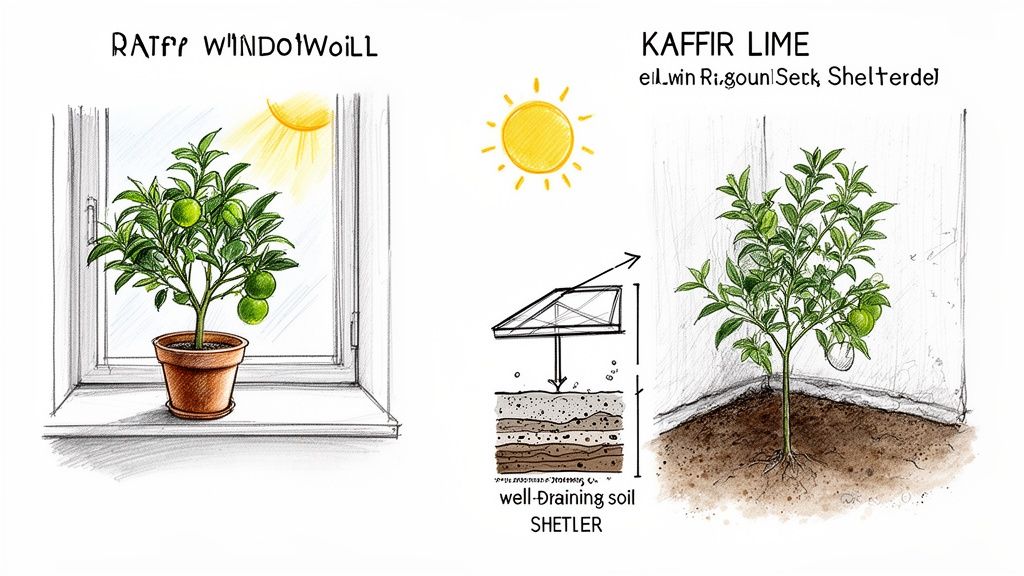
To get the absolute best from your Citrus hystrix, you’ve got to think like the plant. Its native home is Southeast Asia, so your job is to create a little slice of the subtropics right here in New Zealand. It’s all about warmth, the right kind of light, and soil that lets its roots breathe.
The good news? This is totally achievable. Whether you're in a warm spot where you can plant it straight in the garden or in a cooler region where a pot is the way to go, you can give this tree exactly what it needs to focus on producing those incredibly aromatic leaves.
Finding The Sweet Spot: Light And Location
First things first, where is this tree going to live? Your Kaffir lime loves the sun, but it’s not a fan of harsh, difficult conditions. It needs that perfect balance of sunshine and shelter to really thrive.
If you’re lucky enough to live in the warmer parts of New Zealand—think Northland or the Bay of Plenty—you can pop your tree right in the garden. Find a spot that gets at least six hours of direct sun every day. Just as important, make sure it’s protected from those bitter southerly winds that can whip through and stress the plant. A north-facing wall is often the perfect companion, soaking up heat all day and radiating it back at night to create a cosy microclimate.
For those of us in cooler spots like Canterbury or Otago, growing in a pot is your best bet. It gives you all the control. You can move it to a sunny, sheltered deck or patio through spring and autumn. Then, when the frosts start to threaten, you can simply whisk it indoors to a bright room or glasshouse for winter.
A Kaffir lime tree is a bit like a seasoned traveller—it loves the sun but appreciates a good shelter when the weather turns rough. Providing this protection is the single most important step you can take for its long-term health.
Getting The Soil Just Right
A healthy plant starts from the ground up, and Kaffir limes are particularly fussy about their feet. Like most citrus, they simply cannot stand being waterlogged. They need soil that drains beautifully while still holding onto just enough moisture to stay happy.
Whether it’s in a pot or in the ground, drainage is non-negotiable. If you're planting in the garden and have heavy clay soil, you'll need to do some prep work. Dig in plenty of good compost and even some sand to break up that dense structure and let water escape.
For container growing, don’t skimp on the potting mix. A specialised, high-quality citrus mix is the only way to go. These are designed to provide the perfect balance of drainage, aeration, and nutrients. It stops the roots from sitting in a boggy mess, which is the fastest way to get root rot. If you want to dive deeper, you can learn more about creating the ideal potting mix for your plants in our detailed guide.
Drawing inspiration from well-designed private backyard makeover projects can also spark ideas for creating the perfect, sheltered spot for your citrus tree within your larger garden plan.
To make things easy, here’s a quick summary of what your Kaffir lime is looking for in its soil and location.
Kaffir Lime Growing Conditions At A Glance
| Growth Factor | Ideal Condition | NZ Specific Notes |
|---|---|---|
| Light | Minimum 6 hours of direct sunlight daily | A north-facing position is ideal to maximise sun and warmth. |
| Location | Sheltered from strong, cold winds | Crucial in areas exposed to southerlies. Walls or fences provide excellent protection. |
| Soil Type | Free-draining, rich in organic matter | Amend heavy clay soil with compost and sand before planting. |
| Soil pH | Slightly acidic, between 6.0 and 7.0 | Most NZ soils are suitable, but a test kit can confirm. Use citrus-specific fertiliser. |
| Culture | In-ground or container | Container growing is recommended for cooler regions to allow for overwintering indoors. |
Ultimately, getting the environment right from day one is the secret. By being thoughtful about where you place it and what you plant it in, you’re setting your Kaffir lime up for a long, productive life, ready to reward you with its amazing flavour for years to come.
A Seasonal Guide To Kaffir Lime Care In New Zealand
To get the best from your Kaffir lime, it really helps to think in seasons. Just like the rest of your garden, its needs shift throughout the year. By following a simple seasonal rhythm tailored to our Southern Hemisphere climate, you'll give your Citrus hystrix exactly what it needs, when it needs it.
This approach prevents stress on the plant, encourages strong, healthy growth, and prepares it for whatever the next season throws at it. From the big growth spurt in spring to the quiet dormancy of winter, a bit of timely attention goes a very long way.
Spring Care: September To November
As the winter chill finally lifts and the days get longer and warmer, your Kaffir lime will kick back into gear. This is the season of renewal and vigorous growth, making it the most critical time for feeding and setting the plant up for a productive summer.
Think of spring as the plant's big breakfast after a long sleep. It’s hungry and ready to go. Now is the perfect time to give it a good feed with a high-quality citrus fertiliser. These specialised formulas have the right balance of nutrients—especially nitrogen for lush leaves and essential trace elements like magnesium and iron to stop them from yellowing.
This is also the ideal window to repot if your plant is looking a bit cramped. A pot-bound tree will struggle, so moving it into a slightly larger container with fresh, premium potting mix gives its roots the space they need to support all that new growth.
Spring Checklist:
- Fertilise: Apply a balanced citrus food according to the package directions to fuel new growth.
- Repot: If it's root-bound, move it to a pot 5-10 cm wider in diameter.
- Prune: Tidy up any dead or damaged branches to make way for healthy new shoots.
- Water: Start watering more often as the weather warms up and the plant gets more active.
Spring is your chance to give the plant a powerful head start. The care you provide now directly impacts its health and resilience for the entire year.
Summer Care: December To February
Summer in New Zealand means long, sunny days and warm temperatures—pretty much perfect conditions for a subtropical Kaffir lime. During this peak growing season, your main job switches from feeding to keeping it watered and staying vigilant.
The summer sun can be intense, and keeping the soil consistently moist is the absolute key to a happy plant. A thirsty Citrus hystrix is a stressed one, which can lead to leaf drop and makes it an easy target for pests. For potted plants, this might mean watering every few days, especially during a heatwave.
Always check the soil first. Poke your finger about 2-3 centimetres deep, and if it feels dry, it’s time to give it a good soak until you see water running out the bottom. Summer is also peak season for pests, so regularly check the leaves (especially underneath) for common critters like aphids and scale. Catching them early makes them much easier to deal with.
Autumn Care: March To May
As the intense heat of summer fades into the cooler, milder days of autumn, your Kaffir lime's growth will naturally start to slow down. This is a transition season, and your role is to help the plant get ready for winter.
The most important change to make is with the watering can. As temperatures drop and daylight hours shorten, the plant just doesn't need as much water. Overwatering in autumn is a classic mistake and a fast track to root rot. Start watering less, allowing the top few centimetres of soil to dry out completely between sessions.
This is also a good time to move any outdoor potted plants into a more sheltered spot, protecting them from any early, unexpected frosts. Hold off on any big pruning or feeding sessions; you don't want to encourage a flush of tender new growth that will be vulnerable to the cold.
Winter Care: June To August
Winter is downtime for your Kaffir lime. Across New Zealand, particularly from the central North Island south, frost is the main enemy. Your number one job during these months is protecting your plant from the cold.
For trees planted in the ground in frost-prone areas, covering them with frost cloth on clear, cold nights is a must. Potted plants are best moved somewhere sheltered, like under the eaves of the house, onto a covered deck, or even indoors for the season. If you do bring it inside, give it the sunniest, brightest spot you can find—a north-facing window is perfect.
Indoor plants will need very little water over winter, so let the soil dry out quite a bit before giving it a light drink. Keep an eye out for pests like scale and mealybugs, which can sometimes enjoy the warm indoor conditions. With this simple protection, your Citrus hystrix will cruise through winter, ready to burst back into life come spring.
How To Prune, Propagate, And Repot Your Tree
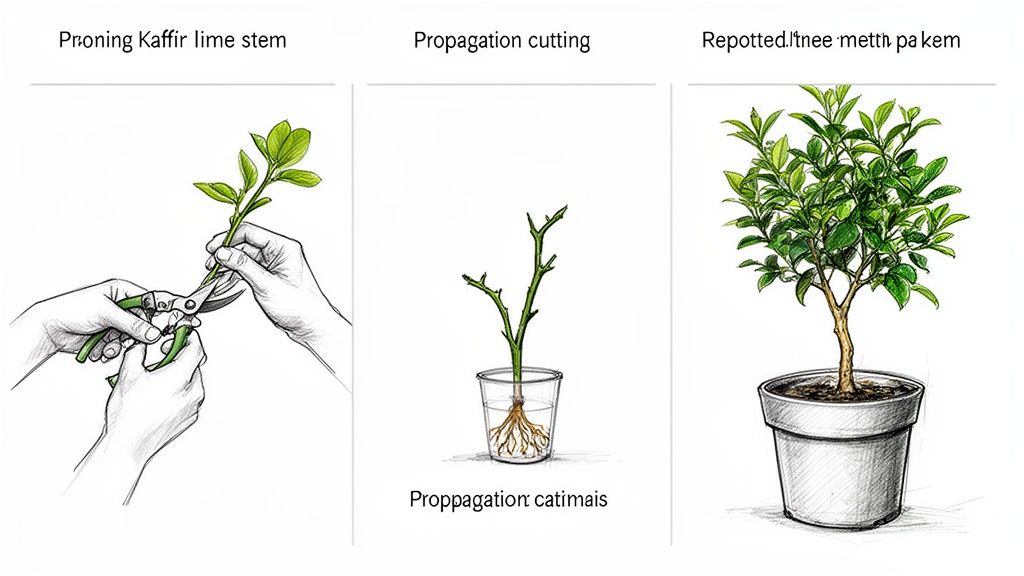
Beyond just watering and feeding, getting hands-on with pruning, propagating, and repotting is where you can really take your plant care to the next level. These tasks are what keep your Citrus hystrix thriving for years to come. They might sound a bit technical, but they're surprisingly straightforward and give you amazing control over your tree’s shape, size, and even how many you have!
Think of it as actively shaping your tree’s future. A strategic snip can turn a lanky plant into a dense, bushy source of fragrant leaves. Propagation lets you create brand new plants from your original one—perfect for sharing with friends or dotting around the garden. And knowing the right time to repot is the secret to long-term health for any citrus grown in a container.
Mastering The Art Of Pruning
Pruning isn’t about giving your tree a harsh haircut. It's more of a thoughtful trim to boost its health and overall look. For a Kaffir lime, the goal is to encourage a fuller, bushier shape, improve air circulation between the branches, and keep it a manageable size, especially if it's living in a pot.
Here in New Zealand, the best time for a good prune is late winter or very early spring—around August or September. This timing lets you shape the plant just before it bursts into its main growing season, so it bounces back quickly and puts all its energy into producing fresh, new leaves.
Simple Pruning Steps:
- Remove the Unhealthy: Start by snipping off any branches that are dead, damaged, or look diseased. They’re just draining energy from the rest of the plant.
- Thin the Centre: Take a look inside the tree. See any branches crossing over each other or growing inwards? Removing a few of these opens up the canopy, letting light and air reach the inner leaves and helping to prevent fungal problems.
- Encourage Bushiness: For that lovely, full shape, just snip off the tips of the main branches. This is called tip pruning, and it encourages the plant to send out new side shoots from just below the cut, making it much denser.
Always use a clean, sharp pair of secateurs. A clean cut heals much faster and reduces the risk of introducing any nasty diseases.
Propagating New Kaffir Lime Plants
One of the most satisfying jobs in the garden is making a new plant from scratch. With Citrus hystrix, it’s easily done by taking cuttings. The best time to do this is in late spring or early summer when the plant is covered in active, semi-hardwood growth.
This process is basically cloning your parent plant, which means the new tree will have the exact same wonderfully aromatic qualities.
Step-by-Step Propagation Guide:
- Select a Healthy Stem: Look for a healthy, disease-free branch and cut a 10-15 cm section from the tip. You want a piece that’s firm but not old and woody.
- Prepare the Cutting: Carefully strip off the lower leaves, leaving just two or three at the very top. If those top leaves are quite large, you can snip them in half horizontally to reduce water loss while roots form.
- Encourage Rooting: Dip the cut end into a rooting hormone powder. While not absolutely essential, it seriously boosts your chances of success.
- Plant the Cutting: Grab a small pot and fill it with a free-draining seed-raising mix. Poke a hole with a pencil and gently place the cutting inside, firming the mix around it.
- Create a Humid Home: Give it a good water and pop a clear plastic bag over the pot to create a mini-glasshouse. Find a warm spot with bright, indirect light. Keep the soil moist, and within 6-8 weeks, you should have a newly rooted plant.
When And How To Repot Your Tree
For Kaffir limes grown in containers, repotting every two to three years is a non-negotiable health check. It gives the roots fresh soil and more room to stretch out, preventing the plant from becoming "root-bound"—where the roots just circle the pot and eventually choke themselves.
Spring is the perfect time to repot, just as you see new growth starting to appear. You’ll know it’s time if you spot roots peeking out of the drainage holes or if your plant seems to be drying out way faster than it used to.
Think of repotting as giving your plant a new, larger home with a fully stocked pantry. Fresh potting mix provides essential nutrients and the extra space allows the root system to expand, supporting a healthier, more productive tree above ground.
Choose a new pot that’s only about 5-10 cm wider in diameter than the old one. If you go too big, the soil can stay wet for too long, which is a recipe for root rot. When you take the plant out, gently tease out any circling roots at the bottom before placing it in the new pot with a fresh, high-quality citrus potting mix. Water it in well to settle the soil, and your tree will be ready for another few years of happy growth.
Harvesting and Using Your Homegrown Leaves and Zest
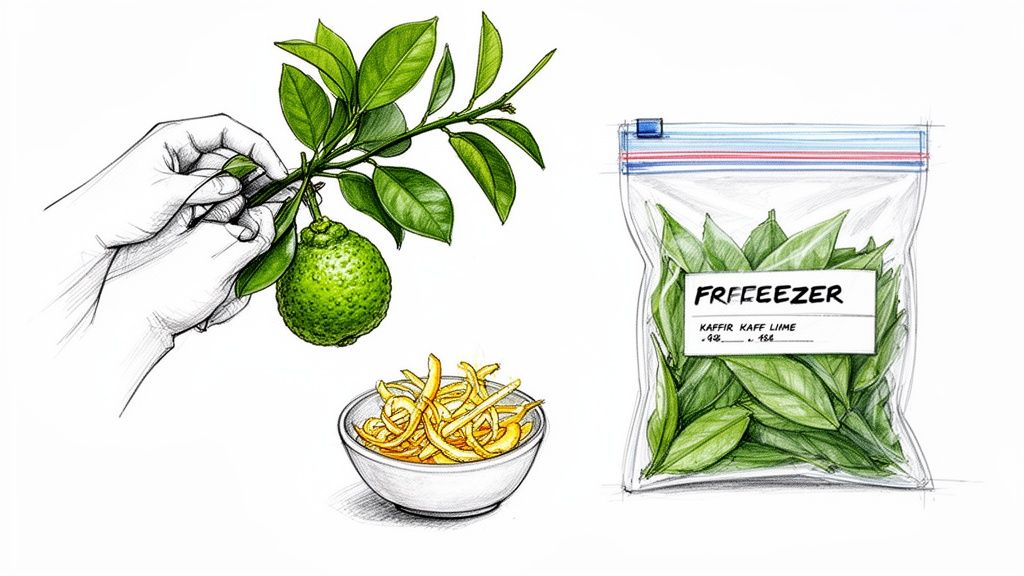
This is the moment all your hard work pays off, when your gardening efforts transform into incredible flavour. Harvesting from your Citrus hystrix is a genuinely rewarding job, and knowing just how to do it right ensures you get that potent, iconic aroma without harming the plant. It really comes down to picking the right bits at the right time.
You can harvest leaves pretty much whenever you need them, as the tree pumps them out year-round. For the most intense fragrance, gently pluck a few leaves from different parts of the plant rather than stripping one branch bare. This little trick encourages balanced growth and keeps your tree looking full and happy.
Leaves Young and Old
Not all leaves are created equal. Their age really influences their flavour and texture, and understanding this difference means you can tailor your harvest to whatever you're cooking.
- Young, Tender Leaves: Look for the lighter green leaves. They're soft enough to be sliced into an ultra-fine chiffonade for salads, stir-fries, or as a vibrant garnish. Their flavour is bright, zesty, and electric.
- Older, Mature Leaves: These are darker and tougher. Their robust character is perfect for infusing flavour into slow-cooked dishes. Just toss them in whole to curries, soups, and broths—much like you would a bay leaf—and remember to fish them out before serving.
And let's not forget the bumpy, aromatic fruit. While the juice is sparse, the zest is where the real magic is. Finely grate it to add an explosive citrus punch to marinades, desserts, and even cocktails. Its complex flavour, with hints of lemongrass and ginger, is something truly special.
The dual-purpose harvest of both leaves and zest makes the Citrus hystrix one of the most versatile edible plants you can possibly grow. Each part offers a distinct aromatic experience, opening up a whole world of culinary possibilities from a single tree.
Culinary Inspiration
With a fresh supply of leaves and zest right outside your door, your kitchen creativity can really take off. This plant is a cornerstone of Southeast Asian cuisine for a reason; it provides a flavour that simply can't be replicated, bringing an authentic touch to countless dishes.
A few ideas for your harvest:
- Thai Green Curry: Add a few whole leaves to the simmering coconut milk to infuse the entire dish with their signature scent.
- Tom Yum Soup: This classic hot and sour soup just isn't complete without the fresh, citrusy notes of bruised makrut lime leaves.
- Aromatic Marinades: Finely chopped leaves or grated zest mixed with garlic, ginger, and chilli creates a sensational marinade for chicken, fish, or tofu.
- Infused Syrups: Gently heat leaves or zest in a simple sugar syrup. You'll create a fantastic flavour base for unique cocktails, mocktails, or for drizzling over a fruit salad.
Storing Your Harvest
To keep that incredible fragrance locked in, proper storage is everything. Fresh leaves will keep in a sealed bag in the fridge for a week or two, but for long-term use, freezing is absolutely the best way to go.
Just place clean, dry leaves in a zip-lock bag, press out all the air, and pop them in the freezer. They will hold onto their potent aroma for months and can be used directly from frozen—no need to thaw. The zest can also be frozen in small portions, ready to elevate a dish at a moment’s notice.
If you want to dig deeper into growing your own food, a Certificate in home food gardening can provide some brilliant insights. And if unique citrus has piqued your interest, you might also enjoy our guide on how to grow finger limes in New Zealand.
Troubleshooting Common Pests And Problems
Even the most carefully tended plant can hit a snag, but a healthy Citrus hystrix is remarkably tough. The good news is that most issues are pretty simple to handle, especially if you catch them early. Think of this as your field guide for the common troubles that might pop up in your New Zealand garden.
The real secret weapon here is observation. A quick once-over every few days means you can spot a problem before it really takes hold, turning a potential disaster into nothing more than a minor fix.
Identifying Common Pests
In our temperate NZ climate, a few specific pests have a real fondness for citrus trees. Thankfully, organic and gentle solutions are usually all you need to keep your Kaffir lime healthy and productive.
Here are the main culprits to keep an eye out for:
- Aphids: You'll find these tiny, sap-sucking insects clustered on fresh, tender new growth. They can make the leaves curl up and often leave behind a sticky "honeydew," which in turn attracts sooty mould.
- Scale Insects: These look like small, motionless bumps on the stems and undersides of leaves. Just like aphids, they suck sap and weaken the plant, also excreting that tell-tale honeydew.
- Leafminers: These are actually the larvae of a tiny moth. You'll know they've been visiting when you spot distinctive silvery, squiggly trails or "mines" etched into the leaves.
For most of these sap-suckers, a simple spray can work wonders. A strong jet of water from the hose is often enough to blast aphids off. For more stubborn infestations of aphids and scale, organic sprays are the way to go. For a reliable, plant-safe option, learning how to use neem oil for plants is an invaluable skill for any Kiwi gardener.
Fixing Common Plant Problems
Pests aside, you might spot other signs that your plant isn't feeling its best. These are often just clues about its environment, usually pointing to a water or nutrient issue.
Yellowing Leaves (Chlorosis)
If the leaves are turning yellow but the veins are still green, that’s a classic sign of a nutrient deficiency — typically magnesium or iron. This happens a lot with potted plants, where nutrients can get washed out of the soil over time.
An easy fix is to give your plant a specialised citrus fertiliser that contains all the essential trace elements. A good feed in spring and early summer should sort it out and bring back that lovely deep, healthy green colour.
Sooty Mould
This is a black, soot-like fungus that grows on the sticky honeydew left behind by pests like aphids and scale. While it doesn't directly harm the plant, it looks awful and can block sunlight from getting to the leaves. The solution isn't to treat the mould itself, but to get rid of the pests causing it. Once the aphids or scale are gone, the sooty mould will gradually weather away on its own.
Sudden Leaf Drop
A Citrus hystrix that suddenly drops its leaves is definitely stressed. The most common culprit is a sudden change in its watering routine—either way too much or far too little. Check the soil moisture and adjust accordingly. It can also be a reaction to a surprise cold snap, so make sure it’s sheltered from frost and chilly draughts.
Your Kaffir Lime Questions Answered
To wrap things up, let's tackle some of the most common questions we get from Kiwi gardeners about growing Citrus hystrix. Think of this as a quick-fire round to boost your growing confidence.
Why Are My Kaffir Lime Leaves Turning Yellow?
Yellowing leaves (a condition called chlorosis) almost always point to a nutrient problem, especially for plants in pots. If you see the leaves yellowing but the veins are still green, that’s a classic tell-tale sign of a magnesium or iron deficiency.
It’s an easy fix, though. A good quality citrus fertiliser that includes all the essential trace elements will sort it out. Stick to a regular feeding schedule during the growing seasons of spring and summer, and you'll see that gorgeous deep green colour return. Just be sure you're not overwatering, as soggy roots can also cause the leaves to yellow.
How Often Should I Fertilise A Potted Tree?
Citrus in containers are hungry plants because their roots can only access what's in the pot. For your potted kaffir lime citrus hystrix, plan on feeding it every four to six weeks right through spring and summer.
Grab a balanced citrus fertiliser and just follow the directions on the packet. As autumn rolls around, you can ease off, and stop feeding completely during the winter months (June to August) when the plant is resting.
Key Takeaway: Think of fertilising like giving your plant regular meals during its active months. Consistent feeding prevents problems and fuels the growth of those incredibly aromatic leaves.
Can I Grow A Kaffir Lime From Seed?
You absolutely can, but it’s a bit of a lottery and a real test of patience. A tree grown from seed can take seven years or more before it’s mature enough to produce fruit. On top of that, there’s no guarantee it will be anything like the parent plant.
If you want faster results and a tree that you know will be top-quality, your best bet is to grow from a cutting or simply buy a grafted plant. It’s a much more reliable path to success.
Fresh Vs Dried Leaves: Which Is Better For Cooking?
Both are fantastic in the kitchen, but they play slightly different roles.
- Fresh leaves pack a bright, vibrant, and intense citrus punch. They’re perfect for dishes where you want that zesty aroma to really shine, like in fresh salads or sprinkled over a dish as a final garnish.
- Dried leaves offer a deeper, more earthy, and concentrated flavour. They are brilliant for slow-cooked recipes like curries and soups, where their complex aroma has time to infuse into the whole dish.
Of course, the real magic of having your own tree is being able to snip off fresh leaves whenever the mood strikes.
Ready to start your own aromatic journey? Explore our collection of healthy, ready-to-grow citrus plants at Jungle Story and bring the incredible flavour of homegrown Kaffir lime to your garden and kitchen today. Find your perfect plant at https://junglestory.co.nz.