
Welcome to the captivating world of orchids in New Zealand. This guide is your starting point for getting to know the stunning diversity on offer, from the delicate native species hiding in our bush to the vibrant exotic varieties that can brighten up your home. With a bit of know-how tailored to our local conditions, any Kiwi gardener can find success.
An Introduction to Orchids in New Zealand
Orchids have a bit of a reputation for being fussy and difficult, but honestly, that’s mostly a myth. It's better to think of them not as divas, but as highly specialised plants with very clear preferences. Once you understand what a particular orchid needs—a bit like getting to know a friend's quirks—caring for them becomes a genuinely rewarding and straightforward process.
New Zealand's temperate climate is actually a brilliant environment for a huge range of orchid species. Our varied conditions, from the subtropical warmth of the upper North Island right down to the cooler seasons in the South, mean there's an orchid suited for just about every Kiwi home and garden. The real trick is simply matching the right plant to the right place.
Why Grow Orchids in NZ?
Growing orchids is about more than just pretty flowers; it’s a way to connect with one of the most fascinating and diverse plant families on the planet. With over 25,000 species worldwide, the orchid family is one of the largest out there. Here in New Zealand, we're lucky enough to have access to both stunning international hybrids and our own unique native species.
- Sheer Beauty: Orchids produce some of the most intricate and breathtaking flowers in the plant kingdom. The variety of colours, shapes, and scents is almost endless.
- A Rewarding Hobby: There’s a deep sense of accomplishment that comes from mastering the care for a specific orchid and seeing it re-bloom, year after year.
- A Connection to Nature: Cultivating these plants, especially our local varieties, fosters a real appreciation for New Zealand's unique biodiversity. While this guide focuses on cultivated orchids, learning about our native flora can definitely enrich your gardening journey. If you're keen, exploring a guide to creating an NZ native garden provides wonderful context for our local plant life.
Understanding the Southern Hemisphere Advantage
One of the most crucial things to get right when growing orchids in NZ is our seasons. A huge amount of the advice you'll find online comes from the Northern Hemisphere, and following it blindly can lead you astray.
Remember, when a guide from the US or UK says an orchid flowers in 'winter', for us here in New Zealand, that means June through August, not December. This seasonal awareness is fundamental to providing the correct care at the right time.
This guide has been put together specifically for Kiwi gardeners. We’ll demystify the whole process by giving you advice that actually lines up with our local climate and seasons. From picking out your first Phalaenopsis to understanding the dormant periods of Cymbidiums, you'll gain the confidence you need to help your plants thrive. Forget the confusion—let's get growing.
Discovering New Zealand's Native Orchids
When most of us picture an orchid, we think of the big, flashy blooms you find at a garden centre. But New Zealand has its own world of native orchids, a quieter, more subtle collection of plants that have spent millennia adapting perfectly to our unique landscapes. Stepping into their world reveals a side of the orchid family many Kiwis have never seen. Forget the massive, colourful flowers of tropical hybrids; our local species are often tiny, delicate, and absolute masters of camouflage.
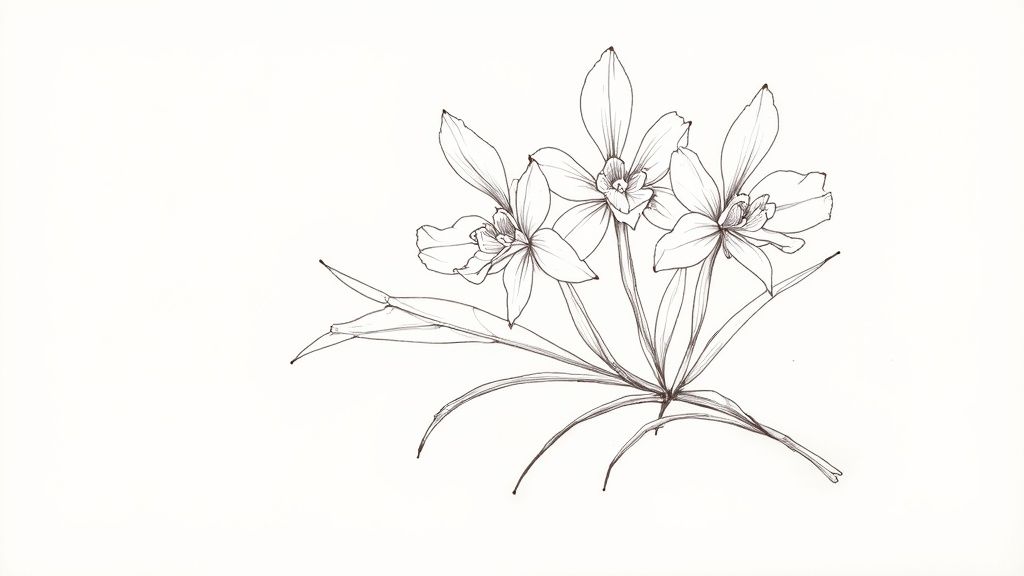
To really get to know these plants, you first need to understand their specialised lifestyles. They generally fall into two camps: terrestrial orchids, which grow in the soil, and epiphytic orchids, which make their homes on other plants, usually high up in the forest canopy. Each has adapted brilliantly to its chosen spot, whether that's the forest floor or the crook of a rimu branch.
This specialisation has given rise to some incredible biodiversity right here in our backyard. New Zealand is home to a unique orchid flora of around 117 species spread across 27 genera. What’s truly remarkable is that about 82 of these species are endemic—they exist here and nowhere else on the planet. That's an endemism rate of nearly 70%, a testament to how our country's isolation has nurtured a truly one-of-a-kind collection of orchids. You can dive deeper into the specifics of our native orchid biodiversity in this comprehensive study.
To help you get a handle on some of the key players, here's a quick look at some common native genera you might come across.
Common Native New Zealand Orchid Genera at a Glance
| Genus | Common Name | Typical Habitat | Growing Habit |
|---|---|---|---|
| Corybas | Spider Orchid | Damp, mossy banks, forest floor | Terrestrial |
| Pterostylis | Greenhood Orchid | Leaf litter, shaded forest floor | Terrestrial |
| Earina | Bamboo Orchid | On tree trunks and branches in forests | Epiphytic |
| Dendrobium (Winika) | New Zealand Dendrobium | On forest trees, often in large clumps | Epiphytic |
These are just a few examples, but they showcase the incredible diversity hiding in plain sight, from the ground up to the treetops.
Terrestrial Treasures: The Ground Dwellers
Many of our most fascinating native orchids are found on the forest floor, often hiding amongst leaf litter and moss. These terrestrial species have perfected the art of disguise, and spotting them feels like a real reward for the patient observer.
One of the most recognisable groups is the genus Corybas, which you might know as spider orchids. They earned their name from the long, spidery sepals and petals that fan out from their single, hooded flower. These tiny plants—just one underground tuber, one leaf, and a lone, scentless flower—often pop up in colonies on damp, mossy banks all over the country.
Another incredible group is the greenhood orchids (Pterostylis). Their flowers form a distinct helmet-like hood, called a galea, that shelters their reproductive bits. This structure is actually a clever evolutionary trap, designed to lure in specific pollinators like fungus gnats.
Epiphytic Orchids: Life in the Treetops
In stark contrast to their ground-based cousins, epiphytic orchids have figured out how to live without soil. They cling to the trunks and branches of trees, using them purely for support—they aren't parasites. They simply get the moisture and nutrients they need from the air and rain.
Epiphytes are like tenants in the forest canopy. They don't harm their host tree but simply use its structure to get closer to the sunlight, creating a multi-layered ecosystem high above the ground.
Two of the most common epiphytic genera you might spot in New Zealand are Earina and Dendrobium.
- Earina (bamboo orchids): These have long, cane-like stems and produce sprays of small, incredibly fragrant flowers. Earina autumnalis, for example, is famous for filling the autumn air with its sweet perfume.
- Dendrobium (syn. Winika): The New Zealand dendrobium, Dendrobium cunninghamii, is our largest epiphytic orchid. It can form impressive, cascading clumps and puts on a beautiful show of white and purple flowers in our summer months.
From the spider orchids on the forest floor to the bamboo orchids in the canopy, understanding the natural homes and habits of our native species gives you a much deeper appreciation for their vital role in New Zealand's biodiversity.
Choosing Your Perfect Orchid in NZ
Picking the right orchid is the very first—and most crucial—step to becoming a happy orchid parent. It’s less like buying a standard houseplant and more like adopting a pet; you need to find one that suits your home's environment and your care style. A little forethought now means you'll bring home a beautiful plant that’s set up to thrive from day one.
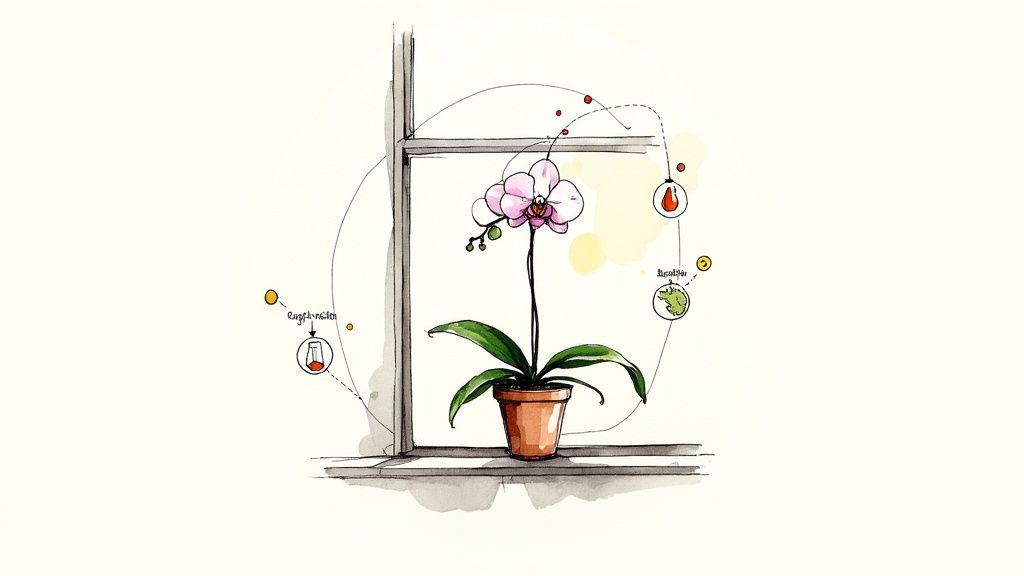
Let's walk through some of the most popular and resilient orchids you can find here in NZ. We'll focus on three fantastic choices that are widely available and well-suited to the typical Kiwi home.
The Ever-Popular Phalaenopsis (Moth Orchid)
If you're just starting your orchid journey, the Phalaenopsis, or Moth Orchid, is your perfect companion. These are the graceful orchids you see everywhere, from garden centres to supermarkets, and for good reason—they’re incredibly forgiving and feel right at home indoors.
Think of the Phalaenopsis as the Peace Lily of the orchid world. It enjoys the exact same conditions: stable indoor temperatures, no harsh direct sun, and a fairly regular watering schedule. They are ideal for a bright spot away from a north-facing window, as direct sunlight can easily scorch their leaves.
- Light: Bright, indirect light is the sweet spot. An east-facing window is often perfect.
- Temperature: They are happy in typical home temperatures, generally between 18°C and 26°C.
- Watering: Give them a good soak when the potting mix is almost dry, which is usually every 7-10 days.
Their elegant, arching flower stems can last for months on end, bringing a splash of colour to your home all the way from late winter through spring.
The Robust Cymbidium Orchid
Cymbidiums are another brilliant choice for growers of orchids in NZ, particularly if your home tends to be a bit on the cool side. Don't let their exotic looks fool you; these orchids are tougher than they appear and can handle a much wider range of temperatures than their tropical cousins.
In fact, they need that distinct drop in temperature on autumn nights to trigger their flower spikes.
This cool dip in temperature is the secret signal for a Cymbidium to start producing flowers. It’s what makes them so well-suited for many New Zealand homes, where temperatures naturally fluctuate between day and night.
Many people grow Cymbidiums in covered outdoor areas or unheated sunrooms, especially in the North Island. Down in the cooler South Island, they make fantastic indoor plants as long as they get plenty of bright, filtered light. Their spectacular flower spikes, which can hold over a dozen blooms, usually show up from late autumn to early spring. If you're keen on these reliable bloomers, you can find a beautiful Cymbidium orchid for sale on our marketplace.
The Versatile Dendrobium Orchid
The Dendrobium family is absolutely huge, with thousands of different species and hybrids. Luckily, many of the most popular varieties are perfectly suited for New Zealand conditions. Growers usually group them into two main types: "hard-caned" and "soft-caned".
The hard-caned varieties, like the popular Dendrobium-Phalaenopsis hybrids, prefer warmer conditions similar to Moth Orchids. They need a bright, warm spot and consistent water during their growing season in spring and summer.
Soft-caned types, such as Dendrobium nobile, are a different story. To encourage them to flower, they need a cool, dry rest period during our New Zealand winter (June-August). This means you’ll want to cut back on watering dramatically until you see new flower buds forming in spring. This makes them a great option for growers in cooler regions who can easily provide that essential winter chill.
Matching an Orchid to Your NZ Region
Where you live in New Zealand plays a big part in which orchid will be easiest for you to grow. Our climate varies quite a bit from the top of the North to the bottom of the South, and this really influences which plants will thrive with the least amount of fuss.
- Upper North Island (Auckland, Northland): The warm, humid climate here is ideal for Phalaenopsis and hard-caned Dendrobiums. Cymbidiums will also do beautifully, especially if they get some time outside in a sheltered spot.
- Lower North Island & Upper South Island (Wellington, Nelson): This temperate zone is fantastic for Cymbidiums, which love the distinct seasonal changes. Phalaenopsis will be happy indoors, and soft-caned Dendrobiums can flourish if they have a protected spot for their winter rest.
- Lower South Island (Canterbury, Otago, Southland): Cooler homes here are a perfect match for Cymbidiums and soft-caned Dendrobiums that need a proper winter chill. Phalaenopsis will need to be kept indoors in a consistently warm, bright room, well away from any cold draughts.
By keeping your specific home and regional climate in mind, you can confidently choose an orchid that's already set up for success.
Mastering Year-Round Orchid Care in NZ
Caring for an orchid is really a year-long conversation with your plant. The secret to getting it right in New Zealand is tuning into our local seasons, not just following generic advice you might find online, which is often geared towards the Northern Hemisphere.
It's less about memorising complex rules and more about responding to your plant's natural rhythm—from the energetic growth of spring to the deep rest of winter.
This seasonal playbook will walk you through what your orchids need during our distinct Kiwi seasons, helping you give them the right care at the right time.
Summer Care (December – February)
New Zealand summers, with their long days and strong sun, signal a major growth spurt for most orchids. Your main jobs? Keeping them consistently moist and shielding them from that harsh afternoon sun.
Think of your orchid's potting mix like a sponge; it's going to dry out much quicker in the summer heat. You'll need to water more often, but always check first. A quick poke with your finger or feeling the weight of the pot will tell you if it's thirsty. Whatever you do, never let your orchid sit in a saucer of water—that's a fast track to root rot.
Good air circulation is also a must during our warm, sometimes humid, summers. A gentle breeze from an open window or a small fan can make a world of difference in preventing fungal problems. Keep an eye out for signs of stress like limp or yellowing leaves, which could mean too much water or heat.
Autumn Adjustments (March – May)
As the days get shorter and the temperatures start to dip, your orchid will begin winding down for its winter rest. This is a transition period, so you'll want to gradually scale back your care routine.
Start watering less frequently. The cooler air means the potting mix holds onto moisture for longer. For many species, like Cymbidiums, those cool autumn nights are the crucial trigger they need to start forming flower spikes for the season ahead.
This is also the perfect time to give your plants a good once-over for any pests that might have moved in over summer. If you're looking for a sustainable way to handle them, incorporating Integrated Pest Management (IPM) strategies is a great approach. A little proactive care now sets your plant up for a healthy winter.
Winter Rest (June – August)
For many orchids, winter is downtime. Growth slows to a crawl as the plant conserves its energy. Your care should mirror this quiet period, and the biggest mistake you can make is overwatering.
Winter care is about doing less, not more. Your orchid is resting, and respecting this natural slowdown is crucial for its health and for encouraging spectacular blooms in the spring.
Cut back on watering dramatically. For some varieties, this could mean a drink only once every few weeks. Cold, wet roots are a recipe for disaster. Keep your orchids in a bright spot, but be wary of chilly draughts from windows, which can shock the plant. For most orchids in NZ, this cool, drier spell is absolutely essential for setting buds.
Spring Awakening (September – November)
Spring is when the magic happens. As the weather warms up and the days get longer, your orchid will burst back to life, pushing out new leaves, roots, and—most excitingly—flower spikes.
Now's the time to get back into your regular care routine.
- Increase Watering: As new growth appears, your plant’s thirst will increase. Go back to your summer watering frequency, but always check the potting mix first.
- Begin Fertilising: Start feeding your orchid with a balanced fertiliser to fuel all that rapid growth. It's like giving it breakfast after a long sleep.
- Check for Repotting: If your plant looks like it's bursting out of its pot or the potting mix has gone sludgy, spring is the ideal time to repot.
A consistent feeding schedule is vital throughout the growing season. Getting to know the different fertiliser formulas can make a huge difference in your blooms. You can learn more in our detailed guide on choosing the right indoor plant fertilizer.
By following this seasonal rhythm, you'll be giving your orchid exactly what it needs to thrive, ensuring it stays healthy and rewards you with beautiful flowers year after year.
To make things even easier, here's a quick calendar you can follow.
Year-Round Orchid Care Calendar for New Zealand
This simple schedule outlines the key tasks for each season in the Southern Hemisphere, helping Kiwi growers stay organised and on top of their orchid care.
| Season (NZ) | Watering Frequency | Feeding Schedule | Key Focus |
|---|---|---|---|
| Summer (Dec-Feb) | High (check mix every few days) | Weekly, weakly (1/4 strength) | Provide consistent moisture, protect from harsh sun, ensure good air circulation. |
| Autumn (Mar-May) | Moderate (reduce as temps cool) | Taper off to every 2-3 weeks | Gradually reduce watering, inspect for pests, allow for cooler night temps. |
| Winter (Jun-Aug) | Low (allow mix to dry out completely) | Stop or reduce to once a month | Provide a cool, dry rest period. Avoid overwatering and cold draughts. |
| Spring (Sep-Nov) | Increase as new growth appears | Resume weekly feeding as new growth starts | Support new growth and flowering. This is the best time to repot if needed. |
Keeping this calendar handy is a great way to stay in sync with your orchid's needs, taking the guesswork out of its care and setting you up for a stunning floral display.
The Secrets of Native Orchid Pollination
The flowers of our native orchids NZ might look small and unassuming, but the stories they tell about adaptation and survival are enormous. Their reproduction isn't left to the whims of the wind or sheer chance; it's a highly specialised drama built on deception, exclusive partnerships, and incredible precision. To really get to know these plants, we have to look past their petals and into the fascinating world of their pollination.
Here's the thing: many of our orchids don't bother producing nectar to reward visiting insects. Instead, they’ve evolved to trick them. Some mimic the look or even the scent of female insects to lure in hopeful males, while others imitate the appearance of other rewarding flowers blooming nearby. It's a high-stakes strategy where the plant has evolved in lockstep with its specific pollinator—a concept known as co-evolution.
This intricate relationship means a single orchid species often relies on just one or two types of insects to get the job done. This extreme dependency is why successful pollination in the wild is often a rare and special event.
The Mechanics of Pollination
Forget the dusty pollen you see on a daisy. Orchid pollen is neatly packed into waxy, consolidated masses called pollinia. Think of them not as loose grains, but as perfectly formed little pollen parcels, ready for express pickup and delivery. When the right insect lands on the flower, a sticky pad glues the pollinia to its body, usually on its head or back.
The insect then flies off, carrying this precious cargo completely unaware. When it visits another flower of the same species, the pollinia are positioned so precisely that they land perfectly on the stigma, completing the fertilisation process. It's an incredibly efficient system, ensuring a massive amount of pollen gets transferred in one go. Even home gardeners can appreciate this kind of precision when exploring manual pollination techniques for other plants.
A Game of Numbers and Precision
Because pollinator visits can be so few and far between, our native orchids have to make every single encounter count. Research into New Zealand's epiphytic species like Earina autumnalis shows they have a very high pollen-to-ovule ratio of 46:1, a clear strategy to maximise their chances when insects are scarce. Despite this, natural fruit set rates often stay below 40% because of this "pollen limitation," which just goes to show how challenging reproduction really is in the wild.
This delicate balance is exactly why conserving both the orchids and their specific pollinators is so crucial.
The survival of many native orchids is not just about the plant itself, but about the health of the entire ecosystem it belongs to. The orchid and its pollinator are two halves of a whole, and the loss of one can spell disaster for the other.
This fragile, finely-tuned dance between plant and insect is what makes the reproductive life of New Zealand’s native orchids so compelling. It’s a stunning testament to millions of years of evolution, resulting in one of nature’s most ingenious and specialised survival strategies.
Orchid Conservation in a Changing Climate
Orchids are more than just stunning flowers; they're sensitive environmental indicators. Think of them as the canaries in the coal mine for our native ecosystems. Because of their highly specialised lifestyles, they’re often the first to show signs of stress when things start to change, making them a crucial lens through which we can understand the local impacts of a shifting climate here in New Zealand.
Our native orchids have incredibly intricate connections with their environment. Everything from specific soil fungi to exclusive insect pollinators plays a part, and these relationships make them particularly vulnerable. Even tiny shifts in temperature or rainfall can throw off these delicate systems, which have taken millennia to evolve. As our climate warms, we're starting to see these finely tuned partnerships begin to fray.
Observed Shifts in Native Flora
The effects of a changing climate aren't some distant problem on the horizon—we're seeing them right now. Changes in flowering times and where species live are already being documented across Aotearoa. For many orchids in NZ, this means their internal calendars are being reset, often with major consequences.
A comprehensive study of 21 native New Zealand orchid species uncovered some pretty startling trends directly linked to climate change. Researchers found several species were flowering earlier than ever recorded. Others were slowly creeping up to higher, cooler elevations, almost as if trying to escape the rising temperatures. You can dive into the detailed findings of this important climate change research on NZ orchids.
This might seem like a simple adjustment, but it creates profound ripple effects throughout the entire ecosystem.
The Pollinator Mismatch Problem
One of the most worrying outcomes of these shifts is the potential for a pollinator mismatch. Many of our native orchids have co-evolved to flower at the exact moment their specific pollinator emerges. If warmer spring temperatures trick the orchid into flowering too early, its pollinator might not have even hatched yet. That means the crucial window for reproduction is missed completely.
It's like a meticulously planned meeting where one party arrives weeks early. The orchid puts on its beautiful floral display, but its insect partner is a no-show. This breakdown in timing directly threatens the orchid's ability to produce seeds and keep its population going.
This timing issue is a serious threat to the long-term survival of our unique flora. Without successful pollination, orchid populations simply can’t reproduce. This leads to a gradual decline that could, over time, push already vulnerable species towards extinction.
Protecting these precious native treasures requires more than just admiring them from afar. It demands a collective sense of stewardship and a real awareness of how our actions impact the delicate natural balance around us. By understanding just how vulnerable they are, we can better appreciate the urgent need for conservation efforts to safeguard New Zealand’s incredible botanical heritage for generations to come.
Of course, even with the best advice in the world, you're bound to have a few questions along the way. That’s just part of the fun of gardening! To help you out, we’ve tackled some of the most common puzzles Kiwi orchid growers run into.
Why Won’t My Orchid Re-flower?
This is the big one, the question we hear more than any other. Nine times out of ten, the answer comes down to two simple things: light and a good rest.
Most of the orchids we love, like Phalaenopsis and Cymbidiums, need plenty of bright, indirect light to build up the energy for another round of blooms. If your plant is tucked away in a dim corner, it’s basically running on empty and just won't have the fuel to flower.
The other piece of the puzzle is a clear signal that it's time to get to work. For Cymbidiums and soft-caned Dendrobiums, this means a cool, drier rest period through our New Zealand winter (June-August). That drop in temperature is nature's nudge, telling the plant it’s time to start forming flower spikes. Without that chill, it’ll keep pushing out new leaves, perfectly happy, but never get the memo to start blooming.
How Do I Know When to Water My Orchid?
It’s an easy mistake to make, but overwatering is the quickest way to kill an orchid. Unlike your other houseplants, most orchids are epiphytes. In the wild, their roots are exposed to the air, designed for a good drenching followed by a dry spell. The key is to check before you water.
- For bark mixes: The classic test is to stick your finger about an inch into the mix. If it feels dry, go ahead and water.
- For sphagnum moss: The top should feel dry to the touch. Another great trick is to just pick up the pot – you'll notice it feels much lighter when it's thirsty.
Forget a strict weekly schedule. Your orchid’s needs will change dramatically with the seasons, the humidity in your home, and even the temperature. Always check the plant first.
Should I Cut the Flower Stem After It Finishes Blooming?
Good question! What you do next really depends on the type of orchid you're growing.
- Phalaenopsis (Moth Orchids): You’ve got a couple of options here. If the stem is still green and healthy, you can snip it back to just above a node (one of those little bumps on the stem). Often, this will encourage a new, smaller branch of flowers to shoot out. The other option is to cut the entire stem right back to the base. This lets the plant pour all its energy into growing stronger roots and leaves, setting you up for a much bigger, more spectacular flower show next season.
- Cymbidiums and Dendrobiums: These guys are more straightforward. Once the flowers are done, the stem will turn brown and dry out. When it does, cut it off as close to the base of the plant as you can. It’s done its job and won't be flowering again.
By getting a feel for these common hiccups, you can tweak your routine and keep your orchids thriving and blooming for years to come.
At Jungle Story, we connect you with New Zealand’s top growers to bring you a stunning selection of orchids and other beautiful plants. Find your next botanical treasure and get it delivered right to your door. Start exploring our marketplace today at https://junglestory.co.nz.