
Meet the Pachira aquatica, better known to most of us as the Money Tree. This absolute stunner is a favourite in Kiwi homes for a reason. With its iconic fat (and sometimes braided) trunk and lush, hand-shaped leaves, it brings a touch of the tropics indoors and has a well-earned reputation for being a symbol of good luck and prosperity.
Your Guide to the Pachira Money Tree

Welcome to your complete guide for growing a happy, healthy Pachira. Whether you're a seasoned plant parent or just getting started on your indoor jungle, we’ve put together practical, New Zealand-specific advice to help your Money Tree thrive. Forget generic tips that don't quite work here; we're focusing on what your plant needs in our unique climate.
The Pachira’s charm is two-fold. On one hand, it’s an incredibly stylish plant. That plaited stem and canopy of bright green leaves make it a living sculpture, adding instant character to any room. But on the other, it’s steeped in positive symbolism, making it a thoughtful gift for housewarmings, new businesses, or anyone who could use a bit of good fortune.
What Makes the Pachira So Popular in New Zealand?
Originally from the tropical wetlands of Central and South America, the Pachira aquatica (also known as the Malabar Chestnut) has found a happy home indoors right here in New Zealand. Why? It's remarkably adaptable and just plain beautiful.
This adaptability makes it a fantastic choice for Kiwi homes. It’s forgiving enough for beginners but still satisfying for those with more experience. The main reasons we love it are simple:
- Looks amazing: The hand-plaited trunk and vibrant, palmate leaves create an instant focal point.
- Good vibes: It’s famously tied to prosperity and positive energy in Feng Shui, believed to trap good fortune in its braids.
- Pretty chill: The Pachira is relatively low-maintenance and will put up with a range of indoor conditions without kicking up a fuss.
The real magic of the Pachira lies in how it blends effortless style with enduring symbolism. It’s more than just a houseplant; it's a statement piece that brings life, luck, and a slice of the jungle into your home.
Ready to invite one into your space? You can find a beautiful Pachira Money Tree and start your growing journey with us. This guide will walk you through everything you need to know to keep it happy for years to come.
The Perfect Light And Water Routine For Your Pachira
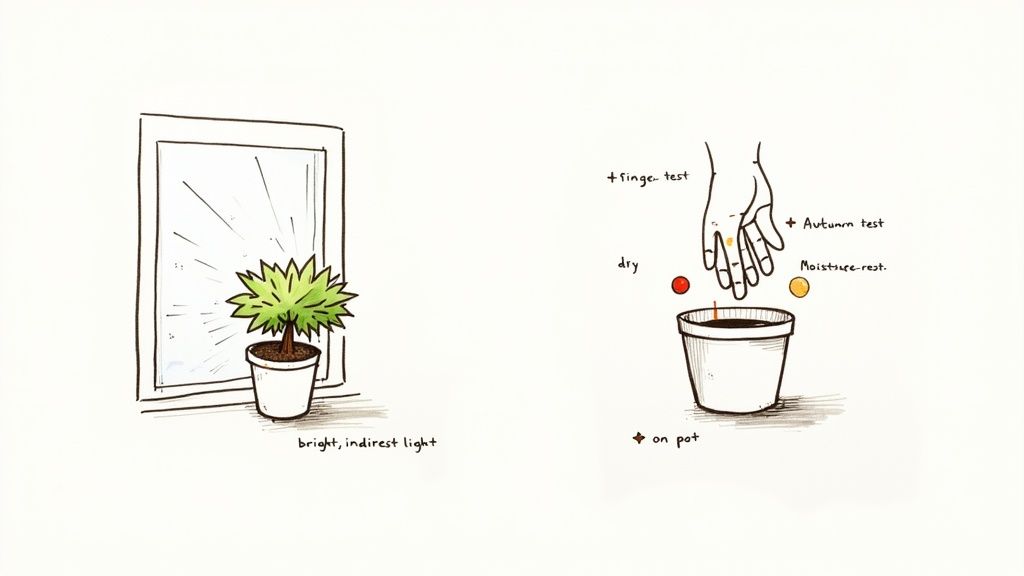
If there's one secret to a happy Pachira, it's getting its light and water needs just right. Nailing these two things is the foundation of good plant care, and honestly, it solves most problems before they even start. The good news? It’s far simpler than it sounds, especially when you know what to look for in our unique New Zealand conditions.
Think of your Pachira as a guest that loves a bright, lively room but hates being in the spotlight. It absolutely craves light to fuel its growth and keep those signature leaves a vibrant green, but harsh, direct sun is its sworn enemy. Finding that perfect balance is the key to a healthy, happy money tree in your home.
Finding The Sweet Spot For Light
So, what does "bright, indirect light" actually mean in a Kiwi home? Picture the light a few feet back from a north-facing window – the room is filled with daylight, but the sun's rays aren't hitting the leaves directly. Our strong afternoon sun will scorch the foliage, leaving behind ugly brown patches.
You’re basically trying to mimic the dappled sunlight it would get in its native tropical habitat. It needs just enough energy to photosynthesise without getting overwhelmed. To keep it looking its best, give your plant a quarter turn every week or so. This stops it from leaning towards the light and helps it grow into a nice, balanced shape.
Here are a few ideal spots for your Pachira:
- Near a north-facing window: This is often the jackpot, offering consistent, bright light all day without the harshness.
- A few feet from an east-facing window: Here it can soak up the gentle morning sun, which isn't nearly as intense as the afternoon glare.
- In a bright room with sheer curtains: A simple net curtain can diffuse strong light from west or north-west facing windows, creating that perfect filtered glow.
Key Takeaway: Avoid placing your Pachira right in the path of afternoon sunbeams. If the plant itself isn't casting a sharp, dark shadow, you've probably found the perfect lighting.
Given its love for these conditions, it's no surprise the Pachira is grown almost exclusively indoors here in New Zealand. Our climate can bring frosts that this tropical native simply can't handle. Thanks to controlled greenhouse growing, these beauties are available in local garden stores all year round. In fact, tropical plants like the Pachira make up a decent slice of our non-food horticulture market, contributing to the roughly 15-20% of plant sales in this category. You can dig deeper into New Zealand's horticulture trends over at the Ministry for Primary Industries.
Mastering The Art Of Watering
Overwatering is, without a doubt, the number one mistake people make with Pachira plants. It's the fastest way to cause serious trouble like root rot. Unlike plants that like to stay constantly moist, the Pachira much prefers a "soak and dry" routine. This means you give it a really thorough watering, then let the soil dry out a bit before you even think about watering it again.
The best tool for the job is your own finger. Just poke your index finger about 5 centimetres deep into the soil. If it feels dry down there, it’s time for a drink. If you feel any dampness at all, hold off for a few more days and check again. This simple test takes all the guesswork out of it.
When you do water, do it properly. Pour water evenly over the soil until you see it running out of the drainage holes at the bottom. This ensures all the roots get a good soaking. Just make sure you empty any excess water from the saucer after 15-20 minutes – letting it sit in a puddle is asking for root rot.
Adjusting Care For New Zealand Seasons
Like most living things, your Pachira's needs will change with our Kiwi seasons. Its watering schedule isn't something you can set and forget.
- Spring and Summer (Active Growth): During these warmer, brighter months (September to February), your plant is in full growth mode. You'll probably find yourself watering more often, maybe once a week, as it's using a lot more water.
- Autumn and Winter (Dormancy): From about March to August, growth slows right down. The days are shorter and cooler, so the soil will take much longer to dry. You absolutely must cut back on watering – sometimes to only once every two or three weeks.
Finally, remember these plants come from humid, tropical places. Our homes, especially with heaters or air con running, can get pretty dry. Giving the humidity a boost will keep its leaves looking lush and prevent those crispy brown edges. Grouping it with other plants, using a small humidifier, or placing its pot on a tray of pebbles and water are all easy, effective ways to help it feel more at home.
Choosing The Right Soil And Repotting Schedule
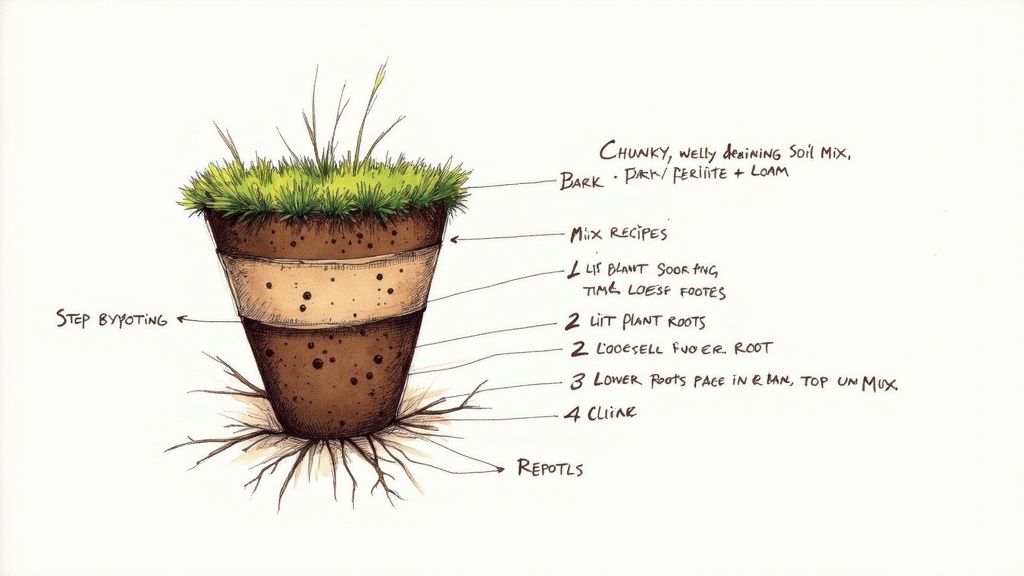
A healthy Pachira starts from the ground up—or more accurately, from the soil down. Just like a house needs a solid foundation, your Money Tree needs the right base to support strong roots and lush growth. Getting the soil mix, feeding schedule, and repotting routine right is your ticket to a thriving plant.
Think of your standard potting soil as a dense, heavy sponge. While it holds water, it often holds too much for a Pachira, which is a fast track to root rot. Your goal is a growing medium that’s airy and drains quickly, letting water flow through freely while still holding enough moisture for the roots to drink. This stops the soil from becoming a soggy bog—the number one enemy of a happy Money Tree.
Crafting The Perfect Soil Mix
The secret to a happy Pachira is excellent drainage. You're aiming for a chunky, airy mix that mimics the loose, loamy soil it would enjoy in its native home. While you can buy pre-made aroid or succulent mixes, whipping up your own is simple and gives you total control.
A great DIY recipe for your Pachira could look something like this:
- Premium Potting Mix: This forms the base, about 50% of your total mix, providing essential nutrients.
- Perlite or Pumice: Make this about 30% of the mix. This lightweight volcanic rock creates vital air pockets for root aeration and drainage.
- Orchid Bark: The final 20% can be orchid bark or coconut husk chips. This adds chunkiness and stops the soil from compacting over time.
This combo creates a soil structure that’s light enough for roots to breathe and grow without any trouble. If you want to dive deeper into soil recipes, check out our detailed guide to crafting the perfect indoor potting mix.
A Fertilising Schedule For NZ Seasons
Feeding your Pachira is like giving it a seasonal vitamin boost—it’s crucial during its active growing period but unnecessary when it's resting. The easiest way to get it right is to sync your fertiliser routine with New Zealand's seasons.
During spring and summer (that's September to February), your plant is busy pushing out new leaves. This is feeding time. Use a balanced liquid indoor plant fertiliser diluted to half-strength every four to six weeks. This gives it just the right amount of nutrients without overwhelming the roots.
Once autumn rolls around in March, it’s time to stop feeding. Your Pachira enters a dormant period for the cooler, darker months right through to August. Fertilising during this rest period can do more harm than good, as the plant isn't using the nutrients, leading to a nasty chemical build-up in the soil.
Knowing When And How To Repot
Sooner or later, your Pachira will need a bigger home. Repotting isn't just about more space; it's a chance to refresh its soil and give the roots a health check. Most indoor Money Trees are happy for 18-24 months in the same pot, but your plant will give you some pretty clear signals when it's time for an upgrade.
Keep an eye out for these signs:
- Roots escaping the drainage holes: This is the most obvious sign your plant is pot-bound and needs more room to stretch.
- Water runs straight through: If the soil dries out in a flash and water just gushes out the bottom, it means there's probably more root than soil left in the pot.
- Stalled growth: If your plant stops producing new leaves during the growing season despite good care, it might have simply run out of space and nutrients.
When it's time, choose a new pot that is only one size up—about 2-5 cm wider in diameter. A pot that's too big will hold excess soil and moisture, putting your plant at risk of root rot. Make sure the new pot has plenty of drainage holes. Gently ease the plant out, tease out any circling roots, and pop it in the new pot with your fresh soil mix. Give it a good water, and it'll be set for another couple of years of healthy growth.
How To Prune And Shape Your Braided Money Tree
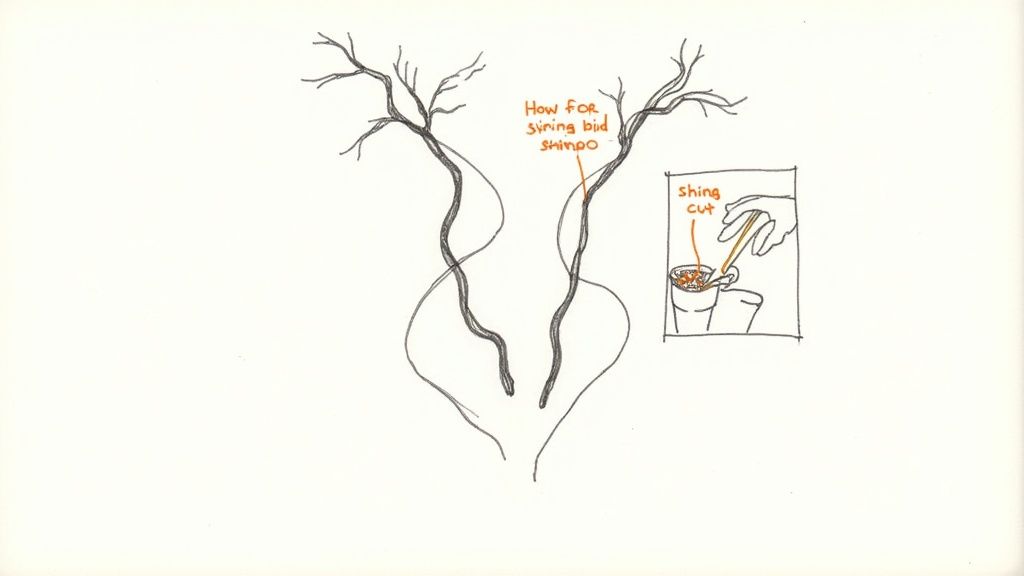
Actively shaping your Pachira is easily one of the most satisfying parts of looking after one. Pruning isn't just about keeping it from getting too big; it’s your chance to encourage a fuller, healthier plant while maintaining that iconic braided look.
A good trim can feel a little scary at first, but it’s the best way to get your Money Tree to grow back stronger and lusher than before. Think of it like a strategic haircut. By snipping away old or leggy growth, you’re telling the plant to push its energy into creating dense, new foliage for a beautiful, compact canopy.
When And How To Prune Your Pachira
The best time for a good prune is during your Money Tree’s main growing season. Here in New Zealand, that's typically from late spring to early summer (around October to January). Pruning then gives it plenty of energy to heal up and push out fresh growth. It's best to avoid any major haircuts during the quiet winter months.
You don’t need a lot of gear, but the right tools make all the difference. Always reach for a pair of clean, sharp secateurs or pruning shears. This guarantees a clean cut that heals fast and lowers the risk of disease. A great habit is to wipe the blades with a bit of rubbing alcohol before and after you use them.
Ready to get started? Just follow these simple steps:
- Size It Up: Take a step back and have a good look at the overall shape. Find any leggy stems (those long, sparse ones), yellowing leaves, or any branches that are heading off in the wrong direction and messing with the shape you want.
- Make The Cut: To get new branches to sprout, make your cut just above a leaf node. That’s the little bump on the stem where a leaf grows from. A new branch will usually shoot out from right near there, giving you a much fuller look.
- Be Bold: It’s much better to make one clean, decisive cut than to nibble away hesitantly. You can safely snip off up to one-third of the plant's leaves in one go without causing it any stress.
Caring For The Braided Trunk
That braided trunk is the real star of the show. To keep it in top shape, make sure there’s good airflow around the base of the plant.
Every now and then, you might find that one of the stems in the braid has died off. If that happens, it’s a good idea to carefully remove it to stop any rot from spreading to the healthy stems. Gently untwist it and cut it out as close to the soil as you can.
The goal of pruning a Pachira is not just to make it smaller, but to strategically guide its growth. Each cut is an instruction to the plant, telling it where you want new, lush foliage to appear, resulting in a perfectly balanced shape.
Propagating Your Cuttings
Whatever you do, don't throw those offcuts away! One of the best perks of pruning your Pachira is how easily you can propagate the cuttings to create brand new baby Money Trees. It’s a brilliant way to grow your collection or share a few plants with friends.
Just take a healthy stem cutting that’s at least 15 cm long and has a few leaf nodes on it. Pluck off the lower leaves, leaving just a couple at the top.
Pop the cutting into a glass of water, making sure the nodes are underwater, and place it somewhere with bright, indirect light. Change the water every week, and in just a few weeks, you should start to see little roots forming. Once they’re a few centimetres long, you can pot up your new Pachira in soil.
Troubleshooting Common Pachira Problems In NZ
Even with the best intentions, your Pachira might sometimes show signs of stress. Don't panic! It’s usually just your plant's way of telling you what it needs. Think of this section as your go-to diagnostic guide for the most common hiccups Money Tree owners run into here in New Zealand.
By learning to read the signs, you can catch small problems before they become big ones. From discoloured leaves to unwelcome pests, we'll walk you through clear, practical solutions to get your plant back to its vibrant self.
Decoding Leaf Troubles
The leaves are almost always the first place your Pachira will let you know something’s up. Paying close attention to the colour and feel of its foliage is the key to a quick diagnosis.
The most common cry for help from a Pachira is yellowing leaves. While one older leaf turning yellow and dropping off is totally normal, widespread yellowing is a classic sign of overwatering. It means the roots are sitting in soggy soil and can't breathe, which really stresses the plant out.
On the flip side, if the leaves are crispy, brown, and brittle at the edges, the culprit is likely underwatering or very low humidity. Your plant is losing moisture faster than its roots can soak it up.
-
Symptom: Soft, yellowing leaves, often starting with the lower ones.
-
Cause: This is almost always overwatering.
-
Solution: Cut back on watering immediately. Get into the habit of using the finger test and only water when the top 5 cm of soil feels completely dry. Double-check that your pot has good drainage.
-
Symptom: Brown, crispy leaf tips or edges.
-
Cause: Underwatering or really dry air.
-
Solution: Check the soil more often, especially during warmer weather. You can boost the humidity by misting the leaves every few days, grouping it with other plants, or placing it on a pebble tray.
Sudden Leaf Drop: If your Pachira drops a bunch of green, healthy-looking leaves all at once, it's probably reacting to a sudden change in its environment. This could be a cold draught, a move to a new spot, or a big shift in temperature or light. Try to keep its surroundings as stable as possible.
Dealing With Common Houseplant Pests
Your indoor jungle can sometimes attract unwanted visitors. In New Zealand, the pests that most often bother a Pachira are spider mites and mealybugs, particularly when the air is dry.
Spider mites are tiny and tough to see, but you’ll notice their fine, silky webbing around leaves and stems. Mealybugs are a bit easier to spot; they look like little bits of white, cottony fluff, usually hiding out where the leaf meets the stem or on the undersides of leaves.
It’s really important to treat these pests as soon as you spot them to stop an infestation from spreading. A great first step is to physically remove as many as you can by wiping the leaves with a damp cloth or giving the plant a good rinse in the shower.
For a more robust and natural solution, neem oil is a fantastic ally. You can learn all about its benefits and how to use it in our comprehensive guide on using neem oil for plants.
Pachira Problem Diagnosis Chart
Feeling a bit overwhelmed? Not to worry. This quick-reference table will help you play detective and figure out exactly what your plant needs.
| Symptom | Likely Cause | Solution |
|---|---|---|
| Yellow, soft leaves | Overwatering | Let the top 5 cm of soil dry out completely before watering again. Ensure good drainage. |
| Brown, crispy leaf edges | Underwatering or low humidity | Water more frequently. Increase humidity by misting or using a pebble tray. |
| Sudden drop of green leaves | Environmental shock (draught, move) | Keep the plant in a stable location away from sudden temperature changes. |
| Fine webbing on leaves | Spider Mites | Wipe leaves with a damp cloth and treat with neem oil. Increase humidity. |
| White, cottony spots | Mealybugs | Dab pests with rubbing alcohol on a cotton bud. Treat the plant with neem oil. |
| Droopy or wilting leaves | Thirst or severe overwatering | Check the soil. If bone dry, give it a thorough watering. If soggy, check for root rot. |
Just remember that every plant is a little different. A bit of observation and patience is all it takes to get your Money Tree thriving again
Your Pachira Care Questions Answered
To wrap things up, let's run through some of the most common questions we get from fellow Pachira owners here in New Zealand. These are the quick-fire answers to help you feel confident on your plant care journey.
Is The Pachira Plant Toxic To Pets In New Zealand?
Great news for all you pet lovers out there – the Pachira aquatica is considered non-toxic to both cats and dogs. This makes it a fantastic, worry-free choice for Kiwi homes, so you can enjoy its beautiful green foliage without putting your furry mates at risk.
Why Is My Pachira's Braided Trunk Getting Soft?
A soft or mushy trunk on a Pachira is the number one red flag for root rot. This almost always comes down to overwatering; the soil has been sitting wet for far too long, and the roots are effectively drowning.
If you spot this, you need to act fast to have any chance of saving it:
- Get it out of the pot: Gently slide the plant out and have a proper look at the root system.
- Trim the rot: Using clean, sharp snips, cut off any roots that look black, brown, or feel mushy. Healthy roots should be firm and pale.
- Repot: Give it a fresh start in a new pot that has excellent drainage, using a fresh, airy potting mix.
- Rethink your watering: From now on, let the top few centimetres of soil dry out completely before you even think about watering again.
A soft trunk is a serious cry for help from a Pachira. You have to intervene straight away, as the rot can spread through the healthy parts of the plant surprisingly quickly.
How Fast Does A Pachira Money Tree Grow Indoors In NZ?
When grown indoors, a Pachira is a pretty decent grower during New Zealand’s warmer months. Through spring and summer, if it’s getting plenty of bright, indirect light and you’re looking after it well, you can expect it to put on several centimetres or more in height.
Growth slows right down during the cooler, darker months of autumn and winter as the plant goes into a sort of hibernation. A bit of regular pruning is a great way to manage its size and encourage it to grow outwards into a fuller, bushier shape, rather than just getting tall and leggy.
Ready to bring the good fortune and stunning looks of a Pachira into your home? Jungle Story has a beautiful selection of healthy, vibrant Money Trees waiting for you. Find your perfect plant and all the care essentials you need online at https://junglestory.co.nz.