
If you've ever dreamed of a flowering vine that looks like a living waterfall of pure white stars, let me introduce you to Petraea volubilis 'Snow Stars'. Often called the White Sandpaper Vine, this climber is the stunning, ethereal sibling to the more common purple Queen's Wreath, bringing a truly unique elegance to Kiwi gardens.
The Understated Charm of Petraea 'Snow Stars'

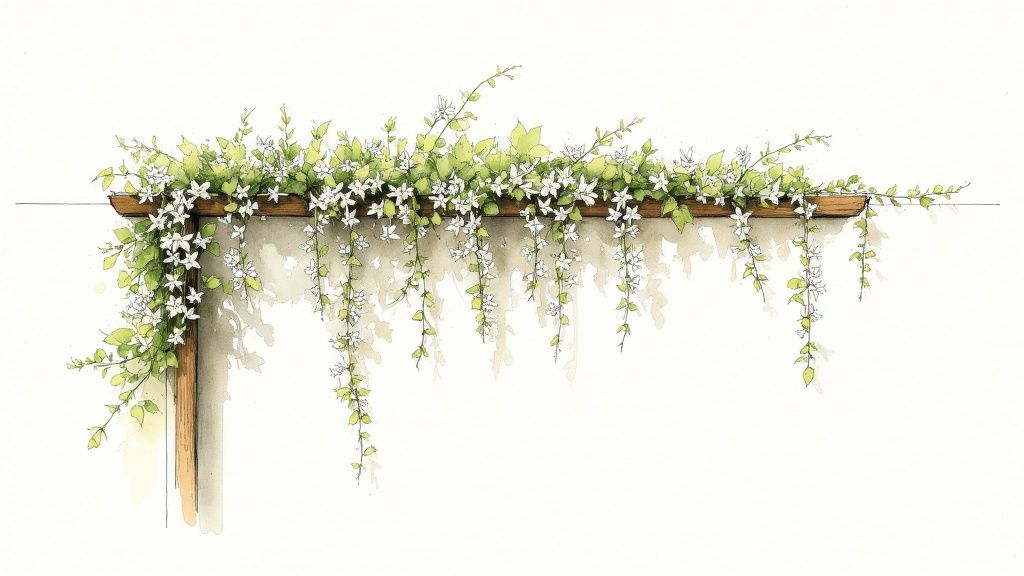
Picture a living curtain of brilliant white, star-shaped flowers draping gracefully over a pergola or garden wall. That’s the magic of 'Snow Stars'. While its roots are in tropical America, this exquisite vine feels perfectly at home in New Zealand's temperate climate, lending a touch of exotic grace to our backyards.
What sets 'Snow Stars' apart is its subtle and sophisticated colour palette. Its long, drooping flower clusters, known as racemes, create a breathtaking display that almost seems to float on air. This makes it a standout choice for gardeners wanting to add a bit of romance and distinction to their outdoor spaces.
A Rising Star in the Kiwi Garden
The popularity of 'Snow Stars' is really taking off among New Zealand gardeners, and for good reason. Its growth is vigorous enough to be impressive but still manageable, making it a perfect partner for all sorts of garden structures. This isn't just a simple vine; it’s a dynamic, living piece of architecture.
Here’s why it’s quickly becoming a favourite:
- A Long Season of Blooms: Here in NZ, 'Snow Stars' generously puts on a show from late spring right through autumn, giving you months of gorgeous flowers.
- Incredibly Versatile: It’s ideal for training over archways, fences, pergolas, and trellises, turning boring structures into something spectacular.
- Unique Aesthetic Appeal: The pure white flowers against the lush green foliage create a cool, calming feel that fits beautifully into both classic and contemporary garden designs.
While 'Snow Stars' is the white variant, its parent species is already a Kiwi favourite. The purple Petraea volubilis is prized in subtropical spots like Auckland for its incredible racemes of purple-blue flowers that can stretch up to 30 cm long. This just goes to show the amazing floral potential you can expect from your 'Snow Stars' plant!
Its stunning looks and adaptable nature make it one of the most rewarding NZ climbing plants you can grow. As this guide will show you, give it the right care, and your Petraea volubilis 'Snow Stars' will become a true showpiece in your garden.
Creating the Ideal Growing Environment in New Zealand
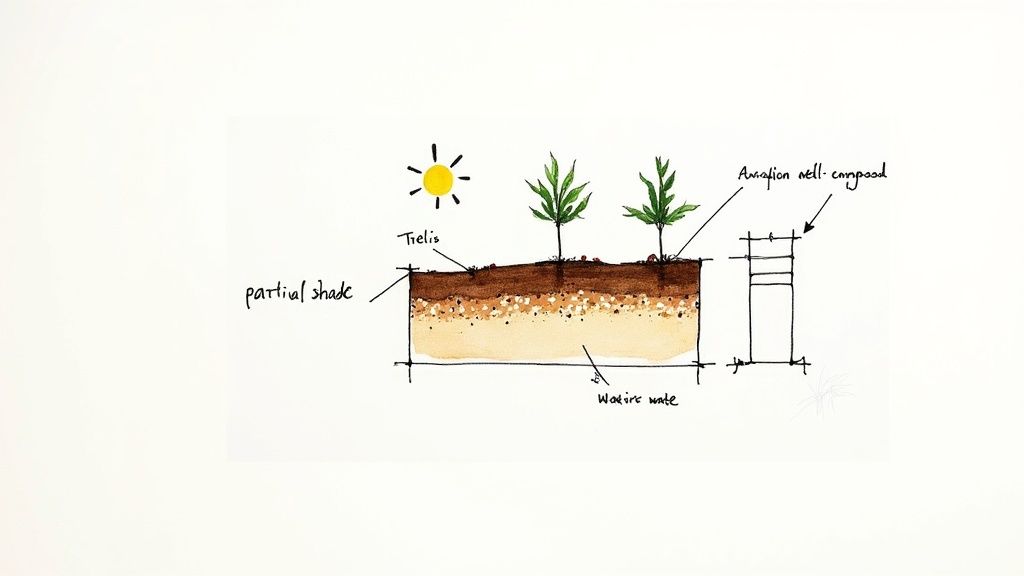
To get those incredible flower displays from Petraea volubilis 'Snow Stars', you just need to give it a home it loves. Think of it as setting the stage for a star performer; get the light, soil, water, and temperature right, and you'll be rewarded with those stunning white blooms. The great news is, its needs are a perfect match for many spots in New Zealand gardens.
First things first: sunlight. This vine is an absolute sun-worshipper. A spot that gets at least six hours of direct sun every day is what you're aiming for – this is the secret to getting the most flowers. A warm, north-facing wall or a pergola that basks in the afternoon sun would be an ideal choice.
That said, 'Snow Stars' is pretty forgiving. While full sun means more flowers, it'll still grow happily in partial shade, which can actually be a blessing in hotter parts of the country where the afternoon sun is fierce. You might notice fewer flower clusters in a shadier spot, but the plant will still look lush and healthy.
Building the Perfect Foundation with Soil
Like any star performer, a thriving plant needs a solid foundation. For Petraea volubilis 'Snow Stars', this boils down to soil that's rich in goodies but, most importantly, drains really well. It absolutely hates having "wet feet," where water pools around its roots. This is a fast track to root rot, especially during our damp Kiwi winters.
Think of the perfect soil as a good sponge: it holds on to enough moisture to stay hydrated but lets any extra water flow right through.
Getting this balance is pretty simple:
- Check Your Soil: Figure out what you're working with. Is it heavy clay that holds too much water, or sandy soil that drains in a flash?
- Add the Good Stuff: Before you plant, dig in plenty of organic matter. Compost, aged manure, or well-rotted leaf mould are all brilliant for this.
- Aim for a Crumbly Mix: This organic material helps break up heavy clay, improving drainage, and gives sandy soil more substance to hold onto moisture and nutrients. You're after a rich, crumbly texture that roots can easily push through.
"The single most important factor for success with many climbers, including Petraea, is drainage. Amending the soil with compost not only feeds the plant but fundamentally changes the soil structure, preventing waterlogging and creating a healthy root environment."
Putting in this little bit of effort when you plant sets your vine up for long-term health, saving you from headaches down the track.
Mastering the Art of Watering
Watering 'Snow Stars' is all about following the rhythm of the New Zealand seasons. The general rule is to keep it consistently moist while it's growing, then ease off completely when it's resting over winter.
Through the warmer spring and summer months (from about September to March), when the vine is putting on new growth and flowering, it'll need regular watering. A good way to check is to poke your finger into the soil; if the top few centimetres feel dry, it's time for a deep soak. This encourages the roots to grow down deep, making the plant tougher in the long run.
Once autumn rolls around and things cool down, you can start watering less often. Over winter (June to August), your 'Snow Stars' goes dormant and needs very little water at all. Overdoing it with the watering can in winter is a common mistake and the quickest way to cause root problems.
Understanding Frost Tolerance in NZ
Being a tropical native, Petraea volubilis 'Snow Stars' feels most at home in the warmer, frost-free parts of New Zealand, like the upper North Island. It really shines in places with mild winters.
A well-established vine can handle a very light, brief frost (down to about -1°C), but it won't pull through a hard or extended freeze. If you're in a cooler part of the country, you're not out of luck! You can create a sheltered microclimate. Planting it against a sunny brick wall that soaks up heat, or covering it with frost cloth during cold snaps, can give it the protection it needs to survive the winter.
How to Plant Your Vine for Lasting Success
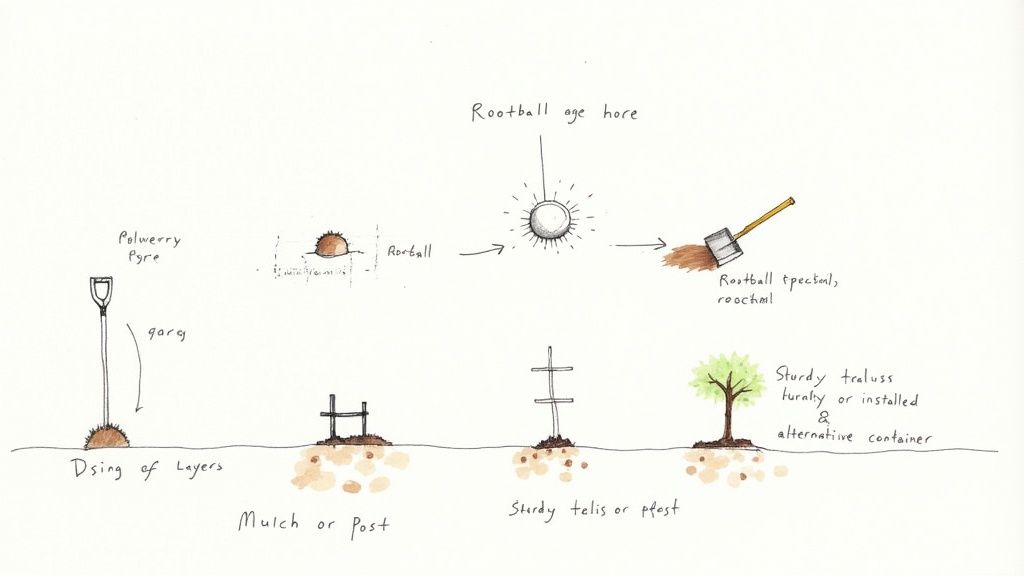
Giving your Petrea volubilis 'Snow Stars' a brilliant start is the single best thing you can do for its long-term health and flower show. Planting isn't just about digging a hole; it's about setting your vine up with everything it needs to get its roots down and start its journey skyward. A bit of prep work now pays off with years of stunning growth.
When you plant is a big deal, especially with New Zealand's distinct seasons. The two golden windows are spring (September to November) and autumn (March to May). Planting during these milder periods lets the vine settle in and establish a healthy root system without having to battle the scorching summer heat or a winter chill.
This timing helps the plant focus its energy on growing roots first, which is the foundation for everything else. A strong root system built in the comfy temperatures of spring or autumn means your vine will be far more resilient and ready for a growth spurt when the seasons shift.
Planting in a Garden Bed
Popping your 'Snow Stars' straight into the garden is a fantastic way to create a permanent, jaw-dropping feature. Getting the spot and the soil just right will make all the difference.
Here’s a simple rundown for getting it in the ground:
- Pick and Prep Your Spot: Find a sunny location with soil that drains well, ideally right next to the structure you want it to climb. Dig a hole that’s twice as wide and just as deep as the plant's root ball.
- Beef Up the Soil: Mix a generous amount of compost or well-rotted manure into the soil you dug out. This enriches the soil and improves its texture, giving roots better drainage and air.
- Support First, Plant Second: This is a step so many people miss, but it's crucial. Get your trellis, pergola frame, or wire guides in place before you put the plant in the hole. This saves you from accidentally damaging those delicate roots later.
- Settle the Vine In: Gently ease the Petrea volubilis 'Snow Stars' from its nursery pot. If the roots are tightly wound at the bottom, carefully tease them out to encourage them to spread. Place the plant in the middle of the hole, making sure the top of its root ball sits level with the surrounding ground.
- Backfill and Water In: Fill the hole back in with your lovely amended soil, gently firming it down to get rid of any air pockets. Give the plant a thorough watering to help the soil settle in nicely around the roots.
A critical first step right after planting is to lay down a thick blanket of mulch, like bark chips or pea straw, around the base of the vine. This locks in moisture, keeps the roots cool over summer, and stops weeds from stealing nutrients. Just remember to leave a small, clear space right around the stem to prevent any rot.
Growing in a Container
Not much garden space? No worries. Petrea volubilis 'Snow Stars' puts on a beautiful show in a large container, making it a perfect choice for patios, decks, and balconies.
Growing in a pot gives you more control over the soil and where you place it, but it’s a slightly different game. The trick is to choose the right size pot—and go big from the get-go. A container that’s at least 50-60 litres will give the roots enough room to really stretch out.
When potting up your vine, make sure the container has plenty of drainage holes. Use a high-quality potting mix designed for containers, as it'll have the right balance of aeration and moisture retention. And just like planting in the garden, it’s a smart move to add a small trellis or support to the pot when you plant it.
Once it's potted, give it a deep drink of water and move it to its sunny new home. Just keep in mind that container plants dry out much faster than garden plants, so you'll need to check the moisture levels more often, especially during warm, windy weather.
Pruning and Training for a Cascade of White Flowers
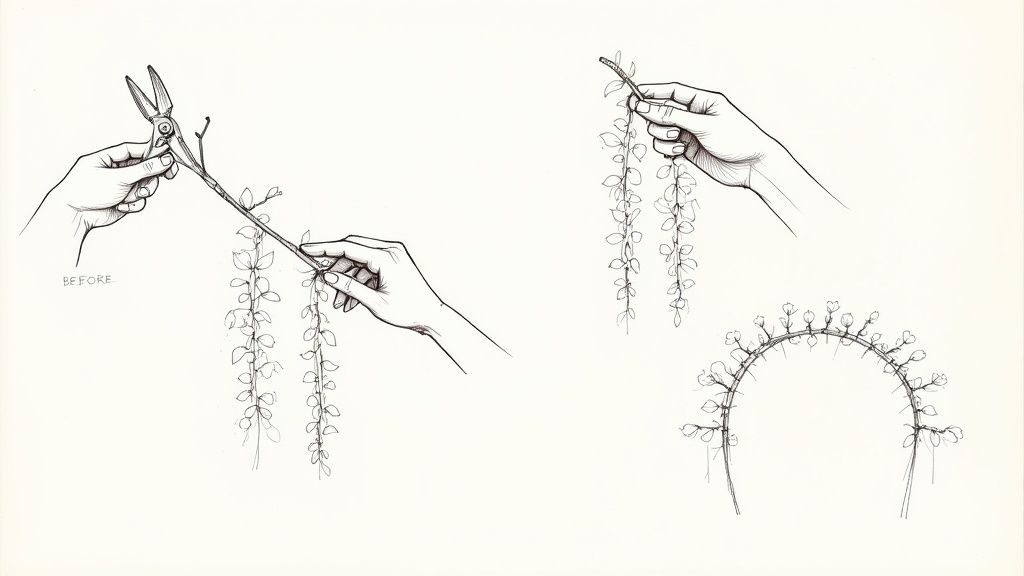
Giving your Petrea volubilis 'Snow Stars' a prune isn't just a simple haircut; think of it as a strategic chat with your plant. With the right snips at the right time, you’re encouraging it to put on an even more spectacular show of those incredible white flowers. By shaping and guiding its growth, you can turn a simple vine into a genuine living sculpture.
The whole process is surprisingly straightforward. It's basically spring cleaning for your plant – clearing out the old to make room for fresh, vibrant new growth. This not only keeps the vine looking tidy but also helps it focus its energy on making more blooms instead of maintaining old, unproductive stems.
When to Prune in New Zealand
Timing is everything. For 'Snow Stars' here in New Zealand, the golden rule is to prune immediately after its main flowering burst. This usually happens in late autumn or early winter (around May to June), right after the last of those beautiful white flowers has faded.
Pruning then gives the plant the whole winter to rest up and recover. It can then spend all of spring and summer pushing out the new growth that will carry next season's flowers. Definitely avoid pruning in late winter or spring (from about August onwards), or you’ll risk chopping off the very stems that are getting ready to bloom.
What and How to Prune
The main goal here is to create a strong, open framework that lets sunlight and air get to every part of the vine. This promotes healthy growth and really ramps up flower production. There's no need to go wild; a careful, selective approach works best.
Your main pruning jobs are:
- Remove Dead or Damaged Wood: First things first, snip off any branches that are broken, dead, or look a bit dodgy. It’s basic plant hygiene and stops potential problems in their tracks.
- Thin Out Weak Stems: Have a look for any thin, spindly stems that aren't likely to produce strong flowers. Taking these out lets the plant put its energy into the more robust branches.
- Trim Back Flowered Stems: Cut back the stems that have finished flowering by about a third. This little tidy-up encourages new side shoots, making the whole plant look fuller and bushier.
- Maintain the Main Framework: Gently tidy up the main structural branches to keep the vine in its designated space, whether that's on a trellis, over an arch, or along a fence.
Always use clean, sharp secateurs. A clean cut heals much faster and lowers the risk of disease getting in. A jagged cut from blunt tools can crush the stem and is just an open invitation for infection.
Training Your Vine into a Living Sculpture
While pruning is about shaping, training is about guiding. 'Snow Stars' is a twining vine, so it will naturally wrap itself around things, but it really thrives with a bit of direction from you. It’s best to do this when the stems are young, green, and bendy.
The idea is to create a well-spaced framework against whatever you're growing it on. This makes sure every leaf gets a bit of sun and stops the vine from turning into a tangled mess.
Here are a few simple training techniques:
- Gentle Weaving: As new shoots pop up, carefully weave them through your trellis or along support wires. Aim for a fan shape to spread the growth out nice and evenly.
- Secure the Stems: Use soft plant ties, garden twine, or clips to loosely attach the main stems to the support. Make sure not to tie them too tightly – this can cut into the stem as it grows and thickens.
- Encourage Horizontal Growth: Training stems to grow horizontally actually encourages more flowering side shoots to grow along their length. It’s a simple trick that can dramatically increase the number of blooms you get.
By guiding its growth, you can transform your Petraea volubilis 'Snow Stars' into a stunning feature, whether it's perfectly framing a doorway or creating a lush privacy screen. For vertical structures, a good climbing surface is key. You might find a quality handmade plant support moss pole gives your vine an excellent framework to climb up, especially when it's young.
A Simple Feeding Plan for Healthy Growth
Think of fertiliser as the perfectly timed, high-energy meal that fuels your Petraea volubilis 'Snow Stars' for its magnificent flowering season. This stunning vine is a seriously hungry plant during its growing period, and getting the nutrition right is the key to unlocking that breathtaking cascade of white blooms. A simple, season-aware feeding plan is all it takes to give it the right fuel at the right time.
The most important feed of the year happens in early spring, just as the weather warms up and you spot the first signs of new life. For us here in New Zealand, this is usually around September. Applying a balanced, slow-release fertiliser at this point is like giving your vine a power-packed breakfast that will sustain it for months to come.
Grab a general-purpose granular fertiliser with a balanced N-P-K (Nitrogen-Phosphorus-Potassium) ratio. This provides a steady trickle of essential nutrients to support vigorous new stems, healthy leaves, and most importantly, the formation of countless flower buds. Just scatter the granules around the base of the plant, following the packet instructions, and water it in well.
The Power of Organic Goodness
Beyond a scheduled feed, one of the best things you can do for your 'Snow Stars' is to enrich the soil with good old organic matter. Think of it as a wholesome, ongoing supplement that works hand-in-hand with your main feeding plan. Organic goodness does more than just feed the plant; it improves the very soil it lives in.
Adding a generous layer of well-rotted compost or aged manure around the base of your vine each spring works wonders:
- Slow-Release Nutrition: It breaks down gradually, offering a gentle and continuous source of micronutrients.
- Improved Soil Structure: It helps heavy clay soils drain better and gives sandy soils a bit more body, creating the perfect environment for happy roots.
- Enhanced Water Retention: It acts like a sponge, helping the soil hold onto moisture during those dry summer spells.
A fantastic addition to your routine is a liquid seaweed tonic. Applied every four to six weeks during the active growing season (spring and summer), it acts as a brilliant plant conditioner. It's packed with trace elements and natural growth stimulants that boost overall plant health and resilience. You can learn more about the incredible benefits of using a seaweed fertiliser in your NZ garden in our detailed guide.
Common Feeding Mistakes to Avoid
While feeding is crucial, it’s also easy to go overboard. Over-fertilising is a common pitfall that can lead to some really disappointing results. The biggest giveaway? A vine that produces an explosion of lush, green leaves but very few, if any, flowers.
This happens when the plant gets too much nitrogen, which tells it to focus on leafy growth instead of blooms. To avoid this, always stick to the recommended amounts on the fertiliser packet. If you suspect you've been a bit too generous, the best fix is to hold off on any more fertiliser and just water the plant well to help flush the excess nutrients from the soil. With a balanced and thoughtful approach, you'll give your 'Snow Stars' everything it needs for a long and healthy life, overflowing with those spectacular white flowers.
Common Questions About Growing Petraea Snow Stars
Even the most straightforward plants can throw us a curveball now and then. When you’re dealing with a stunner like Petraea volubilis 'Snow Stars', it's only natural to have a few questions about its specific needs and quirks, especially in a New Zealand garden. Let’s tackle some of the most common queries from fellow Kiwi gardeners to help you grow your vine with confidence.
Getting your head around these common issues is the best way to stay one step ahead. Once you understand the ‘why’ behind a plant’s behaviour—like why its leaves might be yellowing or how much frost it can really handle—potential problems become simple, manageable tasks. This approach will ensure your 'Snow Stars' stays healthy and looks incredible for years to come.
How Frost Tolerant Is Petraea Snow Stars in NZ?
This is probably the most critical question for anyone gardening outside of New Zealand's warmest pockets. Coming from tropical climes, Petraea volubilis 'Snow Stars' is happiest in the balmy, frost-free areas of the country, like the upper North Island. It truly thrives where winters are mild and a deep freeze is off the cards.
But "frost tolerant" can mean different things. A well-established, healthy vine can often shrug off a very light, fleeting frost—we’re talking a brief dip to around -1°C. Anything more severe or lasting longer is likely to cause some real damage to the leaves and tender new shoots.
For gardeners in cooler spots, don't despair! Success is still possible with a bit of clever planting.
- Create a Microclimate: Plant your vine against a north-facing brick or stone wall. These materials soak up heat during the day and radiate it back at night, creating a little pocket of warmth.
- Provide Shelter: Pick a spot that’s shielded from those cold southerly winds and avoids frost pockets, which often form in low-lying parts of the garden.
- Use Protection: If an unexpected cold snap is on the forecast, covering your vine with frost cloth overnight can be a lifesaver. It traps ground warmth and stops ice crystals from forming on the leaves.
Why Are the Leaves on My Vine Turning Yellow?
Yellow leaves, or chlorosis, are a plant’s way of sending up a flare to say something isn’t quite right. For Petraea volubilis 'Snow Stars' in New Zealand, the culprit is often related to water or nutrients, particularly with our often-heavy soils and wet winters. The most common cause is simply overwatering or poor drainage. When soil gets waterlogged, roots can't breathe. This leads to root rot and stops the plant from absorbing nutrients, which shows up as yellowing leaves.
Before you do anything else, check the soil moisture. Push your finger about five centimetres deep; if it feels soggy rather than just damp, you've probably found your problem. Let the soil dry out more between waterings.
If the soil feels fine, the issue could be a nutrient deficiency.
- Iron Deficiency: This often appears as yellowing on new leaves while the veins stay stubbornly green.
- Magnesium Deficiency: This tends to show up on the older leaves, with yellowing appearing between the veins in a V-shape or marbled pattern.
An easy fix is to apply a liquid fertiliser that contains a good range of trace elements. A seaweed tonic can also work wonders for correcting minor deficiencies and giving the whole plant a health boost.
Can I Grow Snow Stars in a Pot on My Balcony?
Absolutely! Petraea volubilis 'Snow Stars' is a fantastic choice for a container, making it perfect for adding a bit of vertical drama to patios, decks, and balconies. Growing it in a pot means you can give it the perfect soil mix right from the get-go and have total control over its placement.
The secret to success in a pot comes down to two things: size and drainage. Don't be tempted by a small container; this vine needs plenty of room for its roots to establish a strong system.
Choose a substantial pot, at least 50-60 litres in volume, to provide ample space for growth. Make sure it has plenty of large drainage holes at the bottom to prevent waterlogging, which is even more of a risk in a contained environment.
Use a high-quality, free-draining potting mix and pop a sturdy support structure, like a small trellis or obelisk, directly into the pot when you plant it. Just remember, potted plants have a limited supply of water and nutrients. They’ll dry out much faster than garden plants, especially on warm or windy days, and will need a more consistent watering and feeding schedule to keep them thriving.
What Is the Best Way to Propagate My Petraea?
Once you fall in love with your 'Snow Stars', you'll probably want to make more to share or plant elsewhere in the garden. For the home gardener, the most reliable and straightforward method is through semi-hardwood cuttings. This just means taking cuttings from this season's growth after it has started to mature and become a bit woody, but while it's still flexible.
In New Zealand, the ideal time to take these cuttings is during late summer or early autumn (February to April). At this point, the stems are at the perfect stage for successful rooting.
Here’s a simple step-by-step guide:
- Select a Stem: Look for a healthy, disease-free stem that’s about the thickness of a pencil.
- Take the Cutting: Using clean, sharp secateurs, cut a section about 10-15 cm long. Make the cut just below a leaf node (the little bump where a leaf grows from).
- Prepare the Cutting: Strip the leaves from the lower half of the cutting, leaving just two or three at the top. If these leaves are large, you can snip them in half to reduce moisture loss.
- Apply Rooting Hormone: Dip the bottom end of the cutting into a rooting hormone powder or gel. This isn't strictly essential, but it definitely increases your chances of success.
- Plant the Cutting: Pop the cutting into a pot filled with a free-draining mix, like a blend of perlite and seed-raising mix.
- Create a Humid Environment: Water the pot gently and cover it with a plastic bag or place it in a mini greenhouse to keep the humidity high. Find it a warm spot with bright, indirect light.
With a bit of patience, you should see roots forming within a few months. Before you know it, you'll have a brand-new Petraea volubilis 'Snow Stars' plant ready for its new home.
Ready to bring this cascade of white flowers to your own garden? At Jungle Story, we connect you with trusted local growers offering beautiful and healthy Petraea volubilis 'Snow Stars'. Explore our collection and find the perfect climbing plant to transform your outdoor space today.