
If you've been looking for a guide to the rubber plant NZ scene, you're in the right place. Known to botanists as Ficus elastica, this striking houseplant has become a real favourite in Kiwi homes. Its lush foliage and surprisingly easy-going nature make it a perfect first step for anyone new to plant parenthood.
Why Kiwis Love the Rubber Plant
The rubber plant is so much more than just a pretty face; it’s a resilient and effortlessly stylish feature for any room. It adapts beautifully to New Zealand's varied temperate climate, which is why it's just as popular in Auckland as it is down in Wellington.
Don't let the name fool you. While it once had industrial uses, here in NZ, it’s purely an ornamental treasure. We just love it for those bold, glossy leaves that bring a touch of the tropics indoors.
This plant's popularity is part of a bigger picture. Horticultural sales in our cities have been climbing by about 15% annually over the last decade, showing a huge boom in urban gardening. You can even track its presence across the country on iNaturalist NZ.
Key Benefits for Your Home
The appeal of the rubber plant goes way beyond its good looks. It offers some really practical perks that make it one of the great indoor houseplants for any Kiwi home.
- Air-Purifying Qualities: It's known for its ability to filter airborne toxins like formaldehyde, helping to create a healthier, fresher indoor environment.
- Low Maintenance: This is a huge plus. It’s perfect for busy people or absolute beginners because it doesn't demand constant attention to look amazing.
- Aesthetic Versatility: Whether your home is modern and minimalist or full-on bohemian, its classic, deep-green foliage just works.
At the end of the day, the rubber plant offers that perfect blend of beauty and resilience, making it a fantastic choice for lifting the look and feel of your living space.
Choosing the Right Rubber Plant for Your Home
When you think of a rubber plant, you probably picture the classic, deep-green variety that’s been a Kiwi favourite for decades. And while that one is a timeless beauty, the world of Ficus elastica is way more diverse and exciting than you might think. Picking the right one is all about matching its personality to your home's style.
Honestly, it’s a bit like choosing a piece of art. Each type has its own distinct character, so you can go way beyond the standard dark green and find a plant that really makes a statement.
Popular Cultivars to Find in New Zealand
Plenty of stunning varieties thrive in Kiwi homes, each with its own look and little care quirks. The main difference usually comes down to their variegation—the different colours in their leaves—which changes how much light they need to stay looking their best.
A good rule of thumb? More colour in the leaves generally means it needs more bright, indirect sunlight.
Here’s a look at three popular options you'll often find at spots like Jungle Story:
- Ficus elastica 'Tineke': This one is a real showstopper. It's famous for its creamy white and green variegated leaves, which often have a soft pink blush along the edges. It’s perfect for brightening up any room.
- Ficus elastica 'Black Prince': If you're after a more dramatic, moody vibe, the 'Black Prince' is your guy. Its leaves are so dark they look almost black, creating a bold and sophisticated silhouette.
- Ficus elastica 'Ruby': For anyone who loves a splash of colour, the 'Ruby' is a fantastic choice. Its leaves have vibrant splashes of pink, cream, and green that get even more intense in good light.
To make it a bit easier, here’s a quick comparison of these popular varieties.
Comparing Popular Rubber Plant Varieties in NZ
This table breaks down the key differences between the most common Ficus elastica varieties you'll find in New Zealand, focusing on their looks and what kind of light they'll be happiest in.
| Variety Name | Leaf Colour & Pattern | Ideal Light Conditions |
|---|---|---|
| 'Tineke' | Creamy white, green, and soft pink variegation. | Bright, indirect light to maintain its vibrant colours. |
| 'Black Prince' | Deep, dark green to almost black leaves. | Medium to bright indirect light; can tolerate lower light. |
| 'Ruby' | Strong pink, red, cream, and green variegation. | Needs very bright, indirect light to show its best colour. |
As you can see, choosing a variety is more than just a cosmetic decision.
Variegated types like 'Tineke' and 'Ruby' have less chlorophyll in their leaves. This means they need more bright, indirect light than their darker cousins to photosynthesise properly and keep their brilliant colours vibrant.
Understanding these little differences helps you pick a rubber plant that won’t just look amazing, but will actually thrive in the light your home has to offer. That way, your new plant becomes a flourishing centrepiece, not just another green thing in a pot.
Mastering The Ideal Environment For Your Plant
Creating the perfect home for your rubber plant is much less complicated than you might think. It really just comes down to getting the basics right: light, water, humidity, and soil. Nail these, and you'll have a healthy, thriving feature in your home for years to come. These plants are pretty tough, but a little bit of care in setting up their environment makes a massive difference.
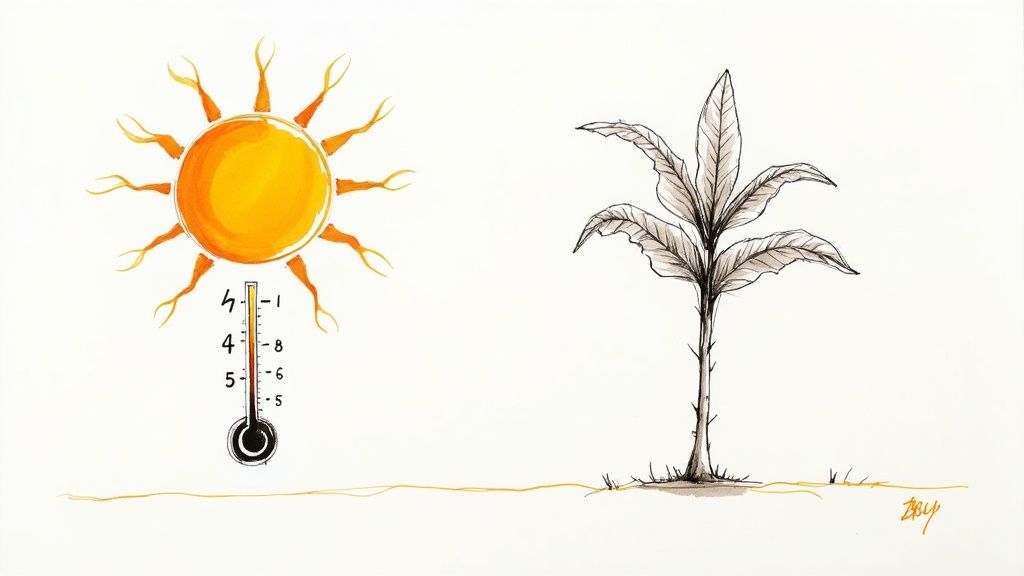
We often hear the phrase ‘bright, indirect light’, which can sound a bit vague. In a typical Kiwi home, this is actually an easy spot to find. Just think of a room that gets heaps of daylight but where the sun's rays don't hit the leaves directly for hours on end. A spot near a north-facing window, but just out of the direct sun's path, is usually perfect.
While they love the brightness, direct sun will scorch their beautiful leaves, leaving behind nasty brown spots. If your only option is a super sunny window, just pop a sheer curtain up to filter the light. For spots with less natural light, you might find other shade-loving plants in NZ are a better fit.
Watering And Humidity Needs
Overwatering is easily the most common mistake people make with a rubber plant nz. The best way to handle it is to let the soil dry out a bit between waterings. A simple trick is to stick your finger about five centimetres into the soil; if it feels dry, it's time for a drink.
Let the soil breathe between waterings. Rubber plants would much rather be slightly too dry than soaking wet, which can quickly lead to root rot.
Our winters can get pretty dry, especially with heaters blasting. This drop in humidity can be tough on a rubber plant. To help it feel more at home, you can mist the leaves every few days or sit the pot on a tray of pebbles with a little water in it.
The Best Foundation Soil
Finally, the right soil mix is the foundation for a healthy root system. Your rubber plant needs soil that drains really well to stop its roots from sitting in water. A quality, well-draining indoor potting mix is your best bet. To give it an extra boost, you can add a handful of perlite or orchid bark to the mix. This improves aeration and drainage, keeping your plant's roots happy and healthy.
Your Seasonal Rubber Plant Care Calendar for NZ
To really get the best out of your rubber plant, it helps to think like a plant. Its needs shift with the seasons, just like everything else in our gardens. By tuning your care routine into New Zealand's specific climate, you can give your Ficus elastica exactly what it needs, all year round.
This isn't about following a strict set of rules. It’s more about paying attention and responding to what your plant is telling you as the days get longer or shorter.
Summer Care (December to February)
Summer is prime time for your rubber plant. With long, warm Kiwi days, your plant is in full-on growth mode, pushing out new leaves and soaking up all that energy.
Naturally, it's going to be thirstier. You’ll probably find yourself watering more often, but always stick to the golden rule: check the top five centimetres of soil first. If it’s dry, it’s time for a drink. Just be careful with our strong sun – even indoors, direct rays blasting through a window can scorch those gorgeous leaves. Bright, indirect light is the goal.
Autumn Adjustments (March to May)
As the days get shorter and the light isn't quite as intense, you'll notice your rubber plant's growth starting to slow down. Think of it as winding down after a busy summer of activity.
The biggest change you need to make now is to ease up on the watering. The soil will take longer to dry out, and watering on a summer schedule is a one-way ticket to root rot. Keep checking the soil, but you’ll definitely be watering less. This is a super important transition that sets your plant up for a healthy, problem-free winter.
Your plant’s metabolism is slowing down, so it needs less fuel and water. Adjusting your care during autumn is the key to preventing common winter problems before they even start.
Winter Hibernation (June to August)
Winter in New Zealand means shorter days, much lower light levels, and cooler temperatures. Your rubber plant will basically go dormant, with growth coming to an almost complete standstill. Its only job right now is to tick over until the warmer months return.
Watering should be cut right back – only do it when the soil has properly dried out. Keep it away from chilly draughts from windows or doors, and make sure it's not too close to heaters or fireplaces, which will dry out the air and its leaves. The number one danger in winter is overwatering, simply because the plant isn't using much moisture at all.
Spring Revival (September to November)
When the weather starts to warm up and the days lengthen, you'll see your rubber plant begin to wake from its slumber. The first signs of new growth are your cue that spring has sprung for your plant, and its needs will start ramping up again.
This is the perfect time to start feeding it. A bit of liquid fertiliser every few weeks will give it the boost it needs to support all that new growth. Our guide on indoor plant fertilizer is a great place to start if you're unsure what to use. You can also get back to a more regular watering routine as its thirst returns. And if it's looking a bit tight in its pot, spring is the ideal season for an upgrade.
Common Problems & How to Fix Them
Even the toughest, most bulletproof plant can have an off day. When your rubber plant starts looking a bit sad, it's usually trying to tell you something's not quite right. Learning to read these little signals is the secret to getting it back to its happy, glossy self in no time.
By far the most common SOS call from a rubber plant is yellowing leaves, especially the lower ones. This is almost always a classic case of too much love – specifically, too much water. Before you panic, just ease up on the watering can and give the soil a chance to properly dry out between drinks.
Diagnosing Common Symptoms
Drooping leaves are another frequent sight and can be a bit tricky. It might mean your plant is parched, but it can also be a sign of shock from being moved or a sudden temperature drop. The first thing to do is feel the soil; if it’s bone dry, a good, thorough watering will usually have it standing tall again within a day.
- Brown, Crispy Spots: Think of these as a nasty sunburn. If your plant is getting blasted with too much direct sunlight, particularly during our harsh NZ summer, its leaves can literally scorch. The simple fix is to move it to a spot with plenty of bright, indirect light instead.
- Sticky Residue or Webbing: These are the tell-tale calling cards of pests. Have a close look under the leaves and along the stems for any tiny, unwelcome visitors.
Honestly, most Ficus elastica problems come down to either water or light. A simple tweak to where you've placed it or how often you're watering will solve 90% of issues before they ever get serious. Getting these two fundamentals right is the foundation of good rubber plant care.
Dealing with Pests
Here in New Zealand, the usual indoor suspects like mealybugs (they look like tiny bits of white fluff) and spider mites can occasionally decide your rubber plant looks like a tasty snack. If you spot them, it pays to act fast to stop them from settling in.
For a minor infestation, just wiping down the leaves with a cloth dipped in soapy water or a bit of neem oil is a great, gentle solution. If they're a bit more stubborn, you might need to grab a store-bought insecticidal soap. Making a habit of checking your plant over every week or so will help you catch any problems before they start.
Got Questions About Your Rubber Plant?
Even the most seasoned plant parent has questions now and then. Let's dive into some of the common queries we get from rubber plant enthusiasts around New Zealand, so you can feel confident looking after your leafy friend.

Repotting and Pet Safety
One of the biggest questions is knowing when it's time for a new home. As a rule of thumb, plan to repot your rubber plant every one to two years. The best time to do this is in spring, just as it’s kicking into its growing season. The most obvious sign? Roots starting to sneak out of the drainage holes at the bottom of the pot.
When you do upgrade its pot, don't go too big. Choose a new one that’s only about 5 cm wider. This gives the roots room to grow without leaving them swimming in a huge amount of damp soil, which can lead to root rot.
For those of us with furry family members, it’s vital to know that the milky sap of the Ficus elastica is toxic to cats and dogs if ingested. Chewing on the leaves can cause some nasty irritation in their mouth and tummy. The safest bet is to place your rubber plant NZ somewhere they simply can't get to.
Keeping your pets safe is priority number one. Always pop toxic plants like the Ficus elastica on a high shelf or in a room your pets don't have access to. It’s the best way to ensure a beautiful and safe home for everyone.
Outdoor Growing and Keeping Leaves Glossy
A lot of Kiwis ask if they can pop their rubber plant outside. While it's tempting, they are generally much happier indoors. In the really warm, frost-free parts of the country, they might enjoy a summer holiday on a sheltered, shady deck. But remember, they have zero tolerance for frost and must come back inside well before the temperature drops.
Ever notice the leaves looking a bit dull instead of their usual deep, glossy shine? That’s usually just a bit of household dust building up. This grime can block light and dull their colour. A simple fix is to gently wipe down each leaf with a soft, damp cloth every couple of weeks. It’ll bring back their beautiful sheen and even help them breathe better.
Ready to bring one of these beauties home? Take a look at the stunning collection at Jungle Story and find the perfect air-purifying feature for your space. Check us out at https://junglestory.co.nz.