
Ever heard of wild pepper? It goes by a few names, most famously la lot, and it's a fantastic plant from Southeast Asia that's starting to make a name for itself here in New Zealand. This isn't just another pretty ground cover; its glossy, heart-shaped leaves have a unique, gently peppery flavour that's incredible in all sorts of dishes.
Meet Wild Pepper, Your New Favourite Edible Green

Picture this: a lush, green carpet of beautiful heart-shaped leaves filling a shady spot in your garden. Now, imagine being able to snip a few of those leaves and bring them straight into your kitchen. That’s the magic of Piper sarmentosum, a plant that’s quickly winning over Kiwi gardeners.
Hailing from Southeast Asia, this versatile plant really does double duty. In the garden, it’s a stunning ornamental creeper. In the kitchen, it transforms into a fragrant, flavourful herb. It's this perfect blend of beauty and utility that makes it such a brilliant addition to any garden.
More Than Just a Pretty Leaf
What really makes wild pepper stand out is how well-suited it is for our local conditions. It has a manageable, low-creeping habit, spreading gently via runners rather than aggressively taking over like some vines we could mention. It’s vigorous without being invasive—a trait every gardener can appreciate.
Here’s why it’s becoming such a popular choice across New Zealand:
- Adaptable Climate Fit: It’s happy in the temperate and subtropical climates found all over the country. It will thrive on a humid Auckland patio just as well as it will in a sheltered spot down south.
- Unique Culinary Flavour: The leaves have a distinctive aromatic and peppery taste that's a cornerstone of many Southeast Asian recipes, but it’s also fantastic for getting creative with fusion cooking.
- Aesthetic Appeal: Those glossy, emerald-green leaves look great all year round, adding a touch of the tropics to garden beds, pots, or even hanging baskets.
Piper sarmentosum offers the best of both worlds—it's a low-maintenance, attractive ground cover that also happens to be a delicious, edible green. It’s a true garden-to-table plant.
This plant perfectly fills the gap for gardeners who want something that's both practical and beautiful. Whether you've got a sprawling backyard or just a small city balcony, wild pepper piper sarmentosum la lot can easily find a home. Get ready to discover how this incredible plant can transform not just your garden, but your cooking too.
How to Confidently Identify Piper sarmentosum
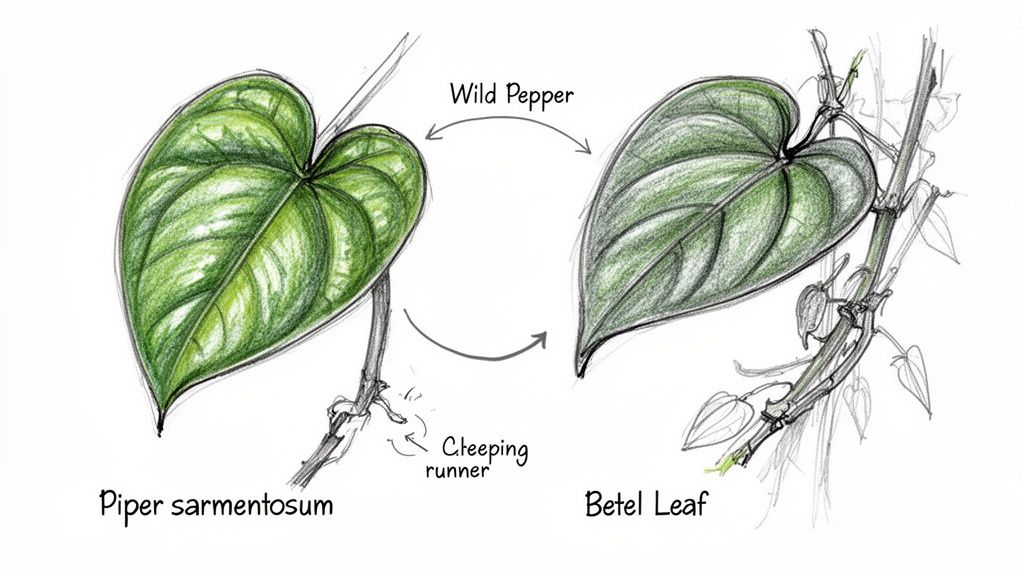
Before you start plucking these vibrant leaves for your kitchen, you need to be absolutely sure you’ve got the right plant. The world of edible greens is full of lookalikes, and Wild Pepper (Piper sarmentosum or Lá Lốt) has a very famous relative that often causes confusion: Betel Leaf (Piper betle).
While they're both in the pepper family, and virtual look-a-likes, their growth, flavour, and culinary uses are quite different. Getting the identification right isn’t just about a recipe tasting good; it’s about making sure your garden-to-plate experience is safe and enjoyable. Think of this as your field guide to becoming a confident La Lot spotter.
Once you know what to look for, telling them apart becomes second nature.
Key Features of Wild Pepper
The most obvious giveaway for Piper sarmentosum is its growth habit. This is a low-growing, spreading plant that sends out runners to form a lush, green ground cover. It creeps along the ground rather than climbing, rarely getting taller than 30-40 cm.
Its leaves are the next big clue. They’re a glossy, bright green with a distinct heart shape, but they’re generally smaller and more delicate than Betel Leaf. The texture is softer and more pliable, which is exactly why they're so perfect for wrapping around little parcels of food for the grill.
This growth habit makes La Lot a fantastic choice for underplanting, spilling out of hanging baskets, or filling in those shaded garden spots where you want attractive, edible coverage without it trying to scale your walls.
Distinguishing La Lot from Betel Leaf
It's really common for people to mix these two up, especially since some overseas shops and restaurants mislabel them. In Vietnamese, lá lốt refers specifically to Piper sarmentosum. Betel Leaf, known as lá trầu, has a much stronger, almost medicinal flavour and is traditionally chewed as a mild stimulant—it's not what you use for those delicious grilled beef wraps.
To make it crystal clear, it helps to see their key differences side-by-side. Paying attention to these details will ensure you harvest the right leaves every time.
Wild Pepper vs Betel Leaf: A Quick Comparison
This table breaks down the main characteristics that set these two cousins apart. Use it as a quick reference when you're out in the garden or at the market.
| Characteristic | Piper sarmentosum (La Lot/Wild Pepper) | Piper betle (Betel Leaf) |
|---|---|---|
| Growth Habit | Low-growing creeper, spreads via runners. | Vigorous climber, uses aerial roots to ascend. |
| Leaf Shape | Smaller, symmetrical heart shape. | Larger, often more elongated and asymmetrical heart. |
| Leaf Texture | Softer, more pliable and thinner. | Thicker, waxier, and more rigid. |
| Taste & Aroma | Mildly peppery, aromatic when cooked. | Strong, pungent, peppery, almost medicinal. |
| Primary Use | Culinary wraps for grilling, shredded in salads. | Chewed as a stimulant, used in traditional remedies. |
Looking closely at the plant's biology gives you even more clues. While its stems can get quite long, La Lot maintains a low profile, creeping about 0.2m wide. This evergreen perennial is also dioecious, meaning you need separate male and female plants to produce seed—a crucial detail for anyone, like us at Jungle Story, who offers stock for propagation.
For the home grower, the leaves have high edibility ratings and are packed with antioxidants. If you're keen to dive deeper into its properties, you can find out more about Piper sarmentosum's botanical details and its nutritional profile.
Bringing La Lot into Your Kitchen

Now that you can spot your wild pepper piper sarmentosum la lot, it’s time to get it from the garden onto your plate. This plant is so much more than a pretty ground cover; it's a culinary star just waiting to introduce a whole new world of flavour to your cooking.
The leaves themselves have a unique, aromatic and gently peppery taste. It's quite subtle when raw, but cook them and they become wonderfully fragrant. It's a flavour that’s at the heart of many Southeast Asian dishes but is also incredibly versatile for a bit of Kiwi-style fusion.
The Iconic Bò Nướng Lá Lốt
You can't talk about cooking with la lot without mentioning the classic Vietnamese dish, Bò Nướng Lá Lốt—grilled beef wrapped in wild pepper leaves. It’s the perfect introduction to the plant's culinary magic. As they char on the grill, the leaves infuse the spiced beef filling with their signature smoky, peppery aroma.
Making it at home is surprisingly simple and incredibly rewarding.
Here’s a quick guide to get you started:
- Prepare the Filling: Mix minced beef with finely chopped lemongrass, shallots, and garlic. A little pork mince adds juiciness. Season with a pinch of five-spice powder, fish sauce, and a touch of sugar.
- Wrap the Parcels: Lay a la lot leaf glossy-side down. Pop a tablespoon of the meat mix near the stem and roll it up into a tight little log. If your leaves are on the small side, just overlap two to make a bigger wrap.
- Secure and Skewer: The leaves can try to unroll, so the easiest trick is to thread three or four rolls onto a soaked bamboo skewer. This holds them together and makes them a breeze to turn on the grill.
- Grill to Perfection: Cook the skewers over a barbecue, on a grill pan, or even under the oven grill until the meat is cooked through and the leaves are fragrant and lightly charred.
Serve these delicious morsels with rice vermicelli noodles, fresh herbs like mint and coriander, crushed roasted peanuts, and a side of Vietnamese dipping sauce (nước chấm).
Beyond the Classic Wrap
While Bò Nướng Lá Lốt is an absolute must-try, the uses for this versatile leaf don't end there. Its pliable texture and unique flavour make it an exciting ingredient for all sorts of creative cooking. The best way to think of it is as an edible, flavourful parcel.
The true beauty of La Lot is its ability to act as both an ingredient and a cooking vessel. The leaf protects the filling, keeping it moist while infusing it with a distinctively aromatic, peppery essence that you can't get from anything else.
Here are a few more ideas to get you going in your New Zealand kitchen:
- Seafood and Chicken Wraps: Try wrapping portions of firm white fish, prawns, or minced chicken before grilling or pan-frying. Those peppery notes are a beautiful match for seafood.
- Vegetarian and Vegan Options: Create delicious parcels with crumbled halloumi, marinated tofu, or a mixture of mushrooms and water chestnuts.
- A Fresh, Zesty Kick: Don’t just use them whole! Finely shred fresh la lot leaves and toss them into salads, soups, or noodle dishes for a burst of fresh, peppery flavour. They add a fantastic herbaceous lift to a rich coconut curry. For more inspiration on using unique Asian greens, check out our guide on another garden gem, Myoga Ginger.
To get the most out of wild pepper, especially for quick and flavourful stir-fries, having the right gear is a game-changer. You might want to explore a comprehensive new wok buying guide to find the perfect one for your kitchen. The right tools make experimenting with new ingredients like Piper sarmentosum that much more enjoyable.
Your Guide to Growing Wild Pepper in New Zealand
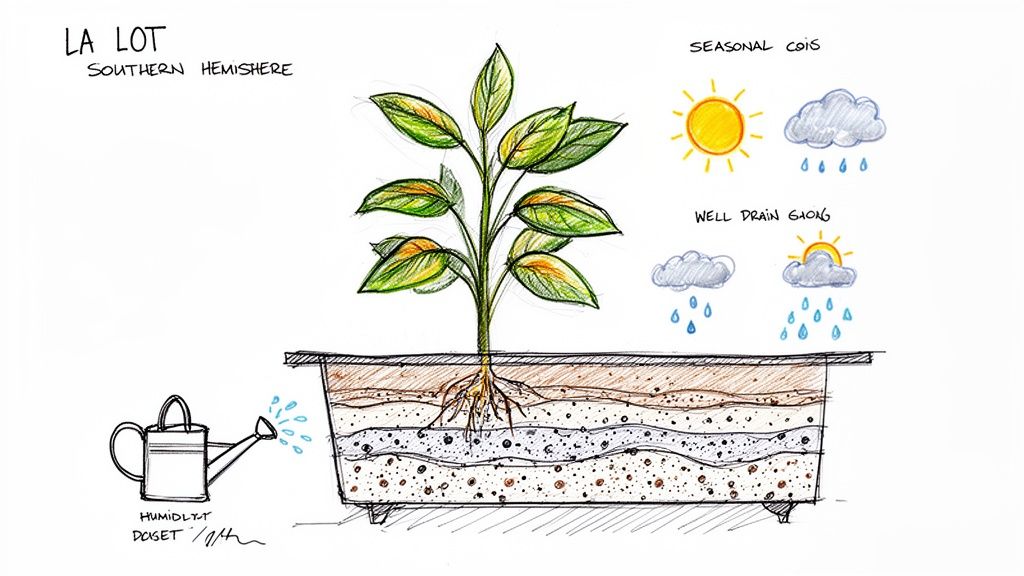
Let’s get our hands dirty. Now that you know how to spot and cook with wild pepper, it's time to get a patch of your own thriving. The best part? This plant is incredibly forgiving and adapts beautifully to our Kiwi climate.
Whether you're in the humid north or have a sheltered corner in Wellington, a few simple tricks will see your plant flourish. We'll walk through everything from the perfect soil mix to its favourite light, helping you grow a lush, productive plant you can snip from all year round.
Finding the Perfect Spot and Soil
Think of Piper sarmentosum as a creature of the forest floor. In its native Southeast Asia, it loves the warm, damp, and shady spots under the bigger trees. If you can mimic that environment in your garden, you’ve cracked the code.
The ideal location is somewhere with dappled sunlight or partial shade. Morning sun is perfectly fine, but that harsh Kiwi afternoon sun can easily scorch its lovely leaves, turning them yellow and crispy.
When it comes to soil, you’re aiming for that rich, loamy forest floor feel. A great mix for Wild Pepper needs to do two things well:
- Hold moisture: The soil needs to stay consistently damp, but never sopping wet.
- Drain well: Any excess water must be able to escape freely. Its biggest enemy is root rot from sitting in water.
A simple and effective recipe is a good quality potting mix blended with compost for nutrients, and a generous handful of perlite or pumice to keep things airy and well-draining.
Watering and Humidity Needs
Consistent moisture is the one thing this plant won't compromise on. "Keep soil consistently moist" is your new mantra. This doesn't mean you should drown it, just that you should never let the soil dry out completely.
A good rule of thumb is to stick your finger into the top few centimetres of soil. If it feels dry, it’s time for a drink. You’ll find you need to water less over the cooler winter months when the plant’s growth naturally slows down.
Wild Pepper absolutely loves humidity. In drier parts of New Zealand, or indoors during winter with the heating on, give your plant a regular misting. This little bit of effort goes a long way to replicating the humid air it craves.
That extra bit of humidity helps keep the leaves vibrant and green, preventing the brown, crispy edges that can show up in dry air.
Versatile Uses in Your Garden
One of the most rewarding things about Piper sarmentosum is just how versatile it is. Its creeping, low-growing nature makes it a fantastic problem-solver for tricky garden spots.
- Lush Ground Cover: It’s brilliant for filling in those shady areas under trees or shrubs where nothing else seems to grow. Before you know it, you'll have a dense carpet of green.
- Hanging Baskets: The trailing runners look stunning as they spill over the sides of a hanging basket, creating a cascade of glossy, heart-shaped leaves.
- Pots and Containers: It’s perfectly happy in a pot, making it a great choice for a patio, balcony, or even as a handsome indoor plant in a room with good light.
If you enjoy growing this, you might be interested in its close relative. You can learn more about cultivating Betel Leaf (Piper betle), which shares many of the same care needs.
Seasonal Care for Wild Pepper in New Zealand
Looking after your Wild Pepper through our Southern Hemisphere seasons is pretty straightforward. To help you stay on track, we've put together a simple year-round guide.
Seasonal Care Calendar for Piper sarmentosum in NZ
| Season | Key Tasks & Focus |
|---|---|
| Spring (Sep - Nov) | This is prime growing season. Feed your plant with a balanced liquid fertiliser every few weeks to encourage all that vigorous new growth. It's also the best time for propagation. |
| Summer (Dec - Feb) | Your main job is consistent watering, especially during hot, dry spells. A bit of mulch around the base will help the soil hold onto moisture. Keep it protected from that harsh afternoon sun. |
| Autumn (Mar - May) | Growth will start to slow down. You can reduce how often you feed and start to ease back on watering as the weather cools. It's a good time to tidy up any dead or yellowing leaves. |
| Winter (Jun - Aug) | The plant will go dormant. It needs protection from frosts, so if you're in a colder part of the country, bring potted plants inside or move them to a sheltered spot. Water only sparingly. |
By following these seasonal cues, you'll give your Wild Pepper everything it needs to not just survive, but truly thrive right here in New Zealand.
How to Propagate Wild Pepper and Share Your Plants
One of the best things about growing wild pepper Piper sarmentosum is discovering just how simple it is to make new plants. It’s a vigorous grower, which means you can quickly multiply your stock for free — perfect for filling out your own garden or sharing with friends and neighbours.
This generosity is just part of its nature. Because the plant readily sends out runners and roots from its stems, propagation isn't some complex gardening chore; it's more like a simple snip and replant. You’ll turn one healthy plant into a thriving patch in no time.
Propagating with Stem Cuttings
Taking stem cuttings is probably the most common and reliable way to create new La Lot plants. You can root them in either water or soil, so just go with whatever you find easiest.
- Select a Healthy Stem: Look for a strong, healthy stem on the mother plant. You'll want a piece that has at least two or three nodes — those are the little bumps on the stem where leaves and new roots will sprout from.
- Make the Cut: Using clean, sharp scissors or secateurs, snip off a piece about 10-15 cm long. Make your cut just below a node, as this is where the plant's natural rooting hormones are most concentrated.
- Prepare the Cutting: Gently pull off the leaves from the lowest node on your cutting. This is the part that will sit in the water or soil, and taking the leaves off stops them from rotting.
- Root Your Cutting: Now you have two easy options. You can pop the cutting into a jar of water, making sure the bare node is completely submerged. Or, you can plant it directly into a pot filled with a moist, free-draining potting mix.
If you go the water route, you should see new roots starting to form within a couple of weeks. Once they’re a few centimetres long, it’s ready to be potted up into soil.
Dividing Runners for New Plants
As your Wild Pepper plant gets established, it will start sending out runners across the surface of the soil. These runners are basically the plant's way of exploring new territory, and they make propagation ridiculously easy.
Think of runners as the plant doing most of the work for you. Each one is a potential new plant, already equipped with nodes ready to form their own root system.
Here’s how to make the most of this natural habit:
- Find Rooted Runners: Look for runners that have already started to form little roots where the nodes are touching the soil.
- Peg Them Down: To encourage stronger roots, you can use a small pin or a bent piece of wire to gently secure a node on the runner into the soil. Just make sure to keep the area moist.
- Snip and Transplant: After a few weeks, once you can see the runner has a healthy, independent root system, you can snip it free from the parent plant. Then, just carefully dig up the newly rooted section and move it to its new home.
While La Lot roots easily all on its own, some gardeners like to give their cuttings an extra nudge. If that sounds like you, you can explore the benefits of using rooting hormone to encourage even faster and stronger root development.
Troubleshooting Common Growing Problems
Even the most bulletproof plants have their moments, but don't worry—most issues with wild pepper are easy to sort out once you know what you’re looking at. This is a pretty fuss-free plant on the whole, but learning to read its signals is the secret to keeping it lush and thriving.
The first step is simply paying attention. Are the leaves turning yellow? Do they have crispy brown edges? Has the plant lost its usual get-up-and-go? More often than not, the culprit is a simple issue with water, light, or pests, and a small tweak is all it takes to get things back on track.
Reading the Leaves: What They’re Telling You
Think of your plant’s leaves as its dashboard, giving you real-time updates on its health. If they start looking a bit off-colour, it’s time to play detective.
- Yellowing Leaves (Chlorosis): This is the classic sign of overwatering. Before you reach for the watering can, stick your finger in the soil. If it's still damp from last time, hold off. Yellow leaves can also point to a nutrient shortage, so if you're sure your watering is on point, a dose of a balanced liquid fertiliser during the growing season (that's spring and summer here in New Zealand) should do the trick.
- Crispy Brown Edges: This almost always means the air is too dry or the plant is thirsty. Piper sarmentosum is a tropical at heart and loves humidity. Misting the leaves can really help, especially for indoor plants when the heating is on during our winter. Also, double-check that the soil isn't drying out completely between waterings.
- Scorched or Pale Leaves: If the leaves look bleached out or have burnt-looking patches, it’s getting too much direct sun. That harsh Kiwi afternoon sun is just too intense for it. The solution is simple: move your plant to a shadier spot with more dappled, gentle light to protect its delicate foliage.
Preventing Root Rot: The Number One Mistake
By far, the most common and serious problem for wild pepper is root rot, which is caused by waterlogged soil. Yes, the plant loves moisture, but it absolutely cannot stand having its roots sitting in a puddle. This essentially suffocates the roots, leading to a droopy, sad-looking plant that quickly goes downhill.
Prevention is always, always better than cure. Make sure your pot has excellent drainage holes and use a free-draining soil mix with plenty of perlite or pumice worked through it. It’s far easier to give a thirsty plant another drink than it is to rescue one you’ve drowned.
Managing Common Garden Visitors
Because these leaves are destined for your dinner plate, you'll want to avoid chemical sprays. Thankfully, the usual suspects like slugs, snails, and aphids are pretty manageable using organic methods.
Slugs and snails are particularly fond of the tender new leaves, especially in those damp, shady spots wild pepper loves. A simple patrol in the evening to hand-pick them off is surprisingly effective. For aphids, a sharp jet of water from the hose can dislodge them, or a simple homemade spray of soapy water will keep them in check without tainting your harvest. Ultimately, keeping your wild pepper healthy and vigorous is its own best defence.
Your Wild Pepper Questions, Answered
To wrap things up, let's get into some of the questions we hear most often from Kiwi gardeners about growing wild pepper. Getting these details right will set you up for a happy, thriving plant.
How Fast Does Wild Pepper Grow?
Piper sarmentosum is a pretty quick mover, especially once it finds its feet in your garden. During the warmer spring and summer months, you'll see it push out new runners and leaves with real energy, quickly creating that lush, green ground cover it's famous for. Growth will naturally slow right down when the cooler weather of winter arrives.
Can Wild Pepper Handle New Zealand Frosts?
This is a big one for anyone gardening outside of the country's warmest spots. Being a tropical native, wild pepper is not frost-tolerant. A very light, quick frost might just singe the leaves, but a hard frost can easily kill the plant right back to the ground.
If you live in an area that gets frost (like much of Canterbury or the central North Island), you have a few good options:
- Grow it in a pot. This way, you can just whisk it away to a sheltered spot or even bring it indoors over winter.
- Find a microclimate. Planting it against a warm, north-facing wall can make all the difference.
- Cover it up. A layer of frost cloth on those chilly nights will give it the protection it needs.
Is Piper sarmentosum Considered Invasive?
Nope, Piper sarmentosum isn't considered invasive here in New Zealand. While it's certainly a vigorous spreader through its runners, it doesn't spread aggressively by seed and is very simple to manage. You can easily keep it contained by just snipping any runners that stray too far or by installing a root barrier if you want to keep it neatly in one garden bed.
Can I Eat the Stems or Flowers?
The leaves are really the star of the show. While the stems and flowers aren't toxic, they just don't have the same delicious flavour or culinary appeal, so they aren't typically eaten. For the best taste and texture in your cooking, stick to harvesting those tender, heart-shaped leaves.
It's also interesting to know that the plant's value isn't just in its flavour. Research has started to highlight its potential health benefits, pointing to the presence of protective flavonoids and alkaloids. One study found that a water extract significantly reduced fatty streak coverage in the arteries of subjects on a high-cholesterol diet, decreasing lipid peroxidation by up to 25%. You can read more about the study's findings on its potential cardiovascular benefits here.
Ready to grow your own patch of this amazing edible green? At Jungle Story, we have healthy, established Piper sarmentosum plants, all set to thrive in your garden. Find your La Lot plant and start growing today.