
Garden landscape design is so much more than just plopping a few plants in the ground. It's the art of thoughtfully shaping your outdoor space, turning it into a place that’s not only beautiful but truly works for you and your lifestyle.
It’s about figuring out the best spot for the patio, mapping out paths that make sense, and choosing plants that will thrive in our unique New Zealand climate. Get it right, and your garden becomes a genuine extension of your home.
Your Garden Landscape Design Journey Starts Here
Ready to get your hands dirty and transform that patch of lawn? This guide is all about demystifying garden design, with a special focus on what works right here for Kiwis. We're skipping the fluffy, generic advice and getting straight into practical strategies you can actually use.
The goal here isn't to overwhelm you with theory. It’s about smart planning and setting achievable goals. A well-thought-out garden is about creating a space that feels right for you, every single day.
Creating Functional and Beautiful Spaces
The best gardens are those perfect blends of beauty and utility. That’s what separates a random collection of plants from a cohesive outdoor room that you’ll love spending time in.
First things first, what do you actually want to do in your garden?
- An entertainment hub? Maybe you’re dreaming of a deck or patio for those classic Kiwi summer barbies.
- A productive patch? Raised beds are perfect for growing your own veggies and herbs.
- A peaceful retreat? You might want a quiet corner tucked away with a comfy seat for a morning cuppa.
- A play area? A good-sized, durable lawn for the kids to run around on might be top of the list.
When you plan with a purpose, every single element, from the paving stones to the lemon tree, works together. A garden designed around your life doesn't just bring you joy; it can seriously boost your property's value, too.
The Evolution of Kiwi Gardens
While shaping the land around our homes feels like something we’ve always done, professional garden design is a relatively new thing in Aotearoa. As a profession, it really only started finding its feet in the early 1970s, though our love for gardening goes way back.
Early colonial settlers were focused on the essentials – kitchen gardens and a few ornamentals. It wasn't until the late 19th century that more established domestic gardens became common. You can actually dive deeper into the history of NZ landscape architecture over at Te Ara.
This rich heritage informs some of today's most stunning gardens, blending historical influences with a modern appreciation for our incredible native flora. Understanding where we've come from can inspire your own design, connecting it to a long tradition of Kiwi ingenuity and our love for the great outdoors.
Right then, before a single shovel even thinks about touching the dirt, the most important part of any great garden design is getting to know your canvas. A stunning garden isn’t just forced onto a site; it’s a partnership. Learning to ‘read’ your land—understanding all its unique quirks and features—is the absolute foundation for creating a space that doesn’t just survive, but truly thrives.
Think of yourself as a bit of a detective. Your job is to uncover the clues your property is giving you about its sunlight, soil, water, and wind patterns. This initial site assessment is where professional results are born, making sure you choose the right plants and features for the right spots from day one.
How to Read Your Land Like a Professional
Sunlight is the lifeblood of any garden, and here in New Zealand, its path changes dramatically between our long summer days and the shorter days of winter. A spot that gets baked in January might be cast in deep shade by July. Just watching the light for a single day won’t cut it; you really need to understand its seasonal journey.
Start by sketching a rough map of your property. Over a couple of days, mark where the sun falls at different times—morning, midday, and late afternoon. Don't forget to note the big things like your house, large trees, or the neighbour's fence that cast significant shadows.
Then, you need to think seasonally:
- Summer Sun: From December to February, the sun is high and intense. Pinpoint the spots that get absolutely blasted all day. These are your zones for sun-loving, drought-tolerant plants.
- Winter Sun: From June to August, the sun hangs much lower in the northern sky. Areas that were shaded by your house in summer might suddenly get some precious winter light. This knowledge is gold for placing things like citrus trees or carving out a sheltered, sunny nook for a winter morning coffee.
This simple sun map is one of the most powerful tools you'll have. It stops you from making that classic, costly mistake of planting a shade-lover in a sun-scorched corner or a sun-worshipper where it will just languish in the gloom.
Getting Your Hands Dirty with Soil Analysis
Right beneath your feet is the next massive piece of the puzzle: your soil. The kind of soil you have dictates what will grow well, how you'll need to water, and what amendments you might need to make. The good news is you don't need a fancy lab kit to get a pretty good idea of what you're working with.
A simple, hands-on method is the jar test. Grab a large glass jar, fill it about two-thirds full of water, then chuck in a scoop of soil from your garden. Give it a vigorous shake for a minute, then just let it settle for a few hours. The soil will separate out into layers:
- Sand: The heaviest bits will settle at the bottom first.
- Silt: A finer layer will form just above the sand.
- Clay: The finest particles settle on top and often make the water look cloudy.
- Organic Matter: You might see little bits of decomposed material floating on the surface.
This gives you a brilliant visual of what your soil is made of. Is it mostly sand? It’ll drain fast and need more frequent watering. Heavy on the clay? It will hold onto moisture but can get compacted and waterlogged.
Drainage is just as crucial as the soil type itself. To test it, dig a hole about 30cm deep and fill it with water. If it drains away within an hour or two, your drainage is pretty good. If water is still sitting there hours later, you might need to improve it with plenty of compost or choose plants that don't mind having "wet feet."
Identifying Your Unique Microclimates
Every single garden has its own microclimates—little pockets where the conditions are slightly different from the rest of the property. Learning to spot these is like finding secret opportunities to grow a much wider variety of plants.
Have a look for these common Kiwi microclimates on your patch:
- The Sun Trap: That sheltered spot against a north-facing wall can be several degrees warmer, letting you grow subtropicals that wouldn't survive elsewhere.
- The Wind Tunnel: A gap between the house and a fence can create a seriously blustery corridor. This is the spot for tough, wind-resistant plants like flaxes or coprosmas.
- The Rain Shadow: The dry patch right at the base of a wall or under the eaves of the house gets very little rain. It's perfect for succulents or Mediterranean herbs like rosemary.
- The Frost Pocket: Cold air is dense, so it settles in the lowest parts of a garden on calm, clear nights. Avoid putting any frost-tender plants in these dips.
By carefully observing these subtle variations, you move from just gardening to actively designing with nature. You can harness a warm spot for a special plant you’ve always wanted to grow, or solve a problem area by choosing something that loves those exact conditions. This intimate knowledge of your land is what elevates a good garden into a truly great one.
Developing a Vision and Defining Your Garden Style
Okay, you’ve done the groundwork—you know your sun, your soil, and your microclimates. Now for the exciting part, where your creativity can finally run wild. This is where you get to turn those daydreams of a perfect garden into a clear, cohesive vision and pick a style that feels like you.
It all starts with a simple question: what do you actually want your garden to be?
Is it going to be the go-to spot for summer barbies and family get-togethers? Or maybe you're picturing a quiet, green sanctuary for your morning coffee. Perhaps it's a practical, productive space, bursting with homegrown veggies and herbs.
Pinning down the purpose of your garden is the first real step towards a successful garden landscape design. It’s what transforms a messy collection of ideas into a functional plan, guiding every single decision you make from here on out.
Choosing a Garden Style That Speaks to You
Just like your house has its own architectural character, your garden can have a distinct personality. If you can define this style early, it ensures everything—from the plants and pavers to the water features—all works together in harmony. The good news is, there’s a whole world of styles to pull from.
Here are a few popular approaches that work brilliantly for the Kiwi lifestyle:
- Contemporary Minimalist: Think clean lines, bold geometric shapes, and a really disciplined palette of materials and plants. This style often heroes its hardscaping—like a polished concrete patio or dark-stained decking—and sets it off with structured plantings like architectural grasses or a single, sculptural feature tree.
- Lush Cottage Garden: This one’s all about informal, romantic abundance. Cottage gardens embrace a joyful jumble of flowering perennials, climbing roses, and self-seeding annuals. Paths are often winding and made from materials like brick or gravel, with every spare inch filled with colour and texture.
- Native New Zealand Bush Garden: A style that celebrates our incredible local flora, creating a space that feels deeply connected to its surroundings. You’d use native trees like pōhutukawa or kōwhai for structure, with an understory of ferns, flaxes (harakeke), and tussock grasses to build a rich, layered, and often wonderfully low-maintenance landscape.
The Power of the Bubble Diagram
Trying to translate your vision into a practical layout can feel a bit overwhelming. A fantastic, low-pressure way to get started is with a bubble diagram. This isn’t some technical blueprint; it's a simple, free-flowing sketch that helps you organise your space without getting bogged down in the tiny details.
Grab that rough map of your property you made during your site assessment. Now, instead of drawing precise shapes, just draw circles or ‘bubbles’ to represent the different zones you want.
You might sketch a big bubble near the back door labelled "Entertainment/Deck," another in a sunny corner for "Veggie Patch," and a smaller, tucked-away bubble for a "Quiet Seating Area." Don’t stress about the scale or exact placement just yet. The goal is to figure out how these different areas relate to each other.
A bubble diagram is your first draft of how the garden will flow. It helps you see how people will move through the space and ensures the veggie garden isn’t miles away from the kitchen or the kids' play area isn't right next to your quiet reading nook.
Once your bubbles are on paper, you can start thinking about connecting them with paths and how they sit in relation to the sun and wind patterns you've already mapped out. For properties on a slope, or gardens that need a bit more structure, looking into different retaining wall design ideas can be a game-changer for both function and style.
By nailing down your style and mapping out your zones like this, you create a solid foundation for your entire garden landscape design. This process helps prevent costly mistakes and gets you one giant step closer to building the outdoor space you've always imagined. For more inspiration that’s perfectly suited to our local environment, have a look at these brilliant landscaping ideas for NZ gardens to get your creative juices flowing.
Choosing Plants and Materials for NZ Gardens
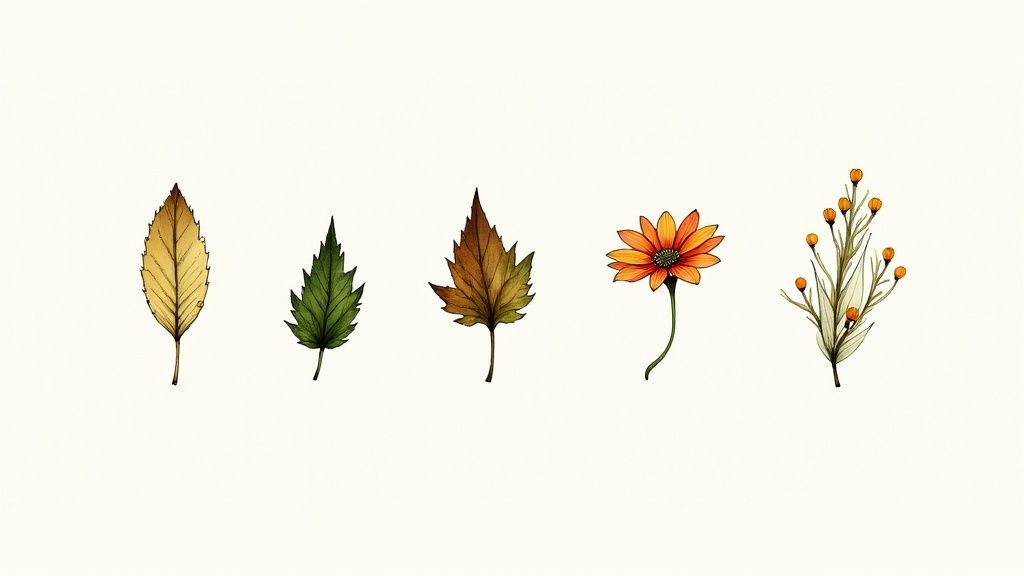
This is where the magic really starts to happen—the moment your garden design shifts from ideas on paper to a living, breathing reality. Picking the right plants and materials is what brings the texture, colour, and soul to the structural bones you’ve so carefully mapped out.
Here in New Zealand, our temperate climate gives us an incredible palette to play with. We have the unique opportunity to create a stunning interplay between our own native flora and a whole world of well-chosen exotic species.
Garden designers talk about softscaping (the plants) and hardscaping (the paths, decks, walls, and other non-living bits). The secret to a truly breathtaking garden is getting the balance right, making sure these two elements work together to create the exact feel you’re after.
Weaving Together Native and Exotic Plants
This isn't an "either/or" situation. In my experience, the most captivating New Zealand gardens are the ones that masterfully blend native and exotic plants. This approach creates a space that feels deeply connected to its location but also offers visual excitement right through the year.
Our native plants are the ecological heart of a garden. They’re perfectly tuned to our local conditions, which means they often need less water and fuss once they're established. More importantly, they’re a lifeline for our native birds and insects, providing vital food and shelter that helps support local biodiversity.
But let's be honest, exotic plants can bring something truly special to the party. A Japanese maple, for instance, offers fiery autumn colour that our evergreen natives just can't match. And you can't beat classic perennials like lavender or salvia for a long-lasting floral show.
The trick is to combine them with a clear purpose. You might use a tough native like a Griselinia hedge for structure, then paint the foreground with the vibrant blooms of exotic perennials. For a deeper dive into celebrating our local flora, our guide on designing a https://junglestory.co.nz/blogs/plant-blogs/nz-native-garden is packed with specialised advice.
Plants with a Purpose
In any great garden design, every plant has a job to do. Before you even think about heading to the garden centre, step back and consider the specific roles your plants need to play. This ensures you create a garden that’s layered, textured, and has something interesting to look at, no matter the season.
Think about these key functions:
- Structure and Height: Trees and large shrubs are the 'walls' and 'ceiling' of your outdoor rooms. They create shade, give you privacy, and add a vertical element that draws the eye upward.
- Mid-Level Texture: This is the middle layer, made up of shrubs in all shapes and sizes. It's where you can really play with different foliage colours, textures, and forms to build depth.
- Ground-Level Colour: Perennials, annuals, and groundcovers are your finishing touches. They bring that splash of seasonal colour and softness right down at ground level.
The push-and-pull between native and exotic species is a huge part of our urban landscapes. For example, a study of Wellington’s urban forest found that while a third of its street trees are non-native, only 20% are true 'plants of place'—species that naturally grow in that specific area. It really shows how both types of plants shape the character of our cities, a concept you can easily bring into your own backyard.
Choosing Your Hardscaping Materials
Hardscaping is the backbone of your garden. The materials you pick will define the garden's style, guide how you move through the space, and create those all-important spots for relaxing and entertaining. Your choices need to hit that sweet spot between your aesthetic vision and your budget.
When you're deciding on materials for paths, patios, or retaining walls, think about how they'll feel and look alongside your plants.
Plant Selection Guide for Common Garden Functions
To help you get started, here’s a quick comparison of some great plant choices—both native and exotic—that fill specific roles in a garden landscape design.
| Garden Function | NZ Native Option | Exotic Option | Key Characteristics |
|---|---|---|---|
| Privacy Screening | Pōhutukawa (Metrosideros excelsa) | Photinia 'Red Robin' | Dense foliage, offers year-round cover. Pōhutukawa is hardy and iconic; Photinia provides striking red new growth. |
| Ground Cover | Acaena inermis 'Purpurea' | Creeping Thyme (Thymus serpyllum) | Low-growing and spreading. Acaena has unique purple-tinged foliage; Thyme is fragrant and produces small flowers. |
| Feature Tree | Kōwhai (Sophora microphylla) | Japanese Maple (Acer palmatum) | Provides a strong focal point. Kōwhai has beautiful yellow flowers that attract native birds; Maple offers stunning autumn colour. |
| Low Hedging | Hebe 'Wiri Mist' | Buxus (Boxwood) | Creates formal or informal borders. Hebe offers delicate white flowers; Buxus is a classic choice for precise shaping. |
This table is just a starting point, of course. The real fun is in finding the perfect combination of plants that work for your space and your style.
Materials that Make a Statement
-
Decking Timber: A classic for the Kiwi outdoor lifestyle, timber decking creates a warm, natural platform for entertaining. Your choice, from affordable pine to durable hardwoods like kwila, will affect both the look and how much maintenance is needed down the line.
-
Pavers and Stone: Perfect for creating solid paths and patios. Concrete pavers are budget-friendly and come in a huge range of colours, while natural stone like schist gives a more organic, high-end feel.
-
Retaining Walls: A must-have for sloped sections, retaining walls can also be a standout design feature. A simple timber wall is cost-effective, but stacked stone or concrete blocks can make a powerful architectural statement.
If you’re dealing with a particularly dry or challenging spot, don’t be afraid to look for inspiration from other garden styles. You might find that clever drought-friendly rock garden designs are the perfect solution, beautifully blending hardscaping with tough, resilient plants. It’s this thoughtful selection of both plants and materials that will ultimately turn your vision into a living space you’ll love.
Bringing Your Garden Design to Life
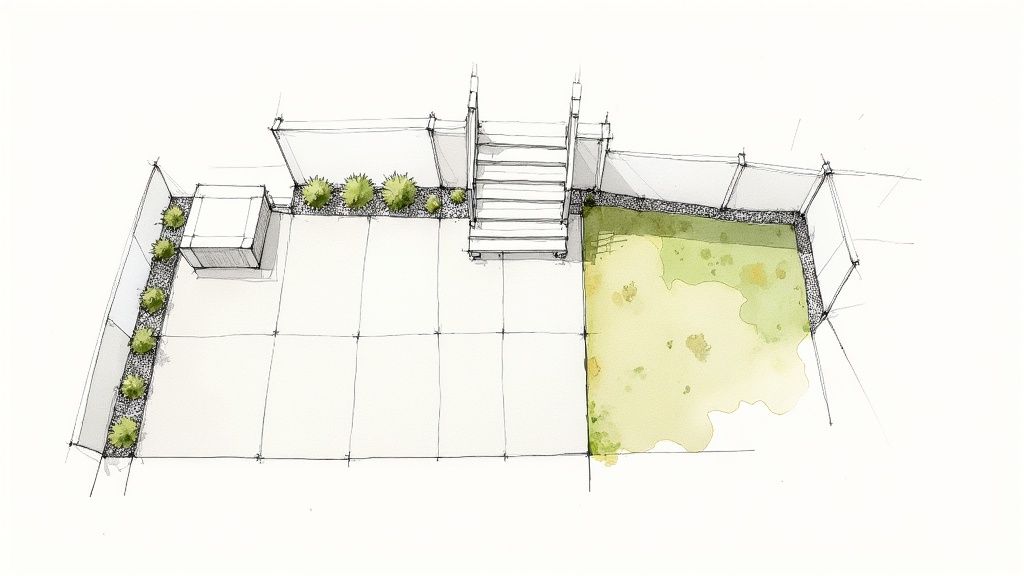
Alright, with a solid plan in your hands, it’s time to get your hands dirty. This is the exciting part where your paper dream starts to become a reality, but hold your horses. The secret to a smooth project is tackling everything in the right order.
Think of it like building a house – you don't paint the walls before the foundations are poured. In the garden, that means getting the big, messy jobs out of the way first, then building the framework, and saving the delicate planting for last. Get this sequence right, and you’ll save yourself a world of backtracking and frustration.
Preparing Your Canvas
Before a single new thing goes in, you need a clean slate. I’m not going to lie, this is often the most physically demanding part of the whole process. But a well-prepped site makes every single job that follows a whole lot easier.
First things first, clear the area of everything you don't want. This is your chance to rip out those tired old shrubs, wage war on the stubborn weeds, or finally dismantle that rickety garden shed that’s seen better days.
With the clutter gone, it’s time to look at the ground itself. If your grand design involves terraces, different levels, or simply a flat lawn where there was once a slope, now is the time for the earthworks. This might be a simple job with a spade and a wheelbarrow, or you might need to call in a mini-digger if you're shifting a lot of soil.
Installing the Hardscaping Bones
Once the site is clear and graded, you can start putting in the 'bones' of the garden – the hardscaping. These are the solid, structural pieces that define your space and create the skeleton for all the planting. It's so important to get this done before any plants go in. Trust me, you don't want wheelbarrows and cement mixers running over your brand-new garden beds.
Your hardscaping list might include:
- Patios and Decks: Building the main spots for outdoor living.
- Paths and Walkways: Laying out how you'll move through the garden.
- Retaining Walls: Constructing walls to manage any slopes and create level areas.
- Fences and Pergolas: Adding vertical elements for privacy, shade, or climbing plants.
This is the stage that locks in the layout for good. It's your last real chance to tweak the flow of the garden before you commit to planting.
Perfecting the Soil and Planting
With the heavy lifting done, the focus shifts to the green stuff. The success of your plants is almost entirely down to the quality of your soil, so whatever you do, don't cut corners here. Get some good quality compost and organic matter, spread a generous layer over your garden beds, and dig it in well. This simple step transforms your soil, improving its structure and feeding your plants from day one.
Here's a pro tip: Always plant from biggest to smallest. Start with your trees and large shrubs, then work your way down to the smaller perennials and groundcovers. This way, you're not trying to squeeze big things in and accidentally squashing the little guys.
When digging a hole, make it about twice as wide as the plant’s root ball, but no deeper. Gently loosen any tightly wound roots before you pop it in the hole, making sure the top of the root ball sits flush with the ground around it. Backfill with your lovely improved soil, firm it down, and give it a good, deep soak to settle everything in.
Applying the Finishing Touches
It's the final details that really make a garden feel complete and polished. These are the touches that pull everything together, giving it that professional look while making it easier to maintain in the long run.
- Mulching: A good layer of bark, wood chips, or pea straw is a game-changer. It keeps the weeds down, holds moisture in the soil (a huge help in our dry Kiwi summers!), and keeps soil temperatures stable.
- Irrigation: If you planned for an irrigation system, now’s the time to pop it in. A simple drip-line system is super efficient, getting water right to the roots where it's needed most.
- Lighting: Don’t let your garden disappear when the sun goes down. A bit of outdoor lighting can work wonders, highlighting a beautiful tree or making pathways safe and atmospheric.
- Pots and Planters: Containers are fantastic for adding a final flourish. They can bring height and drama to a patio, create a stunning focal point, or let you grow plants that need special conditions. For some ideas, check out our tips on choosing the perfect large outdoor plant pots in NZ.
Common Garden Landscape Design Questions
Taking on a garden landscape design project can feel like a massive job, and it’s totally normal to have questions pop up. To wrap things up, we’ve put together a few of the most common queries we hear from Kiwi gardeners, with some practical answers to help you lock in those final decisions.
A little bit of inside knowledge can save you a whole lot of time, money, and stress down the track, especially when you're in the thick of it.
How Much Does Garden Landscape Design Cost in NZ?
This is always the first question, and the honest answer is: it really depends. The final cost is tied directly to the size of your project, the materials you fall in love with, and how much of the work you’re prepared to tackle yourself. A simple DIY spruce-up with some new plants and mulch might only cost a few hundred dollars.
On the other hand, if you're looking at a full professional design and installation for an average suburban garden here in NZ, you could be looking at anywhere from $10,000 to $50,000. For larger or more complex sites, that number can climb even higher. The most important thing you can do is set a realistic budget right at the start.
A good rule of thumb is to think about where the money goes. Hardscaping—things like patios, paths, and retaining walls—is usually the biggest expense, often eating up 60-70% of the total budget. The rest typically goes towards plants and soil improvements.
What Are the Best Low-Maintenance Plants for a Kiwi Garden?
If you want a garden that looks fantastic without demanding all your free time, the trick is to choose hardy, drought-tolerant plants. Luckily for us, many of our own native plants are perfect for a low-fuss garden design.
Here are a few reliable choices to consider:
- NZ Natives: You can't go wrong with hebes, tussock grasses like Chionochloa, and Griselinia littoralis (Broadleaf) for hedging. They’re tough, built for our local conditions, and they're great for supporting native wildlife.
- Hardy Exotics: For a splash of colour and texture, succulents, lavender, and rosemary are brilliant. These Mediterranean plants love a sunny, dry spot and need very little water once they've settled in.
The real secret is to match the plant to the place. A happy plant in the right environment will always need less work from you.
When Is the Best Time to Start a Landscaping Project in NZ?
Your timing can make a huge difference. For most of New Zealand, autumn is the sweet spot for getting stuck into major landscaping work. The soil is still warm from summer, and the extra rain helps new plants establish a strong root system before winter sets in.
The weather is generally a bit more settled in autumn, too, which is a massive help when you’re building decks, laying pavers, or doing any other hardscaping. Spring is another good window for planting, but you’ll just need to be on top of your watering as the weather warms up and the ground dries out fast.
At Jungle Story, we're all about helping you create a garden you'll love. From stunning statement trees to the perfect groundcover, you’ll find everything you need to bring your garden landscape design to life in our extensive online marketplace. Explore our collection at https://junglestory.co.nz.