
Thinking about getting some large outdoor plant pots in NZ? You’re in the right spot. A great big pot is so much more than just a home for your plant; it's a secret weapon for Kiwi gardeners, solving common problems and making a real statement in any outdoor setting.
Why Bigger Is Often Better for Kiwi Backyards
Here in New Zealand, our decks, patios, and backyards are basically extra living rooms. A single, well-chosen large pot can completely transform one of these spaces. Don't just think of it as a container – think of it as a piece of architectural furniture for your garden.
They’re also a fantastic workaround for some classic Kiwi gardening headaches.
For a lot of us in places like Auckland, Wellington, or Christchurch, a big backyard is just a dream. Large pots are the perfect answer. They let you create a surprisingly lush garden on a tiny balcony or in a small courtyard. You can grow everything from a stunning native puka tree to a mini veggie patch, no lawnmower required.
Solve Your Toughest Garden Problems
Beyond just looking good, large pots offer some seriously practical benefits that can make life much easier for the average New Zealand gardener.
- Dodgy Soil? No Worries. Is your garden a battlefield of heavy clay or uselessly sandy soil? Instead of spending a whole season trying to fix it, a large pot lets you cheat. You can fill it with the perfect, high-quality potting mix from day one and get straight to the fun part.
- Create an Instant Focal Point. A striking, oversized pot immediately draws the eye. Use one to anchor a seating area, add a bit of drama to your front entrance, or create a stunning centrepiece on the deck. It’s an instant upgrade.
- Total Control and Flexibility. Our weather can be all over the place. Growing in a big container gives you complete control over watering and feeding, which is a massive plus. It's especially handy for growing plants that are a bit fussy and wouldn't normally love your local soil conditions.
In the end, going for a large outdoor pot is about making an impact. It’s an investment in a statement piece that adds structure, solves problems, and sets the stage for a garden you'll be proud of.
Choosing the Right Pot Material for NZ Conditions
https://www.youtube.com/embed/crg2r-BRDxQ
Picking the right material for your large outdoor plant pots is one of the most important decisions you'll make. It’s about so much more than just aesthetics; it’s about finding a pot that can handle New Zealand’s unique and often unpredictable climate. The material you choose will influence everything from water retention and root health to whether you can even lift the pot to move it.
Think of the pot as a tiny home for your plant's roots. Some materials, like classic terracotta, are porous, which means they breathe. This is a brilliant feature for plants that despise having 'wet feet', but it also means they can dry out incredibly fast during a hot, dry Kiwi summer, demanding more of your time with the watering can.
On the flip side, non-porous materials hold onto moisture for much longer, creating a more stable environment for thirsty plants. Getting this balance right is the secret to a happy, thriving plant.
Large Pot Material Comparison for NZ Conditions
Let’s take a look at the most common materials for large outdoor pots here in NZ and see how they really perform in our local conditions.
| Material | Pros | Cons | Best For |
|---|---|---|---|
| Terracotta | Classic look, porous for excellent aeration. | Can crack in sharp frosts if waterlogged, dries out very quickly in summer. | Drought-tolerant plants like succulents, or for gardeners who love to water. |
| Glazed Ceramic | Huge range of colours/finishes, heavy and stable in wind. | Heavy and difficult to move, can be expensive. Can still crack in a hard frost. | Feature plants in sheltered spots where they won’t be moved often. |
| Fibreglass / Fibrestone | Lightweight yet durable, frost-resistant, UV-stable. | Higher upfront cost, quality can vary between manufacturers. | Balconies, decks, or any area where weight is a concern and pots may be moved. |
As you can see, there's a perfect material for every situation. It just comes down to matching the pot's properties to your plant's needs and its spot in your garden.
A pot's material has a direct say in how well it protects its roots. A dark-coloured concrete pot, for instance, will soak up and hold a huge amount of heat, which could easily bake sensitive roots during a Kiwi summer scorcher. A lighter-coloured fibreglass pot, however, reflects more sunlight and keeps the soil temperature far more stable.
Choosing the right pot is the difference between a plant that just survives and one that truly thrives. For more specific advice on what your particular plant needs to flourish, have a look through our comprehensive plant care guides.
Getting The Foundation Right: Soil And Drainage
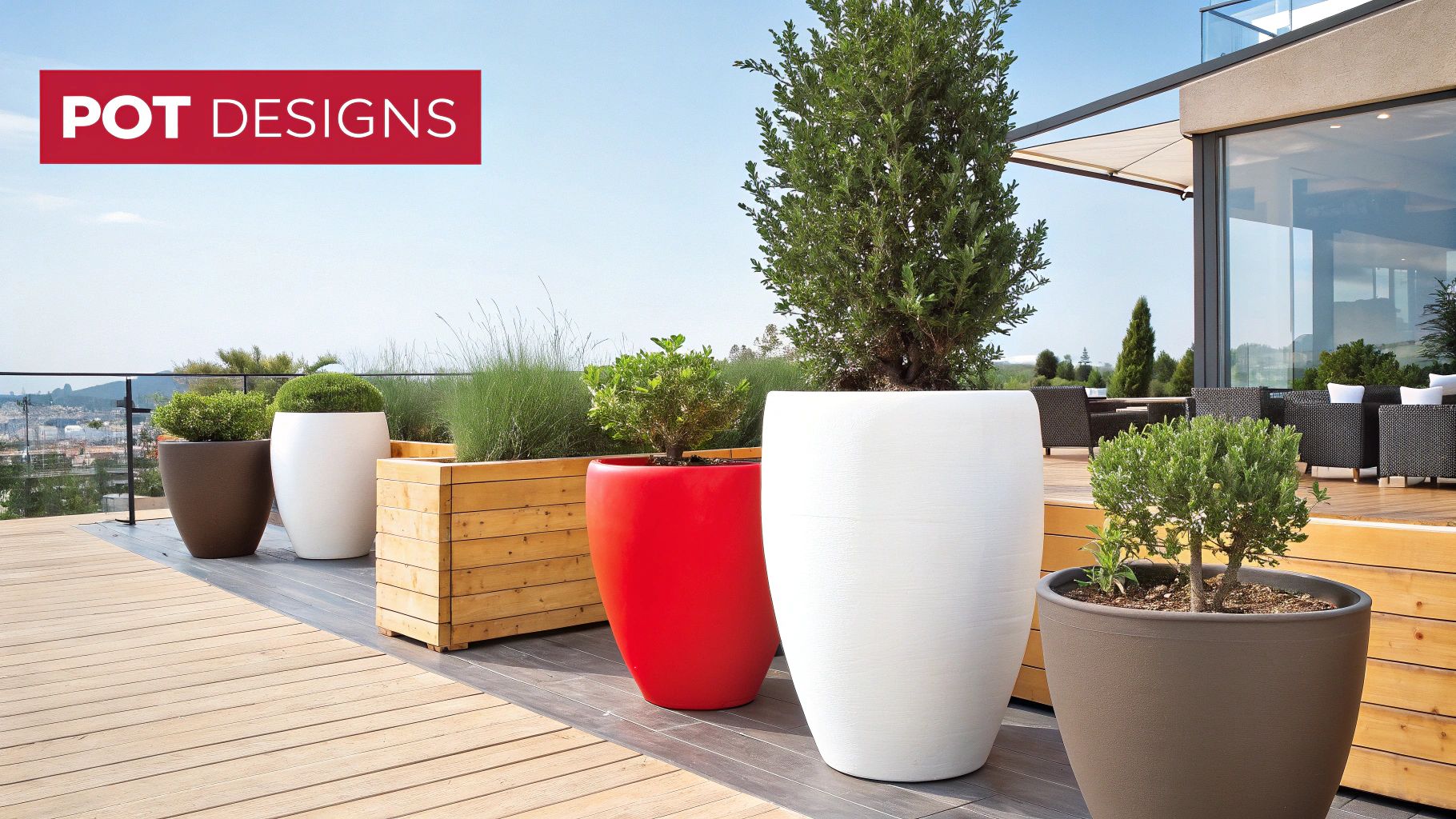
You can pick the most beautiful pot in the world, but if you don't get the basics right inside, your plant simply won't thrive. The two most critical elements for happy, healthy container plants are excellent drainage and high-quality soil. With New Zealand's famously unpredictable weather, getting this foundation right is non-negotiable.
Good drainage is all about letting excess water escape, especially after a sudden downpour. Without it, you get waterlogged soil, which leads to root rot – one of the quickest ways to say goodbye to a potted plant. That’s why every pot must have at least one large drainage hole, though more is always better.
That Old Gravel Myth
You've probably heard the advice: add a layer of gravel or broken pot shards to the bottom for better drainage. It’s a common bit of gardening folklore, but it’s an outdated practice that actually does more harm than good.
This technique creates something called a "perched water table." Instead of flowing out, water collects in the soil just above the gravel layer, essentially raising the soggy, waterlogged zone closer to your plant's precious roots.
The best way to guarantee great drainage is surprisingly simple: fill the entire pot with a high-quality, free-draining potting mix and make sure the drainage holes are clear.
Choosing The Perfect Potting Mix
Whatever you do, don't be tempted to scoop soil straight from your garden bed. Garden soil is far too heavy for pots. It compacts quickly, suffocating roots and often bringing unwanted pests and diseases along for the ride.
What you need is a specially formulated potting mix. A great mix strikes the perfect balance between:
- Moisture Retention: Holding just enough water to stop the soil from drying out on a hot Kiwi summer day.
- Aeration: Allowing vital oxygen to get to the roots.
- Nutrients: Providing that initial boost of food your plant needs to settle in.
Thankfully, there are fantastic local suppliers creating innovative potting mixes designed specifically for our conditions. For most plants, a premium, all-purpose mix is a brilliant choice.
Some plants, like hydrangeas, have more specific tastes that you can easily cater for in a pot. If you’re growing these gorgeous blooms, our guide on pruning hydrangeas in NZ has some handy tips you might find useful.
What to Plant in Your Large Outdoor Pots
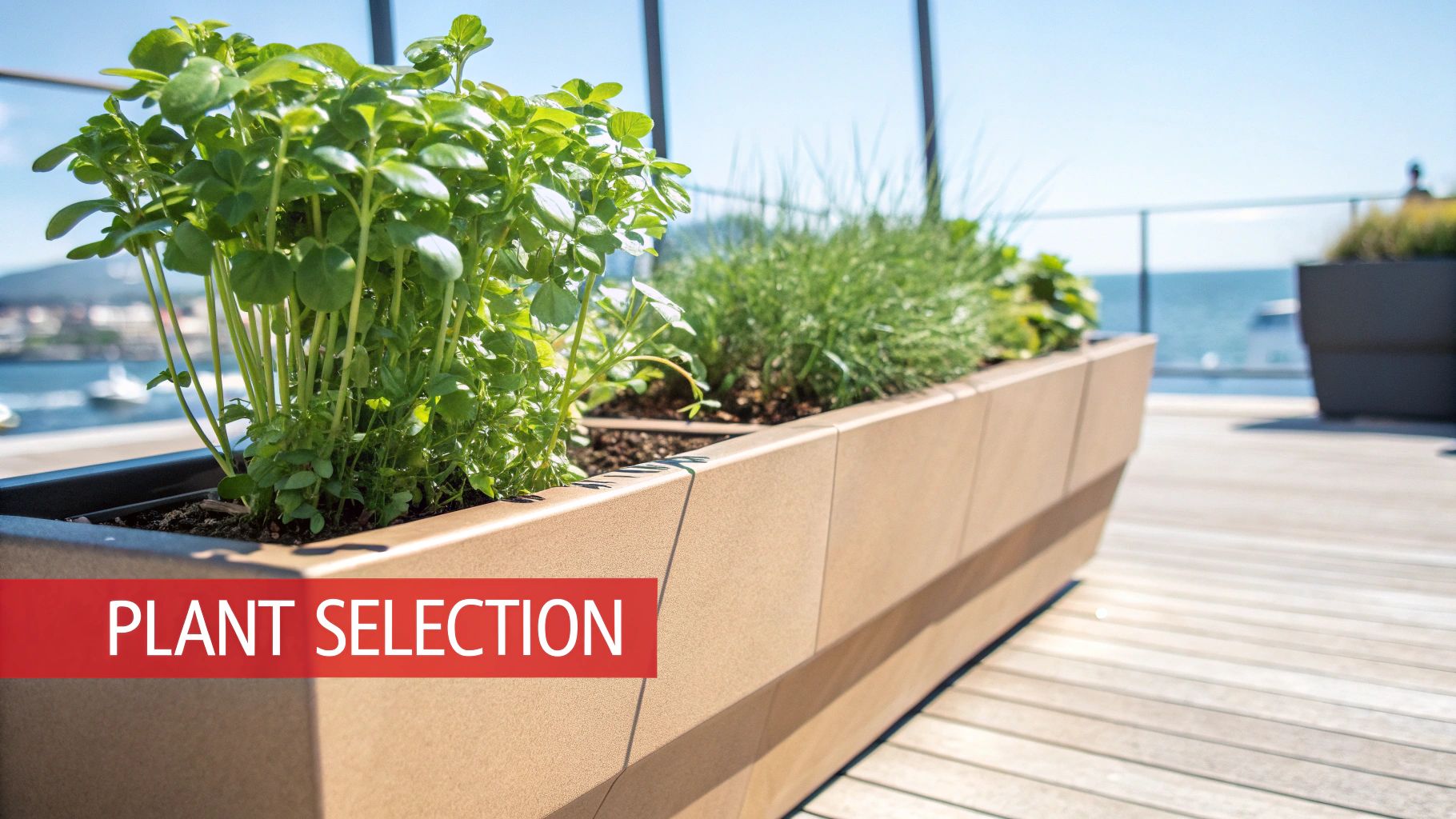
Alright, this is where the fun really begins: choosing what to grow in your large outdoor plant pots nz. The extra room opens up a whole world of creative gardening, letting you cultivate everything from a single, stunning feature plant to your very own miniature orchard.
A single, bold plant can create a powerful focal point. Imagine a native cabbage tree (Tī kōuka) or a lush puka (Meryta sinclairii) bringing year-round structure and that unmistakable Kiwi character to your patio or entranceway. These plants absolutely love the generous root space a large pot offers, allowing them to grow into impressive, healthy specimens.
Many of us are also keen on growing our own food, and the great news is that large pots are perfect for a productive edible garden, even on a tiny balcony. You can easily grow dwarf fruit trees like lemons, limes, or even apples. This move towards self-sufficiency is a huge part of gardening in New Zealand right now. If you're curious about what else is popular, you can explore the latest New Zealand gardening trends to see how Kiwis are embracing homegrown food.
The Thriller, Filler, Spiller Method
For a display that looks professionally designed, there's a brilliantly simple trick called the "thriller, filler, spiller" method. It’s a foolproof recipe for creating a balanced, eye-catching arrangement every time.
Here's how it breaks down:
- Thriller: This is your showstopper—a tall, dramatic plant that provides height and a real wow-factor. A vibrant flax (harakeke) or a striking cordyline works a treat.
- Filler: These are your mid-sized, mounding plants that snuggle around the thriller, making the pot look lush and full. Think flowering perennials like hebes or bushy herbs like parsley.
- Spiller: These are the trailing plants that cascade gracefully over the pot's edge. They soften the container's lines and connect it visually to the ground. Dichondra 'Silver Falls' or trailing lobelia are fantastic choices here.
By combining these three elements, you create a dynamic, multi-layered composition with interest from every angle. It's the easiest way to turn your large outdoor plant pots into living works of art.
Styling Your Pots to Elevate Your Outdoor Area
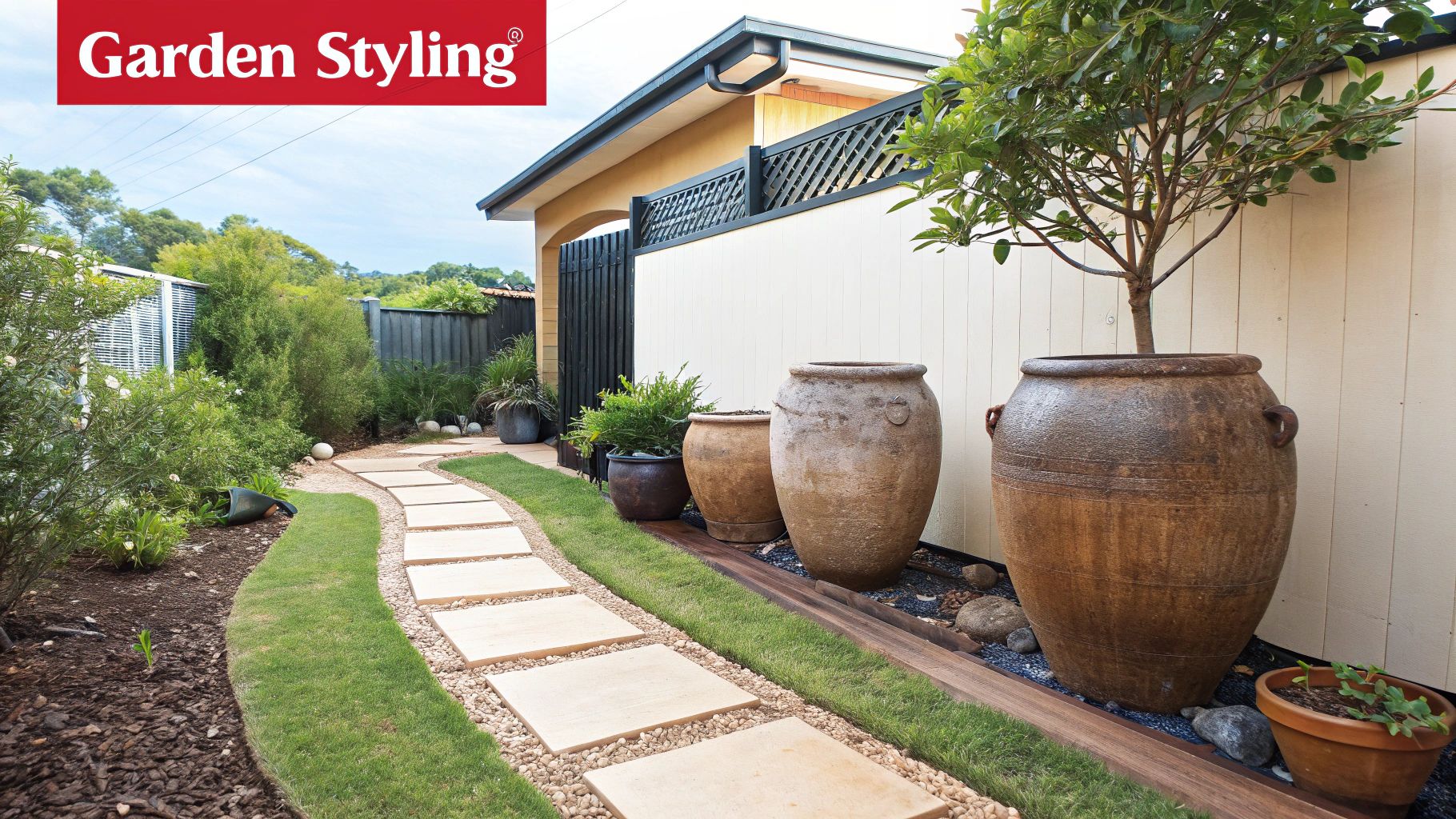
A large pot is so much more than just a container for soil; it’s a powerful design tool that can completely transform the look and feel of your Kiwi backyard. When you start thinking like a designer, you can use large outdoor plant pots nz to create a space that feels intentional, polished, and uniquely yours.
One of the most effective and classic techniques is playing with symmetry. Try placing two identical large pots on either side of a front door, an entryway, or at the start of a garden path. This simple move instantly creates a sense of formal elegance and a welcoming vibe, beautifully framing the space.
Create Depth and a Focal Point
Another fantastic strategy is to group your pots. Instead of lining them up like soldiers, try clustering three pots of varying heights and sizes together in a corner of your deck or courtyard. This creates wonderful visual depth and a little garden vignette that naturally draws the eye.
A single, dramatic oversized pot can act as a powerful focal point all on its own. Position it at the end of a sightline or right in the centre of a patio to anchor the entire outdoor living area.
Don't forget to think about the pot itself as a piece of decor. Its colour and texture should complement your home's architecture and your existing outdoor colour scheme. A sleek, charcoal-coloured fibrestone pot might feel right at home with a modern build, while a rustic terracotta pot could be the perfect touch for a country-style garden.
For more inspiration on creating beautiful, plant-focused spaces, you can find a wealth of ideas in our Jungle Story plant blogs. Ultimately, choosing pots that harmonise with their surroundings is the key to achieving that cohesive and stylish look you're after.
Your Large Pot Questions Answered
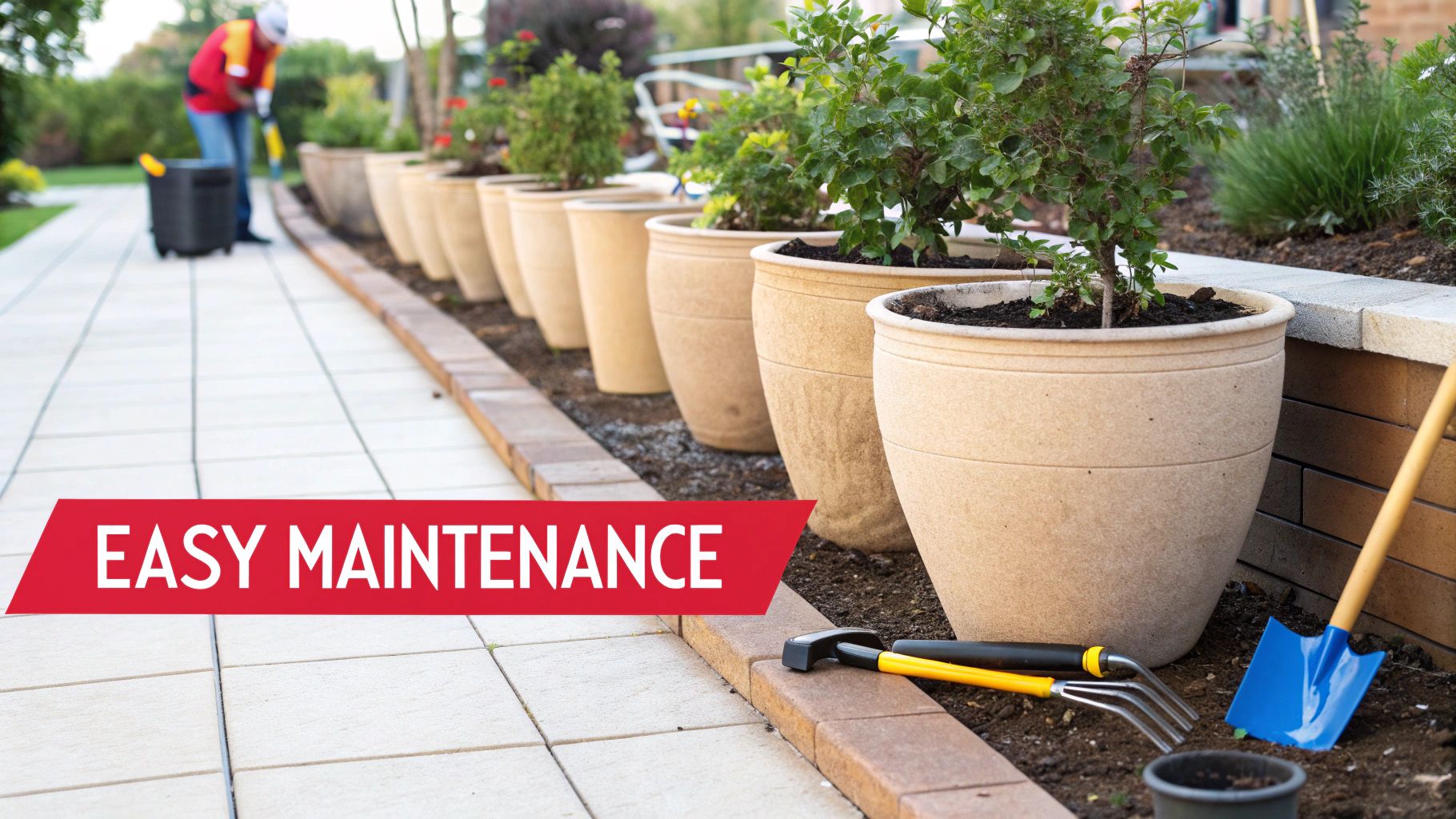
Even after you’ve found the perfect pot and plant combo, a few questions can pop up. We’ve pulled together the most common queries we hear about using large outdoor plant pots in NZ, with practical answers to help you get growing with confidence.
How Do I Move a Very Heavy Pot?
Honestly, the best trick is to get your pot into its final spot before you fill it. It will save you a world of back-breaking effort!
If you absolutely have to move a full pot, start by scooping out as much soil as you can. For those moderately heavy ones, a good pot trolley from your local garden centre is a brilliant investment. No trolley? Try the 'walking' method: carefully tilt the pot onto its bottom edge and pivot it forward, inch by inch. For seriously heavy concrete or ceramic pots, always grab a mate to help – it’s not worth risking an injury.
How Often Should I Repot Plants in Large Containers?
This is one of the best things about going big – you don’t have to repot nearly as often as you do with smaller pots. Depending on how fast your plant grows, you might only need to do a full repot every 3-5 years.
A much easier approach for established plants is to just 'top dress' them each year. In spring (around September or October), when you see new growth starting, just gently scrape away the top 5–10 cm of the old potting mix.
Simply replace that old soil with a fresh, high-quality mix and a sprinkle of slow-release fertiliser. It’s a simple way to top up the nutrients without the massive job of a full repot.
What Is the Best Way to Water a Large Pot?
The secret is to water deeply and thoroughly, but less often. You want to give it a really good soak, right until you see water draining freely from the holes at the bottom. This encourages the roots to grow deep and strong, rather than staying shallow.
During a hot, dry Kiwi summer (from December to February), you might need to do this every few days. But come winter (June to August), when growth slows down and we get more rain, you might only need to water every couple of weeks, if at all.
Your best tool is your finger. Just poke it a few centimetres into the soil. If it feels dry, it's time for a drink.
Where Can I Find Good Large Plant Pots in NZ?
You’ve got plenty of great options right across New Zealand. For a huge, easy-to-find selection, big garden centres like Mitre 10 or Bunnings are always a reliable place to start.
If you’re after something a bit more special or high-end, it’s worth checking out local independent nurseries and specialty landscape suppliers in your area. Many online shops also have massive catalogues of large outdoor plant pots nz and will deliver the big, bulky ones straight to your door, which makes life a whole lot easier.
Ready to find the perfect statement piece for your garden? The Jungle Story marketplace connects you with trusted New Zealand sellers offering a huge range of pots, plants, and everything you need to create your dream outdoor space. Explore the collection at https://junglestory.co.nz.