
Think of the raw beauty of Aotearoa's coastline, or the golden glow of alpine tussock lands swept by the wind. This is the exact spirit New Zealand native grasses can bring into your own garden. These plants are more than just hardy survivors; they're the versatile, low-maintenance stars of modern Kiwi garden design. This guide is here to show you how their unique textures, colours, and forms can create a garden that truly feels like it belongs here.
Bringing Aotearoa's Landscape into Your Garden
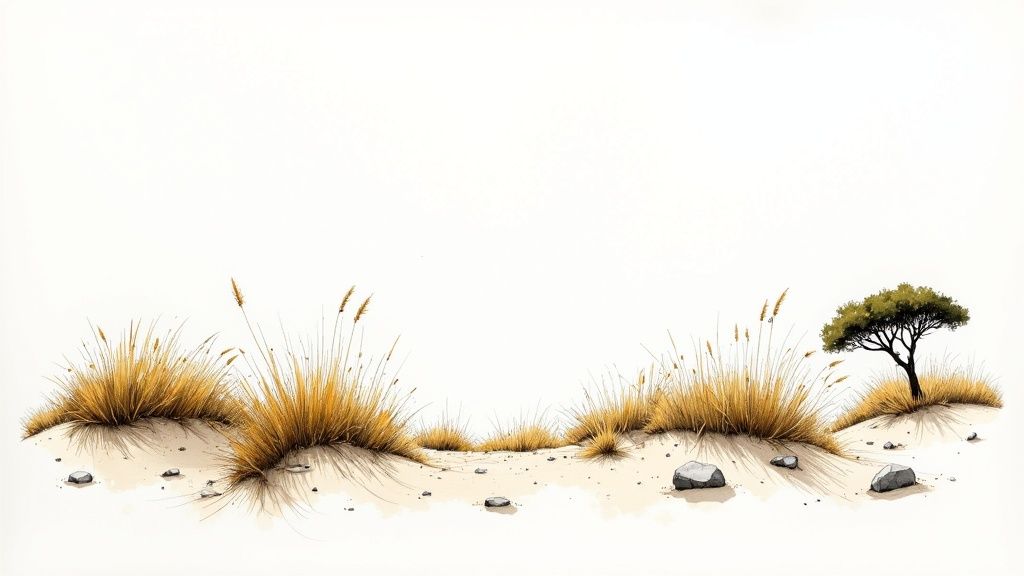
There’s a special connection you get when you plant New Zealand's native grasses in your garden. It’s like borrowing a piece of our wild places—from rugged coastlines to sweeping high country—and bringing that character right to your doorstep.
Unlike so many exotic ornamentals, our native grasses are perfectly tuned to local conditions. They’ve spent millennia evolving to thrive in our specific climate and soils, which means they are incredibly resilient and ask for very little once they’re settled in. They’re masters of our environment, ready for dry summers, damp winters, and everything in between.
Choosing native grasses isn't just about picking a plant; it's about embracing a piece of New Zealand's natural heritage.
The Appeal of Native Grasses
So, what makes these grasses such a great choice for the home gardener? It really comes down to their quiet strength and subtle beauty. They give your garden year-round structure, texture, and movement in a way few other plants can match.
Here's what makes them stand out:
- Year-Round Interest: Flowers are fleeting, but the form and colour of native grasses provide a constant visual anchor. Many species even change their hues with the seasons, shifting from deep greens and bronzes in summer to rich golds and oranges as the weather cools in autumn.
- Movement and Sound: One of the most captivating things about grasses is the way they dance with the wind. That gentle rustling adds another sensory layer to your garden, creating a peaceful yet dynamic atmosphere.
- Low Maintenance: Because they’re adapted to our local soils, most NZ native grasses don't need fertilisers and are remarkably drought-tolerant once their roots get established. This makes them a brilliant, sustainable choice for any modern, time-poor gardener.
By incorporating native grasses, you are essentially creating a garden that works with its environment rather than fighting against it. This approach fosters a landscape that is not only beautiful but also ecologically sound and much easier to look after.
On top of all that, these plants play a vital role in supporting local biodiversity. They offer food and shelter for native insects and lizards, helping to build a healthier ecosystem right in your own backyard.
If you’re keen to create a truly authentic outdoor space, our guide on crafting a NZ native garden has plenty more inspiration for integrating these incredible plants. It'll give you the confidence to pick the perfect species for your patch, helping you create a landscape that is uniquely Kiwi.
Getting to Know New Zealand's Native Grasses
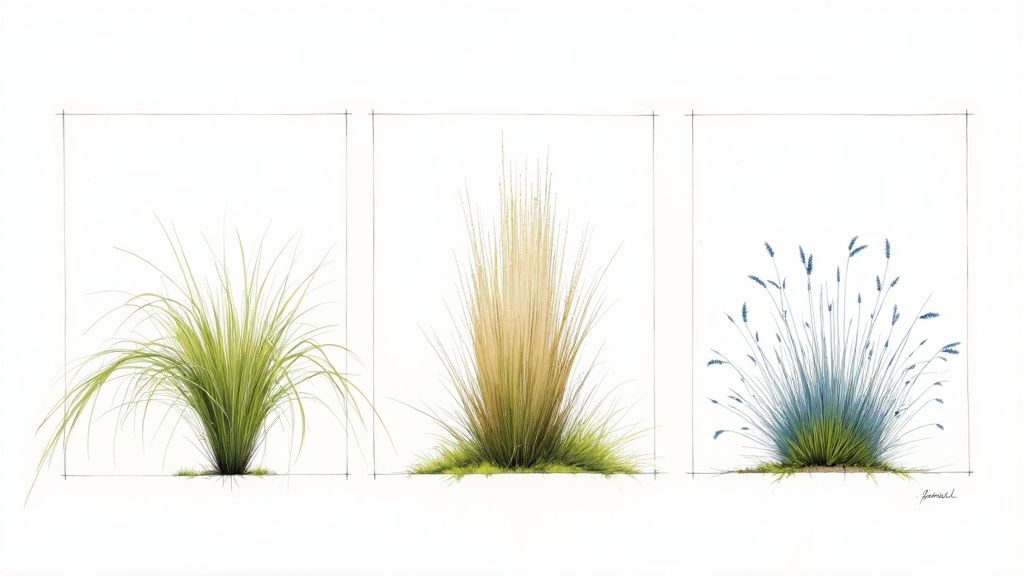
The world of New Zealand’s native grasses is incredibly varied, with each species bringing its own personality to the garden. Don't just think of them as a uniform sea of green. They're a whole cast of characters—architectural wonders, colourful performers, and graceful scene-setters.
This incredible diversity isn't an accident. It's the result of grasses evolving to survive in Aotearoa’s wildly different microclimates, from windswept coastlines and damp forests to dry alpine basins. Each one has developed specific traits to thrive in its home environment, which is fantastic news for gardeners wanting plants that are a perfect fit for their local conditions.
Understanding this variety is the first step to creating a garden that works with nature, not against it. When you match the right grass to the right place, you get a thriving, resilient, and stunningly beautiful landscape with half the effort.
Thinking About Grasses by Their Garden Roles
To make choosing the right plant easier, let's group them by the job they do in the garden. Instead of getting bogged down in Latin names, start by thinking about the visual effect you want to create. This way, you're choosing a plant based on its form and function right from the get-go.
Are you after a bold statement piece to create a focal point? A soft, weeping form to spill over a wall? Or a splash of year-round colour to brighten a dull corner? There’s a native grass for just about every need.
Here are the three main "character types" you'll come across:
- The Upright Architects: These are your bold, structural grasses that give the garden form and height. Think of them as the strong backbone of your planting design, creating definition and a sense of permanence.
- The Weeping Wonders: With their softer, cascading habit, these grasses are perfect for spilling over retaining walls, softening the hard edges of paths, and adding gentle movement as they sway in the breeze.
- The Colourful Characters: This group is all about distinctive hues. From fiery reds and rich bronzes to cool blues and silvery sheens, these plants provide lasting colour long after your flowers have faded for the season.
Choosing a grass is a bit like casting an actor for a play. You need to know if you want a tall, dramatic lead to command attention, or a soft, flowing supporting character to add texture and depth to the scene.
Thinking this way simplifies the whole process, helping you build a garden with layers of texture, form, and colour that all work together beautifully.
Why Their Origins Matter
Understanding where a native grass comes from gives you all the clues you need to make it happy in your garden. A species that naturally grows on a sun-baked, windy coastal cliff will have completely different needs from one found on a damp, shady forest floor.
For example, many of the big snow tussocks from the Chionochloa genus are built for open, alpine environments. This means they're incredibly tough—they'll tolerate wind, sun, and poor soils without complaint. On the other hand, many of our native sedges (Carex) prefer moister, more sheltered spots, which makes sense given their origins in wetlands or forest understoreys.
The rich and distinctive native grass flora of New Zealand is a testament to this incredible adaptation. It includes around 218 taxa in the true grass family (Poaceae) alone, with major groups like Poa, Chionochloa, and Festuca showing just how diverse they are. This specialisation is exactly why our grasses are so well-suited to local gardening. You can dive deeper by exploring the research on New Zealand's unique grass flora.
By paying attention to a plant’s natural habitat, you can almost guarantee its success. This is the secret to creating a low-maintenance garden that not only looks fantastic but also reflects the unique ecological story of Aotearoa.
Choosing the Right Native Grass for Your Garden
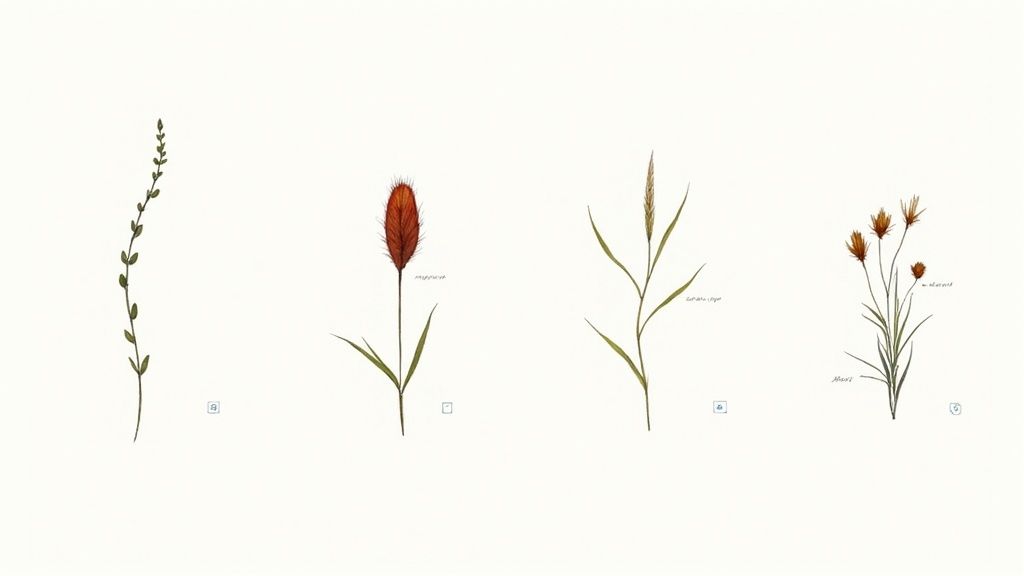
Now that you've got a feel for what native grasses can bring to a garden, we get to the fun part—picking the perfect species for your place. Choosing the right New Zealand native grass isn't just about what looks good; it's about matching the plant to the home you're giving it.
Take a good look at your garden. Do you have a spot that gets baked by the sun all day long? Or maybe a damp, shady corner that never quite dries out? Getting this match right from the start is the secret to a thriving garden that doesn't need constant fussing.
Here are a few of our favourite, proven performers that you'll find in garden centres across New Zealand. They're not just beautiful, they’re reliable choices for Kiwi backyards.
Star Performers for Your Garden
Let's get into the specifics. Each of these grasses brings something unique to the table—be it colour, texture, or form.
Red Tussock (Chionochloa rubra)
This one is a true Kiwi icon, and for very good reason. With its magnificent, weeping shape and incredible bronze-red to coppery foliage, Red Tussock brings a warmth and movement to the garden that lasts all year round.
It's a tough character, hailing from our alpine and subalpine landscapes, which makes it a brilliant pick for open, sunny gardens that have to deal with a bit of wind and frost. It builds up slowly into a big, graceful clump, making it a fantastic feature plant.
- Size: Grows to about 1.2 metres high and just as wide.
- Best For: Making a statement as a focal point, planting in swathes on a sunny bank, or adding year-round colour to a mixed border.
- Conditions: Loves full sun and soil that drains well. It’s happiest in cooler, moister parts of the country but is surprisingly adaptable.
Silver Tussock (Poa cita)
If you're after something a bit smaller and more delicate, you can't go past Silver Tussock. Its fine, silvery-green leaves have this beautiful shimmering quality, especially when you plant a few together and watch the wind move through them. It’s incredibly versatile and handles all sorts of conditions, including dry soils and coastal spots. Perfect for that soft, meadowy look.
Anemanthele lessoniana (Gossamer Grass)
Often called Wind Grass, this one is a real chameleon. The foliage starts out green with hints of bronze, then, as if by magic, it shifts to stunning shades of copper, orange, and fiery red—especially in a sunny, dry spot. In late summer (February to March), it produces these delicate, hazy flower heads that float above the plant like a pinkish cloud. It self-seeds easily, which is great for a natural, evolving garden where it can pop up in just the right places.
To help you decide, here’s a quick-reference guide comparing some of our most popular natives. It’s designed to make it easier to see at a glance which grass might be the best fit for your garden's conditions and the look you're going for.
Quick Guide to Popular Native Grasses
| Common Name (Species) | Mature Size (H x W) | Foliage Colour | Sunlight Needs | Best For |
|---|---|---|---|---|
| Red Tussock (Chionochloa rubra) | 1.2m x 1.2m | Bronze, copper, red | Full Sun | Feature plants, mass plantings |
| Silver Tussock (Poa cita) | 60cm x 60cm | Silvery-green | Full Sun to Part Shade | Meadow planting, softening edges |
| Gossamer Grass (Anemanthele lessoniana) | 1m x 1m | Green, bronze, orange, red | Full Sun to Part Shade | Colourful drifts, naturalistic gardens |
| Leatherleaf Sedge (Carex buchananii) | 70cm x 50cm | Reddish-brown, copper | Full Sun | Containers, modern designs, contrast |
| Cook's Tussock (Festuca cookii) | 40cm x 40cm | Silvery-blue | Full Sun | Rock gardens, edging, small spaces |
Choosing from a table can really help narrow things down, but don't forget to also think about the textures and forms you want to combine.
Smaller Grasses and Sedges
Not everyone has room for a massive tussock, and that’s where our smaller grasses and sedges come in. These little gems are perfect for pots, rockeries, or lining a garden path, offering all the textural benefits in a more compact package.
Think of these smaller species as the quiet achievers. They're the 'glue' that pulls a garden bed together, connecting the larger shrubs and flowering perennials to create a cohesive look.
If you're wanting to cover a larger area, it's also worth exploring options for native ground cover in NZ. Many of these work beautifully alongside grasses to create a low-maintenance, layered effect.
Carex buchananii (Leatherleaf Sedge)
This is a real favourite among garden designers. Its fine, coppery-brown leaves stand straight up, unlike the weeping form of many grasses, giving it a strong architectural feel. It looks amazing planted in groups where the colour can really make a punch, or in a pot where you can appreciate its unique form up close.
- Size: Reaches about 60-70 cm in height.
- Best For: Modern garden styles, pots, and creating a pop of contrasting colour amongst green plants.
- Conditions: It’s happiest in a sunny spot with soil that is moist but still drains well.
Festuca cookii (Cook's Tussock)
For a touch of cool, silvery-blue, Festuca cookii is a winner. This neat little clumping grass forms a soft, rounded mound. It’s a tough plant that copes well with dry spots once it's settled in, and the blue colour is most intense when it gets plenty of sun. Its small size makes it incredibly useful for those little gaps in the garden.
Planting Your Native Grasses for Success
Getting your new grasses off to a great start is the single most important thing you can do for their long-term health and beauty. Think of it as laying the foundation for a garden that’s resilient and low-maintenance down the track. A little extra care now pays off for years.
Your work actually begins before you even pick up a spade. When you're at the garden centre, have a good look at the plants on offer. You want ones that look vigorous and healthy, with strong, upright growth and no yellowing leaves. Give a wide berth to any that look stressed, have roots bursting out the bottom, or are full of weeds – they’ll likely struggle to get established in your garden.
The Best Time to Plant in New Zealand
When it comes to planting New Zealand native grasses, timing really is everything. Our temperate climate gives us two perfect windows for planting: autumn (March to May) and spring (September to November).
Planting during these milder seasons gives your grasses a critical head start. In autumn, the soil is still warm from summer, while in spring it’s just starting to warm up, both of which encourage strong root growth. Better yet, these times of year usually bring more reliable rain, meaning you won’t have to water constantly while the plants are settling in.
Think of it as tucking your plants into a comfortable bed. You’re giving them a gentle transition into their new home, allowing them to establish a robust root system before the stress of a scorching summer or a frosty winter kicks in.
Trying to plant in the peak of summer is a battle against heat and dry soil. On the flip side, planting mid-winter (June to August) can leave them sitting in cold, waterlogged ground, which is a recipe for root rot. Aiming for autumn or spring means you’re working with our natural climate cycles, not against them.
A Step-by-Step Planting Guide
Once you've got your healthy plants and the time is right, planting is a pretty simple affair. Following these steps will help your grasses get comfortable from day one.
-
Get the Site Ready: First things first, clear the area of any weeds or old lawn. If you’re dealing with heavy clay or compacted soil, it’s a good idea to loosen it up with a garden fork to improve drainage and let the roots breathe. Our native grasses are tough and already adapted to local soils, so they generally don't need any compost or fertiliser when you plant them.
-
Dig a Proper Hole: You want the hole to be a bit wider than the plant's root ball, but about the same depth. The main goal here is to avoid planting too deep, which can smother the base (or crown) of the grass.
-
Position the Plant: Gently slide the grass out of its container. If the roots are tightly coiled at the bottom, carefully tease them out. Pop it in the middle of the hole, checking that the top of its root ball is sitting level with the ground around it.
-
Backfill and Water In: Use the soil you dug out to fill the hole back in, gently firming it down to get rid of any air pockets. Finish with a really good, deep watering to settle the soil and give the roots a much-needed drink.
Spacing and Finishing Touches
How far apart you space your grasses all comes down to the final look you're after. For a soft, natural meadow effect, try planting them in staggered groups of three, five, or seven. This creates a far more dynamic feel than planting in rigid, straight lines.
Finally, here's the secret weapon for happy native grasses: mulch. A good 5-7 cm layer of bark chips, pea straw, or even gravel spread around the base of the plant works wonders. Just be sure to keep it from touching the actual stems.
Mulch is fantastic because it helps hold precious moisture in the soil, keeps weeds down, and evens out soil temperature. This simple finishing touch is one of the best things you can do to guarantee your new planting is a roaring success.
Caring for Native Grasses Through the Seasons
One of the best things about bringing New Zealand native grasses into your garden is how self-sufficient they are. They have a reputation for being low-maintenance, and for the most part, it’s true. But ‘native’ doesn’t mean ‘no care’—a little bit of attention timed with the seasons will keep them looking their absolute best.
The trick is to work with their natural cycles, not against them. This means you can forget some of the usual gardening jobs, like heavy pruning or regular feeding. For our natives, that kind of approach often does more harm than good.
Spring and Summer Care
As things warm up in spring (September to November), your grasses will kick into a new growth cycle. Now is the perfect time for a gentle tidy-up to set them up for a great summer.
The main thing to get right is grooming, not cutting. With tussock-forming grasses like Chionochloa or Poa, you’ll want to resist the urge to give them a haircut. Instead, pop on some gloves and gently run your fingers through the clump, combing out the old, dead leaves from the centre. This technique, sometimes called ‘grubbing’, gets the air flowing and keeps the plant healthy without wrecking its natural form.
Think of it like brushing out tangled hair. You’re not chopping it off; you’re just carefully teasing out the dead bits to let the new growth through. It’s a simple job that stops the plant from getting choked up and looking scruffy.
During our long, dry Kiwi summers (December to February), water is the main thing to think about. While established native grasses are brilliant in a drought, any new plants will need a consistent drink over their first summer to get their roots down.
For mature grasses, you only really need to step in during a proper dry spell. When you do, give them a deep, thorough soaking. This is far better than a light sprinkle every other day, as it encourages the roots to search deeper for moisture.
Autumn and Winter Maintenance
Autumn (March to May) is a time of transition. Growth slows right down, and your main job is another light groom to clear out any dead foliage before the winter wet sets in. This is especially important for dense tussocks to prevent rot.
Winter (June to August) is the quiet season. The grasses are mostly dormant, just resting before their spring burst of energy. Their architectural shapes and beautiful winter colours—often shifting to rich golds and oranges—provide fantastic structure in the garden when everything else can look a bit bare. For the most part, you can just leave them be and enjoy the view.
This hands-off winter approach really sums up the philosophy for native grasses: less is almost always more.
A Note on Feeding and Pests
Here’s some great news: you can put the fertiliser away. Our native grasses have evolved to thrive in New Zealand's naturally low-nutrient soils.
Adding extra food can actually cause a few problems:
- It makes them produce soft, floppy growth that tends to collapse.
- It can dull their colour. Many grasses, like the Red Tussock, get their most intense hues when they’re slightly stressed in poorer soil.
- Lush, sappy growth is a magnet for pests.
By leaving them to it, you’re helping them stay strong, colourful, and true to their natural shape. Pests are rarely a problem, but keeping the air flowing with a seasonal groom is your best line of defence. With this light-touch approach, you’ll find your native grasses are some of the easiest and most rewarding plants you can grow.
Creative Landscaping Ideas with Native Grasses
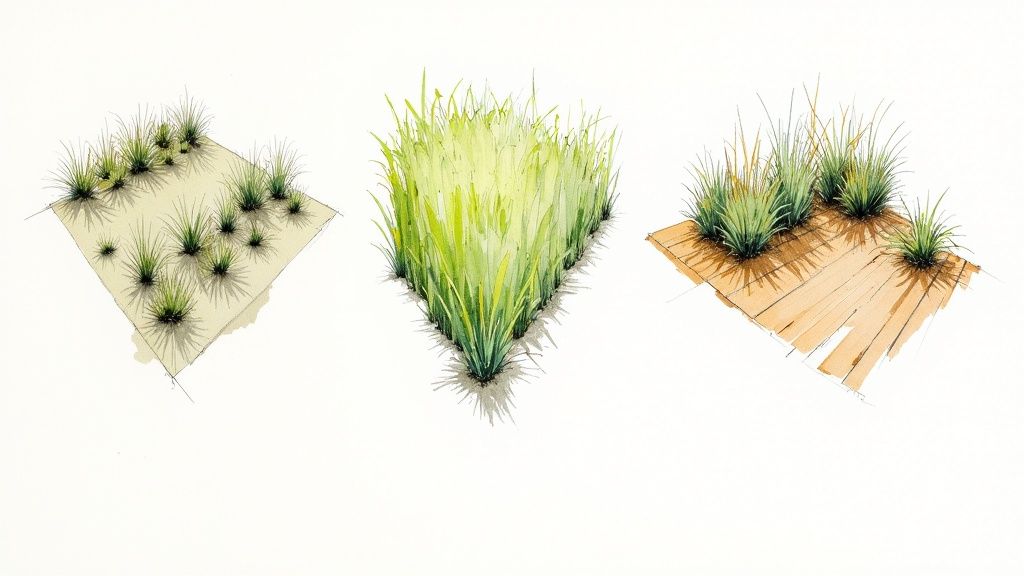
Alright, now that you've got the hang of planting and looking after your native grasses, we can get to the fun part—design. These plants are incredibly versatile, slipping beautifully into almost any garden style you can imagine, from sharp, modern layouts to dreamy, wild-looking meadows. They’re the secret ingredient for adding texture, movement, and a real Aotearoa vibe to your outdoor space.
Let’s dig into a few practical ways to use New Zealand native grasses to turn your garden from a simple collection of plants into a stunning, unified landscape.
Designing a Modern Minimalist Garden
For that clean, contemporary aesthetic, it’s all about structure and repetition. Native grasses are absolute stars in this role, offering clean lines and bold shapes that make a serious visual impact. Think of them less as plants and more as living sculptures that define the space.
- Create Structured Rows: Planting a single species in straight, repeating lines is a classic minimalist move. Imagine the upright, coppery tones of Carex buchananii (Leatherleaf Sedge) marching along a path or driveway. It creates a powerful sense of rhythm and order.
- Use Bold Groupings: Big, bold clumps of a single tussock, like the magnificent Chionochloa rubra (Red Tussock), look incredible against a simple backdrop like a white wall or dark fence. The contrast in colour and form is just fantastic.
This disciplined approach really shows off the unique architectural qualities of each grass, turning your garden into a living work of art. If you're planning on creating residential garden beds, you can draw a lot of inspiration for framing these kinds of structured plantings.
Crafting a Naturalistic Meadow
If a softer, more relaxed garden is what you're after, you can't go past a meadow style. The idea here is to mimic nature by planting in gentle drifts and layers. This creates a garden that ebbs and flows with the seasons and sways beautifully in the breeze.
The key is to combine different grasses with varying heights, colours, and textures. Try mixing the delicate, shimmering Silver Tussock (Poa cita) with the taller, airy Gossamer Grass (Anemanthele lessoniana). Dotting native flowering perennials like rengarenga lilies or hebes through the mix will add seasonal pops of colour and bring in the bees and butterflies.
The real magic of a meadow garden is its organised chaos. It’s a carefully curated slice of the wild, designed to look effortless while providing year-round interest and a boost for local wildlife.
Thriving in Coastal and Container Gardens
Native grasses are also brilliant problem-solvers for tricky garden spots. For those windswept coastal properties, you'll want to pick tough, salt-tolerant species that don't mind sandy soils and a bit of a battering. Many Poa and Festuca species are perfectly adapted to these harsh conditions.
Short on space? No worries. The compact forms and striking foliage of many smaller grasses make them perfect for pots and containers on a deck or balcony. A single, eye-catching tussock in a stylish pot can make a huge statement.
Funnily enough, the very traits that make most native grasses unsuitable for high-traffic lawns—their slower establishment—make them perfect for ornamental landscaping where they don't have to fight off more aggressive species. If you want to dive deeper, you can explore some of these findings on their unique evolution.
For more general inspiration, check out our other landscaping ideas for NZ gardens.
Got Questions About Growing NZ Native Grasses?
Even the most seasoned gardeners run into questions now and then. Let's tackle some of the common queries that come up when you're getting to know your New Zealand native grasses.
Can I Give My Native Tussocks a Haircut?
It's tempting to trim them like other ornamental grasses, but please don't! The best way to keep a tussock looking its best is to gently 'comb' through it with your fingers (gloves are a good idea) a couple of times a year. This removes any dead leaves without ruining its beautiful, natural shape.
How Often Should I Be Watering My Grasses?
Once they've settled in, most NZ native grasses are incredibly tough and drought-resistant. You'll generally only need to give them a drink during those long, dry Kiwi summers. Honestly, overwatering is a far bigger risk than underwatering, as soggy soil can easily lead to root rot.
Do They Need Any Fertiliser?
Nope, save your fertiliser for the hungrier plants in your garden. Our native grasses are perfectly adapted to New Zealand's naturally low-nutrient soils and don't need the extra feed. In fact, adding it often does more harm than good, encouraging weak, floppy growth and washing out their unique colours.
A common mistake is treating our native grasses like their European or American cousins. Remember, they thrive on a bit of neglect and are happiest when you mimic their wild origins—lean soil, good drainage, and minimal fussing.
Will They Spread and Take Over Everything?
While one or two species are known to self-seed a bit, the varieties you'll typically find for your garden are well-behaved clump-formers. They'll slowly get bigger over time but won't aggressively march across your garden beds. If you do spot an unwanted seedling pop up, it's usually very easy to pull out.
Why Is My Grass Turning Brown or Yellow?
A bit of seasonal colour change is totally normal. Many species take on stunning bronze or golden hues as the weather cools in autumn and winter. If, however, your grass is looking sick and yellow during the main growing season, the culprit is almost always poor drainage or too much water. Check that the soil isn't constantly waterlogged.
Ready to find the perfect grasses to bring a piece of Aotearoa to your garden? Explore the stunning collection at Jungle Story, where you can browse and buy a huge range of New Zealand native grasses and other beautiful plants online.
Start creating your slice of native paradise today at https://junglestory.co.nz.