
Choosing a native ground cover for your garden in New Zealand is one of the smartest moves you can make. It’s the secret to creating a beautiful space that’s both low-maintenance and great for the environment. These hardy plants are already perfectly in tune with our unique climate, which means they need less water and less work than any exotic species you could plant. They form a living carpet that smothers weeds and supports local wildlife, turning your garden into a proper little ecosystem.
Why Choose Native Ground Cover for Your Garden
Going for native ground cover isn't just about how it looks; it's about creating a tough, self-sufficient garden that works with nature, not against it. Think about it: unlike many imported plants that need constant fussing, our native species have spent thousands of years adapting to New Zealand’s soils, rainfall, and seasons.
This deep-rooted connection to our land makes them naturally tougher. Once they're settled in, you'll find they need less watering, less feeding, and are far more resistant to local pests and diseases. For you, that means less time spent on chores and more time actually enjoying your beautiful, thriving garden.
Building a Backyard Ecosystem
Every little patch of native ground cover you plant becomes part of a much bigger ecological picture. These plants are the very foundation of a healthy garden food web, offering crucial resources for our local wildlife.
- Nectar for Pollinators: Many native ground covers have flowers that provide essential food for native bees, moths, and butterflies.
- Shelter for Insects: The dense mat they create offers a safe micro-habitat for countless beneficial insects, lizards, and other small critters.
- Food for Birds: Some species grow berries or attract insects that become a feast for native birds like the pīwakawaka (fantail) or tauhou (silvereye).
When you choose native plants, you're essentially rolling out the welcome mat for local wildlife. Your garden stops being just a collection of plants and transforms into a small-scale nature reserve that actively boosts biodiversity.
A Conscious Choice for Aotearoa
Making room for native plants is also a powerful way to help restore our environment. So much of New Zealand’s original landscape has been changed, with huge areas converted for other uses. For example, planted production forests, mostly exotic species like radiata pine, cover a massive 1.79 million hectares. This kind of expansion has often pushed out our own indigenous ecosystems.
Planting native ground cover is a small but meaningful way to push back. You're helping to rebuild a healthier, more resilient local environment, one garden at a time. It’s a wonderful way to connect with the land and celebrate the unique natural character of Aotearoa. If you're keen to go further, you might enjoy our guide to designing a NZ native garden.
How to Choose the Right Native Ground Cover
Finding the perfect native ground cover for your garden is a bit like matchmaking. It's not about just picking the prettiest plant off the shelf; success comes from finding a plant that truly loves the conditions you already have. A species that flourishes in the damp shade of a Southland backyard will quickly struggle on a sun-baked Auckland plot.
So, before you do anything else, the first and most critical step is to really get to know your space.
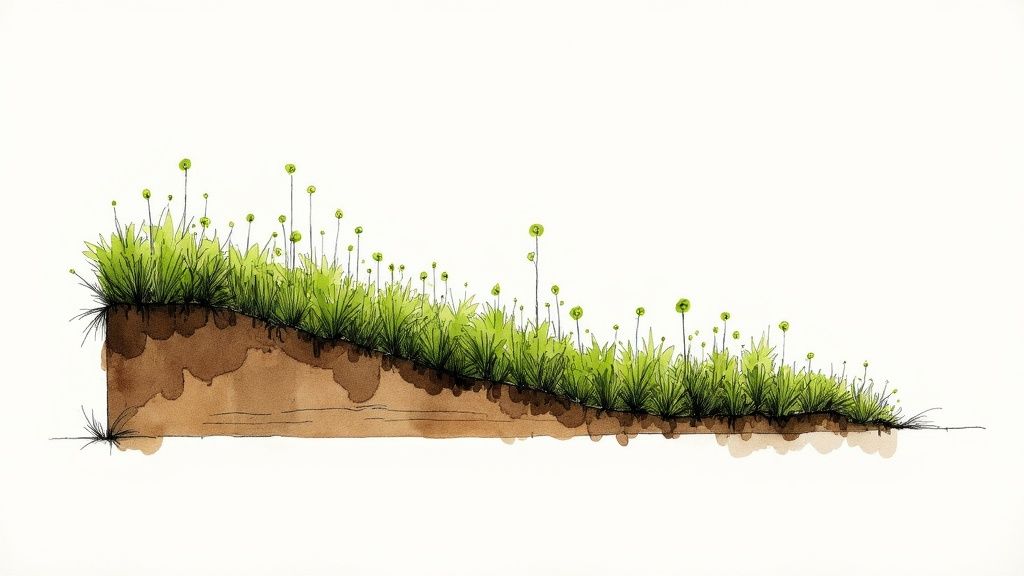
Think of it as creating a profile for your patch of earth. Before you even start looking at plants, you need to nail down three key things. Get this right, and you'll choose a ground cover that not only survives but absolutely thrives with very little fuss.
How Much Sun Does Your Garden Get?
The amount of direct sunlight hitting a spot is probably the biggest decider. You'll need to watch your garden at different times of the day to get a real sense of its light patterns. "Sunny" and "shady" can mean very different things.
- Full Sun: This is an area that gets at least six hours of direct, unfiltered sun every day. These spots are often the hottest and driest parts of the garden, so they need tough, sun-loving plants.
- Partial Shade: This might be a spot that gets direct sun for a few hours in the morning or afternoon (say, three to six hours) but is in shade the rest of the day. Dappled light filtering through a tree canopy also counts as partial shade.
- Full Shade: An area is in full shade if it gets less than three hours of direct sun, or only receives filtered light all day long. These spots are usually cooler and tend to hold on to moisture.
What Kind of Soil Are You Working With?
Next up, it’s time to get your hands dirty. Your soil's texture dictates how it holds water and nutrients, which has a massive impact on what will grow well. The easiest way to check is to grab a handful of slightly damp soil and give it a squeeze.
If it feels gritty and crumbles apart easily, you’re likely dealing with sandy soil. If it’s sticky and forms a solid, firm ball, you have clay. But if it’s dark, crumbly, and holds its shape loosely, you've hit the jackpot with loamy soil—the ideal for most plants. Knowing this helps you choose a native ground cover nz that will be happy with the foundation it's got.
My best advice? Don't fight your conditions—embrace them. It is so much easier to choose a plant that naturally loves clay soil than it is to try and change your soil to suit a fussy plant. This approach will save you a heap of time, money, and frustration down the track.
What Job Do You Need the Plant to Do?
Finally, ask yourself: what is the purpose of this ground cover? Your answer will really help narrow down the choices.
Are you trying to stop weeds from taking over a steep bank? Or maybe you want to create a soft, green carpet in a part of the garden that doesn't get much foot traffic. Perhaps you just want to add a splash of colour to a dull corner.
You might need something that spreads fast to cover a large, bare patch quickly. On the other hand, a slow, compact grower might be better for creating a neat and tidy border. Being really clear on the job you need your plant to do makes sure you pick the right candidate for the role.
Once you’ve got this profile of your garden’s light, soil, and purpose, you’re all set to find its perfect match. This table is a great starting point to help you connect your garden's unique needs with some of our hard-working native options.
Matching Native Ground Cover to Your Garden Conditions
Use this table to find the perfect native ground cover based on your garden's sunlight, soil, and your desired outcome.
| Native Plant Name | Best for Sun or Shade | Ideal Soil Type | Key Feature |
|---|---|---|---|
| Muehlenbeckia axillaris | Full sun to partial shade | Adaptable to most soils, including sandy and clay | A tough, fast-spreading weaver perfect for covering banks and suppressing weeds. |
| Leptinella dioica | Full sun to light shade | Prefers damp, fertile soil | Forms a soft, lawn-like mat that can handle very light foot traffic. |
| Coprosma 'Hawera' | Full sun | Well-drained soil; dislikes wet feet | A low-growing, cascading plant with fine, olive-green foliage, great for dry spots. |
| Scleranthus biflorus | Full sun | Gritty, free-draining soil | Creates a dense, moss-like mound that adds unique texture to rockeries or borders. |
Think of these as just a few of the fantastic options out there. With a clear idea of your garden's personality, you're now in the best position to choose a native ground cover that will settle in and make itself at home for years to come.
Alright, now that you’ve got a handle on your garden's specific needs, let's get to the fun part: meeting the plants. These are some of the unsung heroes of the native ground cover world. I’ve found them to be tried-and-true performers in Kiwi gardens, each bringing its own unique blend of texture, colour, and resilience to the party.
When you choose to plant natives, you’re doing more than just filling a space. New Zealand's native forest and shrubland cover has seen a massive reduction over the years. We're now sitting at around 9 million hectares, which is only about 33% of our total land area. Planting natives, even on a small scale, helps reclaim a little piece of that precious natural heritage.
Muehlenbeckia axillaris (Pōhuehue)
Often called creeping wire vine or simply pōhuehue, this plant is an absolute champion of toughness. It forms a dense, tangled mat of fine, wiry stems and tiny dark green leaves. The result is a springy carpet that’s brilliant at smothering out weeds before they can get a hold.
- Growth Habit: It's a vigorous, fast-spreading grower that can cover large areas in no time, which makes it perfect for stabilising banks or filling in annoying bare patches.
- Best For: Give it a sunny or partially shaded spot with well-drained soil and it'll be happy. It's incredibly tolerant of dry conditions, wind, and even frost once it's established.
- Ecosystem Role: Its small, discreet flowers are a fantastic nectar source for native insects. Later, its tiny white berries provide food for lizards and small birds.
Scleranthus biflorus (New Zealand Moss)
Don't let the common name fool you—Scleranthus biflorus isn't a moss at all. It's a fascinating native that forms firm, undulating mounds of bright green, moss-like foliage. Its unique texture adds incredible visual interest wherever it’s planted.
It looks absolutely stunning when tucked in amongst rocks or planted alongside darker foliage for contrast. I like to think of it as a living sculpture for the garden floor.
Scleranthus is the perfect choice if you want a low-maintenance plant with high visual impact. It needs very little care once it's happy, but it is non-negotiable on one thing: it must have sharp, free-draining soil to keep root rot at bay.
Coprosma 'Hawera'
There are loads of Coprosma species out there, but 'Hawera' is a real standout. It's a prostrate variety with delicate, olive-green to bronze foliage. It has a beautiful cascading habit, making it ideal for spilling over retaining walls, trailing down banks, or softening the front edge of a garden bed.
- Growth Habit: This is a low and spreading plant, forming a dense mat that can reach up to 1.5 metres wide while staying incredibly close to the ground.
- Best For: Full sun and well-drained soil are essential for this sun-lover. It truly excels in coastal gardens and on dry, exposed sites where other plants might give up.
- Ecosystem Role: Like other coprosmas, it provides excellent shelter for our local skinks and geckos.
While these ground-hugging shrubs are fantastic, they're not the only option. For a different texture and feel, you might want to look at our guide on native grasses in NZ. They can complement these ground covers beautifully.
Giving Your Ground Cover the Best Start in Life
Right, you’ve picked out the perfect native ground cover for your garden. Now comes the part that makes all the difference: planting it properly. A bit of prep work now means less work later and a lush, weed-free carpet of green for years to come. Think of it as setting the stage for a great performance.
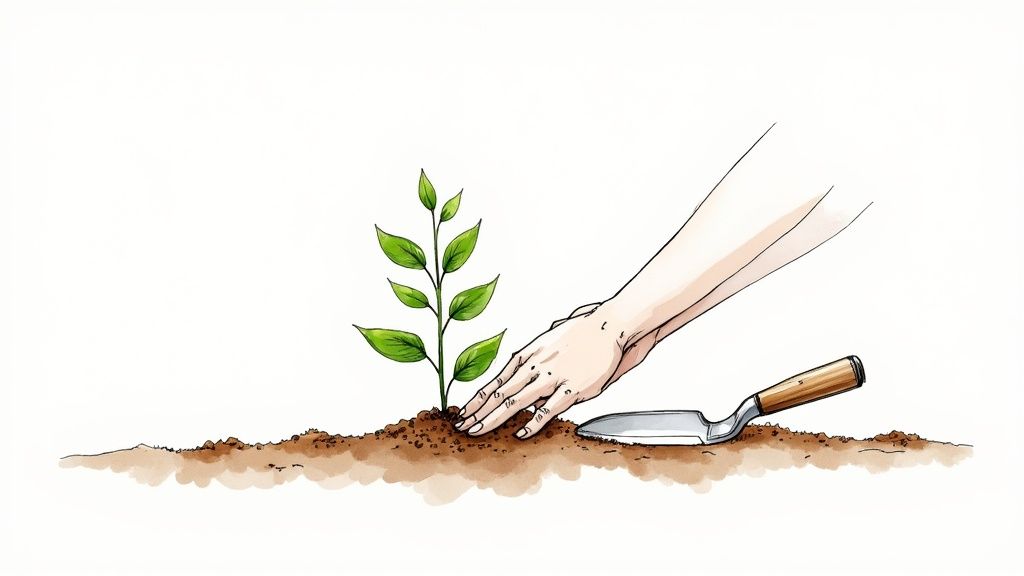
Honestly, the most critical step is getting the ground ready. Before you do anything else, clear the area of every single weed. You need to be ruthless here. Any sneaky roots left behind, especially from stubborn couch grass or dandelions, will just pop back up and compete with your new plants for water and food.
Once the weeds are gone, grab a fork and loosen the soil to about 20-30 centimetres deep. This breaks up any compacted earth and gives the new roots plenty of room to explore. If your soil is heavy clay or a bit rubbish, now's your chance to mix in some good quality compost to liven it up.
Spacing and Planting Your Natives
Getting the spacing right is the secret to achieving that dense, seamless mat of native ground cover nz. Take a look at the plant label – it'll tell you how wide the plant will get when it’s fully grown. Use that as your guide. It might look a bit gappy at first, but trust me, giving them space to breathe is essential for healthy growth.
Planting is straightforward if you follow a few simple steps:
- Map It Out: Place your plants, still in their pots, on the prepared soil. This lets you play around with the layout and see how it will look before you commit to digging.
- Dig Your Holes: Make each hole a little bit wider and deeper than the pot.
- Get Planting: Gently slide the plant out of its pot. Try not to break up the root ball too much. Pop it in the hole so the top of its soil is flush with the ground around it.
- Tuck It In: Backfill the hole with your prepared soil, pressing down gently to get rid of any air pockets around the roots.
One common mistake is planting too deep. You want the base of the stem to be sitting right at soil level, not buried under it. Planting too deep can cause the stem to rot, which is a one-way ticket to a dead plant.
The All-Important First Summer
Once everything is in the ground, give your new plants a really good, deep watering. This helps settle the soil and gets the roots hydrated. For that first summer, from December through to February, consistent watering is your number one job. This is when the plants are working overtime to establish a strong root system that will see them through the drier months.
A thick layer of mulch – think bark chips or pea straw – will be your best mate during this time. It locks moisture into the soil, keeps the roots cool, and smothers any new weeds trying to crash the party. A good 5-7 cm layer is perfect. Just be careful to keep the mulch from piling up right against the plant stems.
Get this right, and you'll be rewarded with a thriving, beautiful ground cover that not only looks great but also helps our local biodiversity. To dive deeper into how planting natives supports our unique ecosystems, you can check out the latest environmental reports.
Simple Long-Term Care and Maintenance
One of the best things about establishing a carpet of native ground cover is how wonderfully low-maintenance it is. But while these plants are incredibly resilient, thinking they need zero care is a common trap. A little bit of seasonal attention is all it takes to keep your living carpet healthy, dense, and looking its best for years to come.

This isn't about constant fussing. Forget the weekly mow you’d do with a traditional lawn. Here, the focus is on simple, occasional jobs that keep the plants in good health and shape.
Key Seasonal Tasks
A small amount of effort at the right time of year really does make all the difference. A light trim in late winter or early spring—around August or September—can work wonders. For many species, this encourages a flush of fresh, dense growth and stops them from getting too woody or sparse.
For the more vigorous spreaders like Muehlenbeckia, don't be shy about giving them a harder prune to keep them in check. This is crucial for stopping them from smothering neighbouring plants and helps maintain a much tidier look.
The goal of maintenance isn't to force plants into an unnatural shape. It's about guiding their natural growth habits. Think of it as a gentle nudge, encouraging them to form that lush, weed-suppressing mat you're after.
Managing Weeds and Plant Health
A thick ground cover is your best defence against weeds, but a few persistent ones might still poke through, especially while your plants are filling in the gaps. It’s best to pull these by hand as soon as you spot them. This avoids disturbing the roots of your natives and, most importantly, stops the weeds from setting seed.
Keep an eye out for any signs of stress, like yellowing leaves or dieback, which could point to issues with drainage or pests. For the most part, though, established native ground cover nz is remarkably trouble-free. The long-term nature of these plants also aligns well with other garden choices; you can learn more about combining them by reading up on perennial plants in NZ.
Common Questions About Native Ground Cover
Even with the best plan in hand, it's completely normal to have a few questions as you get started with native ground covers. Let's walk through some of the most common queries we hear from Kiwi gardeners, so you can feel confident creating your own thriving, beautiful green space.
How Long Until My Native Ground Cover Fills In?
This is probably the first question on everyone's mind! The time it takes for your native ground cover nz to form a dense, living carpet really depends on the species you've chosen and the conditions in your garden.
Faster-growing varieties like Muehlenbeckia axillaris can create a thick, lush look within 18-24 months. On the other hand, slower, mounding types such as the gorgeous Scleranthus biflorus might take two to three years to really hit their stride and achieve that full, impressive form.
To give your plants the best possible head start, it all comes back to the basics. Proper soil preparation, planting at the right spacing, and being diligent with watering through that first summer (December to February) are the absolute keys to encouraging quick, healthy growth.
Can Native Ground Cover Completely Replace My Lawn?
Yes, it absolutely can—and it’s a brilliant, eco-friendly move for so many New Zealand gardens. Native ground covers are fantastic lawn alternatives, especially in areas that don't get a huge amount of foot traffic. They create a beautifully textured, diverse green space without the endless cycle of mowing and watering.
Some species, like Leptinella dioica, can handle a bit of light walking. Most, however, aren't quite as tough as traditional turf. For pathways or high-traffic spots, the perfect solution is to lay down some stepping stones. This way, you get the best of both worlds: a practical path winding through a stunning, low-maintenance living carpet.
Are Native Ground Covers Safe for Pets and Children?
This is a vital question for any family garden. The great news is that the vast majority of our native ground cover plants are non-toxic and considered perfectly safe for gardens shared with kids and pets. Our local flora simply evolved without the harsh toxins you might find in plants from other parts of the world.
That said, it’s always a good idea to double-check the specific plants you’re bringing home, just for complete peace of mind. While rarely dangerous, some plants could cause a bit of mild irritation if a curious pet or child decides to have a big nibble. Your local native plant nursery is the best place to go for specific, reliable advice on the species you're thinking about.
Ready to transform your garden with a beautiful, low-maintenance living carpet? Explore the incredible selection of native ground covers at Jungle Story and find the perfect match for your space today. Start building your backyard ecosystem by visiting junglestory.co.nz.