
Of course you can! It's absolutely possible to grow Heliconia in New Zealand and bring a slice of the tropics right to your backdoor. While these stunning "lobster-claw" plants are happiest in our warmer, frost-free regions, with a bit of clever placement and care, gardeners all over the country can enjoy their dramatic, colourful flair. The secret really comes down to picking the right varieties and giving them a sheltered spot to call home.
Bringing The Tropics To Your Kiwi Garden
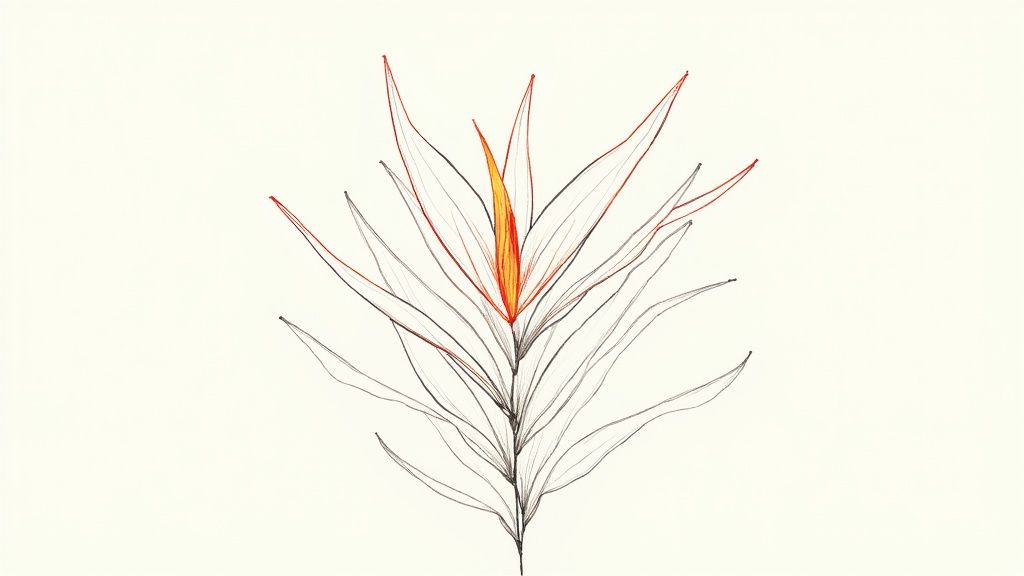
Picture this: you step out into your garden and are greeted by the bold, architectural shapes and fiery colours of a tropical jungle. That's the magic of the Heliconia. It's a plant that instantly injects an exotic and luxurious feel into any space. What most people think of as the "flower" is actually a modified leaf called a bract, which cleverly hides the small, true flowers inside.
These bracts are nature’s own masterpieces, showing up in incredible shades of red, orange, yellow, and pink—often in striking combinations. Their unique, claw-like shape is what gives them their famous nicknames like 'Lobster Claw' or 'Parrot's Beak'. They don’t just look amazing; they also attract our native birds like the Tūī, adding a bit of life and sound to your garden oasis.
Heliconia At A Glance For NZ Gardeners
To get you started, here's a quick rundown of what you need to know about growing these tropical beauties in our unique Kiwi climate.
| Attribute | NZ Context |
|---|---|
| Climate | Thrives in subtropical zones like Northland & Auckland. Needs a warm, frost-free, sheltered spot elsewhere. |
| Flowering Season | Expect the best colour display from late spring through autumn in New Zealand. |
| Growth Habit | Spreads via underground rhizomes. Can be divided to make new plants. |
| Light | Prefers bright, indirect light or dappled sun. Avoid harsh, direct afternoon sun. |
| Watering | Likes consistently moist, well-draining soil, especially during the growing season. Never let it get waterlogged. |
| Main Challenge | Frost. Protecting it from even a light frost is your number one priority for survival and flowering. |
This table should give you a solid foundation. Think of Heliconias as special guests from warmer lands—they just need a little extra TLC to feel at home here.
Understanding Heliconia In A NZ Context
Hailing from the tropical Americas, Heliconias aren't native to our local ecosystems. They're introduced beauties that need a bit of understanding to really flourish in our temperate climate. Think of it this way: you wouldn't try to grow a pineapple on a windswept Southland plain without some serious protection. It's the same idea with Heliconias—we need to create a small pocket of warmth and shelter for them.
While they're originally from places like Central and South America, here in New Zealand, they're grown purely as stunning ornamental plants. Luckily, in places like Northland and parts of Auckland where the climate is already subtropical, some Heliconia varieties can be grown outdoors with great success. For more tips on this, the Royal New Zealand Institute of Horticulture is a great resource for cultivating subtropicals in NZ.
Key Characteristics For Kiwi Gardeners
If you're thinking about adding a Heliconia to your garden, knowing a few of their key traits is essential for success. These plants offer so much more than just pretty flowers; they provide structure, drama, and a lush, green look all year round.
Here are the main things to keep in mind:
- Vibrant Bracts: The main drawcard is the colourful, long-lasting bracts. They put on a spectacular show, mostly during our warmer months from late spring right through to autumn.
- Lush Foliage: Their big, banana-like leaves create a dense, green backdrop that feels instantly tropical. They're perfect for screening off a fence or adding a bit of height to a garden bed.
- Rhizomatous Growth: Heliconias grow from underground stems called rhizomes. This means they'll spread over time and can be divided to create new plants, letting you expand your tropical paradise for free!
- Warmth is Crucial: Above all else, they need warmth. Frost is their biggest enemy, making your choice of planting location the most critical decision you'll make.
Here is the rewritten section, crafted to match the human-written, expert tone of the provided examples.
Choosing The Right Heliconia For Your Garden
Picking the right Heliconia is probably the most crucial step you'll take. It's less about just finding a pretty flower and more about matching a plant to the unique spot you have in mind. Get this right, and you're setting yourself up for a stunning display.
With so many incredible varieties out there, it can feel a bit daunting. But the secret is to narrow your focus to the tried-and-true performers that have proven they can handle New Zealand conditions. These are the ones that will give you that lush, tropical vibe without a constant battle.
Clumping vs. Running: Know The Difference
Before getting lost in names and colours, there’s one fundamental thing to understand: a Heliconia’s growth habit. They are either clumping or running, and knowing which is which will save you a world of headaches later on.
-
Clumping Heliconias: Think of these as the polite members of the family. They grow in a tight, contained clump that slowly gets bigger over time. This makes them predictable and super easy to manage, perfect for smaller gardens, pots, or as a standout feature plant.
-
Running Heliconias: These are the adventurers. They send out underground rhizomes, popping up new shoots sometimes metres away from the main plant. They’re fantastic for filling a big, empty space or creating a dense screen, but they can quickly get out of hand if you don't contain them with a root barrier.
For most Kiwi gardens, especially if you're just starting out or have limited space, a clumping variety is the way to go. You get all the drama and colour without worrying about a garden takeover.
Top Heliconia Choices For New Zealand Gardens
So, which ones actually work well here? These varieties have a reputation for being reliable in our climate, offering gorgeous flowers and a manageable size.
1. Heliconia psittacorum (Parrot's Beak)
This is the go-to Heliconia for most of New Zealand and for good reason. It’s a smaller, clumping plant that handles our cooler temperatures much better than its giant tropical cousins. Its bright, upright flowers come in a whole range of stunning colour combinations.
- ‘Andromeda’: A real show-stopper with fiery red and orange bracts tipped in yellow and black. It flowers its head off from late spring right through to autumn.
- ‘Lady Di’: A more elegant and delicate-looking option, with beautiful soft pink and creamy white flowers. It tends to stay a little more compact, too.
2. Heliconia subulata
Another tough, clumping variety that’s a great fit for Kiwi gardens. It’s a bit bigger, usually getting up to 2 metres tall, and has those classic red-orange 'lobster-claw' flowers. Heliconia subulata forms a really dense, leafy screen, which makes it perfect for creating a bit of privacy.
The big win with Heliconia subulata is its resilience. It still needs a sheltered spot, but it can take slightly cooler conditions in its stride, making it a solid choice for gardeners a bit further south than the subtropical north.
Making The Right Decision For Your Space
To lock in the perfect choice, just run through this quick mental checklist for your own garden.
| Factor | What to Consider | Example |
|---|---|---|
| Location | Where are you in NZ? Northland gardeners can be more adventurous than those in Wellington. | Go for H. psittacorum for its better cool tolerance if you're in a cooler spot. |
| Available Space | How much room do you actually have? A tight courtyard needs a compact, clumping type. | ‘Lady Di’ is brilliant for pots or squeezing into a packed garden bed. |
| Desired Look | What's the goal? A tall privacy screen or a low burst of colour? | Use the taller H. subulata to block out the neighbours, or plant a few H. psittacorum for a pop of colour. |
Thinking about these points takes you from just buying a plant to designing your space. This simple approach is the best way to ensure your new heliconia nz doesn't just survive, but becomes a spectacular feature you can enjoy for years.
Creating A Subtropical Haven For Your Plants
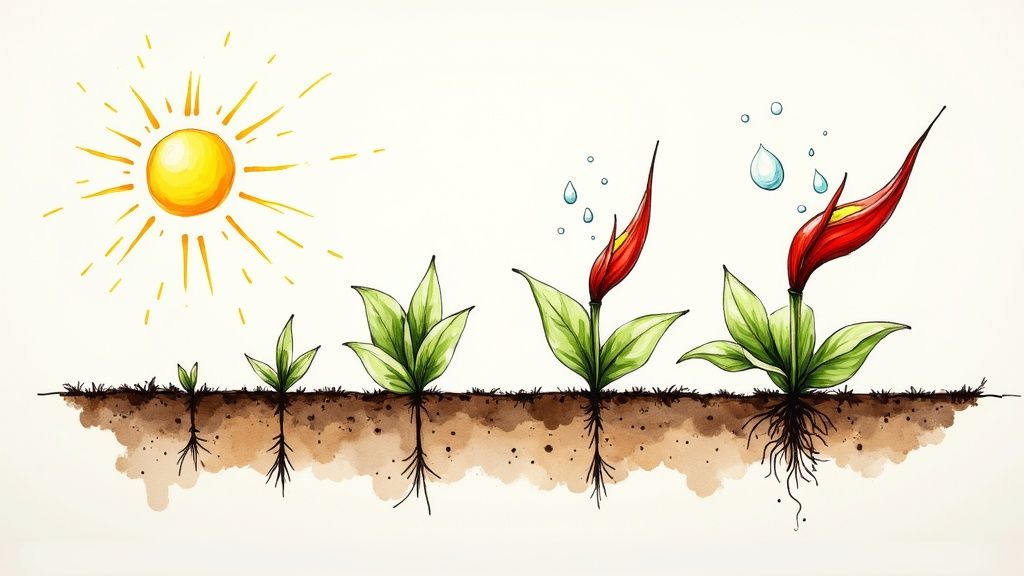
The secret to growing a magnificent heliconia nz garden is to create a little slice of the tropics right in your own backyard. These plants aren't just looking for warmth; they crave a stable, sheltered spot that feels like their jungle home. If you can nail three key things—soil, location, and light—you're well on your way to turning a typical Kiwi garden bed into a thriving subtropical escape.
Think of it as preparing a room for a special guest. You wouldn’t just show them to any spare corner; you’d make sure it was warm, comfortable, and had everything they need. It's the same deal here. A little bit of planning goes a long way in helping your Heliconias not just get by in our climate, but truly put on a show.
Perfecting Your Soil Foundation
The road to a happy Heliconia starts beneath the surface. They are seriously hungry plants and absolutely hate having 'wet feet', a real risk in our cooler winters. This means your soil has to pull double duty: it needs to be packed with organic goodness and drain like a champion.
For most of us, that means improving what we’ve got. Heavy clay soil holds on to too much water and is a recipe for root rot, while sandy soil lets moisture and nutrients drain away far too quickly. You're aiming for a lovely, crumbly loam.
Here's a quick check for drainage: dig a hole about 30cm deep and fill it with water. If it hasn't drained away within an hour, your soil is too heavy, and you'll need to improve its structure before planting.
To get that perfect balance, work in generous amounts of organic matter. A good mix of compost, well-rotted manure, and a bit of peat moss works wonders. This not only feeds the soil but also opens it up, letting water move through freely while still holding onto enough moisture for the roots to drink.
Finding The Ultimate Sheltered Spot
Location, location, location. For a Heliconia in New Zealand, this is non-negotiable. Your number one job is to shield it from its two biggest enemies: frost and harsh wind. A single light frost can be enough to wreck the foliage and stop it from flowering, while a good gale can shred those big, beautiful leaves to ribbons.
The best approach is to create a 'microclimate'—a small pocket in your garden that's naturally warmer and more protected than the areas around it. Here are a few tricks to find or make one:
- North-Facing Walls: Planting up against a north-facing wall or fence is a classic move. The structure soaks up the sun's heat all day and slowly radiates it back at night, keeping things toasty.
- Under A Canopy: Tucking your Heliconia under the canopy of larger, evergreen trees provides a natural blanket against light frosts as the leaves trap warmth rising from the ground.
- Sheltered Corners: Check out the corners formed by your house, garage, or fences. These spots are brilliant at blocking wind from several directions, creating a calm little haven.
By choosing a spot that gives this kind of natural protection, you're massively stacking the odds in your favour. It's a key strategy for lots of impressive flowering plants, and you can get more ideas in our guide to growing tropical plants in NZ.
Getting The Light Just Right
While Heliconias are sun-lovers, most varieties really don't enjoy being blasted by intense, direct afternoon sun. Think about their natural home on the forest floor or at the jungle's edge, where they get plenty of bright, but filtered, light. Too much direct sun, especially during the peak of a Kiwi summer, can easily scorch their leaves.
The sweet spot is what we call dappled light or morning sun. This gives them all the energy they need to power those amazing flowers without the stress of being baked. A position that gets full sun until around midday, then filtered light for the rest of the afternoon, is pretty much perfect. This balanced approach gives your plant the fuel for incredible growth without the risk of damage, setting the scene for a truly stunning display.
A Seasonal Guide to Planting and Care in NZ
To get your Heliconias looking their best, you really need to get in sync with their seasonal rhythm. These are tropical plants, after all, so their internal clock is a bit different from our native Kiwi flora. Think of this as your year-round playbook, guiding you on exactly what your plant needs from the heat of summer to the chill of winter, helping it not just survive, but truly flourish.
Following a seasonal calendar takes the guesswork out of caring for them. It turns it into a simple, confident routine. You’ll know precisely when to push growth with water and fertiliser, and just as crucial, when to ease off and let the plant rest.
Planting Your Heliconia the Right Way
Timing is everything when you're planting Heliconia rhizomes here in New Zealand. A common mistake is getting them in the ground too early in spring. If you rush it, the rhizome can easily rot in the cold, damp soil before it even gets a chance to sprout. You need to wait for the soil to genuinely warm up to kickstart growth.
For most of the country, the sweet spot for planting is late spring, from October into November. By then, the danger of a surprise frost has usually passed, and the soil temperature is high enough to signal the rhizome that it's time to get going. This gives your new plant the whole summer to build a strong root system and push out healthy leaves before its first winter.
Your Seasonal Watering Schedule
Watering a Heliconia is a bit of a balancing act that changes throughout the year. They absolutely love moisture but hate sitting with "wet feet" in cold, soggy soil. Getting this right is the key to avoiding root rot, which is the number one killer of Heliconias in our temperate climate.
Here’s a simple guide to adjusting your watering through the seasons:
- Spring and Summer (Active Growth): During the warm months, your Heliconia is growing like mad and gets very thirsty. Your goal is to keep the soil consistently moist, but never waterlogged. A good, deep watering two or three times a week usually does the trick. Always check the top few centimetres of soil first, though—if it’s still damp, hold off for another day.
- Autumn (Winding Down): As the days get shorter and cooler, the plant's growth naturally slows. This is when you start to gradually reduce how often you water. It's a simple way to help the plant prepare for its winter dormancy.
- Winter (Dormancy): This is the danger zone. Overwatering now is a critical mistake. You need to cut back on watering significantly, letting the soil dry out more between drinks. For a Heliconia in the garden, our normal winter rainfall might be all it needs. If it's in a pot, a light water every few weeks is often plenty to stop it from drying out completely.
If you're growing your Heliconia in a container, the right pot is essential for managing moisture. For a few more tips, check out our guide on choosing the best large outdoor plant pots in NZ to make sure you've got perfect drainage.
A Feeding Regime for Maximum Flower Power
Heliconias are hungry plants, especially when they're preparing to produce those stunning flowers. To get the most impressive display, you have to give them the right nutrients at the right time. They have a particular craving for potassium (K), which is the nutrient responsible for promoting big, healthy flowers and overall plant strength.
Think of high-potassium fertiliser as the 'superfood' for Heliconia flowers. While nitrogen (N) fuels leafy growth, it's the potassium that powers the production of those vibrant, long-lasting bracts that everyone loves.
A simple and effective feeding plan looks like this:
- Early Spring (Wake-up Call): Once you see new shoots emerging, give the plant a balanced slow-release fertiliser to provide a gentle start to the season.
- Late Spring to Mid-Summer (Flower Fuel): Now's the time to switch to a high-potassium liquid fertiliser. Apply it every two to four weeks, following the directions on the product. This targeted feeding during peak growth is what encourages those amazing flower spikes to develop.
- Late Summer (Final Boost): Give one last feed in late summer. This supports the final flush of flowers before the plant starts to slow down for autumn.
- Autumn and Winter (Rest Period): Stop all feeding. Adding fertiliser during their dormant period is a bad idea; it can force weak, floppy growth at the wrong time of year and stress the plant. Just let it rest and save its energy for next spring.
Troubleshooting Common Pests And Problems
Even the most well-cared-for plants can run into a bit of trouble, and Heliconias are no different. Think of this as your go-to guide for figuring out what’s wrong and how to fix it, helping you tackle the common issues that might crop up in your Kiwi garden.
The real key is to keep a close eye on your plants and act fast. Most problems are pretty minor if you catch them early. We’ll walk through everything from the usual garden-variety critters to the more serious threat of root rot, which can be a real headache in our damper winters. Knowing what to look for is half the battle won.
Identifying And Managing Common Pests
While Heliconias are generally pretty tough, a few common pests can sometimes decide to move in. The good news? They’re rarely a major drama, and a bit of simple, garden-friendly attention is usually all it takes to send them packing.
In a New Zealand garden, you’re most likely to encounter:
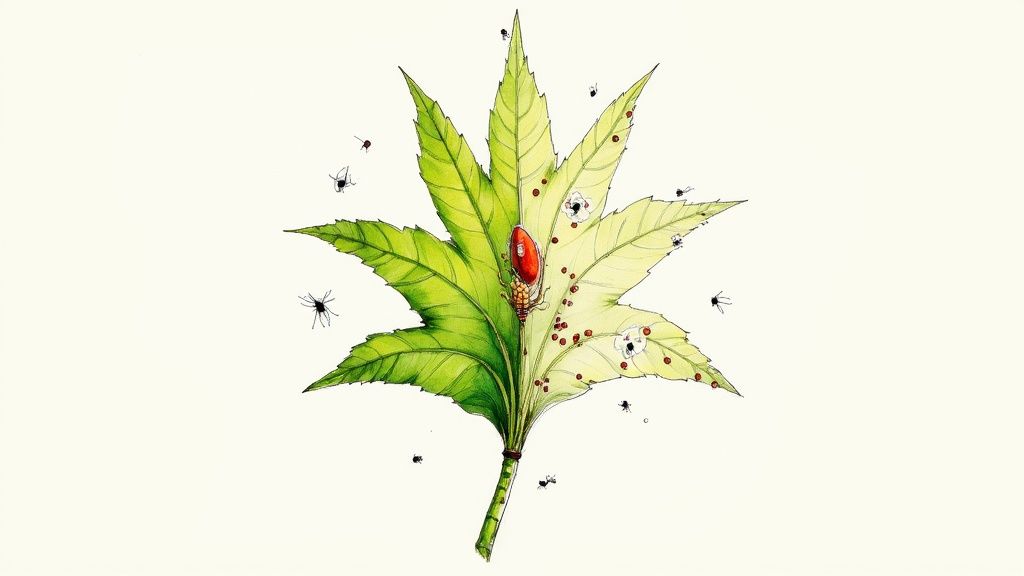
- Slugs and Snails: These guys love chewing holes in those big, lush leaves, especially when the shoots are new and tender. The best bet is to pick them off by hand at dusk or use a pet-safe slug bait to thin their numbers.
- Aphids: Every now and then, you might spot a little colony of these sap-suckers setting up shop on new growth or under the leaves. Often, a sharp spray of water from the hose or a bit of diluted soapy water is enough to convince them to leave.
Just make a habit of checking your plants regularly, particularly the new foliage, and you’ll be able to nip any pest problems in the bud.
The Biggest Threat: Root Rot
Without a doubt, the most serious problem for Heliconias here in New Zealand is root rot. This isn't really a pest or a disease, but a condition that happens when the roots sit in cold, soggy soil for too long—a very real risk during our cool, wet winters.
Think of it like this: if your feet were stuck in wet gumboots for weeks, you’d get trench foot. That’s what root rot is for a plant. The roots can’t breathe, so they start to suffocate and decay, making it impossible for them to take up water or nutrients. This is exactly why excellent drainage is non-negotiable.
Prevention is truly your only option here. Once root rot takes hold, it’s incredibly difficult to save the plant. All that hard work you put into creating well-draining soil and picking the right spot is your best insurance policy. Come winter, it’s crucial to cut back on watering and let the soil dry out a bit more between drinks to keep those rhizomes happy.
Diagnosing Common Leaf Issues
The leaves on your Heliconia are great at telling you what's going on. If you learn to read their signals, you can fix problems before they get out of hand.
| Symptom | Likely Cause | Solution |
|---|---|---|
| Yellowing Leaves (General) | Overwatering or underfeeding. | Feel the soil. If it's soggy, ease up on the watering. If it's dry, it might be hungry (but only feed it during the growing season). |
| Brown, Crispy Edges | Underwatering or low humidity. | Water more often during hot, dry spells. Grouping plants together can also create a more humid microclimate. |
| Scorched or Bleached Patches | Too much direct sun. | Your plant is getting sunburnt! Move it somewhere with more dappled light, or a spot that only gets gentle morning sun. |
| Shredded or Torn Leaves | Wind damage. | It's in too exposed a spot. Move it somewhere more sheltered, or consider planting something nearby to act as a windbreak. |
By getting to know these signs, you can react quickly and keep any minor niggles from turning into major headaches, ensuring your tropical beauties stay in top form.
Designing A Tropical Oasis With Heliconia
Heliconias aren't just plants you stick in the ground; they're incredible architectural tools for creating a lush, tropical landscape. With their bold shapes and electric colours, you can literally paint with texture and height, turning a standard Kiwi backyard into your own private slice of paradise. Think of them as living sculptures, dramatic screens, or jaw-dropping focal points.
Using Heliconias in garden design is all about thinking vertically. Their upright growth and massive leaves draw the eye upwards, adding a sense of grandeur and depth. This is a brilliant trick for making a smaller space feel larger and more immersive—creating that genuine feeling of being enveloped by a jungle oasis.
Creating Layers And Focal Points
A great tropical garden is all about layers. Heliconias are the perfect 'mid-layer' or 'backbone' plants, giving you a solid structure that everything else can be built around.
- Dramatic Screening: Taller species like Heliconia rostrata or Heliconia subulata are fantastic for planting along a fence line. They form a dense, leafy screen in no time, giving you privacy and blocking out unwanted views with a solid wall of green.
- Stunning Focal Points: A single, well-placed clump of a showy variety like Heliconia psittacorum 'Andromeda' can easily become the garden's centrepiece. Just surround it with lower-growing foliage plants to make its fiery bracts really pop.
This style of gardening is taking off. In fact, subtropical plantings in the warmer, northern parts of New Zealand grew by about 15-20% annually between 2010 and 2020 as more gardeners fell in love with these exotic designs. This trend has been especially strong in places like Whangārei, Hamilton, and north Auckland, where the microclimates are perfect for a heliconia nz garden. You can dive deeper into these trends with Heliconia cultivation trends in New Zealand on CABI Digital Library.
Perfect Companion Plants For Heliconia
Choosing the right neighbours for your Heliconias is key to nailing the overall tropical effect. You're looking for plants that enjoy similar conditions—rich, moist soil and a bit of dappled light—and whose textures and colours work well with the Heliconia's bold look.
A core principle of tropical design is to mix up leaf shapes and sizes. When you combine the large, paddle-like leaves of Heliconias with finer, more delicate foliage, you create a rich tapestry that looks captivating all year round.
Some excellent companions that thrive here in New Zealand include:
- Canna Lilies: With their big, colourful leaves and vibrant flowers, canna lilies are a natural fit. They help create that lush, layered look and come in a huge range of colours to either contrast or complement your Heliconia.
- Gingers (Alpinia and Hedychium): Many ornamental gingers share the same love for warmth and moisture. Their fragrant flowers and striking foliage add another sensory dimension to the garden.
- Taro (Alocasia and Colocasia): Often called Elephant Ears, these plants bring massive, heart-shaped leaves to the party, creating a stunning textural contrast against the more upright form of Heliconias.
By pairing Heliconias with companions like these, you can create a design that feels truly dynamic and cohesive. For more inspiration on a classic tropical partner, check out our complete guide on how to grow Canna Lily NZ.
Frequently Asked Questions
Diving into the world of tropical gardening can bring up a few queries. We get it! Here are some quick, clear answers to the most common questions from Kiwi gardeners to help you on your heliconia nz journey.
Can I Grow Heliconias In The South Island?
While growing Heliconias outdoors year-round in the South Island is a real challenge due to the colder winters and frost, it's definitely not impossible to enjoy them. The trick is to grow them in containers.
Simply move your potted Heliconias into a warm, bright spot indoors or a heated greenhouse as autumn rolls in. For container life, smaller varieties like Heliconia psittacorum are a perfect fit, adapting beautifully to pot culture. This way, you can bring that tropical vibe to your space, no matter where you live in New Zealand.
How Long Until My Heliconia Flowers?
Patience is a virtue, especially when you're waiting for those jaw-dropping blooms. A healthy Heliconia rhizome, planted in the right conditions here in New Zealand, will typically start flowering in its second or third growing season.
Think of the first year as its settling-in period. The plant is busy establishing a strong root system and pushing out lush green foliage. To give it a nudge, make sure you're feeding it consistently with a high-potassium fertiliser during the active growing months of spring and summer.
Think of the first year as building the factory. Once the plant has a solid foundation of roots and leaves, it has the energy reserves needed to start producing those incredible, long-lasting flowers you're waiting for.
Should I Divide My Heliconia Clumps?
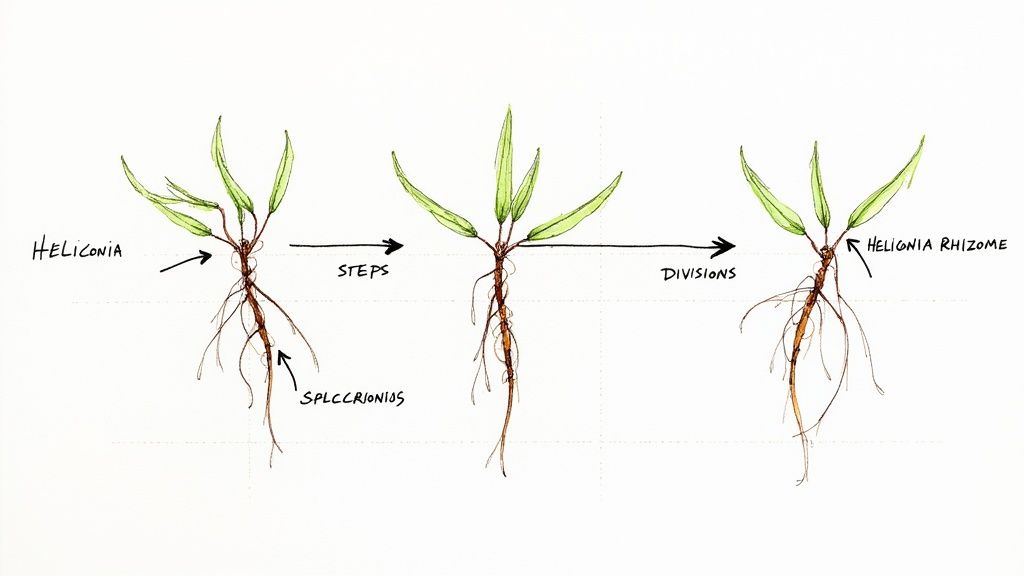
Absolutely. Dividing your Heliconia clumps every three to four years is a brilliant bit of garden maintenance. It's especially useful if you've noticed the flowering has slowed down. This process gives the plant a new lease on life, encouraging fresh, vigorous growth. Plus, you get new plants to expand your garden or share with friends!
The best time to tackle this job in New Zealand is during late spring, once the soil has properly warmed up and the plant is kicking into its growth phase. This gives the new divisions a full summer to get established before the next winter.
Are Heliconias Safe For Pets In New Zealand?
This is a great question, and one we hear a lot from pet owners. You'll be happy to know that Heliconia plants are generally considered non-toxic to cats, dogs, and other common household pets.
Of course, it's always best to discourage your furry friends from munching on any of your garden plants. But you can rest easy knowing that Heliconias are a relatively safe choice for creating that lush, pet-friendly Kiwi garden you've been dreaming of.
Ready to start your own tropical paradise? Explore a stunning selection of Heliconias and other exotic plants at Jungle Story, New Zealand's premier online plant marketplace. Find the perfect addition to your garden and have it delivered right to your door. Begin your jungle journey today at https://junglestory.co.nz.