
Walk into just about any home in New Zealand, from Auckland down to Wellington, and you’re likely to spot a lucky bamboo. It's become a staple indoor plant for a reason – those elegant, sculpted stalks are hard to resist, and it’s famously easy to look after. But its appeal goes deeper than just good looks; this is a plant with real cultural weight and a reputation for being incredibly resilient.
Getting to Know Lucky Bamboo in NZ

First things first, let’s clear up a common mix-up. Despite the name, lucky bamboo isn't actually a bamboo at all. It’s part of the Dracaena family, a tough species called Dracaena sanderiana. While it certainly looks like bamboo, its care needs are totally different, which is a big part of what makes it such a brilliant houseplant.
This adaptability makes it one of the easiest tropical plants to grow indoors in NZ, letting it thrive far away from our often-unpredictable outdoor weather. It might come from warmer climates, but it’s perfectly happy inside our centrally heated homes, handling the cooler Kiwi winter months from June to August without a fuss.
More Than Just a Plant
A huge part of its popularity here is tied to Feng Shui principles, which have become more widely known thanks to New Zealand's diverse Asian communities. In this tradition, lucky bamboo is seen as a powerful tool for attracting positive energy.
When given as a gift, lucky bamboo is believed to bring prosperity, happiness, and good fortune to a home or workplace. It's so much more than just a bit of greenery.
This rich symbolism, paired with its sleek, modern look, has made it a favourite in Kiwi homes. Its upright shape fits beautifully with contemporary interior design, adding a splash of green without taking up much space. If you're looking for ideas on how to share that good energy, you might find some inspiration in these thoughtful gifts for plant lovers.
Of course, it also helps that lucky bamboo is incredibly low-maintenance, a huge plus for urban dwellers and anyone new to indoor gardening. It loves the typical indoor temperatures of New Zealand homes, preferring a steady environment between 18-35°C. That lines up perfectly with our heated living spaces, especially during the colder months.
How To Choose the Perfect Arrangement
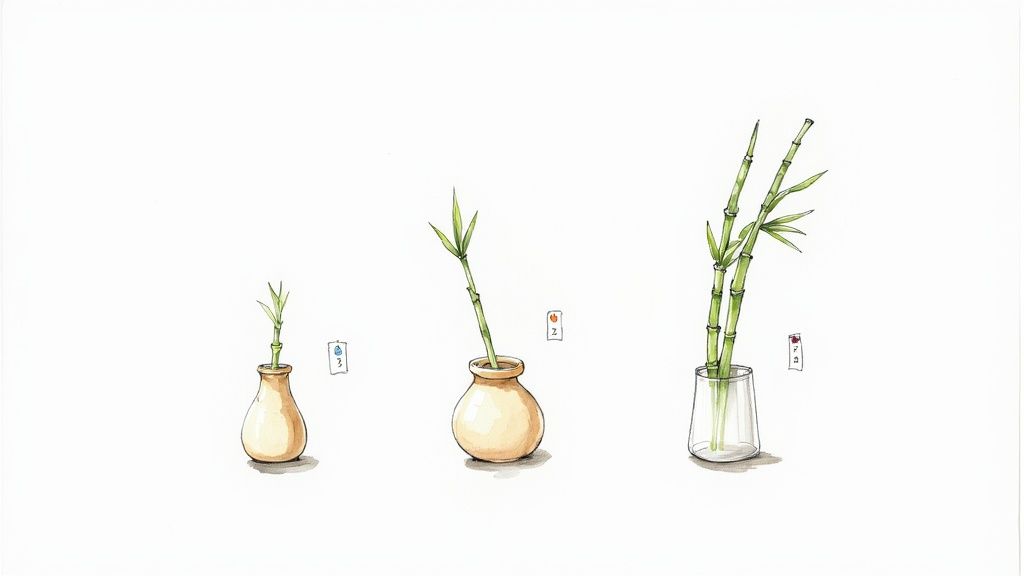
Picking out the right lucky bamboo arrangement doesn’t have to be a huge decision. Once you know a few key things to look for, it's actually pretty simple. You’ll find a huge range in New Zealand garden centres, from elegant single stalks to stunning, woven creations. The trick is to find one that not only catches your eye but is also healthy and strong.
When you're browsing, let your senses guide you. Look for stalks that are a vibrant, solid green from top to bottom. Healthy leaves should be a deep, rich green, with no yellowing or brown on the tips. And don't be afraid to give it a gentle sniff – a happy plant will smell fresh and a bit earthy, never sour or musty.
The Meaning Behind the Stalks
In the world of Feng Shui, the number of stalks in your arrangement carries a special meaning. It’s believed that each number attracts a different type of positive energy, so you can choose one that aligns with what you want to bring into your space.
A quick look at the symbolism behind lucky bamboo can help you decide on the perfect arrangement for your home or as a thoughtful gift.
A Guide to Lucky Bamboo Stalk Meanings
| Number of Stalks | Symbolic Meaning |
|---|---|
| Three Stalks | This popular choice represents happiness, wealth, and a long life (Fu, Lu, and Soh). |
| Five Stalks | Represents the five elements (earth, water, fire, wood, metal) to bring balance and harmony. |
| Six Stalks | Symbolises good luck and blessings, believed to attract prosperity and success. |
| Eight Stalks | A very lucky number in many Asian cultures, representing wealth, abundance, and joy. |
It's a fun way to add a layer of intention to your plant choice.
You might notice one number is missing. It’s worth noting that arrangements with four stalks are almost always avoided. In Feng Shui, the number four is tied to death and is considered unlucky, which is why you’ll rarely, if ever, see them for sale.
Water vs Soil Grown Plants
You’ll typically find lucky bamboo grown in two ways: with its roots in water (often held in place with pebbles) or potted up in soil.
Plants grown in water have a lovely, clean look, and it’s super easy to see when they need a top-up. Just remember they’ll need a bit of diluted liquid fertiliser every now and then, as water alone doesn't provide any nutrients.
On the other hand, plants grown in soil tend to be a bit more resilient and can go longer between waterings. The soil acts as a slow-release pantry, giving the roots a steady supply of nutrients for more vigorous growth. If you go for a soil-based plant, the right pot is key. Our guide to selecting indoor plant pots can point you in the right direction. For some beautiful options, check out these charming indoor plant pots that work well with any decor.
Mastering Lucky Bamboo Care in Your Home
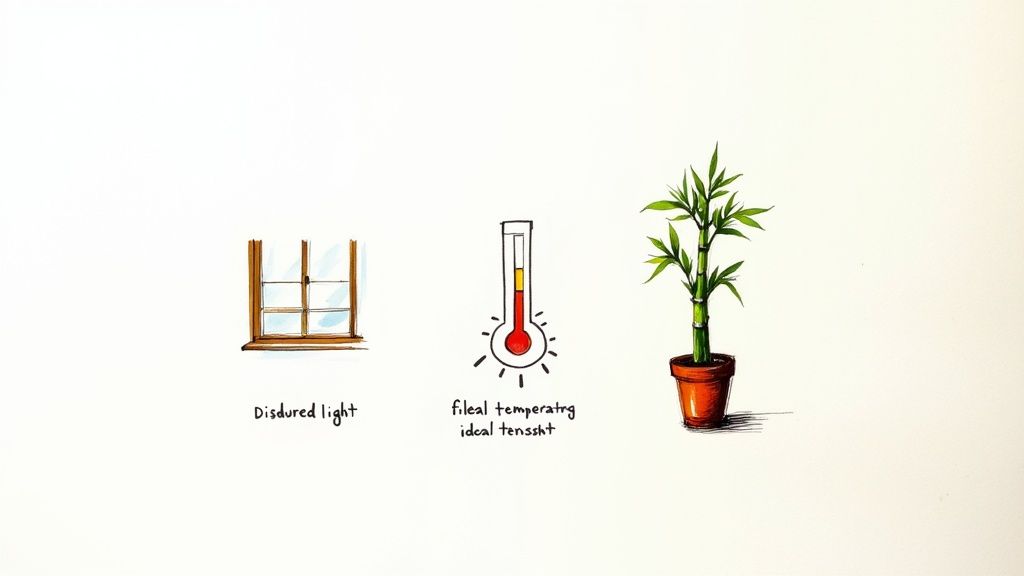
So, you’ve brought a lucky bamboo into your home. That's the first step, but the real reward is helping it flourish. The great news is this plant’s needs are a perfect match for most New Zealand homes. It all comes down to getting three things right: light, water, and temperature.
Think of your lucky bamboo as a guest who likes a bright room but doesn't want to be in the spotlight. It does best in bright, indirect sunlight, which is pretty easy to find in Kiwi homes where harsh, direct sun isn't always a problem. Try placing it near an east-facing window to catch the gentle morning light, or just in a well-lit room away from any direct sunbeams.
The Importance of Water Quality
While light is a big deal, the quality of your water is probably the most critical factor for a happy lucky bamboo. These plants are quite sensitive to chemicals like chlorine and fluoride, which are common in our tap water across New Zealand. Over time, these can build up and cause the leaf tips to go brown or yellow.
To keep this from happening, your best bet is to use filtered, distilled, or even rainwater. If you have to use tap water, just let it sit out in an open container overnight. This gives some of the chlorine a chance to evaporate, making it much healthier for your plant.
A good rule of thumb for lucky bamboo: if you wouldn't want to drink the water, your plant probably doesn't either. Clean water is the simplest secret to a vibrant, healthy plant.
If your plant is growing in water, be sure to change it out completely every one to two weeks. This stops the water from getting stagnant and keeps bacteria away. If your lucky bamboo is in soil, make sure it’s in a good mix that drains well. You can find out more about getting the right foundation for your potted plants in our guide to the best indoor potting mix.
Finding the Perfect Temperature
Lucky bamboo originally comes from the tropics, so it naturally loves a warm and stable environment. It thrives in temperatures between 18°C and 35°C, which conveniently is the standard temperature range for most heated Kiwi homes. This makes it a fantastic year-round indoor plant, completely unfazed by the cold winter outside.
Just be sure to keep it away from any sudden temperature shifts. You'll want to avoid placing it near:
- Draughty windows or doors.
- Directly in front of a heat pump or air conditioning unit.
- Radiators, which can dry out the air around it.
By giving it a stable, warm spot, you’re basically mimicking its native habitat, which will encourage it to grow strong and steady all year long.
Troubleshooting Your Lucky Bamboo
Even a plant as hardy as lucky bamboo can hit a rough patch. Don’t worry, though. Catching issues early is the secret to getting your plant back on track, and most common problems are surprisingly simple to fix once you know the signs.
Usually, the first clue something’s amiss is a change in colour. If you spot the leaves or stalks of your lucky bamboo turning yellow, it’s a distress signal. Think of it as your plant’s way of saying, "Hey, I need a little help over here!"
What to Do About Yellowing
Yellowing almost always boils down to one of two things: too much sunlight or the wrong kind of water.
Direct sun, especially the harsh stuff we get here in New Zealand, can literally scorch the leaves, turning them a sad shade of yellow. The fix is as easy as it sounds—just move your plant to a spot with plenty of bright, indirect light.
The other big offender is often the water straight from your tap. Town supply water frequently contains chemicals like chlorine and fluoride, which can slowly build up in the plant and cause the tips to turn yellow. Making the switch to filtered, distilled, or even just rainwater is the best way to prevent this chemical overload.
A yellowing stalk, sadly, is a goner. You'll need to remove it to stop any rot from spreading to the healthy parts of the plant. Yellow leaves, on the other hand, can often bounce back once you've sorted out the light or water issue.
Other Common Issues
Beyond yellowing, there are a couple of other things to keep an eye out for, especially if your lucky bamboo lives in a vase of water.
- Green Water (Algae): If the water in the vase starts looking a bit murky or green, you've got algae. It's not just unsightly; it steals nutrients from your plant. To solve this, give the vase a thorough clean every time you change the water. Using an opaque container that blocks light will also help keep the algae away.
- Unwanted Guests (Pests): It's rare for indoor lucky bamboo to get pests, but it can happen. Look out for tiny white fluffy spots (mealybugs) or delicate webbing (spider mites). If you see any, just dip a cloth in some soapy water and gently wipe them off the affected areas.
For a quick reference, here’s a simple guide to diagnosing and fixing the most common lucky bamboo troubles.
Your Lucky Bamboo Troubleshooting Guide
Quickly identify and solve common lucky bamboo issues with these simple steps.
| Symptom | Potential Cause | Solution |
|---|---|---|
| Yellow Leaves | Too much direct sunlight. | Move the plant to a spot with bright, indirect light. |
| Yellow Leaf Tips | Chemicals (chlorine, fluoride) in tap water. | Switch to filtered, distilled, or rainwater. |
| Yellow Stalk | Advanced stress or rot; cannot be saved. | Remove the yellow stalk to protect the rest of the plant. |
| Green, Murky Water | Algae growth due to light exposure. | Clean the vase regularly and consider an opaque container. |
| White Fluff or Webbing | Pests like mealybugs or spider mites. | Wipe the affected areas with a cloth and soapy water. |
| Brown Leaf Tips | Dry air or inconsistent watering. | Mist leaves occasionally or ensure water levels are consistent. |
With just a little attention to these details, you can easily troubleshoot any issues and keep your lucky bamboo looking its best for years to come.
Styling and Shaping Your Plant
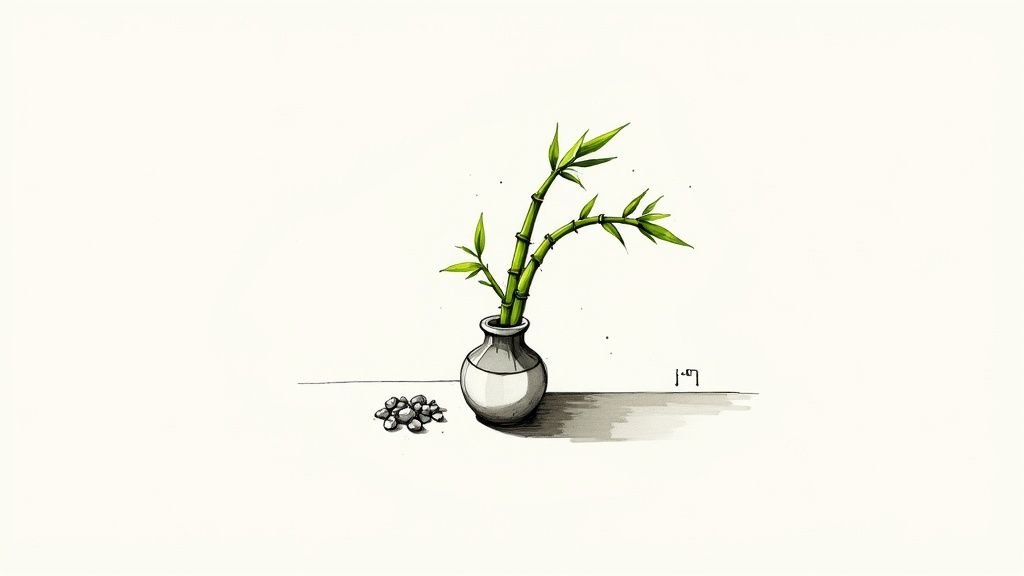
Your lucky bamboo is more than just a plant—it’s a living sculpture you can shape to match your personal style. It's easy to move beyond a simple bunch of stalks and create something truly special, whether you’re after a clean, minimalist vibe or a more complex, eye-catching design.
The container you choose is really the starting point for your whole arrangement. A tall, clear glass vase gives a crisp, modern feel, showing off the sleek green stalks and any decorative pebbles you’ve added. If you want a more grounded, earthy look, a ceramic pot can introduce a bit of texture or a pop of colour to the space.
When you're picking a vase, you're balancing two things: style and stability. A heavy base is a must for taller arrangements to keep them from toppling over. Decorative stones or glass beads aren't just for looks; they also do a great job of holding the stalks firmly in place.
It’s these little details that transform a basic houseplant into a considered piece of your home décor.
Creating Curls and Twists
Ever wondered how growers get those amazing spiral shapes? It’s all a clever trick using light. Professionals will pop the young, bendy stalks in a dark room with just one light source. The plant naturally reaches for the light, and by turning the plant bit by bit, they encourage it to curl as it grows.
While doing this at home takes a fair bit of patience, you can still gently train your stalks. Using some soft wire or even string, you can carefully guide the new growth into different shapes. Just remember to be gentle! The stalks are quite delicate and can snap if you force them.
Feng Shui and Placement
Styling isn't just about what looks good; it can also be about creating good energy. In Feng Shui, the placement of your lucky bamboo is thought to influence the positive vibes in your home. For the best effect, have a think about these spots:
- East: Placing your plant in the eastern part of your home is said to promote good health for everyone in the family.
- Southeast: This is known as the wealth and prosperity corner, making it a very popular spot for arrangements designed to attract abundance.
By carefully styling and placing your lucky bamboo nz arrangement, you’re not just adding a plant to a room—you’re creating a beautiful and meaningful feature for your living space.
Answering Your NZ Lucky Bamboo Questions
We've walked through choosing, caring for, and styling your lucky bamboo, but you might still have a few things you're wondering about. This last section is for all those common questions we hear from plant lovers across New Zealand.
Can I Grow My Lucky Bamboo Outside in My New Zealand Garden?
It’s generally not a great idea. Lucky bamboo (Dracaena sanderiana) prefers the stable, warm conditions found inside most Kiwi homes, ideally somewhere between 18°C and 35°C. Our unpredictable weather, especially the frosts many regions get during winter (June to August), can easily damage or even kill the plant. For the best results, keep it inside as a treasured houseplant.
Think of lucky bamboo as a tropical plant at heart. It's a house guest that far prefers the consistent warmth of your living room to the changing seasons of a garden bed.
How Often Should I Change My Lucky Bamboo's Water?
For any lucky bamboo arrangement grown in water, you'll want to change the water completely every one to two weeks. This is a vital step to stop bacteria from building up and keeps the environment fresh for the roots.
When you're changing the water, it's a good idea to also:
- Give the vase a quick rinse to get rid of any slime or film.
- Wash any pebbles or decorative stones.
- Refill with filtered, distilled, or even rainwater to avoid the chemicals sometimes found in tap water.
Is Lucky Bamboo Toxic to My Pets?
Yes, this is an important one for all pet owners to know. Lucky bamboo is considered toxic to both cats and dogs if they eat it. If you have curious pets who like to nibble on houseplants, you must place your arrangement well out of their reach. A high shelf, a dedicated plant stand, or a room they can't get into are all good, safe options to make sure everyone in your home stays happy and well.
Ready to find the perfect lucky bamboo for your home? Explore our beautiful collection at Jungle Story and bring a touch of green elegance and good fortune into your space. Find your ideal plant today at https://junglestory.co.nz.